- Home
- Services and Shopping
- What to Ask a Scooter Dealer
What to Ask a Scooter Dealer – The Ultimate Dealer Questions Buying Guide
Picture this: You've finally made the decision. Maybe your knees have been complaining a bit more lately, or that walk to the local shops has started to feel like a marathon rather than a simple errand.
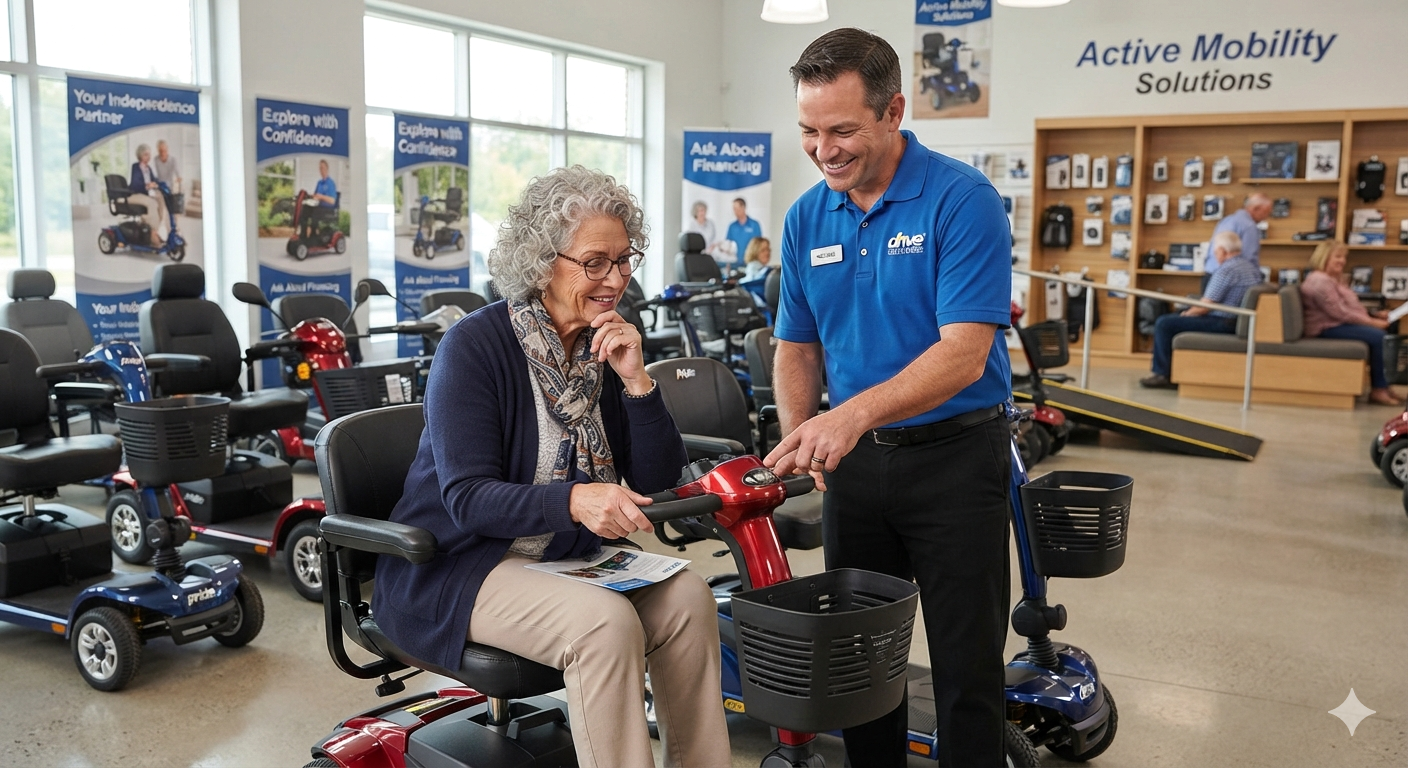
You walk into a mobility scooter showroom, bright lights shining down on rows of shiny scooters. A friendly salesperson approaches, smiles, and asks, "Can I help you find something today?"
And suddenly, your mind goes blank.

You know you need a scooter. You know it could change your life – give you back that independence you've been missing, let you visit friends without relying on lifts, help you feel the sun on your face again.
But what do you actually ask? What matters? What's just sales fluff? And how do you know you're not about to make a costly mistake?
That's undoubtedly why we created this guide. By the time you finish reading, you'll know exactly what to ask a scooter dealer – and you'll walk into that showroom feeling confident, prepared, and in control.
Let's get started, shall we?
Before You Even Step Foot in the Showroom
The best time to start thinking about what to ask a scooter dealer isn't when you're standing next to a scooter – it's before you even leave home. Knowing the right questions begins with knowing what you need.
Start by thinking about your daily life. Where will you use your scooter most? Are you mostly indoors, navigating shopping centres and narrow doorways? Or do you dream of exploring parks, footpaths, and perhaps even a few bush tracks?
A small, portable scooter with a tight turning circle might be perfect for the shops, but if you're tackling uneven terrain, you'll want something with proper suspension and larger wheels.
Also consider how you'll transport your scooter. Will it need to fit in the boot of your car? If so, you'll want to ask about total weight, the weight of the heaviest piece, and whether it folds or pulls apart. These aren't just nice-to-know details – they're make-or-break factors that could determine whether your scooter actually works for your lifestyle.
Once you've got a clear picture of your needs, you're ready to start asking the important questions. And we've got every single one of them covered for you.
How Do I Compare Mobility Scooter Dealers?
Not all dealers are created equal. Some offer exceptional after-sales support; others disappear the moment you hand over your money – as vulnerable outback residents discovered when a dealer took payments for mobility equipment and then vanished. One man paid $6,300 for a scooter that never arrived.
So how do you compare dealers effectively?
Look for dealers who invest in after-sales service. A dealer with qualified technicians who are well-trained in mobility equipment repairs and maintenance is worth their weight in gold. Ask about their service department – do they have in-house technicians or do they outsource repairs?
Check their parts availability. A good dealer stocks spare parts locally, not just orders them when something breaks. Ask how long you'd wait for common parts like tyres, batteries, and control components.
Consider their service options. Some dealers offer both workshop servicing and mobile on-site repairs. If you have limited mobility, a technician who comes to you is far more convenient than trying to get your scooter to a workshop.
Look for industry-leading warranties. Some Australian dealers offer comprehensive warranties plus extras like 12 months of free roadside assistance. That kind of commitment tells you they stand behind what they sell.
Read the full guide: How do I compare mobility scooter dealers (service, parts, warranty, and support)?
What Are the Red Flags of a Mobility Scooter Dealer?
Knowing what to ask a scooter dealer is important – but knowing what to watch out for is equally critical. There are some clear red flags that should send you walking straight out the door.
Red Flag #1: They promise the world but can't deliver.
The Remote Mobility case is a cautionary tale – they promised in-person support and product delivery to remote communities, took payments, and then disappeared.
The owner's ABN was eventually cancelled. Always verify a dealer's registration and check for recent complaints.
Red Flag #2: They're evasive about service and support.
If a dealer won't give you straight answers about warranty claims, repair turnaround times, or who handles issues, that's a problem. One customer reported having to pay for service upfront before a technician would even attend their home.
Red Flag #3: They push you to buy without a test drive.
Any dealer who rushes you through the process or discourages testing multiple models is not looking out for your best interests.
Red Flag #4: They can't tell you where spare parts come from.
If they don't know how long parts take to arrive, they probably don't have a reliable supply chain.
Red Flag #5: They have a pattern of poor customer service.
Check online reviews and ask around. If multiple customers report being ghosted after purchase, believe them.
Read the full guide: What are the red flags of a mobility scooter dealer (support and servicing problems)?
What Paperwork Should I Expect When Buying a Mobility Scooter?
When you're working out what to ask a scooter dealer, don't forget about the paperwork. Getting the right documentation protects you now and down the track.
Your purchase receipt or invoice is the most important document you'll receive. It proves you bought the scooter, what you paid, and when. Without it, warranty claims can be denied.
The warranty certificate or terms should be provided in writing. Ask for a clear document that spells out exactly what's covered, for how long, and what voids the coverage.
The serial number is critical – you'll need it for warranty registration and claims. It's usually located on the frame or steering column. Register your product with the manufacturer within a week of purchase to stay connected for service and support.
The owner's manual should include operating instructions, maintenance schedules, and safety information. Keep it somewhere safe.
Proof of any NDIS or government funding – if you're using NDIS funds, keep copies of all correspondence and approvals.
If you're buying second-hand, ask for any available service history and verify the serial number is accessible and matches the documentation.
Read the full guide: What paperwork should I expect when buying a mobility scooter in Australia (warranty, receipts, serials)?
What Should I Ask About Servicing Costs and Call-Out Fees?
Ongoing costs can catch you by surprise if you don't know what to ask a scooter dealer upfront.
Ask about routine service costs. A basic annual service typically costs around $129, though prices vary. In-store servicing for a scooter might cost around $140, while on-site service could be $175.
Ask about call-out fees. If a technician needs to visit your home, you'll usually pay a call-out fee on top of the service cost. One provider charges $70 for an emergency call-out, which includes the first 15 minutes of service, with time then billed in 15-minute increments. Another charges $44 call-out plus $66 per hour. Always ask for the current fee schedule.
Ask what's included. Does the service price cover parts, or are they extra? Some services are "basic" and don't include replacement parts.
Ask about diagnosis fees. Some workshops charge an assessment fee just to inspect your scooter and diagnose the problem – one provider charges $79.99 for this.
Ask about maintenance frequency. Most experts recommend servicing your scooter every 12 months. Some brands recommend every six months. Regular servicing not only keeps your scooter safe but also protects your warranty.
Read the full guide: What should I ask about servicing costs and call-out fees for a mobility scooter?
What Should I Ask About Battery Replacement Cost, Lifespan, and Availability?
Batteries are the heart of your scooter – and one of the most expensive parts to replace. Getting the battery questions right is essential when you're figuring out what to ask a scooter dealer.
Ask about replacement cost. Batteries typically cost between $200 and $500 to replace, depending on the size and type. Some specialist batteries can cost over $1,200. A pair of 12V 33Ah batteries might cost around $219, while a 12V 55Ah AGM battery could be $419.
Ask about lifespan. Most batteries last around two years, though this varies depending on how well they're maintained. Some higher-quality batteries are rated for up to 2,000 charge cycles. Ask the dealer for realistic expectations based on your usage patterns.
Ask about availability. Are replacement batteries stocked locally, or do they need to be ordered in? One customer reported having to buy new batteries and spend another $1,000 on repairs – a situation that could have been avoided with the right questions upfront.
Ask about battery type. Lead-acid (AGM) batteries are cheaper but heavier and shorter-lived. Lithium batteries cost more but are lighter and last longer. Ask which type suits your needs and budget.
Read the full guide: What should I ask about battery replacement cost, lifespan, and availability (for a specific model)?

What Should I Check During a Mobility Scooter Test Drive or In-Home Trial?
Here's the single most important piece of advice we can give you about what to ask a scooter dealer: ask for a test drive. Choosing a mobility scooter without testing it first makes about as much sense as buying shoes online without knowing your size.
A test drive reveals what specifications cannot. You discover how the controls feel in your hands, whether you can comfortably reach the tiller, and whether the seat provides adequate support for your back and legs. A seat that feels adequate while stationary may press uncomfortably against your thighs after ten minutes of movement.
What to test: Ask to test turning capability, slopes and ramps, braking, and overall comfort. A tighter turning circle navigates supermarket aisles and hallways without requiring multiple-point turns. Test on surfaces similar to your regular routes – cracked pavement, gravel paths, and uneven footpaths.
Ask about in-home trials. Some dealers offer free in-home demonstrations. Others may charge a fee. Confirm the trial length, costs, and whether they'll test the scooter in your actual environment – your driveway, your hallway, the footpaths you'll actually use.
Come prepared. Wear the shoes you typically use for outings. Bring any mobility aids you currently use. Consider bringing a family member who understands your daily routine.
Read the full guide: What should I check during a mobility scooter test drive or in-home trial?
What Questions Should I Ask to Confirm a Mobility Scooter Is Stable and Safe for My Terrain?
This is where the rubber meets the road – literally. Many of the most common "surprise problems" after purchase relate to whether the scooter actually works in the buyer's real environment.
Ask about ground clearance. More clearance may help over raised surfaces, but higher isn't automatically safer – it must be balanced with stability. Cracked pavement, gravel paths, or grassed areas all require higher clearance.
Ask about suspension. Mobility scooter suspension can reduce the impact of small surface changes, but it cannot remove every bump or hazard. Check whether the scooter remains controlled during slow turns, gentle slopes, and uneven sections.
Ask about wheel configuration. Four-wheel scooters offer superior stability compared to three-wheel models, especially on uneven surfaces. Three-wheel models have a tighter turning circle – great for indoor use.
Ask about slope ability. Not all scooters handle steep slopes equally. Ask for the maximum slope the scooter can safely manage.
Ask about anti-tip features. Look for anti-tip wheels and a low centre of gravity.
Test on your actual routes. Regional paths can change quickly – a smooth section may lead to compacted gravel, broken paving, loose stones, or a narrow turn. Test on surfaces similar to what you'll encounter daily.
Read the full guide: What questions should I ask to confirm a mobility scooter is stable and safe for my terrain?
What Questions Should I Ask About Delivery, Setup, and User Training?
A proper handover reduces early accidents and frustration. When you're deciding what to ask a scooter dealer, don't skip the delivery and training questions.
Ask about delivery options. Some dealers deliver and set up your scooter, removing it from packaging and ensuring it's ready to use. Others simply ship it in a box. Know what you're getting.
Ask about setup. Will the dealer adjust the scooter to fit you? Will they show you how to assemble or disassemble it if it's portable?
Ask about user training. A good dealer provides hands-on training – showing you how to use speed controls, brake effectively, navigate indoor and outdoor terrain, and charge the battery correctly. Some dealers offer free training and will even show you how to navigate your local area.
Ask about ongoing support. Does the dealer offer training remotely or through video consultation if you need a refresher?
Read the full guide: What questions should I ask about delivery, setup, and user training for a new mobility scooter?
What Should I Ask a Dealer When Buying a Used Mobility Scooter?
Buying second-hand can save you money, but it also comes with extra risks. So, add these what to ask a scooter dealer questions to your list.
Ask about the scooter's history. When was it last used? Has it been kept on charge while not in use? (Batteries need regular charging to stay healthy.) Ask for any available service history.
Ask about the battery health. Batteries are expensive to replace – ask when they were last replaced and how well they've been maintained.
Ask about wear and tear. Check the tyres, signs of rust, and any damage to the frame. Test the brakes, lights, and horn thoroughly.
Ask where it was originally purchased. If you can, call the original dealer to verify the service and repair history.
Ask about warranty. Most warranties don't transfer to second-hand owners. Ask what protection, if any, comes with the used purchase.
Ask to test drive it. Just because it's used doesn't mean you shouldn't test it. Take it over different surfaces and pay attention to how it performs.
Read the full guide: What should I ask a dealer when buying a used mobility scooter (inspection, history, battery health)?
Should I Buy a Mobility Scooter Online or From a Local Dealer?
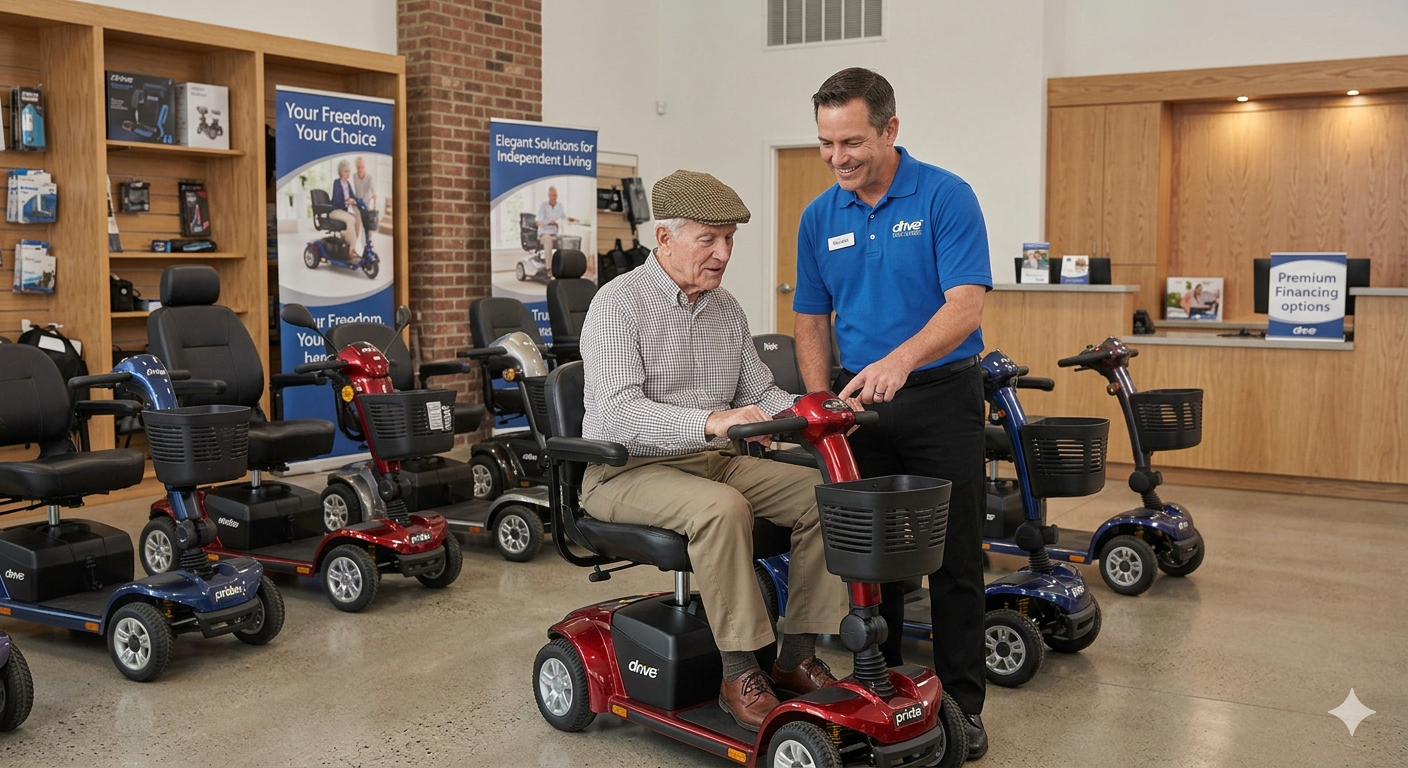
This is one of the most important decisions you'll make – and it directly affects what to ask a scooter dealer.
Local dealers offer test drives. You can sit on the scooter, adjust it, and test it on real surfaces. You can't do that with an online purchase.
Local dealers offer after-sales support. When something goes wrong, you have someone local to call. Online sellers may not offer the same level of support.
Local dealers offer service and repairs. Many dealers have in-house technicians and can service your scooter. Online sellers typically don't.
Online may offer lower prices. But you're trading price for support. If something goes wrong, you're often on your own.
If buying online, ask: What's the return policy? Who handles warranty claims? Where do I get it serviced? How long do parts take to arrive?
If buying locally, ask: Do you offer test drives? What's your service turnaround time? Do you provide loan scooters during repairs? Are you an NDIS registered provider?
Read the full guide: Should I buy a mobility scooter online or from a local dealer (and what should I ask either way)?
Your Australian Rights and Responsibilities
One more thing to keep in mind when deciding what to ask a scooter dealer: your rights as an Australian consumer.
Under the Australian Consumer Law, you're protected when buying products or services – whether in-store, online, at home, or over the phone. This includes mobility aids like scooters. Goods must be of acceptable quality, fit for purpose, and match their description. You're entitled to a replacement or refund for a major failure.
You don't need a driver's licence to use a mobility scooter in Australia. Queensland is the only state where you must register your scooter – but registration is free. The legal speed limit is 10km/h on level ground. You're considered a pedestrian under the Australian Road Rules and are generally not allowed on roads unless there's no practical footpath available.
Some dealers offer mobility scooter insurance, which typically costs $100–$200 per year. RAA (Royal Automotive Association) members can also access servicing discounts.
Your Next Steps – Ready to Shop With Confidence
So there you have it – everything you need to know about what to ask a scooter dealer. You've got the questions, you know the red flags, and you understand your rights. Now it's time to put that knowledge into action.
Remember, a good dealer isn't just someone who sells you a scooter – they're someone who helps you find the right scooter for your life. They'll listen to your needs, answer your questions honestly, and support you long after the sale is complete.
If you're ready to dive deeper into any of these topics, we've got you covered. Each of the guides linked above is designed to give you the confidence to make the best decision for your independence and quality of life.
Because here's the truth: the right mobility scooter isn't just a machine. It's freedom. It's connection. It's the ability to say "yes" to life again. And you deserve that.
So go ahead – walk into that showroom with your head held high. You know what to ask a scooter dealer now. And you're ready to find the scooter that's been waiting for you all along.

Frequently Asked Questions
Can I try the mobility scooter before I buy it?
Absolutely – and you absolutely should. Ask for a test drive and find out exactly what you're allowed to test: turning, slopes and ramps, braking, and comfort. A proper test drive is essential to finding the right scooter for your needs.
Do you offer an in-home demo or trial – and what does it cost?
Many Australian dealers offer in-home demonstrations, some for free. Confirm the trial length, any fees involved, and whether they'll test the scooter in your real environment.
What warranty do I get, and what isn't covered?
Get the warranty terms in writing and confirm exclusions. Common exclusions include batteries, tyres, misuse, and water damage. Some warranties also require you to register your product within a week of purchase.
Who handles repairs and warranty claims – your store or the manufacturer?
Clarify who you contact first and whether the dealer manages the process end-to-end. A dealer who handles everything saves you time and stress.
What's your typical turnaround time for servicing and repairs?
Ask for typical and worst-case timeframes, not just a vague "we're quick." Knowing what to expect helps you plan.
Do you provide a loan scooter if mine is being repaired?
If yes, ask about the conditions, costs, and whether delivery and pickup are included.
How long do spare parts usually take to arrive for this model?
This reveals whether the dealer has real support or only sells units. Quick parts availability means less downtime for you.
What routine maintenance will I need, and how often?
Ask what maintenance is required to keep the warranty valid. Most experts recommend servicing every 12 months.
What's the real-world range for someone my weight on my typical terrain?
Advertised range is based on ideal conditions. Compare that against realistic use – hills, rough paths, and heavier loads all reduce range.
How long does it take to charge from empty, and what battery type is it?
Confirm charge time, battery type (lead-acid vs lithium), and whether replacement batteries are stocked locally.
Can I adjust the seat, tiller, and armrests to fit my height and comfort?
A good dealer should help you dial in the fit, not just sell you the box. Adjust everything until it feels right for your body.
Are there different control options if I need them?
Ask what can be changed now versus what requires add-ons or modifications later – especially important if you have limited hand strength or dexterity.
Will this scooter handle kerbs, ramps, and uneven paths near my home?
Ask for exact limits: ground clearance, slope ability, and stability warnings. Don't assume – get the specifics.
What's the turning radius – and can I test it in a tight space?
Turning space is one of the most common "surprise problems" after purchase. Test it in a space similar to your home environment.
What is the scooter's total weight capacity – user plus bags?
Confirm safe load capacity, not just the rider's weight. Factor in shopping, medical supplies, and anything else you'll carry.
Does it disassemble or fold – and what is the heaviest piece to lift?
This is critical for carers and car transport. If the heaviest piece is too heavy, the scooter won't work for your lifestyle.
Will it fit in my car boot – and can you help me test the fit?
Ask for folded dimensions and ideally test the fit with your own vehicle. Some dealers will help you load and unload during the test drive.
What's included in the price versus optional extras?
Confirm batteries, charger, mirrors, baskets, cover, delivery, and setup. Know exactly what you're paying for.
What are the delivery options, setup, and handover and training like?
A proper handover reduces early accidents and frustration. Ask what's included and what you need to arrange yourself.
What is your return or exchange policy if it's uncomfortable or not suitable?
Get the policy in writing – especially for online or "special order" models. Know your options before you commit.
Stay mobile, stay confident!
Sign up for our monthly Mobility Scooter Newsletter to receive practical guides, expert advice, and inspiring stories that help you make the most of your scooter and download our free "Mobility Scooter Guide for Beginners."
Don't worry — your e-mail address is totally secure.
I promise to use it only to send you our newsletter, "Mobility Matters."
Recent Articles


-
Portable vs Travel vs Folding Mobility Scooters Buyer's Guide
Sep 15, 26 11:01 AM
 Confused by "portable," "travel," and "folding" mobility scooter listings? This guide explains what Australian sellers actually mean, with real weight comparisons and a decision framework.
 -
Mobility Scooter Types Overview: No More Confusion
Sep 15, 26 10:54 AM
 Mobility scooter types explained in plain English. Includes Australian footpath rules, airline battery limits, and the one mistake most first-time buyers make.
 -
How to Choose a Mobility Scooter in Australia Guide (2026)
Sep 15, 26 07:29 AM
 Choosing a mobility scooter in Australia? This guide covers registration requirements by state, public transport dimensions, NDIS funding steps, and practical testing advice.


Ready to Feel More Confident on Your Mobility Scooter?

My Ebook, The Ultimate Guide to Mobility Scooters, walks you through choosing the right scooter, using it safely, and keeping it in top condition — all explained in clear, friendly language.
Give yourself (or someone you love) the gift of independence.




