- Home
- Services and Shopping
- What to Ask a Scooter Dealer
- What Paperwork Should I Expect When Buying a Mobility Scooter in Australia?
What Paperwork Should I Expect When Buying a Mobility Scooter in Australia?
Picture this. You've finally found the perfect mobility scooter. You've handed over your hard-earned money, driven it home with a smile, and enjoyed weeks of newfound freedom.
Then, something goes wrong. A strange noise from the motor. The battery won't hold a charge. You call the dealer to make a warranty claim – and they ask for your proof of purchase.
You rummage through your drawers. Nothing. You check your email. No receipt. The dealer says, "I'm sorry, without proof of purchase, we can't process your claim."
Your heart sinks. Your scooter is broken, and you might have to pay for repairs out of pocket – hundreds or even thousands of dollars.
This scenario is more common than you'd think. But it doesn't have to be your story.
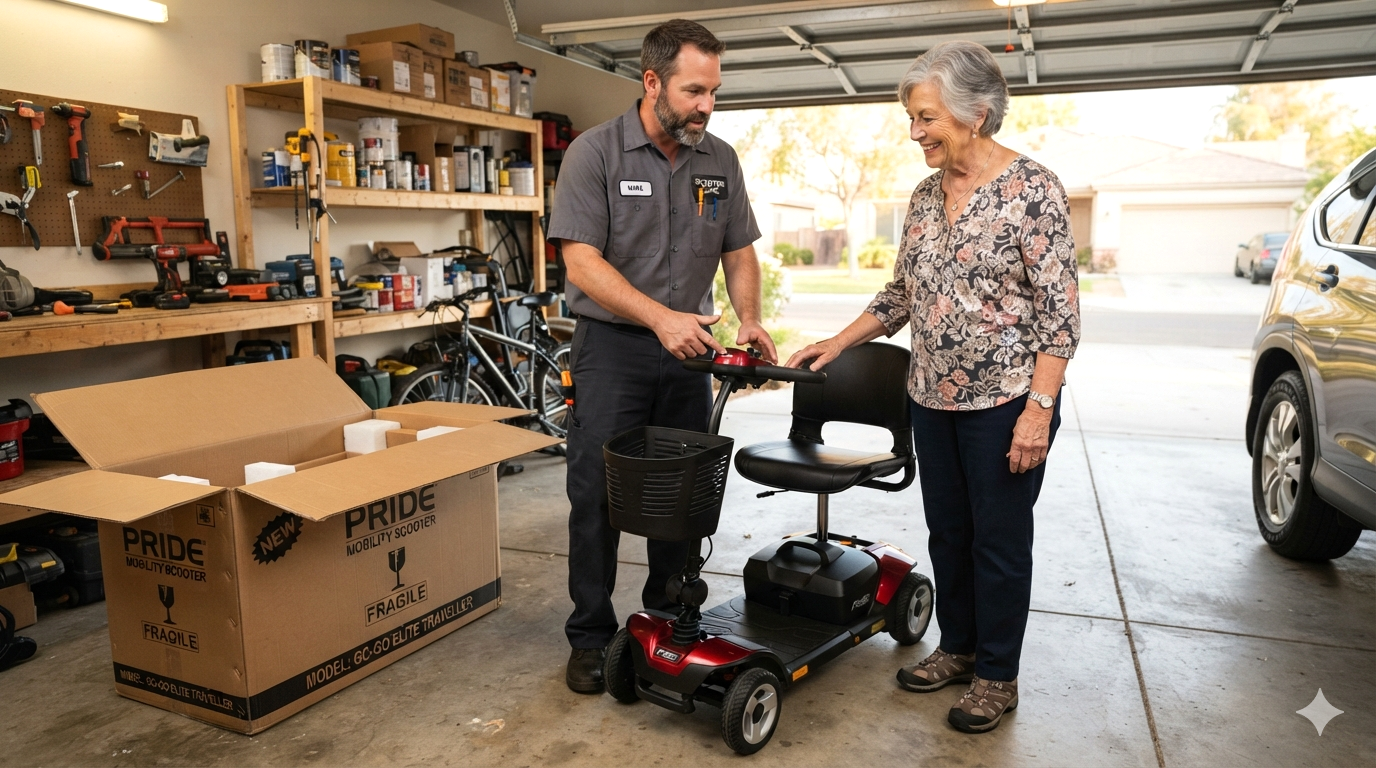
Knowing what paperwork to expect when buying a mobility scooter in Australia can mean the difference between a smooth warranty claim and a costly nightmare. The right documents protect your investment, prove your ownership, and ensure you can access the support you're entitled to under Australian law.
This guide will walk you through every document you should receive – from receipts and warranties to serial numbers, user manuals, and funding paperwork. By the end, you'll know exactly what to ask for, what to keep, and what to file away for safekeeping.
Let's get started – because your independence deserves proper protection.
Your Purchase Receipt – The Most Important Document You'll Receive
The single most important document you'll receive when buying a mobility scooter is your purchase receipt or invoice. Without it, warranty claims are often impossible.
Most manufacturers and dealers require proof of the original purchase to validate any warranty claim. If you can't verify the date of purchase, some dealers may assess your claim based on the product's manufacturing date or serial number – which could significantly shorten your effective warranty period.
What your receipt should include:
- The dealer's name, ABN, and contact details
- The date of purchase
- The make and model of the scooter
- The serial number (if available – some dealers include it on the receipt)
- The total price paid, including any extras
- A clear description of what was purchased
Why it matters: Your receipt proves when you bought the scooter – and that determines when your warranty clock starts ticking. Without it, you may struggle to make any claim, even for legitimate defects.
What to do: Keep your receipt in a safe place. Take a photo of it and store it in the cloud. If you lose the physical copy, a digital copy may still be accepted. Some dealers also send receipts by email – check your inbox and save it immediately.
Warranty Documents – What They Must Contain
When you're figuring out what paperwork to expect when buying a mobility scooter in Australia, warranty documents are right at the top of the list. And they're not all created equal.
In Australia, most new mobility scooters come with a warranty against defects. A typical warranty might offer:
- Two years on brand new mobility scooters
- Six months on batteries and tyres
- Three months on second-hand scooters
Some manufacturers offer more. Pride Mobility, for example, offers a lifetime limited warranty on structural frame components, a two-year limited warranty on certain parts and electronics, and a six-month warranty on the battery.
The Mandatory Text Your Warranty Must Include
Under the Australian Consumer Law (ACL), any warranty against defects must include specific prescribed text. This text cannot be excluded or hidden in fine print.
The required text is:
"Our goods come with guarantees that cannot be excluded under the Australian Consumer Law. You are entitled to a replacement or refund for a major failure and compensation for any other reasonably foreseeable loss or damage. You are also entitled to have the goods repaired or replaced if the goods fail to be of acceptable quality and the failure does not amount to a major failure."
Why this matters: If your warranty document doesn't include this text, it may not be compliant with Australian law. Some dealers have been caught failing to include it – and faced regulatory action as a result.
What Else Should Be in Your Warranty Document?
Regulation 90 of the Competition and Consumer Regulations 2010 requires that a warranty against defects must:
- Be in a document that is transparent
- Concisely state what the warrantor and the consumer must do to give effect to the warranty
- Prominently state the warrantor's name and contact details
- State the period or periods within which a defect must appear for the warranty to apply
What to do: Read your warranty document carefully. Check that it includes the mandatory prescribed text. Make sure you understand what's covered, what's excluded, and what you need to do to make a claim.
If anything is unclear, ask the dealer to explain it before you leave the showroom.
Serial Numbers – Your Scooter's Unique Fingerprint
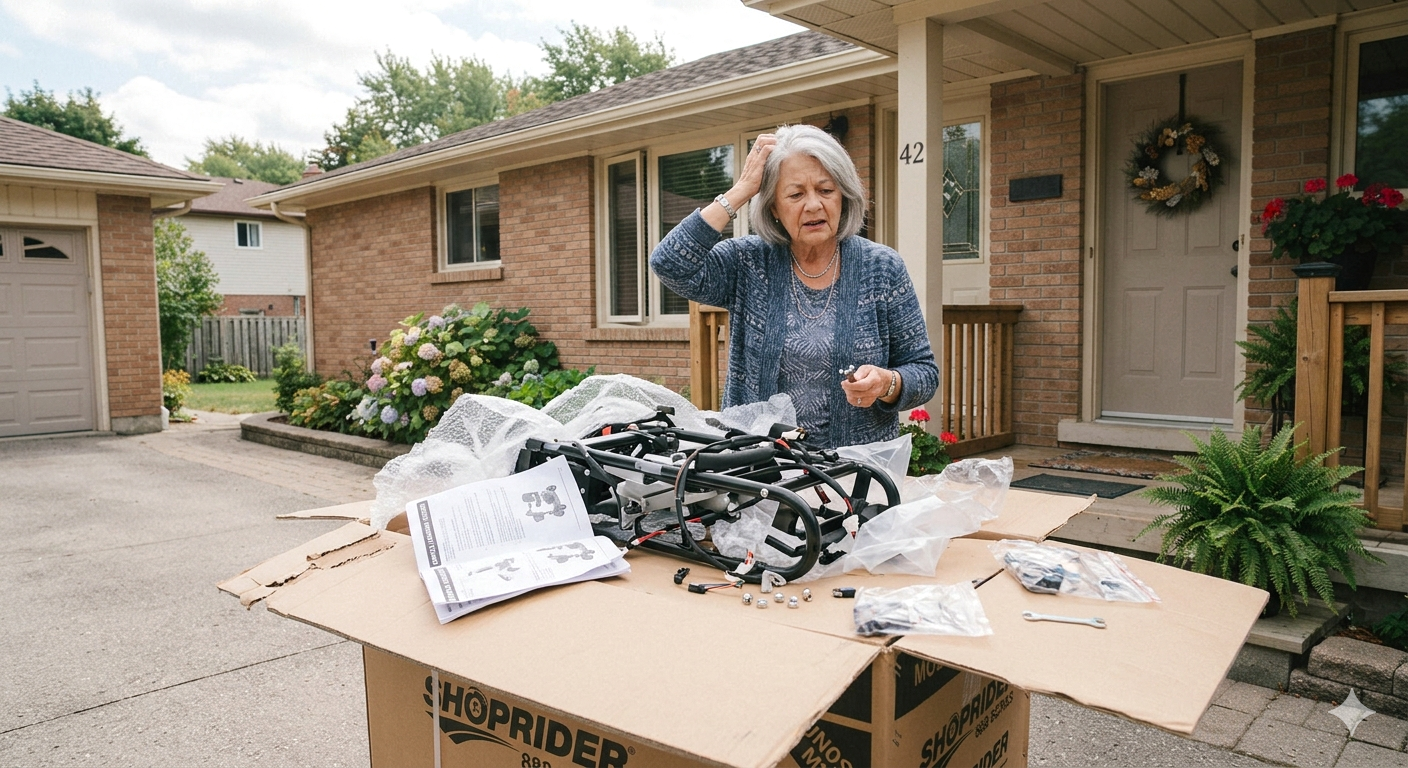
Every mobility scooter has a unique serial number – and it's one of the most important pieces of documentation you'll need.
What is a serial number? It's a unique identifier for your specific scooter. It's how manufacturers track production dates, warranty coverage, and service history. Pride Mobility products, for example, have a 14-character serial number that identifies your specific device.
Where to find it: The serial number and model number are usually printed on a white sticker attached to the frame or steering column. Check your owner's manual for the exact location – it varies by model.
Why it matters:
- Warranty registration: Manufacturers like Pride Mobility encourage you to register your new product within a week of purchase – and you'll need the serial number to do it.
- Warranty claims: If you need to make a claim, you'll often be asked for the serial number.
- Proof of ownership: The serial number helps prove the scooter is yours, especially if it's ever lost or stolen.
- Service history: Dealers and technicians use the serial number to track service records.
What to do: Write down your serial number in multiple places. Take a photo of the sticker. Store it with your receipt and warranty documents.
If you're buying second-hand, make sure the serial number on the scooter matches the documentation.
Owner's Manual – Your Operating Bible
Every new mobility scooter should come with an owner's manual – and it's more important than you might think.
What it should include:
- Operating instructions
- Safety information and warnings
- Battery charging and care instructions
- Maintenance schedules
- Troubleshooting guidance
- Warranty information
- Contact details for service and support
Why it matters: Your owner's manual isn't just a nice-to-have – it contains critical safety information. It tells you how to charge your battery correctly, how to maintain your scooter, and what to do if something goes wrong. Some warranties also require you to follow the maintenance schedule outlined in the manual – failing to do so could void your coverage.
What to do: Read your owner's manual thoroughly. Keep it somewhere accessible – not buried in a drawer. If you lose it, check if the manufacturer offers a digital version on their website.
NDIS and Home Care Package Paperwork
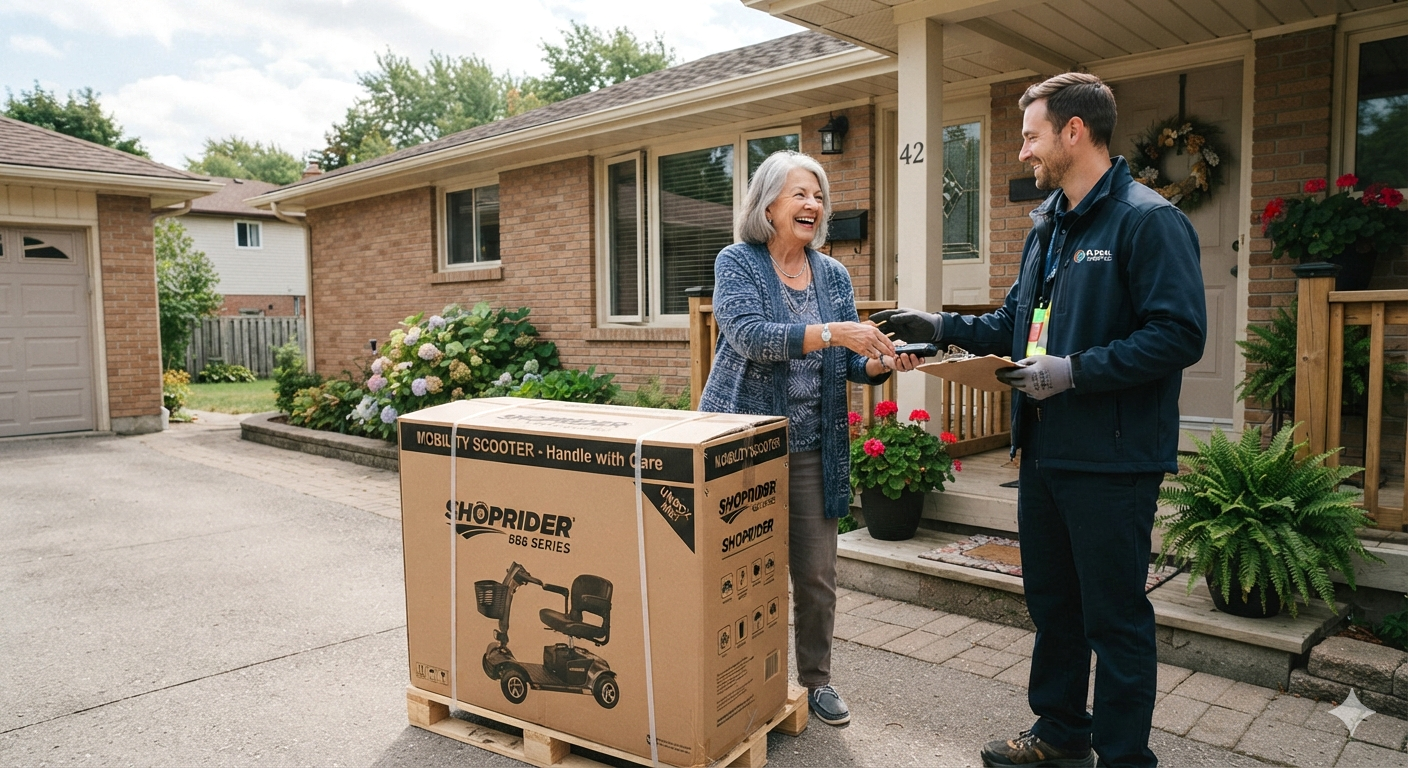
If you're using NDIS funding or a Home Care Package to purchase your mobility scooter, you'll need additional paperwork.
NDIS Documentation
Mobility scooters can be funded under the NDIS when they're considered reasonable and necessary to support a participant's mobility needs. Funding is not automatic – it depends on individual assessment and supporting evidence.
What you'll typically need:
- An assessment from an Occupational Therapist or Physiotherapist – most NDIS funding requests require a professional assessment and report
- A detailed OT report that includes a functional mobility assessment, safety considerations, environmental requirements, and a recommendation for a mobility scooter
- A supplier quote – a formal written quote from an NDIS-registered supplier
- A justification report explaining why this equipment is necessary and how it links to your NDIS goals
Cost tiers: Most mobility scooters fall into the mid-cost AT (Assistive Technology) category ($1,500 to $15,000), which typically requires an OT assessment and quote but doesn't require NDIA approval before purchase. For high-cost AT (over $15,000), you'll need a detailed report, risk assessment, and trial data.
Home Care Package Documentation
If you're using Home Care Package funds, the requirements are similar. You'll need:
- An in-home OT assessment
- Evidence that the scooter is safe, appropriate, and helps you meet your health and mobility goals
- A report that satisfies the requirements of My Aged Care providers and funding approvals
What to do: If you're using NDIS or Home Care Package funds, ask your dealer if they're an NDIS-registered provider. A registered provider can help with funding support, documentation, equipment trials, and can often invoice against your plan directly. Keep copies of all assessments, reports, and correspondence.
For a complete guide to NDIS funding for mobility scooters, explore our NDIS funding guide.
Queensland Registration Documents
Queensland is the only state that requires mobility scooters to be registered. If you live in Queensland and use your scooter on a footpath or road-related area, it must be registered – and registration is free.
What paperwork you'll need to register:
- A completed Motorised Mobility Device Registration Application (F5338)
- Evidence of identity – for example, your Queensland driver licence or pensioner concession card
- Evidence of the Queensland address where the device will be garaged
If you're buying second-hand in Queensland:
If the scooter changes hands, the registration must be transferred within 14 days. You'll need:
- A completed (by buyer and seller) Part A - vehicle registration transfer application (F3520)
- A completed Motorised Mobility Device Transfer of Registration Declaration (F4414)
- Evidence of the Queensland address where the device will be garaged
Fees: There are no registration, registration transfer, vehicle duty, number plate, or compulsory third-party insurance fees for motorised mobility devices in Queensland. Registered devices are automatically covered by compulsory third-party insurance at no additional cost.
What to do: If you live in Queensland, complete the registration paperwork as soon as you purchase your scooter. If you're buying second-hand, make sure the seller completes the transfer forms with you. Keep copies of all registration documents.
Second-Hand Scooter Paperwork
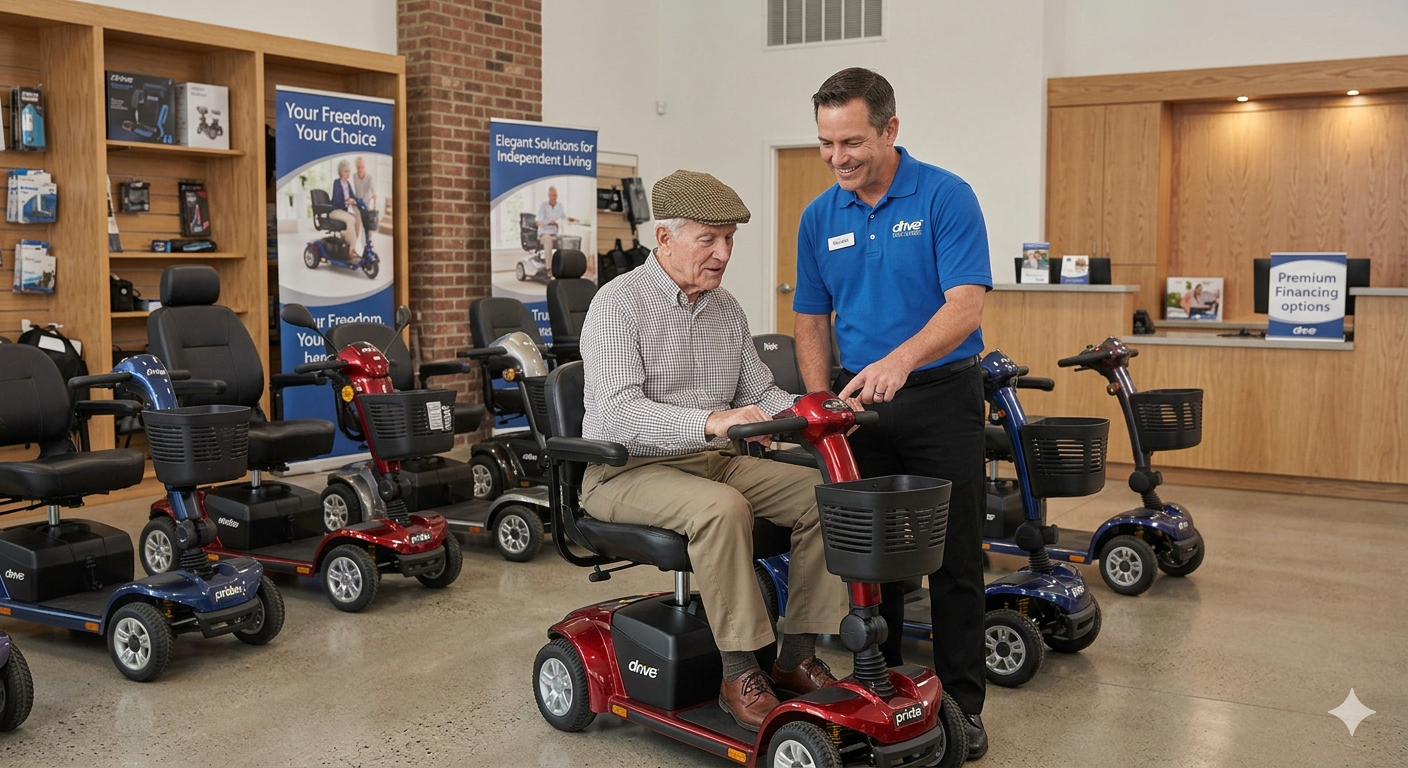
Buying a used mobility scooter comes with additional paperwork considerations. Knowing what paperwork to expect when buying a mobility scooter in Australia is especially important when you're not buying new.
What to ask for:
- Original purchase receipt or proof of purchase – this helps verify the scooter's age and warranty status
- Service history – records of any maintenance or repairs performed
- Warranty information – most warranties don't transfer to second-hand owners, but some may
- Serial number – verify it matches the scooter and any documentation
- Transfer of registration (Queensland only) – completed transfer forms (F3520 and F4414)
What to check:
- Ensure the serial number on the scooter matches any paperwork
- Ask when the battery was last replaced – batteries typically last around two years
- Ask if the scooter has been kept on charge when not in use – batteries need regular charging to stay healthy
What to do: Don't buy a used scooter without documentation. If the seller can't provide proof of purchase, service history, or clear ownership, that's a red flag.
Walk away.
For a complete guide to buying second-hand scooters, read our used scooter buying guide. (Coming Soon!)
Red Flags – When Paperwork Goes Wrong
Not all dealers provide proper documentation. Here are the red flags to watch for.
Red Flag #1: The warranty document excludes your legal rights.
Some dealers have tried to include clauses like: "Implied warranties, including those of merchantability, and fitness for a particular purpose are excluded." This is misleading – and regulators have taken action against dealers who do this.
Red Flag #2: The mandatory prescribed text is missing.
Under the ACL, warranty documents must include specific text about your consumer guarantees. If it's missing, the warranty document may not be compliant.
Red Flag #3: The dealer won't give you a receipt.
If a dealer refuses to provide a proper receipt, that's a massive red flag. Walk away.
Red Flag #4: The serial number is missing or hard to find.
If the serial number sticker has been removed or is illegible, you may struggle to register your warranty or make a claim.
Red Flag #5: The warranty is only "at the discretion of the manufacturer."
Some dealers include clauses that give the manufacturer sole discretion over claims. While manufacturers do assess claims individually, this shouldn't be used to unreasonably deny legitimate claims.
For a full list of dealer red flags, read our dealer warning signs guide.
Your Paperwork Checklist
Here's a quick checklist of every document you should receive:
|
Document |
What It Should Include |
Why It Matters |
|
Purchase Receipt |
Dealer details, date, model, serial number, price |
Proof of purchase for warranty claim |
|
Warranty Certificate |
Coverage period, exclusions, prescribed ACL text, warrantor details |
Protects your investment |
|
Serial Number |
Located on frame/sticker, noted on receipt |
Identifies your specific scooter |
|
Owner's Manual |
Operating instructions, safety info, maintenance schedule |
Safe operation and maintenance |
|
NDIS/Home Care Paperwork |
OT assessment, supplier quote, justification report |
Secures funding |
|
QLD Registration |
F5338 (new) or F3520/F4414 (transfer) |
Legal requirement in Queensland |
Your Next Steps
So there you have it – everything you need to know about what paperwork to expect when buying a mobility scooter in Australia. You know what documents to ask for, what they should contain, and how to protect yourself.
Remember: the right paperwork isn't just bureaucracy – it's your safety net. It proves your ownership, protects your warranty, and ensures you can access the support you're entitled to under Australian law.
A good dealer will provide all these documents without being asked. They'll explain your warranty clearly, help you register your product, and make sure you leave with everything you need.
If a dealer is evasive about paperwork, won't give you a proper receipt, or provides a warranty document that excludes your legal rights – that's a red flag.
You deserve better.
So go ahead – ask for the documents. Read them carefully. File them safely. And enjoy the freedom of your new mobility scooter, knowing you're fully protected.
Ready to dive deeper? Explore our full range of guides mobility scooter. Each article is designed to give you the confidence to make the best decision for your mobility and quality of life.
Stay mobile, stay confident!
Sign up for our monthly Mobility Scooter Newsletter to receive practical guides, expert advice, and inspiring stories that help you make the most of your scooter and download our free "Mobility Scooter Guide for Beginners."
Don't worry — your e-mail address is totally secure.
I promise to use it only to send you our newsletter, "Mobility Matters."
Recent Articles


-
Portable vs Travel vs Folding Mobility Scooters Buyer's Guide
Sep 15, 26 11:01 AM
 Confused by "portable," "travel," and "folding" mobility scooter listings? This guide explains what Australian sellers actually mean, with real weight comparisons and a decision framework.
 -
Mobility Scooter Types Overview: No More Confusion
Sep 15, 26 10:54 AM
 Mobility scooter types explained in plain English. Includes Australian footpath rules, airline battery limits, and the one mistake most first-time buyers make.
 -
How to Choose a Mobility Scooter in Australia Guide (2026)
Sep 15, 26 07:29 AM
 Choosing a mobility scooter in Australia? This guide covers registration requirements by state, public transport dimensions, NDIS funding steps, and practical testing advice.

Ready to Feel More Confident on Your Mobility Scooter?

My Ebook, The Ultimate Guide to Mobility Scooters, walks you through choosing the right scooter, using it safely, and keeping it in top condition — all explained in clear, friendly language.
Give yourself (or someone you love) the gift of independence.



