- Home
- Services and Shopping
- What to Ask a Scooter Dealer
- Mobility Scooter Stability and Terrain Safety
What Questions Should I Ask to Confirm a Mobility Scooter Is Stable and Safe for My Terrain?
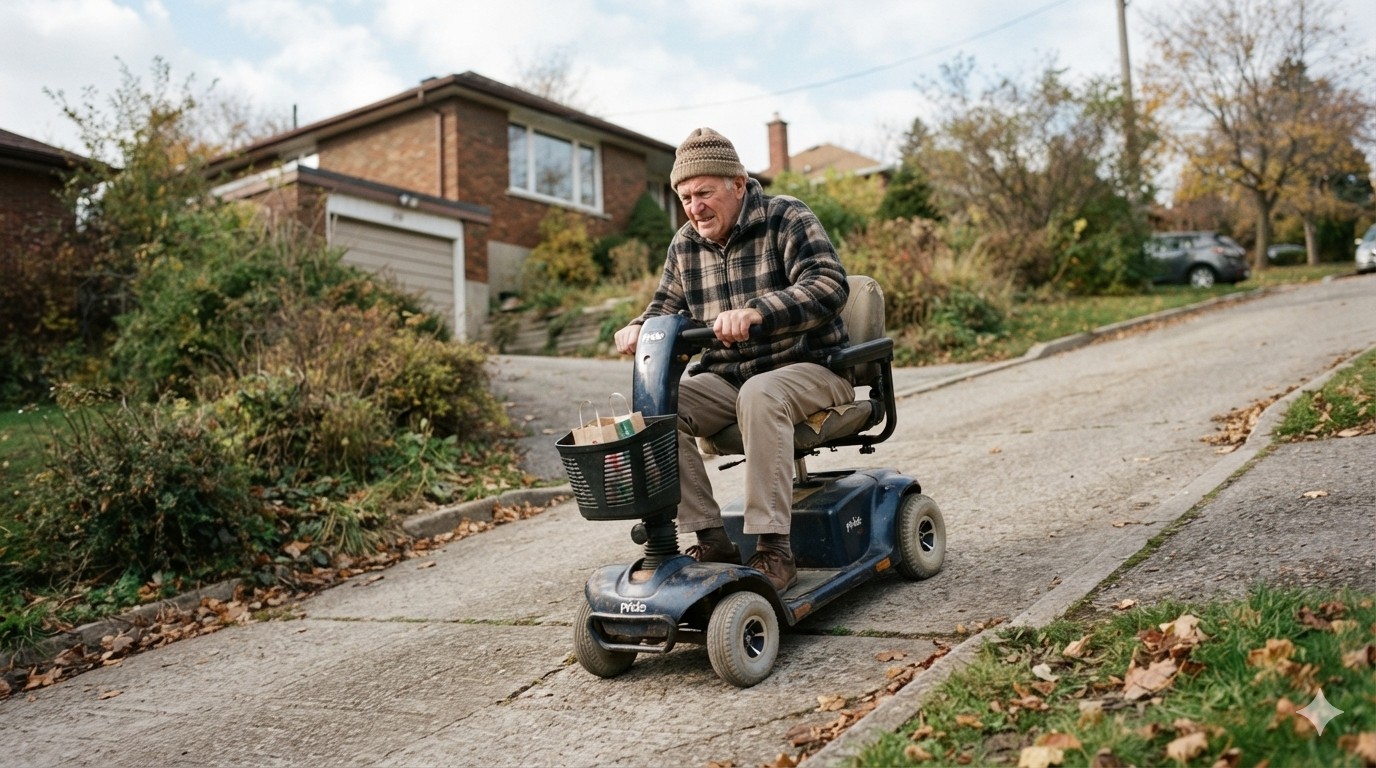
Picture this: You've found a mobility scooter that looks perfect. It's comfortable, affordable, and the dealer says it "handles all terrains with ease." You take it home, excited to explore your neighbourhood.
Then you try to go up the gentle slope at the end of your street. The scooter slows to a crawl. You feel it struggling. You're not sure if it'll make it to the top.
You try to cross a grassy patch at the park. The wheels spin. You're stuck.
You attempt to navigate a cracked footpath. Every bump jolts through your spine. You feel unstable, unsafe.
The dealer said it could handle "all terrains." But your terrain—the one outside your front door—tells a different story.
This scenario is painfully common. Many people buy mobility scooters based on showroom experiences that bear no resemblance to their real-world environment. And the consequences aren't just inconvenient—they can be dangerous.
Consumer Reports found that due to stability issues and unreliable braking systems on some models, they couldn't stop on a downhill section using the hand brake on a three-wheeled scooter. Research has shown that around two out of three scooters fail on ice- and snow-covered surfaces, and only half can climb a gentle slope covered in snow without losing traction. While Australia doesn't have Canadian winters, wet grass, gravel, and uneven footpaths pose similar challenges.
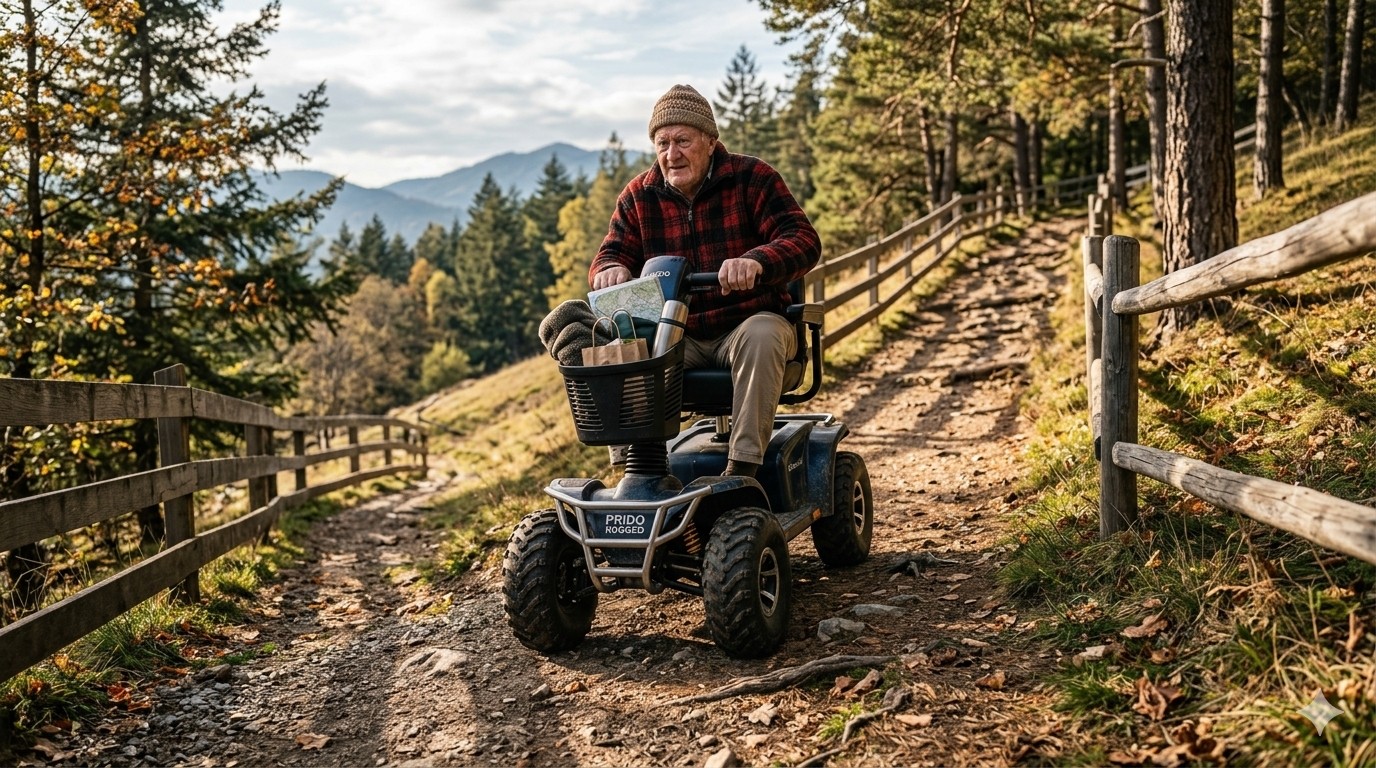
Knowing what questions to ask to confirm a mobility scooter is stable and safe for your terrain can mean the difference between a scooter that gathers dust in the garage and one that genuinely transforms your independence.
This guide will walk you through every question you need to ask—from wheel configuration and tyre types to ground clearance, suspension, and real-world testing. By the end, you'll know exactly what to ask and how to spot a dealer who's more interested in selling than in your safety.
Let's get started—because your safety is worth more than a smooth sales pitch.
Understanding Your Terrain First
Before you can ask the right questions about stability and safety, you need to understand your own terrain. This is the foundation of knowing what questions to ask to confirm a mobility scooter is stable and safe for your terrain.
Map Your Daily Routes
Ask yourself:
- What surfaces will I travel on most? (Pavement, grass, gravel, dirt paths?)
- Are there hills or slopes on my regular routes? How steep are they?
- Will I need to cross kerbs or navigate uneven transitions?
- Will I be driving in wet conditions? (Rain, dew on grass?)
- Will I be carrying shopping or other items that add weight?
Why it matters: Not all mobility scooters are made to travel on rough or uneven surfaces like dirt, grass, or loose gravel. A scooter that's perfect for indoor shopping centre use may be completely unsuitable for suburban footpaths with tree roots and cracks.
Consider Seasonal Changes
In Australia, seasonal changes affect terrain too. Rain makes grass and paths slippery. Summer heat can affect battery performance. Some dealers offer all-terrain models with features like larger tyres, higher ground clearance, and suspension systems that help provide a smoother ride over uneven terrain.
Ask yourself: Will I need to use this scooter in all seasons, or only in good weather?
Wheel Configuration – The Foundation of Stability
The single most important question about stability is about wheel configuration. When you're figuring out what questions to ask to confirm a mobility scooter is stable and safe for your terrain, start here.
Three Wheels vs Four Wheels
Ask your dealer: Is this a three-wheel or four-wheel model?
Why it matters: Three-wheel scooters offer a tighter turning radius for indoor use, while four-wheel models provide more stability for outdoor use on uneven surfaces. Three-wheelers can be easier to manoeuvre in tight spaces because they are narrower at the front, although some people say this makes them more likely to tip over.
What to look for:
- Four wheels – More stable on uneven surfaces and slopes, better for outdoor distance
- Three wheels – Better indoor manoeuvrability, but less stable on rough terrain
- Three wheels on hilly or uneven terrain – Consumer Reports flagged stability issues with three-wheeled models
Ask your dealer: Is this scooter designed primarily for indoor or outdoor use?
If your answer is "both," a four-wheel model with good outdoor capability is usually the safer choice.
Wheel Size
Ask your dealer: What size are the wheels?
Why it matters: Bigger wheels will help smooth out bumps, meaning you can travel over rough ground and climb kerbs more easily. The Merits Aurora 2 Hill Climber, for example, features large 12-inch wheels that increase ground clearance for better traction and stability.
What to look for:
- Large wheels (10-12 inches or more) – Better for outdoor use, uneven surfaces, and kerbs
- Medium wheels (8-10 inches) – A compromise between indoor and outdoor use
- Small wheels (under 8 inches) – Primarily for indoor use; may struggle on uneven ground
Tyre Types – Traction and Ride Quality
Tyres are your only contact with the ground. The type of tyre on your scooter dramatically affects stability, especially on uneven or slippery surfaces.
Ask your dealer: What types of tyres does this scooter have?
There are three main types of mobility scooter tyres:
Pneumatic (inflatable) tyres – Inflated with air like a bicycle tyre. They absorb bumps well, so they'll probably give you the smoothest ride. However, they need to be kept at the right pressure and can puncture.
Solid tyres – Don't puncture but aren't as good at absorbing bumps. They provide a firmer ride that transfers more vibration to the user.
Puncture-proof (microcellular) tyres – Give a smoother ride without the risk of puncturing. A good middle-ground option.
What to look for:
- Pneumatic – Best ride quality, the best traction, but requires maintenance
- Puncture-proof/microcellular – Good ride quality, no punctures
- Solid – No punctures, but rougher ride
- Worn or bald tyres – Dangerous; replace immediately
Ask your dealer: How do these tyres perform on wet surfaces or loose gravel?
Ask your dealer: Are these tyres suitable for the surfaces I'll be using?
Ground Clearance – Overcoming Obstacles
Ground clearance determines whether your scooter can safely navigate uneven paths, kerbs, and obstacles.
Ask your dealer: What is the ground clearance of this scooter?
Why it matters: More clearance may help over raised surfaces, but higher isn't automatically safer—it must be balanced with stability. Cracked pavement, gravel paths, or grassed areas all require higher clearance.
What to look for:
- High clearance (over 10cm) – Good for uneven outdoor terrain
- Medium clearance (6-10cm) – Suitable for most paved surfaces
- Low clearance (under 6cm) – May scrape on kerbs or uneven ground
The SupaScoota HD, for example, has a ground clearance of 6cm. The TopGun Mobility Everest offers high ground clearance of 20.5cm. The Merits Aurora 2 has a chassis height above ground of 130mm (13cm).
Ask your dealer: Will this scooter clear the kerbs and obstacles on my typical routes?
Climbing Ability – Hills and Slopes
If you live in a hilly area or have a steep driveway, this is one of the most important questions to ask to confirm a mobility scooter is stable and safe for your terrain.
Ask your dealer: What is the maximum slope this scooter can climb?
Why it matters: All scooters have a "maximum gradient," the steepest slope that they can safely be used on. Going up a slope takes more battery power, so in hilly areas you won't be able to travel as far between charges. Going downhill will make you accelerate faster, so braking ability is equally important.
What to look for:
- Climbing ability of 10° or more – Good for hilly areas
- Climbing ability of 6-10° – Suitable for gentle slopes
- Climbing ability under 6° – May struggle on even moderate hills
Examples from Australian models:
- Merits Aurora 2 Hill Climber: Climbing gradient of 12°
- SupaScoota HD: Slope grade ability of max 9°
- Sterling S800: Maximum kerb climbing capability of slopes up to 10°
Ask your dealer: Can I test this scooter on a slope similar to the one outside my home?
Ask your dealer: How does this scooter perform going downhill—does the braking system hold it safely?
Suspension – Ride Comfort and Stability
Suspension isn't just about comfort—it's about stability. A scooter with good suspension keeps all wheels in contact with the ground, even on uneven surfaces.
Ask your dealer: Does this scooter have suspension?
Why it matters: Suspension can reduce the impact of small surface changes, but it cannot remove every bump or hazard. Models designed for rugged conditions often have larger tires, higher ground clearance, and suspension systems that help provide a smoother ride over uneven terrain.
The Merits Aurora 2, for example, features an adjustable suspension system that enhances rider comfort and handling, providing a smoother experience across uneven ground. The SupaScoota HD features coil spring seat suspension for added comfort.
What to look for:
- Full suspension – Best for uneven outdoor terrain
- Seat suspension only – Some comfort benefit but less stability improvement
- No suspension – May be uncomfortable and unstable on rough ground
Ask your dealer: How does the suspension perform on cracked footpaths or uneven grass?
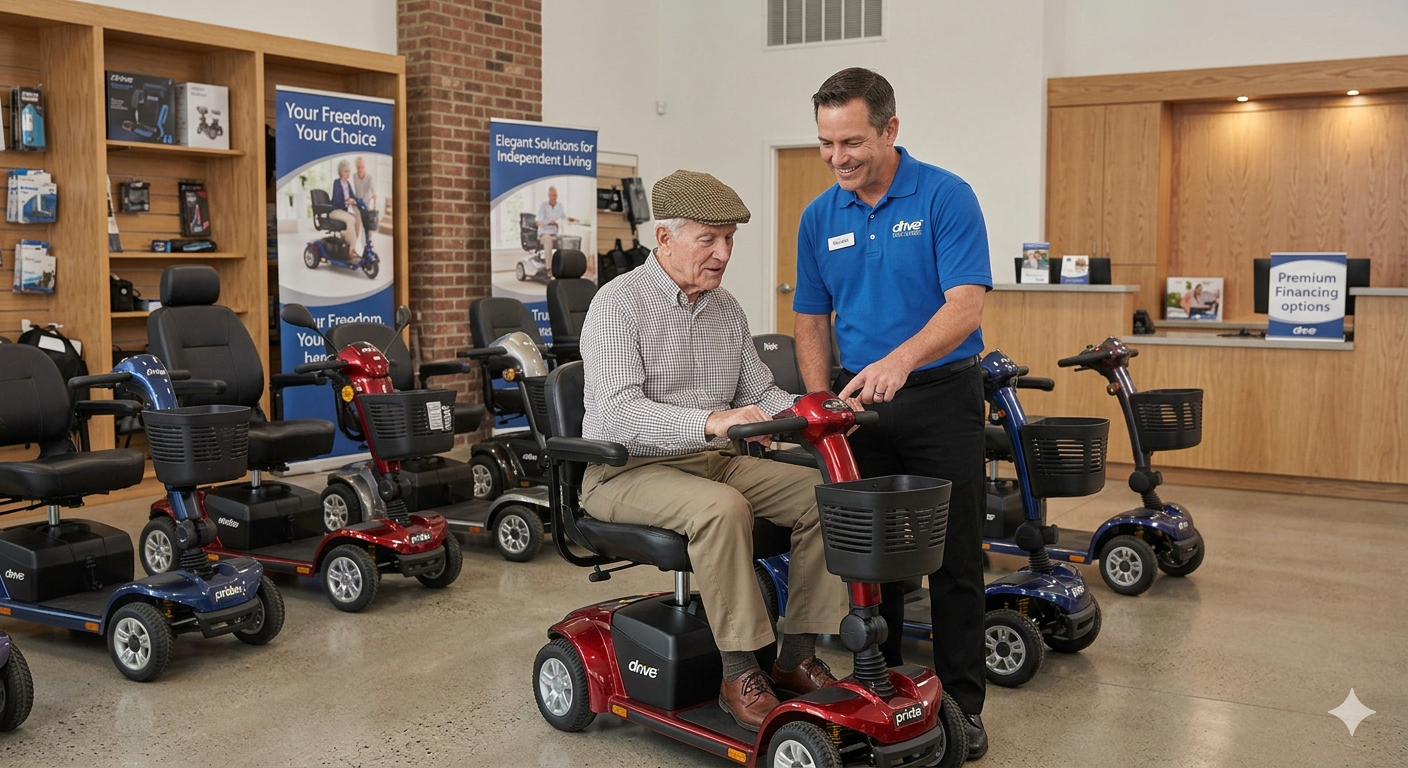
Safety Features – Anti-Tip and Braking
Safety features are your last line of defence. Knowing what questions to ask to confirm a mobility scooter is stable and safe for your terrain means asking about these features specifically.
Anti-Tip Wheels
Ask your dealer: Does this scooter have anti-tip wheels?
Why it matters: Anti-tip wheels are small wheels at the rear (and sometimes front) of the scooter that prevent it from tipping backward or sideways. They're not a guarantee against tipping, but they provide an important safety margin.
What to look for:
- Rear anti-tip wheels – Standard on most models, provides basic protection
- Front and rear anti-tip wheels – Extra protection on steep slopes
- No anti-tip wheels – Avoid for outdoor use
Braking System
Ask your dealer: What type of braking system does this scooter have?
Why it matters: Braking is critical for safety, especially on slopes. Consumer Reports found they "weren't able to stop on a downhill section using the hand brake" on one model. That's a serious safety concern.
What to look for:
- Electromagnetic brakes – Automatic braking when you release the throttle; reliable
- Separate emergency braking system – Extra safety on inclines
- Hand brake only – Relies on user strength
- Unreliable or slow braking – Dangerous; avoid
Ask your dealer: Can I test the brakes on a slope?
Speed Control
Ask your dealer: Does this scooter have adjustable speed control or automatic speed reduction when turning?
Why it matters: The Merits Aurora 2 features an automatic half-speed safety switch that reduces speed when turning, ensuring greater control and stability. This is especially important on uneven terrain.
Centre of Gravity
Ask your dealer: Where is the centre of gravity on this model?
Why it matters: A lower centre of gravity improves cornering stability. Ride height is important, since the lower the centre of gravity of the user, the greater the user's stability.
Weight Capacity – Don't Overload
Overloading your mobility device with too much weight can drain the battery and affect the stability of your scooter.
Ask your dealer: What is the total weight capacity of this scooter?
Why it matters: A scooter that's underrated for its user can be less stable and wear out faster. Factor in not just your weight but also any shopping, bags, or accessories you'll carry.
What to look for:
- Capacity comfortably exceeds your weight + cargo
- Capacity is close to your weight + cargo – May be less stable
- Capacity is less than your weight + cargo – Dangerous; avoid
Ask your dealer: What happens if I exceed the weight capacity?
Ask your dealer: Does the weight capacity change on slopes or uneven terrain?
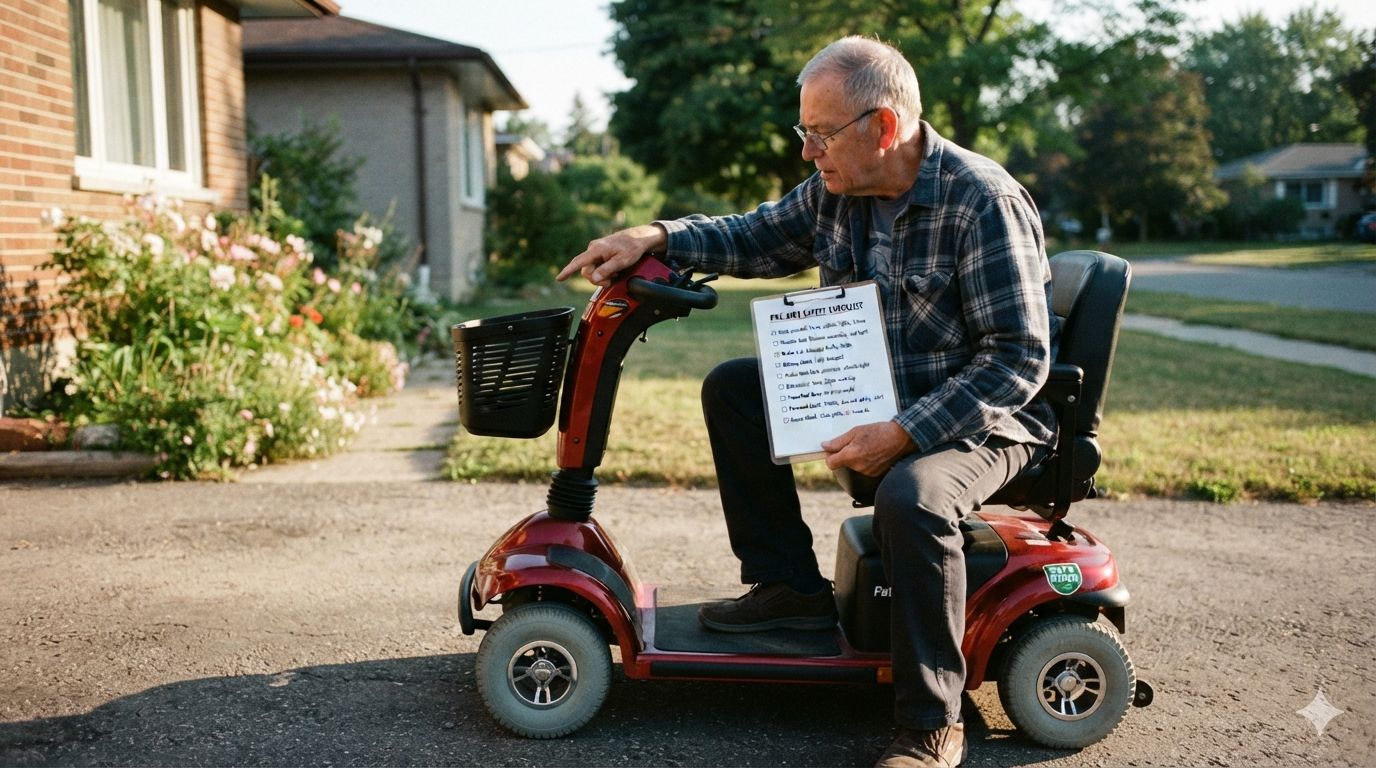
Real-World Testing – The Ultimate Confirmation
No amount of questions can replace actual testing. Knowing what questions to ask to confirm a mobility scooter is stable and safe for your terrain means asking for the opportunity to test it yourself.
Test Drive on Your Terrain
Ask your dealer: Can I test this scooter on surfaces similar to what I'll encounter daily?
Why it matters: A test drive on a smooth showroom floor tells you very little about how the scooter will perform in real life. Research has shown that scooters perform differently on different surfaces—what works on concrete may fail on uneven ground.
What to test:
- Your driveway and street – Test the slope you'll use daily
- Local footpaths – Test for cracks, tree roots, and uneven surfaces
- Grass or gravel – If you'll use these surfaces, test them
- Kerbs – Test with a dropped kerb if possible
In-Home Demonstration
Ask your dealer: Do you offer an in-home demonstration?
RAA offers free in-home demonstrations in metro Adelaide, allowing you to test a scooter in your actual environment. This is invaluable because it lets you test:
- Whether the scooter fits through your doorways
- Whether it can navigate your hallways
- Whether it can handle your driveway slope
- Whether it can be stored and charged where you need it
Ask your dealer: Can I bring an occupational therapist to the test drive or in-home demonstration?
Bring an Occupational Therapist
Ask your dealer: Can I bring an occupational therapist to the test drive or in-home demonstration?
If you're an NDIS participant or have complex mobility needs, an occupational therapist can assess the scooter's suitability for your specific body, home, and terrain.
Red Flags – When to Walk Away
Knowing what questions to ask to confirm a mobility scooter is stable and safe for your terrain also means knowing when something isn't right.
Red Flag #1: The dealer won't let you test on real surfaces. If they restrict you to smooth showroom floors only, they're hiding something.
Red Flag #2: The dealer can't give you specific numbers. If they can't tell you the ground clearance, climbing gradient, or weight capacity, they don't know the product.
Red Flag #3: The dealer dismisses safety concerns. If they say "don't worry about that" when you ask about stability on slopes, walk away.
Red Flag #4: The dealer guarantees "all terrains." No scooter handles all terrains equally. Even all-terrain models have limitations.
Red Flag #5: The dealer discourages bringing an occupational therapist. A good dealer welcomes professional assessment.
Your Stability and Safety Questions Checklist
Here's a quick checklist of everything to ask to confirm a mobility scooter is stable and safe for your terrain:
|
Question |
Why It Matters |
|
Is this a three-wheel or four-wheel model? |
Four wheels are more stable outdoors |
|
What size are the wheels? |
Larger wheels handle rough ground better |
|
What types of tyres does it have? |
Pneumatic gives best ride; solid never punctures |
|
What is the ground clearance? |
Determines if it can clear kerbs and obstacles |
|
What is the maximum slope it can climb? |
Essential for hilly areas |
|
Does it have anti-tip wheels? |
Prevents tipping backward or sideways |
|
What type of braking system does it have? |
Critical for safety on slopes |
|
Does it have automatic speed reduction when turning? |
Prevents tipping during turns |
|
What is the total weight capacity? |
Overloading affects stability |
|
Can I test it on my actual routes? |
Real-world testing is essential |
|
Do you offer an in-home demonstration? |
Tests fit in your actual environment |
|
Can I bring an occupational therapist? |
Professional assessment for complex needs |

Your Next Steps
So there you have it—everything you need to know about what questions to ask to confirm a mobility scooter is stable and safe for your terrain. You know what to ask about wheels, tyres, ground clearance, climbing ability, suspension, safety features, and weight capacity. And you know how to test it in your real environment.
Remember: a scooter that looks perfect in the showroom might be dangerous on your driveway. The only way to know is to ask the right questions and test it on your terrain.
A good dealer will welcome your questions. They'll give you specific numbers, encourage real-world testing, and help you find a scooter that's genuinely safe for your needs. If a dealer dismisses your concerns or rushes you through the process, that's a red flag.
Your safety is worth more than a quick sale. And now you know exactly how to protect it.
Ready to dive deeper? Explore our full range of guides on mobility scooter. Each article is designed to give you the confidence to make the best decision for your mobility and quality of life.
Frequently Asked Questions
What questions should I ask to confirm a mobility scooter is stable and safe for my terrain?
Ask about wheel configuration (3 vs 4 wheels), wheel size, tyre type, ground clearance, maximum slope climbing ability, suspension, anti-tip wheels, braking system, and weight capacity. Always ask for a test drive on surfaces similar to your daily routes.
Are three-wheel scooters safe outdoors?
Three-wheel scooters offer better manoeuvrability indoors but are less stable on uneven terrain and slopes. Consumer Reports flagged stability issues with some three-wheel models. If you plan to use your scooter outdoors, a four-wheel model is generally safer.
What ground clearance do I need for outdoor use?
Higher ground clearance helps navigate uneven paths, kerbs, and obstacles. Models designed for outdoor use often have 10cm or more ground clearance. If you'll be on paved surfaces only, 6-10cm may suffice.
Can mobility scooters handle hills?
Yes, but not all scooters are equal. Check the maximum slope gradient—models like the Merits Aurora 2 can climb 12° slopes, while others may struggle on much gentler inclines. RAA recommends premium models if you live in a hilly area.
How does weight affect stability?
Overloading your scooter can drain the battery and affect stability. Always check the weight capacity and ensure it comfortably exceeds your weight plus any cargo you'll carry.
Do I need an occupational therapist to assess my scooter?
If you have complex mobility needs or are an NDIS participant, an occupational therapist can assess whether a scooter is suitable for your body, home, and terrain. Many dealers welcome OT involvement.
Stay mobile, stay confident!
Sign up for our monthly Mobility Scooter Newsletter to receive practical guides, expert advice, and inspiring stories that help you make the most of your scooter and download our free "Mobility Scooter Guide for Beginners."
Don't worry — your e-mail address is totally secure.
I promise to use it only to send you our newsletter, "Mobility Matters."
Recent Articles


-
Portable vs Travel vs Folding Mobility Scooters Buyer's Guide
Sep 15, 26 11:01 AM
 Confused by "portable," "travel," and "folding" mobility scooter listings? This guide explains what Australian sellers actually mean, with real weight comparisons and a decision framework.
 -
Mobility Scooter Types Overview: No More Confusion
Sep 15, 26 10:54 AM
 Mobility scooter types explained in plain English. Includes Australian footpath rules, airline battery limits, and the one mistake most first-time buyers make.
 -
How to Choose a Mobility Scooter in Australia Guide (2026)
Sep 15, 26 07:29 AM
 Choosing a mobility scooter in Australia? This guide covers registration requirements by state, public transport dimensions, NDIS funding steps, and practical testing advice.

Ready to Feel More Confident on Your Mobility Scooter?

My Ebook, The Ultimate Guide to Mobility Scooters, walks you through choosing the right scooter, using it safely, and keeping it in top condition — all explained in clear, friendly language.
Give yourself (or someone you love) the gift of independence.

