- Home
- Services and Shopping
- What to Ask a Scooter Dealer
- Mobility Scooter Delivery, Setup and Training
What Questions Should I Ask About Delivery, Setup, and User Training for a New Mobility Scooter?
Picture this: After weeks of research, test drives, and careful decision-making, your new mobility scooter is finally on its way. You've cleared a space in the garage. You've told your friends you'll be visiting soon. You can almost feel the wind in your hair and the freedom of independent travel.
Then the delivery driver arrives. He wheels a large box into your home, hands you a clipboard to sign, and disappears before you can even ask, "How do I turn this thing on?"
You're left standing in your hallway, staring at a scooter in a box, with no idea how to assemble it, charge it, or safely operate it. The instruction manual is 80 pages long. Your excitement quickly turns to frustration – and maybe a little fear.
This scenario is more common than you might think. But it doesn't have to be your story.
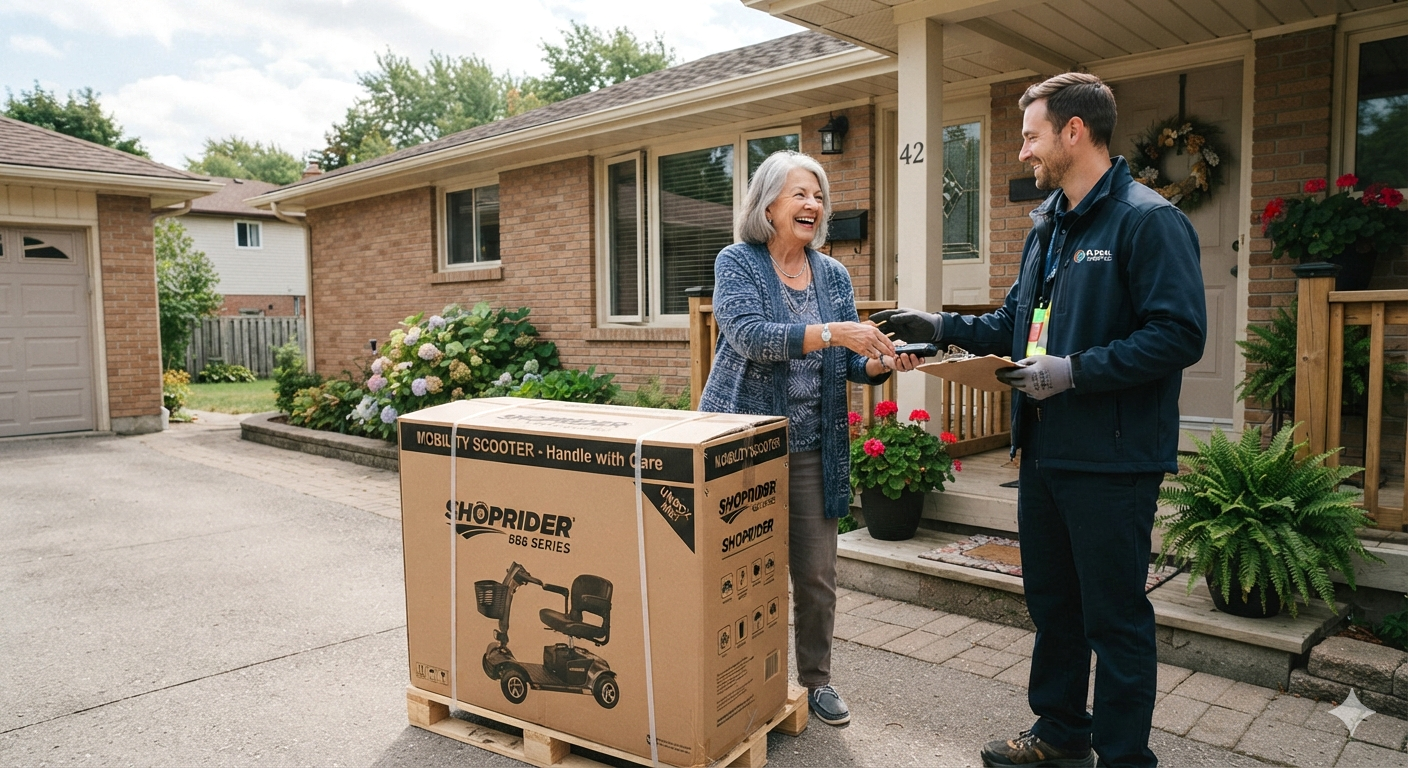
Knowing what questions to ask about delivery, setup, and user training for a new mobility scooter can transform that overwhelming moment into a confident, empowering experience. The right dealer doesn't just drop off your scooter and leave – they take the time to make sure you feel safe, confident, and fully supported from day one.
This guide will walk you through every question you need to ask – before delivery, during setup, and throughout your training session. By the end, you'll know exactly what to expect and how to ensure your new scooter becomes the freedom machine you've been dreaming of.
Let's get started – because your independence deserves more than a box on the doorstep.
Before Delivery Day – Questions to Ask in Advance
The best time to start thinking about what questions to ask about delivery, setup, and user training isn't when the delivery driver is at your door – it's before you even finalise your purchase.
What Are Your Delivery Options and Timelines?
Ask your dealer: What are my delivery options, and how long will it take?
Some dealers offer free delivery in major regional centres. Others may charge a fee, especially for remote locations. Understanding this upfront prevents surprises.
Also ask about timing. Will your scooter be delivered fully assembled, or will it arrive in pieces? Some dealers deliver the scooter fully assembled, securely packaged and ready to ride. Others may require some assembly on your part.
Ask: Will the scooter arrive fully assembled, or will I need to put it together?
Do You Offer an In-Home Demonstration or Trial?
Some dealers offer free, no-obligation home demonstrations where they bring several scooters to your home so you can test them in your actual environment. This is invaluable – it lets you see how the scooter handles your doorways, your driveway, and your local footpaths.
Ask: Do you offer a free in-home demonstration before I commit to purchase?
If you've already purchased, ask: Will the delivery include a demonstration of how the scooter works?
Who Will Be Delivering the Scooter?
Is it a courier service, or is it a trained mobility specialist? A courier might just drop the box and leave. A trained mobility specialist will set up the product and provide a demonstration to ensure you are confident using it.
Ask: Will the person delivering my scooter be trained to show me how to use it safely?
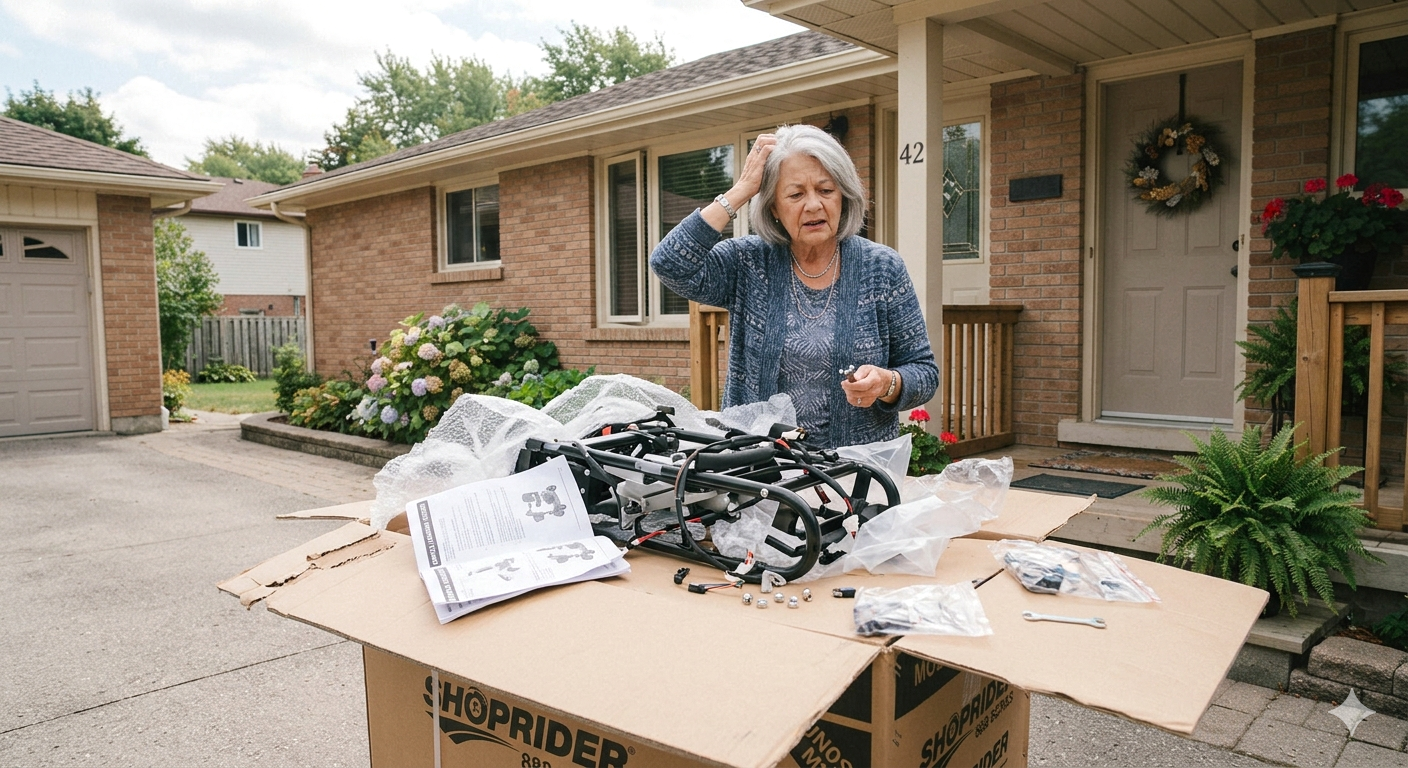
During Setup – Questions to Ask as the Scooter Is Unpacked
When the delivery day arrives, this is your moment to ensure everything is right. Don't let the delivery person rush through the process. A good dealer "doesn't just drop and go" – they take the time to get it right.
Is Everything Here?
Before the delivery person leaves, check that you've received everything you paid for.
Ask: Can we go through the packing list together to make sure everything is here?
Most scooters include several standard components: the scooter base or frame, seat and armrests, battery pack, battery charger, basket or storage accessory, owner's manual, and assembly tools if required.
If something is missing, contact your dealer immediately.
Can You Show Me How to Assemble or Disassemble It?
If your scooter is portable or folds for transport, this is critical. Many travel scooters arrive partially disassembled to keep the box size manageable.
Ask: Can you show me exactly how to assemble and disassemble this scooter?
A proper setup includes adjusting seating, armrests, footplates and controls so you're properly supported, balanced, and confident while operating your equipment.
Ask: Can you adjust the seat, tiller, and armrests to fit me properly before you leave?
How Do I Charge the Battery Correctly?
Incorrect battery use can cause frustration or even hazards. This is one of the most important things to learn during setup.
Ask: Can you please show me the correct way to charge the battery, how often to do it, and what to avoid?
A good dealer will show you:
- Where to plug in the charger
- How long a full charge takes
- Whether you should leave it plugged in when not in use
- Any safety precautions specific to your battery type
For detailed information on battery care and charging, explore our comprehensive battery guide.
User Training – The Most Important Part of the Handover
This is where the magic happens. Proper training transforms a confusing piece of equipment into a trusted companion. It's also where many dealers fall short – so knowing what questions to ask about delivery, setup, and user training is essential.
What Does Your Training Cover?
A comprehensive training session should go far beyond "this is the on switch." Some dealers provide comprehensive training that covers the basics of electric scooter controls, use, care, and full safety training.
Ask: What topics will you cover during the training session?
A proper training program should include:
- Set up, components and adjustments
- Driving on a flat surface
- Planning, preparation and precautions
- Emergency skills (falling and recovery, power breakdown)
Some dealers even take you out to navigate your local area – this is the gold standard because it builds confidence in the places you'll actually use your scooter.
Ask: Will you take me for a practice run around my local neighbourhood?
Can You Show Me the Controls?
Understanding speed controls, how to brake effectively, and navigating indoor and outdoor terrain are essential.
Ask: Can you walk me through every control and let me practice each one?
This should include:
- How to accelerate smoothly
- How to brake safely (including emergency braking)
- How to steer and turn
- How to use lights, indicators, and horn
- How to engage the parking brake
How Do I Stay Safe?
Safety isn't just about knowing the controls – it's about understanding your environment and your own limitations.
Ask: What safety considerations should I be aware of for my specific situation?
Key safety topics include:
- Moving safely in and out of the device
- Responding readily to verbal commands to stop
- Identifying obstacles in front of the device
- Understanding unsafe terrain (hills, loose or uneven surfaces, stairs)
Ask: Will this scooter handle the terrain near my home? Can you show me what to watch out for?
What About Seating and Positioning for Stability?
Comfort matters – but so does stability. An incorrectly adjusted seat can affect your balance and increase the risk of accidents.
Ask: Is my seating position correct for stability and comfort? Can we adjust anything else?
Do You Offer Follow-Up Training or Support?
Sometimes it takes a few days to feel fully confident. Some dealers offer follow-up support or even remote training via video consultation.
Ask: What if I have questions after you leave? Can I call you? Do you offer a follow-up visit?
After the Dealer Leaves – Questions to Ask Yourself
Once the delivery and training are complete, there are still some important checks to make.
Do I Feel Confident?
A good dealer won't leave until you feel safe and confident. If you're still unsure about anything, speak up.
Ask yourself: Do I feel confident using this scooter on my own? If not, what do I need more help with?
Do I Have All the Documentation?
Make sure you have:
- Your purchase receipt or invoice
- The warranty certificate or terms
- The owner's manual
- Any registration documents (required in Queensland)
- Contact details for service and support
Ask: Do I have all the paperwork I need, including warranty and registration information?
Do I Know How to Get Help?
Ask yourself: Who do I call if something goes wrong? Do I have their number saved?
For a complete guide to paperwork and warranties, read: What paperwork should I expect when buying a mobility scooter in Australia? (Coming Soon!)
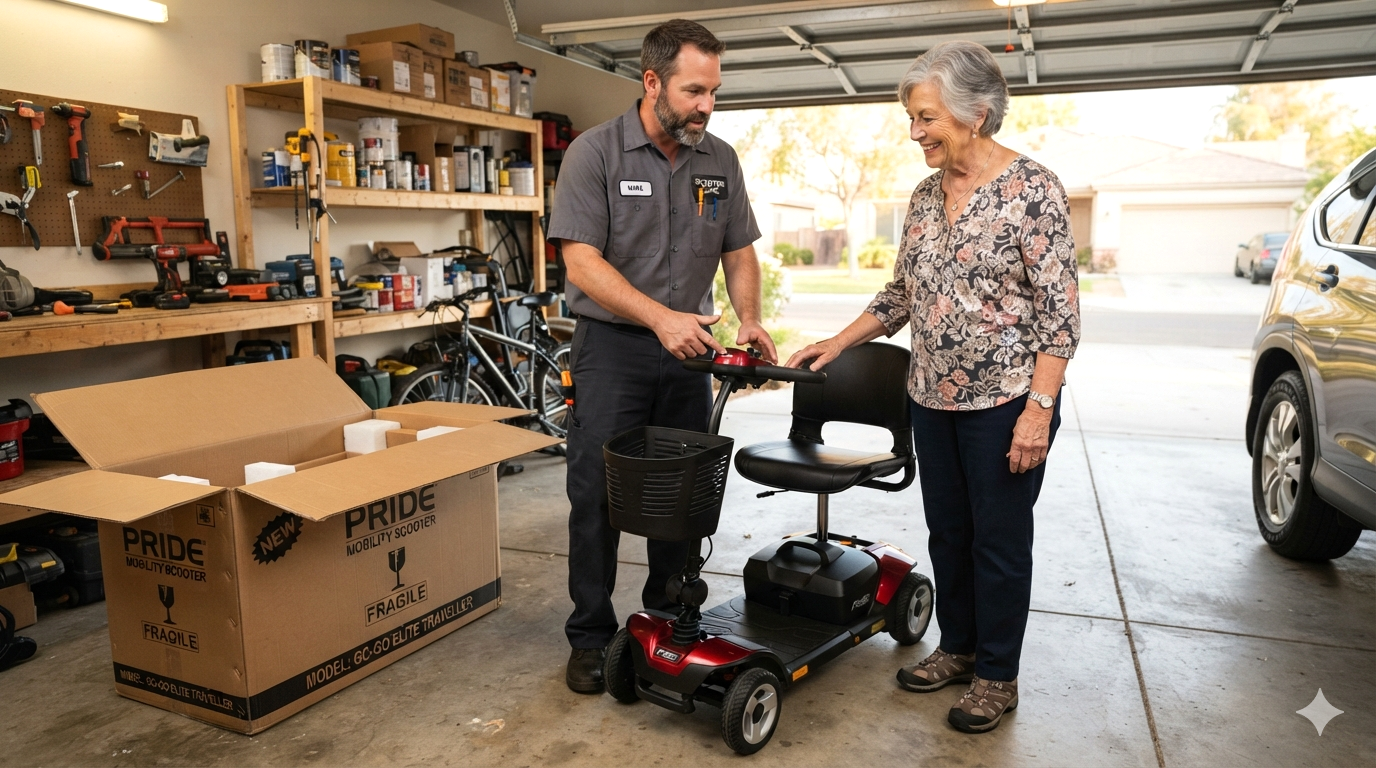
Red Flags – When Delivery and Training Go Wrong
Knowing what questions to ask about delivery, setup, and user training also means knowing when something isn't right.
Red Flag #1: The Dealer "Drops and Goes"
If the delivery person simply hands over the scooter and leaves without any training or demonstration, that's a problem.
A reputable dealer takes the time to make sure you know exactly how to use it safely and comfortably.
Red Flag #2: They Rush Through the Training
If the training session feels rushed or incomplete, speak up. A good dealer will answer every question – "there are no silly questions, just better outcomes when you're informed".
Red Flag #3: They Can't Answer Your Questions
If the delivery person doesn't know how to adjust the seat, charge the battery, or explain safety features, they're not properly trained. A "trained mobility specialist" should know the product inside out.
Red Flag #4: No Handover Checklist
Some dealers follow a clear delivery and handover checklist to ensure every customer receives the same high-quality, safety-focused service. If there's no structure to the handover, that's a concern.
For a full list of dealer red flags, read our guide: What are the red flags of a mobility scooter dealer (support and servicing problems)?
Your Delivery, Setup and Training Checklist
Here's a quick checklist to use on delivery day:
|
Stage |
Question to Ask |
Why It Matters |
|
Before Delivery |
What are your delivery options and timelines? |
Avoids surprises |
|
Before Delivery |
Will the scooter arrive fully assembled? |
Know what to expect |
|
Before Delivery |
Who will be delivering it? |
Trained specialist vs courier |
|
During Setup |
Is everything here? |
Check against packing list |
|
During Setup |
Can you show me how to assemble/disassemble it? |
Essential for transport |
|
During Setup |
Can you adjust the seat and controls to fit me? |
Safety and comfort |
|
During Setup |
How do I charge the battery correctly? |
Prevents damage and hazards |
|
Training |
What does your training cover? |
Know what to expect |
|
Training |
Can you show me every control? |
Builds confidence |
|
Training |
What safety considerations should I be aware of? |
Prevents accidents |
|
Training |
Will you take me for a practice run? |
Real-world confidence |
|
After |
Do I feel confident using it alone? |
Your readiness matters |
|
After |
Do I have all the documentation? |
Warranty and support? |
|
After |
Who do I call if something goes wrong? |
Peace of mind |
Your Next Steps
So there you have it – everything you need to know about what questions to ask about delivery, setup, and user training for a new mobility scooter.
Remember: a good dealer doesn't just sell you a scooter – they partner with you to ensure you can use it safely and confidently. They take the time to set it up properly, adjust it to your body, train you on every control, and answer every question. When they leave, your scooter won't just be ready to use – you will be ready to use it with confidence.
If your dealer rushes through delivery, skips the training, or leaves you feeling unsure, that's a red flag. You deserve better. You deserve to feel excited about your new scooter, not anxious.
So go ahead – ask the questions. Take your time. Practice until you feel confident. And then enjoy the freedom that your new mobility scooter brings.
Because here's the truth: the right scooter, delivered and set up properly, with the right training, isn't just a machine. It's freedom. It's connection. It's the ability to say "yes" to life again. And you deserve every bit of it.
Ready to dive deeper? Explore our full range of guides on mobility scooter. Each article is designed to give you the confidence to make the best decision for your mobility and quality of life.
Frequently Asked Questions
What questions should I ask about delivery, setup, and user training for a new mobility scooter?
Ask about delivery timelines, whether the scooter arrives assembled, who delivers it, what the setup process involves, what training is provided, how to charge the battery, and how to get support after the delivery.
Will the dealer show me how to use my scooter?
Many reputable dealers provide comprehensive training at the time of delivery. This should include controls, safety, battery charging, and a practice run in your local area. Always confirm this before purchase.
Do I get free delivery and training?
Some Australian dealers offer free delivery in major regional centres and free, hands-on training as part of the purchase. However, this varies by dealer – always ask upfront.
What if I don't feel confident after the training?
A good dealer will answer every question and take the time to make sure you feel safe and confident. If you're still unsure, ask for a follow-up visit or additional training.
Do I need to register my mobility scooter?
Queensland is the only state that requires a form of free registration. In other states, no registration is required, but you're considered a pedestrian under the road rules.
Can an occupational therapist help with training?
Yes. An occupational therapist can assess which device best suits your needs and teach you how to use it safely. For NDIS participants, an OT handover assessment is often required.
Stay mobile, stay confident!
Sign up for our monthly Mobility Scooter Newsletter to receive practical guides, expert advice, and inspiring stories that help you make the most of your scooter and download our free "Mobility Scooter Guide for Beginners."
Don't worry — your e-mail address is totally secure.
I promise to use it only to send you our newsletter, "Mobility Matters."
Recent Articles


-
Portable vs Travel vs Folding Mobility Scooters Buyer's Guide
Sep 15, 26 11:01 AM
 Confused by "portable," "travel," and "folding" mobility scooter listings? This guide explains what Australian sellers actually mean, with real weight comparisons and a decision framework.
 -
Mobility Scooter Types Overview: No More Confusion
Sep 15, 26 10:54 AM
 Mobility scooter types explained in plain English. Includes Australian footpath rules, airline battery limits, and the one mistake most first-time buyers make.
 -
How to Choose a Mobility Scooter in Australia Guide (2026)
Sep 15, 26 07:29 AM
 Choosing a mobility scooter in Australia? This guide covers registration requirements by state, public transport dimensions, NDIS funding steps, and practical testing advice.

Ready to Feel More Confident on Your Mobility Scooter?

My Ebook, The Ultimate Guide to Mobility Scooters, walks you through choosing the right scooter, using it safely, and keeping it in top condition — all explained in clear, friendly language.
Give yourself (or someone you love) the gift of independence.




