- Home
- Mobility Scooter Guide for Caregivers
The Mobility Scooter Guide for Caregivers: Your Roadmap to Confidence, Clarity, and Peace of Mind
Welcome to your Mobility Scooter Guide for Caregivers—a warm, practical, and honest companion designed specifically for the person in your shoes. Whether you're helping an aging parent, a spouse, or a loved one navigate the world of mobility scooters, you're in exactly the right place.
We know this decision can feel overwhelming. We know you're juggling a dozen concerns at once. And we know you desperately want to get this right—not just for your loved one's sake, but for your own peace of mind.
Stick with us, because by the end of this guide, you'll have a clear roadmap to choose a scooter that truly fits your family's life—and you'll feel a lot lighter in the process.

Picture this: It's a Thursday morning. You've got a doctor's appointment for your parent at 10 a.m., a grocery run to make, and a phone call with your sibling about the weekend visit.
Your parent mentions they'd love to join you for the shopping trip—but you can already feel the familiar knot in your stomach. The walk from the car park to the store entrance alone will leave them exhausted. You'll have to rush through the aisles before their energy gives out. You'll be watching their every step instead of enjoying the outing together.
What if there was a way to turn that knot into calm?
Why This Mobility Scooter Guide for Caregivers Exists
Let's be honest: most mobility scooter guides are written for the user.
But you're not the one who'll be sitting in the seat—you're the one doing the research, the comparing, the worrying, and quite possibly the lifting, storing, and assembling too. Your needs matter just as much.
As a caregiver, you carry a quiet pressure that rarely shows up as a single breaking point—it accumulates. What if your parent gets tired halfway through the outing? What if the clinic visit runs longer than expected? What if you're unreachable when plans change?
These aren't just hypotheticals—they're the daily realities that shape your decisions. And that's exactly why this Mobility Scooter Guide for Caregivers is different.
We're speaking to you—your stress, your schedule, your shoulders that do the heavy lifting, literally and figuratively.
The Emotional Weight Caregivers Carry (And Why You're Not Alone)
Here's something most guides don't talk about: the guilt. The guilt of not being there every time. The guilt of suggesting a mobility aid when your loved one might resist. The guilt of feeling relieved when they finally agree.
One caregiver shared that their parent kept a scooter in the garage for four or five years because they were too embarrassed to use it. Another admitted they "parked it down the road and walked with a stick" to avoid being seen. If any of this sounds familiar, please hear this: you are not alone, and you're doing something incredibly loving.
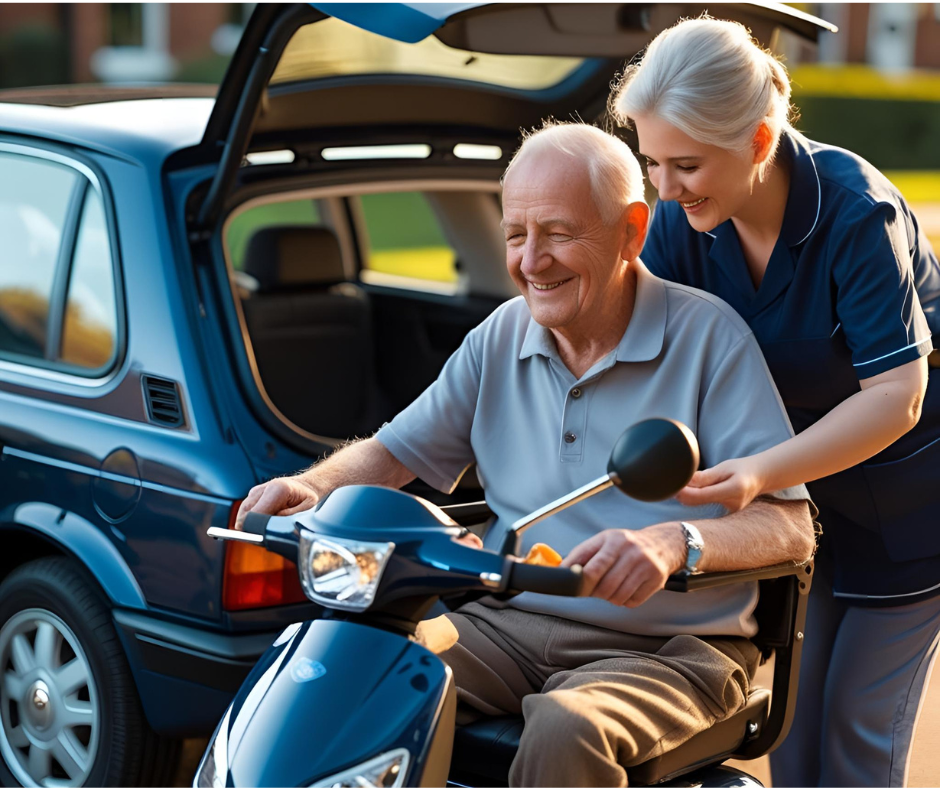
Reduced mobility in a parent or loved one often leads to loss of confidence, avoiding social situations, relying heavily on family, and feeling like independence is slipping away. A mobility scooter isn't just equipment—it can be a turning point. And as a caregiver, your role isn't just to provide support—it's to help create the conditions where independence can return.
But here's the thing: choosing the wrong scooter can create frustration, risk, or extra work for caregivers. That's why getting this decision right matters so much—for both of you.
What This Mobility Scooter Guide for Caregivers Covers
We're going to walk through everything you need to know, step by step. No jargon. No sales pitch. Just clear, honest advice from someone who genuinely wants to help. Here's what we'll cover:
- Understanding your loved one's real needs (not just what they say)
- The types of scooters and which one fits your situation
- The features that truly matter for safety and confidence
- Portability and storage (because you might be the one lifting it)
- The emotional side—how to have the conversation and build confidence
- Common mistakes that caregivers make (and how to avoid them)
- Your next steps—from research to purchase, to first ride
Doesn't that sound like exactly what you've been looking for?
Step 1: Start With Your Loved One's Abilities—Not Their Age
The most common mistake caregivers make is focusing on features before understanding the person who'll actually use the scooter. Before you look at a single model, ask yourself these questions:
Physical capabilities:
- Can your loved one sit upright without support?
- Do they have sufficient grip strength to operate hand controls (a tiller)?
- Can they step onto a flat foot deck with minimal assistance?
- Do they have adequate hearing, vision, concentration, memory, reaction time, and awareness of safety in crowded areas?
Cognitive considerations:
- Can they plan movements and judge speed?
- Do they have the attention span for short trips?
- Important: Anyone considering a scooter for a person with early-stage dementia should involve their GP and an occupational therapist before purchase.
Daily habits:
- Where will they use it most—indoors, outdoors, or both?
- How far do they typically need to travel?
- Will they use it daily or occasionally?
Answering these first will save you hours of confusion. And that means less overwhelm for you.
Doesn't that feel like a relief already?
Step 2: Understand the Types of Mobility Scooters
Mobility scooters generally fall into three categories
1. Travel / Portable Scooters
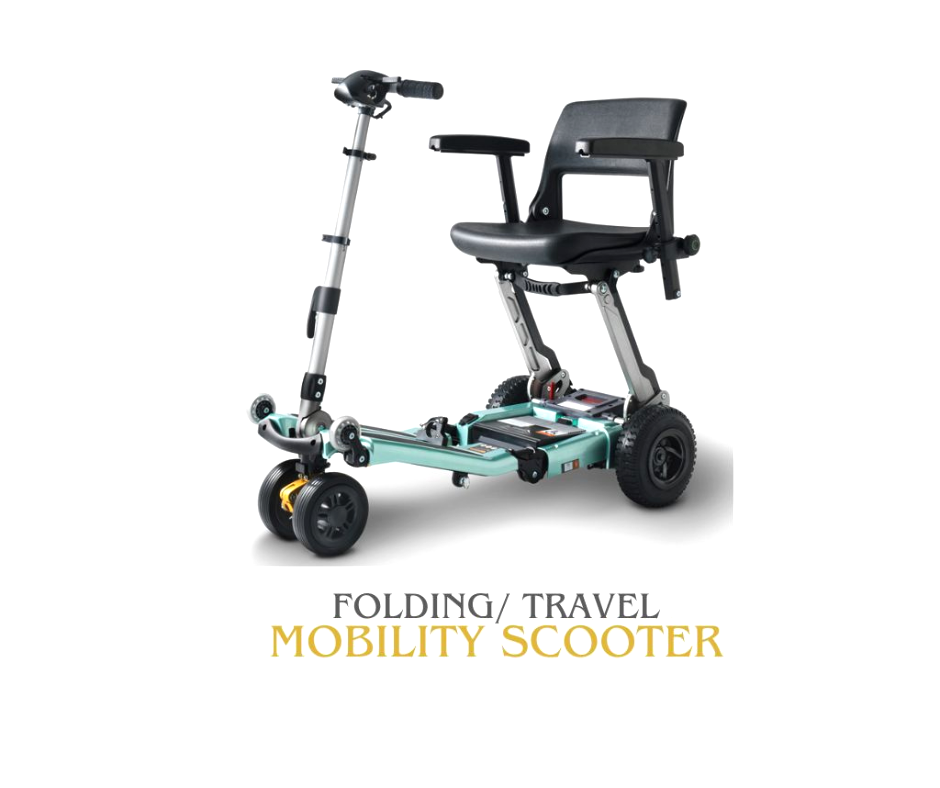
Lightweight (often 18-36 kilograms), folding or disassemble for car trunks or airplane transport, compact for tight spaces. Ideal for vacations, shopping, and short community trips.
Best for: Active users who travel frequently or have limited storage space.
Consider for your loved one if: You'll be transporting the scooter regularly and weight is a concern.
2. Three-Wheel Scooters
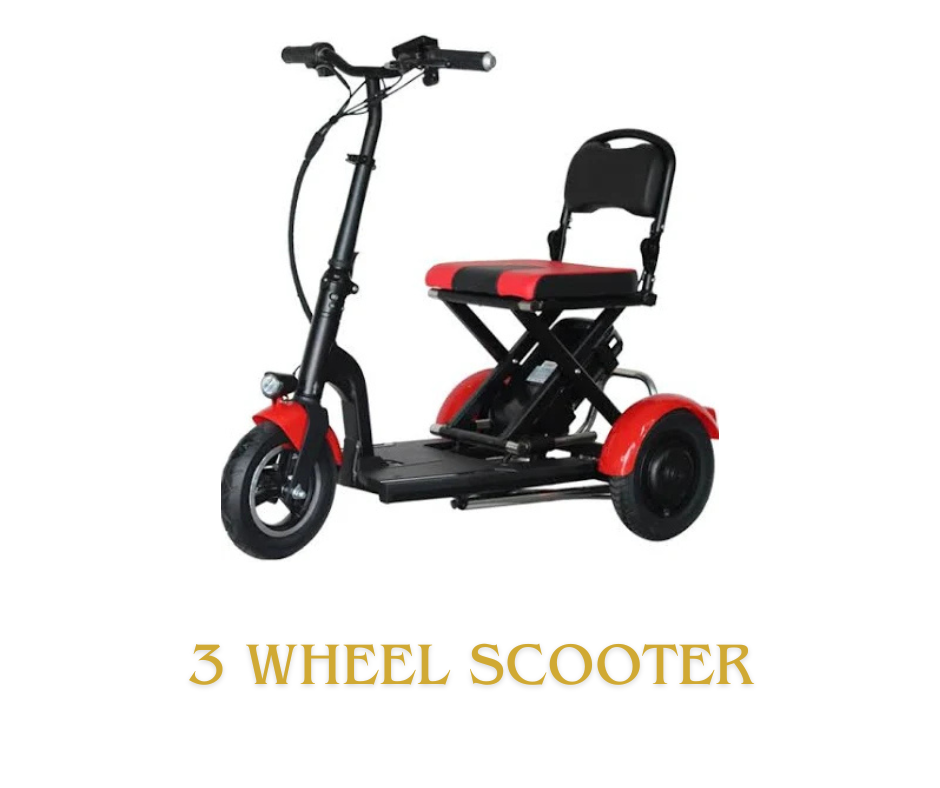
Better turning radius than four-wheel models, suitable for indoor and moderate outdoor use. More maneuverable in tight spaces like stores and narrow hallways.
Best for: Indoor use and navigating crowded spaces.
Consider for your loved one if: They'll primarily use it indoors or in tight spaces—and they have good balance.
3. Four-Wheel Scooters
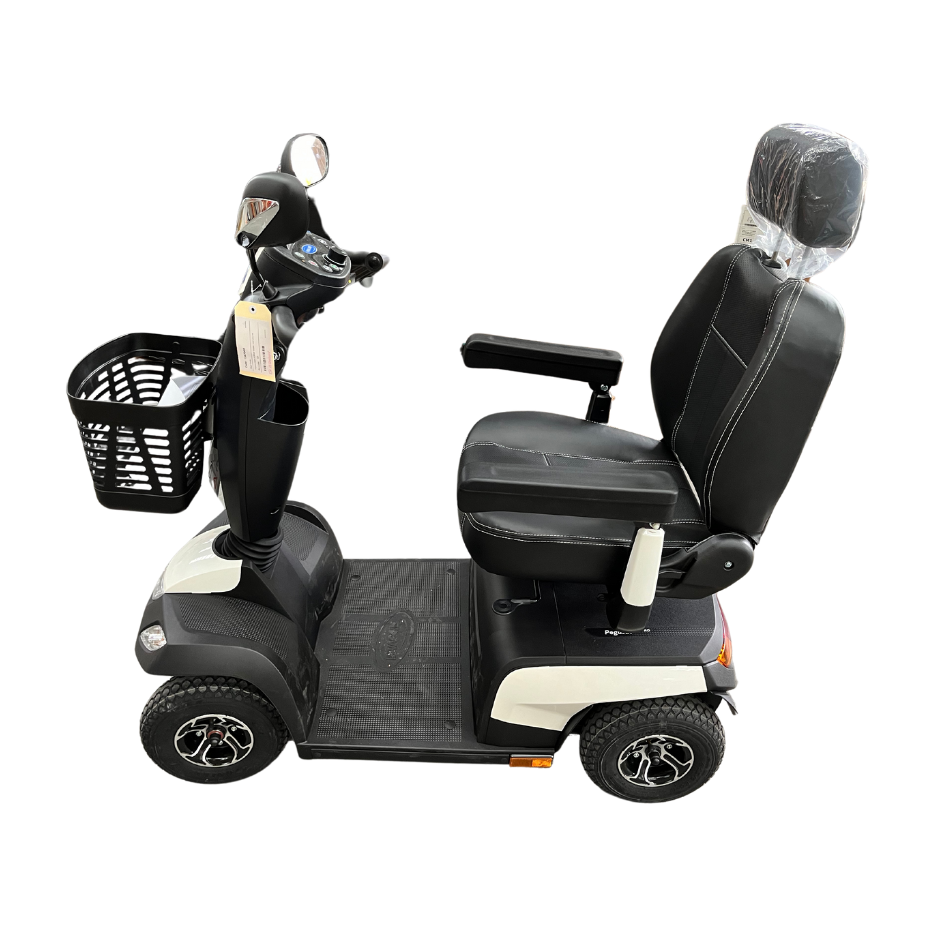
Superior stability, lower centre of gravity, and better outdoor performance. Generally preferable for safety reasons.
Best for: Outdoor use, uneven terrain, and anyone with balance concerns.
Consider for your loved one if: Stability is a priority—and for many seniors, it absolutely is.
Still unsure? Keep reading—we'll help you narrow it down.
Step 3: The Features That Truly Matter (For Both of You)
When caregivers look at scooter specs, they often focus on speed or battery range. But here's what actually matters:
Portability and Weight (This One's For You)
If you're the one lifting, storing, or transporting the scooter, weight is everything.
For regular car transport, aim for under 20kg total weight (without battery), a compact folded size, and a simple one-step folding mechanism. Even a few kilograms difference can dramatically change how manageable it feels.
Ask yourself realistically: How often will you lift it? Will you assemble and disassemble it? How easy is it to fold?
The best scooter supports both the rider and the person assisting them.
Stability and Confidence
Many seniors worry about balance. Look for:
- Four-wheel design
- Low centre of gravity
- Solid, puncture-proof tyres
- Smooth braking response
Confidence while riding is just as important as portability. If the scooter feels heavy, complicated, or intimidating, it won't be used.
Ease of Controls
Simplicity matters. Ensure:
- The throttle is light and responsive
- Controls are clearly labelled
- Speed adjustment is intuitive
- Braking is automatic and smooth
If possible, allow your loved one to test it before committing. A test drive can reveal things no spec sheet can.
Visibility and Safety
Colour and lighting are often overlooked. High-visibility finishes make users easier to spot in busy areas, car parks, and crossings.
This is particularly important during autumn and winter when daylight hours are shorter.
Storage at Home
Ask yourself: Where will it be stored? Is there indoor space? Will it need to be folded daily?
Lightweight folding models are ideal for flats, smaller homes, limited hallway space, and frequent travel.
Each of these features directly impacts whether the scooter will actually get used—or end up collecting dust in the garage.
Step 4: The Battery Question (More Important Than You Think)
Battery life determines how far your loved one can travel—and how much freedom they'll actually have. Most scooters offer 13–40 kilometres per charge, depending on the model.
For caregivers, here's the key question: Will you need to charge it daily? Can you remove the battery and charge it indoors, or does the whole scooter need to be near a plug point?
Lithium-ion batteries are now standard in travel-class scooters because of their weight saving. Lead-acid batteries remain common in full-size outdoor models where cost matters more.
Real-world range is always less than the manufacturer claims—terrain, user weight, and battery age all affect actual range. Always buy a little more range than you think you need.
Step 5: The Conversation—How to Talk About Mobility Scooters
One of the hardest parts of being a caregiver is having the conversation. Many parents and loved ones initially resist the idea of a mobility scooter. They may worry it signals ageing, dependency, or loss of independence.
Here's how to approach it:
Start with reassurance, not persuasion. Position the scooter as a tool that expands life, not restricts it. Focus on:
- Freedom
- Convenience
- Staying socially active
- Reducing fatigue—not replacing walking
Remind them what they gain—not what they've lost. Weekly shopping trips. Coffee with friends. Park visits. Holidays. Community events.
And here's something powerful: After a few weeks of regular use, many seniors say, "I wish I'd done this sooner". The scooter becomes a tool for freedom, a symbol of independence, a way to stay engaged.
You're not taking something away—you're giving something back.

Step 6: Practice and Build Confidence Gradually
Once you've chosen a scooter, don't expect immediate confidence. Confidence builds gradually.
Start with short positive experiences:
- Practice in a quiet area first—a quiet pavement, testing turning and stopping
- Start with local shop trips and short outings
- Choose familiar routes initially
- Adjust speed settings to a comfortable level
Avoid over-correcting or hovering excessively. Confidence develops when the rider feels in control, the scooter responds predictably, and outings feel enjoyable. Support, but don't overshadow independence.
And remember: The goal is steady progress—not instant transformation.
Step 7: Common Mistakes Caregivers Make (And How to Avoid Them)
✘ Buying the heaviest model assuming "more stable". Heavier doesn't always mean safer—and it definitely means harder to transport.
✘ Overpaying for road-class scooters when pavement use is sufficient. Know where your loved one will actually use it.
✘ Ignoring storage dimensions. Measure your doorways, hallways, and storage space before you buy.
✘ Forgetting about lifting requirements. Be honest about who will lift it and how often.
✘ Buying based on price or speed instead of safety and fit. A scooter that's too large, too fast, or poorly matched to strength levels increases fall risk and anxiety.
✘ Not involving an occupational therapist when needed. If cognitive decline is a concern, get professional input.
Caregivers often say, "They stopped using it after two weeks".
Don't let that be you.
Step 8: Your Role—And How This Changes Everything
Here's the beautiful part: the right mobility scooter doesn't just help your loved one—it helps you.
When your loved one has a reliable, easy-to-use scooter, you experience:
- Hands-free walking—no more pushing or supporting
- Reduced monitoring anxiety—less worrying about fatigue or falls
- Calmer shared outings—you can actually enjoy being together
- Predictable energy—no abrupt end to outings, energy preserved for the return journey
Seniors using mobility scooters move at their own pace and enjoy outings instead of enduring them. And that means you can enjoy them too.
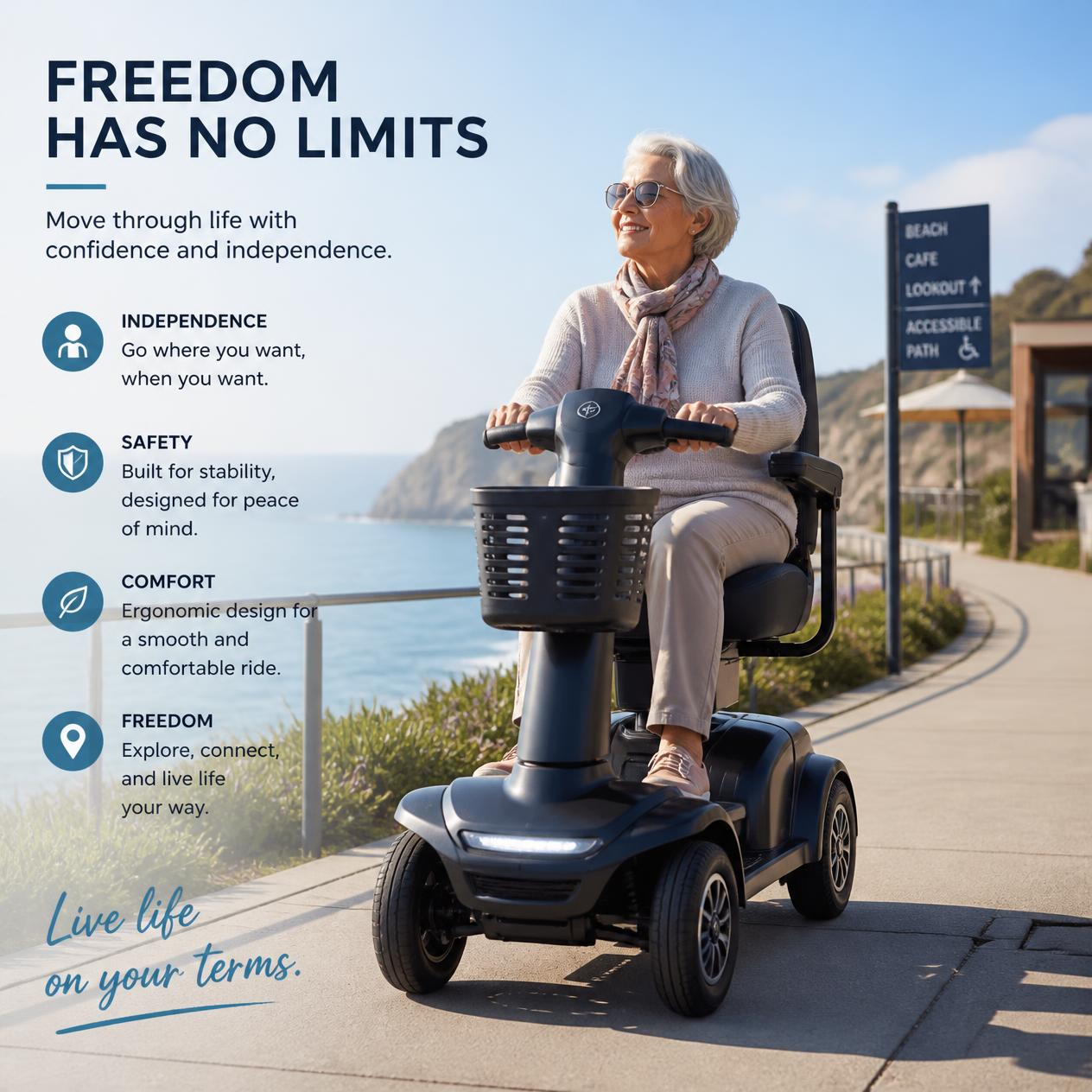
The right mobility scooter restores independence, confidence, and daily enjoyment—for both of you.
Your Next Steps: From Reading to Riding
You've made it through this Mobility Scooter Guide for Caregivers—and that tells us you're dedicated, thoughtful, and deeply caring.
So what now?
Step 1: Write down your answers to the questions we covered—physical abilities, daily habits, storage space, who will lift it.
Step 2: Visit a reputable dealer. Take your loved along for a test drive. Feel what it's like to move freely again. Ask every question that comes to mind.
Step 3: Start small. Practice in quiet areas. Build confidence gradually.
Step 4: Celebrate the wins. The first successful trip to the shop. The first coffee with a friend. The first time your loved one says, "I wish we'd done this sooner."
A Final Word From Your Friendly Guide
Choosing a mobility scooter for someone you love is a big decision—but it doesn't have to be a stressful one. With the right information, the right support, and the right mindset, you can find a scooter that truly transforms your family's life.
Remember: This Mobility Scooter Guide for Caregivers is here for you whenever you need it. Bookmark it. Share it with family. Come back to it when you have questions.
You are not alone on this journey. Caregivers all over the world are facing the same decisions, carrying the same worries, and finding the same relief when they get it right.
You've got this. And we've got your back.
Now go ahead—take that first step. The freedom you're seeking for your loved one (and for yourself) is closer than you think.
Don’t Go It Alone—Download Your Free Guide & Claim Your Personal Consultation
You’ve done the reading. Now let’s tackle the specifics—together.
Printing out this guide and highlighting the important parts is a great way to start. But we both know that choosing the right scooter depends on details that a single article can't cover—like your exact doorway width, your loved one's specific grip strength, or how steep your driveway actually is.
That’s why we’ve turned this Mobility Scooter Guide for Caregivers into a beautifully formatted, easy-to-read PDF—so you can take it with you anywhere, share it with family members, and jot down your personal questions in the margins.
But we’re not stopping there.
Along with your free download, we’re offering a no-obligation, 15-minute "Peace of Mind" Consultation. This isn't a sales pitch. Think of it as a friendly chat where we answer the specific questions keeping you up at night. We’ll listen to your situation, address your worries, and point you in the right direction—no pressure, just clarity.
Here’s exactly what you get:
📄 The Complete PDF Guide: Read offline, share with your spouse, and keep it for reference.
📞 A 1-on-1 Expert Chat: Speak directly to a mobility specialist who understands caregiver stress.
✅ Actionable Next Steps: Leave the call with a clear, personalized plan.
Why wait? The freedom you want for your loved one is just a click away.
Enter your email below, and we'll send it straight to your inbox.
Email Signup Box:
"No spam. No obligation. Just honest, friendly advice from people who genuinely care."
Stay mobile, stay confident!
Sign up for our monthly Mobility Scooter Newsletter to receive practical guides, expert advice, and inspiring stories that help you make the most of your scooter and download our free "Mobility Scooter Guide for Beginners."
Don't worry — your e-mail address is totally secure.
I promise to use it only to send you our newsletter, "Mobility Matters."
Recent Articles


-
Choosing the Right Battery Capacity 101: (Ah vs Wh)
Oct 08, 26 09:04 AM
 Choosing the Right Battery Capacity Guide: Compare Ah vs Wh, estimate range, and pick the best battery for your routine.
 -
Stop! Compare AGM, Gel, and Lithium Before You Buy (
Oct 08, 26 08:59 AM
How to compare AGM, gel, and lithium batteries for mobility scooters: Stop guessing. Get the honest facts before you spend your money. -
Stop! Your Charger Must Match Your Battery Chemistry
Oct 08, 26 07:08 AM
Choosing the right charger for your battery capacity and chemistry (AGM/gel vs lithium): Stop guessing. Get the facts before you buy a replacement charger.
Ready to Feel More Confident on Your Mobility Scooter?

My Ebook, The Ultimate Guide to Mobility Scooters, walks you through choosing the right scooter, using it safely, and keeping it in top condition — all explained in clear, friendly language.
Give yourself (or someone you love) the gift of independence.




