- Home
- Services and Shopping
- Service Plan vs Pay As You Go
- Service plan Exclusion
What Does a Mobility Scooter Service Plan Usually Exclude?
If you’ve ever tried to read the fine print of a mobility scooter service plan, you know it can feel like decoding a secret language. Every dealer lists exclusions differently — some hide them in footnotes, others scatter them across multiple pages.
The result? Confusion, frustration, and uncertainty about what’s actually covered.
This article cuts through the clutter. We’ll translate the most common exclusions into plain English, explain why they exist, and help you decide whether a service plan truly fits your daily‑use needs. By the end, you’ll know exactly what a mobility scooter service plan usually excludes — and how to protect yourself from surprise costs.

Why Exclusions Exist (and Why They Matter)
A mobility scooter service plan sounds simple: pay a yearly fee, get regular maintenance, and enjoy peace of mind. But service plans aren’t insurance policies — they’re maintenance agreements. That means they cover routine servicing, not every possible problem.
Exclusions exist because dealers can’t predict accidents, misuse, or environmental damage. They focus on keeping your scooter running smoothly, not rebuilding it after a mishap.
Understanding these boundaries helps you avoid disappointment later — and we’ll start with the most common exclusions that catch riders off guard.
1. Accidental Damage and Misuse
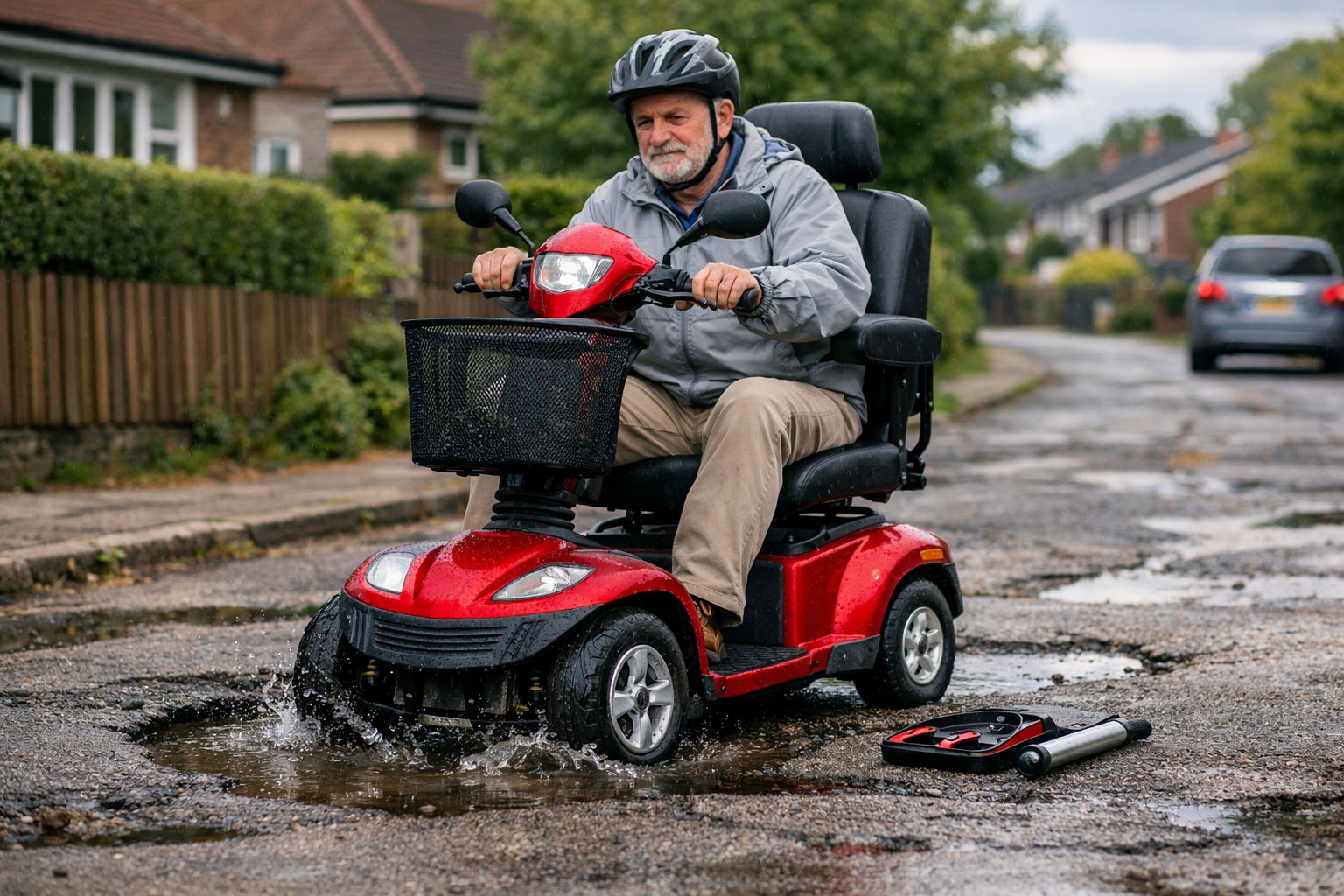
If your scooter tips over, gets hit, or is damaged while loading into a car, that’s considered accidental damage — and it’s almost always excluded. The same goes for misuse, like overloading the scooter with heavy bags or riding through deep puddles.
Plain‑English example:
If your scooter’s motor burns out because you drove through floodwater, the service plan won’t cover it. That’s considered misuse, not wear and tear.
2. Water and Weather Damage
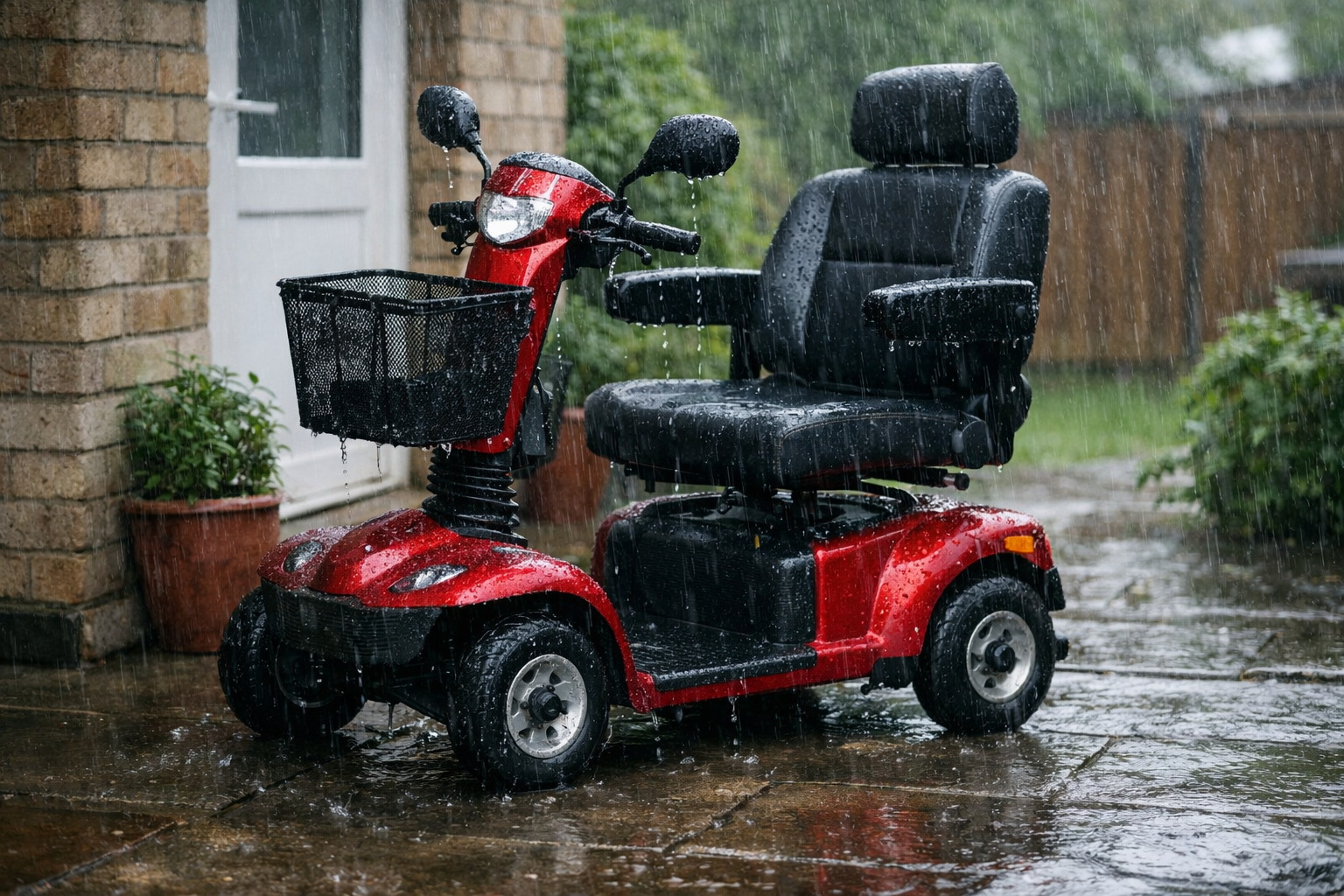
]Mobility scooters are sturdy, but they’re not waterproof. Rain, humidity, and salt air can corrode electrical parts and batteries.
Most service plans exclude water damage because it’s preventable with proper care.
Plain‑English example:
If your scooter stops working after being left outside during a storm, the repair cost is on you — not the service plan.

3. Battery Replacement
Batteries are consumable items, like tyres or brake pads. They wear out naturally over time.
While service plans include battery testing, they rarely cover replacement unless you’ve purchased a premium plan.
Plain‑English example:
If your battery no longer holds a charge after two years, you’ll pay for a new one — even if you have a service plan.
4. Tyres and Tubes
Tyres take the brunt of daily use. They wear down, puncture, and flatten. Most service plans include tyre inspections but exclude replacements.
Some offer discounts, but few covers the full cost.
Plain‑English example:
If you hit a nail and get a flat tyre, the service plan won’t pay for a new one.
5. Cosmetic and Upholstery Repairs
Scratches, scuffs, faded paint, and torn seat covers are considered cosmetic issues. They don’t affect performance, so they’re excluded.
Plain‑English example:
If your seat tears or your paint fades in the sun, that’s not covered — it’s considered normal wear.
6. Major Electronic Failures
Controllers, wiring harnesses, and display screens are expensive parts. Service plans usually cover inspection and minor adjustments but exclude full replacement unless the failure is due to manufacturing defects under warranty.
Plain‑English example:
If your display screen stops working after three years, the service plan won’t replace it — that’s a separate repair.
7. Transport and Recovery Costs
If your scooter breaks down away from home, most service plans don’t include towing or transport back to the workshop. Some premium plans offer limited roadside assistance, but it’s rare.
Plain‑English example:
If your scooter stops halfway to the shops, you’ll need to arrange transport yourself — the service plan doesn’t cover pickup.
8. Third‑Party Repairs or Modifications
If you’ve had your scooter modified by another technician or added after market parts, the service plan may exclude coverage for those components. Dealers can’t guarantee the quality of third‑party work.
Plain‑English example:
If you install a non‑standard battery or custom lights, the service plan won’t cover issues caused by those modifications.
9. Neglect and Poor Maintenance
Skipping scheduled servicing or ignoring warning signs can void parts of your plan. Service plans assume you’ll follow basic care guidelines — like charging correctly and keeping tyres inflated.
Plain‑English example:
If your scooter fails because you never charged the battery properly, the plan won’t cover the repair.
10. End‑of‑Life Scooters
Older scooters nearing replacement often fall outside service‑plan coverage. Dealers may refuse plans for scooters beyond a certain age or mileage because parts become scarce.
Plain‑English example:
If your scooter is eight years old and parts are discontinued, the plan may not apply.
How to Protect Yourself from Exclusions
- Read the fine print — ask for a full list of exclusions before signing.
- Ask direct questions — “Are batteries covered?” “What about tyres?” “Do you offer call‑outs?”
- Keep records — log every service visit and battery test.
- Store your scooter properly — indoors, dry, and charged.
- Consider an extended warranty — it covers major failures that service plans don’t
The Bottom Line
So, what does a mobility scooter service plan usually exclude? In short: anything outside routine maintenance. That includes accidental damage, water exposure, battery and tyre replacements, cosmetic fixes, major electronics, and transport costs.
But don’t let exclusions scare you off. A service plan still offers real value for daily riders — predictable costs, priority servicing, and peace of mind.
Just remember: the plan keeps your scooter healthy, not invincible.
Understanding what a mobility scooter service plan usually excludes helps you make smarter choices, avoid surprise bills, and stay confidently mobile every day.
Stay mobile, stay confident!
Sign up for our monthly Mobility Scooter Newsletter to receive practical guides, expert advice, and inspiring stories that help you make the most of your scooter and download our free "Mobility Scooter Guide for Beginners."
Don't worry — your e-mail address is totally secure.
I promise to use it only to send you our newsletter, "Mobility Matters."
Recent Articles


-
Portable vs Travel vs Folding Mobility Scooters Buyer's Guide
Sep 15, 26 11:01 AM
 Confused by "portable," "travel," and "folding" mobility scooter listings? This guide explains what Australian sellers actually mean, with real weight comparisons and a decision framework.
 -
Mobility Scooter Types Overview: No More Confusion
Sep 15, 26 10:54 AM
 Mobility scooter types explained in plain English. Includes Australian footpath rules, airline battery limits, and the one mistake most first-time buyers make.
 -
How to Choose a Mobility Scooter in Australia Guide (2026)
Sep 15, 26 07:29 AM
 Choosing a mobility scooter in Australia? This guide covers registration requirements by state, public transport dimensions, NDIS funding steps, and practical testing advice.



Ready to Feel More Confident on Your Mobility Scooter?

My Ebook, The Ultimate Guide to Mobility Scooters, walks you through choosing the right scooter, using it safely, and keeping it in top condition — all explained in clear, friendly language.
Give yourself (or someone you love) the gift of independence.

