- Home
- Services and Shopping
- Mobile Repair Call-out Expectations
- How Much Does a Mobility Scooter Repair Call-out Cost in Australia?
How Much Does a Mobility Scooter Repair Call-Out Cost in Australia?
How much does a mobility scooter repair call-out cost in Australia? It's a question that causes genuine anxiety for so many people.
Will it be $50? $200? $500? Will you have to pay extra just for someone to turn up? And what if they can't fix it on the spot?
Picture this: it's a beautiful morning. The sun is shining, you've got your favourite hat on, and you're ready to head to the local shops for a coffee with a friend. You settle into your mobility scooter, turn the key, and... nothing. Just a faint click. The battery has died, or worse—something deeper is wrong.
Your heart sinks. You need that scooter. It's your independence, your ticket to getting out of the house, your connection to the world. But now you're facing the dreaded question: how much is this going to cost?
The good news is that while costs vary, they're not as mysterious as they seem. Once you understand the different components of a call-out—the fee just to get someone to your door, the labour, the parts, and the travel charges—you can budget with confidence.
Let's walk through it together, step by step, so you know exactly what to expect before you pick up the phone.
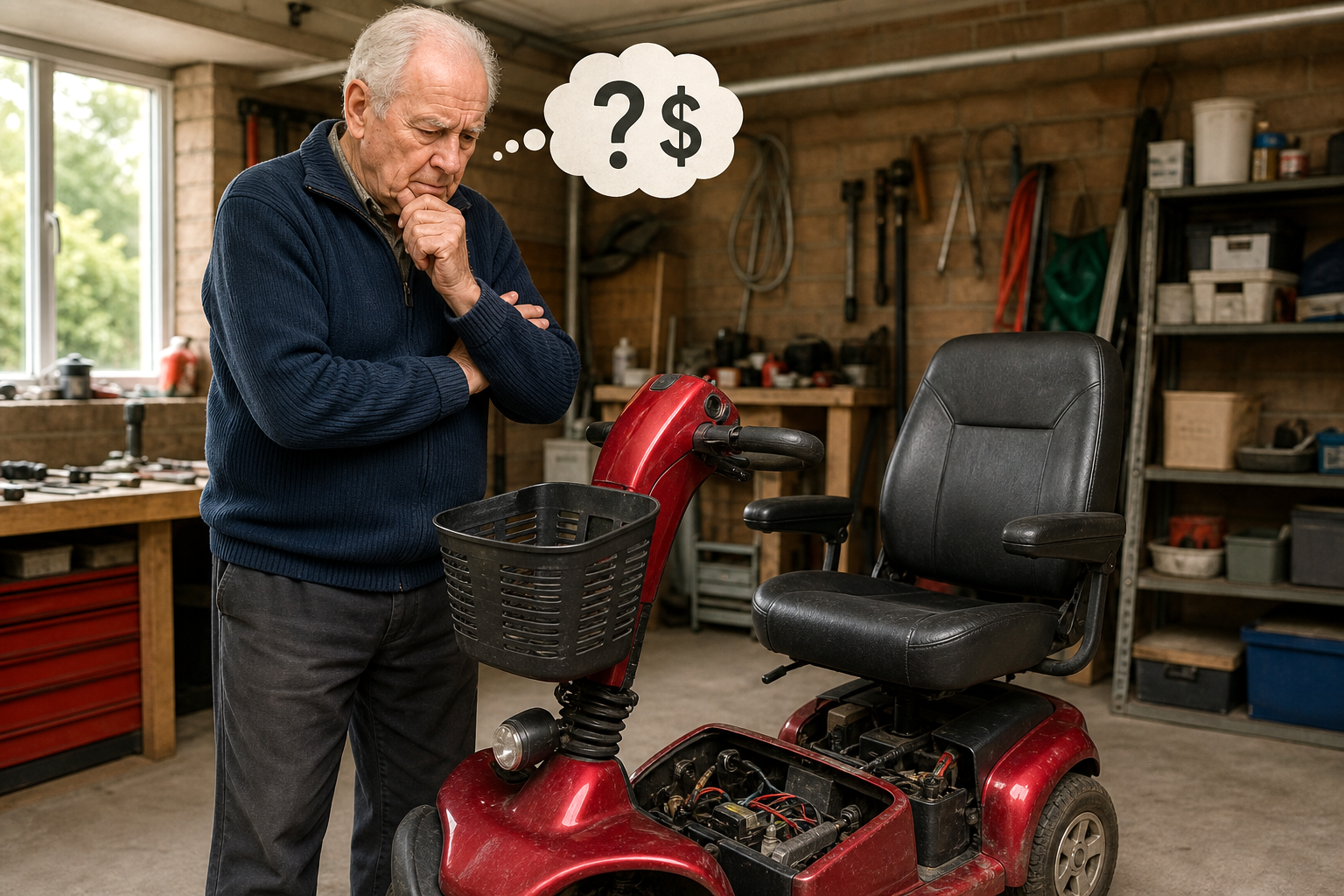
What Actually Is a Mobility Scooter Call-Out?
A call-out is when a technician comes to your home—or wherever you are—to diagnose and fix your mobility scooter on-site. Instead of you having to transport a heavy, awkward scooter to a workshop (which might be impossible if you live alone or don't have a suitable vehicle), the repair comes to you.
This is a game-changer for many people.
It means you don't have to worry about lifting, loading, or arranging transport. The technician arrives with their tools, assesses the problem, and—hopefully—gets you moving again without you ever leaving your home.
The trade-off, of course, is that this convenience comes at a cost. That cost is the call-out fee, and it's what we're going to unpack in detail.
The Average Call-Out Fee: What to Expect
Let's get straight to the number you're here for. Across Australia, a mobility scooter repair call-out fee typically ranges from $44 to $150, depending on your location and the provider.
Here are some real examples from Australian providers:
- TASC Mobile Equipment Service (Sydney): Charges a call-out fee of **$44.00**, with an hourly rate of $66.00 for labour.
- Scooterland (Gold Coast): Bills a standard call-out fee depending on your location, which generally includes the first 15 minutes on site.
- Mobile EScooter Mechanic (Melbourne): Applies mobile fees starting at around $20 + $10 per 10 minutes of travel time from Heidelberg, Victoria.
- RACV Emergency Wheelchair and Scooter Assist (Victoria): Offers a yearly plan with up to 8 call-outs for just $30 a year—an exceptional value if you're eligible.
- Youi Roadside Assist: Charges a call-out fee of $150 for each call-out after the first two in the contract period.
As you can see, the range is significant. A simple, local call-out might cost you just $44, while a more complex or distant visit could set you back $150 or more.
But don't let that scare you—there are ways to keep costs down, which we'll cover shortly.
Labour Costs: What You Pay Per Hour
The call-out fee is just the beginning. Once the technician arrives, they'll start working on your scooter—and that work is charged by the hour.
Average labour rates for mobility scooter repairs in Australia range from $66 to $150 per hour.
- TASC charges $66.00 per hour.
- Mobile EScooter Mechanic charges an average repair cost of $70–$150 in labour, excluding parts.
- Some providers charge a flat fee for common services. For example, a general service might cost $70 for a commuter scooter** or **$100 for a performance scooter.
- More complex electrical diagnostics can range from $50 to $100 depending on the severity of the issue.
The total labour cost depends on how long the repair takes. A simple tyre change might be done in 30 minutes, while diagnosing a faulty controller could take an hour or more.
Always ask for an estimate before the technician starts work—a good provider will give you a clear idea of the expected time and cost.
Travel and Mobile Fees: The Hidden Cost
Here's one of the most confusing parts of a call-out: the travel fee. Many providers charge extra for the time it takes to drive to your location.
Travel fees typically range from $20 to $70+, depending on distance.
Mobile EScooter Mechanic, for example, charges around $20 + $10 per 10 minutes of travel time from their base in Heidelberg, Victoria. This means if you're 20 minutes away, you might pay $20 + $20 = $40 just for them to reach you.
Some providers waive the travel fee if you're within a certain radius. Others build it into their standard call-out fee. Always ask: "Is there a travel charge on top of the call-out fee?" It's a simple question that can save you from an unpleasant surprise on your invoice.
Pro tip: If multiple people in your area need repairs, some providers offer discounts because they can cluster appointments. It never hurts to ask!
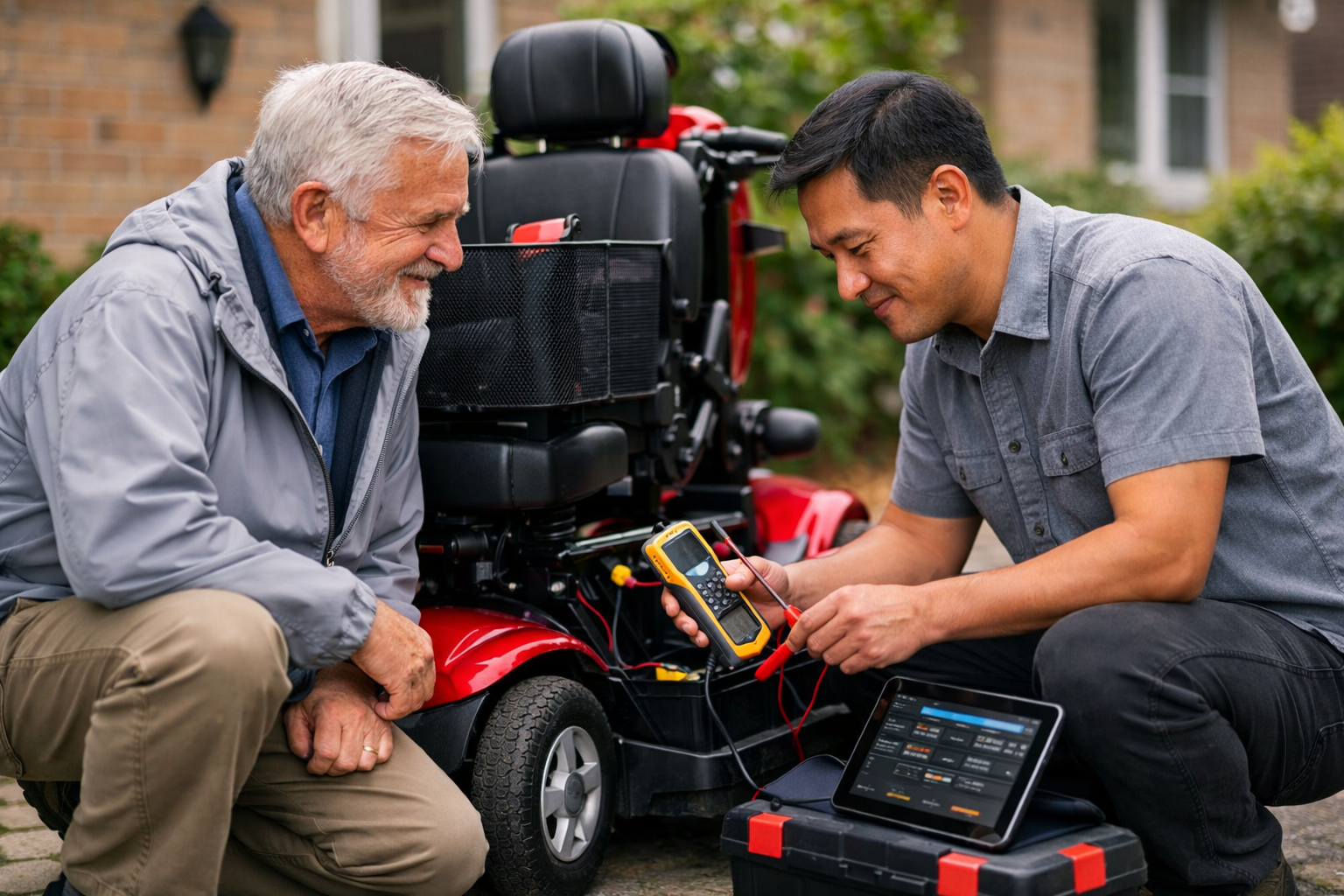
Parts and Materials: The Variable Cost
Then there are the parts. Unlike labour and call-out fees, parts costs vary wildly depending on what's broken.
Common parts and their approximate costs:
|
Part |
Approximate Cost (Australia |
|
Tyre replacement (labour only) |
$70–$90 per tyre |
|
Battery replacement |
$100–$500+ depending on capacity |
|
Basic service |
$70–$100 |
|
Electrical diagnosis |
$50–$100 |
Some providers will give you a quote for parts before they start work. Others will charge materials "at the time of invoicing". If you're concerned about cost, ask for a parts quote upfront. A reputable technician will be happy to provide one.
A note on batteries: Battery replacement is one of the most common and expensive repairs. Prices start from around $100 for smaller batteries and can go up to $400–$500 for larger 80Ah batteries.
Factor this into your long-term budget—most scooter batteries need replacing every 18 to 36 months.
Workshop Drop-Off: The Cheaper Alternative
Here's a money-saving tip that many people don't consider: if you can get your scooter to a workshop, you can avoid the call-out fee entirely.
Many providers offer workshop repairs with no call-out charge. Scooterland, for example, notes that "many clients arrange for their scooter to be brought to our premises and this means there is no call out charge". Similarly, TASC offers repairs at certain sites with no call-out fee.
This can save you $44 to $150 right off the bat. If you have a family member, friend, or carer who can help transport your scooter, this is worth considering.
Just be aware that you'll be without your scooter for longer—sometimes a few days—while it's in the workshop.
Subscription and Membership Options: The Smart Money Move
If you rely on your scooter daily, consider a subscription or membership service. These can dramatically reduce your call-out costs.
RACV Emergency Wheelchair and Scooter Assist is a standout example. For just $30 a year, you get up to 8 call-outs across Victoria. If you break down, they'll either fix the problem on the spot or arrange transport for you and your scooter to your destination or a repair shop. This subscription can be funded through your NDIS plan under the consumables support category.
Other providers offer similar plans. Some include 4 free calls per year with a 30km towing radius.
If you use your scooter frequently, these memberships pay for themselves after just one or two call-outs.
NDIS and Mobility Scooter Repairs
If you're an NDIS participant, you may be able to claim repair costs through your plan.
The NDIS covers urgent repairs when your assistive technology stops working, you can't access back-up supports, and there's a risk to your safety or wellbeing. As a general rule, repairs for power wheelchairs and mobility scooters shouldn't exceed $3,000.
For repairs over $1,500, you usually need to supply a quote to the NDIA before a payment request can be accepted. Always check your plan and speak to your support coordinator or plan manager before booking expensive repairs.
Important: RACV is currently not a registered NDIS provider. If you're agency-managed (NDIA), you won't be able to use your plan for their Emergency Wheelchair and Scooter Assist. However, plan-managed participants can sign up and claim the cost.
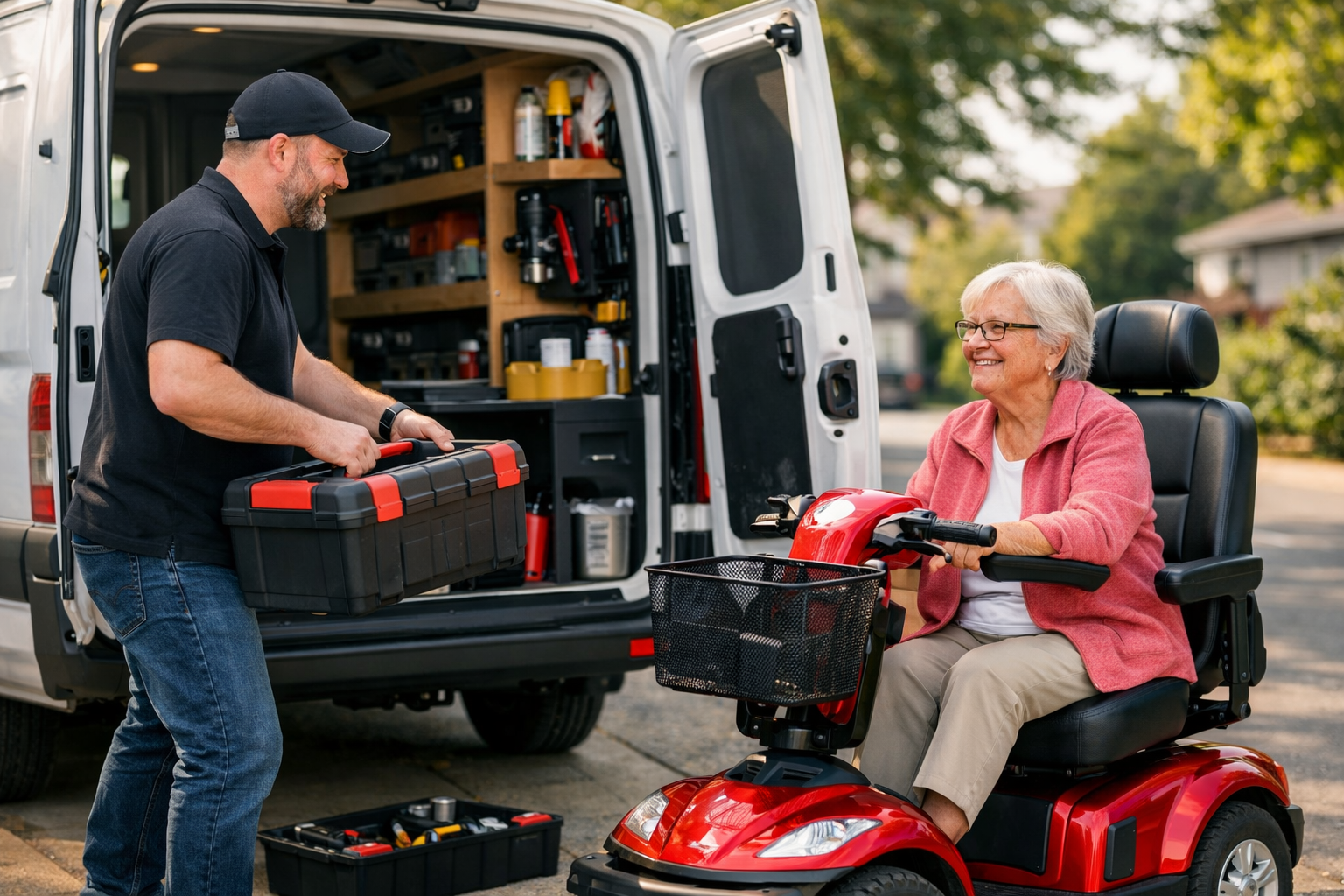
How to Get an Accurate Quote Before You Book
The best way to avoid bill shock is to get a clear quote before the technician arrives.
Here's what to ask:
- "What's your call-out fee?" Get this number in writing.
- "Is there a travel charge on top of that?" Clarify any distance-based fees.
- "What's your hourly labour rate?" And ask for an estimate of how long the repair will take.
- "Can you give me a quote for parts before you start?" This prevents surprises.
- "Are there any other fees I should know about?" Some providers charge for diagnostics even if you don't proceed with the repair.
A good provider will answer these questions clearly and without hesitation. If they're evasive or vague, consider calling someone else.
Call-Out vs Drop-Off: Which Is Better Value?
|
Factor |
Call-Out (Mobile) |
Drop-Off (Workshop) |
|
Call-out fee |
$44–$150 |
$0 |
|
Convenience |
High—they come to you |
Low—you must transport the scooter |
|
Time without scooter |
Usually same day |
Could be days |
|
Labour rate |
Similar |
Similar |
|
Parts cost |
Similar |
Similar |
Red Flags: What to Watch For
Not all repair providers are created equal. Watch out for these warning signs:
- Vague pricing. If they won't give you a clear call-out fee or hourly rate, walk away.
- Pressure to book immediately. A reputable technician will give you time to decide.
- No written quote. Always get the estimate in writing—email is fine.
- Excessive travel fees. A $20 travel fee is reasonable; $100 might not be.
- No mention of NDIS. If you're an NDIS participant, ask if they're registered or if they can work with your plan manager.
Your Action Plan: What to Do When Your Scooter Breaks Down

The Bottom Line
How much does a mobility scooter repair call-out cost in Australia? The honest answer is: it depends. But now you know the ranges. Call-out fees: $44 to $150. Labour: $66 to $150 per hour. Travel: $20 to $70+. Parts: variable.
The key takeaway? Always ask for a quote before you book. A few minutes on the phone can save you from a nasty surprise on your invoice.
And remember: your mobility scooter is your independence. Investing in its maintenance—and knowing what a call-out will cost—is investing in your freedom.
You've got this. And now you've got the information to make the right call.
Stay mobile, stay confident!
Sign up for our monthly Mobility Scooter Newsletter to receive practical guides, expert advice, and inspiring stories that help you make the most of your scooter and download our free "Mobility Scooter Guide for Beginners."
Don't worry — your e-mail address is totally secure.
I promise to use it only to send you our newsletter, "Mobility Matters."
Recent Articles


-
Portable vs Travel vs Folding Mobility Scooters Buyer's Guide
Sep 15, 26 11:01 AM
 Confused by "portable," "travel," and "folding" mobility scooter listings? This guide explains what Australian sellers actually mean, with real weight comparisons and a decision framework.
 -
Mobility Scooter Types Overview: No More Confusion
Sep 15, 26 10:54 AM
 Mobility scooter types explained in plain English. Includes Australian footpath rules, airline battery limits, and the one mistake most first-time buyers make.
 -
How to Choose a Mobility Scooter in Australia Guide (2026)
Sep 15, 26 07:29 AM
 Choosing a mobility scooter in Australia? This guide covers registration requirements by state, public transport dimensions, NDIS funding steps, and practical testing advice.


Ready to Feel More Confident on Your Mobility Scooter?

My Ebook, The Ultimate Guide to Mobility Scooters, walks you through choosing the right scooter, using it safely, and keeping it in top condition — all explained in clear, friendly language.
Give yourself (or someone you love) the gift of independence.




