- Home
- Services and Shopping
- What to Ask a Scooter Dealer
- Mobility Scooter Test Drive Guide
What Should I Check During a Mobility Scooter Test Drive or In-Home Trial?
Picture this: You've spent weeks researching mobility scooters. You've read reviews, compared specs, and finally found a model that looks perfect on paper. You head to the showroom, sit on the scooter, and think, "This feels nice." You sign the papers, take it home, and discover...
...it won't fit through your hallway.
...the seat is comfortable for five minutes but painful after 20.
...the turning circle is too wide for your local shopping centre.
...you can't get it into the boot of your car.
This scenario is surprisingly common. Choosing a mobility scooter without properly testing it first makes about as much sense as buying shoes online without knowing your size.
Yet, many people still make this costly mistake – often because they don't know what to look for during a test drive or in-home trial.
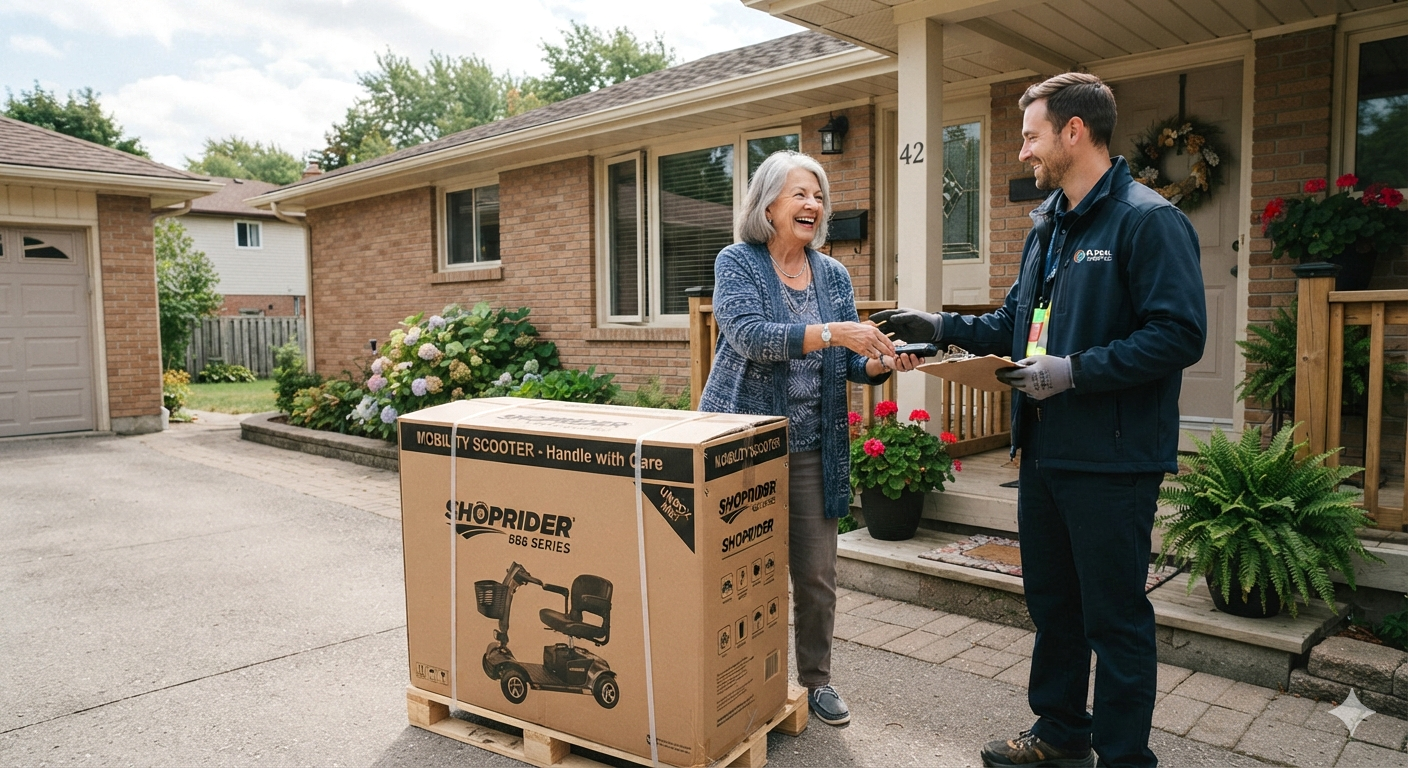
Knowing what to check during a mobility scooter test drive or in-home trial can mean the difference between a scooter that gathers dust in the garage and one that genuinely transforms your independence.
This guide will walk you through everything you need to check – before you get on, while you're sitting on it, during the drive, and during an in-home trial. By the end, you'll know exactly what to look for and how to avoid expensive mistakes.
Let's get started – because your independence deserves more than a scooter that looks good on paper.
Before the Test Drive – Preparation Matters
The best time to start thinking about what to check during a mobility scooter test drive isn't when you're already sitting on the scooter – it's before you even leave home.
What to Bring
Arriving prepared makes your test drive far more productive:
- Wear the shoes you typically use for outings – footwear affects how comfortably you reach the floor plate and operate controls
- Dress in your usual clothing rather than restrictive outfits that limit your natural movement patterns
- Bring any mobility aids you currently use – if you walk with a cane, you need to see where it fits on the scooter. If you use a walking frame, adequate storage matters
- Consider bringing a family member or friend who understands your daily routine – they notice details you might miss while concentrating on driving
What to Know Before You Go
- Know your typical routes – will you mostly use it indoors, on pavements, or both?
- Know your transport needs – does it need to fit in a car boot? Will anyone need to lift or dismantle it?
- Know your storage space – where will it be stored and charged?
Static Check – Before You Even Start Moving
Before you turn the key, there are several things to check during a mobility scooter test drive that don't require any movement at all.
Seat Comfort and Fit
Sit on the scooter and assess the following:
- Is the seat wide enough for you? A seat that's too narrow will be uncomfortable; too wide and you won't feel secure.
- Is the seat height adjustable? Your feet should rest flat on the floor plate with your knees at a comfortable angle.
- Does the seat swivel? This makes getting on and off much easier.
- Is the backrest supportive? The backrest height that looks sufficient in a photo might not support your shoulders properly in use.
- Is there enough legroom? Your legs should not feel cramped.
- Is the seat padded for extended use? A seat that feels adequate while stationary may press uncomfortably against your thighs after ten minutes of movement.
Ask yourself: Could I sit in this for an hour? A scooter that feels uncomfortable after 10 minutes won't feel better after an hour.
Armrests and Tiller
- Are the armrests adjustable to your size? Armrests positioned slightly too high force your shoulders upward, creating tension across your neck that compounds into real discomfort on longer outings
- Is the tiller (steering column) height-adjustable?
- Are the controls within easy reach? The thumb lever that works perfectly for someone with strong hands may prove difficult to manage for someone with arthritis or limited grip strength
- Are the footplates in a comfortable position for your legs and feet?
Controls and Display
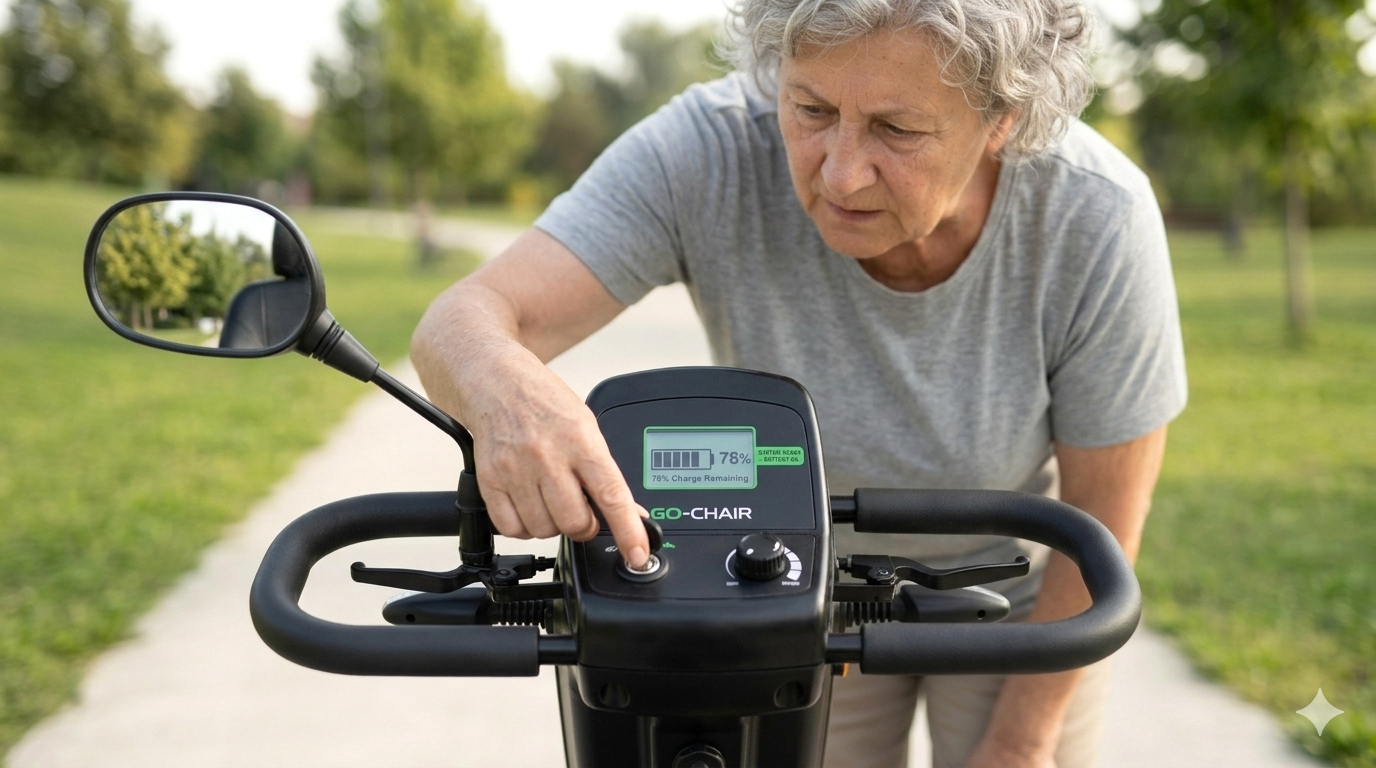
- Are the buttons clear, simple to read, and reachable?
- Can you easily see the battery display?
- Is the key or start button easy to operate?
Red Flag: If you have to strain, stretch, or adjust your body awkwardly to reach any control, this scooter isn't right for you.
Dynamic Testing – What to Check While Driving
Now it's time to actually drive. This is the most important part of what to check during a mobility scooter test drive – and many people don't test enough.
Start Slow and Build Up
Begin at a slow speed in an open, level area with plenty of room to stop. Get comfortable with the controls before attempting anything challenging.
Acceleration
Check: Does the scooter accelerate smoothly?
Some scooters accelerate smoothly from a standstill; others jerk forward unpredictably. A jerky start can be startling and even dangerous, especially if you have balance issues.
What to look for:
- Smooth, gradual acceleration
- Slight hesitation then smooth
- Jerky or unpredictable starts
Braking
Check: How quickly and smoothly does it stop?
Test the brakes at different speeds. They should respond promptly but not so abruptly that you lurch forward.
What to look for:
- Smooth, controlled stopping
- Stops but with a jolt
- Delayed braking or pulling to one side
Steering and Turning
Check: Is the tiller easy to turn?
Steering should feel natural and responsive, not stiff or overly loose.
Test the turning circle – this matters more than most people expect:
- Can you make a tight turn in a small space?
- Does the scooter track straight when you're not turning?
What to look for:
- Smooth, responsive steering with a tight turning circle
- Steering is stiff but manageable
- Pulling to one side, stiffness, or unusual noises
A tighter turning circle navigates supermarket aisles, pharmacy corridors, and aged care facility hallways without requiring multiple-point turns. A wider circle turns the same spaces into obstacle courses.
Speed Settings
Check: How does it handle at different speeds?
If the scooter has multiple speed settings, try them all. In Australia, the speed limit for mobility scooters is 10km/h, and some scooters only do 6km/h.
What to look for:
- Smooth operation at all speeds
- Slight vibration at higher speeds
- Instability or loss of control at higher speeds
Noise and Vibration
Check: Is the ride smooth and quiet?
Listen for unusual noises – grinding, clicking, or whining sounds can indicate mechanical issues.
What to look for:
- Quiet, smooth operation
- Some vibration but acceptable
- Grinding, clicking, or unusual noises
Battery Gauge
Check: Does the battery gauge drop unusually quickly during the test drive?
A battery gauge that falls rapidly during a short test drive is a red flag – it could indicate weak batteries.
What to look for:
- Battery gauge holds steady
- Slowly decreases (normal)
- Drops unusually quickly
Real-World Terrain Testing
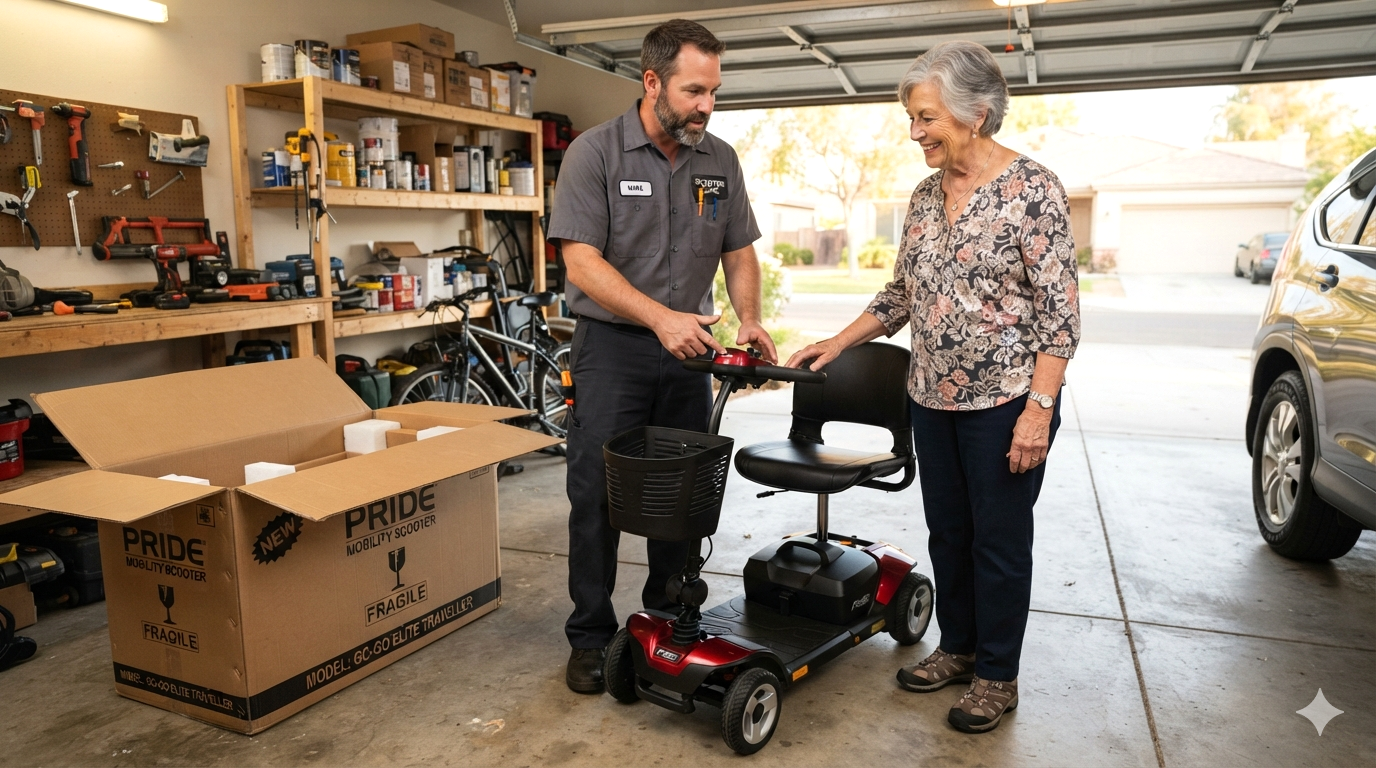
A test drive on a smooth showroom floor tells you very little about how the scooter will perform in real life. Real life isn't flat. It's lipped gutters, cracked footpaths, uneven grass, leaves, dirt, and camber.
Test on Surfaces You'll Actually Use
Ask the dealer: Can I test this on surfaces similar to what I'll encounter daily?
What to test:
- Pavements – does it handle without jolting or losing traction?
- Uneven surfaces – cracked pavement, gravel paths, or grassed areas
- Slopes and ramps – can it handle the steepest slope in your area?
- Kerb mounts – where possible, test over a kerb or slope similar to routes you'll actually use
Ground Clearance
Check: Does the scooter have enough ground clearance for your typical routes?
Standard scooters handle smooth sealed surfaces without issue. Cracked pavement, gravel paths, or grassed areas require higher clearance. Testing on surfaces similar to your regular routes prevents discovering limitations after purchase.
What to look for:
- Handles all your typical surfaces comfortably
- Manages most but struggles on some
- Scrapes, stalls, or loses traction on basic surfaces
Stability
Check: Do you feel secure and balanced while using it?
Stability is one of the biggest concerns for many users. A scooter that feels stable on flat ground might feel different on cambered surfaces or slopes.
Ask yourself:
- Do I feel secure on flat ground?
- Do I feel secure turning?
- Do I feel secure on slopes?
- Would I feel comfortable using this on my own?
In-Home Trial – Testing in Your Real Environment
A showroom test drive is valuable, but it can't tell you how the scooter will work in your actual home. This is why in-home trials are so important.
What Is an In-Home Trial?
An in-home trial is exactly what it sounds like: a mobility scooter is brought to your home so you can test it in your real environment. Some Australian dealers offer free in-home trials, and some even bring a mobile showroom to you.
Doorway Clearance
Check: Can you easily pass through all your doorways?
This is one of the most common "surprise problems" after purchase. A scooter that fits through the showroom door might not fit through your bathroom or bedroom door.
What to check:
- Front door – can you get in and out?
- Internal doors – bedroom, bathroom, kitchen
- Doorway width – measure the narrowest doorway in your home
Hallway and Room Navigation
Check: Is there enough space to turn around and move freely?
What to check:
- Can you navigate through hallways without bumping into walls?
- Can you turn around in your kitchen?
- Can you access every room you need?
Turning Circle in Your Space
Check: Can the scooter turn in your tightest space?
Your hallway width, doorway positions, and furniture layout determine which turning radius actually works in your home. Test the scooter's turning circle in the tightest space you'll actually use it in.
Access to Furniture and Facilities
Check: Can you smoothly move from the mobility aid to your bed, sofa, dining chair, or car seat?
What to check:
- Can you get close enough to your bed to transfer safely?
- Can you reach the dining table?
- Can you access kitchen counters and cabinets?
- Can you safely and comfortably use bathroom facilities?
Car Compatibility
Check: Can you get the scooter in and out of your vehicle with ease?
If you plan to transport your scooter, this is critical.
What to check:
- Does it fit in your car boot?
- Is it simple to lift, fold, and store?
- What is the heaviest piece to lift?
Storage and Charging
Check: Where will you store and charge it?
What to check:
- Is there a convenient place to store it?
- Is there a power point nearby for charging?
- Can you easily access the charging port?
Battery Performance in Your Environment
Check: Does the battery last through your typical day?
Testing in your real environment gives you a much better idea of real-world battery performance than a showroom test.

In-Home Trial with an Occupational Therapist
For NDIS participants, an in-home trial often involves an Occupational Therapist (OT).
What an OT Assessment Includes
An OT home visit allows you to try products right where you live, making sure every turn, doorway, and daily routine works seamlessly for you.
During the assessment, the OT will check:
- Seating comfort – does the seat and backrest feel right for extended use?
- Simple operation – is the mobility aid intuitive and easy to control?
- Energy efficiency – does using it feel effortless, or does it tire you out?
- Indoor mobility – does it work well inside your house without bumping into furniture?
- Doorway clearance – can you easily pass through all your doorways?
- Room access – are you able to reach every room you need?
- Easy transfers – can you smoothly move from the mobility aid to your bed, sofa, or car seat?
- Surface versatility – does it handle different terrains like grass, gravel, tiles, ramps, and uneven surfaces?
- Stability – do you feel secure and balanced while using it?
Why OT Assessments Matter
For NDIS funding, occupational therapists often require trial data to complete reports. An OT assessment ensures the equipment suits the user's body size, strength, and mobility goals.
Ask your dealer: Can you arrange an OT assessment as part of the in-home trial?
Red Flags – When to Walk Away
Knowing what to check during a mobility scooter test drive also means knowing when something isn't right.
Red Flag #1: The dealer won't let you test drive. No dealer should be afraid of letting you test drive one of their scooters. If they refuse or rush you, walk away.
Red Flag #2: The dealer only lets you test on smooth surfaces. A good dealer will encourage you to test on surfaces similar to your regular routes.
Red Flag #3: The scooter makes unusual noises. Grinding, clicking, or whining sounds can indicate mechanical issues.
Red Flag #4: The battery gauge drops quickly during the test. This could indicate weak batteries.
Red Flag #5: The scooter pulls to one side or has delayed braking. This is a safety issue.
Red Flag #6: The dealer won't offer an in-home trial. A reputable dealer should offer some form of home trial or demonstration.
For a complete guide to dealer red flags, read our full guide: What Are the Red Flags of a Mobility Scooter Dealer?
Your Test Drive and In-Home Trial Checklist
Here's a quick checklist of everything to check during a mobility scooter test drive or in-home trial
Before the Test Drive
- □ Wear your usual shoes and clothing
- □ Bring any mobility aids you use
- □ Bring a family member or friend
- □ Know your typical routes and needs
Static Check (Before Driving)
- □ Seat is wide enough and padded
- □ Seat height is adjustable
- □ Seat swivels for easy access
- □ Backrest is supportive
- □ Enough legroom
- □ Armrests are adjustable
- □ Tiller is height-adjustable
- □ Controls are within easy reach
- □ Buttons are clear and readable
- □ Battery display is visible
Dynamic Testing (While Driving)
- □ Acceleration is smooth
- □ Braking is prompt and smooth
- □ Steering is responsive
- □ Turning circle is tight enough
- □ Handles well at different speeds
- □ Quiet, smooth operation
- □ Battery gauge holds steady
Real-World Terrain
- □ Handles pavements smoothly
- □ Handles uneven surfaces
- □ Handles slopes and ramps
- □ Enough ground clearance
- □ Feels stable and secure
In-Home Trial
- □ Fits through all doorways
- □ Navigates hallways comfortably
- □ Turns in tight spaces
- □ Accesses all needed rooms
- □ Transfers to furniture are easy
- □ Fits in car boot (if needed)
- □ Storage and charging are convenient
- □ Battery lasts through typical day
Your Next Steps
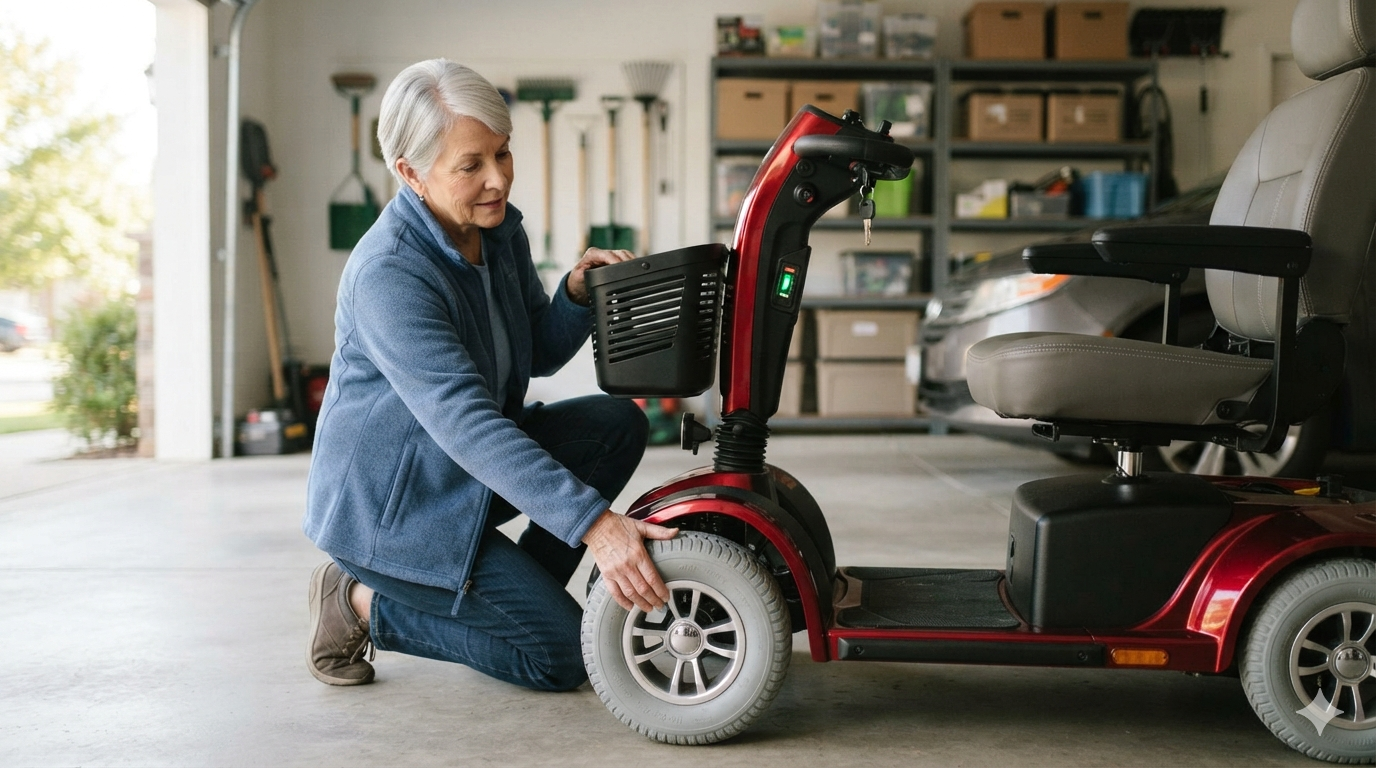
So there you have it – everything you need to know about what to check during a mobility scooter test drive or in-home trial. You know what to look for before you get on, while you're sitting on it, during the drive, and during an in-home trial.
Remember: a scooter that looks perfect on paper might be completely wrong for you in real life. The only way to know is to test it properly – on surfaces you'll actually use, in spaces you'll actually navigate, for the duration you'll actually need.
A good dealer will encourage you to test multiple models, take your time, and bring a family member along. They'll offer in-home trials and work with occupational therapists if needed. If a dealer rushes you, restricts your test drive, or won't offer a home trial – that's a red flag.
Your independence is worth protecting. And now you know exactly how.
Ready to dive deeper? Explore our full range of guides on mobility scooter. Each article is designed to give you the confidence to make the best decision for your mobility and quality of life.
Frequently Asked Questions
What should I check during a mobility scooter test drive?
Check acceleration smoothness, braking response, steering ease, turning circle, noise levels, battery gauge stability, and how it handles on surfaces similar to your regular routes.
What's the difference between a test drive and an in-home trial?
A test drive usually happens at a showroom and focuses on how the scooter handles. An in-home trial brings the scooter to your home so you can test doorways, hallways, turning space, storage, and daily routines.
How long should a mobility scooter test drive be?
Long enough to test all the key factors – acceleration, braking, steering, turning, and real-world terrain. Don't rush. A good dealer will let you take as much time as you need.
Can I bring someone with me to a test drive?
Yes – and you should. A family member or friend who understands your daily routine can notice details you might miss while concentrating on driving.
Do Australian dealers offer in-home trials?
Yes. Many Australian dealers offer free in-home trials. Some even bring a mobile showroom to you. Always ask before you buy.
What should I wear for a mobility scooter test drive?
Wear the shoes you typically use for outings and your usual clothing. Footwear affects how comfortably you reach the floor plate and operate controls.
Do I need an occupational therapist for a mobility scooter trial?
For NDIS participants, an OT assessment is often required for funding. Even if not required, an OT can help ensure the scooter is the right fit for your body, home, and lifestyle.
Stay mobile, stay confident!
Sign up for our monthly Mobility Scooter Newsletter to receive practical guides, expert advice, and inspiring stories that help you make the most of your scooter and download our free "Mobility Scooter Guide for Beginners."
Don't worry — your e-mail address is totally secure.
I promise to use it only to send you our newsletter, "Mobility Matters."
Recent Articles


-
Portable vs Travel vs Folding Mobility Scooters Buyer's Guide
Sep 15, 26 11:01 AM
 Confused by "portable," "travel," and "folding" mobility scooter listings? This guide explains what Australian sellers actually mean, with real weight comparisons and a decision framework.
 -
Mobility Scooter Types Overview: No More Confusion
Sep 15, 26 10:54 AM
 Mobility scooter types explained in plain English. Includes Australian footpath rules, airline battery limits, and the one mistake most first-time buyers make.
 -
How to Choose a Mobility Scooter in Australia Guide (2026)
Sep 15, 26 07:29 AM
 Choosing a mobility scooter in Australia? This guide covers registration requirements by state, public transport dimensions, NDIS funding steps, and practical testing advice.


Ready to Feel More Confident on Your Mobility Scooter?

My Ebook, The Ultimate Guide to Mobility Scooters, walks you through choosing the right scooter, using it safely, and keeping it in top condition — all explained in clear, friendly language.
Give yourself (or someone you love) the gift of independence.



