- Home
- Services and Shopping
- Mobile Repair Call-out Expectations
- How Long Does a Typical Mobility Scooter Repair Take
How Long Does a Typical Mobility Scooter Repair Take? Same-Day vs Parts Delays Explained
Understanding how long does a typical mobility scooter repair take is one of the most practical pieces of knowledge you can have as a scooter owner—because when your scooter breaks down, every hour without it can feel like an eternity. Whether you need it for a medical appointment tomorrow, a weekly shopping trip, or simply the freedom to get outside and enjoy the day, the timeline of a repair directly impacts your independence and peace of mind.
Here's the honest reality: repair times vary wildly. Some fixes are completed in under an hour while you wait. Others can stretch into weeks, leaving you stranded and frustrated.
The difference usually comes down to one factor: parts availability.
In this guide, we'll break down exactly how long different types of repairs typically take, explain what causes delays, and give you the questions you need to ask your repairer before they start work. By the end, you'll have realistic expectations and a plan to stay mobile—even if your scooter needs to be off the road for a while.
Let's start with the best-case scenario—because sometimes, things really do go smoothly.

The Best-Case Scenario: Same-Day Repairs
For many common mobility scooter issues, a same-day repair isn't just possible—it's the norm. Mobile technicians carry a range of common parts in their vans, and simple fixes can be completed in under an hour while you wait.
Repairs Typically Completed Same-Day
Battery replacement:
Batteries are the most common scooter component to fail, and most technicians carry standard sizes in their van. Replacement takes 30–60 minutes, including running diagnostic tests to confirm the new battery is working properly.
Tyre and puncture repairs:
Flat tyres and punctures are quick fixes. A technician can replace a tyre or repair a puncture in around 20–40 minutes. If you have puncture-proof solid tyres, replacement may take slightly longer—around 45 minutes to an hour—but still easily same-day.
Brake adjustments:
Minor brake adjustments or cable tightening typically takes 15–30 minutes. More complex brake work (like replacing brake pads) may take up to an hour.
Simple electrical diagnostics and fault clearing:
If your scooter is throwing error codes and a simple reset or fuse replacement solves the problem, you're looking at 15–30 minutes onsite.
Fuse and wiring repairs:
Replacing a blown fuse or repairing a simple broken wire can be done in 20–45 minutes, depending on accessibility.
Mobile vs Workshop Same-Day Repair
When you book a mobile repair, the technician comes to you. For same-day repairs, this is incredibly convenient—you don't need to transport your scooter anywhere, and you can often get back on the road the same day you call.
However, mobile repair slots can fill up quickly. Most providers can schedule you within 24–48 hours for non-emergency repairs. If you need urgent same-day service, call around early in the morning and ask specifically about availability.
So far, so good. But what happens when the problem isn't so simple?
When Things Get Complicated: Repairs That Take Longer
Some repairs simply can't be done same-day. The most common reasons are:
- Complex diagnostics: If the technician needs to trace an intermittent fault or run comprehensive tests, that takes time.
- Parts not in stock: If your scooter uses an uncommon part or a component that isn't kept in standard stock, the technician will need to order it.
- Workshop-only repairs: Some jobs require specialist equipment only found in a workshop.
Here's what you can expect for more complex repairs.
Electrical Motor or Controller Repairs
These are the "brains" of your scooter. If the controller fails or the motor needs repair, the technician will usually need to order specific replacement parts.
Expect 2–5 working days for the part to arrive, plus 1–2 hours for installation and testing. However, some less common scooter brands can see delays of a few weeks if parts need to be sourced from overseas.
Battery Issues Requiring Specialist Supply
While many batteries are standard, some mobility scooters use non-standard or high-performance batteries that must be ordered in. Allow 2–7 days for delivery, plus installation time.
If you can provide the battery model number when you call, the technician can often pre-order it, reducing your waiting time.
Brake System Overhauls
Minor brake adjustments are quick, but a full brake system overhaul—including replacing calipers, cables, and pads—can take 1–3 hours of labour.
If parts need ordering, add 2–5 days to that timeline
Motor or Transmission Repairs
Motor replacements are labour‑intensive. A typical motor replacement takes 2–3 hours of workshop time. This is one job that's almost always better done in a workshop than onsite—and parts delays can push the total timeline to 1–2 weeks.
The numbers are starting to add up. But before you worry, let's talk about what actually causes those delays.

What Causes Parts Delays? Understanding the Supply Chain
Parts delays are the single biggest source of frustration in mobility scooter repairs. Here's why they happen and what you can do about it.
Brand-Specific Parts
Just like cars, mobility scooters use parts that are often specific to the manufacturer. Brands like Shoprider, Pride Mobility, Merits, and Invacare all have unique controllers, motor housings, and connector types.
If your technician doesn't stock parts for your particular brand, they'll need to order directly from the manufacturer or their authorised distributor.
Typical brand-specific parts delay: 3–10 working days.
2. International Sourcing
Many mobility scooter components are manufactured overseas—particularly in China, Taiwan, or Europe. If the part isn't held in Australian warehouses, it may need to be shipped internationally.
Typical international sourcing delay: 2–6 weeks.
3. Seasonal Demand
Mobility scooter repairs often spike in certain seasons.
Winter can be particularly busy, as scooter owners store their scooters for months and then need them serviced when spring arrives. During peak periods, workshops may have wait times of a few weeks just to get your scooter on the bench.
Typical seasonal delay: Bookings may be 1–2 weeks out, plus parts delays.
4. Workshop Backlog
Good technicians are in demand. If your local repairer is highly rated, they may have a backlog of work. Always ask: "What's your current turnaround time from booking to completion?"
Typical workshop backlog: 2–10 working days.
Now you know what causes delays. But here's the important part—how can you avoid them?

How to Minimise Repair Delays
1. Ask the Right Questions Before Booking
When you call a repairer, don't just ask for a quote. Ask:
- "Do you stock parts for my scooter make and model?"
- "If you need to order parts, how long does that typically take?"
- "What's your current wait time for a technician visit?"
- "Can I provide the battery serial number now so you can check if it's in stock?"
- "Do you offer a loan scooter while mine is being repaired?" (Some providers do—it's worth asking!)
2. Use Mobile Repair for Simple Jobs
If the problem is straightforward (battery, tyre, basic electrical), a mobile repair gets your scooter back quickly.
Workshop repairs require transporting your scooter and often have longer wait times.
3. Build a Relationship With One Technician
Like any service, loyalty pays.
Establish a relationship with a repairer who knows your scooter brand. They'll be more likely to stock common parts for your model and prioritise your repairs.
4. Consider Annual Roadside Assistance
Organisations like RACV offer emergency wheelchair and scooter assistance plans, with coverage for up to 8 call-outs per year from around $30 annually.
These plans can provide peace of mind and often come with faster response times.
5. Plan Ahead for Non-Urgent Repairs
If your scooter is still running but needs attention, book the repair in advance.
Don't wait until it fails completely—regular servicing can prevent emergency breakdowns and their associated delays.
The 7 Key Questions You Should Ask Before Any Repair
Here's your cheat sheet—the seven questions that every mobility scooter owner should ask before agreeing to any repair.
Print this out, save it on your phone, or keep it handy for the moment your scooter breaks down.
|
# 1 2 3 4 5 6 7 |
Question "What is your call-out fee, and what does it include?" "What are your hourly labour rates, and do you charge in 15-minute or full-hour increments?" "Do you carry parts for my scooter brand, or will you need to order them?" "What happens if you can't fix it onsite?" "Can you provide a written quote before starting work?" "What's the estimated timeline from booking to completion?" "Do you offer loan scooters or have a replacement while mine is being repaired?" |
Why It Matters Some providers include the first 15 minutes onsite; others charge from departure. This determines how your bill adds up. If they need to order, you're looking at days or weeks of delay. Will they arrange transport to their workshop? Is there an additional charge? Always get it in writing. Verbal quotes can change. Set realistic expectations for both the repair and your backup transport plans. Some providers offer this as a service—it's worth asking, especially for longer waits. |
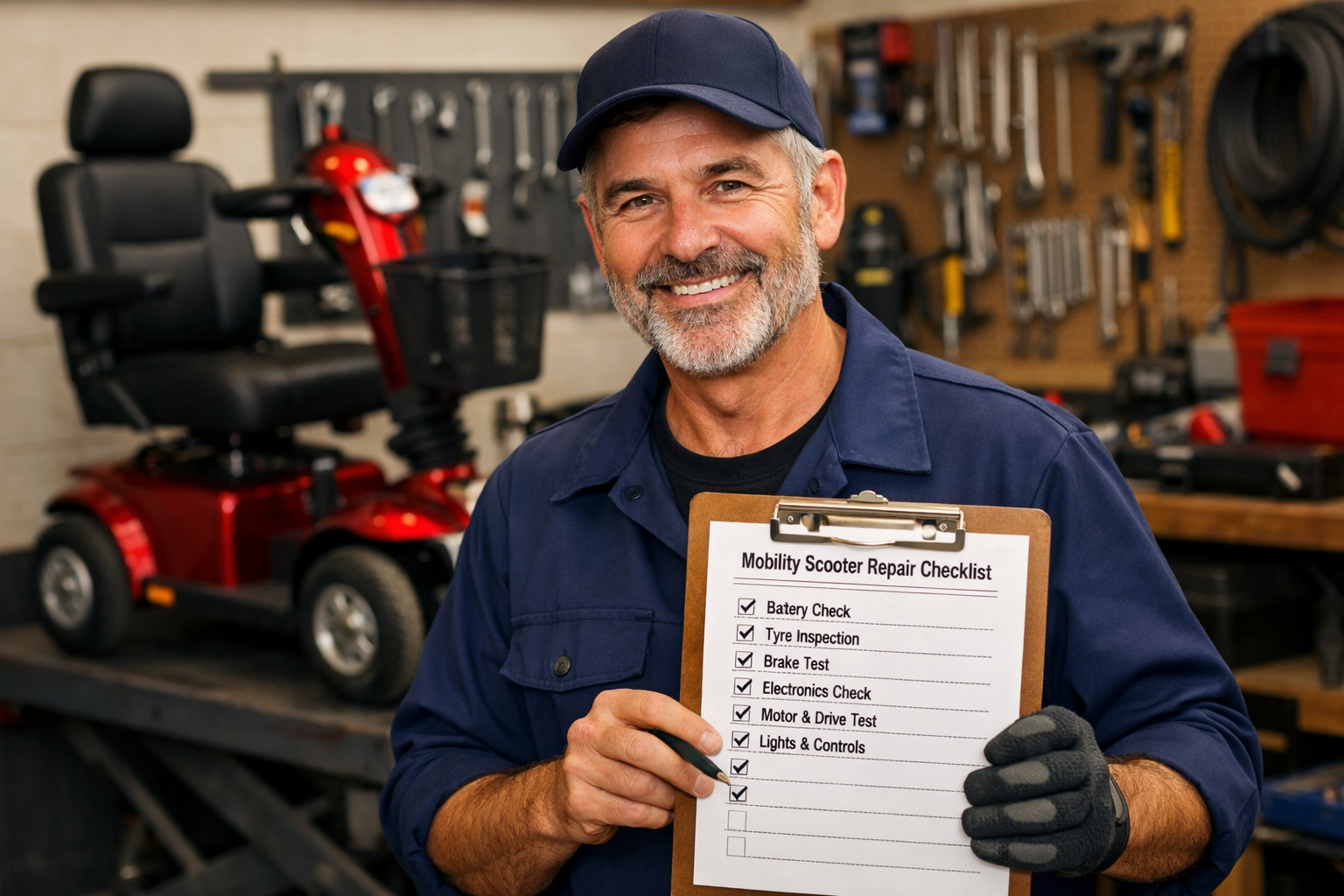
Typical Repair Timelines: A Quick Reference Table
|
Repair Type Battery replacement Tyre/puncture repair Tyre replacement (solid) Brake adjustment Brake system overhaul Fuse/wiring repair Controller replacement Motor replacement Complex electrical diagnostics Motor/transmission rebuild |
Typical Labour Time 30–60 minutes 20–40 minutes 45–60 minutes 15–30 minutes 1–3 hours 20–45 minutes 1–2 hours 2–3 hours 1–3 hours 3–5 hours |
Parts Delay (If Applicable) Usually same-day Usually same-day Usually same-day Usually same-day 2–5 days Usually same-day 2–10 days 2–10 days Varies 2–10 days |
Total Estimated Timeline Same-day Same-day Same-day Same-day 3–7 days Same-day 3 –12 days 3–14 days 2–14 days 4–15 days |
Planning for the Worst, Hoping for the Best
The single most important piece of advice we can give you is this: always have a backup plan.
If your scooter is your primary mode of transport, don't wait until it breaks down to think about alternatives. Consider:
- Having a second scooter (even a basic lightweight model) for emergencies
- Knowing your local public transport accessible options
- Building a network of friends, family, or community services who can assist if you're without your scooter for a few days
- Checking if your NDIS plan includes funding for temporary replacement scooters
Being prepared doesn't mean expecting the worst—it means you'll never be caught off guard.
When a Repair Isn't Worth the Wait
Sometimes, the repair timeline just doesn't make sense. If you're facing a 2‑week wait for a part that costs $400, and a new scooter is available for $2,500, you need to do the maths.
The Rule of 50%: If a repair costs more than 50% of the scooter's replacement value, it's usually not worth doing. And if the repair cost exceeds $3,000 (the NDIS urgent repair cap for mobility scooters), replacement is almost always the better financial decision.
New lightweight folding scooters start from around $2,390**, while mid-range everyday models cost **$3,880–$4,990. If your repair quote approaches these figures, replacement becomes compelling.

Your Peace of Mind Matters Most
Your mobility scooter isn't just a machine—it's your freedom, your independence, and your link to the world around you. When it breaks down, the waiting can be the hardest part.
But here's what we want you to take away from this guide: knowledge is power.
Understanding how long does a typical mobility scooter repair take—and what causes delays—means you can plan ahead, ask the right questions, and avoid the frustration of unrealistic expectations.
So the next time your scooter needs attention, take a breath. Refer back to this guide. Ask the seven questions. And remember—you've got this.
Need more help? Check your scooter's user manual for specific troubleshooting advice, or contact your local mobility equipment provider for guidance. And if you're an NDIS participant, don't forget to check your plan has available funding for repairs before booking—urgent mobility scooter repairs are capped at $3,000 under the scheme.
Stay mobile, stay confident!
Sign up for our monthly Mobility Scooter Newsletter to receive practical guides, expert advice, and inspiring stories that help you make the most of your scooter and download our free "Mobility Scooter Guide for Beginners."
Don't worry — your e-mail address is totally secure.
I promise to use it only to send you our newsletter, "Mobility Matters."
Recent Articles


-
Portable vs Travel vs Folding Mobility Scooters Buyer's Guide
Sep 15, 26 11:01 AM
 Confused by "portable," "travel," and "folding" mobility scooter listings? This guide explains what Australian sellers actually mean, with real weight comparisons and a decision framework.
 -
Mobility Scooter Types Overview: No More Confusion
Sep 15, 26 10:54 AM
 Mobility scooter types explained in plain English. Includes Australian footpath rules, airline battery limits, and the one mistake most first-time buyers make.
 -
How to Choose a Mobility Scooter in Australia Guide (2026)
Sep 15, 26 07:29 AM
 Choosing a mobility scooter in Australia? This guide covers registration requirements by state, public transport dimensions, NDIS funding steps, and practical testing advice.



Ready to Feel More Confident on Your Mobility Scooter?

My Ebook, The Ultimate Guide to Mobility Scooters, walks you through choosing the right scooter, using it safely, and keeping it in top condition — all explained in clear, friendly language.
Give yourself (or someone you love) the gift of independence.

