- Home
- Services and Shopping
- What to Ask a Scooter Dealer
- How to Compare Mobility Scooter Dealers
How to Compare Mobility Scooter Dealers – Your Guide to Service, Parts, Warranty and Support
Picture this: You've found the perfect mobility scooter. It looks great, feels comfortable, and fits your budget. You hand over your money, drive it home, and feel a wonderful sense of freedom.
Then, six months later, something goes wrong. A strange noise from the motor. The battery won't hold a charge. You call the dealer for help – and nobody answers. Emails go unanswered. The business seems to have vanished.
This isn't just a hypothetical. In 2025, vulnerable outback residents alleged that Remote Mobility took payments for mobility equipment and then disappeared. One man ordered a scooter worth $6,300 but, six months later, couldn't contact the business. The owner told police the business was insolvent. His Australian Business Number was cancelled.
That's the nightmare scenario.
And it's precisely why learning how to compare mobility scooter dealers is just as important as comparing the scooters themselves.

The right dealer doesn't just sell you a scooter – they become your partner in mobility. They support you when things go wrong, stock the parts you need, honour their warranties, and genuinely care about keeping you moving.
The wrong dealer? They take your money and disappear.
This guide will walk you through exactly how to compare mobility scooter dealers across four critical areas: service, parts, warranty, and support. By the end, you'll know exactly what to look for, what questions to ask, and which red flags should send you walking straight out the door.
Let's get started – because your independence deserves more than a gamble.
Why Comparing Dealers Matters More Than Comparing Prices
When most people start shopping for a mobility scooter, they focus on the scooter itself. Battery range. Weight capacity. Turning radius. Price. And yes, those things matter – a lot.
But here's what many buyers overlook: the dealer you choose can make or break your experience.
Think about it this way. A mobility scooter is a machine with moving parts, electronics, and a battery that will eventually need replacing. It's not a one-off purchase – it's the beginning of a relationship. When something breaks, who are you going to call? When your battery dies, and you can't leave the house, who's going to help?
A good dealer has qualified technicians ready to service your scooter. They stock spare parts locally so you're not waiting weeks for a simple fix. They offer both workshop servicing and mobile on-site repairs – because they understand that getting your scooter to them might be difficult. They honour their warranties without making you jump through hoops.
A bad dealer? They sell you the scooter and wash their hands of you. They don't answer calls. They don't stock parts. They make you pay for service upfront before they'll even attend your home. One customer reported being quoted $2,500 for a scooter motor – more than the cost of a new scooter.
That's why how to compare mobility scooter dealers isn't just a nice-to-know – it's essential. It's the difference between freedom and frustration.
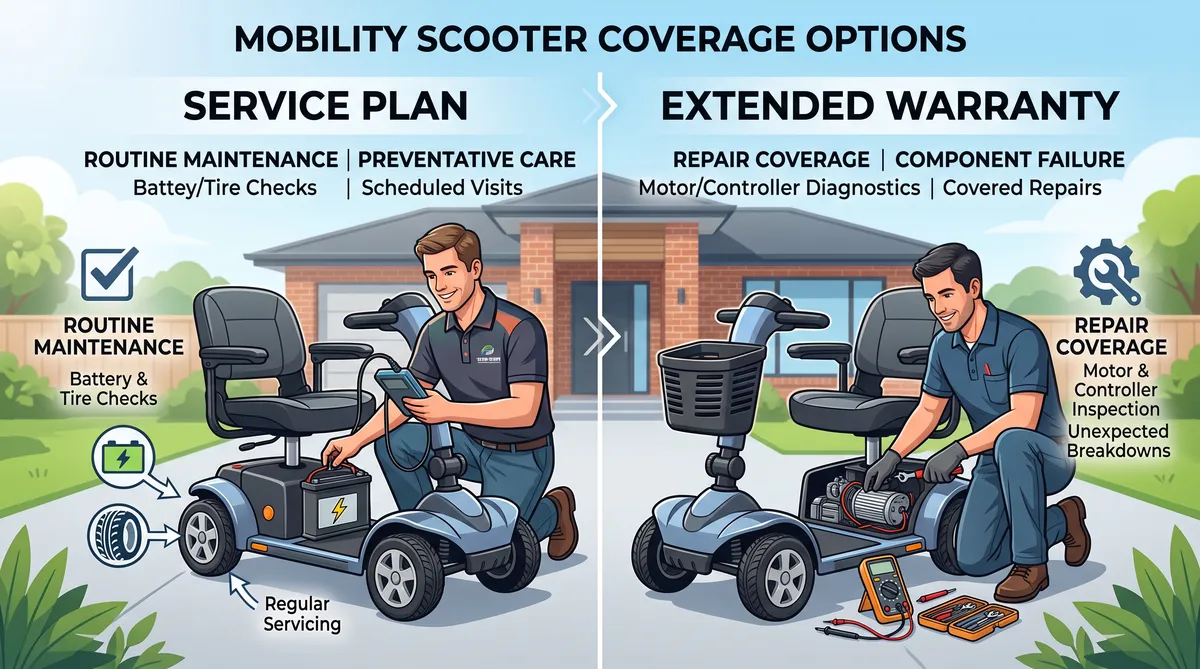
Service and Repairs – The Heart of After-Sales Support
The first and most important thing to compare when looking at dealers is their service and repair capability. This is where the rubber meets the road – literally.
Do They Have In-House Technicians?
Some dealers simply sell scooters and outsource all repairs to third parties. Others have qualified technicians on staff who understand the products inside out.
Ask: Do you have in-house technicians, or do you send repairs elsewhere?
A dealer with in-house technicians can usually diagnose and resolve problems faster. They know the common issues with each model. They have the right tools and training. One provider notes they offer "expert after-sale service and repairs, both onsite and via our convenient mobile service" – that's the kind of capability you want.
What Are Their Service Costs?
Servicing costs vary widely between dealers – and this is something you should compare upfront.
For a standard mobility scooter service, you might pay around $140 for an in-store service or $175 for on-site service. Some dealers charge an emergency call-out fee of around $70, which includes the first 15 minutes of service, with time then billed in 15-minute increments. Another provider charges a $44 call-out fee plus $66 per hour.
Ask each dealer for their current fee schedule. Some dealers offer mobile service that comes to your home – essential if you can't easily transport your scooter. Others require you to bring the scooter to them.
What's Their Turnaround Time?
This is one of the most important questions to ask. If your scooter is your primary means of getting around, being without it for weeks isn't just inconvenient – it's devastating to your independence.
Ask: What's your typical turnaround time for repairs?
What's the worst-case scenario? Some dealers pride themselves on same-day repairs. Others might take weeks. Compare the answers and choose accordingly.
Do They Offer Loan Scooters?
Some dealers will loan you a scooter while yours is being repaired. This is a huge benefit – it means you're not stranded while you wait.
Ask each dealer: Do you provide a loan scooter if mine is being repaired? If so, what are the conditions and costs?
For a complete breakdown of servicing costs and what to expect, explore our detailed guide: Mobility Scooter Servicing Cost Explained
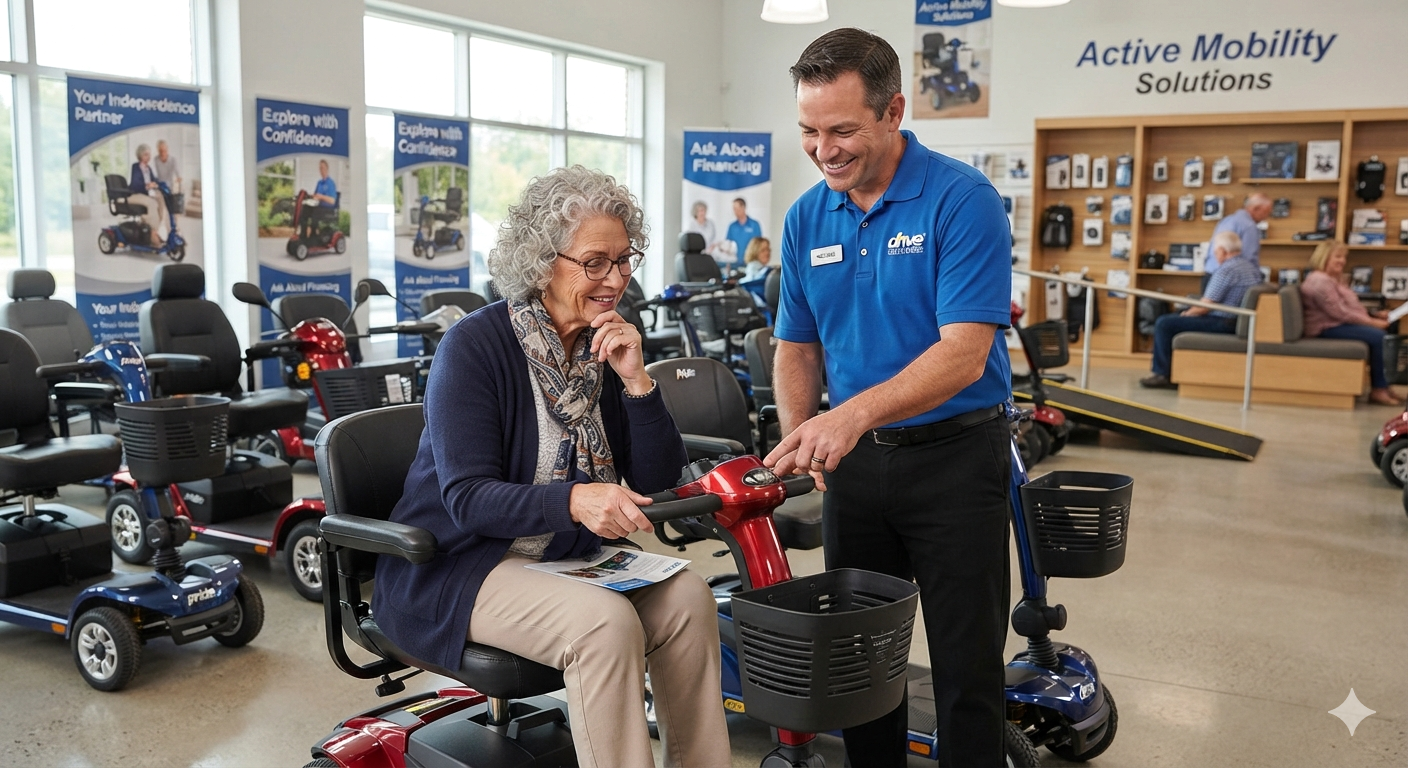
Parts Availability – The Hidden Factor
You might not think about spare parts when you're comparing dealers – but you should. Parts availability can make the difference between a quick fix and weeks of waiting.
Do They Stock Parts Locally?
A dealer who stocks spare parts locally can get you back on the road fast. A dealer who orders everything from overseas? You could be waiting weeks or even months.
Ask: How long do spare parts usually take to arrive for this model?
This reveals whether the dealer has real support or simply sells units and moves on.
What Brands Do They Support?
Some dealers specialise in certain brands. Others support a wide range. If you're buying a specific brand, make sure the dealer can get parts for it.
Ask: Do you stock parts for this brand, or do you need to order them in?
A dealer who stocks parts for your chosen brand is worth their weight in gold.
Battery Availability Is Critical
Batteries are one of the most common replacement items – and they're expensive, typically costing between $200 and $500.
Ask: Do you stock replacement batteries for this model, or do they need to be ordered?
If batteries need to be ordered in, ask how long that takes. Some dealers stock common battery types; others don't.
Read the full guide: What should I ask about battery replacement cost, lifespan, and availability (for a specific model)?

Warranty – What's Really Covered?
Warranties vary dramatically between dealers and brands. Comparing warranty terms is essential when you're figuring out how to compare mobility scooter dealers.
What Does the Warranty Cover?
Ask: What does the warranty cover, and for how long?
In Australia, many new mobility scooters come with a two-year warranty on the frame and major components, with six months on batteries and tyres. Some brands offer three years on the frame. Others offer less.
Get the warranty terms in writing and confirm the exclusions. Common exclusions include:
- Batteries (some warranties exclude them entirely or only cover them for 6 months)
- Tyres
- Damage from misuse
- Water damage
- Normal wear and tear
Who Handles Warranty Claims?
This is crucial.
Ask:Who handles repairs and warranty claims – your store or the manufacturer?
Some dealers manage the process end-to-end. Others require you to deal with the manufacturer directly – which can be a frustrating experience.
What About Consumer Guarantees?
Remember that under the Australian Consumer Law, you have automatic consumer guarantees that cannot be excluded, regardless of what any warranty document says. Goods must be of acceptable quality, fit for purpose, and match their description. A reputable dealer will be upfront about your rights.
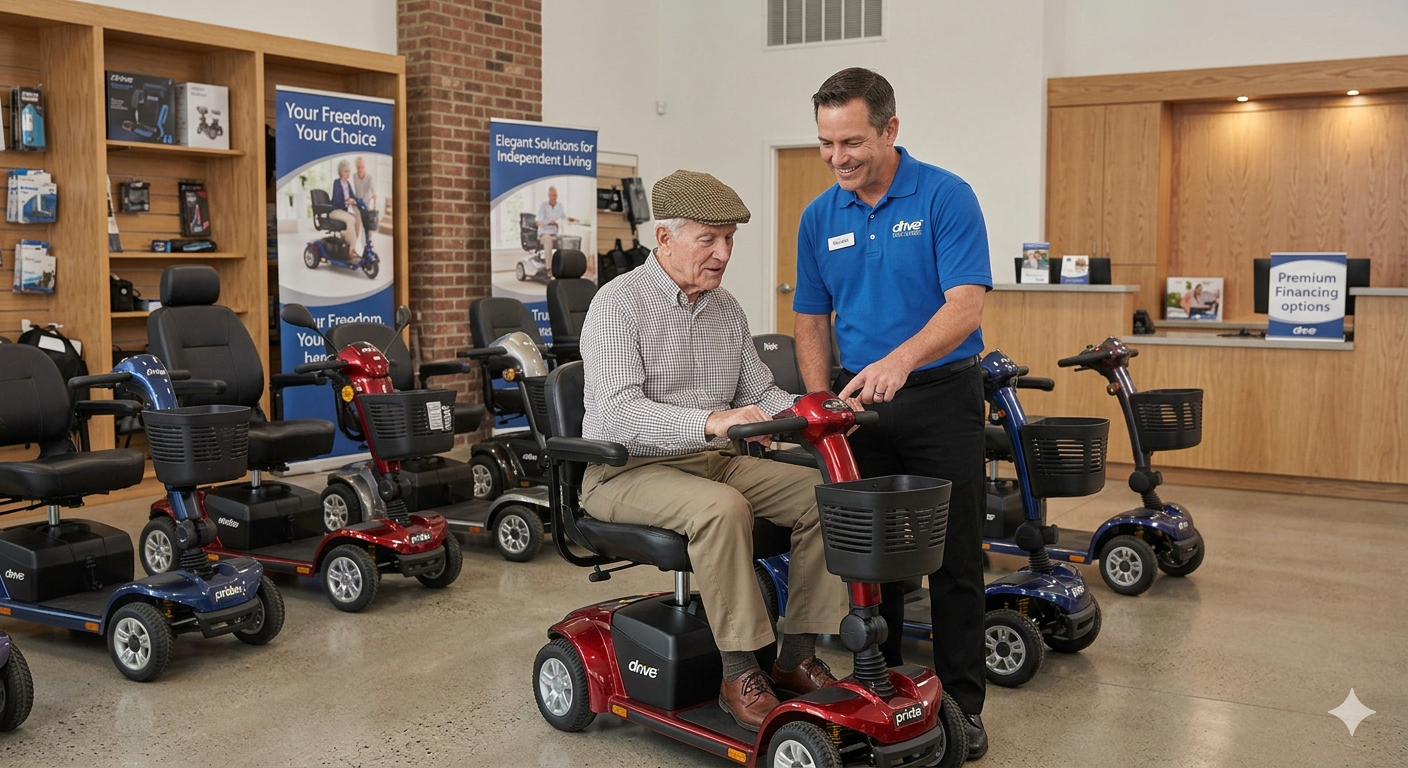
Support and Communication – The Human Factor
This is harder to quantify, but it's just as important. When you're comparing dealers, pay attention to how they treat you.
How Responsive Are They?
Do they return calls promptly? Do they answer emails? One customer reported a dealer who "don't answer enquiries, completely ignore you". Another said their 83-year-old father "tried so many times to get someone to come out and fix his mobility scooter, they don't call back".
Test the dealer before you buy. Call them with a question. See how long it takes to get a response. If they're unresponsive before the sale, they'll almost certainly be worse after.
What Do Their Reviews Say?
Check online reviews – but read them critically. Look for patterns. If multiple customers report the same problem (ghosting after purchase, long repair times, high costs), believe them.
Do They Offer Training and Handover?
A proper handover reduces early accidents and frustration.
Ask: What's your delivery, setup, and training process like?
A good dealer will show you how to use your scooter safely, not just hand over the keys.
Read the full guide: What questions should I ask about delivery, setup, and user training for a new mobility scooter? (Coming Soon!)
Red Flags – When to Walk Away
Knowing how to compare mobility scooter dealers also means knowing when to walk away. Here are the red flags that should send you straight out the door.
Red Flag #1: They can't or won't answer your questions.
If a dealer is evasive about warranty, service costs, or parts availability, that's a problem.
Red Flag #2: They push you to buy without a test drive.
Any dealer who rushes you or discourages testing multiple models is not looking out for your best interests.
Red Flag #3: They promise the world but can't deliver.
The Remote Mobility case is a cautionary tale – they promised in-person support to remote communities, took payments, and then disappeared.
Red Flag #4: They don't stock parts.
If they can't tell you how long parts take to arrive, they probably don't have a reliable supply chain.
Red Flag #5: They make you pay for service upfront before attending your home.
One customer reported this as a major red flag. While some call-out fees are normal, being asked to pay before any service is provided should raise concerns.
Red Flag #6: Their ABN (Australian Business Number) has been cancelled, or they're not a registered business.
Check the Australian Business Register. If a dealer's ABN has been cancelled, that's a major warning sign.
Read the full guide: What are the red flags of a mobility scooter dealer (support and servicing problems)? (Coming Soon!)

Local Dealer vs Online – Which Is Better?
This is one of the most important decisions you'll make – and it directly affects how to compare mobility scooter dealers.
The Case for Local Dealers
Local dealers offer test drives. You can sit on the scooter, adjust it, and test it on real surfaces. You can't do that with an online purchase.
Local dealers offer after-sales support. When something goes wrong, you have someone local to call. Online sellers may not offer the same level of support – or any support at all.
Local dealers offer service and repairs. Many have in-house technicians. Online sellers typically don't.
Local dealers offer setup and training. An online purchase is often delivered in a box, unassembled. You're left to figure it out yourself.
The Risks of Online
The ACCC (Australian Competition and Consumer Commission) is "very concerned about the safety issues related to online retailers of powered mobility scooters and recommends against that avenue of supply".
The traps of buying online include:
- You can't try before you buy
- Questionable quality and unknown brands
- No personal service or expert advice
- No unpacking, assembly, or installation
- No product run-through – just the instruction manual
- No phone or email support
- Difficulty with warranty claims and spare parts
- No convenient service and repairs
- No peace of mind
If You Buy Online Anyway
If you do choose to buy online, ask: What's the return policy? Who handles warranty claims? Where do I get it serviced? How long do parts take to arrive?
Your Dealer Comparison Checklist
Here's a quick checklist to use when comparing mobility scooter dealers:
|
Factor |
What to Ask |
Why It Matters |
|
Service |
Do you have in-house technicians? What are your service costs? What's your turnaround time? |
Determines how quickly you get back on the road |
|
Parts |
Do you stock parts locally? How long do parts take to arrive? |
Prevents weeks of waiting for simple fixes |
|
Warranty |
What's covered and for how long? Who handles claims? |
Protects your investment |
|
Support |
Do you offer loan scooters? Do you provide training? |
Keeps you mobile during repairs |
|
Red Flags |
Check reviews, ABN (Australian Business Number), responsiveness |
Avoids costly mistakes |
|
Local vs Online |
Can I test drive? Do you offer setup? |
Affects your entire experience |

Your Next Steps
So there you have it – everything you need to know about how to compare mobility scooter dealers. You know what to look for, what questions to ask, and which red flags should send you walking.
Remember: the cheapest dealer isn't always the best value. A dealer who charges a bit more but offers exceptional after-sales support, stocks parts locally, and honours their warranty is worth every extra dollar.
A good dealer becomes your partner in mobility. They don't just sell you a scooter – they keep you moving, year after year. They answer your calls. They fix your problems. They genuinely care about your independence.
And that's worth more than any discount.
So go ahead – do your research, compare your options, and choose a dealer you can trust. Your independence deserves nothing less.
Ready to dive deeper? Explore our full range of guides on mobility scooter. Each article is designed to give you the confidence to make the best decision for your mobility and quality of life.
Stay mobile, stay confident!
Sign up for our monthly Mobility Scooter Newsletter to receive practical guides, expert advice, and inspiring stories that help you make the most of your scooter and download our free "Mobility Scooter Guide for Beginners."
Don't worry — your e-mail address is totally secure.
I promise to use it only to send you our newsletter, "Mobility Matters."
Recent Articles


-
Portable vs Travel vs Folding Mobility Scooters Buyer's Guide
Sep 15, 26 11:01 AM
 Confused by "portable," "travel," and "folding" mobility scooter listings? This guide explains what Australian sellers actually mean, with real weight comparisons and a decision framework.
 -
Mobility Scooter Types Overview: No More Confusion
Sep 15, 26 10:54 AM
 Mobility scooter types explained in plain English. Includes Australian footpath rules, airline battery limits, and the one mistake most first-time buyers make.
 -
How to Choose a Mobility Scooter in Australia Guide (2026)
Sep 15, 26 07:29 AM
 Choosing a mobility scooter in Australia? This guide covers registration requirements by state, public transport dimensions, NDIS funding steps, and practical testing advice.


Ready to Feel More Confident on Your Mobility Scooter?

My Ebook, The Ultimate Guide to Mobility Scooters, walks you through choosing the right scooter, using it safely, and keeping it in top condition — all explained in clear, friendly language.
Give yourself (or someone you love) the gift of independence.


