- Home
- Mobility Scooter Buying Guides
Your Complete Mobility Scooter Buying Guides – Find the Perfect Ride for Your Life
This mobility scooter buying guides article is here to walk you through every decision, step by step, without the jargon, without the pressure, and without making you feel silly for asking questions. By the time you finish reading, you’ll know exactly what to look for — and more importantly, you’ll feel confident about your choice.
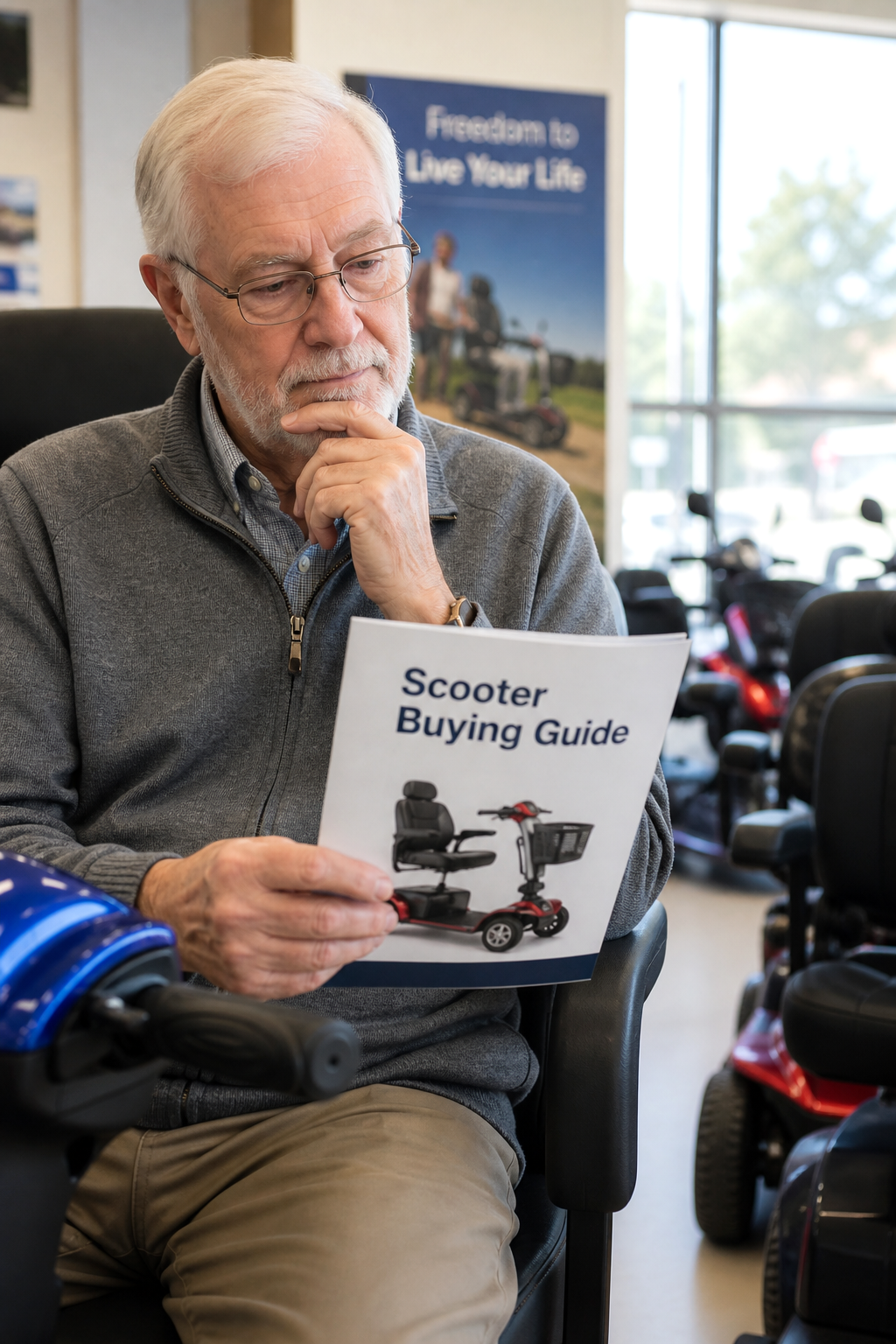
Picture this: You’re standing in a showroom surrounded by scooters. Some are tiny and foldable. Others look like miniature cars with captain’s chairs. A salesperson is throwing terms at you — “turning radius,” “weight capacity,” “battery range” — and your head is spinning. You came here hoping for answers, and instead you left with more questions.
Or maybe you’re sitting at your kitchen table, laptop open, scrolling through dozens of websites. Each one claims to have “the best” mobility scooter. But “best” for whom? Best for what? You’re not sure if you should be looking at three wheels or four. You’re not certain how much you should spend.
And honestly? A small part of you is still wrestling with the idea that you even need one of these in the first place.
Take a deep breath. You’re in exactly the right place. Let’s start with the most important question of all.
Start With the ‘Where’ — Because Everything Else Follows
Before you worry about brands, prices, or battery sizes, ask yourself one simple question: Where will you use this scooter most of the time?
Your answer shapes every other decision you’ll make.
- Mostly indoors — homes, shopping centres, clinics, tight hallways? You need a compact scooter with a tight turning radius. Three-wheel models traditionally excel here because they can pivot in smaller spaces.
- Mostly outdoors — sidewalks, parks, uneven pavement, maybe the occasional grassy path? You’ll want larger wheels, better suspension, and a more stable base. Four-wheel scooters offer greater stability on rough terrain.
- A mix of both — like many people, you plan to use it indoors and outdoors? Look for a versatile mid-size scooter that balances manoeuvrability with stability.
- Travel frequently — you want to take it in the car, on holiday, or even on a plane? Portability becomes your top priority. Lightweight, foldable, or easily dismantled models are your friends.
The “where” isn’t just a practical question — it’s a safety question. A scooter that’s wrong for your environment can be frustrating at best and dangerous at worst. And that’s the last thing any of us want.
So take a moment. Visualise your typical week. Where does your scooter need to take you?

Three Wheels or Four? The Debate That Confuses Everyone
This is the question that trips up almost every buyer. And honestly? It’s not as complicated as it seems as you read through this buying guides.
Three-wheel scooters have one wheel at the front and two at the back. They turn more easily, which makes them stars in tight spaces like grocery store aisles, narrow hallways, and crowded areas. They’re also generally lighter and more portable. The trade-off? They’re slightly less stable, especially on uneven ground or when turning at higher speeds.
Four-wheel scooters have two wheels at the front and two at the back. They offer superior stability, which is why many experts recommend them as the safer default choice for most users. They handle bumps, slopes, and outdoor terrain with more confidence. The trade-off? They need more room to turn and are generally bulkier and heavier.
Here’s the simple decision rule: If you’ll be indoors more than outdoors, consider three wheels. If you’ll be outdoors more than indoors, choose four wheels. If you’re unsure or it’s a mix, four wheels are the safer bet.
Still torn? That’s completely normal. In fact, it’s one of the main reasons people turn to Mobility Scooter Buying Guides in the first place. The good news is that modern technology has blurred the lines — some four-wheel scooters now have turning radii that rival three-wheel models. So you don’t always have to choose between stability and manoeuvrability anymore.
Comfort Isn’t a Luxury — It’s a Necessity
Here’s something most mobility scooter buying guides don’t emphasise enough: you’re going to spend a lot of time sitting on this thing. If it’s uncomfortable, you won’t use it. And if you don’t use it, what was the point?
Comfort features to look for:
- Seat padding and width — wider seats accommodate more body types. Better padding means less fatigue on longer outings.
- Adjustable armrests — they should support your arms without forcing your shoulders into an awkward position.
- Suspension systems — these absorb shocks from bumps and cracks in the pavement. If you’ll be outdoors, suspension is a game-changer.
- Adjustable tiller (the steering column) — being able to angle the handlebars to a comfortable position reduces strain on your wrists and back.
- Foot platform size — you want enough room to position your feet naturally.
Think about this: the average mobility scooter user is older, often with conditions like arthritis or chronic pain. A scooter that doesn’t accommodate your body is a scooter that will collect dust in the garage. And you deserve better than that.
Comfort Features Worth Paying For – What Actually Makes a Difference]
Not all comfort features are created equal. Some are genuine game-changers; others are nice-to-haves that won’t dramatically improve your daily experience.
Suspension, for example, helps absorb bumps, cracks, vibration, and uneven surfaces while you ride. If you ride for longer than 15 to 20 minutes, suspension significantly reduces fatigue and discomfort. It also helps keep all four wheels on the ground over uneven terrain, improving steering control, balance, and safety. Riders with pain conditions often see a major comfort improvement with a suspension-equipped scooter.
But suspension isn’t essential if you ride mostly indoors on smooth surfaces. The key is matching the feature to your actual needs — not just buying what sounds impressive.
Learn which comfort features are truly worth the investment in our full buying guides.
Read Full Guide→ Comfort Features Worth Paying For (Coming Soon!)
Battery Range — How Far Is Far Enough?
Battery range is one of those specs that sounds simple but gets tricky fast. Most mobility scooters offer between 8 and 20 miles per charge, depending on the model, terrain, rider weight, and battery type.
Here’s the question you need to answer: How far do you actually travel in a typical day?
- If you’re mostly popping to the local shops and back, a shorter range ( 13–32 km ) is probably fine.
- If you enjoy long outings, visiting friends across town, or spending entire days out, you’ll want a scooter with approx. 24–32+ km of range.
- Remember that hills, rider weight, frequent stopping, and cold weather can all reduce actual range compared to the manufacturer’s claim.
And here’s a sobering thought: running out of battery mid-journey isn’t just inconvenient — it can be genuinely scary, especially if you’re alone or far from home. Always choose a scooter with a little more range than you think you need. It’s better to have it and not need it than to need it and not have it.
Range Claims Versus Real Distance – What You Need to Know
Here’s a hard truth that many mobility scooter buying guides gloss over: manufacturer range claims rarely match reality. Users consistently report getting 20 to 30 percent lower real-world range than what the box says.
Mobility scooter range is measured under ideal conditions, but in real use — hills, kerbs, stop-start journeys, and cold weather — your usable range can drop by 25 to 40 percent. Most mobility scooters achieve approx. 16 to 32 km in real-world conditions, even if advertised at higher ranges.
An “average” day of scooter use should not exceed more than 50 percent of the manufacturer’s stated theoretical range. So if a scooter claims 30 km, plan for about approx. 16 to 22 km of actual usable distance. Understanding this gap is crucial — it could mean the difference between arriving home comfortably and being stranded half a mile from your front door.
Get the full breakdown of real-world range in our detailed buying guides.
Read Full Guide→ Range Claims Versus Real Distance – What You Need to Know (Coming Soon!)
Portability — Can You Actually Move It?
This is where many Mobility Scooter Buying Guides get technical without being helpful. Let’s keep it real.
If you need to transport your scooter — in a car, on public transport, or while travelling — you need to think about:
- Total weight — how much does the whole thing weigh?
- Heaviest piece — many scooters disassemble into parts. If the heaviest part is too heavy for you (or your caregiver) to lift, that’s a problem.
- Folding vs. disassembling — some fold with the push of a button. Others require you to pull apart several pieces. Which can you manage?
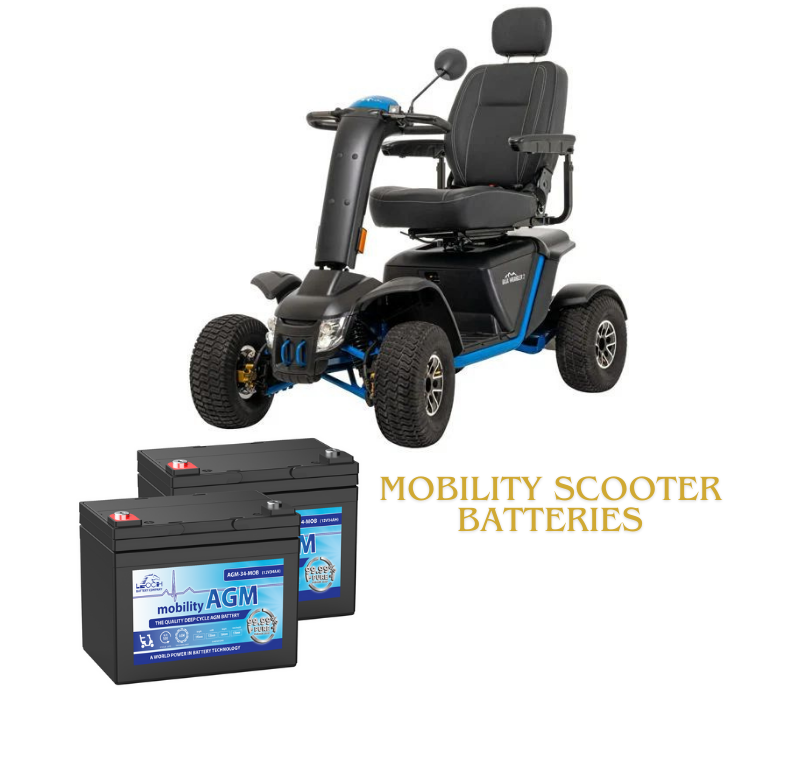
- Battery type — lithium batteries are lighter and often airline-friendly. Lead-acid batteries are heavier and cheaper but less portable.
Be honest with yourself about your physical capabilities. If lifting 40 pounds is a struggle, don’t buy a scooter with a 40-pound heaviest piece. Ask for help, test it in the store, and don’t be afraid to say, “This isn’t going to work for me.”
Mobility Scooter Brands Comparison – Finding the Right Fit
The mobility scooter market is crowded with brands, each claiming to be the best. Major global manufacturers include Pride Mobility, Drive Medical, Golden Technologies, Invacare, Electric Mobility, Afikim Electric Vehicles, Amigo Mobility International, and Hoveround. Pride Mobility and Drive Medical are two of the most tested and recommended options for everyday use.
Pride’s Go-Go Elite Traveller series is known for its travel-friendly design, while Drive Medical’s Spitfire Scout line offers extended range and luxury features. For heavier users or outdoor adventures, brands like Afikim and Pride’s Baja series provide heavy-duty options with higher weight capacities and stronger suspensions.
But the “best” brand isn’t a one-size-fits-all answer — it depends on your specific needs, budget, and lifestyle.
Compare the top brands side by side in our comprehensive brand comparison guide.
Read Full Guide→ Mobility Scooter Brands Comparison – Finding the Right Fit (Coming Soon!)

Weight Capacity — More Important Than You Think
Every scooter has a maximum weight capacity. Exceeding it isn’t just a warranty issue — it’s a safety issue.
Exceeding the weight limit can:
- Overwork the motor, reducing performance and lifespan
- Drain the battery faster
- Compromise stability and increase tipping risk
- Void your warranty
Standard scooters typically support 113–136 kg. Mid-size models support approx. 147–181 kg. Heavy-duty scooters support approx. 181 kg or more.
When checking weight capacity, remember to account for everything you’ll be carrying — not just your body weight, but also shopping bags, oxygen tanks, backpacks, and any accessories.
Weight Capacity Versus Stability – What You Need to Know
There’s a direct relationship between weight capacity and stability — but it’s not as simple as “more weight capacity equals more stability.” Every mobility scooter is built around a maximum safe user weight set by the manufacturer. Going over this limit affects safety, stability, battery range, and warranty cover, so this is the first number to confirm — not the last.
If you weigh over 130 kg, the most important factor isn’t whether the scooter has three wheels or four — it’s whether the scooter is rated to safely support your weight. While some three-wheel models are designed for heavier users, you’ll generally find more options in the four-wheel category with higher weight capacities, larger seats, and stronger suspensions.
A properly rated three-wheel scooter can work well for indoor use, while a four-wheel scooter is often preferred for outdoor stability and higher weight capacities. Choosing a scooter rated below your weight risks structural failure, tipping, or mechanical issues.
Read our full guide to weight capacity and stability to make a safe choice.
Read Full Guide→ Weight Capacity Versus Stability – What You Need to Know (Coming Soon!)
Test Before You Buy — Yes, You Can (And Should)
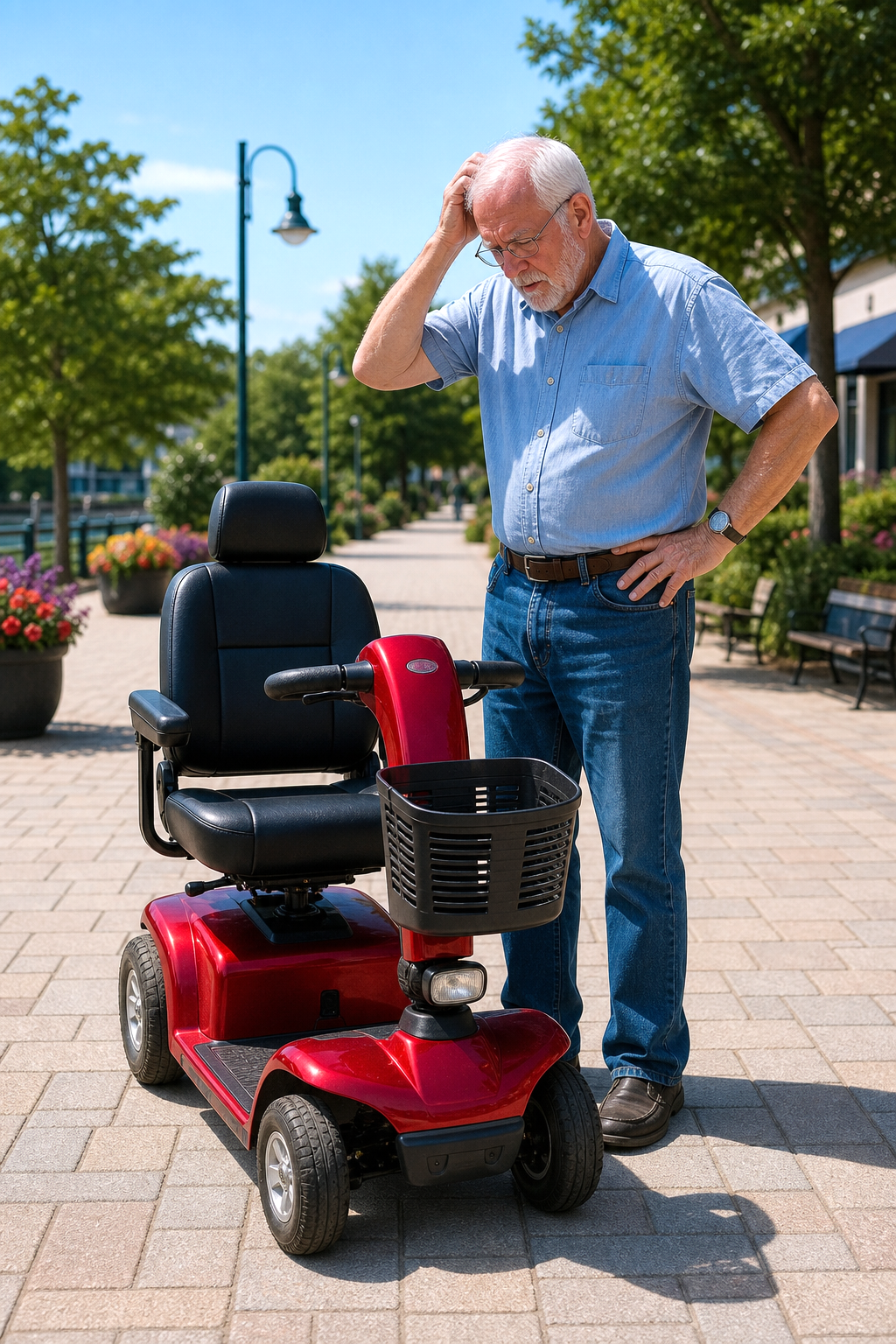
One of the most valuable pieces of advice in any mobility scooter buying guides article is this: test drive the scooter before you buy it.
Reputable suppliers will let you take a scooter for a spin — sometimes even in your own home. Here’s what to test:
- Does it fit through your doorways and hallways?
- Can you get on and off comfortably?
- Is the seat at the right height?
- Are the controls intuitive and easy to reach?
- How does it feel on different surfaces — carpet, pavement, slopes?
If a supplier won’t let you test, that’s a red flag. Walk away.
Mobility Scooter Buying Checklist – Your Pre-Purchase Guide]
A checklist isn’t just a nice-to-have — it’s your safety net.
Start with the basics: where will you be going, what’s the battery capacity, where will you store it, and will you need to transport it. Check the weight limit and make sure you’re within it. Consider whether you need modifications and ask a physiotherapist or occupational therapist for advice if you have specific physical needs.
Think about the surfaces you’ll be travelling on — carpet, pavement, grass, or slopes. And don’t forget about seating: do you require larger seating or extra legroom?
Working through a consistent checklist — rather than judging on appearance alone — helps you avoid a scooter that looks fine but isn’t ready for daily use.
Read and download our complete pre-purchase checklist in our buying guides to make sure you don’t miss a thing.
Read Full Guide→ Mobility Scooter Buying Checklist – Your Pre-Purchase Guide (Coming Soon!)
What About Cost and Insurance?
Mobility scooters can range from around $1,000 for basic travel models to $5,000+ for heavy-duty, all-terrain models.
Insurance coverage varies widely. In some cases, Medicare, Medicaid, or private insurance may cover part or all of the cost if a doctor certifies medical necessity. But approval isn’t guaranteed, and the process can be slow.
If you’re paying out of pocket, consider: are you buying for the short term or the long term? Spending a bit more on a quality scooter that lasts years is often better than buying cheap and replacing it in 12 months.
Used Mobility Scooter Inspection Checklist – Don’t Get Caught Out]
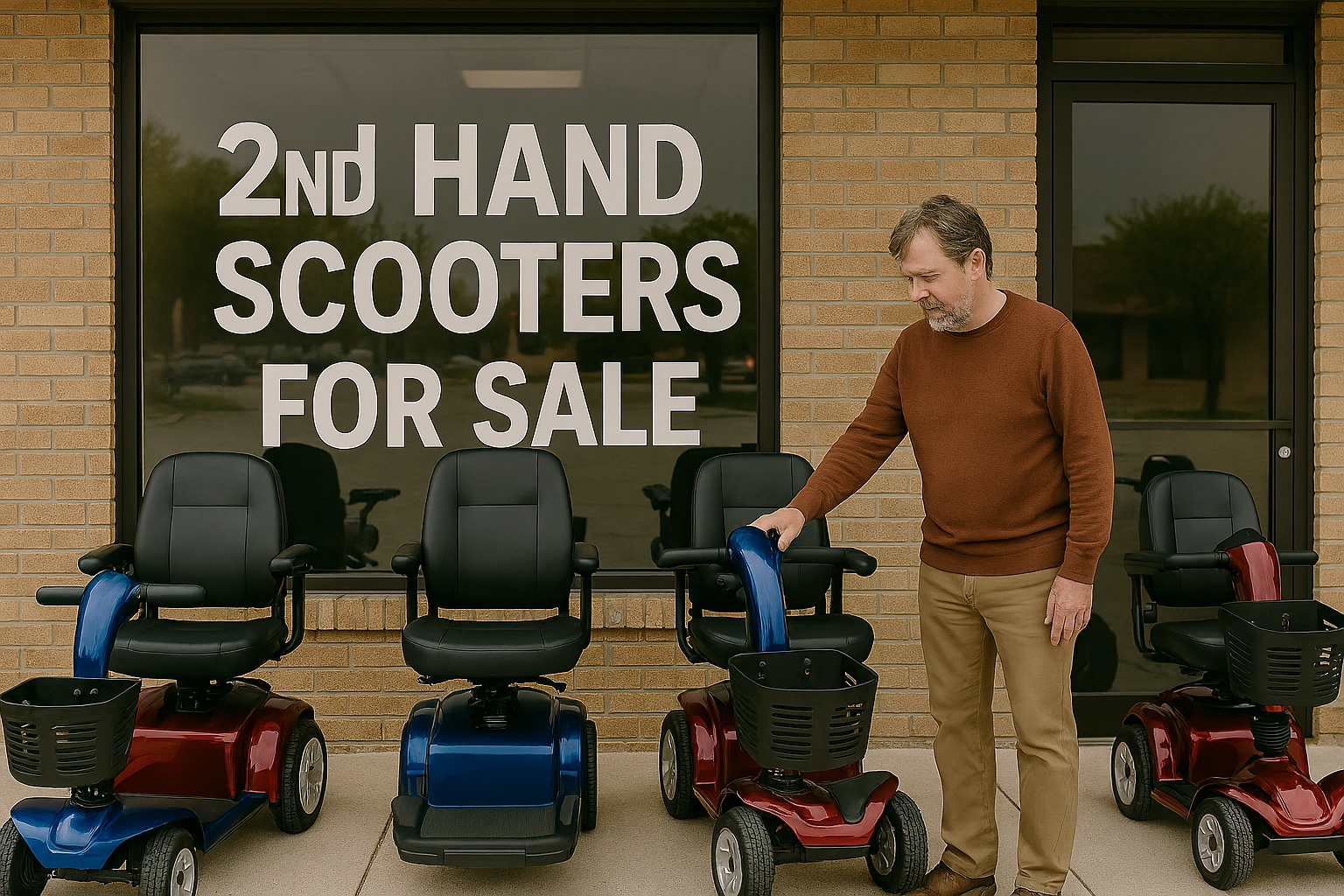
Buying used can save you money, but it also comes with risks.
A used mobility scooter can be a sensible, cost-conscious way to gain independence — but not every used scooter has been properly checked, serviced, or safety-tested. Before buying, check the battery condition and age: ask how old the batteries are and how they’ve been stored and charged.
Inspect the frame for cracks, corrosion, or repaired damage, and check the tyres for flat spots, cracking, or uneven wear. Test that the wheels turn smoothly and that the scooter doesn’t pull to one side. Ask for the service and repair history — a scooter with a documented service history is easier to assess honestly.
Take a short test drive on a flat surface and, where possible, over a kerb or slope similar to routes you’ll actually use. And always confirm the weight capacity and fit before committing.
Get our full used scooter inspection checklist to protect yourself from costly mistakes.
Read Full Guide→ Used Mobility Scooter Inspection Checklist – Don’t Get Caught Out (Coming Soon!)
Mobility Scooter Warranty Fine Print – What’s Actually Covered
Warranties can be confusing, and the fine print matters more than you might think.
A typical warranty covers structural components like the frame, front fork, seat attachment, and welds for up to two years. The drivetrain — including the differential, motor, and magnetic brake — is often covered for two years as well. Electronic components like the control system and battery charger usually have a one-year warranty.
But here’s the catch: items that need replacement due to normal use — tyres, belts, bulbs, upholstery, plastic parts, and batteries — are typically not covered. Batteries are often warranted separately for just six months. And damage from misuse, accidents, or falls isn’t covered. Perhaps most importantly, many warranties don’t cover labour or service costs. If maintenance isn’t performed by an authorised supplier, your warranty may be voided entirely.
Read our full warranty guide to understand exactly what you’re getting — and what you’re not.
Read Full Guide→ Mobility Scooter Warranty Fine Print – What’s Actually Covered (Coming Soon!)
Avoiding Mobility Scooter Sales Pressure – Stay in Control
Unfortunately, high-pressure sales tactics are common in the mobility scooter industry — especially targeting seniors.
One red flag is a salesperson pushing the most expensive scooter immediately, regardless of what you actually need. That’s a common sign of commission-driven sales. Another warning sign: a business with hundreds of perfect five-star reviews and zero real-world negatives. Real businesses inevitably get a mix of reviews.
A more trustworthy sign is when a company has a realistic range of reviews, and you can see how they respond to the negative ones. If a dealer won’t give you time to think, pressures you to decide immediately, or won’t let you compare models without rushing you, walk away.
Legitimate dealers should encourage you to get educated — because education prevents costly mistakes. You have the right to take your time, ask questions, and make a decision that feels right for you.
Learn how to spot and avoid high-pressure sales tactics in our complete guide.
Read Full Guide→ Avoiding Mobility Scooter Sales Pressure – Stay in Control (Coming Soon!)

Your Next Step
You’ve made it through this mobility scooter buying guides article — and that alone tells me you’re serious about making the right choice. You’re not someone who rushes into decisions. You’re someone who wants to get it right. And that’s exactly the kind of person who ends up with a scooter they love.
Here’s your action plan:
- Answer the “where” question — indoor, outdoor, or both?
- Choose your wheel count — three for manoeuvrability, four for stability.
- Prioritise comfort — you’ll thank yourself later.
- Calculate your range needs — and add a buffer.
- Test drive — always, always test.
- Consider your budget — and what you’re really paying for.
Remember: this scooter isn’t just a piece of equipment. It’s freedom. It’s independence. It’s the ability to visit friends, run errands, feel the sun on your face, and stay connected to the world you love.
You deserve that. And now, you have the tools to make it happen.
Stay mobile, stay confident!
Sign up for our monthly Mobility Scooter Newsletter to receive practical guides, expert advice, and inspiring stories that help you make the most of your scooter and download our free "Mobility Scooter Guide for Beginners."
Don't worry — your e-mail address is totally secure.
I promise to use it only to send you our newsletter, "Mobility Matters."
Recent Articles


-
Portable vs Travel vs Folding Mobility Scooters Buyer's Guide
Sep 15, 26 11:01 AM
 Confused by "portable," "travel," and "folding" mobility scooter listings? This guide explains what Australian sellers actually mean, with real weight comparisons and a decision framework.
 -
Mobility Scooter Types Overview: No More Confusion
Sep 15, 26 10:54 AM
 Mobility scooter types explained in plain English. Includes Australian footpath rules, airline battery limits, and the one mistake most first-time buyers make.
 -
How to Choose a Mobility Scooter in Australia Guide (2026)
Sep 15, 26 07:29 AM
 Choosing a mobility scooter in Australia? This guide covers registration requirements by state, public transport dimensions, NDIS funding steps, and practical testing advice.

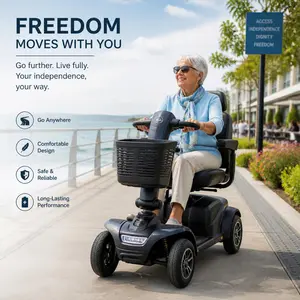

Ready to Feel More Confident on Your Mobility Scooter?

My Ebook, The Ultimate Guide to Mobility Scooters, walks you through choosing the right scooter, using it safely, and keeping it in top condition — all explained in clear, friendly language.
Give yourself (or someone you love) the gift of independence.

