- Home
- Services and Shopping
- Mobility Scooter Service Options
- Battery Replacement: Cost, Lifespan and Warning Signs
Don't Get Stranded! Battery Replacement: Cost, Lifespan and Warning Signs
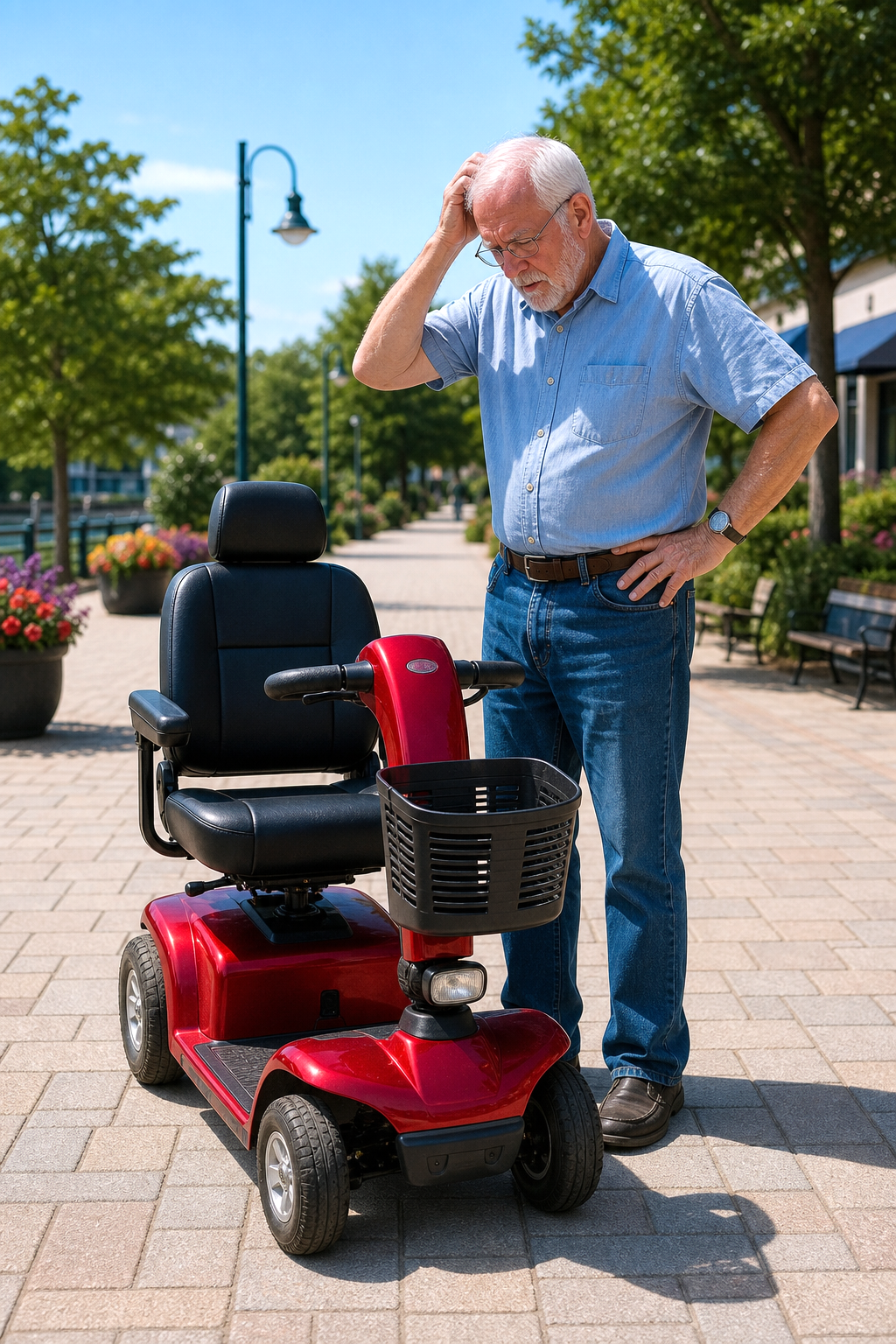
Picture this. You've just loaded your shopping into the basket, settled into the seat, and turned the key. Nothing happens. Or worse – you're halfway home, and your scooter starts crawling to a halt. The battery indicator still shows half a charge, but the motor is struggling. You're stuck...
Again.
That moment of panic? That frustration? That's exactly what we're going to help you avoid today.

If you've been searching for answers about battery replacement: cost, lifespan and warning signs, you're in the right place. Because here's the truth that nobody tells you: mobility scooter batteries don't last forever, and they don't fail gracefully. They give you warning signs – subtle at first, then impossible to ignore – but only if you know what to look for.
And when they do fail, the cost can catch you completely off guard. A new set of batteries might set you back anywhere from A$110 to over A$300. That's a big range, and the difference between the lower and higher end often comes down to choices you make before you need to replace them.
Let's walk through this together, step by step. By the time you finish reading, you'll know exactly how much a replacement should cost, how long your battery should last, and most importantly – the warning signs that tell you it's time to act before you get stranded.
Part One: How Long Should Your Mobility Scooter Battery Last?
Let's start with the question everyone asks first about battery replacement,cost, lifespan and warning signs – the lifespan piece is where it all begins.
The honest answer is: it depends. But here are the averages you can rely on.
Most mobility scooter batteries last between 12 and 24 months with regular use. Some might stretch to three years if you're lucky and meticulous about care. Others might fail in under a year if you're unlucky or neglectful.
But the type of battery you have makes a massive difference. Here's the breakdown:
|
Battery Type |
Average Lifespan |
Best For |
|
SLA / AGM |
12–24 months |
Moderate, everyday use |
|
Gel |
18–30 months |
Frequent use, longer distances |
|
Lithium |
3–5 years |
Heavy use, lightweight needs |
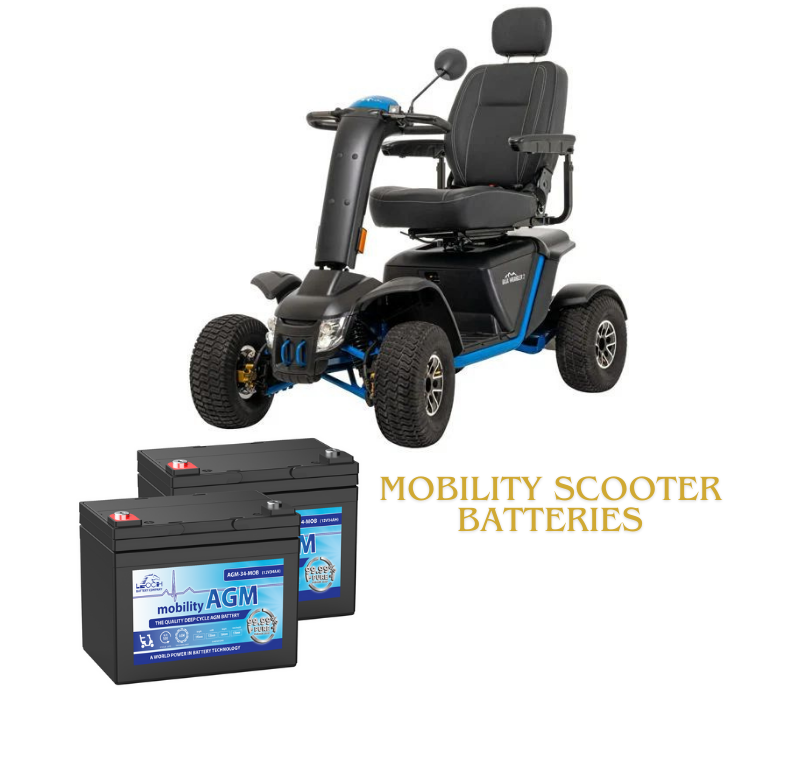
Sealed lead-acid (SLA) and AGM (Absorvent Glass Mat) batteries are the most common – and the shortest-lived. They're reliable and affordable, but they have a limited number of charge cycles, typically 200 to 400.
Gel batteries last a bit longer and handle deeper discharges better. And lithium batteries? They can last 1,000 cycles or more – but they come with a much higher price tag and aren't compatible with every scooter.
So why do some batteries die in 12 months while others last three years?
That's what we're about to uncover.
What Shortens Battery Life? The Silent Killers
Here's the thing about battery replacement, cost, lifespan and warning signs – understanding what kills your battery is just as important as knowing how long it should last.
1. Improper Charging (The Number One Killer)
The most common reason batteries fail early is incorrect charging. And the mistakes are surprisingly easy to make:
- Not charging after every use
- Leaving the battery partially charged
- Unplugging too early
- Using a non-approved charger
Unlike car batteries, mobility scooter batteries prefer regular, full charging cycles. They like being topped up after every trip. Leave them sitting partially discharged, and you're essentially shortening their life with every passing day.
2. Inactivity and Storage
If your scooter sits unused for weeks or months without charging, the batteries can sulphate – which is a technical way of saying they internally degrade. This leads to reduced capacity, shorter travel range, and eventually complete failure.
If you're not using your scooter regularly, charge it at least once every week. And never, ever store it with a dead battery.
3. Deep Discharges
Allowing your batteries to fully drain accelerates cell damage. It's like running a car on empty – except with a mobility scooter battery, the damage is permanent and cumulative. Each deep discharge takes a little more life out of your battery.
4. Extreme Temperature
Cold weather is brutal on batteries. In winter, you may notice reduced range, slower acceleration, and faster discharge. Repeated exposure without proper charging shortens lifespan significantly.
Heat is just as bad. Store your scooter indoors where possible, in a dry, insulated area away from frost. Your battery will thank you.
5. Overloading and Terrain
If your scooter regularly carries more than its recommended weight limit, the batteries work harder and drain faster.
The same goes for frequent hill climbing, sharp acceleration, and long daily distances. Every extra demand on the motor is extra strain on the battery.

Part Two: Warning Signs – How to Know It's Time for Replacement
Now we get to the really important part of battery replacement, cost, lifespan and warning signs – the warning signs are your early warning system.
Ignore them at your peril.
Here's your personal checklist. If you recognise any of these signs, start budgeting for a replacement.
If you recognise multiple signs, act now.
Warning Sign 1: Reduced Travel Range
This is the earliest and most common warning sign. If you used to be able to complete a full shopping trip or a favourite route without recharging, and now you can't – your battery is losing capacity.
Be specific. If your range has dropped by 30–40% or more, that's not "just getting old." That's a battery that's failing.
Warning Sign 2: It Shows Full Charge But Dies Quickly
This is the most deceptive and frustrating warning sign of all. You plug it in overnight, the charger shows green, the dashboard says 100% – and then it dies ten minutes later.
Here's what's happening: a full charge light doesn't mean your battery is healthy. It simply means your charger completed its cycle. But the moment you apply the throttle and put the battery under pressure, the voltage drops like a rock. That's a key sign your battery is failing internally.
If your battery indicator drops rapidly as soon as you start moving, that's another clear warning sign.
Warning Sign 3: Longer Charging Times
When your battery takes significantly longer to reach a full charge than it did when new, it's a warning sign. Extended charging indicates that the battery cells are deteriorating and can no longer store energy efficiently.
Alternatively, if your battery charges too quickly – in a fraction of the normal time – that's also a bad sign. It means the battery can't hold as much energy as it used to.
Warning Sign 4: Failure to Reach Full Charge
If your battery won't achieve 100% charge, no matter how long it stays on the charger, this is a definitive sign that its internal capacity has diminished.
It can no longer hold sufficient power.
Warning Sign 5: Struggles on Slopes or with Heavy Loads
A battery that once handled hills with ease but now slows down dramatically on inclines is telling you something important.
It's no longer delivering adequate power. Replacing it can restore smooth operation and ensure safe handling.
Warning Sign 6: Physical Damage or Unusual Odours
This is the most urgent warning sign of all. Any odd smells – such as a burnt or chemical odour – coming from the battery compartment are serious signs that the battery is in distress. The same goes for bulging, leaking, cracks, or swelling.
If you see or smell any of these, do not wait. Do not try to charge it. Replace immediately – this is a safety hazard.
Warning Sign 7: Erratic Battery Gauge Readings
If your battery indicator shows a full charge but drops to halfway or lower the moment you start driving, this indicates that the battery isn't truly holding the charge it's showing.
It's a clear sign of degradation,
Part Three: Battery Replacement Cost – What You'll Actually Pay
Now for the part that's on everyone's mind about battery replacement, cost, lifespan and warning signs – the cost is what ultimately determines whether you replace or scrap the whole scooter.
UK Pricing (2025/2026)
|
Battery Types |
Typical Cost |
Notes |
|
Small SLA (10–14Ah) |
£60–£100 |
Smaller Class 2 scooters |
|
Mid-range AGM/Gel (20–35Ah) |
£120–£250 |
Most common replacement sets |
|
Large AGM/Gel (50–80Ah+) |
£200–£450 |
Larger Class 3 models |
|
Lithium |
£200–£500+ |
Lightweight, longer lifespan |
|
Full replacement pack |
£50–£450 |
Depends on capacity and type |
Most UK replacement battery packs – the full set your scooter needs – are in the region of £50 to £450 depending on what you buy. For a typical mid-range scooter, you're looking at £120 to £250 for a replacement set.
US/Australian Pricing
In the US and Australia, sealed lead-acid batteries typically cost $50 to $150 per battery, and most scooters use two batteries wired in series. That means $100 to $300 for a full set.
Lithium batteries can range from $400 to $800 or more. Premium, long-range packs can reach $900+.
The "Hidden" Costs to Watch For
Here's what the price lists don't always tell you:
- Always replace in pairs. Most scooters use two 12V batteries in series to create a 24V system. When one weakens, the pair becomes unstable – so replacements should always be fitted as a matched set.
- Check terminal types. Batteries aren't one-size-fits-all. You need to match voltage, capacity (Ah), physical size, and terminal type (F1/F2 tabs, Nut & Bolt, or Threaded Inserts).
- VAT relief may not apply. In the UK, most loose batteries are not eligible for disability VAT relief. However, some retailers offer VAT relief on certain models – always check before you buy.
- Lithium requires a different charger. Gel and lithium batteries cannot be switched within the same system as they have different charging requirements. Using the wrong charger can damage your battery.
- Budget batteries are false economy. Cheap batteries typically last 6–12 months rather than 18–24 months, meaning you replace them twice as often. Quality matters.
Part Four: Should You Replace the Battery or Buy a New Scooter?
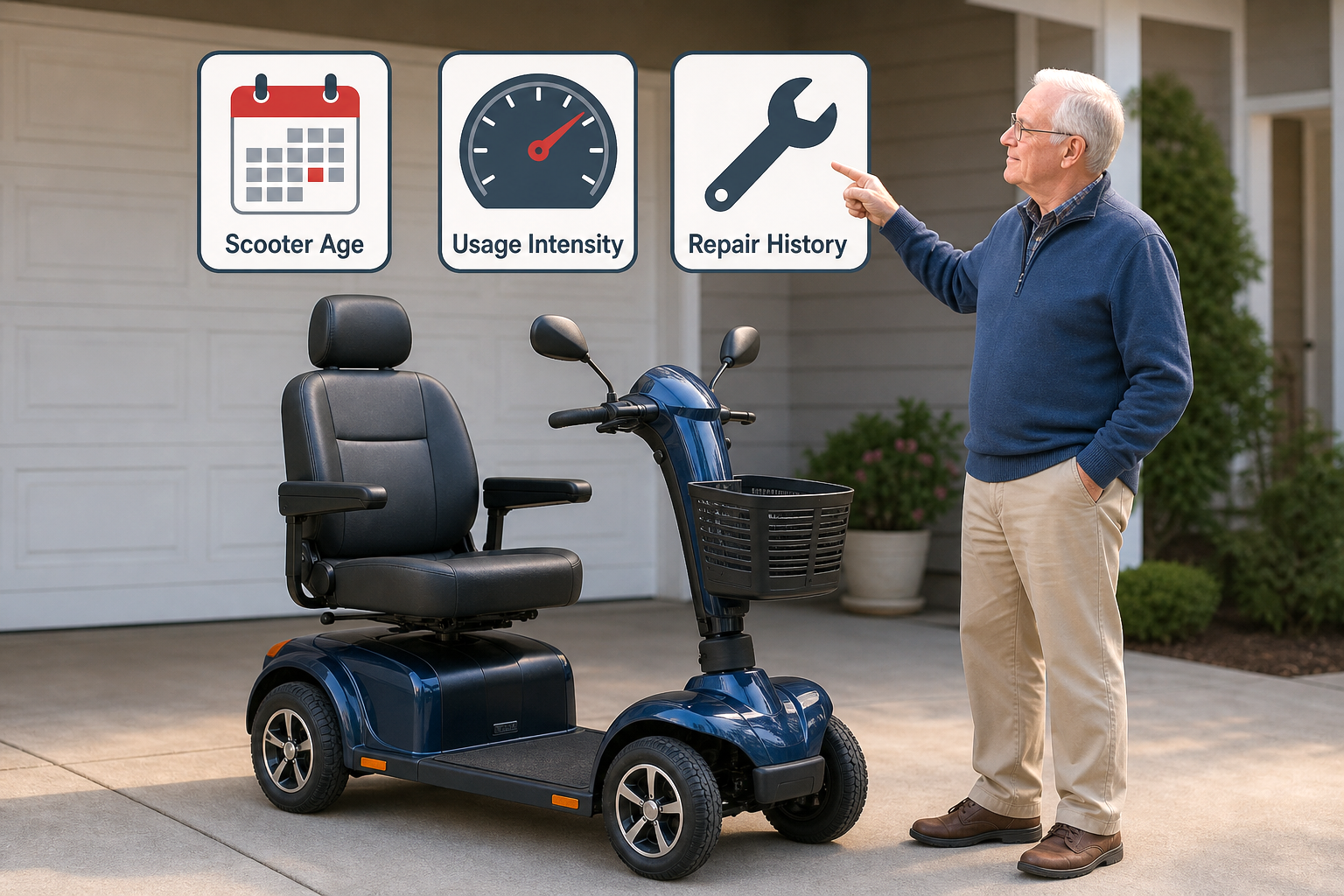
This is the question nobody likes to ask, but it's the one that matters most when considering battery replacement, cost, lifespan and warning signs.
Here's a simple decision framework:
Replace the battery if:
- The rest of the scooter is in good condition
- The replacement cost is less than 50% of the scooter's current value
- You're otherwise happy with the scooter's performance and features
Consider a new scooter if:
- The scooter has other significant issues (motor problems, frame damage, worn brakes)
- The replacement cost is more than 50% of what a comparable used scooter would cost
- The scooter is over 5–7 years old and showing multiple signs of wear
A battery replacement is almost always cheaper than a new scooter. But if your scooter is falling apart in other ways, throwing money at a new battery might be throwing good money after bad.
Part Five: DIY or Professional Installation?
You can save money by doing it yourself – but only if you know what you're doing.
DIY Is Possible
Replacing a mobility scooter battery is a DIY-friendly task that can save you service fees. Basic tools like a screwdriver and wrench are usually all you need. Many scooters allow battery access through a compartment under the seat or floor.
The basic steps:
- Turn off the power and remove the key
- Disconnect the old batteries (negative terminal first)
- Install the new batteries, connecting positive-to-positive and negative-to-negative
- Ensure all connections are tight
But here's the catch: you must match your replacement battery's voltage, capacity, and terminal type to your original specifications.
A battery that's a half-inch too tall won't fit, and one with the wrong terminals is a non-starter.
Professional Installation Has Benefits
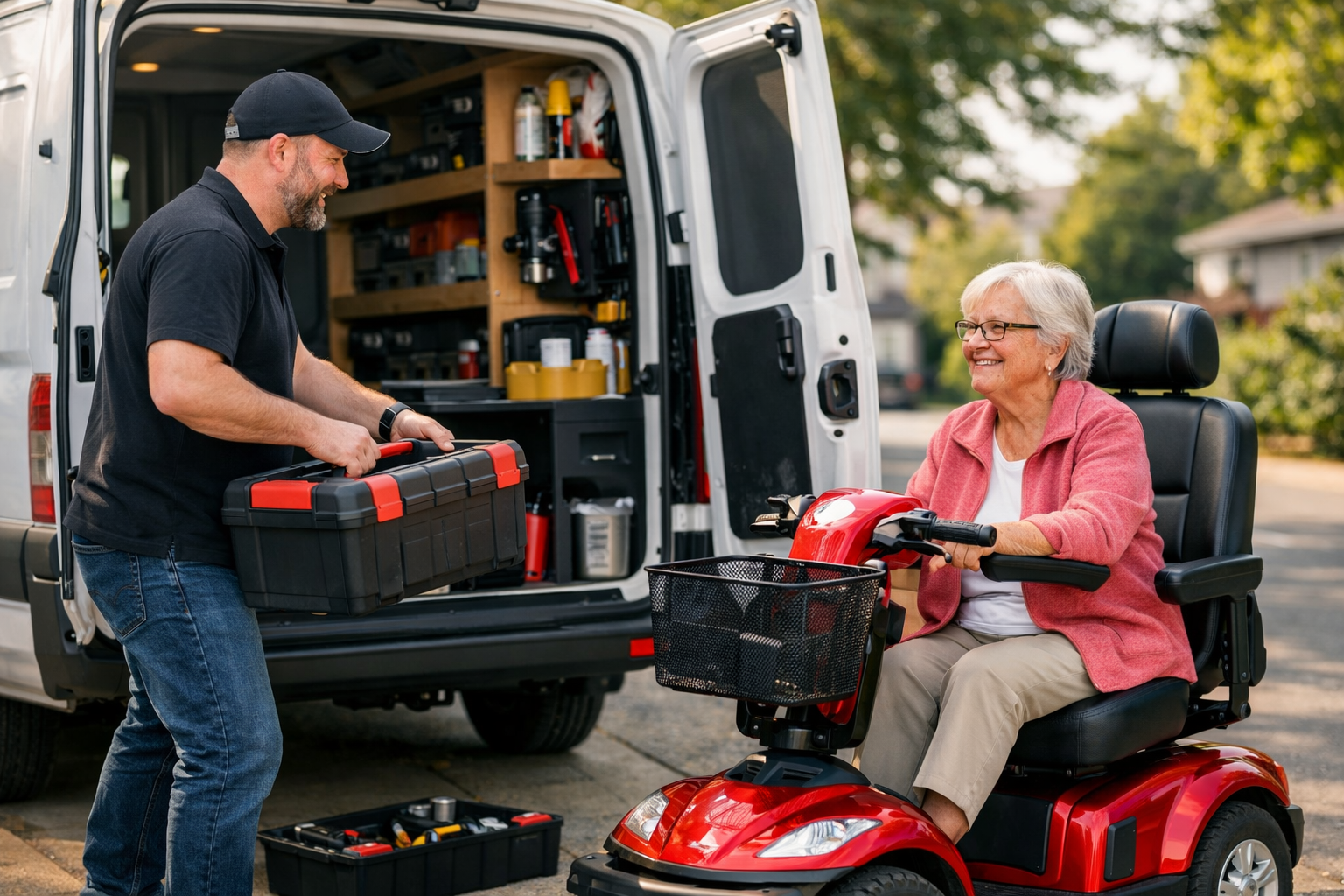
Some retailers offer free in-store installation when you buy from them. Professional installation can cost as little as $45–$50 and ensures correct fitting and safety.
Consider professional help if:
- You're not confident working with electrical components
- Your scooter has a complex battery configuration
- You notice any physical damage or unusual odours (safety first!)
Part Six: How to Extend Battery Life (So You Don't Have to Replace So Soon)
The best way to manage battery lifespan is to make your battery last as long as possible in the first place.
Here's your battery care checklist:
✅ Charge after every use. Mobility batteries prefer regular, full charging cycles.
✅ Don't let the battery fully drain. Deep discharges accelerate cell damage.
✅ Store indoors. Keep your scooter in a dry, insulated area away from extreme temperatures.
✅ Use the correct charger. Only use chargers recommended by your manufacturer.
✅ Charge at least once a week if not in use. Inactivity leads to sulphation and degradation.
✅ Have batteries tested annually. Routine servicing helps identify issues before breakdown occurs.
✅ Keep connections clean and secure. Loose or corroded connections can mimic battery failure.
Your Next Steps
So here's what I'd like you to do.
Step 1: Run through the warning signs checklist. Be honest with yourself. How many of those signs does your scooter show?
Step 2: Check your battery's age. When was it last replaced? If it's over 18–24 months old and showing any warning signs, start planning for replacement.
Step 3: Get a quote. Contact a reputable mobility dealer or battery specialist. Get a price for the correct replacement battery for your model.
Step 4: Do the maths. Compare the replacement cost against the value of your scooter. Make the decision that makes financial sense for you.
Step 5: Act before you get stranded. A failing battery isn't just an inconvenience – it's a safety issue that can leave you stuck. Battery replacement is far cheaper than emergency breakdown recovery.

Final Thoughts
Let's come back to where we started. Battery replacement: cost, lifespan and warning signs – you now have the answers.
Your mobility scooter battery won't last forever. But with the right care, it can last 18 to 24 months or more. And when it does start to fail, you now know exactly what to look for – and exactly what to do about it.
Don't wait until you're stranded. Don't ignore the warning signs. And don't panic about the cost – because now you know what a fair price looks like, and you know how to choose the right battery for your needs.
You deserve to feel independent. You deserve to feel safe. And with the right battery – replaced at the right time – you absolutely can.
You've got this.
Stay mobile, stay confident!
Sign up for our monthly Mobility Scooter Newsletter to receive practical guides, expert advice, and inspiring stories that help you make the most of your scooter and download our free "Mobility Scooter Guide for Beginners."
Don't worry — your e-mail address is totally secure.
I promise to use it only to send you our newsletter, "Mobility Matters."
Recent Articles


-
Portable vs Travel vs Folding Mobility Scooters Buyer's Guide
Sep 15, 26 11:01 AM
 Confused by "portable," "travel," and "folding" mobility scooter listings? This guide explains what Australian sellers actually mean, with real weight comparisons and a decision framework.
 -
Mobility Scooter Types Overview: No More Confusion
Sep 15, 26 10:54 AM
 Mobility scooter types explained in plain English. Includes Australian footpath rules, airline battery limits, and the one mistake most first-time buyers make.
 -
How to Choose a Mobility Scooter in Australia Guide (2026)
Sep 15, 26 07:29 AM
 Choosing a mobility scooter in Australia? This guide covers registration requirements by state, public transport dimensions, NDIS funding steps, and practical testing advice.



Ready to Feel More Confident on Your Mobility Scooter?

My Ebook, The Ultimate Guide to Mobility Scooters, walks you through choosing the right scooter, using it safely, and keeping it in top condition — all explained in clear, friendly language.
Give yourself (or someone you love) the gift of independence.




