- Home
- Funding and Coverage
Funding and Coverage for Mobility Scooters- 2026 Australia Guide)
This page is your friendly, trustworthy hub for Funding and Coverage for mobility scooters, designed to give you clarity now and guide you toward deeper, more specific answers later.
Think of it as your warm, knowledgeable companion — someone who knows the system, understands your worries, and wants you to feel confident as you explore your options. And as you move through each section, you’ll find helpful links that open doors to more detailed guidance.

Picture this: you’re standing at the doorway, looking out at the street you used to stroll down without a second thought. The shops are close, the park is inviting, and your favourite café is calling your name — but getting there feels harder than it should.
A mobility scooter could change everything, but the maze of funding and coverage options feels overwhelming. You’re not alone in that feeling, and you’re definitely not the first person to wonder where to begin, which is why this guide exists — to gently walk you through every step and help you breathe a little easier as you continue reading.
So stay with me as we take this journey together.
What “Funding and Coverage” Really Means
When people search for funding and coverage for mobility scooters, they’re usually looking for one thing: “How do I get a scooter paid for — without stress, confusion, or surprise costs?” That’s exactly what this page delivers. You’ll learn who funds scooters, what they cover, how to qualify, and what to do if things don’t go smoothly. \
And as you read, you’ll notice gentle hints toward deeper articles that unpack each topic in more detail, so you can explore at your own pace.
Funding isn’t just about money — it’s about independence, dignity, and safety. It’s about getting back to the life you want, without feeling like you’re navigating a government puzzle alone.
So let’s take this step together, and I’ll show you how each pathway works, what it covers, and how to make the most of it. Keep going — the clarity you’re looking for is just ahead.
Your Three Main Funding Pathways
Before we dive into the article, here’s the big picture. In Australia, mobility scooter funding comes from three main sources:
- NDIS (under 65)
- Support at Home AT‑HM (Assistive Technology and Home Modifications) (for 65+)
- State Aids & Equipment Programs (loan schemes)
Each pathway has its own rules, benefits, and quirks. The sections below give you a warm, friendly overview — just enough to help you understand the landscape and decide which detailed article you want to explore next. As you read, notice how each section gently nudges you toward the next layer of clarity.
NDIS Funding for Mobility Scooters
If you’re under 65 and living with a disability, the NDIS (National Disability Insurance Scheme) is your primary funding pathway. The NDIS can fully cover mobility scooters when they’re considered reasonable and necessary — meaning they help you move safely, participate in daily life, and reduce the need for support. This is often a huge relief for people who’ve been struggling with mobility but weren’t sure how to ask for help, and knowing this can make the next steps feel a little lighter.
NDIS funding isn’t automatic, though. You’ll need to show how the scooter supports your goals, improves independence, and fits your environment. That might sound intimidating, but it’s much easier once you understand what the NDIS looks for — and that’s exactly what our in-depth article explains. You’ll also learn how to avoid common mistakes that lead to delays, so you can move forward with confidence.
If you’re curious about how the NDIS decides, what evidence you need, and how to get approved faster, you’ll find everything in the full guide. Keep reading — the next section builds on this and helps you prepare the right evidence.
Explore the full guide: NDIS Funding for Mobility Scooters (Coming Soon!)
NDIS Evidence Requirements for Scooter Approval
Evidence is the heart of NDIS funding.
It’s not about paperwork for the sake of paperwork — it’s about painting a clear picture of your daily life, your challenges, and how a scooter will genuinely help. Many people feel nervous about this part, but once you understand what the NDIS wants to see, the process becomes surprisingly manageable. And you might even feel a sense of relief knowing you’re finally telling your story in a way that gets results.
You’ll typically need an OT functional assessment, a daily living impact statement, and a quote from a reputable supplier. These documents work together to show the NDIS that the scooter is safe, suitable, and aligned with your goals. If you’ve ever felt unsure about what “good evidence” looks like, you’re not alone — and that’s why we created a dedicated article that breaks it down step-by-step.
If you want to feel confident and prepared before submitting your request, the full article will guide you through every detail. And as you continue reading this page, you’ll see how OT assessments fit into the bigger picture.
Explore the full guide: NDIS Evidence Requirements for Scooter Approval (Coming Soon!)
OT Assessment Requirements for Mobility Scooter Funding
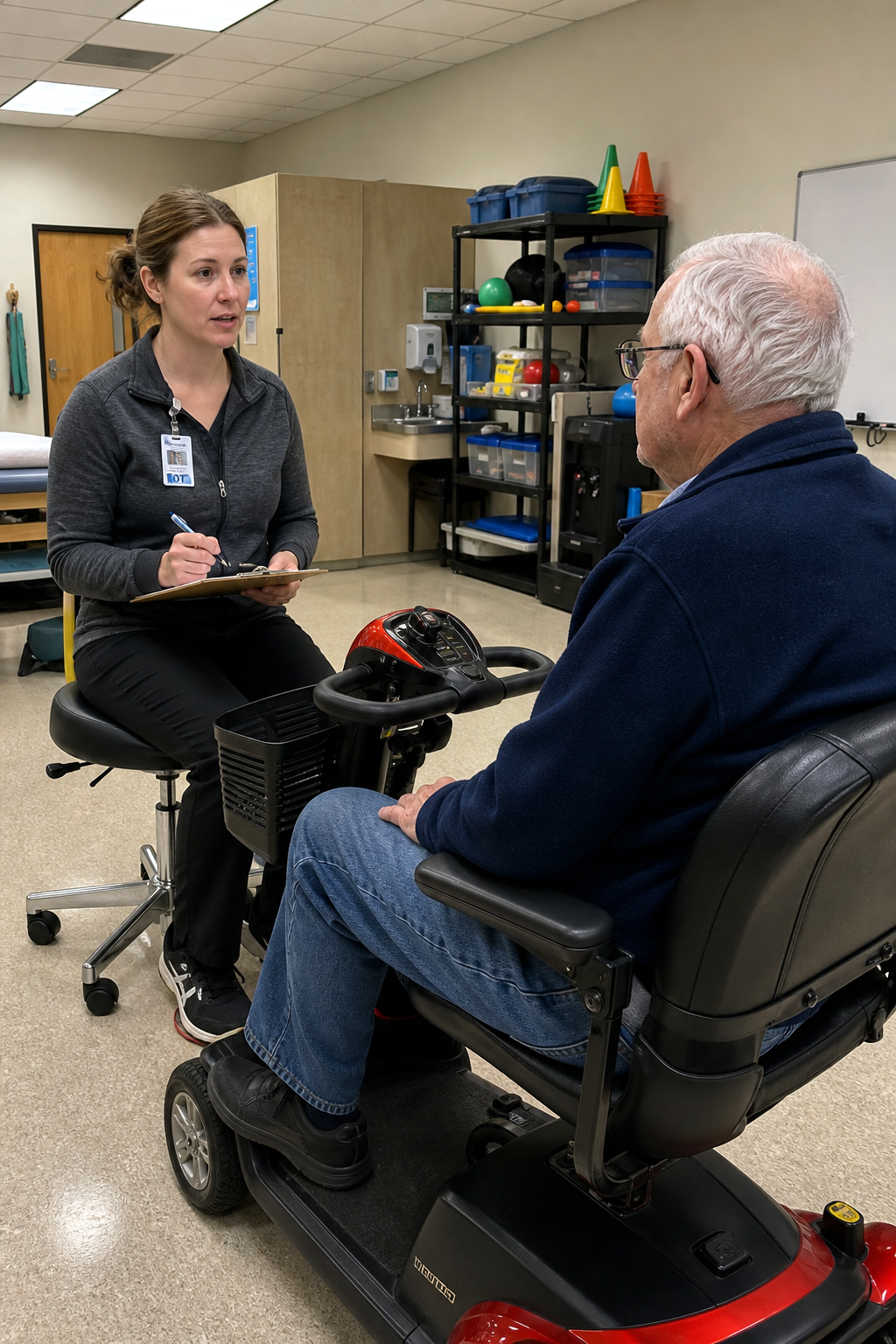
An OT assessment is often the turning point in the mobility scooter funding and coverage journey. It’s where your needs, goals, and environment come together in a clear, professional report that supports your request. Many people worry that an OT assessment will be clinical or intimidating, but in reality, it’s usually a warm, collaborative conversation focused on helping you live more independently. Knowing that can make the whole process feel much more approachable.
Your OT will look at your mobility, balance, strength, daily routines, and the terrain around your home. They’ll help you choose a scooter that fits your life — not just one that looks good on paper. This is important because the wrong scooter can lead to safety issues or funding rejection, and nobody wants that. The assessment is your chance to get expert guidance that protects you from costly mistakes.
If you want to understand exactly what happens during an OT assessment, what to prepare, and how it influences funding decisions, the full article will walk you through it gently and clearly. And as you read on, you’ll see how quotes and paperwork tie everything together.
Explore the full guide: OT Assessment Requirements for Mobility Scooter Funding (Coming Soon!)
AT‑HM Funding for Mobility Scooters (65+)
If you’re 65 or older, the Support at Home AT‑HM (Assistive Technology and Home Modifications) Scheme is your main funding pathway. It replaced the old Home Care Package equipment system, and while it’s much more flexible, it can still feel confusing at first glance. The good news? Once you understand the three funding categories — low-risk, under-advice, and prescribed — everything starts to make sense, and you’ll feel more confident about your options.
AT‑HM can cover scooters from $500 to $15,000 depending on your needs. It also covers delivery, setup, training, repairs, and maintenance. This is a huge help for older Australians who want independence without worrying about hidden costs. And if you’ve ever felt unsure about what AT‑HM does or doesn’t cover, you’re definitely not alone — which is why our detailed article breaks it down in plain English.
If you want to understand the funding tiers, eligibility, and how to avoid delays, the full guide will give you everything you need. And as you continue reading this page, you’ll see how paperwork preparation helps you get approved faster.
Explore the full guide: AT‑HM Funding for Mobility Scooters (Coming Soon!)
Preparing Quotes & Paperwork for Funding Approval
Quotes and paperwork are the glue that holds your funding request together. They show the NDIS, AT‑HM, or state programs exactly what you need, why you need it, and how much it will cost. Many people feel overwhelmed at this stage, but once you know what a “funding-ready quote” looks like, the process becomes surprisingly straightforward — and even empowering.
A good quote includes itemised costs, delivery, setup, accessories, warranty, and servicing details. This prevents delays and helps assessors understand the full picture. Pair that with clear evidence and an OT assessment, and you’re already halfway to approval. If you’ve ever felt unsure about what to include or how to organise your paperwork, our full article will guide you step-by-step.
If you want to feel organised, confident, and ready to submit your request, the detailed guide will help you prepare everything with ease. And as you keep reading, you’ll see how ongoing coverage works once your scooter is funded.
Explore the full guide: Preparing Quotes & Paperwork for Funding Approval (Coming Soon!)
State Aids & Equipment Programs (Loan Schemes)
State loan programs are a lifeline for people who don’t qualify for NDIS or AT‑HM. They provide scooters at no cost or low cost, along with repairs and servicing. These programs are especially helpful for pensioners and low-income households, and knowing they exist can bring a huge sense of relief to families who thought they had no options.
Each state has its own rules, wait times, and eligibility criteria. Some programs offer long-term loans, while others provide temporary equipment until your main funding is approved. If you’ve ever wondered whether you qualify or how long the wait might be, our full article breaks it down clearly and kindly.
If you want to explore your state’s program and understand how loan schemes compare to AT‑HM and NDIS, the detailed guide will give you everything you need. And as you continue reading, you’ll see what to do if your funding request is denied.
Explore the full guide: State Aids & Equipment Programs for Mobility Scooters (Coming Soon!)
Appeal Steps When Funding Is Denied
Funding denial can feel heartbreaking — especially when you’ve done everything right. But a “no” isn’t the end of the road. Whether you’re dealing with NDIS, AT‑HM, or a state program, there are clear, structured appeal pathways that can turn things around. And knowing that can bring a sense of calm and control back into the process.
Appeals usually involve submitting new evidence, requesting a review, or clarifying your functional needs. Many people win their appeals simply by providing clearer documentation or a more detailed OT report. If you’ve ever felt discouraged by a rejection, you’re not alone — and our full article will guide you through every step with warmth and clarity.
If you want to understand how appeals work, what evidence helps, and how to improve your chances, the detailed guide will walk you through it gently. And as you continue exploring this hub, you’ll find even more resources to support your journey.
Explore the full guide: Appeal Steps When Mobility Scooter Funding Is Denied (Coming Soon!)
Final Thoughts: You’re Not Alone in This Journey
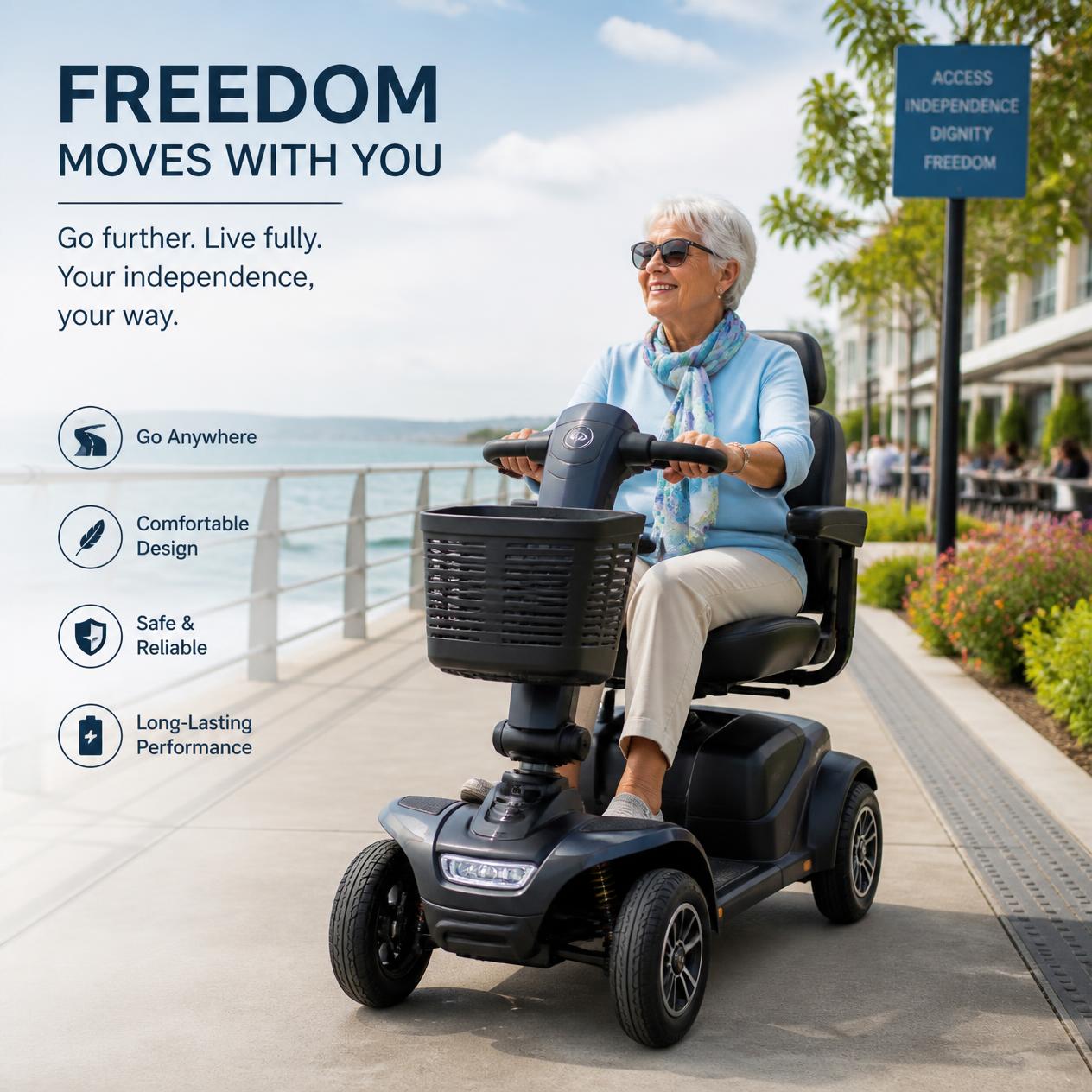
Funding a mobility scooter isn’t just a financial decision — it’s an emotional one. It’s about independence, dignity, safety, and the freedom to live life on your terms. This funding and coverage hub page is here to guide you, support you, and help you feel confident every step of the way. And whenever you’re ready, the detailed articles linked throughout this page will take you deeper, one gentle step at a time.
Keep exploring — your clarity, confidence, and independence are just ahead.
Stay mobile, stay confident!
Sign up for our monthly Mobility Scooter Newsletter to receive practical guides, expert advice, and inspiring stories that help you make the most of your scooter and download our free "Mobility Scooter Guide for Beginners."
Don't worry — your e-mail address is totally secure.
I promise to use it only to send you our newsletter, "Mobility Matters."
Recent Articles


-
Portable vs Travel vs Folding Mobility Scooters Buyer's Guide
Sep 15, 26 11:01 AM
 Confused by "portable," "travel," and "folding" mobility scooter listings? This guide explains what Australian sellers actually mean, with real weight comparisons and a decision framework.
 -
Mobility Scooter Types Overview: No More Confusion
Sep 15, 26 10:54 AM
 Mobility scooter types explained in plain English. Includes Australian footpath rules, airline battery limits, and the one mistake most first-time buyers make.
 -
How to Choose a Mobility Scooter in Australia Guide (2026)
Sep 15, 26 07:29 AM
 Choosing a mobility scooter in Australia? This guide covers registration requirements by state, public transport dimensions, NDIS funding steps, and practical testing advice.


Ready to Feel More Confident on Your Mobility Scooter?

My Ebook, The Ultimate Guide to Mobility Scooters, walks you through choosing the right scooter, using it safely, and keeping it in top condition — all explained in clear, friendly language.
Give yourself (or someone you love) the gift of independence.

