- Home
- Mobility Scooter Buying Guides
- Mobility Scooter Buying Guide
Mobility Scooter Buying Guide: What Nobody Tells You First
Picture this: You are standing in a showroom surrounded by a dozen mobility scooters. They all look similar. Some are bigger, some are smaller, and the price tags range from a few thousand dollars to well over ten thousand. A friendly salesperson is asking you questions you don't quite know how to answer. "What range do you need?" "Do you want three wheels or four?" "Will this need to fit in a car boot?"
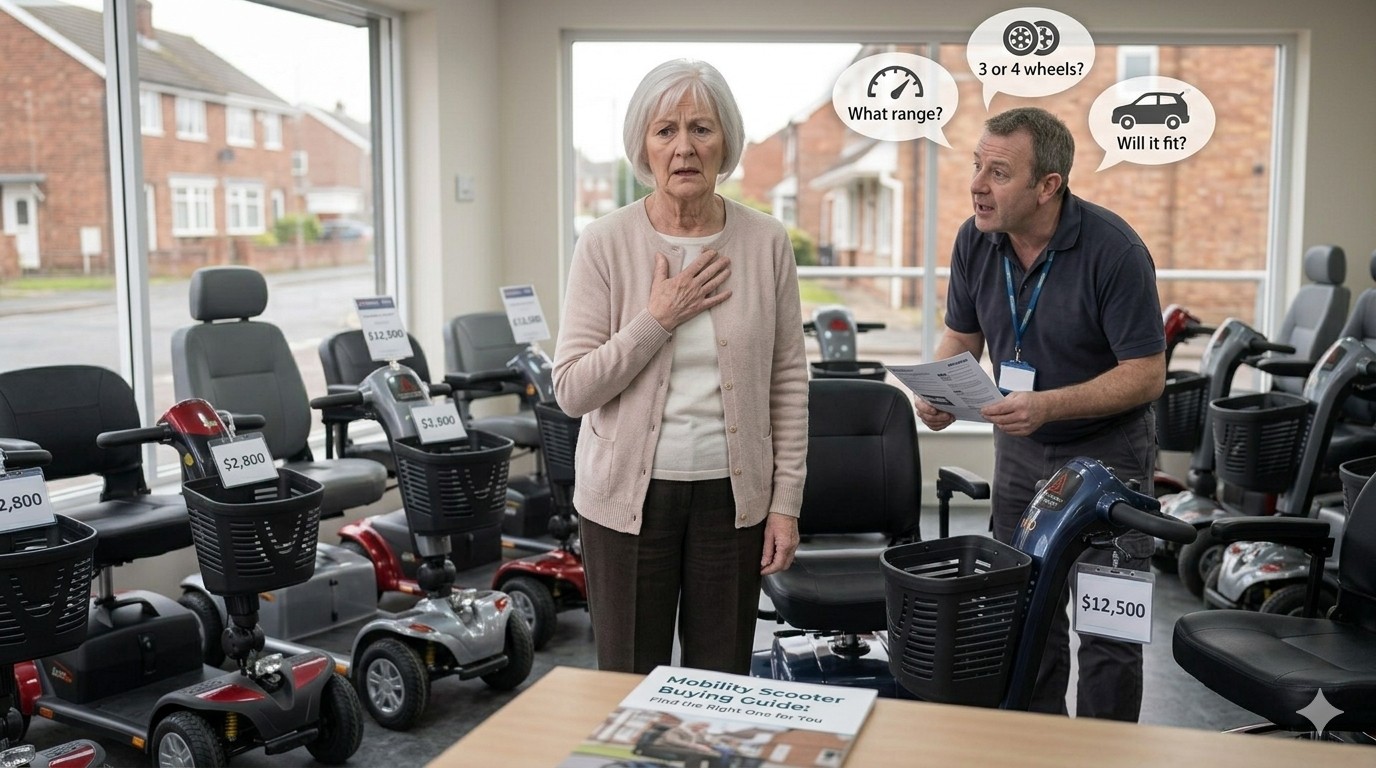
Your chest tightens a little. You came here to solve a problem, but now you feel like you need a degree in engineering just to ask the right questions. If that sounds familiar, take a breath.
This Mobility Scooter Buying Guide was written for exactly this moment.
By the time you finish reading, you will know what matters, what doesn't, and how to make a decision you can feel genuinely good about.
Who This Guide Is For
This Mobility Scooter Buying Guide is for anyone who has noticed that the world has quietly shrunk. Maybe you can still walk around the house, but the trip to the shops now feels like a major expedition. Maybe you are an adult child watching your parent decline invitations they used to enjoy, and you want to help without making them feel fragile or dependent. Or maybe you are recovering from surgery or managing a long-term condition, and you need a practical way to get your life back.
The common thread is this: you need more than a product. You need a decision framework. And that is what this guide delivers, without the sales pressure.
Step 1: Know What You Actually Need
Before you look at any scooter, answer three simple questions. These will narrow the field faster than any spec sheet ever could.
Where will you use it most? If your journeys are mostly indoors, around shopping centres, and on smooth footpaths, a compact travel scooter will serve you well.
If you plan to tackle hills, gravel paths, or uneven nature strips, you will need something with larger wheels, better suspension, and more ground clearance. The terrain you encounter daily should dictate the type of scooter you choose, not the other way around.
How far do you realistically travel on a single outing? Advertised range figures can be misleading. A scooter claiming 20 kilometres may deliver closer to 12 once you factor in hills, your weight, and battery age. Our detailed guide on real-world mobility scooter range shows you how to estimate your true needs based on your routine. (Coming Soon!)
For most urban Australians, 15 to 25 kilometres of genuine range is plenty, but if you live rurally or enjoy long park visits, you will want more.
Will you need to transport it? This is the question that catches people out most often. A heavy-duty scooter with a massive battery might seem appealing, but if you cannot lift it into your car, it becomes a very expensive piece of furniture.
Before you fall in love with a model, read our car boot fit checklist and our guide to scooter liftability. These will save you from a purchase you will regret. (Coming Soon!)
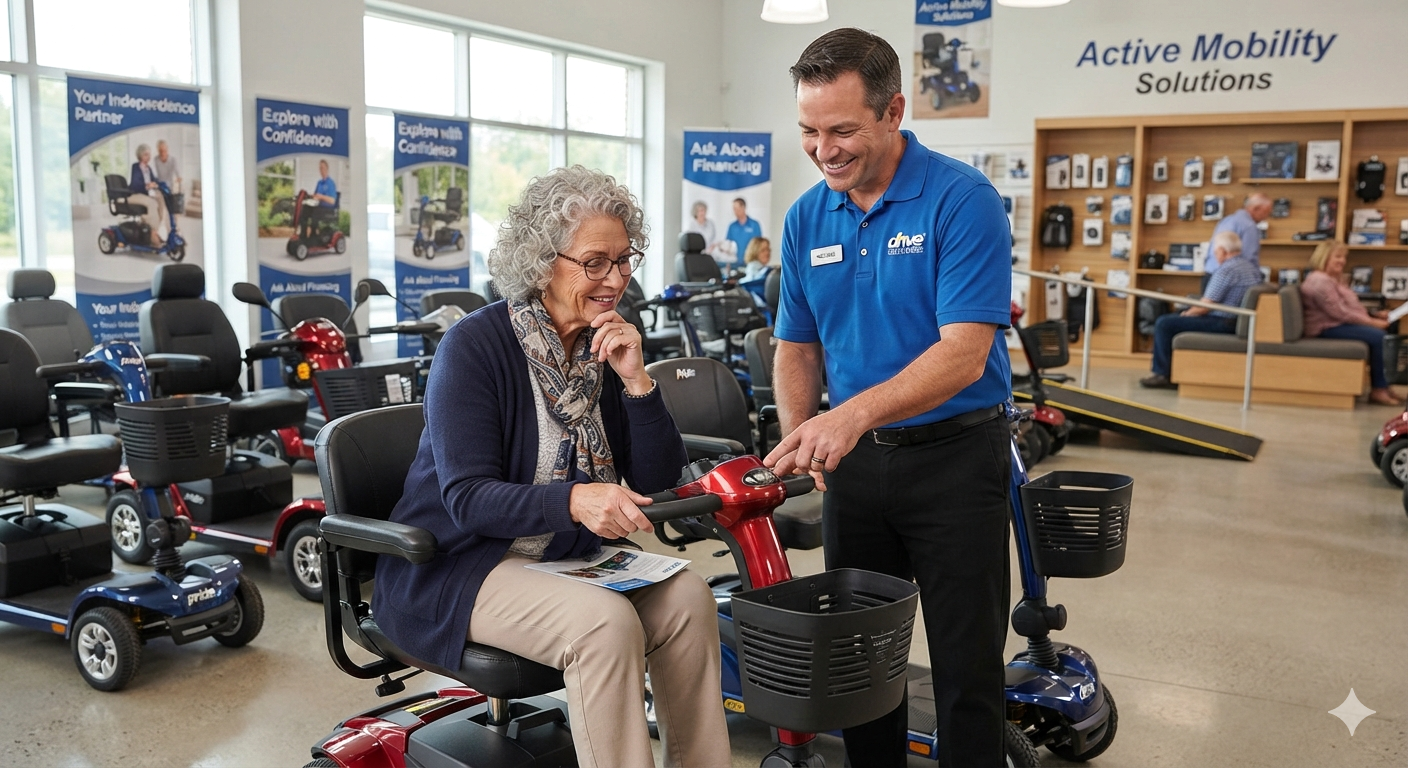
Step 2: Understand the Types Without the Jargon
Travel scooters are lightweight, often foldable or dismantle into pieces, and are designed for portability. They typically have smaller wheels and shorter range, making them ideal for shopping trips, visits to friends, and travel. They are not built for rough terrain or long distances.
Mid-size scooters are the versatile all-rounders. They offer a comfortable seat, decent range, and enough stability for most everyday outdoor use. If you need one scooter that can handle the footpath, the shopping centre, and the occasional park, this is usually the sweet spot.
Heavy-duty and all-terrain scooters are the workhorses. They have large wheels, powerful motors, and long-range batteries. They can handle hills, gravel, and uneven ground with confidence. The trade-off is weight, size, and price. They are rarely portable.
For a deeper comparison of how these types perform in real Australian conditions, our guide on comparing mobility scooter spec sheets breaks down exactly which numbers matter and which are just marketing noise. (Coming Soon!)
Step 3: The Specs That Actually Change Your Life
Turning radius is the single most underrated specification. It determines whether you can turn around in your kitchen, navigate a narrow hallway, or manoeuvre in a bathroom. A scooter with a tight turning circle gives you freedom indoors. One with a wide turning circle can leave you stuck. Measure your narrowest doorway and your tightest corner before you shop. Our turning radius guide shows you exactly how to do this. (Coming Soon!)
Weight capacity is about safety, not vanity. Choose a scooter rated well above your current weight, because the motor works harder and the battery drains faster when you are close to the limit. This is especially important if you carry shopping or use the scooter on slopes.
Ground clearance matters the moment you leave a smooth surface. Kerbs, ramps, and uneven footpaths all demand clearance. If you regularly encounter these obstacles, a scooter with at least 8 to 10 centimetres of clearance will make your life easier and safer.
Comfort features like seat padding, suspension, and tyre type are not luxuries. If you plan to spend more than 30 minutes on your scooter at a time, these features determine whether you arrive feeling refreshed or sore. Ask about adjustable armrests, swivel seats, and pneumatic tyres.
Step 4: Test Drive Like You Mean It
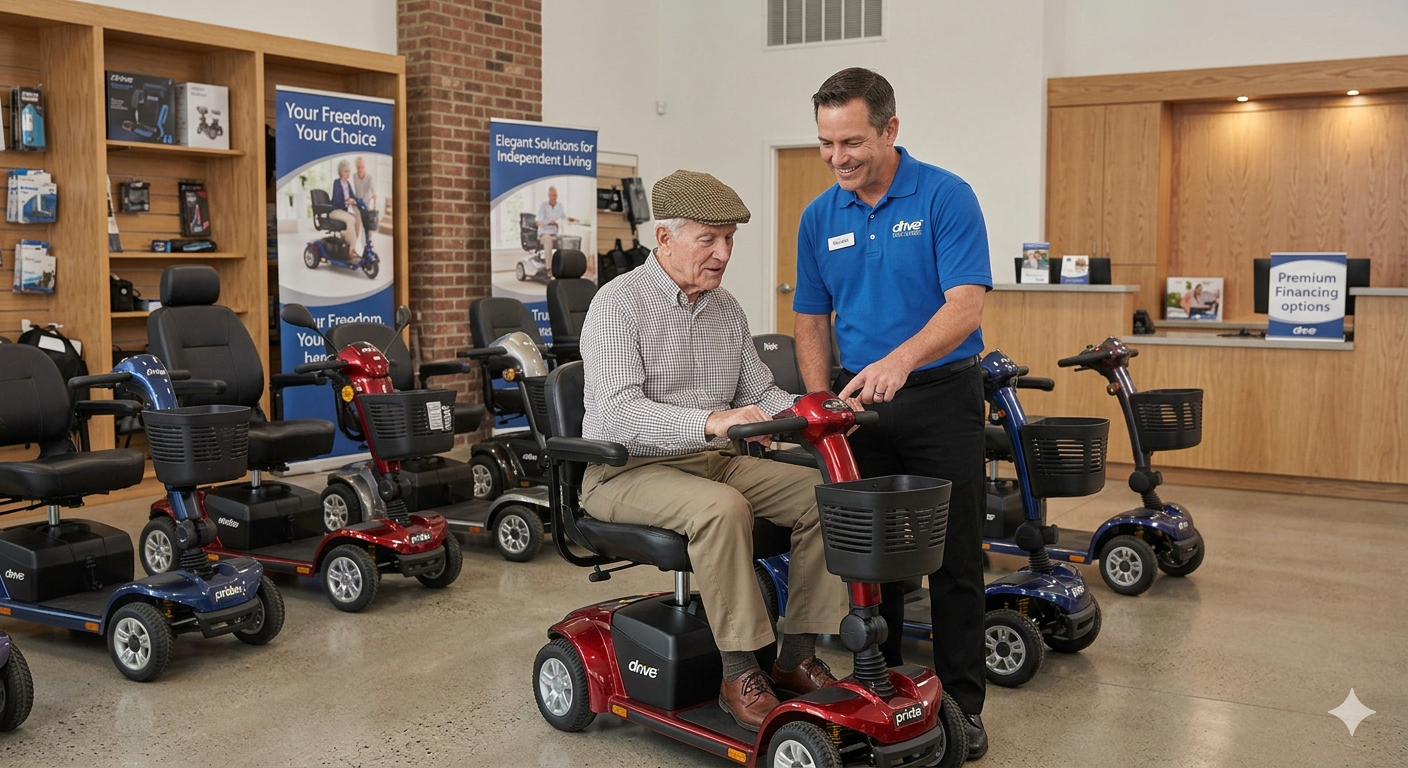
Never buy a mobility scooter without a test drive. And not just a quick loop around the showroom floor. Insist on trying it in an environment that resembles your daily life. If you can, arrange a home trial so you can test it on your own footpaths, ramps, and doorways.
Our test drive checklist for Australians gives you a printable list of what to observe: how the controls feel in your hands, whether you can get on and off safely, how the scooter handles slopes, and whether you feel confident and in control. (Coming Soon!)
Step 5: Know the Real Costs
A Mobility Scooter Buying Guide would be incomplete without talking money. In Australia, prices range from around $2,000 for a basic compact scooter to well over $10,000 for a premium all-terrain model. But the purchase price is only part of the story.
You will also need to budget for battery replacement every few years, regular servicing, tyres, and possibly insurance. If you are eligible for NDIS, My Aged Care, or DVA funding, a significant portion of these costs may be covered.
Our guide to funding options explains how these programs work and what you need to do to access them. (Coming Soon!)
For a full breakdown of what to expect, including how to read the fine print on warranties, see our Australian warranty checklist. (Coming Soon!)
Step 6: New or Used?
A new scooter gives you the latest features, a full warranty, and peace of mind. A used scooter can save you thousands, but it comes with risks. Batteries may be near the end of their life, and hidden damage may not be obvious.
If you are considering a used purchase, our inspection checklist and red flags guide will walk you through exactly what to look for and what to walk away from.
Your Mobility Scooter Buying Guide: Frequently Asked Questions
These are the questions we hear most often from Australians navigating the buying process. Each answer is designed to give you a clear, honest starting point, with links to deeper guides where you need them.
What type of mobility scooter do I need (travel vs mid-size vs heavy-duty)?
It depends entirely on where and how you will use it. If portability is your priority, a travel scooter is your best bet. If you need one scooter for everyday outdoor use with a comfortable seat and reasonable range, a mid-size model is the sweet spot. If you face hills, rough terrain, or long distances, a heavy-duty scooter is worth the investment.
For a full breakdown, see our guide on comparing mobility scooter spec sheets. (C0ming Soon!)
3-wheel vs 4-wheel mobility scooter: which is better for me?
Three-wheel scooters turn tighter and are easier to manoeuvre in narrow indoor spaces. Four-wheel scooters are more stable, especially on slopes and uneven ground. If you mostly navigate indoors and smooth footpaths, a 3-wheel may suit you. If you spend more time outdoors or have concerns about tipping, choose 4-wheel.
Our test drive checklist helps you feel the difference firsthand. (C0ming Soon!)
How much should a mobility scooter cost in Australia?
Expect to pay between $2,000 and $4,000 for a basic compact scooter, $4,000 to $7,000 for a mid-size model, and $7,000 to $12,000 or more for a premium heavy-duty or all-terrain scooter. Funding through NDIS, My Aged Care, or DVA can reduce your out-of-pocket costs significantly.
See our guide to funding options for details. (C0ming Soon!)
What range do I really need (not just the advertised km)?
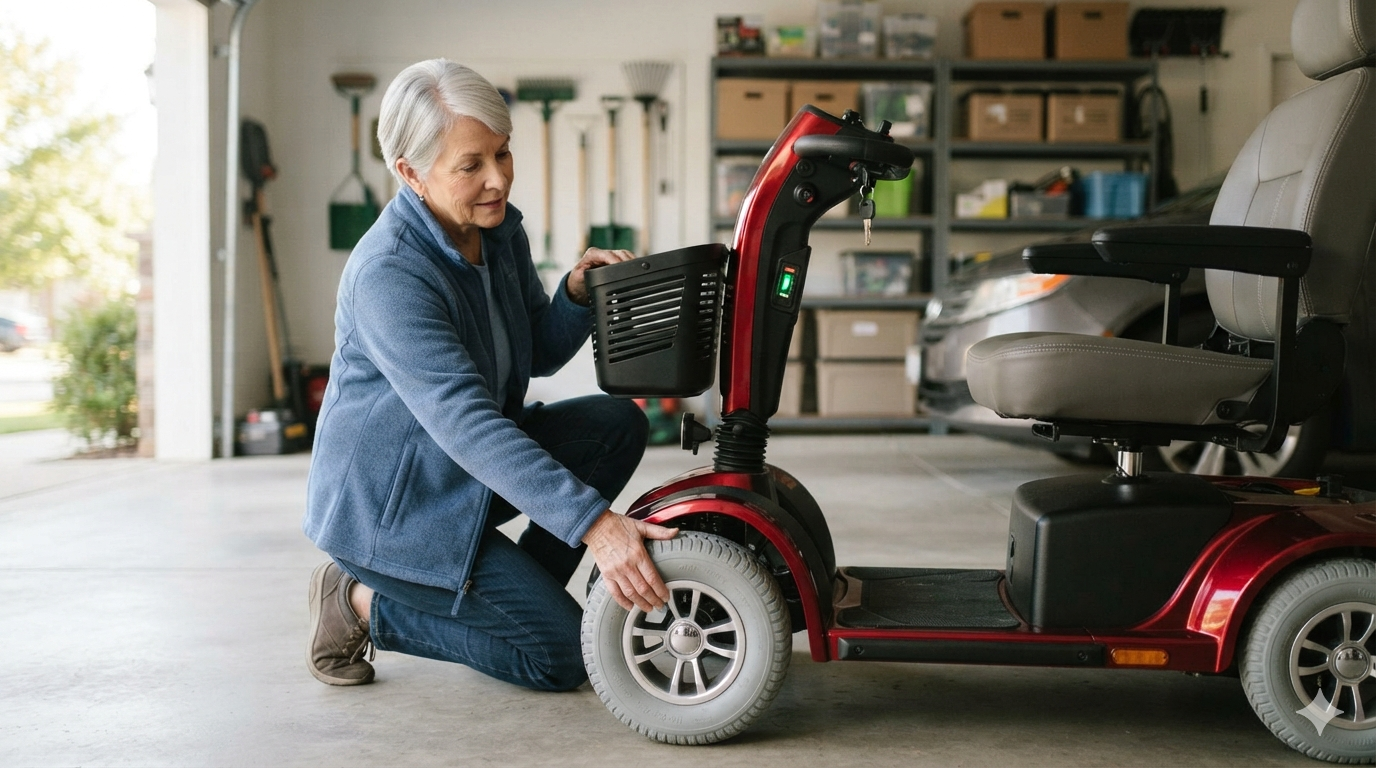
Advertised range is measured under ideal conditions. Real-world range is typically 50–70% of that figure once you account for hills, your weight, terrain, and battery age. Estimate your longest typical outing, then add a 30% buffer.
Our real-world range guide shows you exactly how to calculate this. (C0ming Soon!)
What weight capacity should I choose?
Choose a scooter rated at least 20–30 kilograms above your current weight. This gives the motor and battery headroom, especially on slopes or when carrying shopping. Never buy a scooter rated exactly at your weight.
What is turning radius, and why does it matter indoors?
Turning radius is the smallest circle your scooter can make. A tight turning radius (under 120 cm) lets you navigate kitchens, hallways, and bathrooms with ease. A wide turning radius can leave you stuck or forced to reverse out of rooms. Measure your tightest indoor space before you shop.
Our turning radius guide walks you through it. (C0ming Soon!)
What ground clearance do I need for kerbs, ramps, and uneven paths?
For smooth footpaths and indoor use, 5–7 cm is fine. If you regularly encounter kerbs, ramps, or uneven ground, aim for 8–10 cm or more. Higher clearance also reduces the risk of scraping the underside of the scooter.
Folding vs dismantling scooters: what's the difference?
Folding scooters collapse in one piece, usually by folding the tiller and seat down. Dismantling scooters break into separate pieces, often four or five, with the heaviest piece being the rear section. Folding is faster and simpler. Dismantling often results in lighter individual pieces but takes more effort to assemble and disassemble.
Will a mobility scooter fit in my car boot?
It depends on the scooter's dimensions and your boot's opening and interior space. Measure your boot's height, width, and depth before you shop. Also consider the weight of the heaviest piece and whether you can lift it safely.
Our car boot fit checklist gives you the exact measurements to take.
How heavy is a mobility scooter (and what's the heaviest piece)?
Travel scooters typically weigh 20–40 kg in total, with the heaviest piece around 10–15 kg. Mid-size scooters range from 50–80 kg. Heavy-duty models can exceed 120 kg. Always ask for the weight of the heaviest single piece, not just the total weight. Our liftability guide explains how to assess whether you can load it yourself.
What features matter most for comfort (seat, suspension, tyres)?
Seat padding, adjustable armrests, and a swivel seat make a huge difference for longer trips. Suspension smooths out bumps on uneven surfaces. Pneumatic tyres absorb shock better than solid tyres but require maintenance. If you plan to ride for more than 30 minutes at a time, prioritise these features.
How do I know the controls will suit my hands/strength?
Test the tiller and throttle before you buy. Look for adjustable speed settings, easy-to-reach controls, and a tiller that adjusts to your height. If you have arthritis or limited grip strength, ask about alternative control options. A test drive is the only way to know for sure.
Where can I test drive a mobility scooter?
Most reputable suppliers offer showroom test drives. Some also offer home trials, which are far more valuable because you can test the scooter on your own terrain. Ask specifically for a home trial.
Our test drive checklist tells you exactly what to observe. (C0ming Soon!)
Should I buy new or used?
New gives you a warranty, the latest features, and no hidden wear. Used can save you thousands but carries risks, especially around battery health and hidden damage.
If you buy used, use our inspection checklist and red flags guide to protect yourself. (C0ming Soon!)

What warranty should I expect (and what usually isn't covered)?
Most new scooters come with a 12–24 month warranty covering the frame and motor. Batteries often have a shorter warranty, sometimes only 6–12 months. Wear items like tyres, seat upholstery, and brake pads are usually excluded. Always read the fine print.
Our warranty checklist breaks down what to look for. (C0ming Soon!)
Are mobility scooters allowed on footpaths in Australia (in general terms)?
In most Australian states and territories, mobility scooters are permitted on footpaths and shared paths, provided they meet certain speed and size requirements. Rules vary by state, so check your local transport authority. This guide is general information, not legal advice.
Can I take a mobility scooter in a taxi or on public transport?
Many taxis and ride-share services can accommodate folding or dismantling scooters, but you must notify them when booking. Public transport accessibility varies by city and mode. Always check with the specific transport provider before you travel.
What ongoing costs should I budget for?
Plan for battery replacement every 2–4 years ($300–$800), annual servicing ($150–$300), tyre replacement as needed, and possibly insurance. Total ongoing costs typically range from $300 to $1,000 per year, depending on usage and scooter type.
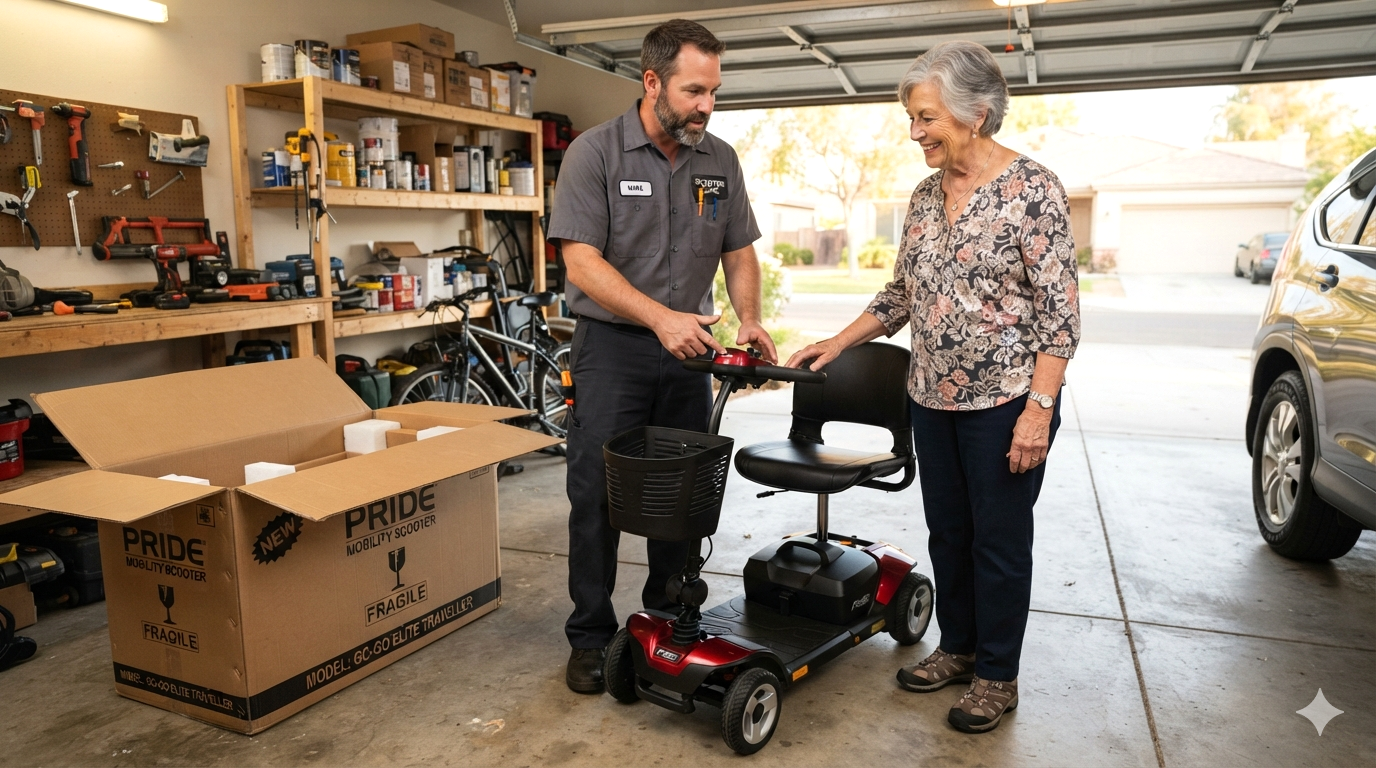
Your Next Step
You do not have to figure this out alone. This Mobility Scooter Buying Guide is designed to be your starting point, not your only resource. Each section links to a deeper guide that answers the specific questions you are likely asking right now.
Read them in any order. Come back to this page whenever you need to reorient yourself.
The right mobility scooter will not just move you from place to place. It will give you back the distances that matter: the walk to the park, the trip to the shops, the afternoon at the fair with your grandchildren. You deserve that.
And with the right information, you can absolutely find it.
Stay mobile, stay confident!
Sign up for our monthly Mobility Scooter Newsletter to receive practical guides, expert advice, and inspiring stories that help you make the most of your scooter and download our free "Mobility Scooter Guide for Beginners."
Don't worry — your e-mail address is totally secure.
I promise to use it only to send you our newsletter, "Mobility Matters."
Recent Articles


-
Mobility Scooter Buying Guides– No More Guesswork
Sep 18, 26 10:46 AM
 Mobility Scooter Buying Guides — don’t buy before reading this. Expert tips on features, safety, and getting the best value.
 -
Mobility Scooter Buying Guide: Don't Buy Until You Read This
Sep 18, 26 10:34 AM
 Mobility Scooter Buying Guide: Confused by choices? We walk you through types, costs, test drives and car boot fit so you buy with total confidence.
 -
Mobility Scooter Types Overview: No More Confusion
Sep 18, 26 08:02 AM
 Mobility scooter types explained in plain English. Includes Australian footpath rules, airline battery limits, and the one mistake most first-time buyers make.


Ready to Feel More Confident on Your Mobility Scooter?

My Ebook, The Ultimate Guide to Mobility Scooters, walks you through choosing the right scooter, using it safely, and keeping it in top condition — all explained in clear, friendly language.
Give yourself (or someone you love) the gift of independence.



