- Home
- Buying Guides
- Mobility Scooter Buying Guide
- Mobility Scooter Warranty Checklist:
Mobility Scooter Warranty Checklist (Australia): What to Look for in the Fine Print
Picture this: You have chosen your scooter. You have arranged the funding. You are sitting in the showroom with a pen in your hand and a stack of paperwork in front of you. The salesperson is smiling warmly and saying something about a "comprehensive warranty." You nod. You sign. You take the scooter home.
Six months later, the battery starts losing charge faster than it should. You call the supplier, feeling confident because you remember the word "comprehensive." And then you hear the phrase that changes everything: "Batteries are only covered for six months, and gradual deterioration isn't covered."

This mobility scooter warranty checklist exists to make sure that never happens to you. By the end of this guide, you will know exactly what to look for, what questions to ask, and how to read the fine print before you sign anything.
Let's make sure the warranty you think you have is the warranty you actually get.
Who This Guide Is For and the Search Intent Behind It
This mobility scooter warranty checklist is for anyone standing at the edge of a purchase, feeling both excited and slightly uneasy.
Maybe you are a first-time buyer who wants to understand what happens if something goes wrong. Maybe you are an adult child helping a parent choose a scooter and you are the one who will handle any future claims. Or maybe you are navigating funding through the NDIS or My Aged Care and you need to document that the equipment is properly protected.
The search intent behind this topic is commercial investigation with a strong risk-reduction focus. People searching for warranty information are not just curious. They are protecting themselves. They have either been burned before, heard a horror story from a friend, or simply know that a mobility scooter is a significant financial commitment and they want to understand the safety net.
And here is the problem with Page 1: most results are either manufacturer warranty PDFs that require a law degree to decipher, or retailer pages that say "comprehensive warranty" without explaining what that actually means.
What is missing is a calm, methodical guide that translates the fine print into plain English. That is what this page delivers.
What Australian Consumer Law Guarantees You, Regardless of Warranty
Before we look at warranty documents, you need to understand something important. In Australia, you have rights under the Australian Consumer Law (ACL) that exist regardless of what any warranty document says. These are called consumer guarantees, and they cannot be excluded or limited by a manufacturer.
The ACL guarantees that goods must be of acceptable quality, fit for purpose, and match their description. If a mobility scooter fails these guarantees, you are entitled to a remedy. For a major failure, you can choose a refund or replacement. For a minor failure, the supplier may choose to repair, replace, or refund.
Every legitimate warranty document in Australia must include the prescribed text stating these rights. If a warranty document tries to exclude or limit your ACL rights, that clause is void. The ACCC and state consumer affairs bodies take this seriously. In one case, a South Australian mobility retailer was required to give an undertaking to the Commissioner for Consumer Affairs after using a clause that excluded implied warranties, which the Commissioner considered likely to mislead consumers about their ACL rights.
So when you read a warranty document, remember this: the ACL is your baseline. The warranty is an addition, not a replacement. And no warranty can take away your consumer guarantees.
The Warranty Periods: What's Actually Covered and For How Long
Now let's look at what typical Australian mobility scooter warranties actually cover. The periods vary significantly between brands, and understanding the structure is essential.
Structural frame. This is usually the longest warranty period. Some brands offer 5 years, 7 years, or even 10 years on the frame. Pride Mobility, for example, offers a two-year limited warranty on structural frame components including the platform, fork, seat post, and frame welds. Avante Australia offers a 5-year structural frame warranty covering the main frame and welded joints. Shoprider offers 10 years on the structural frame for some models.
Drivetrain and motor. This typically ranges from 18 months to 5 years. Avante offers a 2-year drivetrain warranty covering the transaxle, motor, and brake systems. Shoprider offers 18 months on the drive train assembly. Pride offers a two-year limited warranty on the drivetrain including the differential, motor, and brake.
Electronics and electrical components. This is usually 1 year. Controllers, battery chargers, wiring harnesses, displays, and switches typically fall under this category. Pride offers a one-year warranty on all electronic parts including controllers and battery chargers. Avante offers a 1-year general and electrical warranty covering controllers, chargers, wiring, displays, and switches.
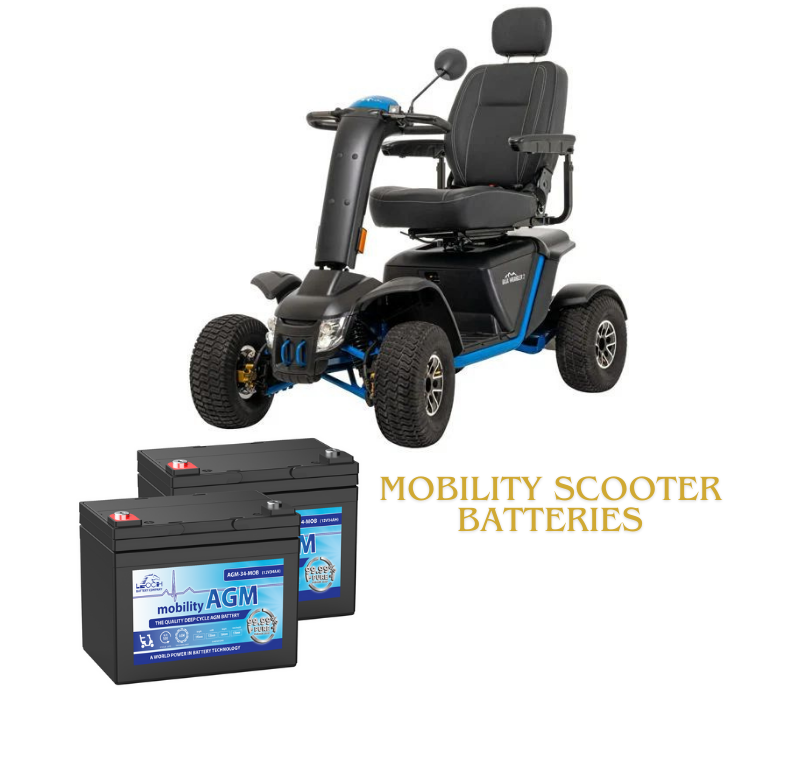
Battery. This is where the fine print gets interesting. Battery warranties are consistently shorter than other components, typically 6 months. Pride covers batteries for six months and explicitly excludes gradual deterioration in performance due to the battery being left in a discharged state, left in cold conditions, or worn out through heavy use. Avante offers a 6-month battery warranty covering manufacturing faults and under-performance not caused by user damage, but explicitly excludes normal capacity loss over time. Aspire scooters from Aidacare offer 6- month battery warranties alongside 7-year frame warranties.
Why are battery warranties so short? Because batteries are consumable items. They degrade with use, and manufacturers classify capacity loss as normal wear and tear. This is the single most common source of warranty disputes for mobility scooter owners.
What's Usually Not Covered: The Exclusion List
Every warranty has exclusions, and understanding them is just as important as understanding the coverage. Here are the items most commonly excluded from Australian mobility scooter warranties.
Normal wear and tear items. Tyres, upholstery, fuses, bulbs, brake pads, and cosmetic deterioration are almost universally excluded. HandyScoot explicitly lists tyres, upholstery, fuses, and cosmetic deterioration as wear-and-tear exclusions. Pride excludes tyres, belts, bulbs, upholstery, plastic shrouds, motor brushes, fuses, and batteries.
Battery capacity loss. This is the big one. Even during the warranty period, gradual loss of battery capacity is typically not covered. It is considered normal degradation, not a defect. If your battery holds less charge after a year, that is not a warranty issue unless it fails completely or suffers a manufacturing fault.
Damage from misuse or accidents. If the scooter is dropped, subjected to severe impact, or damaged through misuse, the warranty will not cover it. HandyScoot excludes damage caused by misuse, abuse, accidents, or failure to follow operating instructions. Pride excludes damage caused by misuse or accident, including the product being dropped or subjected to severe impact.
Unauthorised repairs or modifications. If you or an unauthorised third party open, dismantle, or modify the scooter, the warranty on that item is void. Pride explicitly states that any attempt to open or dismantle the controller or battery charger renders the guarantee void on that item. HandyScoot excludes damage from unauthorised repairs, alterations, or modifications.
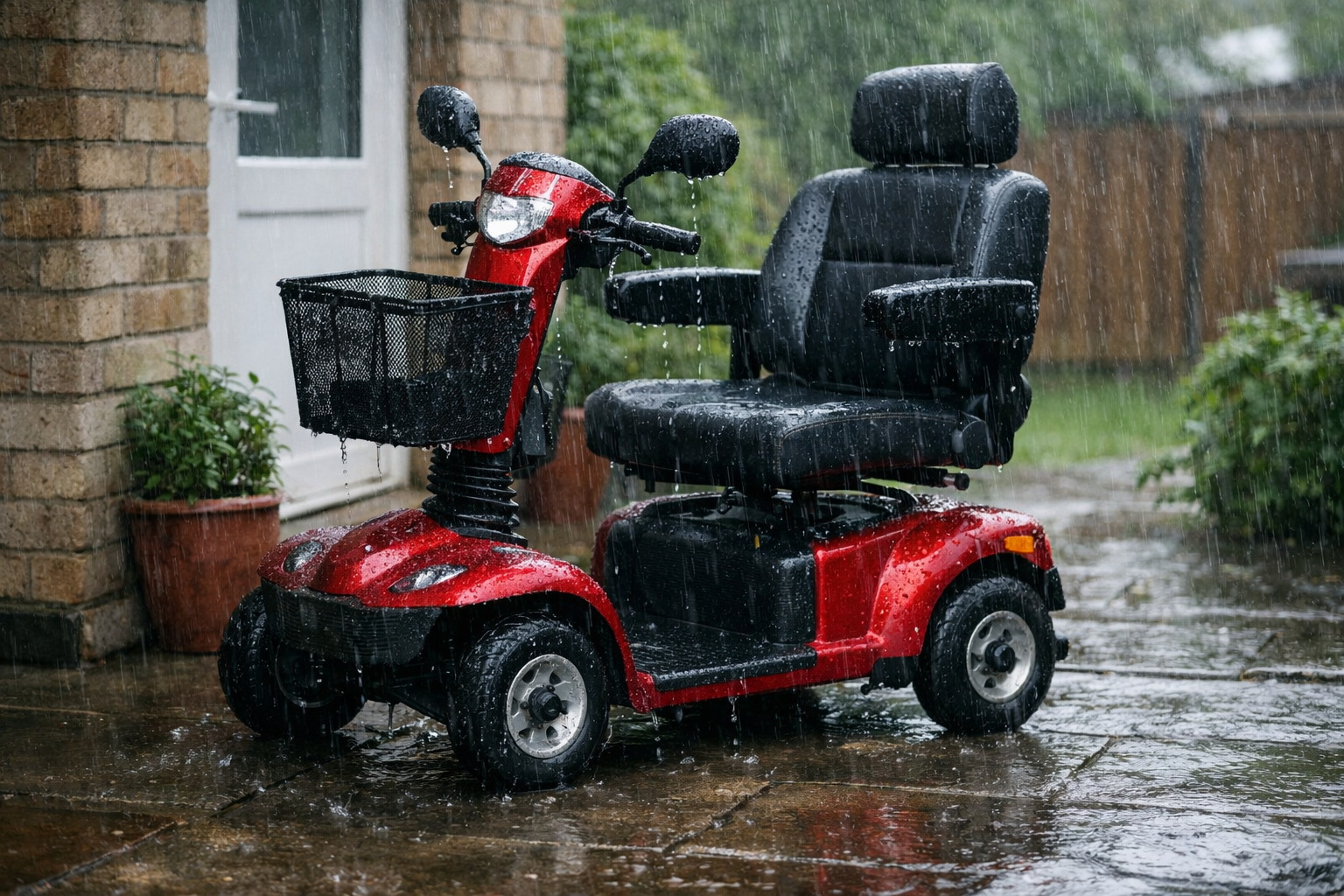
Water damage and extreme weather. Mobility scooters are generally not waterproof. Water damage from rain, puddles, or excessive moisture is typically excluded. Avante excludes water damage or excessive moisture exposure. HandyScoot excludes damage caused by exposure to extreme weather conditions beyond normal outdoor use.
Commercial use. If you use the scooter for commercial or hire purposes, the warranty is often significantly reduced or void. Avante limits commercial use warranty to 6 months on batteries and 12 months on all other components. HandyScoot excludes damage resulting from commercial or rental use entirely.
The Claim Process: What Happens When Something Goes Wrong
Knowing what is covered is only half the battle. You also need to know how to make a claim, and what the process will require from you.
Step 1: Contact the retailer first. In almost all cases, your first point of contact is the retailer who sold you the scooter, not the manufacturer. Pride advises contacting the retailer you purchased from with your proof of purchase, which triggers an internal investigation into the problem and the warranty status.
Step 2: Provide documentation. You will typically be asked to provide proof of purchase, a completed warranty repairs form, and possibly photos or videos showing the fault. Thrive Mobility may ask for a completed Warranty Repairs Form, proof of purchase, battery load test results from an authorised battery centre, and photos or videos showing the fault or damage.
Step 3: Assessment and diagnosis. The retailer or an authorised service agent will assess the scooter to confirm whether the fault is covered. This may involve inspecting the scooter, testing the battery, or sending components to the manufacturer.
Step 4: Remedy. If the claim is approved, the remedy may be a repair, replacement, or refund depending on the nature of the fault and your ACL rights. HandyScoot states that remedies will be provided within a reasonable time and that after a repair or replacement, the scooter is covered for the longer of the remainder of the original warranty period or 90 days.
Important: Service callouts, transportation costs, and labour charges are often the responsibility of the purchaser, even during the warranty period. Lifestyle Mobility states that all service calls, call-out fees, transportation costs, or any other charges associated with warranty repairs are the responsibility of the purchaser. Avante covers transportation costs during the first 12 months but the purchaser is responsible after that.
The Fine Print Traps to Watch For
Now let's talk about the specific traps that catch people out. These are the clauses and conditions that turn a "comprehensive warranty" into something far less comprehensive.
Non-transferable warranties. Almost all mobility scooter warranties in Australia are non-transferable. They apply only to the original purchaser. Shoprider explicitly states that the warranty is not transferable. Monarch Mobility and SectorCare make the same statement. This means if you sell your scooter, the new owner has no warranty protection whatsoever.
Service history requirements. Some warranties require you to maintain a service history to keep the warranty valid. Avante requires proof of purchase and service history records when making a claim. If you skip services or use an unauthorised repairer, your warranty may be void.
Original purchaser only. Related to transferability, warranties apply only to the person who bought the scooter new. If you buy a used scooter, you have no manufacturer warranty protection, though you may still have ACL rights against the retailer who sold it to you.
Warranty doesn't restart after repair. A successful warranty claim does not extend or restart the warranty period. SectorCare explicitly states that a successful warranty claim does not restart or extend the original warranty period.
Exclusions for "as is" or clearance items. Scooters sold on clearance, in as-is condition, via auction agents, or through clearance centres may have no warranty at all. Avante excludes items sold on clearance, in as is condition, via auction agents or other clearance centres.
Your Mobility Scooter Warranty Checklist
Before you sign anything or hand over any money, run through this checklist. Take it with you to the showroom. Ask the salesperson to confirm each point in writing.
What is the warranty period for each component? Get the specific periods for frame, drivetrain, electronics, and battery. Do not accept "comprehensive" as an answer.
What is the battery warranty, and what does it actually cover? Confirm whether gradual capacity loss is covered or excluded.
Is the warranty transferable? If you might sell the scooter later, ask whether the warranty transfers to the new owner. The answer is almost always no.
What are the exclusions? Ask for the written exclusion list. Look for wear items, water damage, misuse, unauthorised repairs, and commercial use.
Who handles warranty claims? Is it the retailer, the manufacturer, or an authorised service agent? What is the process?
Who pays for service callouts and transportation? This can add up quickly. Confirm whether these costs are covered or your responsibility.
What documentation is required for a claim? Proof of purchase, service history, photos, battery tests? Know what you will need.
Does the warranty require regular servicing? If so, what intervals, and does the service need to be performed by an authorised agent?
What are your ACL rights? Remember that regardless of the warranty, you have consumer guarantees under Australian Consumer Law. The warranty cannot exclude these rights.
If you can answer these questions confidently, you are ready to buy with your eyes open.

Your Next Step
You now have a mobility scooter warranty checklist that covers everything from frame coverage to fine print traps. The next step is simple: take this list to your supplier, ask the questions, and get the answers in writing before you sign.
For more guidance on every stage of the buying process, return to our Mobility Scooter Buying Guide hub, where you will find deep dives on test-driving, car boot fit, turning radius, liftability, real-world range, and buying used.
The right scooter is the one you can enjoy without worrying about what happens if something goes wrong. With this checklist in hand, you are well on your way to finding it.
Stay mobile, stay confident!
Sign up for our monthly Mobility Scooter Newsletter to receive practical guides, expert advice, and inspiring stories that help you make the most of your scooter and download our free "Mobility Scooter Guide for Beginners."
Don't worry — your e-mail address is totally secure.
I promise to use it only to send you our newsletter, "Mobility Matters."
Recent Articles


-
Mobility Scooter Buying Guide: Don't Buy Until You Read This
Sep 22, 26 08:04 AM
 Mobility Scooter Buying Guide: Confused by choices? We walk you through types, costs, test drives and car boot fit so you buy with total confidence.
 -
Mobility Scooter Warranty Checklist: Read Before You Sign
Sep 22, 26 07:55 AM
Mobility Scooter Warranty Checklist: Don't assume you're covered. Learn the questions to ask and the fine print to check before buying your scooter. -
Real-World Mobility Scooter Range: How Far Can You Go?
Sep 22, 26 06:55 AM
 Real-World Mobility Scooter Range: Learn how terrain, weight, and temperature cut advertised km by up to 40%. Estimate your true range before you buy.



Ready to Feel More Confident on Your Mobility Scooter?

My Ebook, The Ultimate Guide to Mobility Scooters, walks you through choosing the right scooter, using it safely, and keeping it in top condition — all explained in clear, friendly language.
Give yourself (or someone you love) the gift of independence.



