- Home
- Buying Guides
- Mobility Scooter Buying Guide
- Buying a Used Mobility Scooter in Australia
Buying a Used Mobility Scooter in Australia: Inspection Checklist + Red Flags
Picture this: You find it on Facebook Marketplace. A mobility scooter, barely used, "great condition," only $800. The photos look decent. The seller seems friendly. You arrange to meet, hand over the cash, and drive home feeling pleased with yourself.
Three months later, the battery barely holds a charge. The brakes feel spongy. You call the seller, but they have gone quiet. You call a mobility shop, and they quote you $650 for a new battery — almost as much as you paid for the whole scooter.
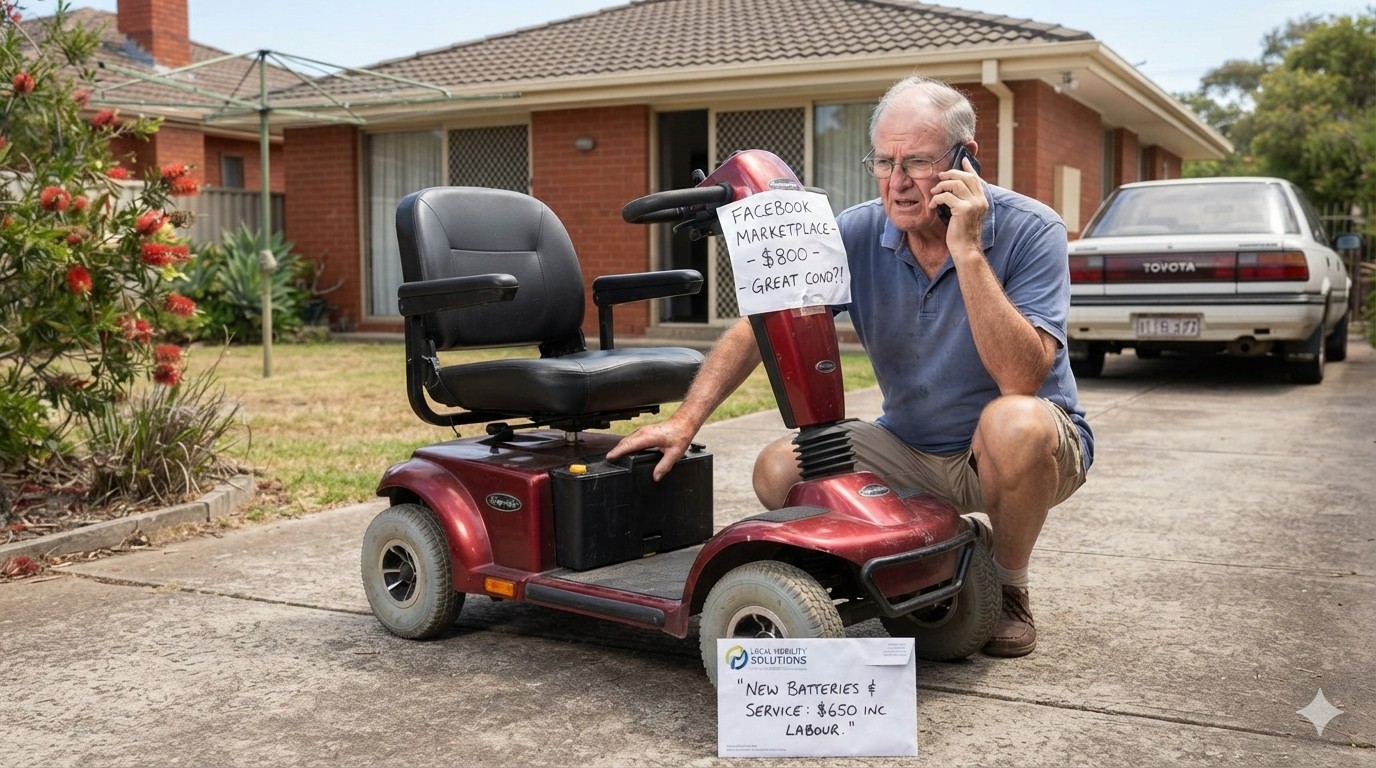
This scenario plays out more often than anyone would like to admit. Buying a used mobility scooter in Australia can be a smart, budget-friendly decision that saves you thousands. But it can also be a trap if you skip the right questions and the right inspections.
This buying a used mobility scooter in Australia guide is your protection. By the end, you will know exactly what to inspect, what to test, what legal rights you have, and which red flags should send you walking away.
The Search Intent Behind This Topic
People searching for used mobility scooter guidance in Australia are not casually browsing. They are standing at a decision point with real money on the line. The intent is commercial investigation with a strong risk-aversion focus. These searchers have usually already decided that a used scooter makes financial sense. What they need now is confidence that they will not be throwing money at someone else's problem.
That is exactly why this guide exists. Page 1 for this topic is a mix of dealer listings, forum threads with horror stories, and vague advice like "check the battery."
What is missing is a practical, step-by-step inspection system that tells you exactly what to look at, what to test, and when to walk away. That is what follows.
Why Buying Used Makes Sense — With Your Eyes Open
Let us start with the good news. Used mobility scooters in Australia typically sell for 50% to 70% less than their new equivalents. A scooter that retails new for $2,500 might sell for $800 to $1,200 in good condition. For someone on a tight budget, that difference is not trivial.
But there is a catch. The savings are only real if you know what you are buying. The biggest risks are unknown battery health, hidden electrical faults, and missing documentation. As one industry guide puts it bluntly, a scooter can power on and display a full charge while still providing poor range under load. The display is not a battery test. It is a battery guess.
And there is another factor: when you buy privately, the manufacturer's warranty is generally void. Every repair — controllers, motors, batteries, wiring — becomes your responsibility. That does not mean you should avoid used scooters. It means you should inspect them properly before money changes hands.
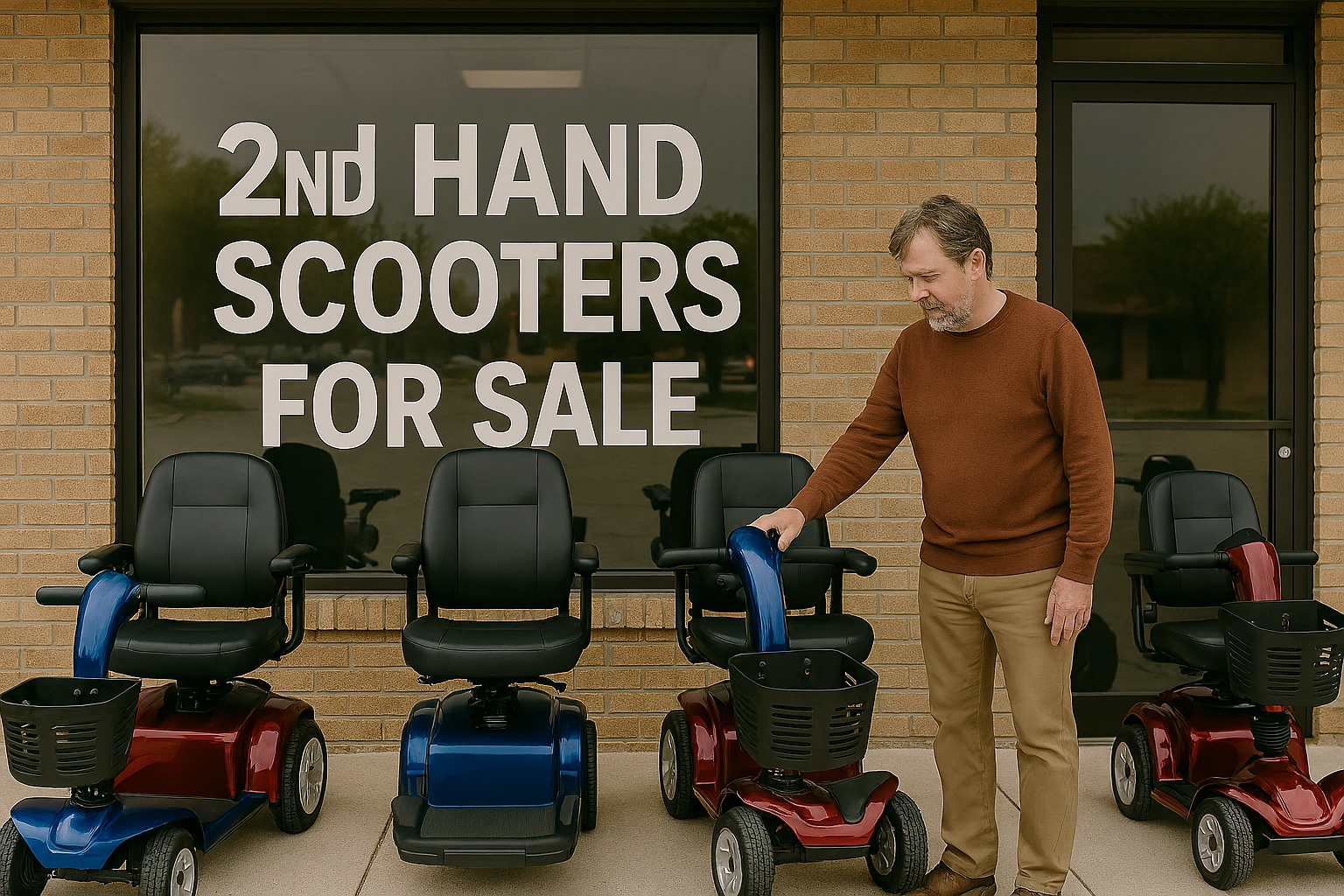
Your Used Mobility Scooter Inspection Checklist
Here is the inspection system. Work through it methodically. If you are not confident doing this yourself, ask a mechanically minded friend or family member to come along.
1. Battery Condition — The Single Most Important Check
Batteries are the number one hidden cost of used scooters. A replacement battery can cost anywhere from $300 to $800 depending on type and size. Before you buy, you need to know whether the battery still holds capacity.
Ask when the scooter was last used regularly. A scooter that has been sitting unused in a garage for months is a red flag. Batteries need to be charged regularly to stay healthy. If a battery has been left flat for too long, it will hold less charge permanently. The exception is when the scooter has been kept on charge while not in use, which preserves battery life.
During the test ride, watch the battery gauge closely. It should not move during a 5 to 10 minute ride. If the gauge drops noticeably during a short test, the battery is not at full capacity and may need replacing soon.
If you want to be thorough, ask whether you can bring a multimeter. A simple voltage check can reveal whether the battery is holding its charge properly. Multimeters are inexpensive and available at most hardware stores.
2. Frame and Body — Look for Hidden Damage
Inspect the frame for cracks, bent metal, corrosion, or signs of water damage. Surface scratches are normal and acceptable. Structural damage is not. Pay particular attention to the welds at the joints, the base of the seat post, and the area around the motor.
Check for rust, especially if the scooter has been stored outdoors or in a damp garage. Water damage and corrosion are often excluded from any remaining warranty coverage.
3. Tyres and Wheels — Wear Indicators
Look for even tread. Tyres that are perishing, cracked, or have flat spots will need replacing, which adds to your cost. Check for excessive wheel movement by rocking each wheel side to side. Some movement is normal; excessive play suggests worn bearings.
4. Brakes and Steering — Safety First
Test the brakes at low speed first, then at a moderate speed. They should stop the scooter smoothly and predictably, without pulling to one side. Test the steering by driving in a slow figure-eight pattern. It should track straight and respond consistently.
If the brakes feel spongy, delayed, or inconsistent, that is a serious safety concern. Walk away.
5. Electrics and Controls — Lights, Horn, Display
Test every electrical function: lights, indicators, horn, and the battery display. Flickering displays or intermittent switches suggest wiring problems that can be expensive to trace and fix. Check that the charger is included and is the correct charger for the scooter. A missing or incompatible charger is a red flag.
6. Seat and Controls — Comfort and Fit
Sit on the scooter. Adjust the seat. Check that the armrests are secure and the controls fall naturally under your hands. A loose seat or difficult controls are not just uncomfortable; they are signs of wear that may worsen over time.
7. Folding or Dismantling Mechanism
If the scooter folds or dismantles for transport, test the mechanism. It should operate smoothly without forcing. Check the weight of the heaviest piece yourself. If you cannot lift it safely, the scooter is not the right one for you, no matter how good the price.
The Red Flags That Should Send You Walking
Some problems are fixable. Others are not worth the risk. Here are the red flags that should end the conversation.
The seller refuses a test ride or discourages inspection. This is the biggest red flag of all. A legitimate seller will want you to test the scooter and will welcome your questions. If they pressure you to buy quickly or refuse to let you inspect properly, walk away.
The scooter cuts out or loses power during the test ride. Intermittent power loss suggests electrical faults that can be difficult and expensive to diagnose and repair.
The battery gauge drops quickly during a short ride. This indicates a battery that is at or near the end of its life. Factor in $300 to $800 for replacement.
Persistent warning lights or error codes. Modern scooters have diagnostic systems. If warning lights stay on or error codes appear, there is a fault that needs professional attention.
The brakes, steering, or controls behave inconsistently. Safety-critical components must work perfectly. Inconsistency is a deal-breaker.
The battery, charger, or wiring becomes excessively hot or produces an unusual smell. This suggests a serious electrical fault that could be a fire hazard.
Missing charger, keys, or documentation. A missing charger is expensive to replace and suggests the seller has not maintained the scooter properly. Missing keys or documentation makes servicing and parts sourcing harder.
Vague or evasive answers about history. If the seller cannot tell you the scooter's age, how often it was used, or whether it has been serviced, you are buying blind.
Your Rights Under Australian Consumer Law
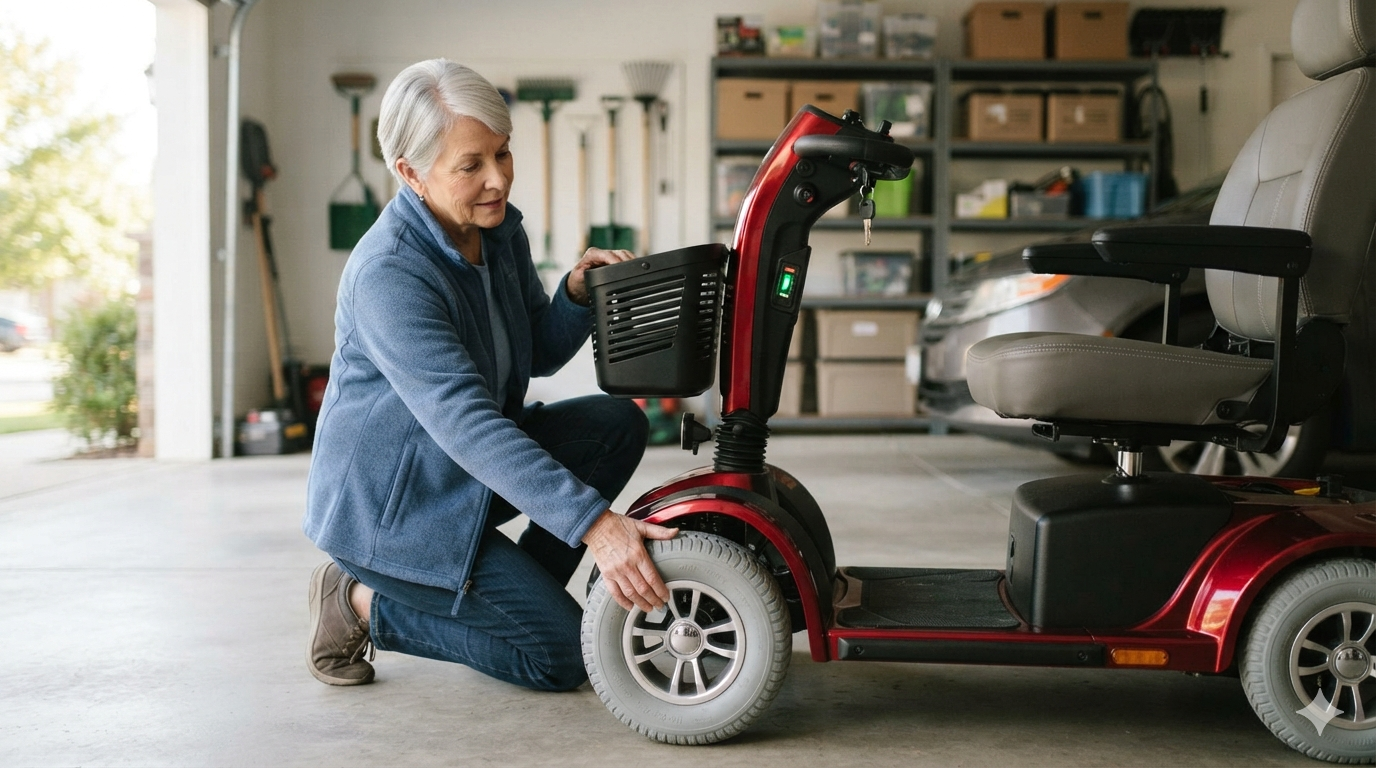
Here is something many buyers do not know: the Australian Consumer Law (ACL) provides statutory guarantees on second-hand goods sold in trade or commerce as well as new ones. This means if you buy a used scooter from a dealer or retailer, you have consumer guarantees that cannot be excluded.
The guarantee of acceptable quality applies to second-hand goods, but age, price, and condition must be taken into account. In other words, a 10-year-old scooter selling for $200 is not expected to perform like a new one. But it should still be fit for purpose, free from defects, safe, and durable for a reasonable period given its age and price.
Important limitation: If you buy from a private seller (not a business), the ACL consumer guarantees generally do not apply. One-off sales by private sellers, such as garage sales or online marketplace listings from individuals, are exempt. This is why buying from a dealer or a retailer that refurbishes and warranties used scooters is often the safer choice.
If you buy from a dealer and the scooter has a major failure, you are entitled to a replacement or refund. For a minor failure, the dealer may choose to repair, replace, or refund. A dealer cannot exclude these rights in their warranty document, even for second-hand goods.
Where to Buy Used Mobility Scooters in Australia
There are several channels for finding used scooters, each with its own risk profile.
Mobility dealers and refurbishers. The safest option. Reputable dealers inspect, service, and sometimes warranty used scooters. Some offer short warranty periods on second-hand units, often three months. You pay more than private sale, but you get peace of mind.
Online marketplaces (Facebook Marketplace, Gumtree). The most common source, with the widest range of prices. Risk is highest here because you are usually buying from private sellers with no warranty protection.
Community noticeboards and newspaper classifieds. Similar risk profile to online marketplaces. Always inspect in person.
Mobility equipment classifieds (e.g., Ebility). Dedicated platforms for mobility equipment. Slightly better than general marketplaces because listings are more detailed, but still private sales.
Wherever you buy, always inspect in person, always test ride, and never pay before you have seen the scooter working.
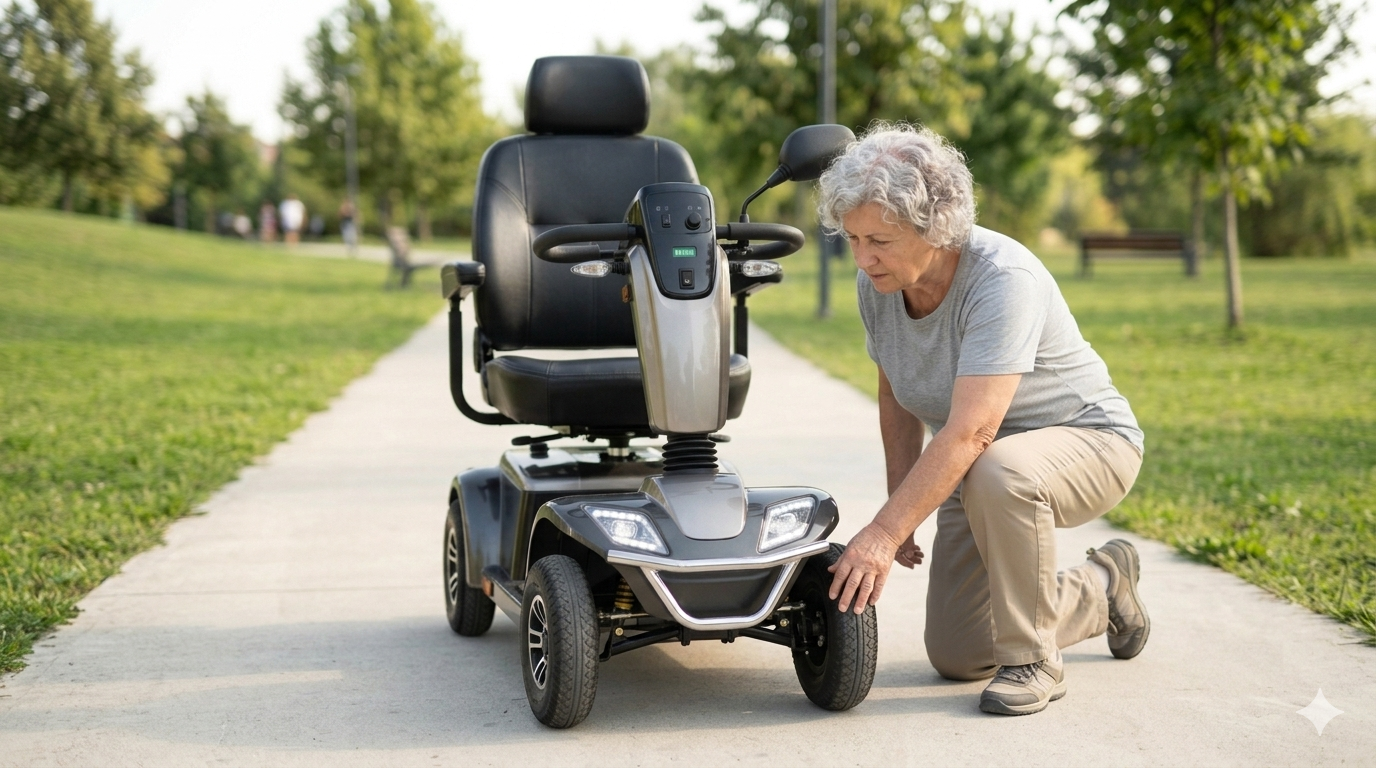
Your Complete Used Mobility Scooter Checklist
Print this or save it to your phone. Take it with you when you inspect any used scooter.
Before you go: Ask for the make, model, and age. Research the model online. Ask why they are selling. Ask how often it was used and whether it has been kept on charge.
Battery: When was it last replaced? Has it been kept charged? Does the gauge drop during a 10-minute test ride? Can you test it with a multimeter?
Frame: Any cracks, bends, rust, or water damage? Check welds and joints.
Tyres: Even tread? Cracks or flat spots? Correct pressure? Wheel bearing play?
Brakes and steering: Smooth stopping? Straight tracking? Consistent response?
Electrics: All lights, horn, and display working? Charger included and correct?
Seat and controls: Comfortable? Adjustable? Secure?
Folding/dismantling: Smooth operation? Can you lift the heaviest piece?
Documentation: Any service history? Original manual? Proof of purchase?
Your rights: Buying from a dealer or private seller? If dealer, your ACL rights apply. If private, they generally do not.
If any red flag appears, walk away. There is always another scooter.

Your Next Step
Buying a used mobility scooter in Australia does not have to be a gamble. With this inspection checklist and an understanding of your legal rights, you can save money and still buy with confidence. The key is to inspect thoroughly, test properly, and never let urgency or a low price override your judgment.
For more guidance on every stage of the buying process, return to our Mobility Scooter Buying Guide hub, where you will find deep dives on test-driving, car boot fit, turning radius, liftability, real-world range, warranty, and spec sheet comparison.
A good used scooter can give you years of reliable freedom at a fraction of the new price. With this checklist in hand, you are well equipped to find one.
Stay mobile, stay confident!
Sign up for our monthly Mobility Scooter Newsletter to receive practical guides, expert advice, and inspiring stories that help you make the most of your scooter and download our free "Mobility Scooter Guide for Beginners."
Don't worry — your e-mail address is totally secure.
I promise to use it only to send you our newsletter, "Mobility Matters."
Recent Articles


-
The NDIS Mobility Scooter Funding Guide I Wish Someone Had Given Me
Sep 24, 26 09:26 AM
 NDIS funding for mobility scooters doesn't have to be confusing. Here's your friendly guide to eligibility, assessment, costs, and approval.
 -
Mobility Scooter Buying Guides– No More Guesswork
Sep 24, 26 07:28 AM
 Mobility Scooter Buying Guides — don’t buy before reading this. Expert tips on features, safety, and getting the best value.
 -
Mobility Scooter Buying Guide: Don't Buy Until You Read This
Sep 24, 26 07:02 AM
Mobility Scooter Buying Guide: Confused by choices? We walk you through types, costs, test drives and car boot fit so you buy with total confidence.



Ready to Feel More Confident on Your Mobility Scooter?

My Ebook, The Ultimate Guide to Mobility Scooters, walks you through choosing the right scooter, using it safely, and keeping it in top condition — all explained in clear, friendly language.
Give yourself (or someone you love) the gift of independence.


