- Home
- Buying Guides
- Mobility Scooter Buying Guide
- Real-World Mobility Scooter Range
Real-World Mobility Scooter Range: How to Estimate KM from Your Routine, Terrain, and Load
Picture this: You have done everything right. You checked the specifications. The brochure said 30 kilometres. You planned a 20-kilometre round trip to the shops and back. That is a comfortable margin, right?
You set off with confidence. The first half feels wonderful. Then you hit the hill near the shopping centre. The motor strains. The battery indicator drops faster than you expected. By the time you reach the car park, you are down to two bars. On the way home, you are watching the gauge like a hawk, praying you make it.
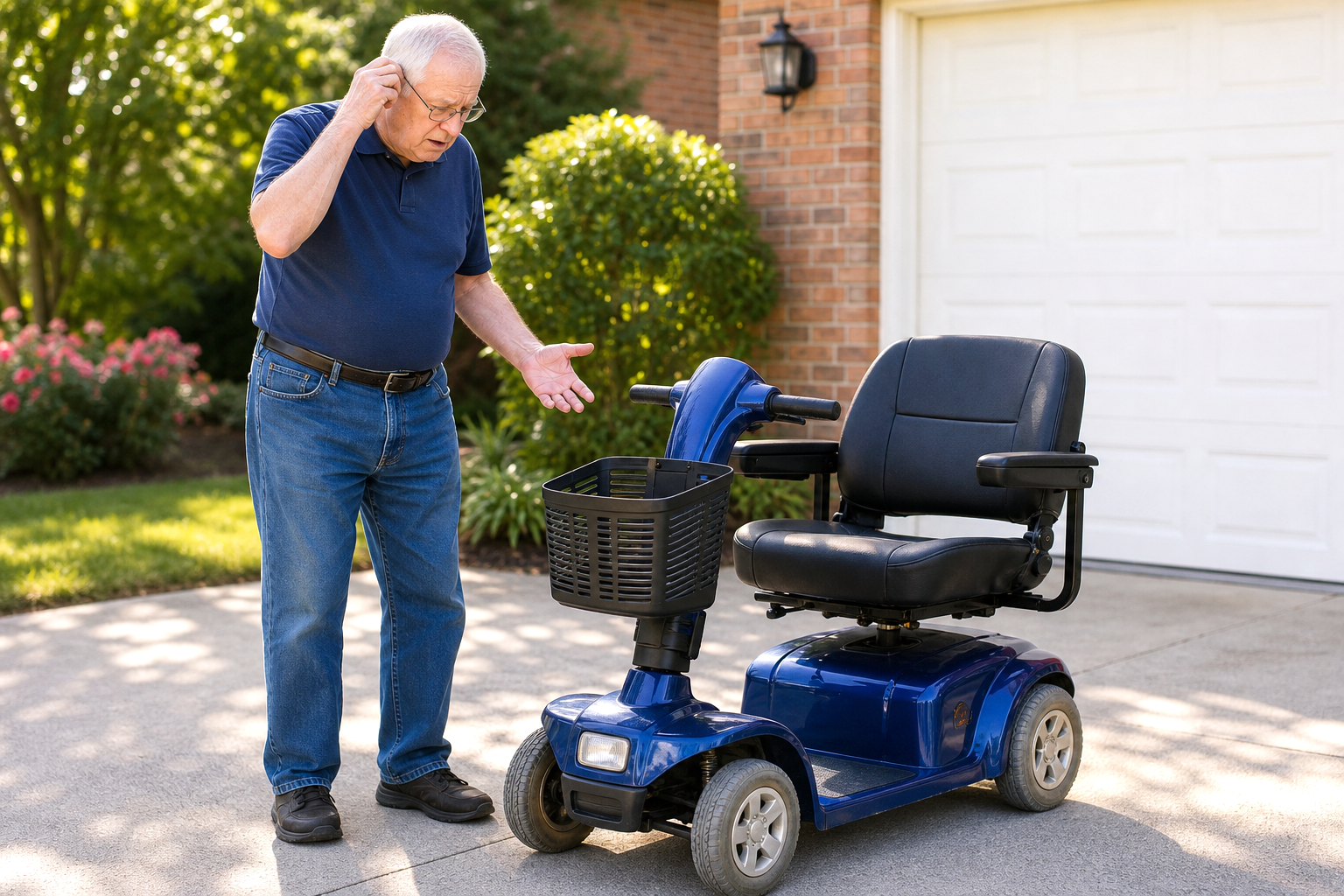
You arrive home with one bar remaining and a knot in your stomach. The scooter said 30 kilometres. Your trip was 20. What went wrong?
This real-world mobility scooter range guide exists to explain that gap. By the time you finish reading, you will know exactly why advertised range and actual range are two different things, and how to estimate your true distance before you buy.
Who This Guide Is For and the Search Intent Behind It
This real-world mobility scooter range guide is for anyone who has felt that knot in their stomach. Maybe you are a first-time buyer trying to understand whether a scooter will actually get you where you need to go. Maybe you are an adult child helping a parent choose a model and you are worried about them getting stranded. Or maybe you already own a scooter and the battery life has quietly declined, leaving you uncertain about how far you can safely travel.
The search intent behind this topic is commercial investigation with a strong practical anxiety. People searching for real-world range are not just curious. They are worried about safety, independence, and making a costly mistake. They want an honest answer, not a marketing number.
And here is the problem with Page 1: most results are either manufacturer pages quoting ideal-condition ranges, or forum posts complaining that the advertised range is a lie.
What is missing is a calm, methodical guide that shows you how to calculate your actual needs and match them to the right battery and scooter type. That is what this page delivers.
Why Advertised Range and Real Range Are Different
Manufacturer range claims are measured under ideal conditions. The battery is new. The rider is an average weight. The terrain is flat. The temperature is mild. The speed is moderate and consistent. There is no wind, no shopping basket, and no stop-start traffic.
Real life is none of those things.
Industry data consistently shows that real-world range is typically 25% to 40% lower than advertised. In some conditions, it can be even less. One Australian supplier notes that while a scooter might claim 40 kilometres, real customer usage often lands closer to 25 or 30 kilometres once the variables of daily life are applied.
That does not mean the manufacturer is lying. It means the test conditions are generous. Your job is to understand the variables and estimate your own personal range, not the laboratory range.
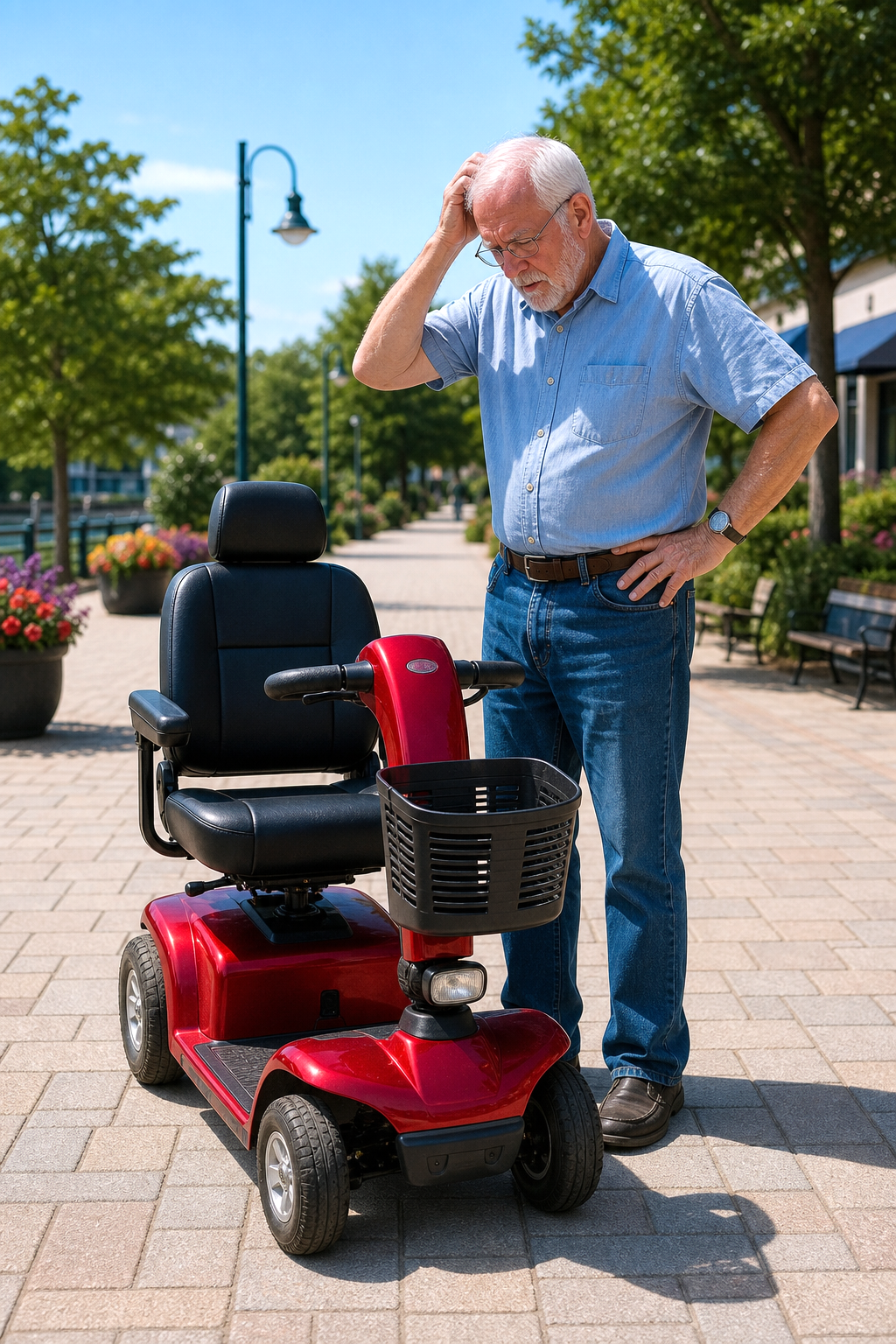
The Five Factors That Drain Your Range
Understanding what reduces range is the first step to estimating it accurately. Five factors matter most, and each one interacts with the others.
Rider and cargo weight. Heavier loads require more power to move. A 100-kilogram rider will achieve noticeably better range than a 140-kilogram rider on the same scooter. Adding shopping bags, a medical kit, or a heavy handbag reduces range further. Every extra kilogram matters.
Terrain and gradients. Flat, smooth footpaths are the ideal. Hills demand exponentially more power. A gentle 10% grade can double power consumption compared to level ground. Grass, gravel, and uneven surfaces all increase resistance and drain the battery faster. If your daily route includes a slope, your effective range drops significantly.
Temperature. Batteries perform less efficiently in cold conditions. On a chilly morning, you may notice your scooter seems sluggish and the gauge drops faster. Cold weather reduces battery capacity while also increasing rolling resistance. The result is a double penalty on range.
Driving habits. Full speed drains the battery faster than moderate speed. Frequent acceleration and braking waste energy compared to maintaining a steady pace. Research shows that operating at 75% of maximum speed can extend your range by 30% to 40% . Smooth, steady driving is not just safer; it is more efficient.
Battery age and type. A new battery holds more charge than one that has been through hundreds of cycles. Gel batteries, common in larger scooters, typically last around 1,000 charge cycles but degrade gradually.
Lithium batteries are lighter and tolerate deeper discharge, but they also lose capacity over time. Tyre pressure also plays a role; under-inflated tyres increase rolling resistance and reduce range.
How to Estimate Your Real Range: A Step-by-Step Method
Now that you understand the variables, let's calculate your actual needs. Grab a pen and paper.
Step 1: Measure your longest regular trip. Not your average trip, but the longest one you take at least once a week. For most people, this is a round trip to the shops, a medical appointment, or a visit to family. Measure the distance using a mapping app or your car's odometer. Write it down.
Step 2: Add a 30% buffer for the unexpected. You might take a detour. You might get stuck in a queue. You might need to take a longer route home. Add 30% to your longest trip. If your longest trip is 15 kilometres, your target is 20 kilometres.
Step 3: Adjust for terrain and weight. If your route includes significant hills, add another 20%. If you carry shopping or equipment regularly, add 10%. If you ride in cold weather often, add another 15%. These are not exact figures, but they will move you closer to reality.
Step 4: Compare to advertised range with a 40% reduction. Take the advertised range and multiply by 0.6. That is a conservative estimate of real-world performance. If a scooter claims 40 kilometres, plan for 24 kilometres in real conditions.
Step 5: Match your target to the scooter. If your adjusted target is 25 kilometres, you need a scooter that claims at least 40 kilometres of advertised range. If your adjusted target is 15 kilometres, a scooter claiming 25 kilometres may be sufficient.
This method is deliberately conservative. It is better to overestimate your needs and have battery to spare than to underestimate and risk getting stranded.
Battery Types and What They Mean for Your Range
Not all batteries are created equal, and the type you choose affects both range and weight.
Gel batteries are the most common type in larger mobility scooters. They are heavier and cheaper than lithium alternatives, but they hold a longer charge and suit riders who need extended range. They also require more careful maintenance, including charging after every use and avoiding deep discharges that shorten their lifespan.
Lithium-ion batteries are lighter and more compact, making them ideal for portable and travel scooters. They do not hold as much charge as gel batteries, which is why they are typically found on lighter scooters designed for shorter trips. They tolerate deeper discharge better and require less maintenance, but they cost more upfront.
The choice between them depends on your priorities. If you need maximum range and do not plan to lift the scooter often, gel batteries are the better option. If portability matters and your trips are shorter, lithium is the practical choice.
Read the full article: What Should I Ask About Battery Replacement Cost, Lifespan, and Availability ?

Tips to Extend Your Range
Once you own a scooter, there are simple habits that can help you get more distance from every charge.
Charge after every use. Do not wait until the battery is low. Plugging in after each trip keeps the battery topped up and healthy. Avoid letting the battery run completely flat, as this damages capacity over time.
Check tyre pressure regularly. Under-inflated tyres increase rolling resistance and reduce range. A quick check every few weeks can make a noticeable difference.
Slow down slightly. Reducing your speed to 75% of maximum can extend your range by up to 40%. You will arrive a few minutes later, but you will arrive with battery to spare.
Plan your route. Avoid steep hills when possible. Choose smooth footpaths over rough surfaces. If you know your route includes a long climb, plan a shorter overall trip or carry your charger.
Use local charging points. Many cafes, shopping centres, and community centres offer charging facilities for mobility scooters. Carrying your charger and asking to plug in while you rest can extend your day significantly.
Your Range Estimation Checklist
Before you buy any mobility scooter, run through these questions:
What is your longest regular trip? Measure it, do not guess.
What terrain will you encounter? Flat footpaths, hills, gravel, or grass?
What is your weight, and will you carry loads? Add a margin for shopping and equipment.
What is the climate like where you ride? Cold weather reduces range.
What is the advertised range? Multiply by 0.6 for a conservative real-world estimate.
Does the adjusted range exceed your longest trip plus a 30% buffer? If yes, you have found a suitable scooter. If no, look for a larger battery or a more efficient model.
If you can answer these questions honestly, you will choose a scooter that genuinely gets you where you need to go.
Your Next Step
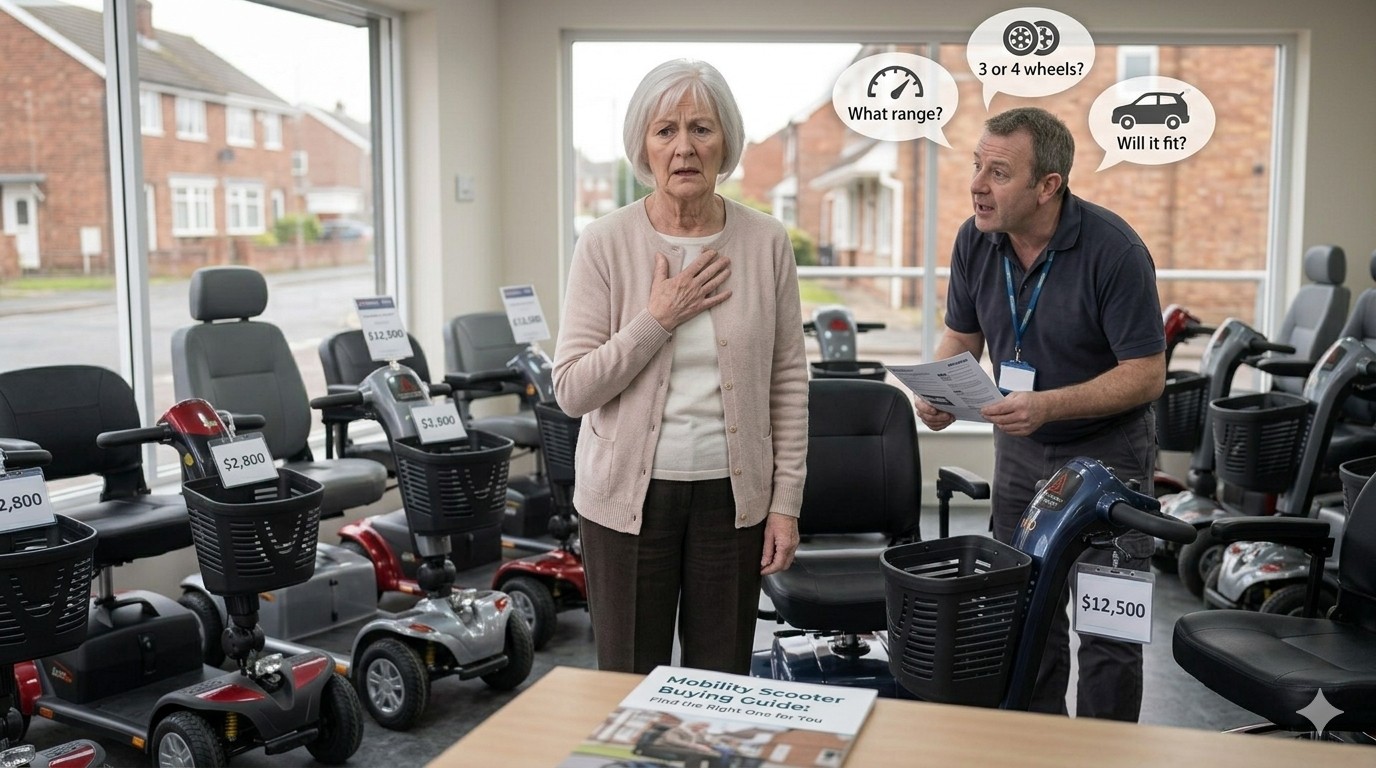
You now have the tools to estimate real-world mobility scooter range with confidence. The next step is to take these calculations to your supplier. Ask about battery size, real customer experiences, and whether a battery upgrade is available for the model you are considering.
For more guidance on every stage of the buying process, return to our Mobility Scooter Buying Guide hub, where you will find deep dives on test-driving, car boot fit, turning radius, liftability, warranty, and buying used.
The right scooter is the one that gets you home safely, every time. With these calculations in hand, you are well on your way to finding it.
Stay mobile, stay confident!
Sign up for our monthly Mobility Scooter Newsletter to receive practical guides, expert advice, and inspiring stories that help you make the most of your scooter and download our free "Mobility Scooter Guide for Beginners."
Don't worry — your e-mail address is totally secure.
I promise to use it only to send you our newsletter, "Mobility Matters."
Recent Articles


-
Mobility Scooter Buying Guide: Don't Buy Until You Read This
Sep 22, 26 08:04 AM
 Mobility Scooter Buying Guide: Confused by choices? We walk you through types, costs, test drives and car boot fit so you buy with total confidence.
 -
Mobility Scooter Warranty Checklist: Read Before You Sign
Sep 22, 26 07:55 AM
Mobility Scooter Warranty Checklist: Don't assume you're covered. Learn the questions to ask and the fine print to check before buying your scooter. -
Real-World Mobility Scooter Range: How Far Can You Go?
Sep 22, 26 06:55 AM
 Real-World Mobility Scooter Range: Learn how terrain, weight, and temperature cut advertised km by up to 40%. Estimate your true range before you buy.


Ready to Feel More Confident on Your Mobility Scooter?

My Ebook, The Ultimate Guide to Mobility Scooters, walks you through choosing the right scooter, using it safely, and keeping it in top condition — all explained in clear, friendly language.
Give yourself (or someone you love) the gift of independence.

