- Home
- Buying Guides
- Mobility Scooter Buying Guide
- Mobility Scooter Liftability
Mobility Scooter "Liftability": How to Tell If You Can Load It Yourself (Heaviest Piece, Ramps, Hoists)
Picture this: You have found the scooter. It is comfortable, it fits your budget, and the test drive felt wonderful. The salesperson is smiling. The paperwork is ready. And then you ask the question that has been sitting quietly at the back of your mind all along: "Can I actually get this into my car by myself?"
The salesperson pauses. "Well," they say, "the heaviest piece is about 25 kilograms. Most people manage."
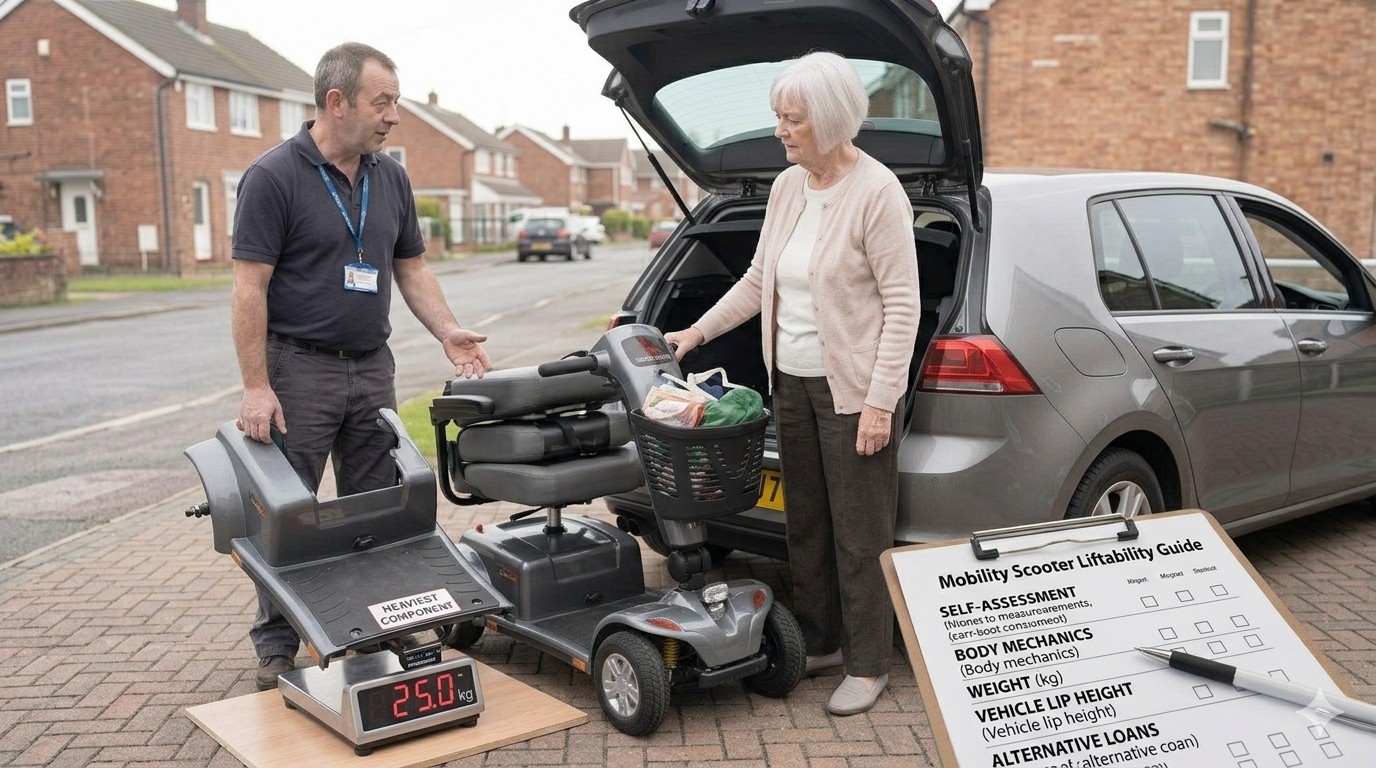
Most people! That phrase does a lot of heavy lifting, doesn't it? Because you are not most people. You are you, with your back, your shoulders, your car, and your daily routine.
This mobility scooter liftability guide is here to help you answer that question honestly, before you spend a dollar. By the end, you will know exactly how to assess whether you can load a scooter yourself, and what to do if the answer is not what you hoped.
Why Liftability Matters More Than You Think
Here is a truth that does not appear in most brochures: a mobility scooter that cannot travel with you is only half a scooter. It gets you around the neighbourhood, but it does not get you to your daughter's house across town, the medical specialist three suburbs over, or the weekend market you have been meaning to visit.
Portability is not a luxury feature. It is the difference between a scooter that expands your world and one that simply moves it a few streets over. If you need to transport your scooter regularly, liftability should be one of the first things you assess, not the last.
And there is a safety dimension too. Lifting a heavy scooter incorrectly is a common cause of back injuries for both users and carers. Getting this right protects not just your scooter, but your body.
The Number That Matters Most: Heaviest Piece Weight
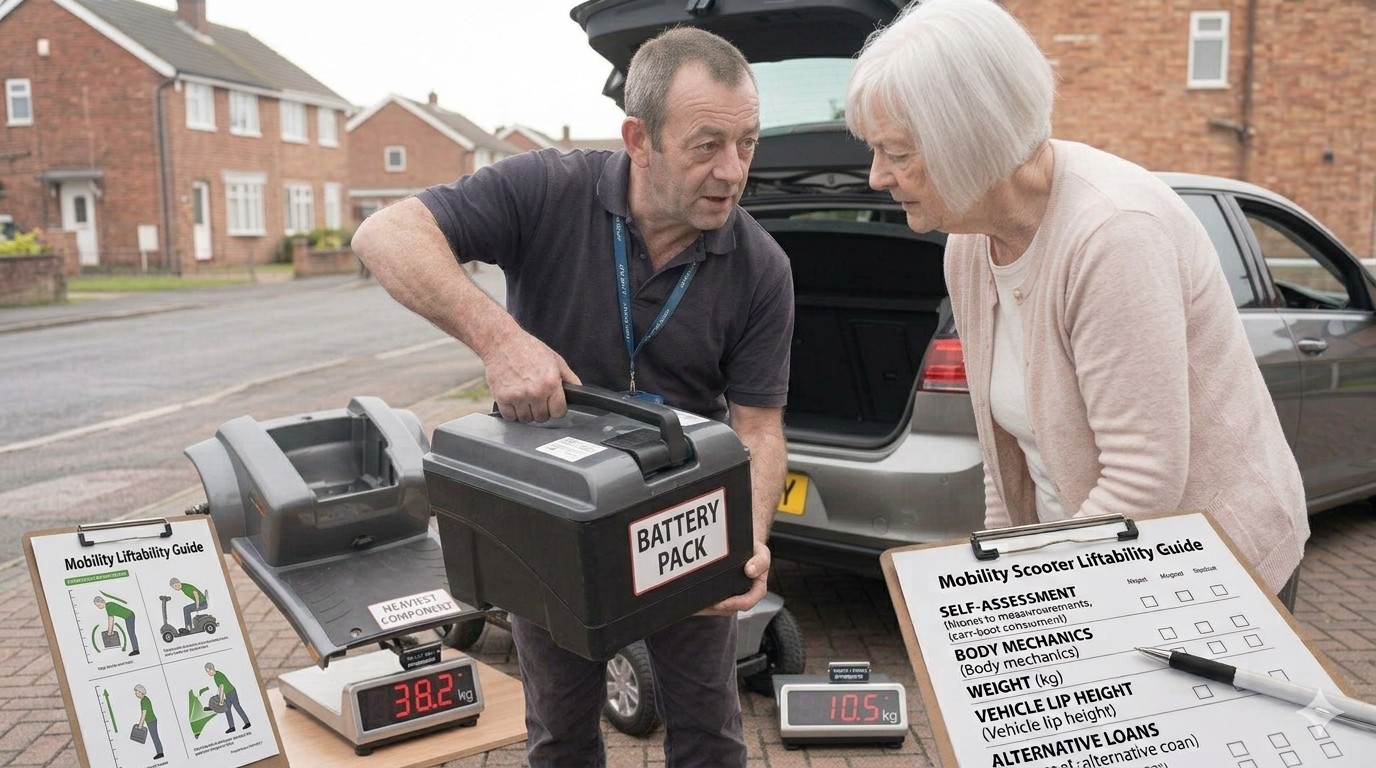
When you look at scooter specifications, you will see a total weight. You might see "45 kg" and think, "That is too heavy for me." But total weight is not the number that determines liftability. The number that matters is the weight of the heaviest single piece when the scooter is disassembled.
A scooter might weigh 45 kilograms in total but break down into five pieces, with the heaviest piece being 12 kilograms. That is manageable. Another scooter might weigh 35 kilograms but only come apart into two pieces, with the heaviest piece being 28 kilograms. That is a different story entirely.
As a general guide, lightweight travel scooters typically have a heaviest piece weighing between 10 and 15 kilograms. Mid-size scooters often have a heaviest piece between 15 and 20 kilograms. Full-size and heavy-duty scooters, which are often not designed for manual lifting at all, may have a heaviest piece of 25 kilograms or more.
Before you buy, ask the supplier for the weight of the heaviest piece. Then pick up something of that weight at home, like a full suitcase or a bag of potting mix, and see how it feels.
Can you lift it from the floor to waist height? Can you do it while bending and twisting slightly? That is a far more honest test than any showroom demonstration.
Folding vs Dismantling: Which Is Easier to Load?
Once you know the weight, the next question is how the scooter breaks down. There are two main approaches, and each has its own loading rhythm.
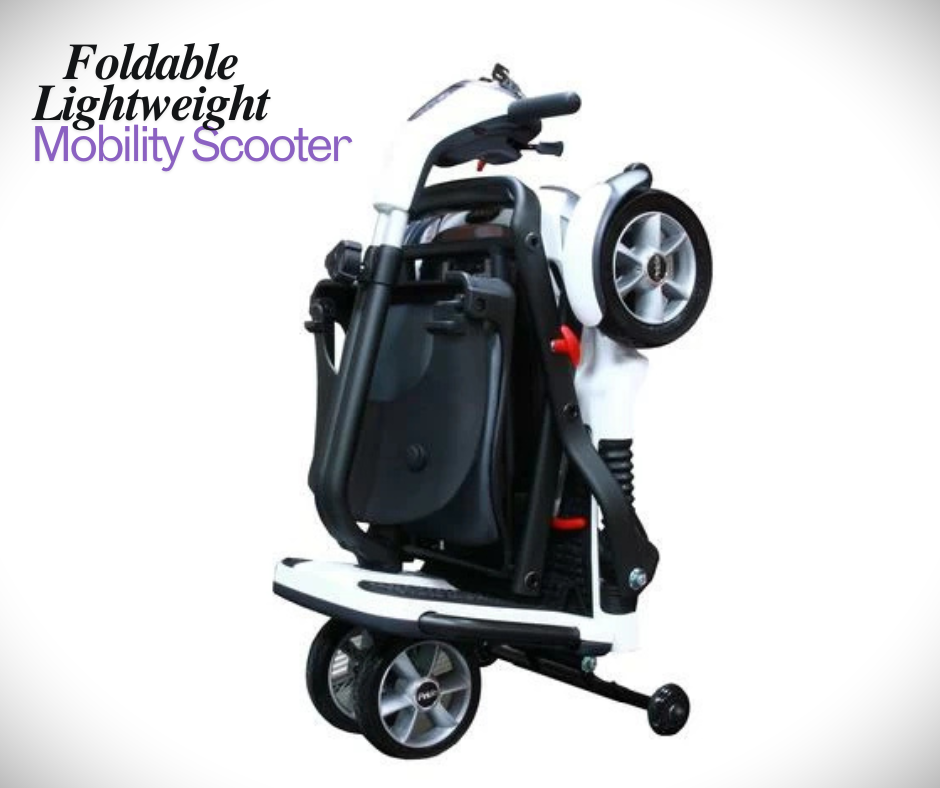
Folding scooters collapse into a single compact unit. You fold the tiller down, fold the seat, and wheel or carry the whole thing as one piece. This is faster and simpler, which matters when you are standing in a car park in the rain.
The trade-off is that you are lifting or manoeuvring the entire scooter, even if it is folded. If the total weight is manageable, folding is the easier option. If it is not, folding will not save you.
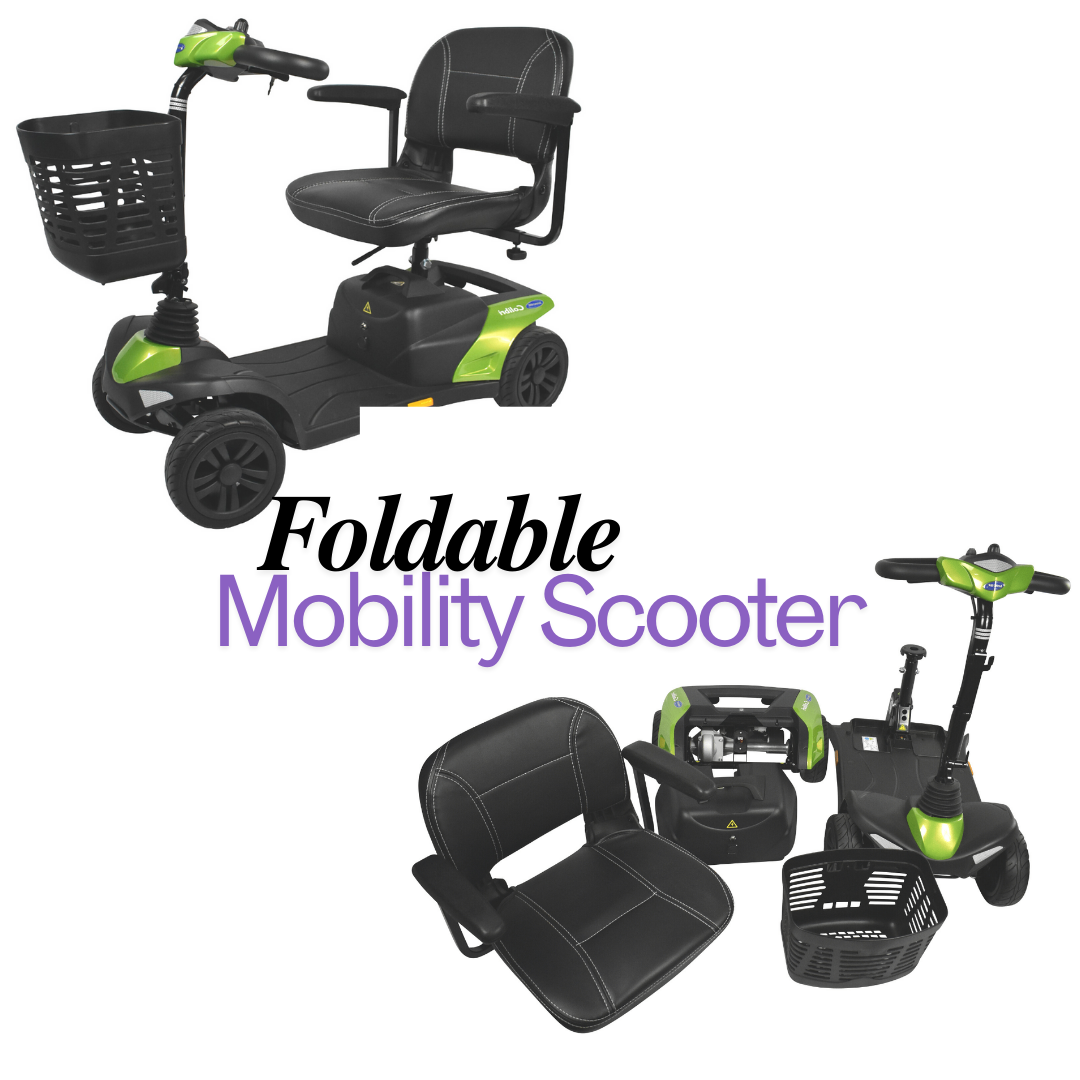
Dismantling scooters break into separate pieces, usually three to five sections. The seat lifts off, the battery slides out, and the frame separates. You carry each piece separately, which means no single lift is overwhelming.
The trade-off is more steps and more time. You will be making multiple trips between the scooter and the car, and you need somewhere safe to place each piece while you load the next.
Neither approach is universally better. If you have good upper body strength and want speed, folding may suit you. If you have a weaker back or shoulders, dismantling spreads the load and may be safer.
Think about your own body and your own routine, not what the brochure suggests.
Ramps: When Lifting Is Not the Answer
If lifting the scooter, even in pieces, feels like too much, a ramp might be the solution. A ramp lets you drive the scooter up into your vehicle rather than lifting it. This is practical for SUVs, minivans, and vehicles with a low cargo floor where the ramp angle stays manageable.
There are two main styles. Platform ramps are a single wide surface, which suits most scooters and wheelchairs. Track ramps are two separate rails, which are easier to store but can be trickier to negotiate and are generally not suitable for three-wheeled scooters.
When choosing a ramp, look for three things. First, the weight capacity must exceed the weight of your scooter with a comfortable margin. Second, the length determines the angle; a longer ramp is easier and safer to climb than a short, steep one. Third, the ramp itself needs to be portable enough for you to lift in and out of the car. A ramp that is too heavy to set up defeats the purpose.
Ramps work best when you have space to position them alongside the vehicle and when someone is available to guide the scooter up. In tight parking spaces or when you are alone, a ramp can be frustrating.
Hoists: The Hands-Free Solution
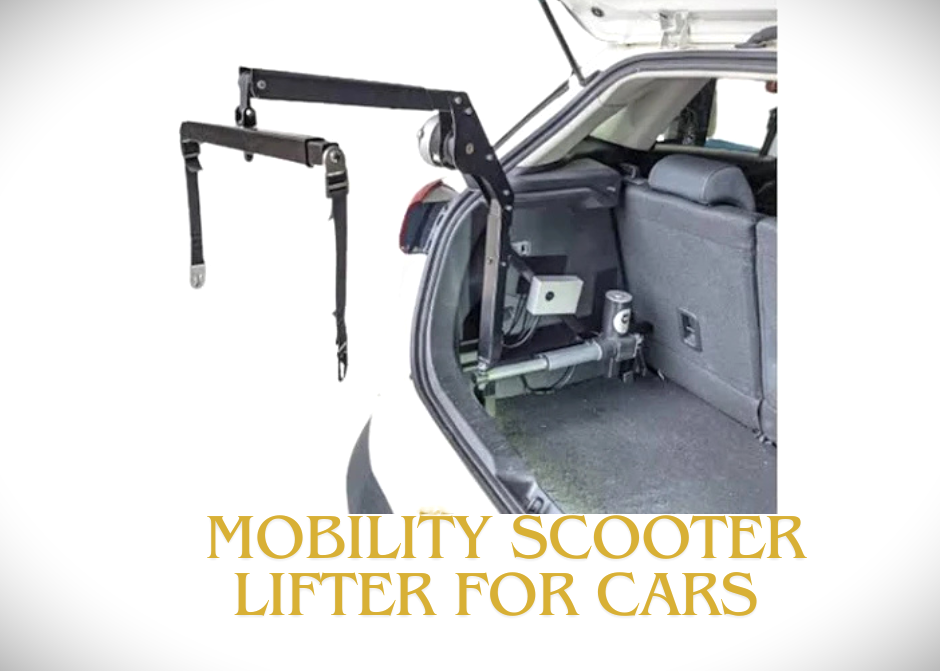
If ramps are not practical and lifting is not possible, a hoist is the answer. A hoist lifts the scooter mechanically, usually with a push-button control, and swings it into the boot or rear of the vehicle.
There are two main styles: boot-mounted hoists, which are fixed to the floor of the boot and powered by the vehicle battery, and portable hoists, which can be moved between vehicles.
Boot-mounted hoists are the more permanent solution. They are installed by a professional and become part of your vehicle. The Smart Lifter range, for example, can lift scooters and power chairs up to 80 or 100 kilograms at the touch of a button. These systems are expensive, but they eliminate the lifting problem entirely.
Portable hoists offer more flexibility. The Solax Portable Electric Hoist, for instance, weighs only 13 kilograms itself and can lift scooters weighing up to 30 kilograms. It can be powered by the scooter's own battery on compatible models, and it folds down for storage when not in use. This is a good middle-ground option if you need occasional loading assistance but do not want a permanent vehicle modification.
The key question with any hoist is whether it matches your scooter's weight and your vehicle's dimensions. Always check compatibility before you buy.
A Note on Safety and Your Body
There is one more factor that matters more than any specification: your body. Even if a scooter's heaviest piece is "only" 15 kilograms, lifting it repeatedly, in awkward positions, from a car boot, day after day, is a different challenge from lifting it once in a showroom.
The safe lifting technique is the same for a scooter as it is for anything else. Bend your knees, keep the load close to your body, and do not twist as you lift. If you have any doubts about your ability to do this safely, that is your answer. There is no shame in choosing a lighter scooter, a ramp, or a hoist. The goal is independence, not proving a point.
And if you are an adult child helping a parent, remember that your strength matters here too. If you will be the one loading the scooter, your capacity is the one that counts.
Your Liftability Checklist
Before you buy any mobility scooter, run through these questions:
Heaviest piece weight: What is the weight of the heaviest single piece? Can you lift it safely from floor to boot height?
Disassembly method: Does it fold as one piece or dismantle into parts? Which suits your strength and patience?
Ramp option: Is a ramp practical for your vehicle and your parking situation?
Hoist option: If lifting is not possible, is a boot hoist or portable hoist compatible with your scooter and car?
Daily reality: Can you do this loading process twice a day, every day, without injury or exhaustion?
If you can answer these questions honestly, you will choose a scooter that genuinely fits your life, not just your showroom visit.
Your Next Step
You now have the tools to assess mobility scooter liftability with confidence. The next step is to take these questions to your supplier. Ask for the heaviest piece weight. Ask to test the disassembly yourself. Ask whether a ramp or hoist would suit your situation.
For more guidance on every stage of the buying process, return to our Mobility Scooter Buying Guide hub, where you will find deep dives on car boot fit, test-driving, turning radius, real-world range, warranty, and buying used. And if you are still measuring your car, our car-boot fit checklist will help you take the right numbers to the showroom.
The right scooter is the one you can actually use every day. With this guide, you are one step closer to finding it.
Stay mobile, stay confident!
Sign up for our monthly Mobility Scooter Newsletter to receive practical guides, expert advice, and inspiring stories that help you make the most of your scooter and download our free "Mobility Scooter Guide for Beginners."
Don't worry — your e-mail address is totally secure.
I promise to use it only to send you our newsletter, "Mobility Matters."
Recent Articles


-
Mobility Scooter Buying Guide: Don't Buy Until You Read This
Sep 21, 26 08:01 AM
 Mobility Scooter Buying Guide: Confused by choices? We walk you through types, costs, test drives and car boot fit so you buy with total confidence.
 -
Mobility Scooter Turning Radius Explained: Measure First
Sep 21, 26 07:57 AM
Mobility Scooter Turning Radius Explained: Learn what turning radius means, how to measure your home, and avoid buying a scooter that's too big. -
Mobility Scooter "Liftability": Can You Load It Yourself?
Sep 21, 26 06:54 AM
Mobility Scooter Liftability: Don't risk your back. Learn how to match your strength to the right scooter, ramp, or hoist with this friendly guide.


Ready to Feel More Confident on Your Mobility Scooter?

My Ebook, The Ultimate Guide to Mobility Scooters, walks you through choosing the right scooter, using it safely, and keeping it in top condition — all explained in clear, friendly language.
Give yourself (or someone you love) the gift of independence.

