- Home
- Buying Guides
- Mobility Scooter Buying Guide
- Mobility Scooter Car-Boot Fit Checklist
Mobility Scooter Car-Boot Fit Checklist: Measurements to Take Before Choosing a Model
Picture this: You have found the perfect mobility scooter. The range is right. The seat is comfortable. The price fits your budget. You picture yourself gliding through the shops, visiting friends, and enjoying the park again. Then you try to lift it into your car boot.
It does not fit.

The boot opening is too narrow. The scooter is too heavy to lift on your own. The folded dimensions looked fine on paper, but the reality of your car's wheel wells and tailgate lip tells a different story.
Now you are stuck with a scooter that lives in the garage and a dream that has to wait.
This mobility scooter car-boot fit checklist exists to make sure that never happens to you. By the end of this guide, you will know exactly what to measure, what to check, and how to choose a model that fits your car and your life.
Let's make sure your scooter goes everywhere you do.
Why This Checklist Matters More Than You Think
Buying a mobility scooter is an emotional decision as much as a practical one. You are not just purchasing a device. You are purchasing freedom, independence, and the ability to say yes to invitations again. That is why it hurts so much when the practical details let you down.
And the details are sneaky. A scooter that folds down small might still be too heavy to lift. A scooter with a long range might be too wide for your boot opening. A scooter that feels light in the showroom might feel like a boulder when you are alone in a car park with a bad back and a bag of groceries.
This mobility scooter car-boot fit checklist is your protection against those surprises. It turns guesswork into certainty, so you can buy with confidence instead of hope.
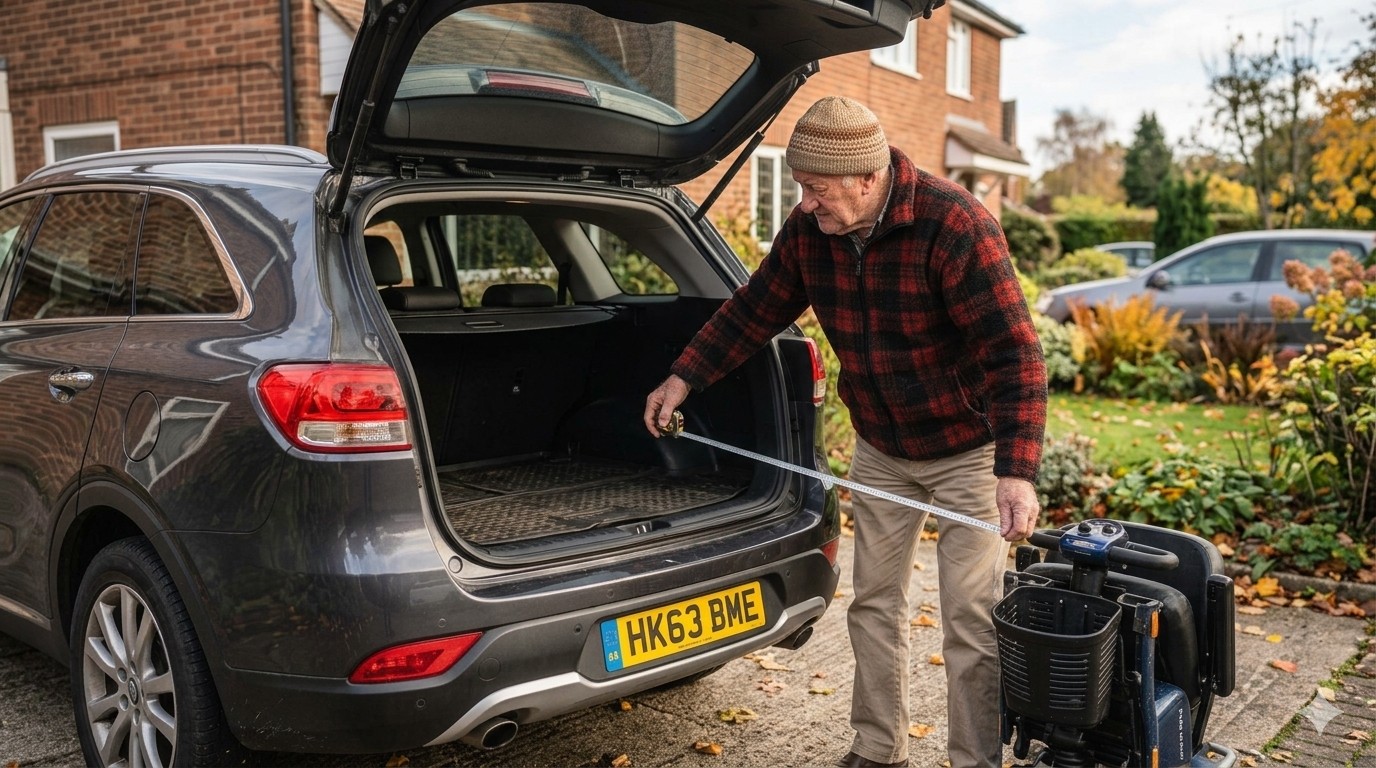
Step 1: Measure Your Car Boot Properly
Most people measure their boot incorrectly. They open the tailgate, glance inside, and think "that looks big enough." That is not a measurement. That is a wish.
Here is how to measure your boot the right way. You will need a tape measure, a notepad, and a few minutes of patience. According to mobility experts, you need to record three critical numbers: depth, width, and height at the narrowest point.
Boot opening width. Measure the narrowest point across the boot aperture, not the boot floor. The opening is often narrower than the space inside, and this is the measurement that determines whether your scooter can actually pass through. Measure side panel to side panel at the tightest spot.
Boot depth. Measure from the tailgate lip to the back of the rear seats. If you can fold the seats down, measure again with them folded, because that may give you significantly more room.
Boot opening height. Measure from the boot floor to the underside of the parcel shelf or the lowest point of the tailgate glass. This is often the measurement that catches people out, because a high boot lip or a sloping tailgate can reduce usable height dramatically.
Write these three numbers down. Then measure them again. Accuracy here saves you thousands of dollars and a lot of frustration.
Read the full guide: How Do I Measure My Car Boot to Choose a Portable Mobility Scooter (And Avoid Buying The Wrong Type)?
Step 2: Understand What the Scooter Specs Actually Mean
Now that you have your car's measurements, you need to compare them to the scooter's folded or disassembled dimensions. But here is where many buyers get confused. Specification sheets list multiple measurements, and not all of them are relevant to boot fit.
Folded length. This is the length of the scooter when folded down. For folding scooters, this is usually the most important measurement. For dismantling scooters, you need the length of the largest individual piece.
Folded width. This is the width of the scooter when folded. Check this carefully, because some scooters fold flat but remain surprisingly wide.
Folded height. This is the height of the scooter when folded. If your boot opening is low, this measurement will determine whether the scooter fits through the aperture.
Heaviest piece weight. This is the number most buyers overlook, and it is often the most important. A scooter might weigh 40 kilograms in total, but if it dismantles into five pieces, the heaviest piece might only be 12 kilograms. That is manageable. But if the heaviest piece is 25 kilograms, you might struggle to lift it into your boot safely.
Our guide on mobility scooter liftability goes into much more detail on this, but the key point is simple: total weight matters less than the weight of the heaviest single piece you have to lift.
Step 3: The Weight and Liftability Factor
Even if a scooter fits your boot dimensions perfectly, it is useless if you cannot lift it. This is where the mobility scooter car-boot fit checklist becomes a liftability assessment as much as a measurement exercise.
Ask yourself three questions. Can you lift the heaviest piece safely and comfortably? Can you do it repeatedly, several times a day if needed? And can you do it without risking injury to your back, shoulders, or knees?
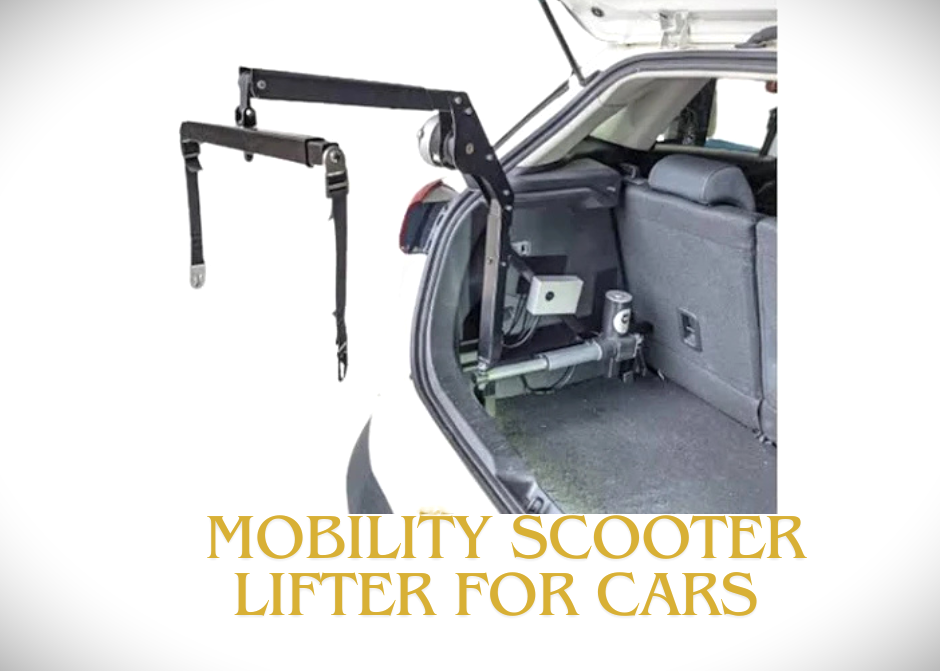
If the answer to any of these is no, you have three options. Choose a lighter scooter. Choose a dismantling scooter with lighter individual pieces. Or invest in a loading solution such as a ramp or hoist.
Ramps work well for lighter scooters that can be pushed rather than lifted. Hoists are better for heavier scooters and are often fitted to the vehicle. A rear hatch carrier is another option if your cargo area is limited.
Whatever you choose, make sure the solution matches your physical capacity, not just your scooter's specifications.
Step 4: Test the Fit Before You Buy
Never assume a scooter will fit based on measurements alone. Measurements tell you whether it should fit. A test fit tells you whether it actually does.
Ask your supplier if you can bring your car to the showroom and physically test loading the scooter. If they cannot accommodate this, ask for a home trial. This is especially important if you are buying through the NDIS or a government funding scheme, because trials are often expected before purchase approval.
During the test fit, observe three things. How easy is it to manoeuvre the scooter through the boot opening? How much effort does it take to lift the heaviest piece? And does the scooter sit securely once it is inside, or does it slide around when you close the boot?
If the supplier cannot offer a test fit, that is a red flag. A good supplier wants you to be certain before you buy.
Step 5: Australian Regulations and Practical Considerations
In Australia, mobility scooters are classified as personal mobility devices. You do not need a driver's licence to use one, and you can generally use them on footpaths and in shopping centres. But there are important rules for transporting them in vehicles.
Under Australian safety guidelines, mobility scooters are not designed to be occupied while being transported in a vehicle. You must transfer to a conventional vehicle seat, and the scooter must be powered off and secured. The scooter should be stowed in the boot or cargo area, not in a passenger seat.
For NDIS participants, the trial and documentation requirements are particularly important. Your occupational therapist will often need evidence that you have trialled the equipment and that it meets your needs before funding is approved. A mobility scooter car-boot fit checklist can form part of that evidence, so keep your measurements and notes.
Your Complete Mobility Scooter Car-Boot Fit Checklist
Before you buy any mobility scooter, run through this checklist:
Car measurements: Boot opening width (narrowest point), boot depth (tailgate to seat back), boot opening height (floor to lowest point of tailgate).
Scooter measurements: Folded or disassembled length, width, and height. Heaviest single piece weight. Total weight.
Liftability: Can you lift the heaviest piece safely and repeatedly? Do you need a ramp, hoist, or carrier?
Test fit: Have you physically loaded the scooter into your car? Did it fit through the opening? Did it sit securely?
Funding: If using NDIS or My Aged Care, have you documented your trial and measurements?
If you can tick every box on this mobility scooter car-boot fit checklist , you can buy with confidence knowing your scooter will go where you go.
Your Next Step
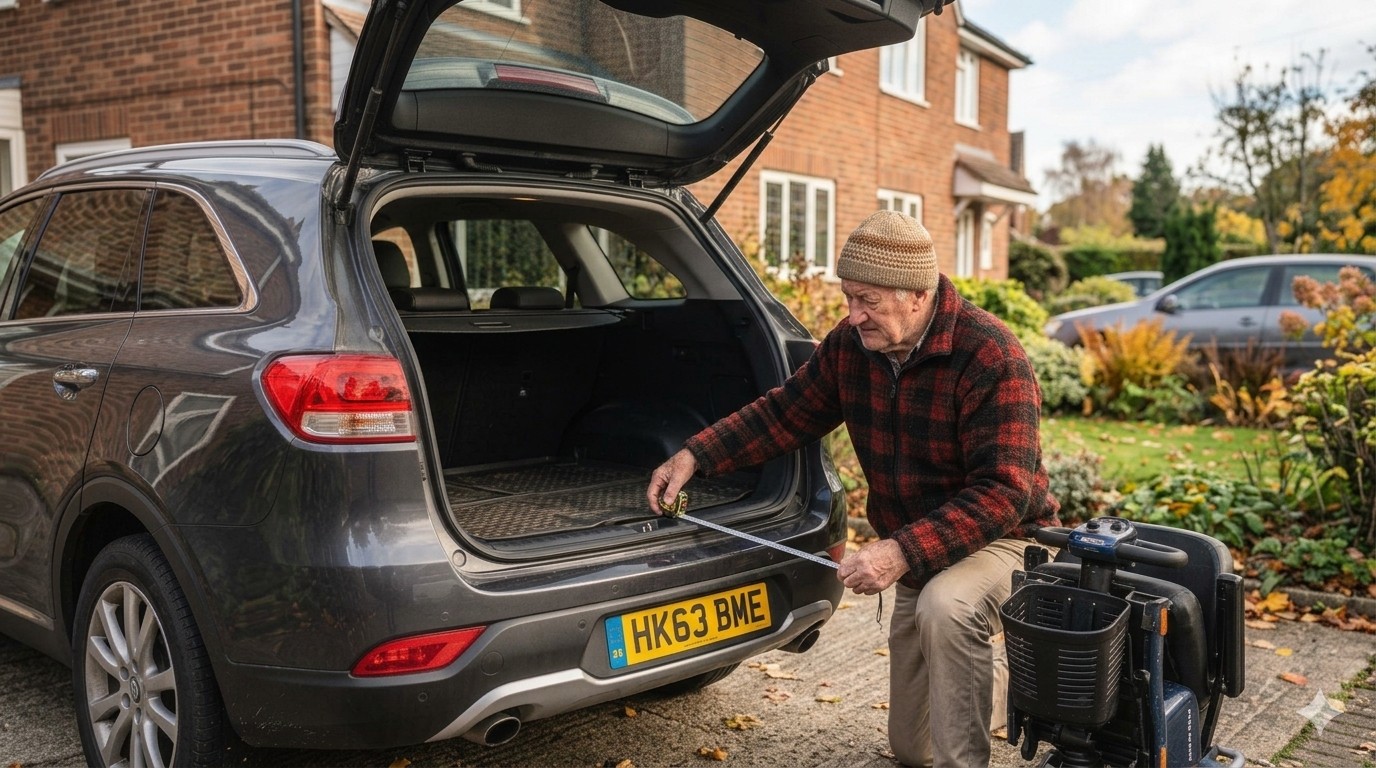
You now have everything you need to measure your boot, understand scooter specifications, and avoid the heartbreak of a scooter that does not fit. The next step is simple: grab a tape measure, write down your three numbers, and take them with you when you shop.
For more guidance on every stage of the buying process, return to our Mobility Scooter Buying Guide hub, where you will find deep dives on test-driving, turning radius, real-world range, warranty, and buying used.
And if you are still deciding between a folding scooter and a dismantling one, our guide on scooter liftability will help you choose the right loading solution for your strength and lifestyle. (Coming Soon!)
The right scooter is out there. With this checklist in hand, you will find it.
Stay mobile, stay confident!
Sign up for our monthly Mobility Scooter Newsletter to receive practical guides, expert advice, and inspiring stories that help you make the most of your scooter and download our free "Mobility Scooter Guide for Beginners."
Don't worry — your e-mail address is totally secure.
I promise to use it only to send you our newsletter, "Mobility Matters."
Recent Articles


-
Mobility Scooter Buying Guide: Don't Buy Until You Read This
Sep 19, 26 09:38 AM
 Mobility Scooter Buying Guide: Confused by choices? We walk you through types, costs, test drives and car boot fit so you buy with total confidence.
 -
Mobility Scooter Car-Boot Fit Checklist: Measure Before You Buy
Sep 19, 26 09:30 AM
Mobility Scooter Car-Boot Fit Checklist: From boot opening height to heaviest piece, this practical guide saves you from a costly mistake. -
Mobility Scooter Test-Drive Checklist: Don't Buy Blind
Sep 19, 26 08:28 AM
Mobility Scooter Test-Drive Checklist: Stop guessing. Use this practical checklist to test comfort, safety and fit before spending your money.



Ready to Feel More Confident on Your Mobility Scooter?

My Ebook, The Ultimate Guide to Mobility Scooters, walks you through choosing the right scooter, using it safely, and keeping it in top condition — all explained in clear, friendly language.
Give yourself (or someone you love) the gift of independence.




