- Home
- Mobility Scooter Accessories and Power
- Mobility Scooter Battery Capacity
- Travel vs Mid-Size vs Heavy-Duty: Battery Capacity Guide
Choosing Battery Capacity for Travel/Portable Mobility Scooters vs Mid-Size vs Heavy-Duty Models
Picture this: You walk into a mobility scooter showroom, and three scooters catch your eye. One is sleek and folds into four pieces. Another has a comfortable captain's seat and suspension. The third looks like it could conquer a hiking trail. Each one comes with a different battery, a different range, and a different price tag. The salesperson asks, "What kind of riding do you do?" And you realize you have no idea how to answer.
This is the moment where choosing battery capacity for travel/portable mobility scooters vs mid-size vs heavy-duty models stops being an abstract exercise and becomes the decision that determines whether your scooter keeps up with your life—or holds you back.
If that scenario feels familiar, take a breath. You are not alone, and you are not expected to know the difference between a 12Ah travel battery and a 75Ah heavy-duty pack. Most people do not.
But by the end of this guide, you will. We are going to walk through each scooter type, what battery capacity it typically uses, what range you can realistically expect, and how to choose the one that fits your daily routine. No jargon. No pressure.
Just clarity.
Why Scooter Type Determines Battery Capacity
Here is the simplest way to think about it: the size of your scooter and the size of its battery are intimately connected. A scooter designed to fold into a car boot cannot carry a massive 75Ah battery—it would be too heavy and too bulky. A heavy-duty scooter built for long outdoor journeys needs a large battery to deliver the power and range its users require.
This is not a limitation. It is a design trade-off. Portability comes at the cost of range and power. Range and power come at the cost of portability. Your job is to decide which trade-off matters most for your life.
The three main categories are:
- Travel/portable scooters — lightweight, foldable or dismantlable, designed for short trips and car transport.
- Mid-size scooters — the everyday workhorses, offering a balance of comfort, range, and manageability.
- Heavy-duty scooters — large, powerful, built for long distances, rough terrain, and higher weight capacities.
Each category has a typical battery capacity range. Let us look at each one in detail.
Travel/Portable Mobility Scooters: Small Battery, Big Freedom
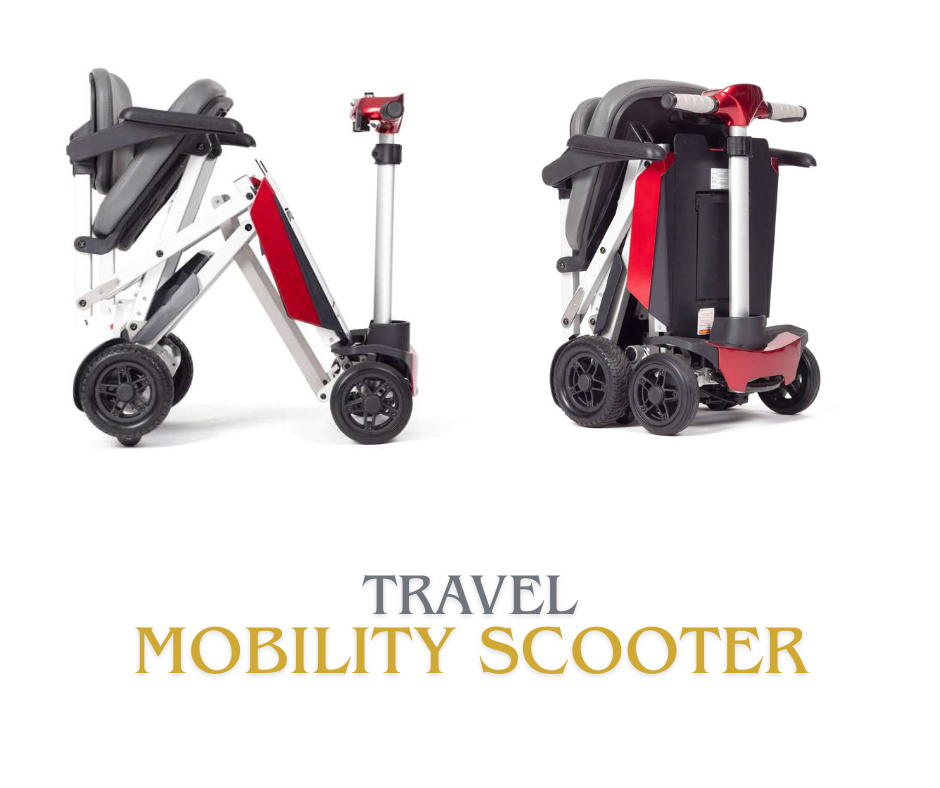
Travel scooters are the featherweights of the mobility world. They dismantle or fold into pieces that fit in a car boot, and they are designed for short, manageable trips—a visit to the shops, a doctor's appointment, a wander around the mall. Their batteries are small, light, and often airline-compliant.
Typical Battery Capacity for Travel Scooters
Travel scooters typically use batteries in the 8Ah to 17Ah range. Many use a single 12V battery, though some 24V systems exist. Lithium batteries are common in this category because they are lighter and can be discharged more deeply than lead-acid alternatives.
For example, the Pride Go Go Endurance Li comes with a standard 8Ah lithium battery that is safe to carry onto a plane, with an optional 16Ah upgrade for additional range. The Go Go Endurance AL+ offers 8Ah and 16Ah options, with ranges of up to 14 kilometres and 28 kilometres respectively at 90 kilos.
What Range Can You Realistically Expect?
Published ranges for travel scooters vary, but here is a realistic picture based on real-world conditions:
- 8Ah: roughly 11-14 kilometres
- 12Ah: roughly 16-20 km
- 16Ah: roughly 22-28 km
These figures assume moderate temperatures, fairly flat terrain, and a rider within the scooter's weight capacity. Hills, cold weather, and heavier riders will reduce these numbers. Travel scooters are not designed for long journeys, and that is perfectly okay. They are designed for a specific purpose: getting you from A to B when A and B are close together.

The Air Travel Factor
If you plan to fly with your scooter, battery capacity becomes critical. Airlines regulate lithium batteries by watt-hours (Wh), not amp-hours. The key threshold for mobility devices is 300Wh per battery if the battery must be removed for travel.
A 24V 12Ah battery is 288Wh—just under the limit. A 24V 15Ah battery is 360Wh—over the limit. This is why most travel scooter manufacturers offer an "airline-friendly" battery capacity and a separate "extended range" option that is not flight-safe.
Who Travel Scooters Are For
Travel scooters suit riders who:
- Need to transport their scooter in a car regularly
- Take short trips close to home
- Want a lightweight option they can manage independently
- Travel by air and need an airline-compliant battery
If your life involves longer journeys, rougher terrain, or you simply want to go further without worrying about charging, you will likely need to step up to a mid-size model.
Mid-Size Mobility Scooters: The Everyday Balance
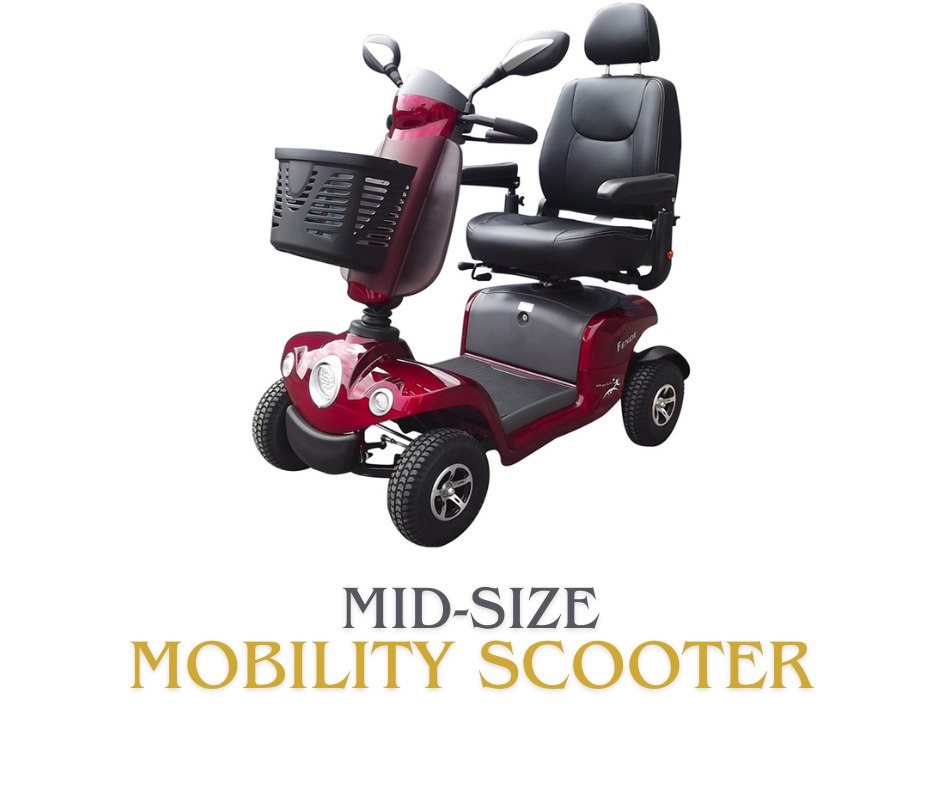
Mid-size scooters are the Goldilocks of the mobility world. They are heavier and more substantial than travel scooters, but they are still manageable for most users. They offer more comfort, better stability, and significantly more range.
Typical Battery Capacity for Mid-Size Scooters
Mid-size scooters typically use batteries in the 20Ah to 50Ah range. Most use 24V systems with two 12V batteries wired in series, though some use a single 24V battery. Lead-acid (AGM or gel) batteries are common, but lithium is increasingly popular for its lighter weight and longer lifespan.
Real-world examples illustrate this range well. The Pride Revo 2.0 uses two 12V sealed lead-acid batteries at 35Ah. The Afikim Afiscooter C4 comes with two 12V 50Ah batteries and can support up to 85Ah. The Kymco Midi XLS uses 50Ah batteries.
What Range Can You Realistically Expect?
Mid-size scooters offer a meaningful step up in range:
- 20Ah: roughly 19-24 km
- 35Ah: roughly 28–35 km
- 50Ah: roughly 40-48 km
These are estimates, not guarantees. Real-world range depends on your weight, the terrain you ride, the temperature, and how you drive. But the general principle holds: more Ah means more range, and mid-size scooters offer enough capacity for most daily needs.
The Lithium Advantage
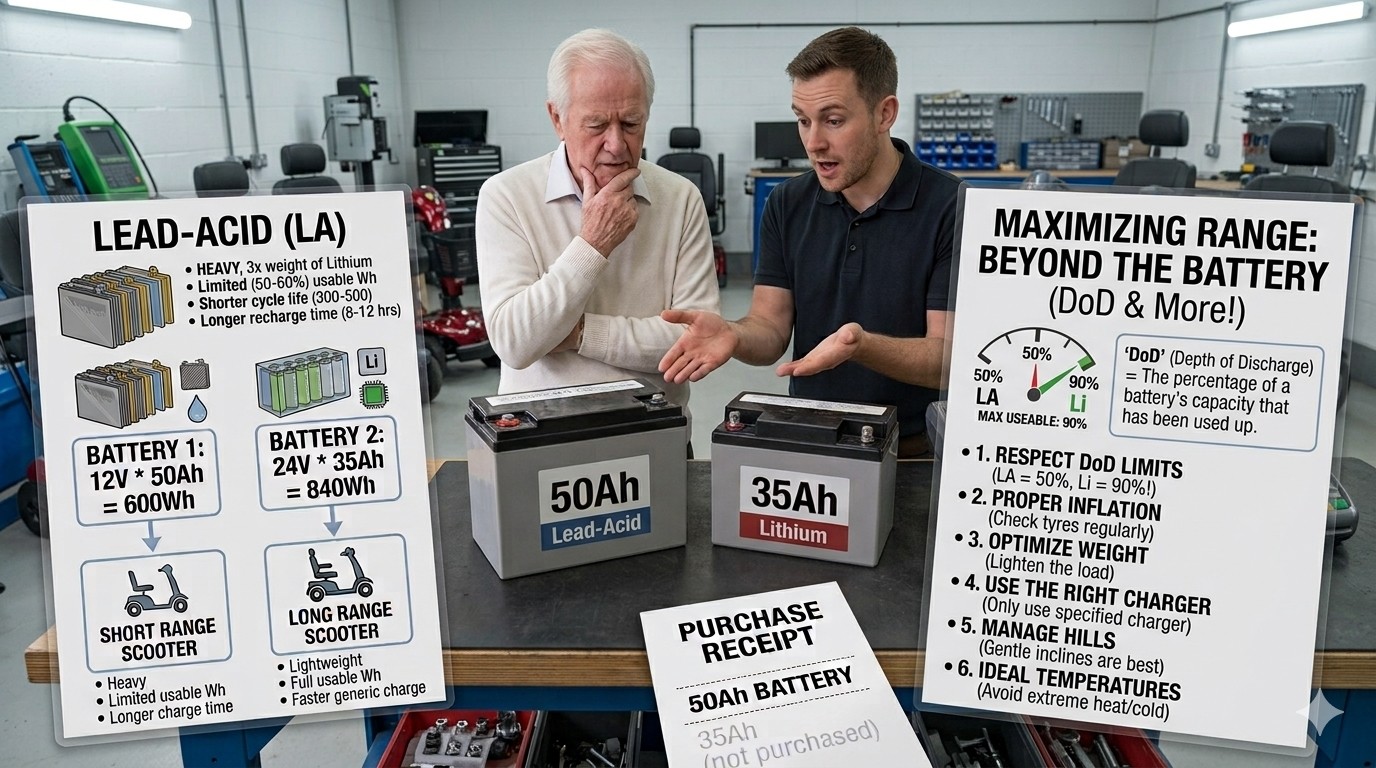
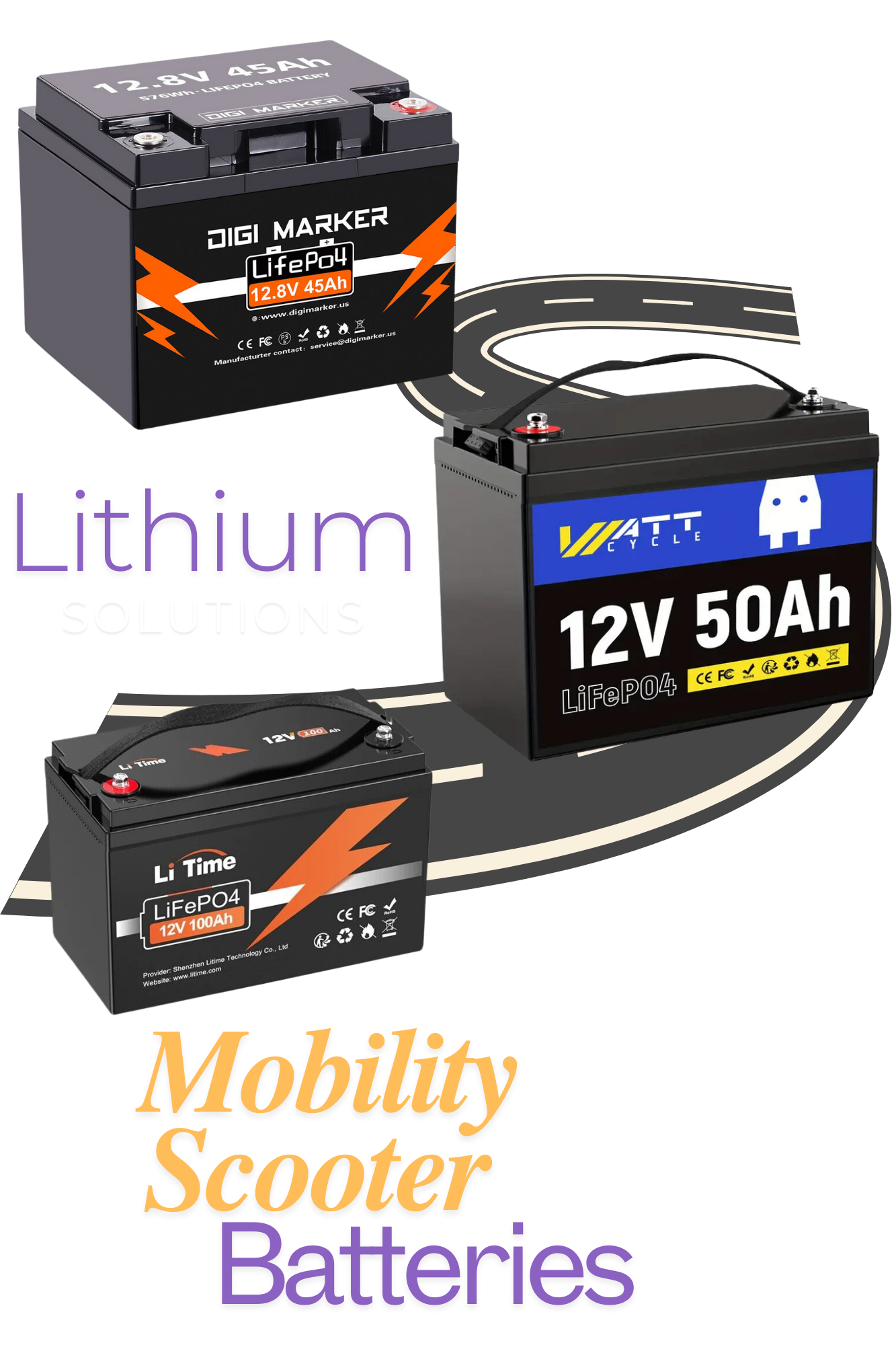
If you are choosing a mid-size scooter, lithium batteries deserve serious consideration. A lithium battery can be discharged more deeply than lead-acid—often to 80–90% of its rated capacity, compared to 50% for lead-acid. This means a 35Ah lithium battery may deliver more usable range than a 50Ah lead-acid battery, despite the lower Ah rating.
Lithium batteries also weigh significantly less, which matters if you ever need to lift or move your scooter. And they last longer—typically 800–1,500 charge cycles compared to 300–600 for lead-acid.
Who Mid-Size Scooters Are For
Mid-size scooters suit riders who:
- Use their scooter daily for errands, appointments, and social outings
- Want a comfortable ride with suspension and a supportive seat
- Need a range of 24-48 km per charge
- Do not need to lift the scooter into a car regularly
If you need even more range, or if you ride on rough terrain or carry heavier loads, you may need to consider a heavy-duty model.
Heavy-Duty Mobility Scooters: Power and Endurance
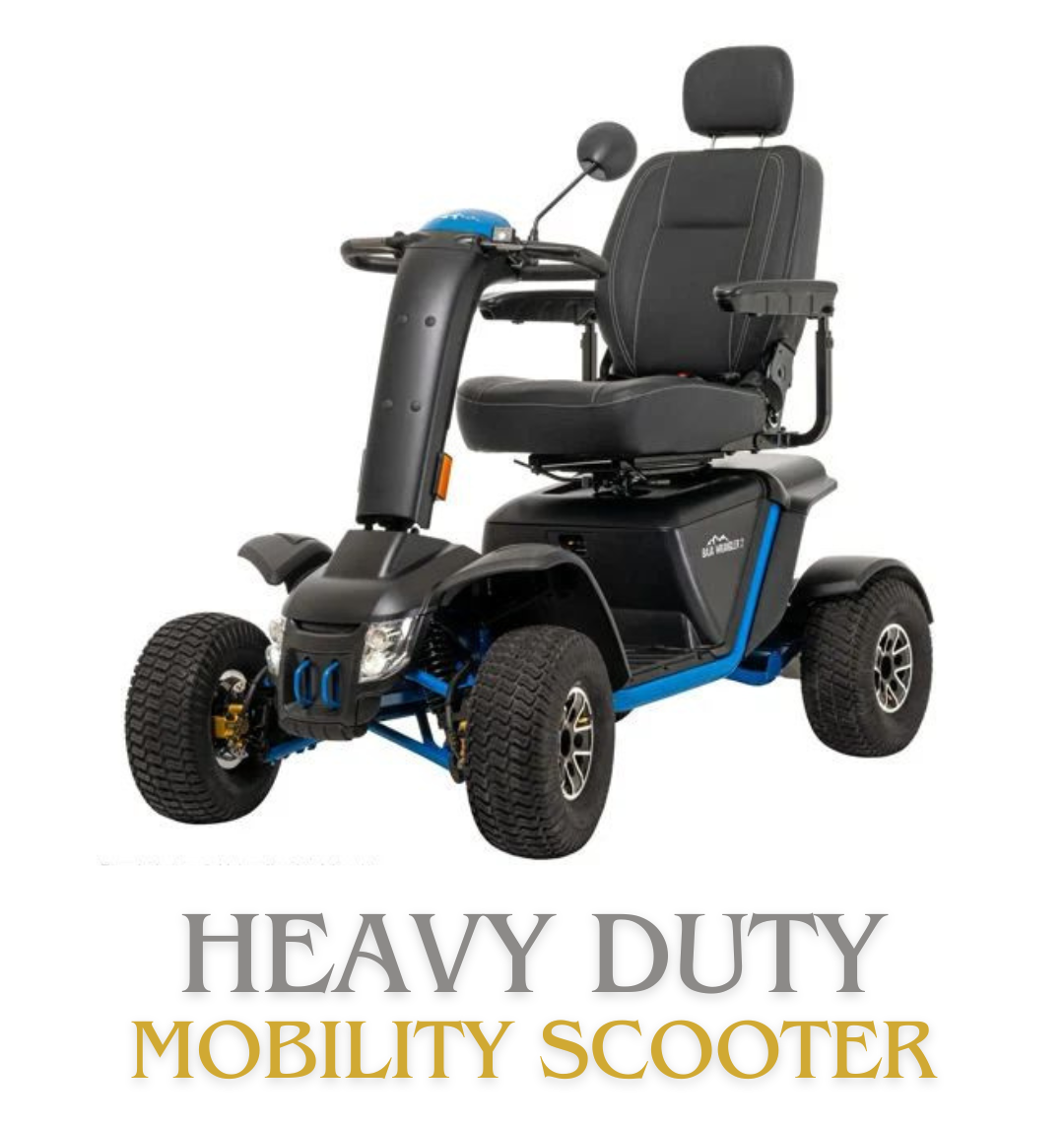
Heavy-duty scooters are the long-distance champions. They are larger, wider, and more powerful, designed for riders who need to cover significant distances or tackle challenging terrain. They often have higher weight capacities, sometimes exceeding 500 pounds.
Typical Battery Capacity for Heavy-Duty Scooters
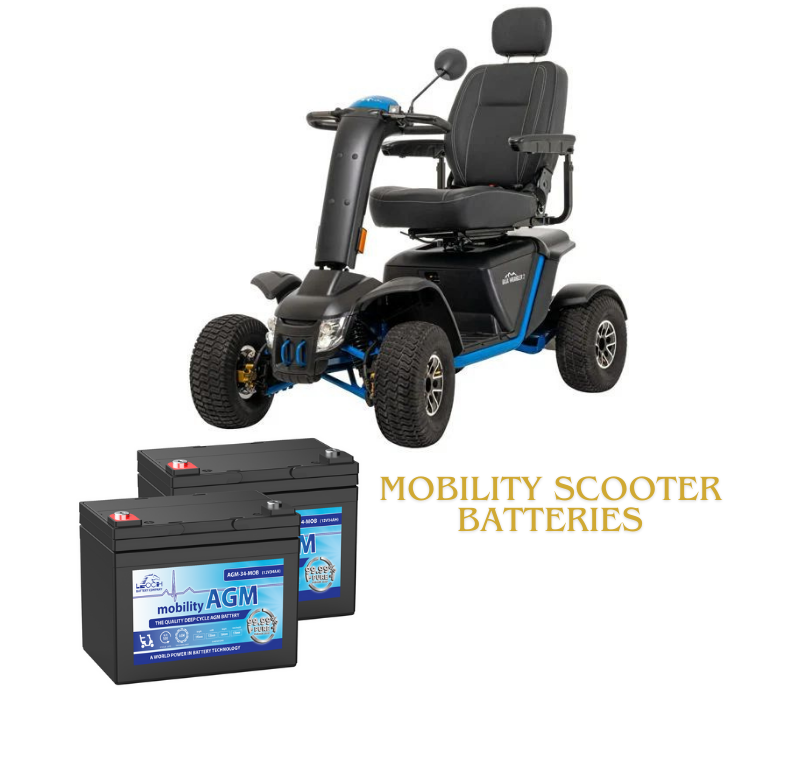
Heavy-duty scooters typically use batteries in the 50Ah to 80Ah range, and sometimes higher. The Sunrise Medical Sterling S700, for example, is equipped with two 75Ah gel batteries. The Pride Maxima uses two 50Ah batteries for a range of up to 40 km. VEVOR's heavy-duty four-wheel scooter features a 60V 20Ah extended battery delivering up to 50 km.
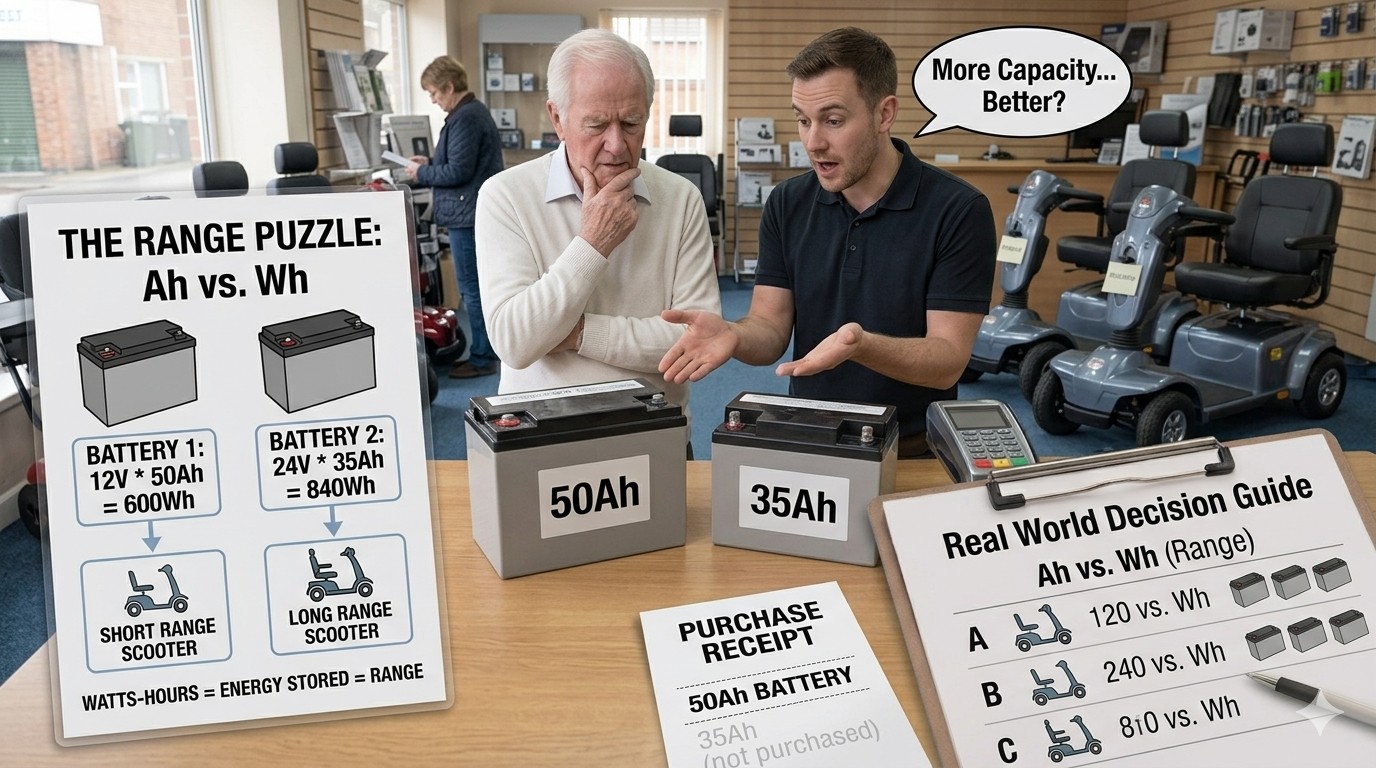
You will notice that voltage varies more in this category. Some heavy-duty scooters use 24V systems, while others use 36V, 48V, or even 60V. This is why comparing batteries by Ah alone is misleading—you must compare watt-hours (Wh) to get a true picture of energy storage.
Read the full guide: Ah vs Wh for Mobility Scooters: How to Compare Batteries the Right Way
What Range Can You Realistically Expect?
Heavy-duty scooters are built for distance:
- 50Ah: roughly 40-48 km
- 58Ah: roughly 48–56 km
- 75Ah: roughly 48–72 km
The Pride Maxima with 58Ah gel-cell batteries delivers up to 19.5 miles, which is a reminder that published ranges vary by manufacturer and testing conditions. The Sterling S700 with 75Ah batteries claims up to 45 km (approximately 28 miles). These differences reflect variations in motor efficiency, scooter weight, and testing methodology.
The Trade-Off: Weight and Bulk
Heavy-duty scooters are not portable. They are wide, heavy, and designed to stay on the ground rather than fold into a car boot. If you need to transport your scooter regularly, a heavy-duty model may not be practical. But if your priority is independence—covering long distances, navigating rough paths, and not worrying about charging—a heavy-duty scooter delivers.
Who Heavy-Duty Scooters Are For
Heavy-duty scooters suit riders who:
- Need to cover long distances regularly
- Ride on rough terrain, gravel, or uneven surfaces
- Have a higher weight capacity requirement
- Want maximum independence and do not need to transport the scooter by car
A Side-by-Side Comparison
Here is a quick reference to help you see the differences at a glance:
|
Feature |
Travel/Portable |
Mid-Size |
Heavy-Duty |
|
Typical Ah |
8–17Ah |
20–50Ah |
50–80Ah+ |
|
Typical Voltage |
12V or 24V |
24V |
24V–60V |
|
Range (realistic) |
11-28 km |
19-48 km |
40-72+ km |
|
Portability |
Folds/dismantles |
Limited |
Not portable |
|
Air Travel |
Often possible (with airline-safe battery) |
Rarely |
No |
|
Best For |
Short trips, car transport |
Daily errands, comfort |
Long distance, rough terrain |
This table gives you a starting point, but your personal needs will determine the final choice. A rider who lives in a flat city and takes short trips may find a travel scooter perfectly adequate.
A rider who needs to cross town daily will benefit from a mid-size model. A rider who explores trails or lives in a hilly area will need the power of a heavy-duty scooter.
How to Choose the Right Capacity for Your Life
Now that you understand the typical capacities for each scooter type, here is a simple framework for making your decision:
1. Map your typical week. How far do you travel on an average day? What is the longest trip you take regularly? If your longest regular trip is 16 km, a travel or entry-level mid-size scooter may suffice. If it is 40 km, you need a mid-size or heavy-duty model.
2. Consider your terrain. Flat, smooth surfaces are easy on batteries. Hills, gravel, and uneven paths drain them faster. If your routes are challenging, size up.
3. Think about the seasons. If you ride year-round in a cold climate, remember that lead-acid batteries lose 20–50% range at 0–10°C, and lithium loses 10–25%. Choose a capacity that covers your winter needs, not just your summer rides.
4. Factor in your weight and cargo. Heavier riders and those who carry shopping or other loads need more capacity for the same distance.
5. Decide on portability. If you need to transport your scooter in a car, a travel or mid-size model is your only realistic option. If portability is not a concern, you can prioritise range and comfort.
6. Check airline regulations if you travel by air. Remember the 300Wh limit for removable lithium batteries. If your chosen capacity exceeds this, you may need a separate airline-compliant battery for travel.
7. Do not forget the charger. A higher-capacity battery may require a more powerful charger to recharge in a reasonable time. Check that your charger is compatible with the battery you choose.
Frequently Asked Questions
What is the typical battery capacity for a travel mobility scooter?
Travel scooters typically use 8Ah to 17Ah batteries, with ranges of roughly 10-28 km depending on conditions.
What is the typical battery capacity for a mid-size mobility scooter?
Mid-size scooters typically use 20Ah to 50Ah batteries, offering ranges of roughly 18-48 km.
What is the typical battery capacity for a heavy-duty mobility scooter?
Heavy-duty scooters typically use 50Ah to 80Ah batteries or larger, with ranges of 40-72 km or more.
Can I put a larger battery in a travel scooter for more range?
Sometimes, but only if the larger battery physically fits and your charger is compatible. Many travel scooters have limited battery compartments, so upgrades are often restricted to the manufacturer's optional capacities.
Do heavy-duty scooters use more power than mid-size scooters?
Yes. Heavy-duty scooters have more powerful motors and larger batteries, which is why they can cover longer distances and handle rougher terrain. They also weigh more and are less portable.
Is lithium better than lead-acid for mid-size scooters?
Lithium offers more usable capacity, lighter weight, and longer lifespan. It costs more upfront but often pays off over time, especially for daily riders.
How do I know which scooter type is right for me?
Start with your daily routine, terrain, and portability needs. If you need to transport your scooter by car, choose travel or mid-size. If you need maximum range and power, choose heavy-duty.
The Bottom Line
Choosing battery capacity for travel/portable mobility scooters vs mid-size vs heavy-duty models comes down to one question: what does your life actually look like? A travel scooter with a small battery is perfect for short trips and car transport. A mid-size scooter with a moderate battery handles daily errands and comfortable rides. A heavy-duty scooter with a large battery delivers the range and power for long journeys and tough terrain.
There is no single "best" capacity. There is only the capacity that fits your routine, your terrain, and your need for portability. Now that you understand the differences, you can walk into any showroom—or browse any online listing—with confidence.
And that confidence? It changes everything. It means you can plan your outings without range anxiety. It means you can choose a scooter that keeps up with your life instead of holding you back.
You deserve that.
Ready to Go Deeper?
This guide is part of our complete series on choosing the right battery capacity for your mobility scooter. If you found this helpful, these related guides will take you further:
- Choosing the Right Battery Capacity for Your Mobility Scooter — The complete hub guide to capacity selection
- Ah vs Wh for Mobility Scooters: How to Compare Batteries the Right Way — The formula that changes everything
- How to Estimate the Battery Capacity You Need from Your Typical Weekly Routine — Put the numbers to work for your lifestyle
- Mobility Scooter Battery Compatibility Checklist: Size, Terminals, Voltage, Charger, and Fit — Make sure your chosen battery actually fits
- Can You Upgrade to Higher Ah Batteries on Your Mobility Scooter (And What Can Go Wrong)? — The upgrade decision, explained
- Battery Capacity vs Range Claims: How to Sanity-Check Manufacturer "Miles per Charge" Numbers — Why real-world range differs from the spec sheet
- Lithium Upgrade Decision Guide: What Capacity to Choose and What Else Must Change — Is lithium right for you?
- Choosing the Right Charger for Your Battery Capacity and Chemistry — Don't overlook this critical companion purchase
- Mobility Scooter Battery Maintenance: How to Preserve Capacity and Extend Lifespan — Keep your battery healthy for years
- Airline-Friendly Mobility Scooter Batteries: Capacity Limits and Travel Rules — Fly with confidence
Stay mobile, stay confident!
Sign up for our monthly Mobility Scooter Newsletter to receive practical guides, expert advice, and inspiring stories that help you make the most of your scooter and download our free "Mobility Scooter Guide for Beginners."
Don't worry — your e-mail address is totally secure.
I promise to use it only to send you our newsletter, "Mobility Matters."
Recent Articles


-
Choosing the Right Battery Capacity 101: (Ah vs Wh)
Oct 05, 26 08:46 AM
 Choosing the Right Battery Capacity Guide: Compare Ah vs Wh, estimate range, and pick the best battery for your routine.
 -
Estimate Battery Capacity from Your Weekly Routine
Oct 05, 26 08:44 AM
Estimate battery capacity from your typical weekly routine and stop overpaying for range you'll never use. Get the right Ah and Wh for your needs. -
Travel, Mid-Size, or Heavy-Duty: Which Battery Do You Need?
Oct 05, 26 06:23 AM
Choosing battery capacity for travel/portable mobility scooters vs mid-size vs heavy-duty models: Stop overpaying. Get the capacity that fits your life.

Ready to Feel More Confident on Your Mobility Scooter?

My Ebook, The Ultimate Guide to Mobility Scooters, walks you through choosing the right scooter, using it safely, and keeping it in top condition — all explained in clear, friendly language.
Give yourself (or someone you love) the gift of independence.




