- Home
- Mobility Scooter Accessories and Power
- Mobility Scooter Battery Capacity
Choosing the Right Battery Capacity for Your Mobility Scooter: The Complete Decision-Support Guide
Picture this: It is a crisp Saturday morning. You have planned a trip to the park, a few errands, maybe a coffee with a friend. You set off with a full charge, feeling confident. But two miles in, the gauge drops from green to yellow. You still have to get to the shops, then home. The anxiety starts to creep in. Will you make it? Should you turn back? That nagging feeling is range anxiety, and it all comes down to one thing: battery capacity.
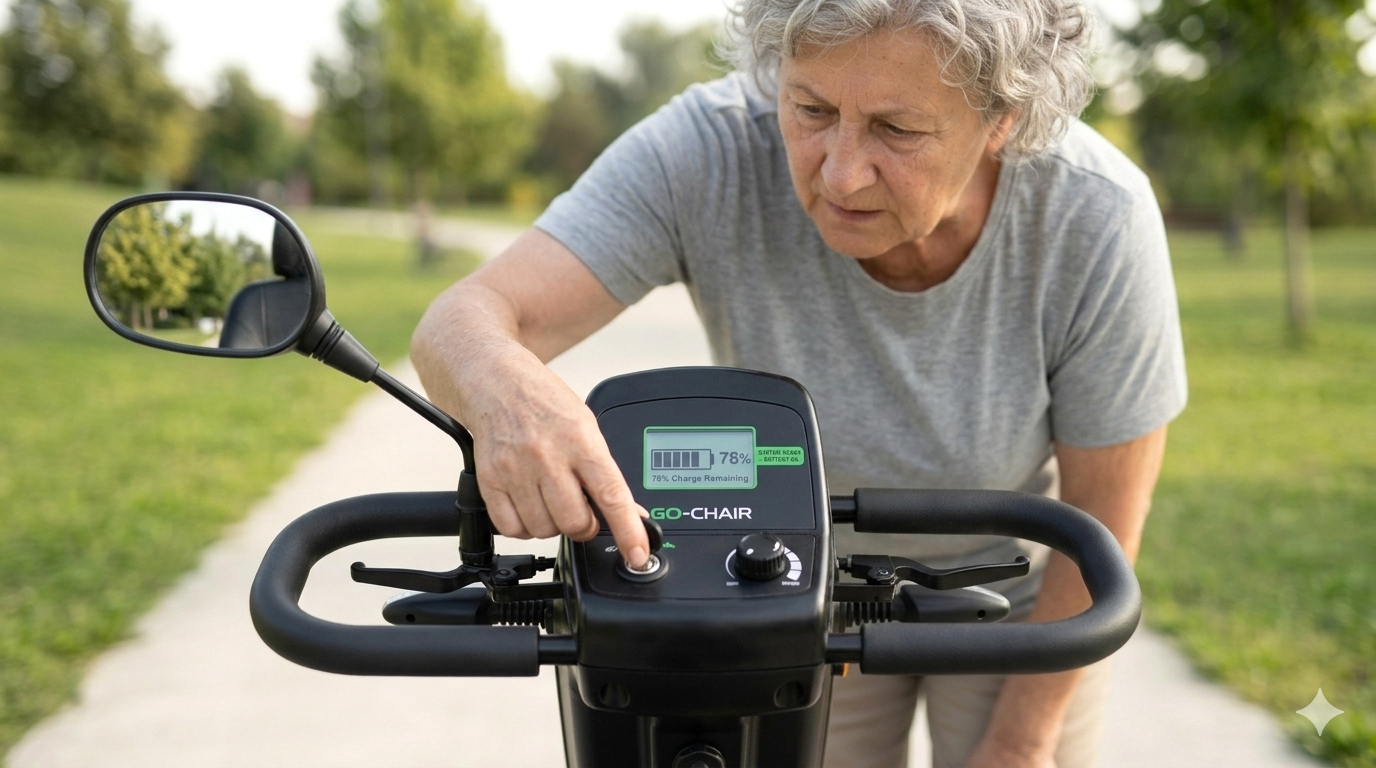
If that scenario sounds familiar, you are not alone. Battery capacity is the single most important factor in how far you can go and how confident you feel. But choosing the right battery capacity is not about picking the biggest number. It is about matching the battery to your real life.
This guide is built around one principle: start with your real-life routine, not the battery spec,
By the end, you will have a working knowledge in choosing the right battery capacity for your needs, and avoid the most common mistakes that leave riders stranded or overpaying.
What Battery Capacity (Ah) Actually Means
Amp-hours (Ah) measure how much electrical charge a battery can store. Think of it like the size of a fuel tank: a 50Ah battery holds more charge than a 20Ah battery, just as a larger fuel tank holds more petrol.
A 50Ah battery can theoretically deliver 50 amps for one hour, or 25 amps for two hours. In practice, you should never drain a mobility scooter battery completely. Drawing lead-acid batteries below 50% capacity accelerates wear, and lithium batteries perform best when kept above 20% charge.
This is the first critical concept: rated capacity is not usable capacity. A 50Ah lead-acid battery gives you roughly 25Ah of usable energy before you start damaging it.
That gap between rated and usable capacity is the single biggest source of confusion in battery selection.
The Metric That Actually Lets You Compare Batteries: Watt-Hours (Wh)
Here is where most guides fall short. Amp-hours alone cannot tell you which battery holds more energy unless you also know the voltage. A 12V 100Ah battery and a 24V 50Ah battery both store 1,200Wh of energy, but their Ah ratings look very different.
Watt-hours (Wh) measure total energy, and they are calculated as:
Wh = Ah × Voltage
When comparing batteries with different voltages, always compare Wh, not Ah alone. For a full explanation of how to use Wh correctly, see our guide on Ah vs Wh for mobility scooters: how to compare batteries the right way. (Coming Soon)
For example:
- 35Ah @ 24V ≈ 840Wh → roughly 20-30 km of range
- 55Ah @ 24V ≈ 1,320Wh → roughly 35–50 km
- 75Ah @ 24V ≈ 1,800Wh → roughly 50–65 km
These figures assume lithium batteries in moderate conditions. Your real-world range will differ based on the factors covered below.
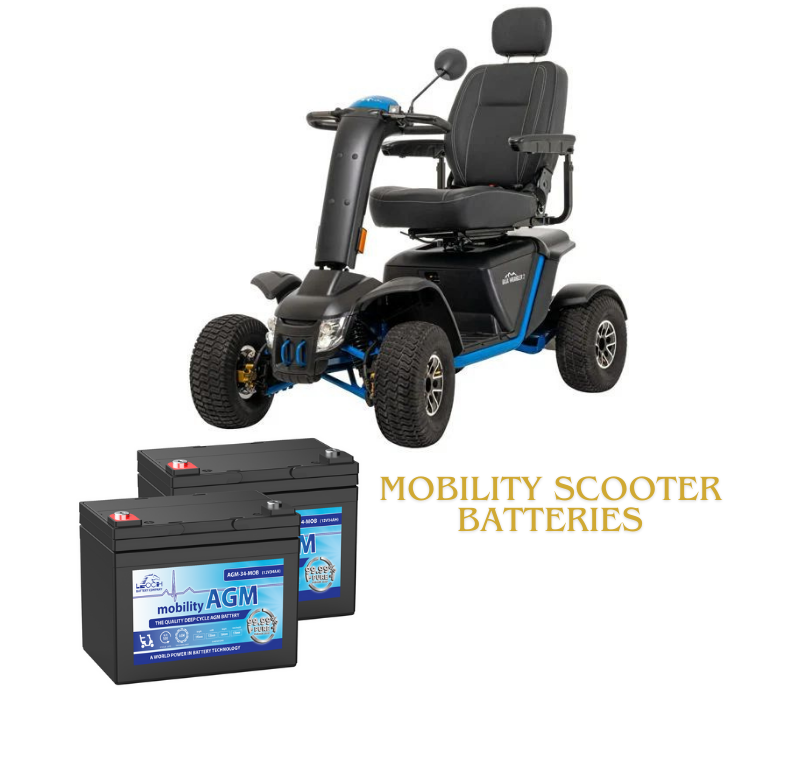
Start With Your Routine, Not the Battery
Before you look at a single specification when choosing the right battery capacity, answer these questions:
How far do you actually travel in a typical week? Not the maximum you have ever traveled. The typical distance. If most trips are under 10 kilometres a smaller capacity may serve you perfectly. If you regularly cover 20-30 kilometres, you need a larger battery.
Do you ride every day or occasionally? Daily riders benefit from lithium's longer lifespan and consistent performance. Occasional riders may find AGM adequate and more affordable.
Do you ride in winter? If yes, you need to size up. Cold weather reduces lead-acid range by 20–50% at 0–10°C, and lithium by 10–25% at the same temperatures. A battery that barely covers your summer route will leave you stranded in January.
What is your weight, and do you carry cargo? Weight affects range more than most factors. A 100kg user achieves significantly better range than a 140kg user on identical equipment. Hills demand exponential power increases—a 10% grade can double power consumption.
How many days of autonomy do you need? For most daily riders, one full charge per day is sufficient. For longer trips or unreliable charging access, you may need to plan for a reserve.
Are you choosing a battery for a travel scooter, a mid-size model, or a heavy-duty scooter? Each category has different capacity expectations.
For tailored recommendations by scooter type, see choosing battery capacity for travel/portable mobility scooters vs mid-size vs heavy-duty models. (Coming Soon!)
How to Calculate the Capacity You Need
Once you know your routine, you can estimate the battery capacity required.
Step 1: Estimate your daily energy consumption.
If you know your scooter's average power draw, multiply it by your daily riding time. For example, a scooter drawing 200W for 2 hours per day consumes 400Wh per day.
Step 2: Account for real-world losses.
Battery capacity must be larger than your calculated consumption because of depth of discharge, inverter efficiency, wiring losses, and temperature derating. For lead-acid, assume only 50% of rated capacity is usable. For lithium, assume 80–90%.
Step 3: Convert to Ah at your system voltage.
Most mobility scooters use 24V systems (two 12V batteries in series). Divide your required Wh by the system voltage to get the Ah rating you need.
Step 4: Add a margin.
Add 10–30% for safety, battery aging, and unexpected conditions. A battery that exactly meets your calculated needs will feel inadequate within a year as capacity naturally declines.
For a more detailed walkthrough of this calculation using your specific weekly routine, see our guide on how to estimate the battery capacity you need (Ah/Wh) from your typical weekly routine. (Coming Soon!)
Real-World Factors That Change the Capacity You Should Choose
Manufacturer range claims assume ideal conditions: level terrain, moderate temperatures, average user weight, and consistent moderate speeds. In reality, most users get 70–90% of the advertised range, and sometimes less.
For a guide on how to interpret those claims critically, see battery capacity vs range claims: how to sanity-check manufacturer "miles per charge" numbers. (Coming Soon!)
Here is how each factor changes your capacity requirement:
Rider weight. Heavier riders need more capacity for the same distance. Each additional kilogram requires more power to move.
Terrain. Hills, grass, gravel, and uneven surfaces increase resistance and drain batteries faster than smooth footpaths. If your typical routes include hills, size up.
Temperature. Cold reduces usable capacity. Lead-acid loses 20–50% at 0–10°C; lithium loses 10–25%. If you ride year-round in a cold climate, choose a larger capacity than your summer needs suggest.
Speed and driving style. Maximum speed depletes batteries much faster than moderate speeds. Operating at 75% of maximum speed can extend range by 30–40%.
Tire pressure. Low tire pressure increases rolling resistance. Cold air reduces PSI, compounding the problem in winter.
Battery age. Capacity declines over time. A battery that met your needs when new may not meet them two years later. To learn how to slow that decline, see mobility scooter battery maintenance: how to preserve capacity and extend lifespan. (Coming Soon!)
For a deeper dive into how weight, terrain, and driving style interact, see our guide on how rider weight, terrain, and stop-start driving change the capacity you should choose. (Coming Soon!)
Can You Upgrade to a Higher-Ah Battery?
Yes, in many cases you can upgrade to a higher Ah battery for more range—but only if it is compatible with your scooter. Before upgrading, check four things:
Physical dimensions. The battery compartment must have enough space for the larger battery. Measure your current battery and compare dimensions carefully. A battery that is slightly too tall or wide will not fit.
Voltage. The voltage must remain the same. Replacing two 12V 35Ah batteries with two 12V 50Ah batteries may be possible on some models if they fit, but changing voltage is not recommended.
Charger compatibility. A larger capacity battery may require a higher-amperage charger to recharge in a reasonable time. Check that your charger is rated for the larger capacity.
Controller and BMS limits. The scooter's controller and battery management system must be able to handle the battery's current delivery. Confirm the controller's peak current rating and the BMS continuous and peak ratings match your hill-climbing demand.
For a full compatibility walkthrough, see our mobility scooter battery compatibility checklist: size, terminals, voltage, charger, and fit.(Coming Soon!)
For a detailed guide on upgrades and potential pitfalls, see can you upgrade to higher Ah batteries on your mobility scooter (and what can go wrong)?. (Coming Soon!)

AGM, Gel, or Lithium: How Chemistry Changes Your Capacity Choice
The battery chemistry you choose changes how much usable capacity you get from a given Ah rating. For a detailed side-by-side comparison of these chemistries, see how to compare AGM, gel, and lithium batteries for mobility scooters. (Coming Soon!)
AGM (Absorbent Glass Mat) is the most common and affordable option. It offers 1–2 years of lifespan and 300–600 charge cycles. AGM batteries should not be discharged below 50%, so a 50Ah AGM battery gives you about 25Ah of usable capacity.
Gel batteries offer better deep-discharge tolerance and slower self-discharge than AGM. They suit occasional riders and irregular use patterns.
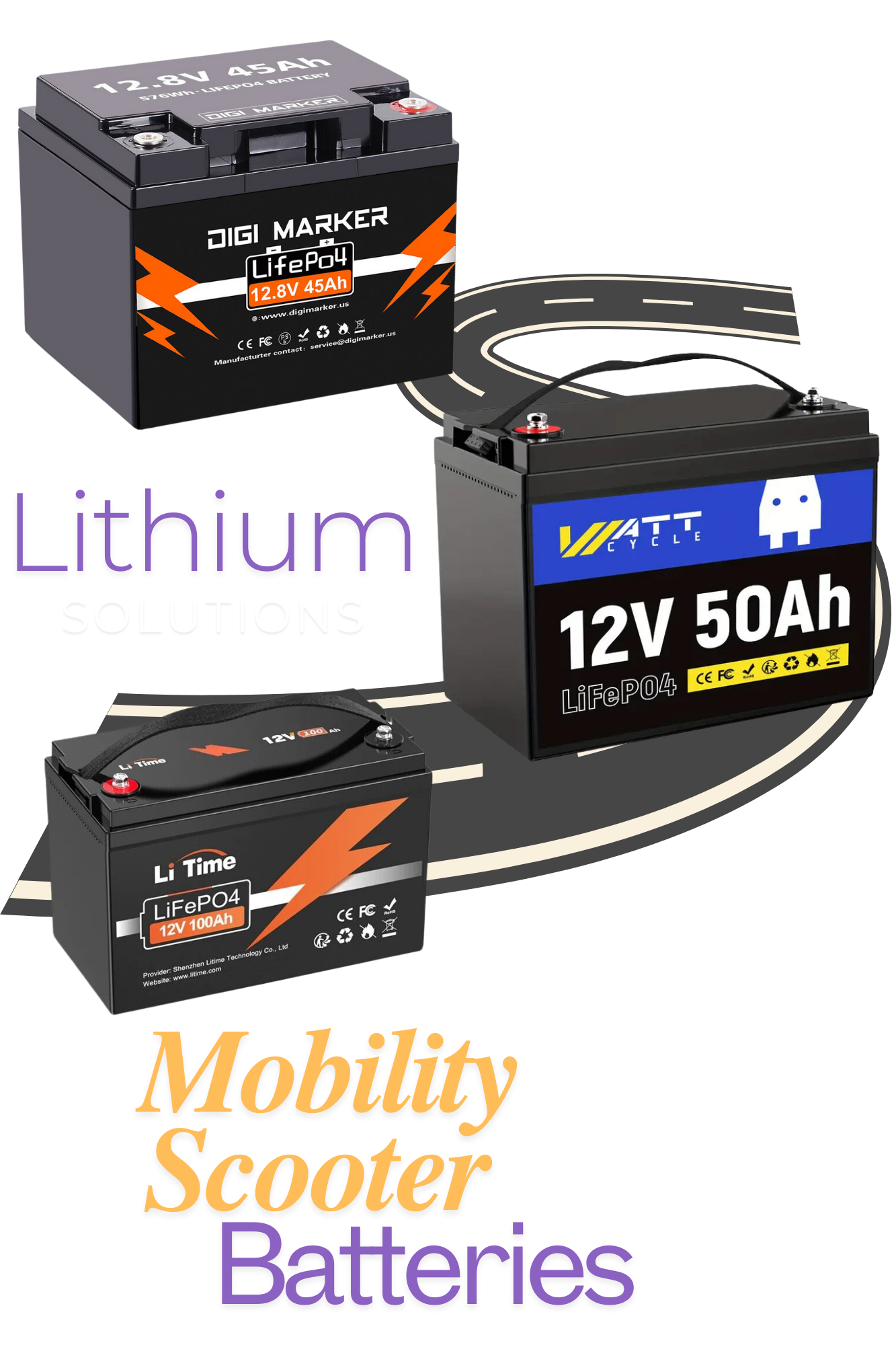
Lithium (LiFePO4) offers roughly 20–40% more usable range than lead-acid from the same battery box, because you can safely use more of the stored energy. Lithium batteries last 800–1,500 cycles—roughly three times longer than AGM—and weigh about half as much. If you ride daily, the higher upfront cost of lithium usually pays off in comfort, lifting ease, and running costs.
The practical implication: if you are choosing between a 50Ah AGM and a 35Ah lithium, the lithium may actually give you more usable range because you can discharge it more deeply. Compare usable Wh, not just Ah.
For a full chemistry comparison and upgrade path, see our lithium upgrade decision guide: what capacity to choose and what else must change. (Coming Soon!)
If you travel by air, also check Airline-friendly mobility scooter batteries: capacity limits and travel rules to ensure your chosen lithium capacity complies with airline regulations. (Coming Soon!)
Cold Weather: The Capacity Trap Most Riders Fall Into
Cold weather is the most common reason riders discover their battery capacity was inadequate. A battery that comfortably covers your summer route may leave you anxious in winter.
The mechanism is straightforward: low temperatures slow the chemical reactions inside the battery, reducing usable capacity and increasing internal resistance. This results in lower operating voltage and shorter runtime.
Lead-acid batteries are heavily impacted. They lose 20–50% range at 0–10°C and require strict charging discipline in cold weather.
Lithium batteries fare better, losing 10–25% at the same temperatures, but they must not be charged below 0°C unless the BMS (Battery Management System) supports low-temperature charging.
Practical guidance: If you ride year-round in a cold climate, size your battery for winter, not summer. If your summer needs are met by a 35Ah battery, consider a 50Ah battery if you ride in winter. Also plan to charge indoors and store the scooter in a heated space where possible.
When "Extended Range" Kits Make Sense
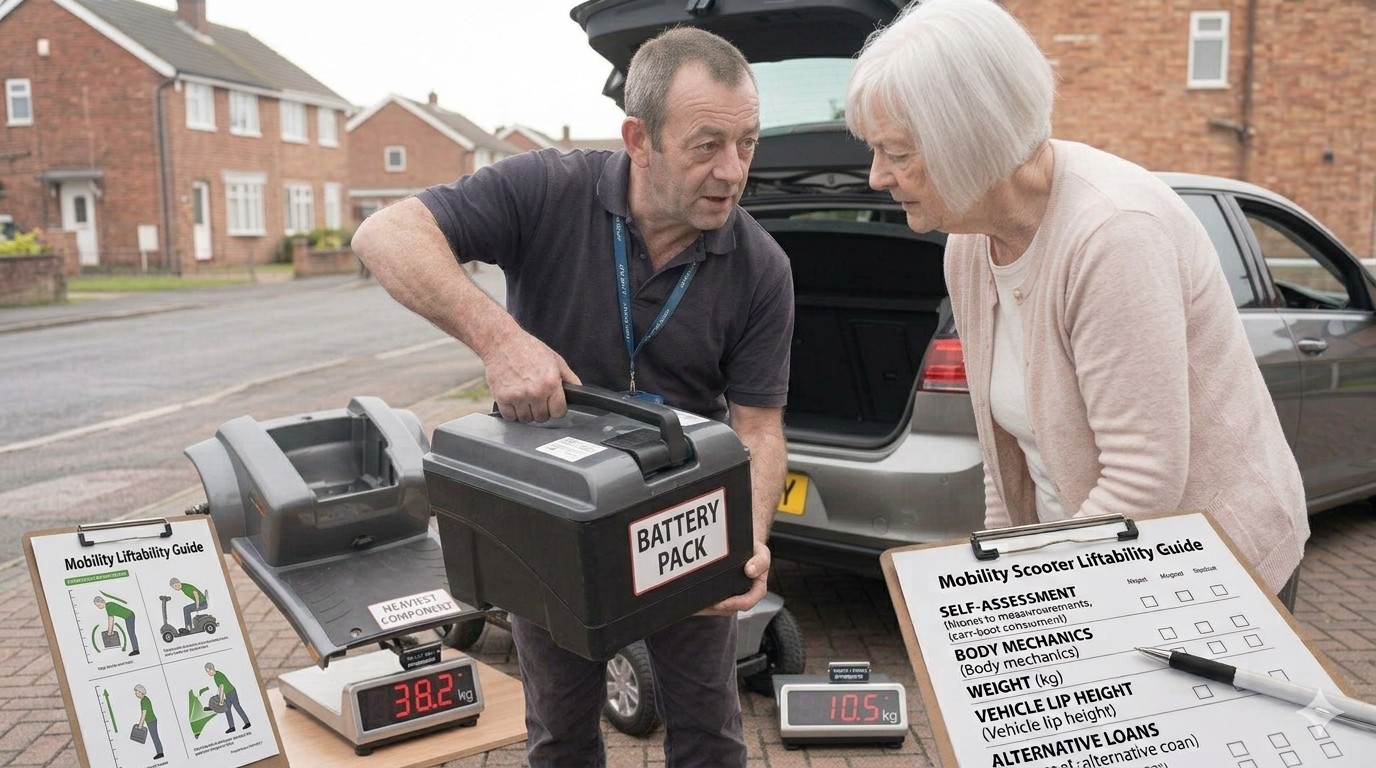
Extended range battery kits—higher-capacity battery packs designed as direct replacements—can make sense when:
- Your scooter's battery compartment has room for a larger battery
- Your charger can handle the larger capacity
- Your typical routes regularly exceed your current range
- You plan to keep the scooter for several years
They make less sense when:
- The larger battery will not physically fit without modification
- You only occasionally need extra range (a spare battery may be more practical)
- The cost approaches the cost of a newer scooter with better range
Extended range packs are available for popular models. For example, Pride Mobility offers a 16Ah lithium-ion battery box upgrade for the Go Go Endurance Li, delivering up to 23 kilometres. Golden Technologies offers an extended range pack for the Buzzaround series with two 12V 22Ah SLA batteries.
For a full analysis of when these kits are worthwhile, see when "extended range" battery kits make sense (and when they don't). (Coming Soon!)

Frequently Asked Questions
What does battery capacity (Ah) mean on a mobility scooter?
Amp-hours (Ah) measure how much electrical charge a battery can store. Higher Ah means more potential range, but usable capacity depends on battery chemistry and depth of discharge limits.
How many amp-hours (Ah) do I need for my mobility scooter?
It depends on your daily distance, terrain, weight, and climate. As a general guide: small travel scooters use 10–17Ah; pavement scooters use 20–36Ah; road-legal scooters use 40–80Ah. For capacity recommendations by scooter type, see Choosing battery capacity for travel/portable mobility scooters vs mid-size vs heavy-duty models. (Coming Soon!)
Is higher Ah always better?
No. Higher Ah means more range, but it also means a larger, heavier, and more expensive battery. If a smaller capacity meets your needs, you save weight and cost.
Does a higher-capacity battery make a mobility scooter faster?
No. Capacity affects range, not speed. Speed is determined by the motor and controller voltage.
How much extra range do you get from going from 20Ah to 35Ah?
At 24V, 20Ah ≈ 480Wh and 35Ah ≈ 840Wh. In practical terms, this could mean an increase from roughly 13–20 kilometres to 22–32 kilometres, depending on conditions.
What affects real-world range besides battery capacity?
Rider weight, terrain, temperature, tire pressure, driving habits, and battery age all affect range. For a detailed breakdown, see how rider weight, terrain, and stop-start driving change the capacity you should choose. (Coming Soon!)
What's the difference between Ah and Wh?
Ah measures charge capacity; Wh measures energy. Wh = Ah × Voltage. Always compare Wh when batteries have different voltages. For a full explanation, see Ah vs Wh for mobility scooters: how to compare batteries the right way. (Coming Soon!)
Can I fit a higher Ah battery in the same scooter?
Possibly, but only if the battery physically fits, the voltage remains the same, and the charger is compatible. See our mobility scooter battery compatibility checklist for details. (Coming Soon)
Will heavier riders need higher battery capacity?
Yes. Heavier riders consume more energy per mile, so they need more capacity for the same distance.
Do hills and uneven paths require a bigger battery?
Yes. Hills can double power consumption compared to level ground. See how rider weight, terrain, and stop-start driving change the capacity you should choose for more. (Coming Soon!)
How much range drops in cold weather?
Lead-acid loses 20–50% at 0–10°C; lithium loses 10–25%.
Does switching to lithium change what capacity I should choose?
Yes. Lithium gives you more usable capacity from the same Ah rating because you can discharge it more deeply. A 35Ah lithium may give you more range than a 50Ah AGM. For a complete guide, see lithium upgrade decision guide: what capacity to choose and what else must change. (Coming Soon!)
What charger do I need if I change battery type or capacity?
A charger matched to your battery chemistry and capacity. Lithium requires a lithium-specific charger. AGM and gel have slightly different charge profiles. For a full guide, see choosing the right charger for your battery capacity and chemistry (AGM/gel vs lithium). (Coming Soon!)
Should both batteries be replaced at the same time?
Yes, for two-battery systems. The batteries work as a matched pair; mixing old and new causes uneven charging and shortens the new battery's life. If your battery won't hold a charge at all. See what to do when your mobility scooter battery won't hold a charge. (Coming Soon!)
Can I mix old and new batteries, or different Ah batteries, in the same scooter?
No. Always use two batteries of the same type, chemistry, capacity, and age.
Your Next Step
Choosing the right battery capacity comes down to three things: knowing your real routine, comparing usable energy (Wh) rather than rated capacity (Ah), and sizing for the conditions you actually ride in—not the best-case scenario on the specification sheet.
If you are ready to go deeper, these guides will help you with the next decisions:
Core capacity & comparison
- How to estimate the battery capacity you need (Ah/Wh) from your typical weekly routine (Coming Soon!)
- Ah vs Wh for mobility scooters: how to compare batteries the right way (Coming Soon!)
Compatibility & upgrades
- Mobility scooter battery compatibility checklist: size, terminals, voltage, charger, and fit (Coming Soon!)
- Can you upgrade to higher Ah batteries on your mobility scooter (and what can go wrong)? (Coming Soon!)
- When "extended range" battery kits make sense (and when they don't) (Coming Soon!)
Real-world performance & chemistry
- Battery capacity vs range claims: how to sanity-check manufacturer "miles per charge" numbers (Coming Soon!)
- How rider weight, terrain, and stop-start driving change the capacity you should choose (Coming Soon!)
- Choosing battery capacity for travel/portable mobility scooters vs mid-size vs heavy-duty models (Coming Soon!)
- How to compare AGM, gel, and lithium batteries for mobility scooters (Coming Soon!)
- Lithium upgrade decision guide: what capacity to choose and what else must change (Coming Soon!)
Charging, care & troubleshooting
- Choosing the right charger for your battery capacity and chemistry (AGM/gel vs lithium) (Coming Soon!)
- Mobility scooter battery maintenance: how to preserve capacity and extend lifespan (Coming Soon!)
- What to do when your mobility scooter battery won't hold a charge (Coming Soon!)
Travel
- Airline-friendly mobility scooter batteries: capacity limits and travel rules (Coming Soon!)
Stay mobile, stay confident!
Sign up for our monthly Mobility Scooter Newsletter to receive practical guides, expert advice, and inspiring stories that help you make the most of your scooter and download our free "Mobility Scooter Guide for Beginners."
Don't worry — your e-mail address is totally secure.
I promise to use it only to send you our newsletter, "Mobility Matters."
Recent Articles


-
Choosing the Right Battery Capacity 101: (Ah vs Wh)
Oct 02, 26 09:38 AM
 Choosing the Right Battery Capacity Guide: Compare Ah vs Wh, estimate range, and pick the best battery for your routine.
 -
NDIS Mobility Scooter Funding Checklist: Evidence That Gets Approved
Oct 01, 26 07:51 AM
NDIS mobility scooter funding checklist — from OT assessment to approval. Here's exactly what to include so your request isn't delayed. -
NDIS Funding for Mobility Scooter Repairs & Servicing: Plan Ahead
Oct 01, 26 07:47 AM
 NDIS funding for mobility scooter repairs and servicing: what's covered, who to call, and how to avoid being stranded.



Ready to Feel More Confident on Your Mobility Scooter?

My Ebook, The Ultimate Guide to Mobility Scooters, walks you through choosing the right scooter, using it safely, and keeping it in top condition — all explained in clear, friendly language.
Give yourself (or someone you love) the gift of independence.




