- Home
- Mobility Scooter Accessories and Power
- Mobility Scooter Battery Capacity
- Choosing the Right Charger for Your Battery Capacity
Choosing the Right Charger for Your Battery Capacity and Chemistry (AGM/Gel vs Lithium)
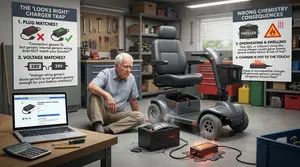
Picture this: Your mobility scooter's charger has stopped working. You find a replacement online—the plug looks identical, the voltage matches, and the price is right. You plug it in, and for a few hours, everything seems fine. Then you notice the battery getting warm. Very warm. By morning, the battery has swollen, the charger is hot to the touch, and you realise something has gone badly wrong. The charger that "looked right" was never designed for your battery chemistry.
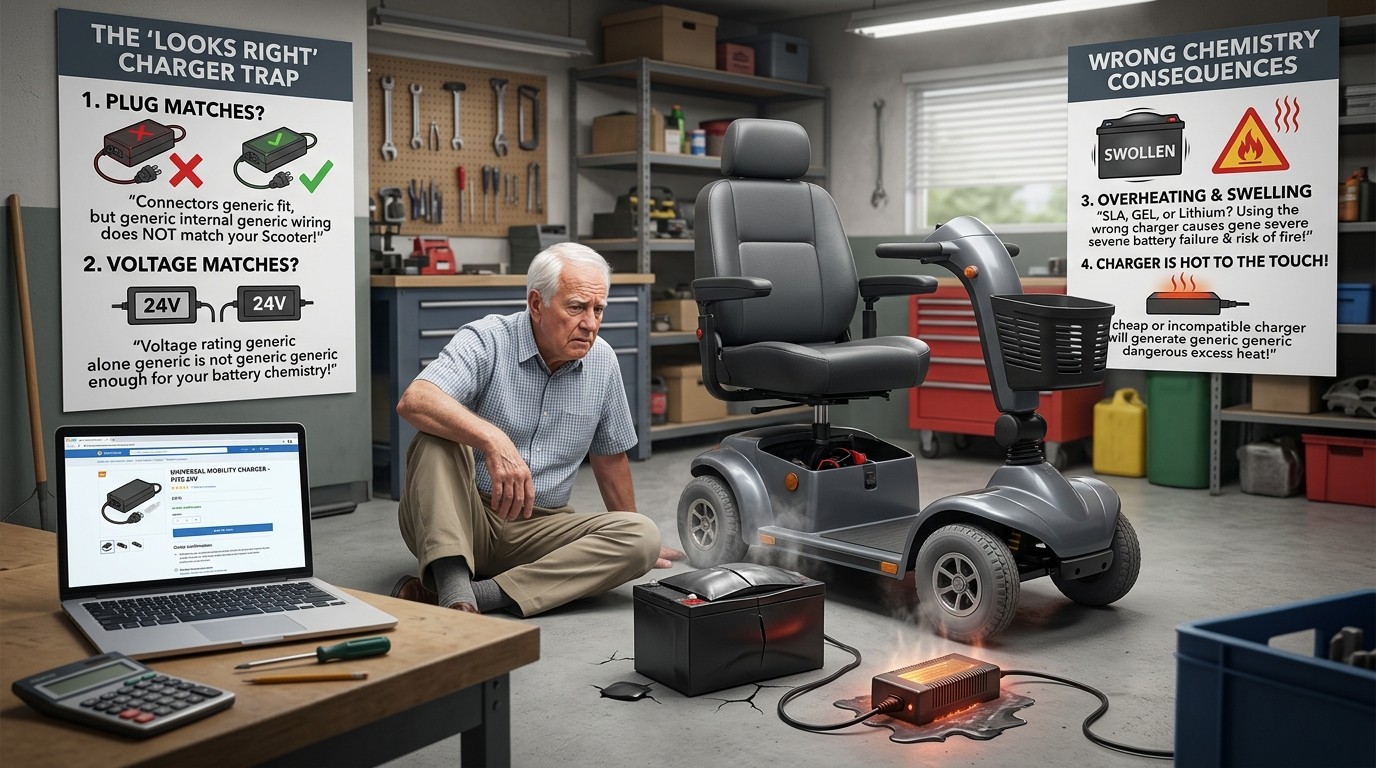
This scenario is more common than you might think. Choosing the right charger for your battery capacity and chemistry (AGM/gel vs lithium) is not just about finding a plug that fits. It is about matching voltage, current, charging profile, and connector type. Get it wrong, and you risk damaging your battery, shortening its life, or—in the worst cases—creating a genuine safety hazard.
If you have ever felt overwhelmed by charger specifications, take a breath. You are not alone, and you are not expected to be an electrical engineer.
In this guide, we are going to walk through everything you need to know, step by step. No jargon. No pressure. Just clear, practical guidance to help you choose a charger that keeps your scooter ready and your mind at ease.
Why Charger Compatibility Matters More Than You Think
A mobility scooter charger is not a generic accessory. It is a carefully engineered device designed to deliver a specific voltage and current to a specific battery chemistry. Using the wrong charger can cause incomplete charging, excessive heat, reduced battery life, or permanent damage. In some cases, it can create a fire risk.
The safest starting point is always the charger supplied for your particular scooter model. If you need a replacement, check the information label on the old charger, your scooter manual, or the battery compartment. A compatible unit should match the required output voltage and be designed for the type of batteries fitted to your scooter.
But what happens when you cannot find the original charger, or when you have upgraded your battery? That is where understanding the specifications becomes essential—and where a little knowledge goes a very long way.
Understanding Battery Chemistry: AGM/Gel vs Lithium
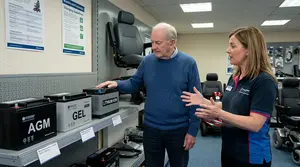
The single most important compatibility factor is battery chemistry. Most mobility scooters use sealed lead-acid batteries, often described as AGM (Absorbent Glass Mat) or gel batteries. These are the traditional workhorses of the mobility world: affordable, widely available, and well-understood. Some newer or lightweight models use lithium batteries, which offer more usable capacity, lighter weight, and longer lifespan.
These chemistries have fundamentally different charging requirements, and their chargers are not interchangeable. A lead-acid charger must not be used with lithium batteries unless the manufacturer clearly confirms it is suitable. This is not a suggestion—it is a safety requirement.
AGM and Gel Charging Profiles
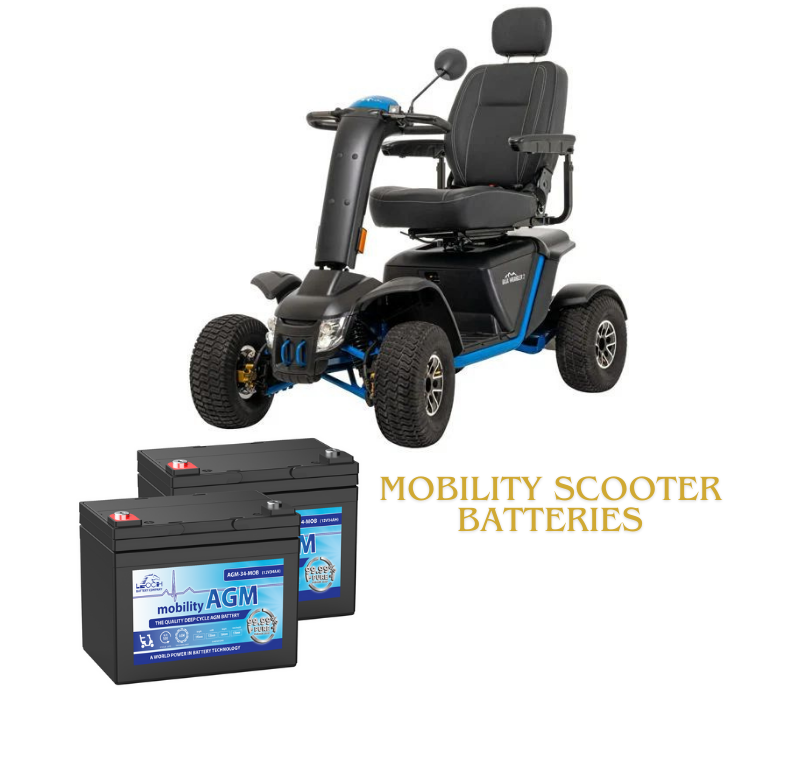
AGM and gel batteries are both types of sealed lead-acid (SLA) batteries, and they share a similar charging approach. A good-quality automatic charger reduces its output as the batteries approach full charge and switches to a maintenance or float stage once charging is complete. This helps avoid overcharging and keeps the battery healthy.
The typical AGM/gel charging process has three stages:
- Bulk charge — the charger delivers high current to bring the battery up to approximately 80% capacity.
- Absorption charge — the charger reduces current and holds voltage steady as the battery approaches full charge.
- Float/maintenance charge — the charger maintains the battery at full charge without overcharging.
Never use an automotive or wet-type charger on sealed gel or AGM batteries. Doing so will damage your battery. Automotive chargers are designed for flooded lead-acid batteries and use different voltage profiles that are not compatible with sealed designs.
Lithium Charging Profiles
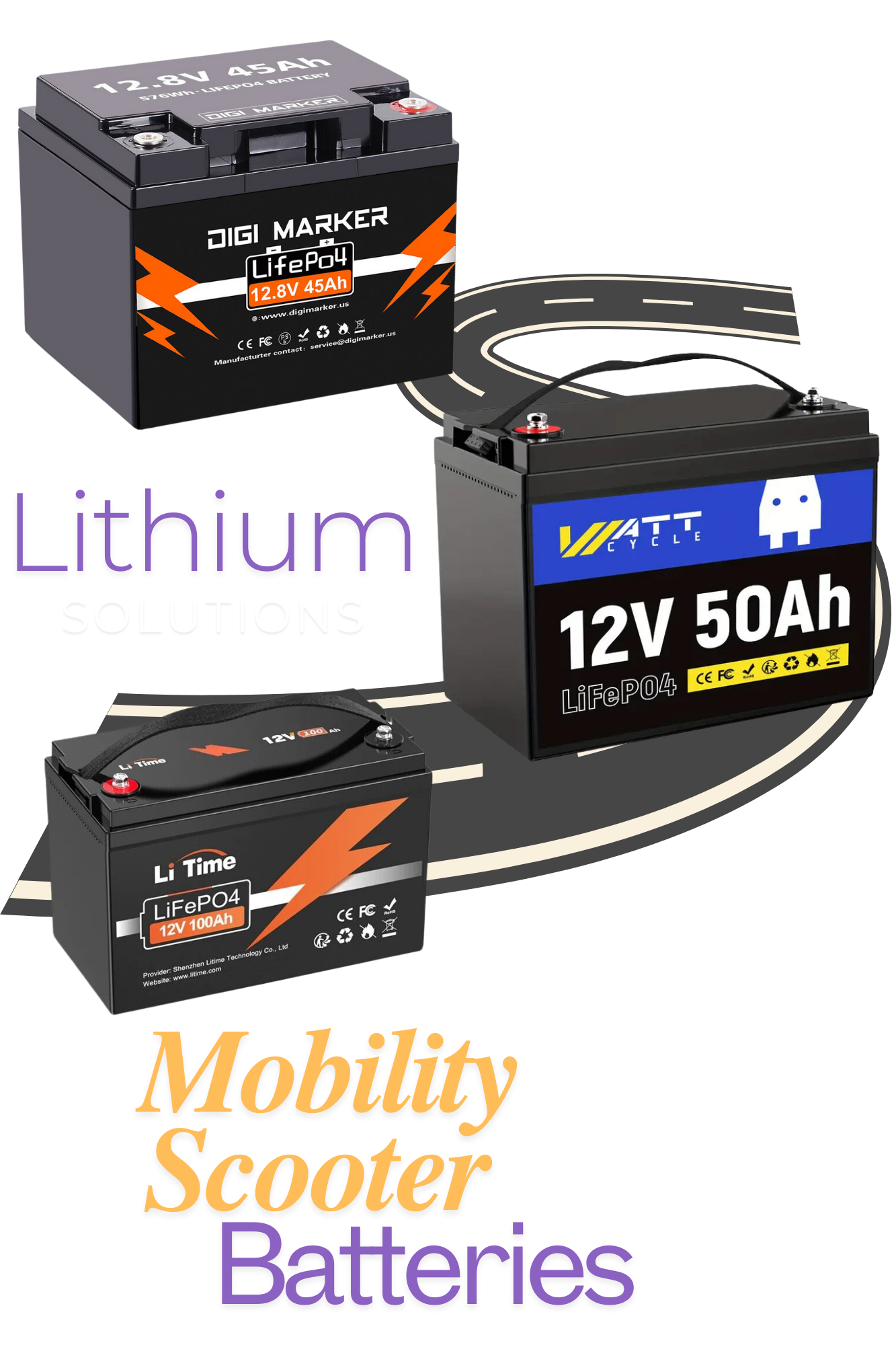
Lithium batteries (typically LiFePO4 for mobility scooters) require a fundamentally different charging approach. They use a CC/CV (constant current / constant voltage) profile with no trickle or float stage. The charger delivers a constant current until the battery reaches its target voltage, then holds that voltage steady while the current tapers off. Once the current drops to a certain point, charging stops completely.
Lithium batteries need a charger specifically made for their chemistry and battery management system. The charger must also match the battery's specific voltage requirements. For example, a 24V LiFePO4 battery typically charges at 29.2V, while a 24V lead-acid battery charges at around 29.4V. These small differences matter enormously.
If you are switching from lead-acid to lithium, you need a lithium-specific charger. Full stop.
Matching Voltage, Current, and Connector Type
Beyond chemistry, three other specifications must match: voltage, charging current, and connector type.
Voltage: The Non-Negotiable Number
Most mobility scooters use two 12-volt batteries connected in series to create a 24-volt system. That means they usually require a 24-volt charger. A 12-volt charger may physically connect in some situations, but it will not charge a 24-volt battery system correctly. Using the wrong voltage can result in incomplete charging or damage to batteries and electrical components.
Some larger or more powerful scooters use 36V or 48V systems. Always confirm your scooter's voltage before buying a charger. This information is printed on the original charger label, in your scooter manual, or on the battery itself.
Charging Current: Faster Is Not Always Better
A charger's output is normally shown in amps, such as 2A, 4A, or 5A. This affects how quickly it charges the batteries, but faster is not automatically better. The suitable charging current depends on the battery capacity, the scooter's design, and the battery manufacturer's guidance.
As a general guide, smaller travel scooters often use lower-capacity batteries and are commonly paired with a 2A charger. Medium-size scooters may use a 4A or 5A charger. Larger, heavy-duty scooters with bigger batteries can accept higher charging currents, such as 8A or more.
A charger that is too low-powered may take a very long time to recharge the scooter. One that is too powerful may cause excessive heat or reduce the service life of batteries that are not designed for it. For example, the Aspire Sierra mobility scooter includes a 24V 5A charger for its 50Ah lead-acid batteries, providing efficient recharging without stressing the battery. For a 24V 5A charger, a full charge typically takes around 6–12 hours depending on the battery capacity and depth of discharge.
Connector Type: The Plug Must Match
Most mobility scooters charge through a round three-pin XLR socket on the tiller. This is the standard connector for most brands, including Pride Mobility, Drive Medical, Golden Technologies, and ShopRider.
However, not all scooters use XLR. Some have different fittings, or they may be charged directly at the battery box. Never force a plug into place. If it does not connect smoothly, stop and check the specification rather than trying to make it fit.
Smart Chargers: What They Are and Why They Matter
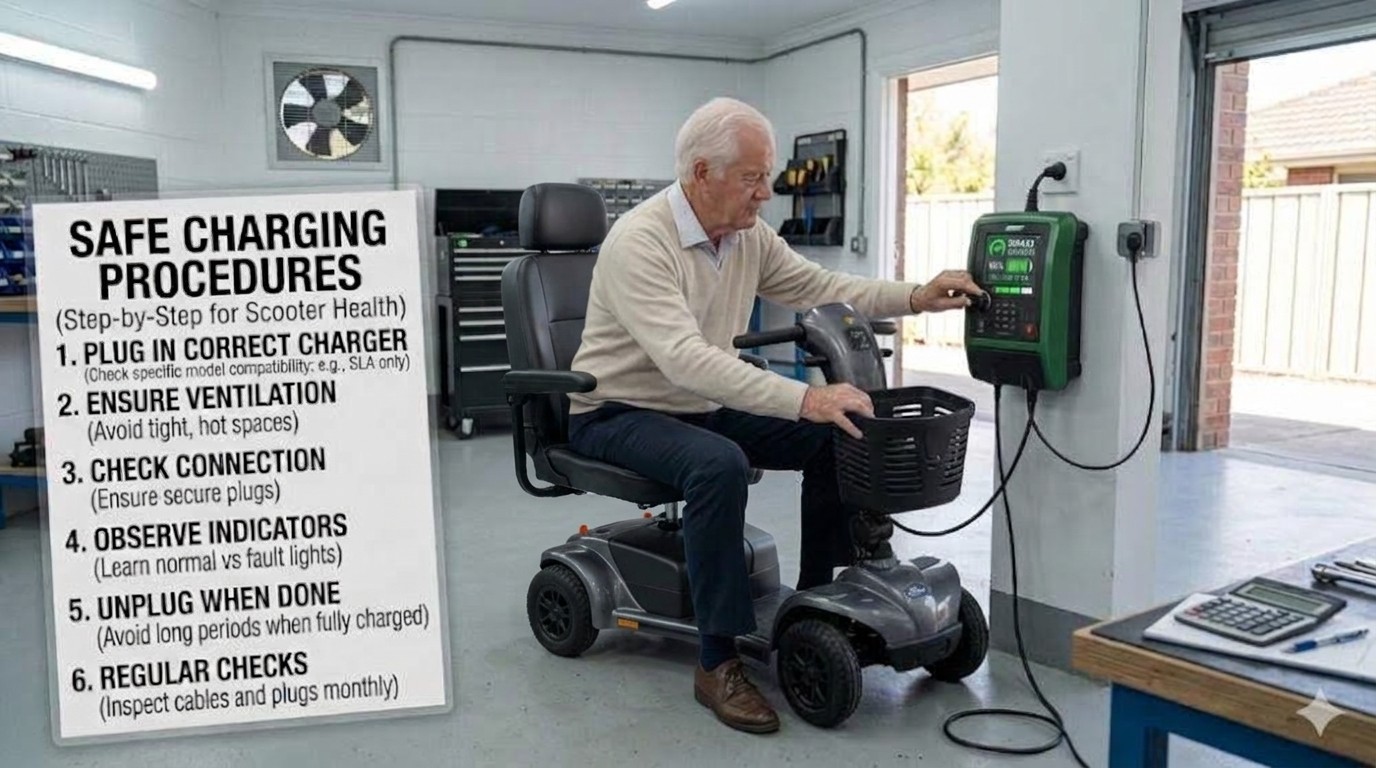
Modern mobility scooter chargers are often described as "smart" or "automatic." These chargers manage the charging cycle automatically rather than applying one uncontrolled fixed current throughout the entire charge. They include protection features such as overcharge protection, auto shut-off, short circuit protection, and reverse polarity protection. This makes overnight charging safe and convenient.
A smart charger is particularly valuable for AGM and gel batteries, where the float stage helps maintain full charge without overcharging. It is essential for lithium batteries, where the CC/CV profile with automatic termination is a safety requirement, not a convenience.
When choosing a charger, look for these features:
- Automatic shut-off when charging is complete
- Overcharge and over-discharge protection
- Short circuit and reverse polarity protection
- LED indicators showing charging status
- Fan cooling for reliable operation during longer charge cycles
What Happens When You Use the Wrong Charger
The consequences of a mismatched charger range from inconvenient to dangerous.
Using a lead-acid charger on a lithium battery is the most serious risk. Lead-acid chargers use a float mode that keeps voltage too high, which can trigger thermal runaway—an uncontrollable fire or explosion—in lithium cells. This is why lithium batteries must only be charged with a charger specifically designed for their chemistry.
Using a lithium charger on a lead-acid battery will result in incomplete charging. The charger will stop charging when it reaches its target voltage, leaving the lead-acid battery at only 70–80% capacity. Over time, chronic undercharging causes sulphation and premature battery failure.
Using a charger with the wrong voltage can damage both the battery and the scooter's electrical components. A 12V charger connected to a 24V system will never fully charge the battery. A 24V charger connected to a 12V system will overcharge and destroy the battery.
Using a charger with too high a current can cause excessive heat, reduce battery life, and in extreme cases, damage the battery internally.
A Step-by-Step Charger Selection Checklist
Here is a simple process for choosing the right charger:
Step 1: Identify your battery chemistry. Is it AGM, gel, or lithium? This is printed on the battery label or in your scooter manual.
Step 2: Confirm your system voltage. Most scooters are 24V (two 12V batteries in series). Some are 12V, 36V, or 48V.
Step 3: Check your battery capacity. This tells you what charging current is appropriate. Smaller batteries (under 18Ah) typically use 2A chargers. Medium batteries (20–45Ah) use 4–5A chargers. Larger batteries may accept 8A or more.
Step 4: Identify your connector type. Most scooters use a 3-pin XLR connector, but some use different plugs. Check your existing charger or the charging port on your scooter.
Step 5: Choose a smart charger with safety features. Automatic shut-off, overcharge protection, and short circuit protection are essential.
Step 6: Confirm compatibility before buying. If you are unsure, consult the scooter manufacturer or a battery specialist. A few minutes of checking can save you from an expensive mistake.

Frequently Asked Questions
Can I use my old lead-acid charger on a new lithium battery?
No. Lead-acid chargers are not compatible with lithium batteries and can cause fire or explosion. You need a lithium-specific charger.
What charger do I need for a 24V mobility scooter?
Most 24V scooters use a 24V charger with a 3-pin XLR connector. The charging current (2A, 4A, 5A, etc.) depends on your battery capacity.
Can I use a higher-amp charger to charge faster?
Only if your battery is rated for it. Using a charger with too high a current can cause excessive heat and reduce battery life. Always follow the manufacturer's recommendation.
Is it safe to leave my mobility scooter charger plugged in overnight?
Yes, modern smart chargers are designed for overnight charging. They automatically shut off or switch to float mode when the battery is full.
What is a float charge?
A float charge is a low-voltage maintenance charge that keeps a lead-acid battery at full capacity without overcharging. Lithium batteries do not use a float charge.
Can I use a car battery charger on my mobility scooter?
No. Car battery chargers are designed for automotive starting batteries, not deep-cycle mobility batteries. They use different voltage profiles and can damage your scooter battery.
Your Next Step
Choosing the right charger for your battery capacity and chemistry (AGM/gel vs lithium) comes down to five things: chemistry, voltage, current, connector type, and safety features. Get these right, and your charger will keep your scooter ready for years.
You now have the knowledge to walk into any shop, open any product page, and make a confident decision. No more guessing. No more hoping a charger will work because the plug looks right. Just clear, informed choice.
And that confidence? It means you can charge your scooter without worry, knowing the charger is matched to your battery and safe to use. You deserve that confidence.
And now you have the tools to build it.
Stay mobile, stay confident!
Sign up for our monthly Mobility Scooter Newsletter to receive practical guides, expert advice, and inspiring stories that help you make the most of your scooter and download our free "Mobility Scooter Guide for Beginners."
Don't worry — your e-mail address is totally secure.
I promise to use it only to send you our newsletter, "Mobility Matters."
Recent Articles


-
Choosing the Right Battery Capacity 101: (Ah vs Wh)
Oct 08, 26 09:04 AM
 Choosing the Right Battery Capacity Guide: Compare Ah vs Wh, estimate range, and pick the best battery for your routine.
 -
Stop! Compare AGM, Gel, and Lithium Before You Buy (
Oct 08, 26 08:59 AM
How to compare AGM, gel, and lithium batteries for mobility scooters: Stop guessing. Get the honest facts before you spend your money. -
Stop! Your Charger Must Match Your Battery Chemistry
Oct 08, 26 07:08 AM
Choosing the right charger for your battery capacity and chemistry (AGM/gel vs lithium): Stop guessing. Get the facts before you buy a replacement charger.

Ready to Feel More Confident on Your Mobility Scooter?

My Ebook, The Ultimate Guide to Mobility Scooters, walks you through choosing the right scooter, using it safely, and keeping it in top condition — all explained in clear, friendly language.
Give yourself (or someone you love) the gift of independence.




