- Home
- Mobility Scooter Accessories and Power
- Mobility Scooter Battery Capacity
- How to Compare AGM, Gel, and Lithium Batteries for Mobility Scooters
How to Compare AGM, Gel, and Lithium Batteries for Mobility Scooters
Picture this: You are standing in a mobility shop, staring at three batteries on the shelf. One is labelled AGM. Another says Gel. The third is Lithium. They all look different, they all cost different amounts, and the salesperson is explaining the differences using words you have never heard before. You nod politely, but inside you are thinking: I just want a battery that works, lasts, and does not cost a fortune. Why is this so complicated?
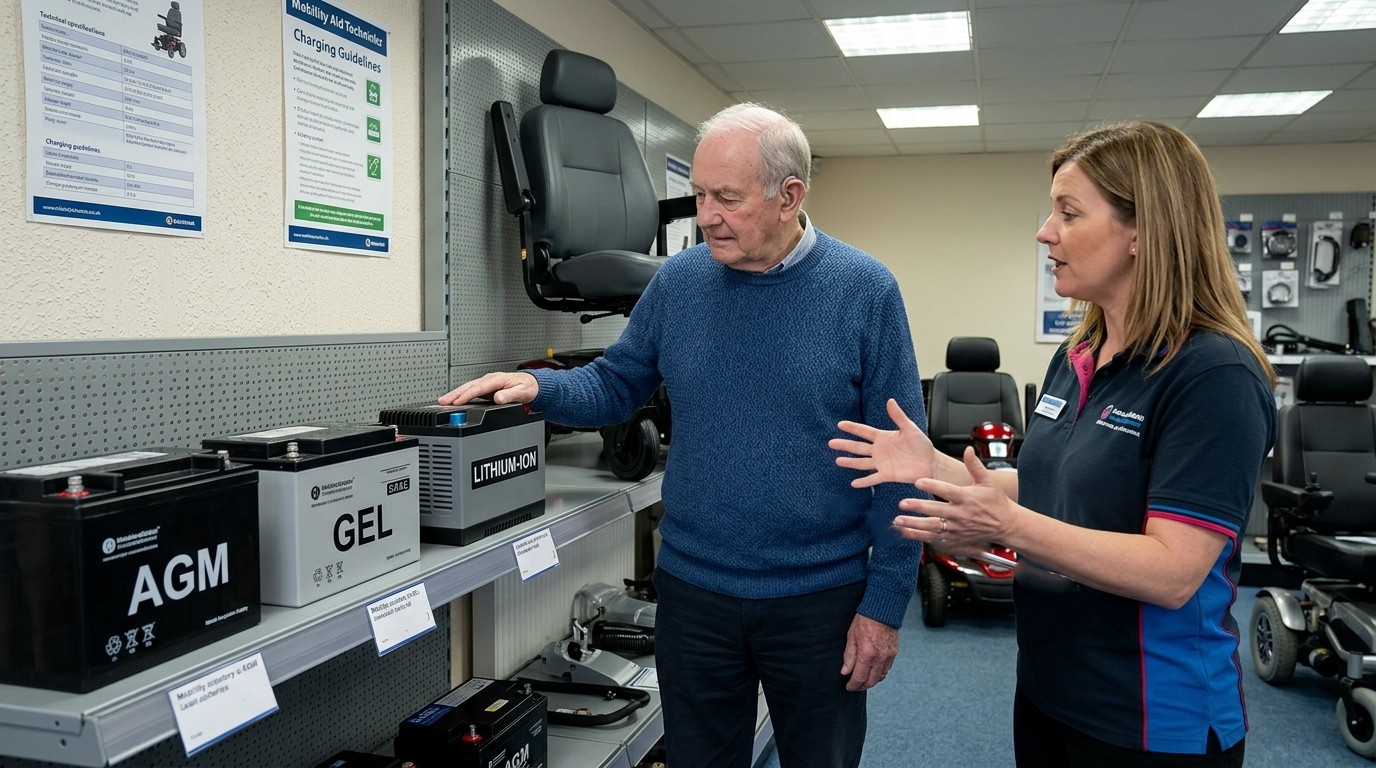
If that sounds familiar, you are in exactly the right place. Learning how to compare AGM, gel, and lithium batteries for mobility scooters does not have to be overwhelming. It comes down to a handful of practical factors: how long the battery lasts, how much it weighs, how it charges, and how much it costs over time. Once you understand those differences, the choice becomes much clearer.
This guide will walk you through each battery type, side by side, in plain language. No jargon. No pressure. Just the honest facts you need to make a confident decision.
Why Battery Chemistry Matters More Than You Think
Before we compare the three types, let us address something important. The battery you choose does not just affect how far you can go. It affects how often you have to replace it, how much you have to lift it, how you charge it, and how your scooter performs in cold weather.
A battery that seems cheaper upfront may cost you more over time. A battery that seems more expensive may actually save you money in the long run. And a battery that works perfectly for one rider may be the wrong choice for another.
This is why comparing battery chemistry is not just a technical exercise. It is a practical decision about your daily life. And the good news is that once you understand the differences, the right choice for you will become much more obvious.
Let us start with the most common option: AGM.
AGM Batteries: The Affordable Workhorse
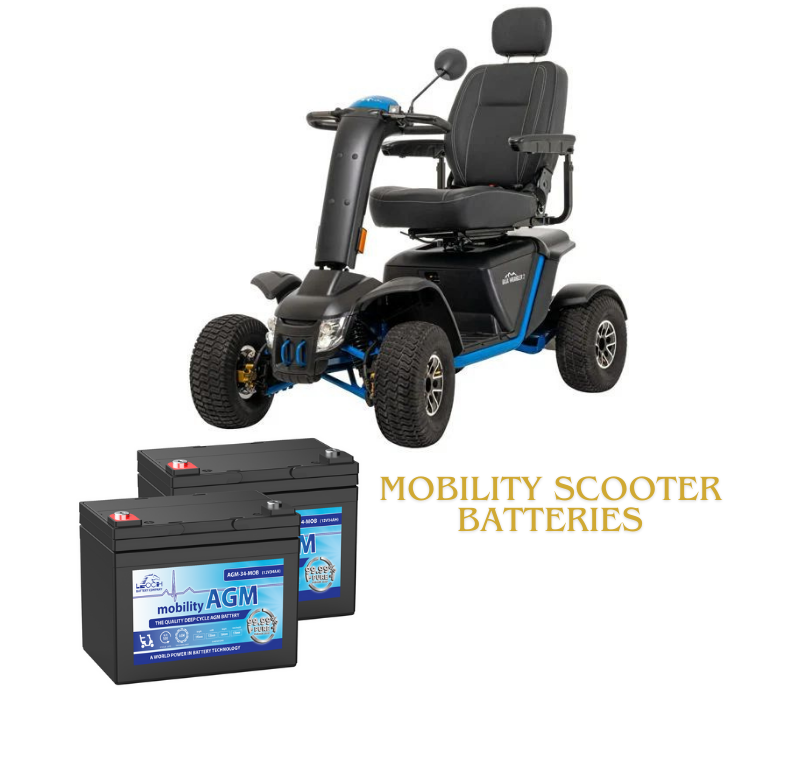
AGM stands for Absorbent Glass Mat. It is a type of sealed lead-acid battery where the electrolyte is absorbed into fibreglass matting rather than floating freely as a liquid. This makes AGM batteries spill-proof and maintenance-free, which is one reason they are the most common type fitted to mobility scooters today.
What AGM Batteries Are Good At
AGM batteries are affordable, widely available, and compatible with the majority of scooter models. They charge quickly and cope well with regular, daily charging routines. For riders who use their scooter regularly and charge it after every trip, AGM is a dependable, budget-friendly choice.
Where AGM Batteries Fall Short
AGM batteries are heavier than lithium alternatives, and they do not tolerate deep discharge as well as gel batteries. In practice, this means you should avoid running them down too far before recharging. They are also better suited to people who make less regular use of their equipment compared to gel or lithium.
In terms of lifespan, AGM batteries typically last 1–2 years with regular use. Cycle life varies by manufacturer, but many AGM batteries deliver around 200–500 cycles at moderate depth of discharge. Some premium AGM batteries claim up to 2,000 cycles, though these figures are typically measured under specific laboratory conditions.
So AGM is the accessible, practical choice for many riders. But if you use your scooter heavily, or if weight is a concern, there is another option worth considering.
Gel Batteries: The Long-Distance Specialist
Gel batteries are also sealed lead-acid batteries, but instead of being absorbed into fibreglass, the electrolyte is suspended in a silica-based gel. This construction gives gel batteries some distinct advantages over AGM.
What Gel Batteries Are Good At
Gel batteries are more tolerant of deep discharge and inconsistent charging than AGM. This makes them a better fit for riders who use their scooter occasionally and do not charge after every trip. They are also slightly more vibration-resistant and can last longer than AGM under heavy use.
Gel batteries cope well with deep discharge and are approved for air travel, which matters if you travel with your scooter. Some long-range scooters use gel as standard equipment. In terms of cycle life, gel batteries typically deliver around 500 or more cycles, which is significantly better than standard AGM.

Where Gel Batteries Fall Short
Gel batteries cost more than AGM upfront, and they require a gel-compatible charger. Using an AGM charger on a gel battery can damage it, so you need to match your charger to your chemistry. Gel batteries also charge more slowly than AGM in some cases, and they are still heavy—roughly the same weight as AGM.
Their lifespan is typically 1–3 years, which is a modest improvement over AGM but still far shorter than lithium.
Gel is a solid middle-ground choice, especially for heavier users or those who do not charge religiously. But if you want the longest lifespan and the lightest weight, there is one more option to explore.
Lithium Batteries: The Modern Upgrade
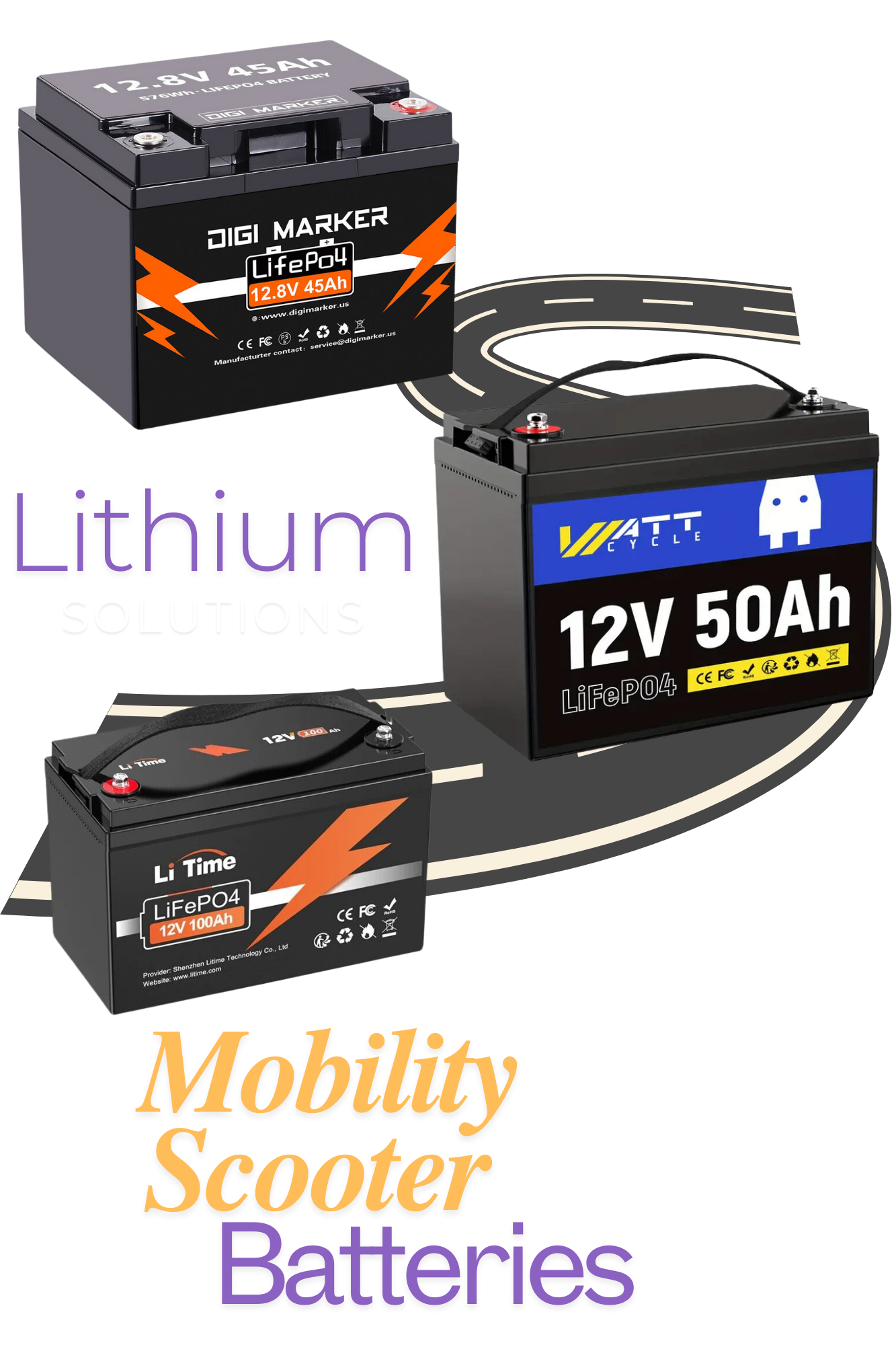
Lithium batteries—specifically Lithium Iron Phosphate (LiFePO4)—are the most advanced option available for mobility scooters. They are significantly lighter than lead-acid types, have a longer lifespan, and hold their charge for longer when not in use.
What Lithium Batteries Are Good At
The most striking advantage of lithium is weight. Lithium batteries are up to 50–60% lighter than equivalent AGM or gel batteries. If you need to lift your battery or transport your scooter, this is a game-changer.
Lithium also wins on lifespan. While AGM lasts 1–2 years and gel lasts 1–3 years, lithium typically lasts 4–8 years. In terms of cycles, lithium can deliver 1,000 to 4,000 cycles or more, depending on the specific battery and depth of discharge. This means fewer replacements over the life of your scooter.
Lithium batteries also handle cool temperatures better than lead-acid equivalents, retaining a larger proportion of their rated capacity when temperatures drop. They hold their charge well during storage, so you can leave your scooter unused for weeks without finding a flat battery when you return.
Where Lithium Batteries Fall Short
The main drawback is cost. Lithium batteries are roughly four times the price of gel batteries, plus the cost of a new charger. They also require a lithium-specific charger and, in many cases, modifications to wiring or terminals if you are upgrading from lead-acid.
There is also a safety consideration. Lithium batteries need a properly matched Battery Management System (BMS) to protect against overcharge, over-discharge, and overheating. Using the wrong charger or a poorly made battery without a proper BMS can create a fire risk. Quality matters enormously with lithium.
And not all scooters are compatible with lithium. A lithium upgrade is not a drop-in replacement for AGM or gel unless your manufacturer says so. Always check compatibility before buying.
So lithium offers the best performance and longest life, but at a higher upfront cost and with more complexity. Is it worth it? That depends on your situation.
Read the full guide: Lithium Upgrade Decision Guide: What Capacity to Choose and What Else Must Change
Side-by-Side: The Comparison Table
Here is a quick reference to help you see the differences at a glance:
|
Feature |
AGM |
Gel |
Lithium (LiFePO4) |
|
Weight |
Heavy |
Heavy |
Up to 60% lighter |
|
Typical lifespan |
1–2 years |
1–3 years |
4–8 years |
|
Cycle life |
~200–500 cycles |
~500+ cycles |
1,000–4,000+ cycles |
|
Charging routine |
Regular (after every use) |
Tolerates irregular charging |
Flexible — holds charge longer |
|
Charger required |
AGM-compatible |
Gel-specific charger |
Lithium-specific charger |
|
Deep discharge tolerance |
Moderate |
Good |
Excellent |
|
Cold weather performance |
Reduced |
Reduced |
Better retention |
|
Upfront cost |
Low |
Moderate |
High |
|
Long-term cost |
Higher (frequent replacement) |
Moderate |
Lower (fewer replacement |
|
Best for |
Everyday users on a budget |
Occasional users, heavy use |
Daily riders, travel, weight-sensitive users |
This table gives you the broad picture. But how do you apply it to your own life? The next section will help you decide.
Which Battery Is Right for You?
The right battery depends on three things: how you use your scooter, how much you are willing to spend upfront, and what matters most to you.
Choose AGM if:
- You use your scooter regularly and charge it after every trip
- You are on a tight budget and want the lowest upfront cost
- Your scooter is designed for AGM and you do not want to modify it
- You are comfortable replacing the battery every 1–2 years
AGM is the practical, no-fuss choice for many riders. It is not the longest-lasting or the lightest, but it is affordable, widely available, and gets the job done.
Choose Gel if:
- You use your scooter heavily and want longer life than AGM
- You do not always charge after every trip
- You need a battery that is approved for air travel
- You want better deep-discharge tolerance than AGM
Gel is a sensible middle ground. It costs more than AGM but lasts longer and handles irregular charging better.

Choose Lithium if:
- You use your scooter daily and want the longest possible lifespan
- You struggle with heavy batteries and want something lighter
- You want the best cold-weather performance and charge retention
- You are prepared to invest upfront for lower long-term costs
- Your scooter is compatible with lithium, or you are willing to make the necessary modifications
Lithium is the premium choice. It costs more initially, but for daily riders, the longer lifespan, lighter weight, and better performance often justify the investment.
A Note on Safety and Compatibility
Whichever chemistry you choose, safety and compatibility are paramount.
Never mix battery types or ages. Always replace batteries as a matched set. Using two batteries of different ages or chemistries can cause uneven charging and premature failure.
Always use the correct charger for your chemistry. AGM and gel chargers are not interchangeable, and neither is suitable for lithium. Using the wrong charger can damage your battery and create a fire hazard.
And if you are considering a lithium upgrade, confirm compatibility with your scooter manufacturer first. Lithium is not a drop-in replacement for lead-acid in most cases, and attempting to force it can damage your scooter or create a safety risk.
Frequently Asked Questions
Which battery lasts longest: AGM, gel, or lithium?
Lithium lasts longest, typically 4–8 years and 1,000–4,000+ cycles. Gel lasts 1–3 years, and AGM lasts 1–2 years.
Is lithium worth the extra cost?
For daily riders, yes. Lithium's longer lifespan, lighter weight, and better performance often justify the higher upfront cost. For occasional riders, AGM or gel may be more cost-effective.
Can I switch from AGM to gel without changing my charger?
No. Gel batteries require a gel-compatible charger. Using an AGM charger on a gel battery can damage it.
Can I upgrade from lead-acid to lithium?
It depends on your scooter. Lithium is not a drop-in replacement unless your manufacturer confirms compatibility. You will also need a lithium-specific charger and possibly wiring modifications.
Which battery is best for cold weather?
Lithium handles cold temperatures better than lead-acid, retaining a larger proportion of its rated capacity. AGM and gel lose significant range in cold weather.
Are gel batteries approved for air travel?
Yes, gel batteries are approved for air travel. Some lithium batteries are also airline-compliant, but you must check the watt-hour rating.

Your Next Step
Comparing AGM, gel, and lithium batteries for mobility scooters comes down to a few practical questions. How often do you ride? How much weight can you manage? What is your budget? And how long do you want your battery to last?
You now have the knowledge to answer those questions for yourself. You know that AGM is affordable and practical, gel is the middle ground for heavier use, and lithium is the premium choice for daily riders who want the best performance and longest life.
And that confidence? It means you can walk into any shop or browse any listing and make a decision that fits your life—not just the specification sheet.
You deserve that confidence. And now you have the tools to build it.
Ready to Go Deeper?
This guide is part of our complete series on choosing the right battery capacity for your mobility scooter. If you found this helpful, these related guides will take you further:
- Choosing the Right Battery Capacity for Your Mobility Scooter — The complete hub guide to capacity selection
- Ah vs Wh for Mobility Scooters: How to Compare Batteries the Right Way — The formula that changes everything
- How to Estimate the Battery Capacity You Need from Your Typical Weekly Routine — Put the numbers to work for your lifestyle
- Choosing Battery Capacity for Travel/Portable Mobility Scooters vs Mid-Size vs Heavy-Duty Models — Capacity recommendations by scooter type
- How Rider Weight, Terrain, and Stop-Start Driving Change the Capacity You Should Choose — Personalise your estimation
- Can You Upgrade to Higher Ah Batteries on Your Mobility Scooter (and What Can Go Wrong)? — The upgrade decision, explained
- Lithium Upgrade Decision Guide: What Capacity to Choose and What Else Must Change — Is lithium right for you?
- Mobility Scooter Battery Compatibility Checklist: Size, Terminals, Voltage, Charger, and Fit — Make sure your chosen battery actually fits
- Choosing the Right Charger for Your Battery Capacity and Chemistry — Don't overlook this critical companion purchase
- Battery Capacity vs Range Claims: How to Sanity-Check Manufacturer "Miles per Charge" Numbers — Why real-world range differs from the spec sheet
Stay mobile, stay confident!
Sign up for our monthly Mobility Scooter Newsletter to receive practical guides, expert advice, and inspiring stories that help you make the most of your scooter and download our free "Mobility Scooter Guide for Beginners."
Don't worry — your e-mail address is totally secure.
I promise to use it only to send you our newsletter, "Mobility Matters."
Recent Articles


-
Choosing the Right Battery Capacity 101: (Ah vs Wh)
Oct 08, 26 09:04 AM
 Choosing the Right Battery Capacity Guide: Compare Ah vs Wh, estimate range, and pick the best battery for your routine.
 -
Stop! Compare AGM, Gel, and Lithium Before You Buy (
Oct 08, 26 08:59 AM
How to compare AGM, gel, and lithium batteries for mobility scooters: Stop guessing. Get the honest facts before you spend your money. -
Stop! Your Charger Must Match Your Battery Chemistry
Oct 08, 26 07:08 AM
Choosing the right charger for your battery capacity and chemistry (AGM/gel vs lithium): Stop guessing. Get the facts before you buy a replacement charger.

Ready to Feel More Confident on Your Mobility Scooter?

My Ebook, The Ultimate Guide to Mobility Scooters, walks you through choosing the right scooter, using it safely, and keeping it in top condition — all explained in clear, friendly language.
Give yourself (or someone you love) the gift of independence.




