- Home
- Mobility Scooter Accessories and Power
- Mobility Scooter Battery Capacity
- The Battery Maintenance Guide
Mobility Scooter Battery Maintenance: How to Preserve Capacity and Extend Lifespan
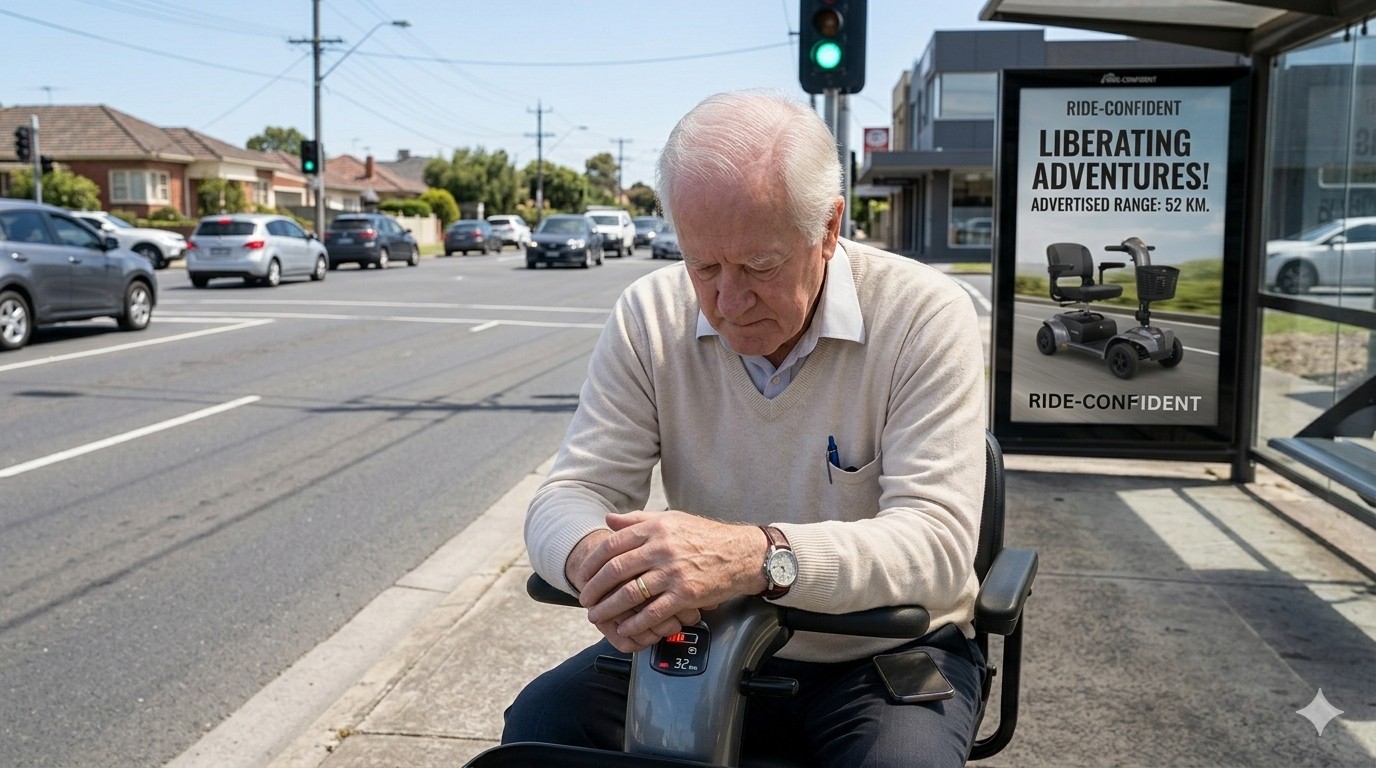
Picture this: You bought your mobility scooter two years ago, and it has been a faithful companion ever since. But lately, something has changed. The battery does not last as long as it used to. A trip that once took you across town now leaves you worried about making it home. You start cutting outings short, avoiding longer journeys, and wondering if you need a new battery—or a whole new scooter.
Here is the thing: most mobility scooter batteries fail prematurely, not because they were defective, but because of how they were treated. The difference between a battery that lasts 18 months and one that lasts four years is rarely about luck. It is about mobility scooter battery maintenance: how to preserve capacity and extend lifespan. A few simple habits—done consistently—can mean the difference between replacing your battery every couple of years and getting the full life your investment deserves.
If you have ever felt frustrated by a battery that seemed to give up too soon, take heart. You are in exactly the right place. This guide will walk you through everything you need to know about caring for your battery, regardless of whether you have AGM, gel, or lithium chemistry.
No jargon. No pressure. Just practical, honest advice that will help you get the most from every charge.
Why Battery Maintenance Matters More Than You Think
Your mobility scooter battery is not just a component. It is the heart of your independence. When it performs well, you go where you want, when you want. When it starts to fade, your world shrinks.
The good news is that battery care is not complicated. Most of what you need to do is simple, consistent, and free. The bad news is that most riders do not know what to do—or they follow outdated advice that actually shortens battery life.
Let us start with the fundamentals, and then we will build up to a complete maintenance routine. By the end, you will know exactly what to do—and what to avoid—to keep your battery healthy for years.
Understanding Your Battery Chemistry
Before we get into maintenance practices, it helps to know what kind of battery you have. The care routine differs slightly depending on whether you are running AGM, gel, or lithium.
AGM (Absorbent Glass Mat) Batteries
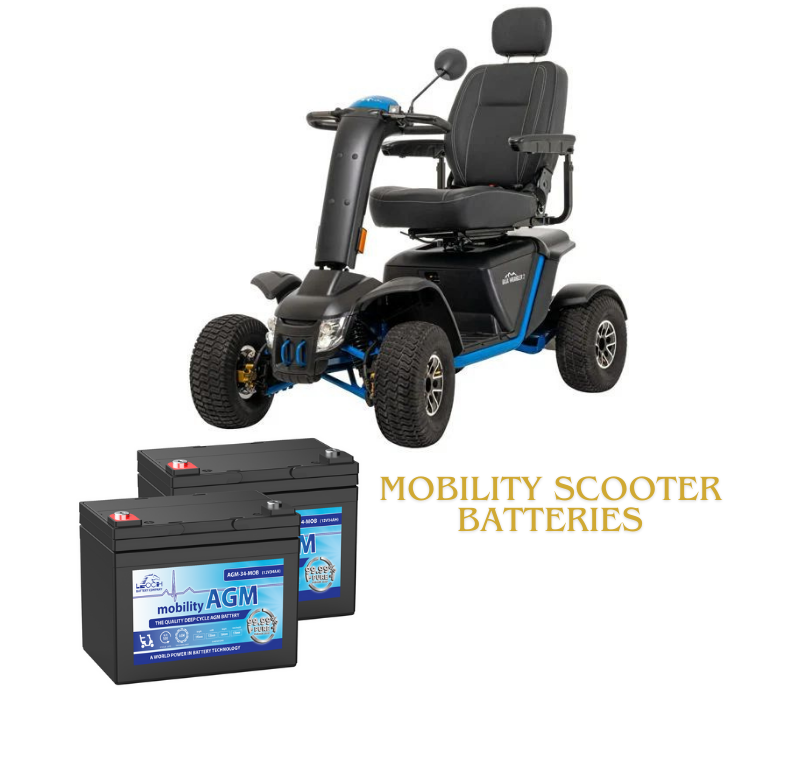
AGM batteries are the most common type fitted to mobility scooters. They are sealed, maintenance-free, and affordable. They should not be discharged below about 50% of their rated capacity, and they perform best when charged regularly after every use. AGM batteries typically last 1–2 years with regular use, though some premium models claim longer lifespans.
Gel Batteries

Gel batteries are also sealed lead-acid types, but the electrolyte is suspended in a silica gel. They tolerate deep discharge better than AGM and are better suited to riders who do not charge after every trip. Gel batteries typically last 1–3 years and can be approved for air travel. They require a gel-compatible charger and should never be charged with an AGM charger.
Lithium Batteries

Lithium (LiFePO4) batteries are the premium option. They are lighter, last longer (4–8 years), and can be discharged more deeply than lead-acid types. However, they have specific care requirements: they should not be fully drained, should not be kept at 100% charge for extended periods, and must only be charged with a lithium-specific charger.
If you are unsure which battery you have, check the label on the battery itself or your scooter's manual. Knowing your chemistry is the first step in caring for it properly. Now that you know what you are working with, let us look at the single most important habit: charging.
Charging Best Practices: The Foundation of Battery Care
If you do nothing else from this guide, get your charging routine right. Charging is the single biggest factor in how long your battery lasts.
Charge After Every Use
For AGM and gel batteries, the golden rule is simple: charge after every use. Do not wait until the battery is nearly empty. Deep discharges are the enemy of lead-acid batteries, and regularly running them down significantly reduces their service life.
Daily riders should plug in every night for 10–12 hours. Even if you only traveled a short distance, a top-up charge keeps the battery healthy. Overcharging or undercharging can both damage your battery, so use the charger provided with your scooter and avoid cheap replacements.
Never Let It Sit Empty
If you are not going to use your scooter for a few weeks, do not leave the battery discharged. Charge it fully before storing it, and then top it up every two weeks. Leaving a lead-acid battery in a discharged state causes sulphation—a permanent loss of capacity that cannot be reversed.
Use the Right Charger
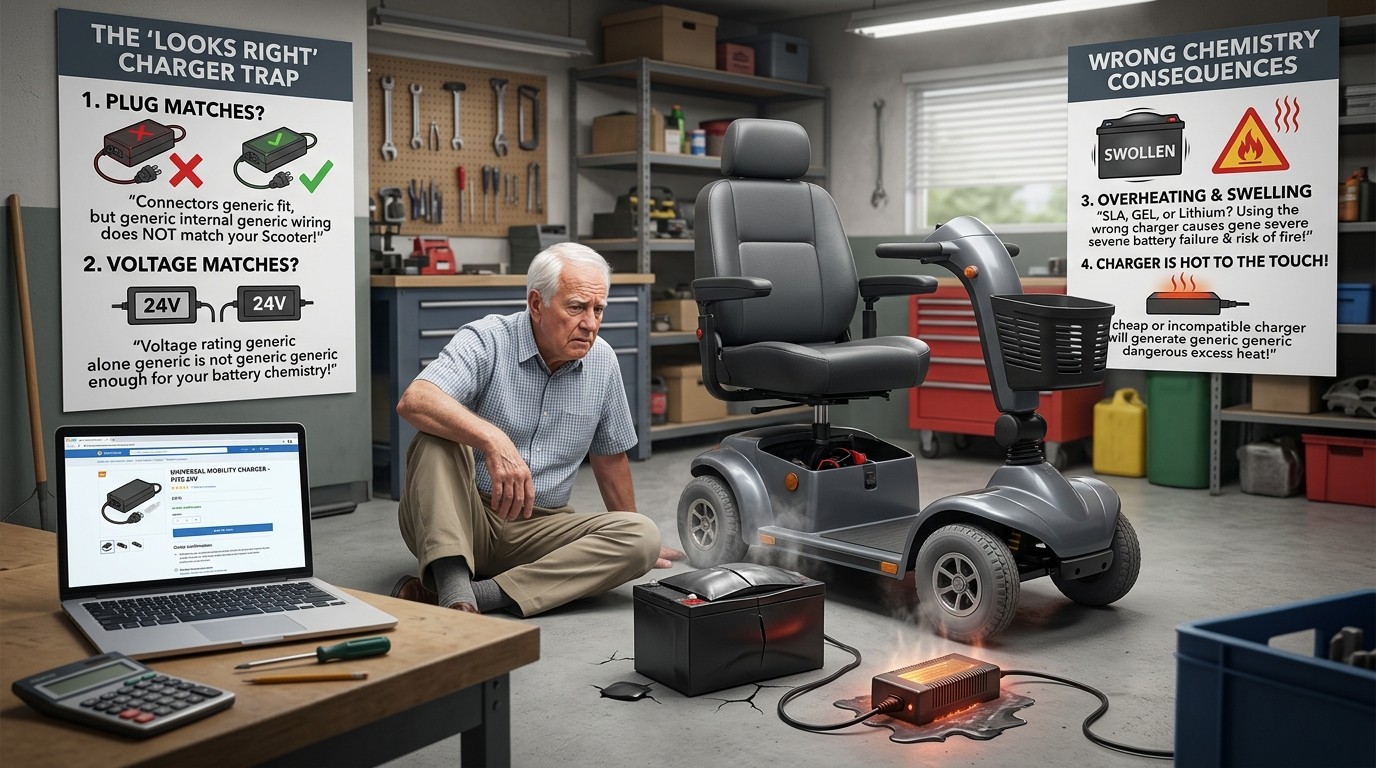
This is non-negotiable. A charger designed for AGM batteries should not be used on gel or lithium batteries. Using the wrong charger can cause incomplete charging, overheating, or—in the case of lithium—a fire risk.
If you are switching chemistry, you need a new charger. For a full guide, see our article on choosing the right charger for your battery capacity and chemistry.
Lithium Charging: A Different Approach
Lithium batteries play by different rules. They should not be fully drained—charge them before they reach low levels. They should also not be kept at 100% charge for extended periods, as this causes stress. The smart charger provided with your lithium device will help prevent overcharging, but if you are storing the battery long-term, aim for around 40–60% charge.
Charging is the foundation, but it is not the whole picture. How you store your battery when it is not in use matters just as much.
Storage: How to Protect Your Battery When It Is Not in Use
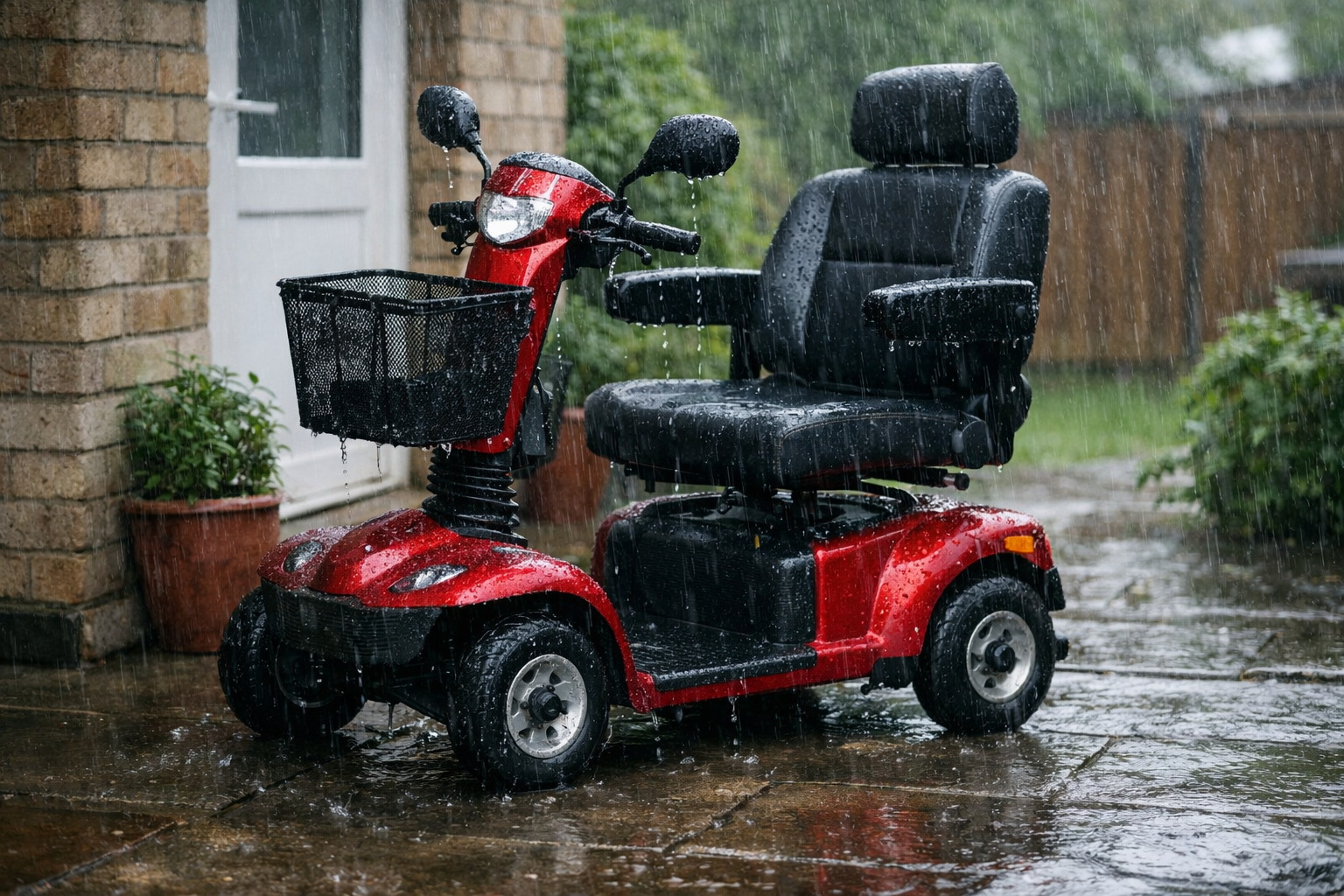
Your battery works hard when you ride. But it also ages when you do not. Improper storage is one of the most common causes of premature battery failure—and one of the easiest problems to avoid.
Store in a Cool, Dry Place
Extreme temperatures are the enemy of battery life. Ideal charging and storage room temperatures are between 10°C and 30°C. Avoid garages or sheds where temperatures fluctuate wildly or drop below freezing.
If your battery has been exposed to extreme heat or freezing, let it return to room temperature for several hours before charging. Plugging in a frozen battery can cause sudden heat damage as the electricity starts to flow.
Disconnect the Battery Leads
If you are storing your scooter for an extended period, disconnect the battery leads. Even when the scooter is off, the system can passively drain a small amount of power.
Disconnecting prevents this drain and also helps prevent corrosion from forming on the terminals.
Top Up Periodically
Even with the battery disconnected, it will lose a tiny bit of charge each month—usually 1–2%.
If you are storing your scooter for months, plug it in every few weeks to top it up. This keeps the battery healthy and ready for use when you need it.
Lithium Storage: Partial Charge Is Best
For lithium batteries, do not store them fully charged. Aim for 40–60% state of charge. Check the battery level every few weeks and top it up if it drops below 40%. This minimises stress and extends the battery's life.
Storage is important, but so is the environment where you ride and charge. Temperature extremes can undo all your good habits.
Temperature Management: Cold, Heat, and Your Battery
Temperature affects battery performance more than most riders realise.
Cold Weather
Cold temperatures slow the chemical reactions inside the battery, reducing capacity and range. Lead-acid batteries lose 20–50% of their range at 0–10°C, while lithium loses 10–25%.
If you ride in winter, keep your battery warm. Store your scooter indoors where possible. If it must stay outside, remove the battery pack and bring it inside. Before you head out, let the scooter sit indoors for 15–20 minutes to warm up.
Charge more often in winter. Cold drains batteries faster, so charge after every use, even short trips. Do not let the battery fully discharge in cold weather.
Hot Weather
Heat is just as damaging as cold. Avoid leaving your scooter in direct sunlight, and charge batteries in a cool, well-ventilated area. High temperatures accelerate battery ageing and can cause permanent damage.
Charging habits and storage conditions are the big-picture factors. But there is one more area that is easy to overlook: the physical condition of your battery and its connections.
Cleaning and Terminal Care
A clean battery is a happy battery. Dust, dirt, and corrosion on the terminals create resistance that reduces charging efficiency and motor power.
How to Clean Terminals
Check your battery terminals every few weeks. If you see white, powdery buildup or signs of corrosion, it is time to clean them. Disconnect the battery first (consult your manual), then clean the terminals with a mixture of baking soda and water applied with an old toothbrush. Dry thoroughly before reconnecting.
Apply a thin layer of petroleum jelly to the terminals after cleaning to prevent future corrosion.
Wipe Down the Battery Case
Wipe down the battery case with a damp cloth every few weeks to remove dust and dirt. Avoid soaking any electrical components, and never use a wet cloth on the terminals while the battery is connected
Check Connections
Inspect the battery connections regularly for loose wires or signs of wear. Loose connections can cause intermittent power loss and can overheat. If you find corrosion on the cables themselves, replace them with manufacturer-approved replacements.
Your battery's physical condition is a good indicator of its overall health. But how do you know when it is time to replace it?

Signs Your Battery Is Nearing the End of Its Life
Even with perfect care, batteries eventually wear out. Knowing the signs helps you plan ahead and avoid being stranded.
Watch for these warning signs:
- Reduced range: The scooter runs out of power faster than it used to.
- Sluggish performance: Noticeable drop in speed or power on inclines.
- Charging issues: The battery takes longer to charge, or the charger indicator fluctuates.
- Battery gauge fluctuations: The gauge drops quickly or behaves inconsistently.
- Shorter charging times: The battery seems to charge faster than it used to—often a sign it can no longer hold a full charge.
If you notice these signs, have your battery tested by a mobility scooter specialist. They can measure its actual capacity and tell you whether it needs replacing. Ignoring the signs can leave you stranded when you least expect it.
Your Battery Maintenance Schedule
Here is a simple schedule to keep your battery in top condition:
|
Frequency |
Task |
|
After every use |
Charge the battery fully |
|
Weekly |
Check terminal connections for corrosion; wipe down battery case |
|
Monthly |
Deep clean terminals with baking soda solution; inspect cables |
|
Every 2–3 weeks |
Top up charge during storage |
|
Seasonally |
Check storage temperature; adjust charging routine for weather |
|
Annually |
Have battery capacity tested by a professional |
This schedule is not complicated. It is not time-consuming. But it will make a significant difference to how long your battery lasts.
Frequently Asked Questions
How often should I charge my mobility scooter battery?
Charge after every use, even short trips. Daily users should plug in every night for 10–12 hours.
Can I leave my mobility scooter on charge overnight?
Yes, modern smart chargers are designed for overnight charging. They automatically shut off or switch to float mode when the battery is full.
Should I fully drain my battery before charging?
No. Deep discharges damage lead-acid batteries. Charge before the battery drops below 50% for AGM, or 20% for lithium.
How do I store my scooter battery for winter?
Charge it fully, disconnect the leads, and store in a cool, dry place between 10°C and 30°C. Top up the charge every two weeks.
How long do mobility scooter batteries last?
AGM lasts 1–2 years, gel lasts 1–3 years, and lithium lasts 4–8 years, depending on usage and care.
Can I use a car battery charger on my mobility scooter battery?
No. Car chargers are designed for starting batteries, not deep-cycle mobility batteries. They use different voltage profiles and can damage your battery.
Your Next Step
Mobility scooter battery maintenance: how to preserve capacity and extend lifespan comes down to a few simple habits. Charge after every use. Store in a cool, dry place. Keep terminals clean. Avoid extreme temperatures. And know the signs that your battery is nearing the end of its life.
You now have the knowledge to protect your investment and keep your scooter ready for years. No more wondering why your battery does not last. No more replacing it every 18 months. Just clear, practical care that works.
And that confidence? It means you can rely on your scooter without worry, knowing you are doing everything right to keep it running.
You deserve that confidence. And now you have the tools to build it.
Ready to Go Deeper?
This guide is part of our complete series on choosing the right battery capacity for your mobility scooter. If you found this helpful, these related guides will take you further:
- Choosing the Right Battery Capacity for Your Mobility Scooter — The complete hub guide to capacity selection
- Ah vs Wh for Mobility Scooters: How to Compare Batteries the Right Way — The formula that changes everything
- How to Estimate the Battery Capacity You Need from Your Typical Weekly Routine — Put the numbers to work for your lifestyle
- Choosing Battery Capacity for Travel/Portable Mobility Scooters vs Mid-Size vs Heavy-Duty Models — Capacity recommendations by scooter type
- How Rider Weight, Terrain, and Stop-Start Driving Change the Capacity You Should Choose — Personalise your estimation
- Can You Upgrade to Higher Ah Batteries on Your Mobility Scooter (and What Can Go Wrong)? — The upgrade decision, explained
- Lithium Upgrade Decision Guide: What Capacity to Choose and What Else Must Change — Is lithium right for you?
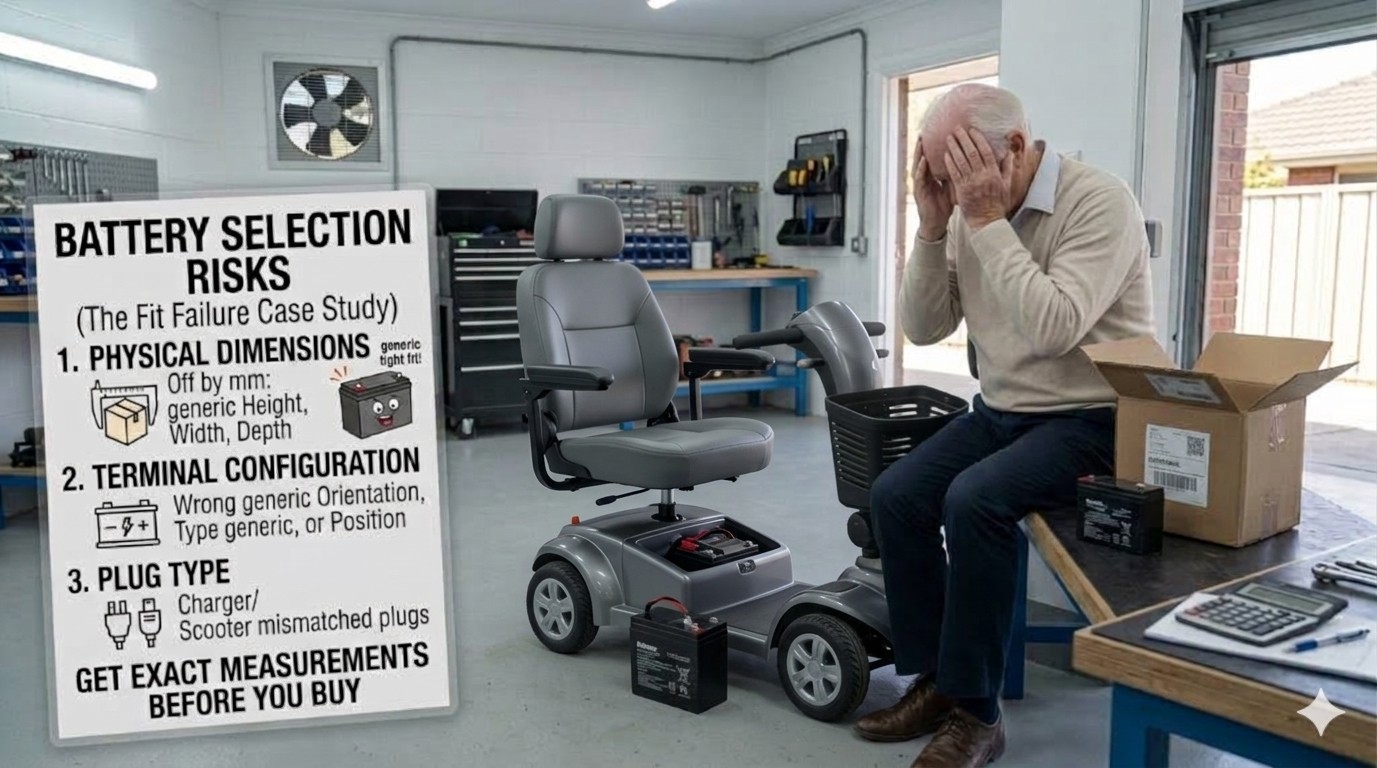
- Mobility Scooter Battery Compatibility Checklist: Size, Terminals, Voltage, Charger, and Fit — Make sure your chosen battery actually fits
- Choosing the Right Charger for Your Battery Capacity and Chemistry — Don't overlook this critical companion purchase
- Battery Capacity vs Range Claims: How to Sanity-Check Manufacturer "Miles per Charge" Numbers — Why real-world range differs from the spec sheet
Stay mobile, stay confident!
Sign up for our monthly Mobility Scooter Newsletter to receive practical guides, expert advice, and inspiring stories that help you make the most of your scooter and download our free "Mobility Scooter Guide for Beginners."
Don't worry — your e-mail address is totally secure.
I promise to use it only to send you our newsletter, "Mobility Matters."
Recent Articles


-
Choosing the Right Battery Capacity 101: (Ah vs Wh)
Oct 09, 26 08:10 AM
 Choosing the Right Battery Capacity Guide: Compare Ah vs Wh, estimate range, and pick the best battery for your routine.
 -
What to Do When Your Mobility Scooter Battery Won't Hold a Charge
Oct 09, 26 08:05 AM
What to do when your mobility scooter battery won't hold a charge: Everything you need to know about diagnosing and fixing battery problems. -
The Battery Maintenance Guide Every Scooter Owner Needs
Oct 09, 26 06:23 AM
Mobility scooter battery maintenance: how to preserve capacity and extend lifespan. Stop replacing batteries early. Get the most from every charge.


Ready to Feel More Confident on Your Mobility Scooter?

My Ebook, The Ultimate Guide to Mobility Scooters, walks you through choosing the right scooter, using it safely, and keeping it in top condition — all explained in clear, friendly language.
Give yourself (or someone you love) the gift of independence.




