- Home
- Mobility Scooter Safety and Daily Use
- Shopping Centre Navigation Strategies for Mobility Scooters
- Peak-Time Shopping on a Mobility Scooter
How Can I Shop at Peak Times on a Mobility Scooter Without Getting Boxed In by Crowds?
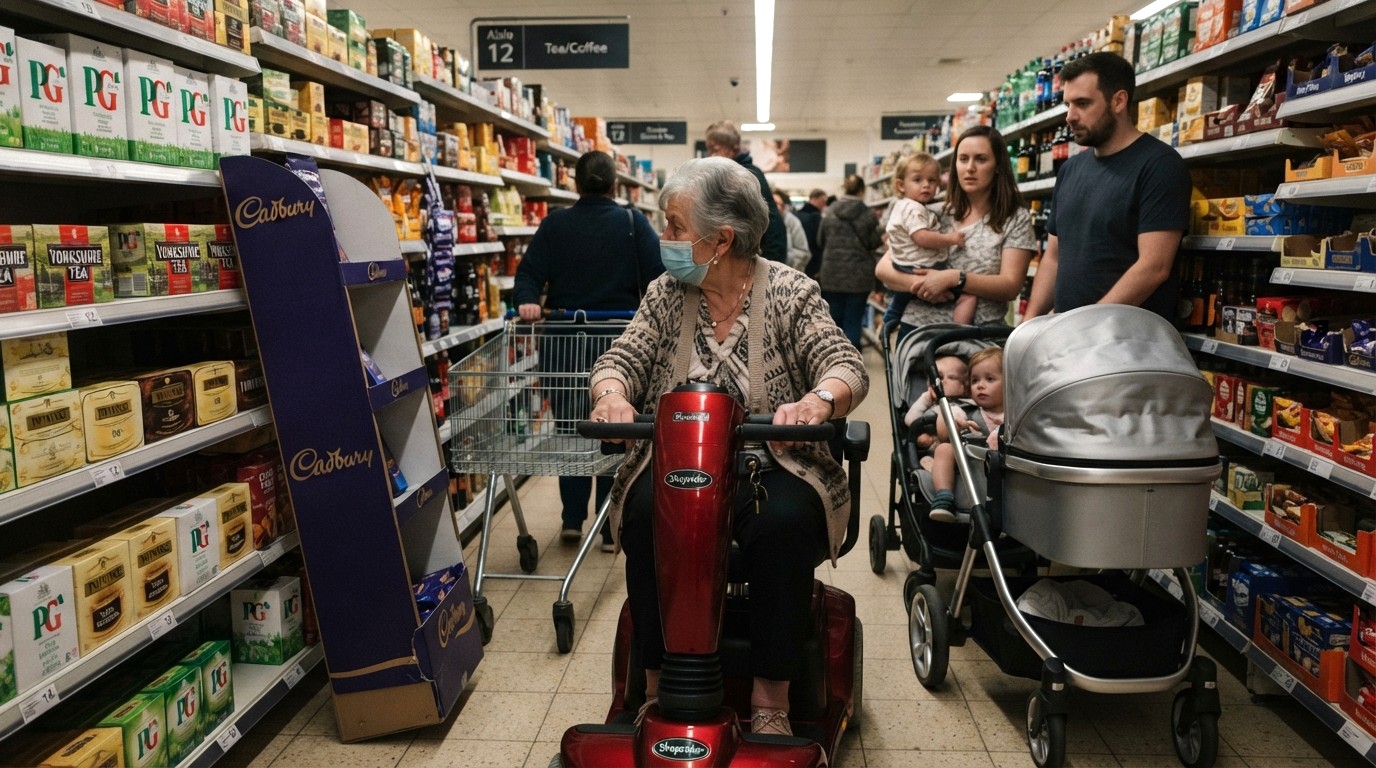
Picture this: It is a Saturday morning, and you have one hour to get your shopping done. You arrive at the centre, and the car park is already a battlefield. Inside, the aisles are rivers of people—trolleys, prams, toddlers darting sideways, teenagers standing in clusters, a queue spilling out of a pop-up stall. You are on your mobility scooter, and within minutes, you feel it: the familiar tightness in your chest as a group of shoppers stops dead in front of you, a trolley clips your rear wheel, and you realise you are, quite literally, boxed in. You cannot move forward, you cannot turn, and the exit feels a hundred miles away.

If that feeling is familiar, you are not alone—and you are not overreacting. Shopping at peak times on a mobility scooter is genuinely harder than shopping on a quiet Tuesday morning, and the anxiety it creates is real and valid. The question “How can I shop at peak times on a mobility scooter without getting boxed in by crowds?” is one that thousands of Australian scooter users ask every week, often quietly, often while wondering whether they should just stay home instead.
Here is the truth: you do not have to stay home. Peak-time shopping is challenging, but it is not impossible. With the right preparation, the right positioning, and a handful of calm, practical strategies, you can navigate a busy Saturday centre without feeling trapped, overwhelmed, or invisible.
This guide is your friendly, step-by-step companion for exactly those moments. We will cover what to do before you leave, how to move through crowds with confidence, and how to protect your space when the centre feels like it is closing in.
Why Peak Times Feel So Hard (and Why It Is Not Your Fault)
Before we get into strategies, let us name the reality. Peak shopping periods—late mornings on weekends, lunch hours, school holidays, and the weeks before Christmas—create conditions that are objectively difficult for anyone using a mobility scooter. Aisles that are manageable on a quiet morning become congested corridors. Pedestrians move unpredictably, stopping suddenly, changing direction, and looking at their phones instead of the space around them. Noise levels rise, checkout queues lengthen, and the sheer volume of visual stimulation can be exhausting.
There is also a specific anxiety that comes from being boxed in—the feeling of being surrounded on all sides with no clear path forward or backward. This is not a sign of poor driving skill. It is a natural response to a genuinely constrained environment.
Research into mobility scooter use in public spaces notes that being bumped or jostled in busy places is a common and distressing experience for users. The good news is that this feeling is manageable when you understand what creates it and how to prevent it.
The first line of defence is preparation—and that starts before you even leave home.
Before You Leave: The Preparation That Prevents the Box-In
The most effective crowd-navigation strategy is not something you do in the aisle. It is something you do in the quiet of your own home, before you ever press the ignition.
Charge your battery fully. Crowded environments drain your battery faster than you might expect. Stop-start movement, constant slow-speed manoeuvring, and the mental energy of navigating crowds all take a toll.
A battery that lasts eight hours on a quiet day may last significantly less on a busy Saturday. Charge overnight, and if your scooter has a battery gauge, check it before you leave. The last thing you need is to be boxed in and watching your battery indicator drop.
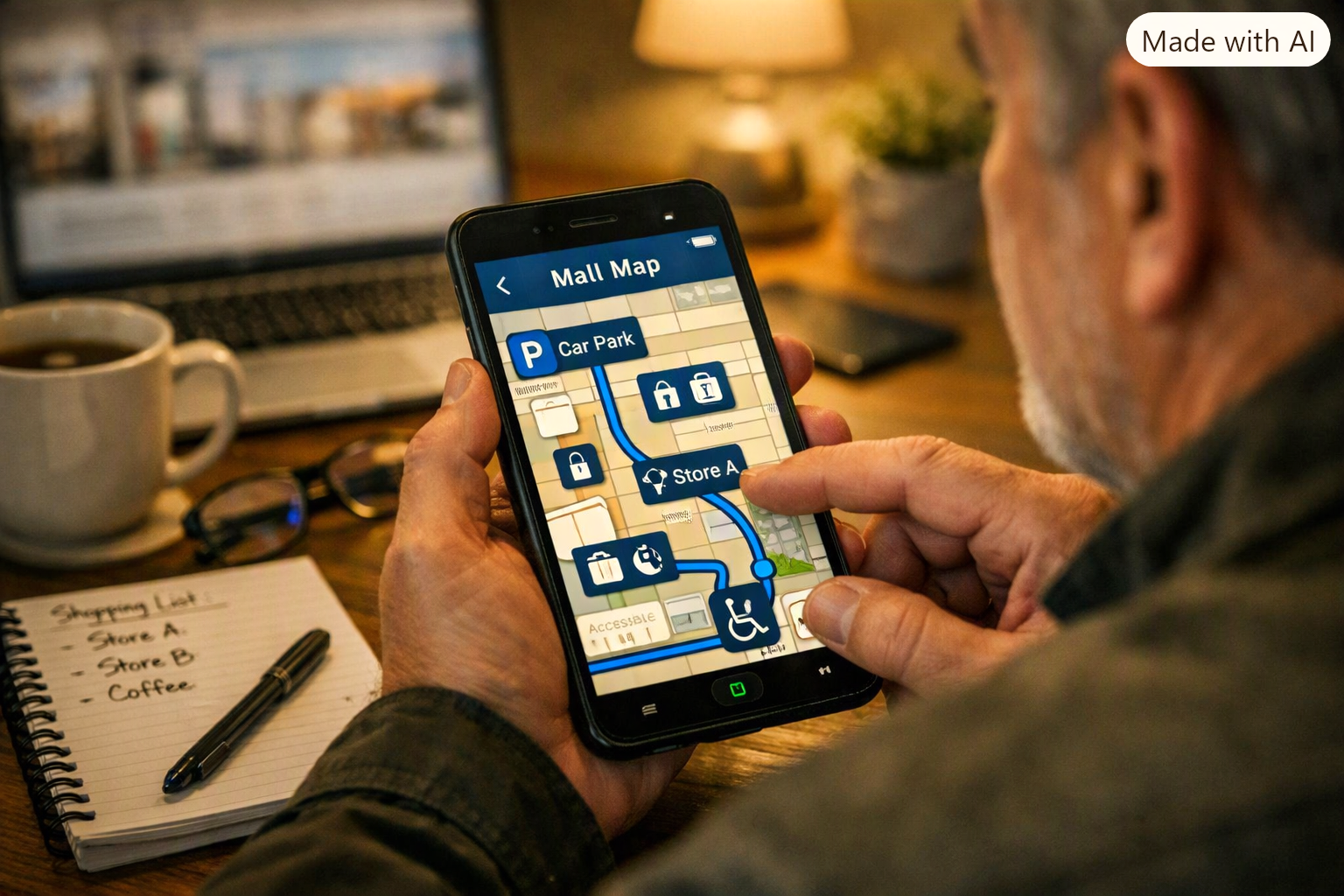
Plan your route around the crowds, not against them. Before you go, pull up the centre map on your phone or print it out. Identify the entrances that are likely to be quieter, the lifts that are less central, and the stores you actually need to visit.
Group your errands so you are not criss-crossing the centre multiple times. A little planning reduces the total distance you travel and the number of crowded spaces you have to pass through. This is also the moment to check whether your centre offers a Quiet Hour—more on that shortly.
Know your scooter’s footprint. Compact scooters with tight turning radii are significantly easier to manoeuvre in crowded spaces than larger models. Before you go, remind yourself of your scooter’s width and turning circle. If your scooter is on the larger side, plan to stick to the widest, most open routes. If it is compact, you have more flexibility, but you still need to be deliberate about where you position yourself. Knowing your numbers helps you make quick, confident decisions when the aisle tightens around you.
You have prepared. Now let us talk about what you do the moment you arrive.
Arriving with Confidence: Entrances, Timing, and the First Five Minutes
The entrance is often the first bottleneck. Peak-time entrances are a collision point of people entering, exiting, stopping to check their phones, and gathering in groups. How you handle the first five minutes sets the tone for the rest of the trip.
Use the least popular entrance. Most shoppers gravitate to the main entrance nearest the car park or the bus interchange. If you have planned ahead, you already know where the quieter entrances are. A side entrance near a department store, a car park lift lobby, or a less obvious door can save you the stress of the initial crowd surge. It adds a minute or two of travel time and subtracts a significant amount of anxiety.
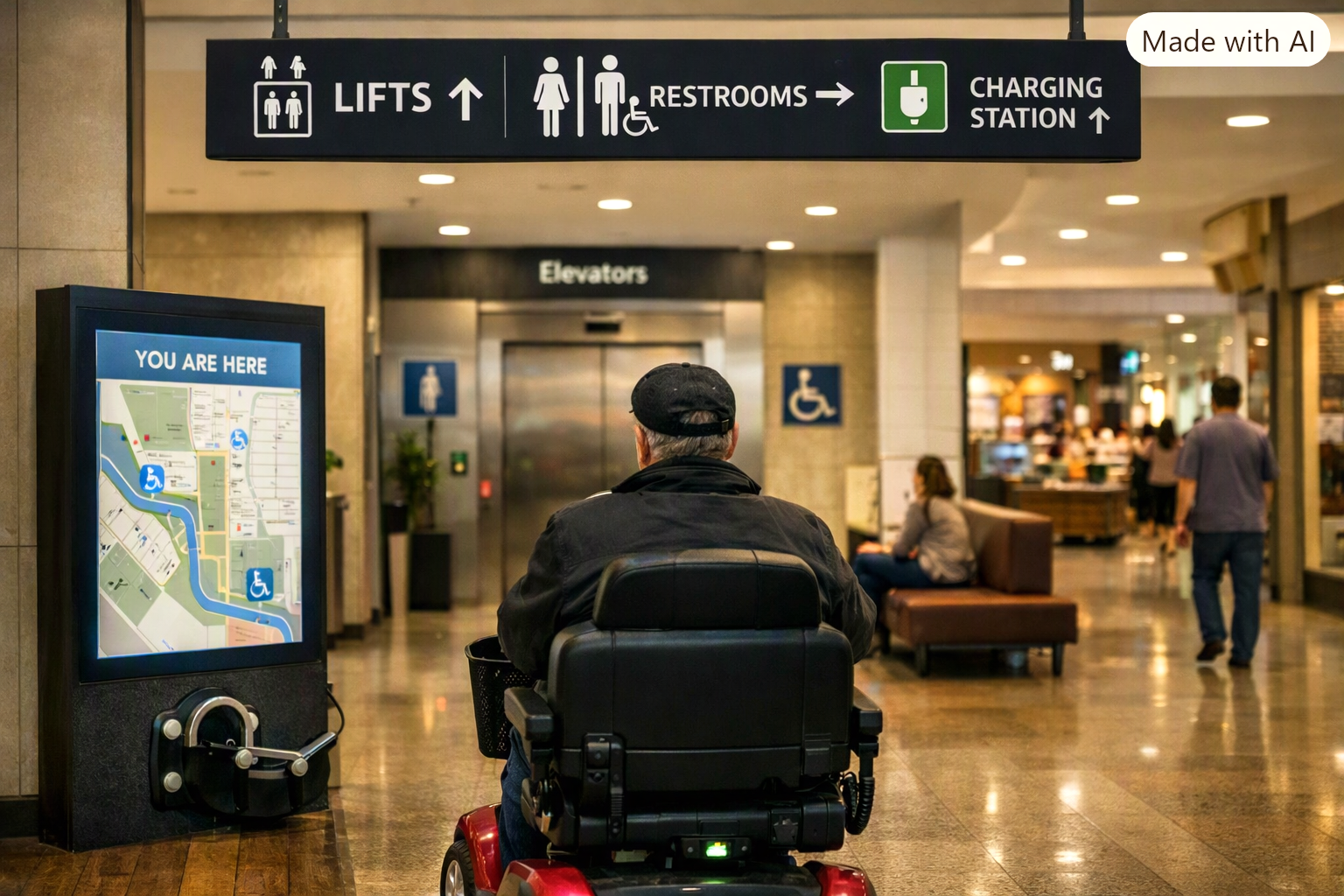
Pause before you enter the flow. When you do enter the main thoroughfare, stop just inside the doorway for a moment. Look at the flow of foot traffic. Identify the direction most people are moving, and find the widest, least congested lane. Do not plunge straight into the middle of a moving crowd. Give yourself a few seconds to read the room, and then move deliberately into the clearest path available.
If the centre offers a Quiet Hour, use it—even at peak times. You might be shopping on a Saturday because that is the only day you can, but many centres still offer quieter windows within busy periods. Westfield centres across Australia, for example, run a Quiet Time every Tuesday from 10:30am to 11:30am, with dimmed lighting and softer music to reduce sensory overload. Coles offers a Quiet Hour between 6pm and 7pm on weekday evenings.
Even if your centre does not have an official Quiet Hour, weekday mornings—Tuesday to Thursday, between 9:30am and 11:30am—are consistently reported as the calmest times to shop. If your schedule allows any flexibility at all, these windows are your best friend.
For a broader look at timing strategies, see our guide on how do I plan the easiest route through a shopping centre using the centre map.
Moving Through the Crowd: Positioning, Speed, and the Art of Not Getting Stuck
Once you are inside, the real work begins. Moving through a peak-time crowd on a scooter is not about speed. It is about positioning, patience, and predictability.
Slow down more than you think you need to. The single most important crowd strategy is reducing your speed to a crawl—slower than walking pace. In a crowded venue, you want to be moving slowly enough that you can stop comfortably if someone steps into your path. A scooter that is moving fast through a crowd is a scooter that cannot react in time. Your speed dial should be at its lowest setting for the duration of the busy section. This is not a loss of independence; it is a gain in control.
Stay to one side, and leave space. Wherever possible, position yourself to the left of the flow of traffic—the same convention you follow on a footpath. This makes you predictable to other shoppers and reduces the chance of someone stepping into your path from behind. Leave a gap between you and the person in front. Tailgating in a crowd is a recipe for a sudden stop and a collision. The goal is not to keep up with the person ahead of you. The goal is to maintain a buffer that gives you time to react.
Do not weave, and do not force a gap. It is tempting, when you see a small opening in the crowd, to try to slip through it. Resist that temptation. Weaving through a packed crowd increases the risk of collisions and makes you unpredictable to pedestrians. Instead, pick a lane and stay in it. If the lane becomes blocked, stop and wait for a gap to open, or look for a parallel route. A wide, steady path is always safer than a fast, weaving one.
Use doorways and cross-aisles as breathing space. If you feel yourself getting boxed in, look for an exit from the crowd flow. A store entrance, a cross-aisle, or even a gap between displays can serve as a temporary refuge. Move into the opening, pause, and let the crowd pass. Then re-enter the flow when it has thinned. You are not retreating. You are strategically repositioning.
For more on tight-space manoeuvring, see our guide on how do I turn around or reverse safely in a narrow shopping-centre aisle on a mobility scooter.
Being Seen Without Being a Nuisance: Visibility in Crowds
In a busy centre, pedestrians are often looking at their phones, each other, or the shelves—not at the floor level where your scooter sits. Making yourself visible is both a safety strategy and a confidence strategy.
A safety flag is your simplest, most effective tool. A fluorescent orange or bright yellow flag mounted high enough to be seen above head height makes you visible to pedestrians, trolley-pushers, and staff from a distance. This is particularly important in crowded spaces where people are looking ahead, not down. A flag does not make you a spectacle. It makes you seen, and being seen is the first step to not being stepped in front of.
Lights and reflective strips help indoors, too. You might associate lights with outdoor evening use, but a front and rear light—even a modest one—can increase your visibility in the dimmer corners of a shopping centre, near lifts, and in car parks. Reflective strips on the sides of the scooter catch the overhead lighting and make your presence more obvious to people approaching from the side.
Use your horn sparingly, and never as a substitute for awareness. A brief horn beep can alert someone who is about to step backwards into your path, but it should not be your primary strategy. Pedestrians cannot always hear the horn in a noisy centre, and it can startle people. Awareness, slow speed, and a visible presence are your main defences.
When You Feel Boxed In: Recovery Strategies
Even with the best preparation, there will be moments when the crowd closes in. Here is what to do when you feel the walls of people tightening around you.
Stop completely and reset. If you cannot move forward, do not force it. Bring the scooter to a full stop. Take a breath. Look around you—not just ahead, but to the sides and behind. Is there a gap you missed? Is there a store entrance you can slip into? Is there a staff member nearby? The simple act of stopping and resetting breaks the panic cycle and gives you time to find a solution.
Ask for help, without apology. A polite “Excuse me, could I just get through?” is usually enough to part a crowd. Most people are not deliberately blocking you; they are simply absorbed in their own shopping. If you need more space, a staff member at a nearby store or a concierge can help clear a path or direct you to a less congested route. You are not being a burden. You are asking for the same access that every shopper deserves.
Consider a tactical retreat. If an aisle is genuinely impassable, there is no shame in turning around and taking a different route. A longer, quieter path is almost always better than a short, stressful one.
For strategies on turning in tight spaces, see our guide on narrow-aisle manoeuvring.
And if the whole centre feels overwhelming, it is perfectly acceptable to cut the trip short, buy what you need from a quieter store, and come back another day.
A Final Word: You Belong There, Even on a Saturday
Peak-time shopping on a mobility scooter is not a test of your patience or your skill. It is a logistical challenge, and logistical challenges can be managed. You have the right to shop when you need to shop, and you have the tools to do it safely.
The strategies in this guide—charging your battery, planning your route, slowing down, staying visible, and knowing how to recover when the crowd closes in—are not about making yourself smaller or less visible. They are about giving yourself the space and confidence to move through the world on your own terms. You belong in that shopping centre on a Saturday morning, just as much as anyone else.
If you are planning a trip and want to check lift access or quiet hours, our guide on what to do if the lift is busy or out of order when you’re using a mobility scooter at a shopping centre is your next stop.
And for the full picture of navigating every part of the centre, from car park to checkout, return to our hub guide on Shopping Centre Navigation Strategies,
You have got this—even on the busiest day of the week.
Stay mobile, stay confident!
Sign up for our monthly Mobility Scooter Newsletter to receive practical guides, expert advice, and inspiring stories that help you make the most of your scooter and download our free "Mobility Scooter Guide for Beginners."
Don't worry — your e-mail address is totally secure.
I promise to use it only to send you our newsletter, "Mobility Matters."
Recent Articles


-
Shopping Centre Navigation Strategies Made Simple & Stress-Free
Oct 19, 26 06:57 AM
 Shopping centre navigation strategies that actually work. Master lifts, tight aisles & crowded malls with practical, carer-friendly advice.
-
How Can I Shop at Peak Times on a Mobility Scooter
Oct 19, 26 06:55 AM
 How can I shop at peak times on a mobility scooter without getting boxed in by crowds? Smart tactics for busy centres, from entrance to checkout.
-
How Do I Turn Around or Reverse Safely in a Narrow Aisle?
Oct 19, 26 05:51 AM
How do I turn around or reverse safely in a narrow shopping-centre aisle on a mobility scooter? Practical techniques for confident manoeuvring.


Ready to Feel More Confident on Your Mobility Scooter?

My Ebook, The Ultimate Guide to Mobility Scooters, walks you through choosing the right scooter, using it safely, and keeping it in top condition — all explained in clear, friendly language.
Give yourself (or someone you love) the gift of independence.




