- Home
- Mobility Scooter Safety and Daily Use
- Shopping Centre Navigation Strategies for Mobility Scooters
Shopping Centre Navigation Strategies Every Mobility Scooter User Should Know
Picture this: You've just arrived at your local Westfield. You're on your mobility scooter, ready to pick up a few things and maybe treat yourself to a coffee. But as you approach the entrance, a familiar wave of uncertainty washes over you. Will the lifts be busy? Is that aisle wide enough? What if your battery runs low? You take a deep breath and remind yourself that you have every right to be here — and with the right shopping centre navigation strategies, you can handle anything this trip throws at you.
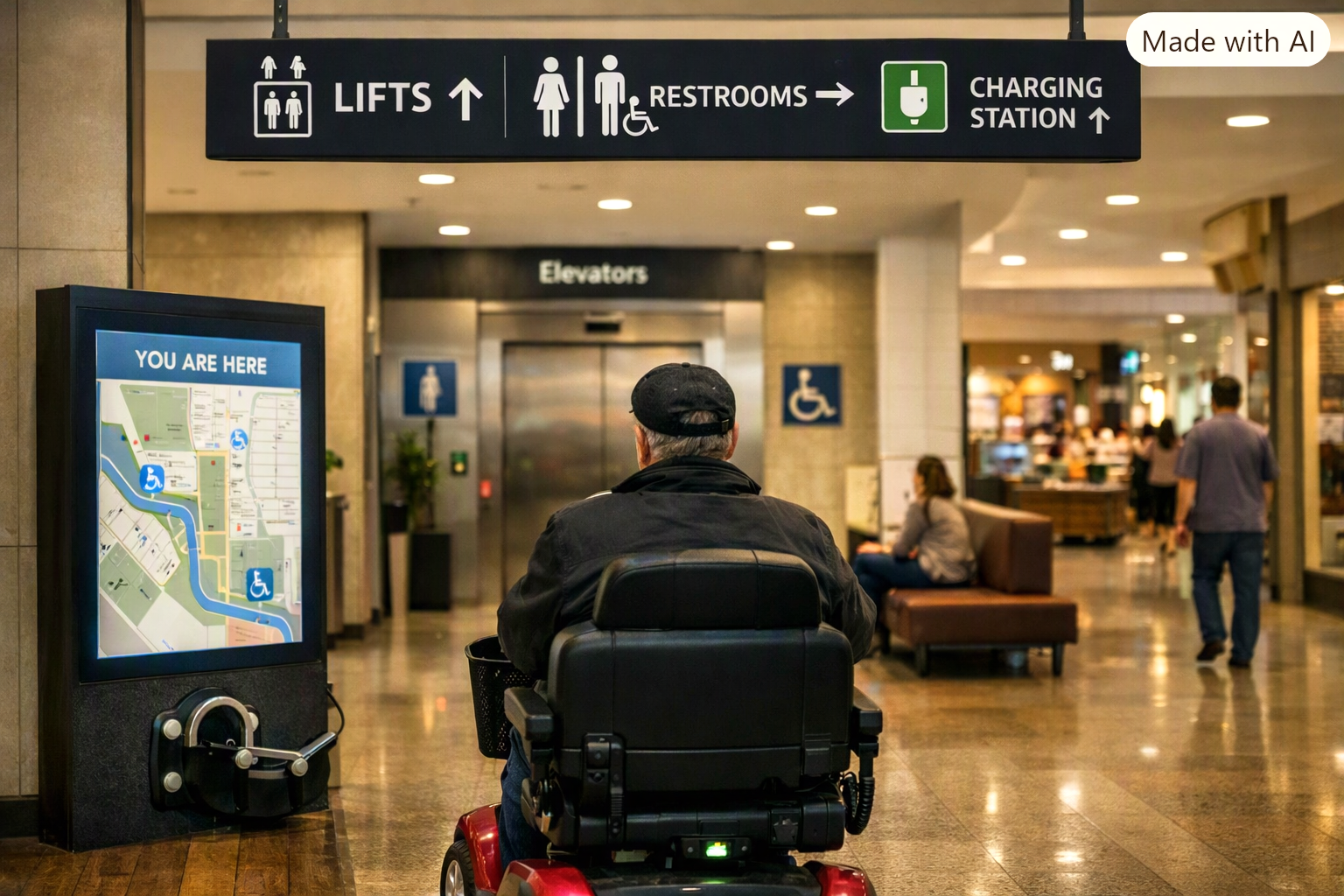
That's exactly what this guide is for.
Shopping centres are designed to be public spaces for everyone, but when they're busy, noisy, or crowded, they can feel genuinely challenging to navigate on a mobility scooter.
The good news? With a bit of preparation and the right knowledge, shopping can be comfortable, safe, and even enjoyable. You just need someone to walk you through it — and that's what we're going to do together.
Are Mobility Scooters Allowed in Shopping Centres in Australia?
Yes — and this is protected by law. The Disability Discrimination Act 1992 (DDA) makes it unlawful to discriminate against a person because of disability in areas such as access to premises, goods, services, and facilities. This includes shopping centres, supermarkets, retail stores, and public malls.
In practical terms, this means shopping centres must provide reasonable access for people using mobility aids, and retail spaces cannot refuse entry simply because someone uses a mobility scooter. Your scooter is regarded as a "disability aid" under the DDA, and it would be unlawful to discriminate against you for using one.
So if you've ever worried about whether you should be there — you absolutely should. You belong in these spaces just as much as anyone else. And understanding your rights is the first step toward shopping with genuine confidence.
But knowing you're allowed in is one thing — knowing how to move through the centre smoothly is another. Let's tackle the practical side next.
Do Shopping Centres Have Rules About Speed and Where You Can Ride?
They do, and they're designed to keep everyone safe — including you. Mobility scooters are legally considered pedestrian mobility aids, not vehicles. In most shopping centres and retail spaces, you're expected to travel at a walking pace, which means staying below 10km/h.
Under Australian Road Rules, motorised mobility devices must not exceed 10km/h when used on footpaths, and users are classified as pedestrians. In busy pedestrian areas like shopping centre aisles, it's wise to go well under that limit — think a gentle walking pace.
Shopping centres may display signage asking you to reduce speed in busy areas, avoid blocking aisles or entrances, and park responsibly when stopping. These aren't restrictions designed to limit you — they're shared guidelines that make the space work for everyone.
If you ever feel uncertain about a specific centre's rules, a quick chat with the concierge desk can clear things up.
And speaking of keeping things smooth — let's talk about the lifts, which are often the trickiest part of any shopping trip.

How Do I Use Lifts Safely on a Mobility Scooter?
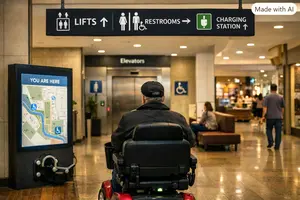
Lifts are your best friend in a shopping centre — but they come with their own set of challenges. First, check your scooter's turning radius. If it's greater than 1,500mm, manoeuvring in standard lifts and building entrances can be difficult.
When approaching a lift, wait for it to arrive completely and for passengers to exit before you enter. If the lift is crowded, it's okay to wait for the next one — patience here is a safety strategy, not a delay. Once inside, position your scooter so you're not blocking the door, and keep your speed setting low.
Always use the lift rather than escalators. Never attempt to take a mobility scooter on an escalator — this is extremely dangerous.
What happens if the lift is out of order or too busy? That's a scenario worth preparing for, and we've covered it in detail in our guide on what to do if the lift is busy or out of order — it walks you through alternative routes, staff assistance, and contingency planning. (Coming Soon!)
But for now, let's move on to something equally important: navigating those tight shop aisles.
What Should I Do If an Aisle Is Too Narrow or Blocked?
This is one of the most common frustrations for scooter users, and it's completely valid. Some shops simply weren't designed with mobility scooters in mind, and that's not your fault.
If you encounter a narrow aisle, slow right down and assess the space. If you can't pass safely, it's perfectly okay to ask a staff member for assistance — they're there to help. Many centres now have staff trained in accessibility support. Alternatively, you might find that a different route through the store works better.
For the technical side of manoeuvring — how to turn around, reverse safely, and handle tight corners without stress — we've put together a dedicated guide on how to turn around or reverse safely in a narrow aisle. It includes practical techniques that make a real difference. (Coming Soon!)
If an aisle is blocked by a display or another shopper, a polite "Excuse me, would you mind letting me through?" usually works wonders. Most people are happy to help — they just haven't noticed you yet.
Which brings us to the question of crowds. What do you do when the centre is packed?

How Can I Shop at Peak Times Without Getting Boxed In?
Shopping during quieter periods makes an enormous difference. Early mornings, weekdays outside lunch hours, and later evenings are generally calmer. Some centres even offer quiet shopping hours — Coles runs a "Quiet Hour" between 6pm and 7pm on weekdays (varies by state), and Westfield Chermside has a Quiet Time every Tuesday from 10:30am to 11:30am.
But sometimes you simply have to shop when it's busy. In those moments, the key strategies are: stick to wider perimeter walkways, take your time, and don't feel pressured to match the pace of foot traffic around you. If you need to stop and let a crowd pass, pull over to the side rather than stopping in the middle of a walkway.
For a deeper dive into handling peak-hour chaos — including positioning techniques and crowd-flow awareness — our guide on shopping at peak times without getting boxed in by crowds is exactly what you need. (Coming Soon!)
Now, let's talk about something that causes a lot of anxiety: parking your scooter while you shop.
Where Can I Park My Scooter While I Shop?
Most shopping centres don't have designated mobility scooter parking bays, which can be frustrating. However, there are practical options.
Look for wider areas near walls, away from main walkways and store entrances. Avoid parking in front of fire exits, lift doors, or emergency access points. If you're stopping at a food court, try to park at the edge of the seating area where you won't obstruct other diners.
If you're leaving your scooter unattended, remove the key, engage the brake, and if possible, keep it within sight. For more detailed security tips — including locking options and what to do if you must leave your scooter for an extended period — see our guide on how to secure your mobility scooter while shopping. (Coming Soon!)
And if you're worried about battery life during a longer trip, let's address that next because it's a genuine concern for many users.
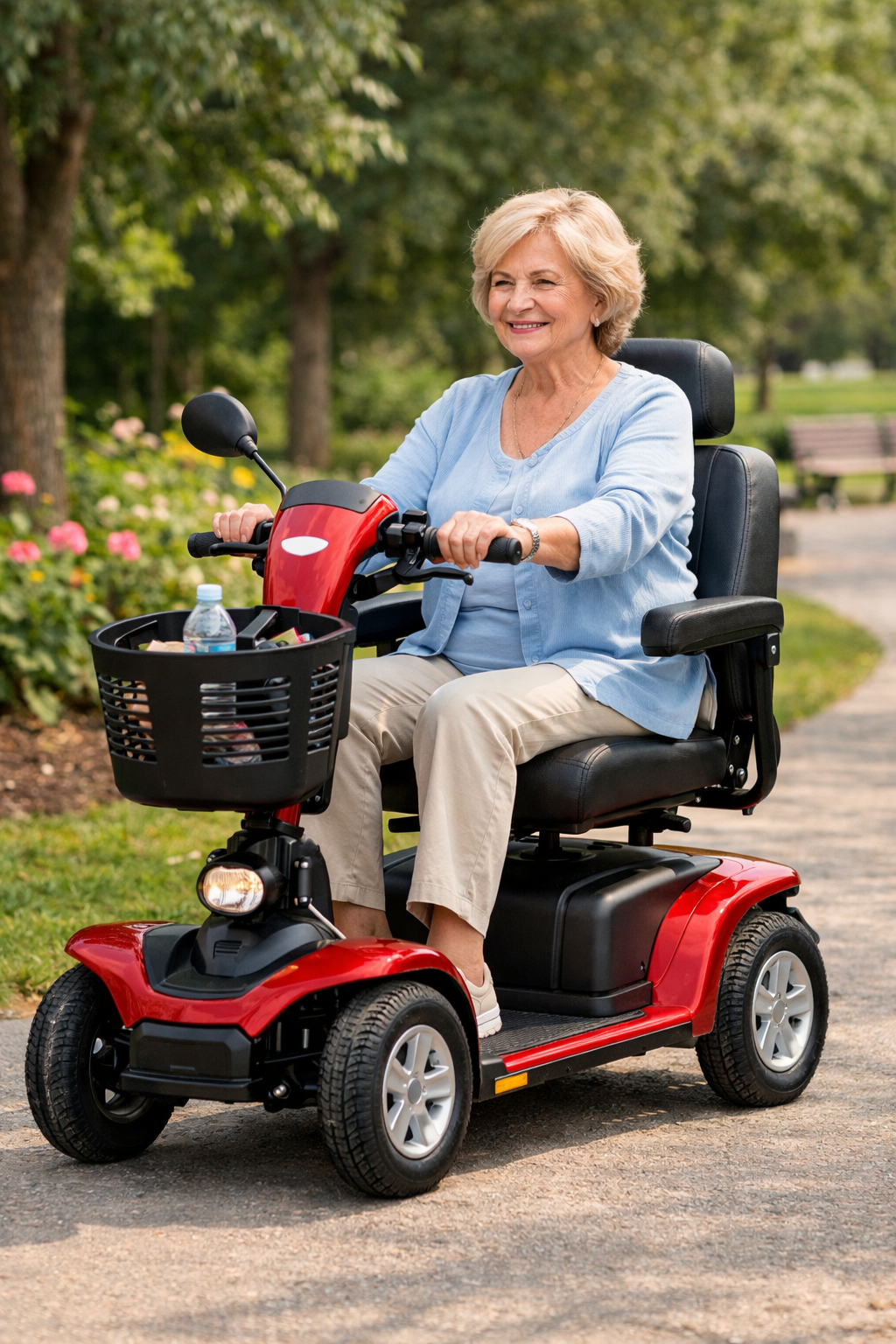
Can I Charge My Scooter at a Shopping Centre?
Possibly — but it depends on the centre. The RECHARGE Scheme™ is a national initiative that provides designated power points for recharging mobility scooters and electric wheelchairs at participating locations, including shopping centres, libraries, and pharmacies. The cost to recharge for up to an hour is typically under 30 cents.
Not all centres participate, so it's worth checking the RECHARGE Scheme website before you go, or simply asking at the concierge desk. If your battery does run low unexpectedly, don't panic — most centre staff will be happy to help you find a power point.
Our guide on what to do if your battery runs low covers the full plan-B playbook. (Coming Soon!)
How Can I Make My Scooter More Visible in Crowded Centres?
Visibility is safety. A few simple additions can make a big difference: attach a bright flag to the back of your scooter, use lights if your scooter has them (or add clip-on ones), and consider wearing light-coloured clothing.
In crowded spaces, slow down and make eye contact with pedestrians before moving forward. A friendly beep of your horn — used sparingly — can gently alert someone who hasn't seen you.
Remember: you're not being a nuisance by being visible. You're being safe.
What About Food Courts and Busy Areas?
Food courts are high-traffic zones with people carrying trays, moving chairs, and not always looking where they're going. The best approach is to move slowly, position yourself near the edges, and park your scooter in a spot that doesn't block walkways. If you're dining, try to choose a table with enough space around it for your scooter.
And if you're concerned about how to handle checkout queues without blocking other shoppers, we've got practical tips in our guide on handling queues on a mobility scooter. (Coming Soon!)
Spoiler: it's mostly about positioning and asking staff for help when you need it.
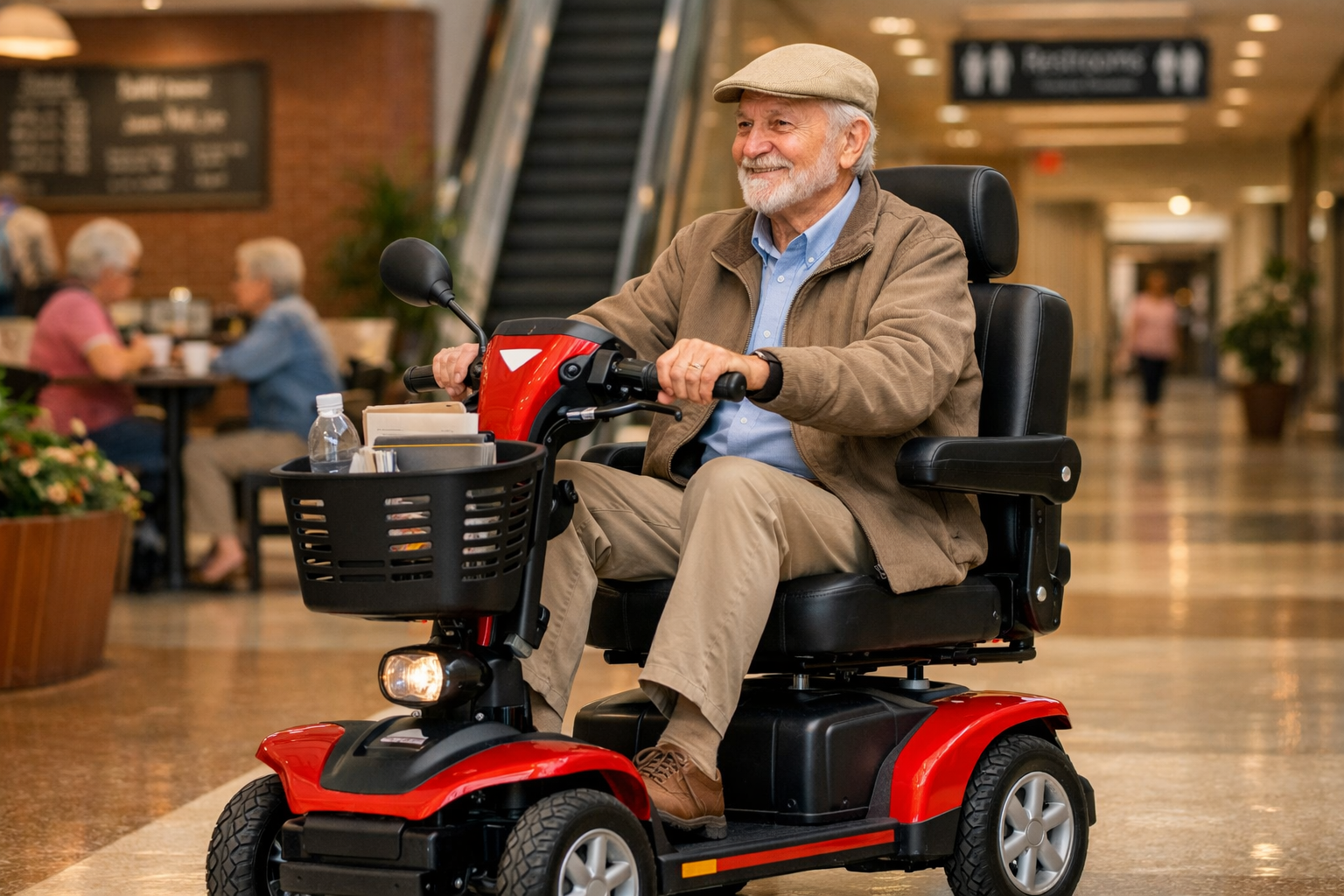
What If a Store Asks Me Not to Bring My Scooter Inside?
This is upsetting when it happens — but it's important to know your rights. Under the DDA, retail spaces must not refuse entry simply because someone uses a mobility scooter. If a store asks you to leave your scooter outside, you can politely explain that your scooter is a disability aid and that refusing entry may constitute discrimination.
That said, some smaller stores with genuine space constraints may struggle. In those cases, asking if a staff member can assist you — bringing items to you at the door, for example — can be a workable compromise.
Our dedicated guide on what to do if a store asks you not to bring your scooter inside includes a helpful script for these conversations. (Coming Soon!)
Navigating Ramps, Door Thresholds, and Car Parks
Ramp transitions and door thresholds require a slow, steady approach. Keep your scooter perpendicular to the threshold, maintain a consistent speed, and avoid sharp turns on slopes. In car parks, always make eye contact with drivers before crossing behind vehicles, and ensure your shopping bags don't obscure your view.
For loading and unloading your scooter in the car park, practice in a quiet space first. Our guide on the safest way to load and unload your scooter in the car park walks through the step-by-step process. (Coming Soon!)

What Should Carers and Family Members Know?
If you're shopping with someone on a mobility scooter, your role is invaluable. Familiarise yourself with the lift protocol, know where accessible toilets are located, and be prepared to assist in an emergency. Most importantly, follow the scooter user's lead — they know their scooter and their comfort zone better than anyone.
What About Emergencies?
It's a difficult topic, but one worth preparing for. Australian building legislation does not currently mandate an inclusive approach to safe evacuation of buildings, which means people with mobility impairments can face significant risk during emergencies. Personal Emergency Evacuation Plans (PEEPs) are recommended for anyone who may need assistance.
Before your trip, take note of exit locations and ask centre staff about their evacuation procedures. Never use lifts during a fire alarm.
For a full breakdown of what to do, see our guide on shopping-centre emergencies and evacuation. (Coming Soon!)
What If I Need to Plan My Route or It's My First Visit?
Many shopping centres provide online maps showing entrances, lifts, and accessible facilities. Before you go, spend a few minutes identifying the most accessible route from your parking spot to the stores you want to visit.
Our guide on planning your route using the centre map shows you exactly how to do this. (Coming Soon!)
You've Got This
Shopping centre navigation strategies aren't about complicated techniques or rigid rules. They're about preparation, awareness, and knowing that you have every right to shop comfortably and safely. Whether it's your first trip or your hundredth, you now have a toolkit of strategies that work.
Take it one step at a time. Ask for help when you need it. And remember — you're not just navigating a shopping centre. You're maintaining your independence, your connections, and your quality of life.
And that's something worth celebrating.
Frequently Ask Questions
Generally yes, but centres and individual stores may have safety rules—check signage and ask concierge if unsure.
Many centres post guidance (slow speed in busy areas, don’t block entrances/aisles). Follow centre signage first.
Typically more compact scooters (narrower width/tighter turning radius) are easier indoors; measure your scooter and consider where you shop most.
Wait for clear space, enter slowly, position to avoid blocking others, and allow extra time for doors.
Usually yes, but slow right down, give pedestrians priority, and avoid creating trip hazards with bags/accessories.
Look for designated scooter/wheelchair areas or park where you won’t block exits, ramps, or aisles; ask staff if needed.
Some centres may have charging points or power access; check the centre website or ask concierge/security.
Head to an exit/quiet area early, ask concierge for assistance, and have a “get-home” plan (carer pickup/taxi).
Use lights if fitted, wear bright clothing, and avoid blind corners; slow down near intersections and store entrances.
Approach square-on and slowly; avoid sharp turns on slopes and watch for slippery surfaces.
Plan rest breaks, allow extra time, and help with navigation/queues while keeping the rider in control.
Stay calm, ask for the reason, and request an alternative (assistance, accessible entry, or safe parking spot).
Keep your turning space clear, don’t block aisles, and ask staff to direct you to the most accessible checkout.
Choose a safe spot with space, avoid sloped areas where possible, and take your time securing ramps/hoists.
Stay mobile, stay confident!
Sign up for our monthly Mobility Scooter Newsletter to receive practical guides, expert advice, and inspiring stories that help you make the most of your scooter and download our free "Mobility Scooter Guide for Beginners."
Don't worry — your e-mail address is totally secure.
I promise to use it only to send you our newsletter, "Mobility Matters."
Recent Articles


-
Mobility Scooter Buying Guide: Don't Buy Until You Read This
Oct 16, 26 05:18 AM
 Mobility Scooter Buying Guide: Confused by choices? We walk you through types, costs, test drives and car boot fit so you buy with total confidence.
 -
Shopping Centre Navigation Strategies Made Simple & Stress-Free
Oct 16, 26 04:45 AM
 Shopping centre navigation strategies that actually work. Master lifts, tight aisles & crowded malls with practical, carer-friendly advice.
 -
Storage Planning for Small Spaces: Measure, Plan, Store Safely
Oct 14, 26 09:02 AM
Storage planning for small spaces doesn't have to be stressful. Learn how to measure, charge, and safely store your mobility scooter at home.

Ready to Feel More Confident on Your Mobility Scooter?

My Ebook, The Ultimate Guide to Mobility Scooters, walks you through choosing the right scooter, using it safely, and keeping it in top condition — all explained in clear, friendly language.
Give yourself (or someone you love) the gift of independence.




