- Home
- Mobility Scooter Safety and Daily Use
- Shopping Centre Navigation Strategies for Mobility Scooters
- Keep Your Scooter Safe While You Shop or Eat
How Do I Secure My Mobility Scooter While I’m in a Shop or Seated in a Food Court?
Picture this: You have found a lovely spot in the food court, your tray is balanced, and you are finally about to sit down with a hot coffee and a well-earned break. But as you lower yourself into the chair, a thought stops you cold: Where is my scooter? You parked it a few metres away, but it is out of your direct line of sight. A group of teenagers is milling nearby. Someone in a hurry brushes past it. Your coffee suddenly feels less appealing, and the peaceful break you imagined is replaced by a quiet, nagging worry. You find yourself half-watching the scooter instead of enjoying your food.

If that scenario sounds familiar, you are in very good company. For many mobility scooter users, the question “How do I secure my mobility scooter while I’m in a shop or seated in a food court?” is a source of genuine, low-level stress that can shadow an otherwise enjoyable outing.
You are not being paranoid. You are being practical. A mobility scooter is a significant investment, and more importantly, it is your independence. The fear of theft, damage, or simply being an inconvenience is real, and it deserves a calm, practical answer.
This guide is your friendly, step-by-step companion for exactly those moments. We will walk through where to park, how to lock, what to do when you are eating, and how to reduce the mental load so you can actually relax.
You do not need to be a security expert. You just need a simple plan that fits the reality of a shopping centre.
Why Securing Your Scooter Feels Stressful (and Why That Is Understandable)
Before we get into the practical steps, let us acknowledge the emotional reality. A mobility scooter is not just a vehicle. It is a mobility aid, a financial investment, and often a deeply personal symbol of freedom. The thought of it being stolen, tampered with, or damaged can feel disproportionately distressing—and that is not an overreaction. Research and community discussion around mobility scooter use frequently highlight theft and security as a significant concern for users, particularly in public spaces.
There is also the social dimension. Many scooter users worry about being seen as an obstacle or an inconvenience. You might feel pressure to park your scooter in a way that does not “get in the way,” even if that means compromising its security. You might worry about locking it in a way that draws attention. These feelings are valid, but they do not have to dictate your choices. With a few simple strategies, you can secure your scooter effectively and respectfully—without feeling like you are causing a fuss.
The first step is knowing what you are working with.
Before You Leave Home: The Simple Preparations That Make Securing Easier
The most effective scooter security strategy starts before you enter the shopping centre. A little preparation makes the actual securing process faster, calmer, and more reliable.
Know your scooter’s security features. Does your scooter have a key-operated ignition? A built-in steering lock? An alarm? Many modern scooters come with basic anti-theft features, but it is worth checking your manual or asking your supplier. If your scooter has a steering lock, use it every time you park, even for short stops. It is a simple, built-in layer of protection that takes seconds to engage.
Consider a portable lock. A lightweight cable lock or a U-lock designed for scooters and wheelchairs can be a worthwhile investment. You do not need a heavy motorcycle chain—a visible, sturdy lock is often enough to deter opportunistic theft.
Look for locks that are easy to attach to your scooter’s frame and to a fixed object. The goal is not to make your scooter impenetrable. The goal is to make it less appealing than the unlocked alternative next to it. If you are unsure what type of lock suits your scooter, your local mobility equipment supplier can point you in the right direction.
Have a plan for your key. This sounds obvious, but it matters. If you step away from your scooter, take the key with you. Never leave the key in the ignition, even for a moment. A scooter with a key in it is an invitation. Keep your key somewhere secure and accessible—a zipped pocket, a small bag, or a lanyard around your neck.
For more on overall shopping centre navigation, see our hub guide on Shopping Centre Navigation Strategies.
You are prepared. Now let us talk about where to park once you are inside.
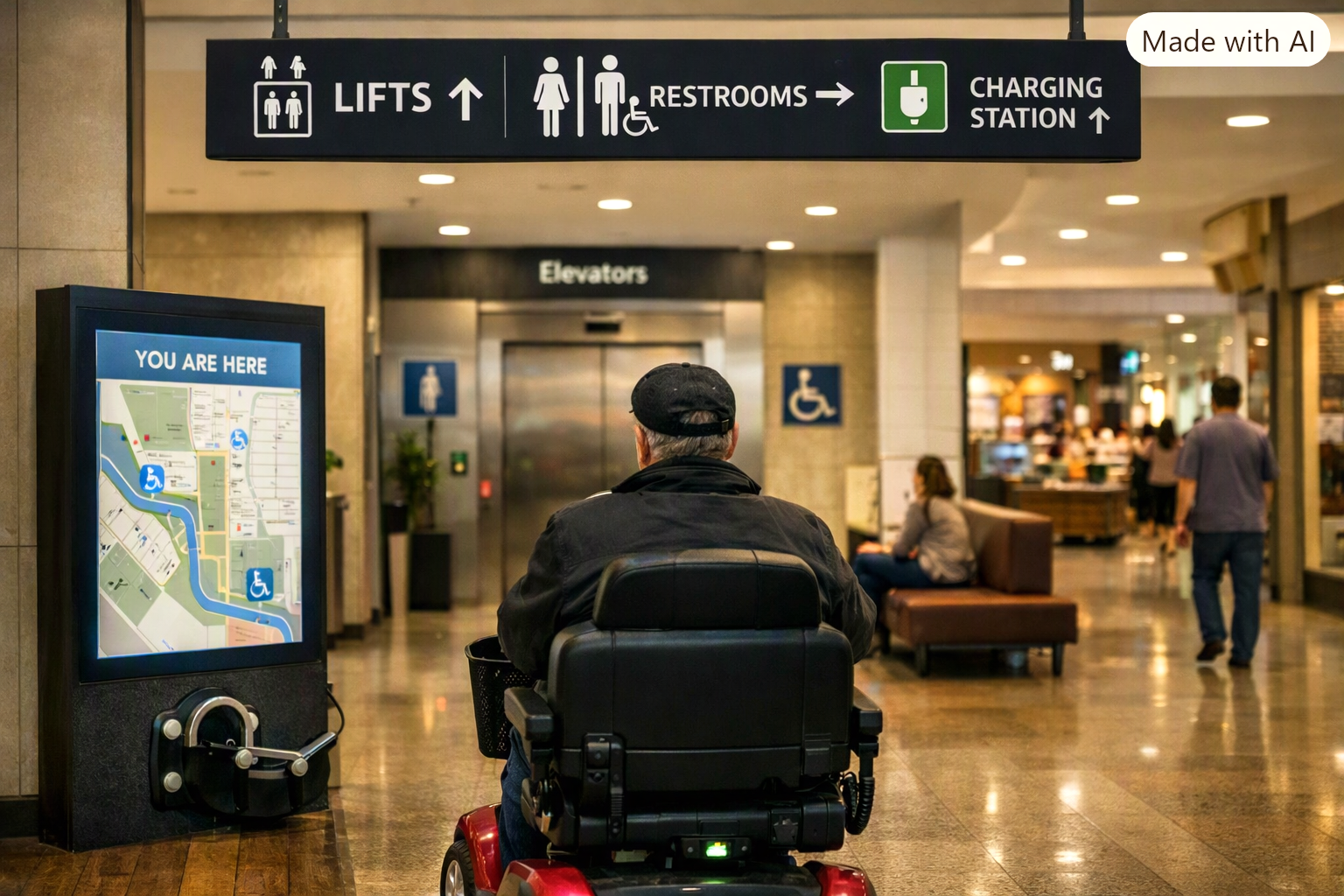
Where to Park: Choosing a Secure Spot in a Shop or Food Court
The location you choose for your scooter is the single biggest factor in its security. A good spot is visible, out of the main flow of traffic, and not easily accessible to someone who might want to tamper with it.
In a shop: park near the entrance or a staffed area. If you are browsing in a store, look for a spot near the entrance, close to the checkout, or within clear view of a staff member. Avoid parking deep in a quiet aisle where no one is around. A scooter parked near a busy checkout is far less likely to be tampered with than one tucked into a deserted corner.
If the store has a designated area for prams or mobility aids, use it. If not, ask a staff member where they would prefer you to leave it. Most retail staff are happy to help and will keep an eye on it.
In a food court: park against a wall, within sight. Food courts present a particular challenge because you need to leave the scooter while you eat, but you also want to keep it visible. The best spots are against a wall or pillar, just outside the main walking path, where you can see it from your table.
Avoid parking in the middle of a walkway, blocking a bin, or near a thoroughfare where trolleys and prams are moving. A scooter parked neatly against a wall is less likely to be bumped or tampered with—and less likely to annoy other diners. If there is a designated scooter or pram parking area, use it. If not, choose the quietest, most visible corner you can find.
Avoid fire exits and emergency egress routes. This is not just about security; it is about safety and compliance. Never park your scooter in front of a fire exit, an emergency door, or a marked egress route. Not only is this dangerous in an emergency, but it also gives centre staff a legitimate reason to ask you to move it—and it creates unnecessary conflict.
A scooter parked responsibly is a scooter less likely to attract negative attention. For more on parking and navigation, see our guide on how do I plan the easiest route through a shopping centre using the centre map.
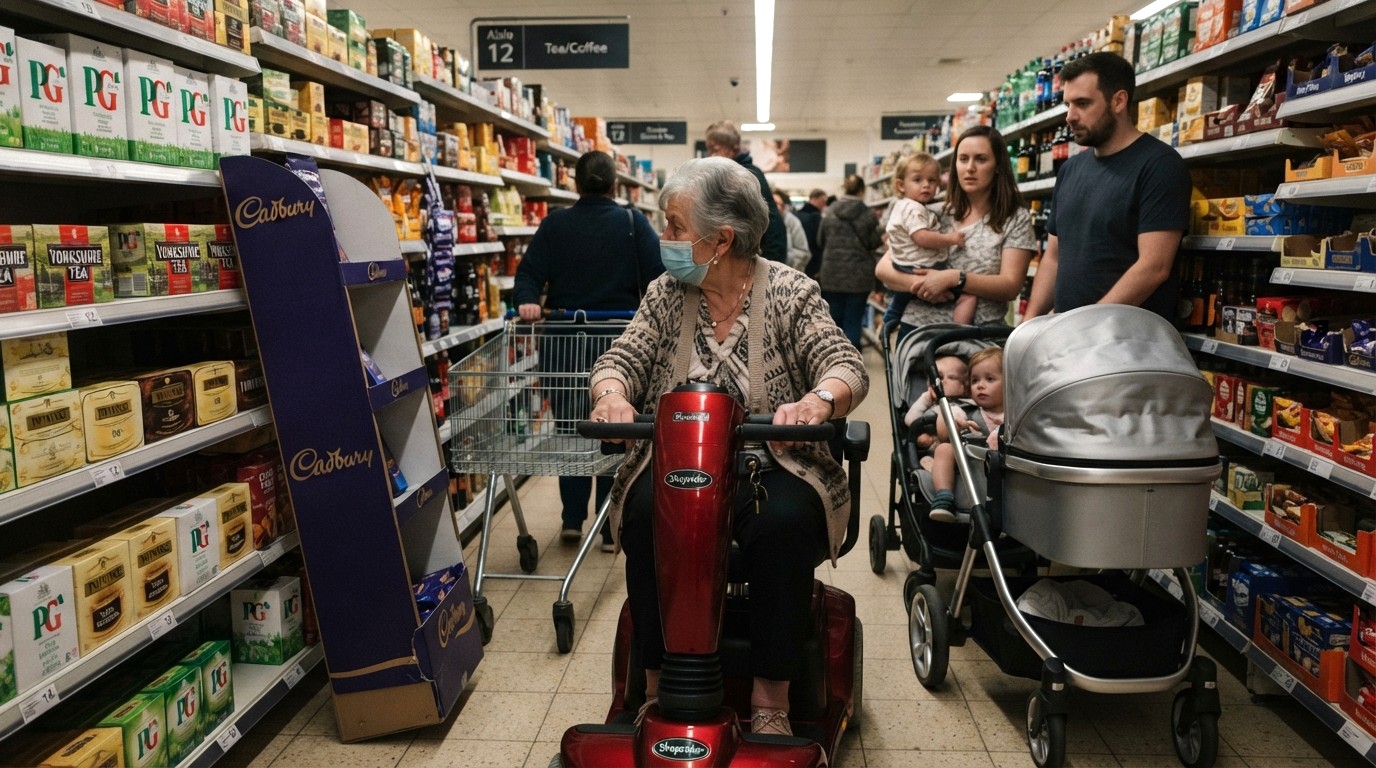
Locking It Up: Simple, Effective Security Habits
A lock is not a guarantee against theft, but it is a powerful deterrent. The key is to use it consistently and sensibly.
Lock the frame to a fixed object whenever possible. If you are parking near a bike rack, a railing, or a sturdy post, loop your cable lock through the scooter’s frame and around the fixed object. This prevents someone from simply rolling the scooter away. If no fixed object is available, lock the scooter’s wheels or steering mechanism to itself—it will not stop a determined thief, but it will slow down an opportunist and make the scooter harder to move quickly.
Use a visible lock, not a hidden one. A lock that is clearly visible signals that the scooter is secured and that the owner is nearby. This is often enough to deter casual theft. A hidden lock, by contrast, offers no deterrent value. Choose a lock in a bright colour or with a reflective element if you want extra visibility.
Do not rely on the key alone. Removing the key is essential, but it is not sufficient. A scooter with no key can still be lifted, rolled, or damaged. A lock adds a second layer of protection and gives you peace of mind. Even a simple, inexpensive cable lock is better than no lock at all.
What If You Cannot Lock It? Strategies for Awkward Situations
Not every shopping centre or food court is designed with scooter security in mind. You may find yourself in a situation where there is no fixed object to lock to, no staff member nearby, and no designated parking area. What do you do then?
Take the key and park in the most visible spot available. If you cannot lock the scooter, visibility becomes your primary defence. Park it where you can see it clearly from where you will be sitting or standing. If you are in a food court, choose a table with a direct line of sight to the scooter. If you are in a shop, stay within a few metres of it. The goal is to make it obvious that the scooter is attended, even if you are not physically touching it.
Ask a staff member to keep an eye on it. This is a simple, underused strategy. A friendly “Would you mind keeping an eye on my scooter while I eat?” is usually met with a yes. Staff are often stationed in food courts and near store entrances, and they can act as a casual deterrent simply by being present. You are not asking them to be a security guard—just to be aware.
Consider a scooter alarm. If you frequently find yourself in situations where you cannot lock your scooter, a motion-sensitive alarm can be a worthwhile investment. These devices are relatively inexpensive and can be attached to the scooter. If someone moves it, the alarm sounds, drawing attention and often scaring off a potential thief. It is not a substitute for a lock, but it adds a layer of reassurance.
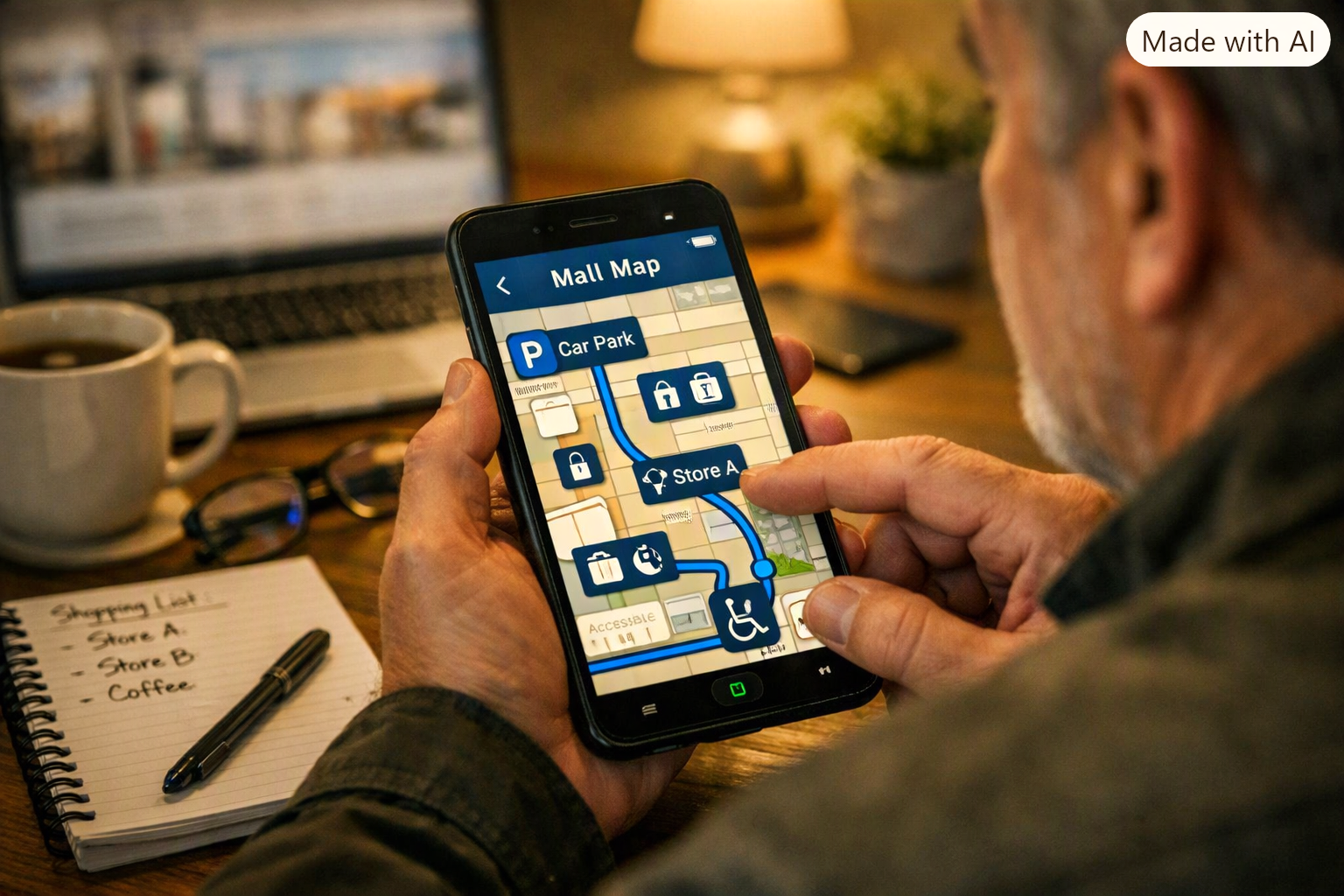
After the Shop: What to Do If Something Goes Wrong
Even with the best precautions, things can happen. A scooter can be bumped, scratched, or, in rare cases, stolen. Knowing what to do can reduce the panic and help you resolve the situation.
Report any theft or tampering to centre management immediately. If you notice that your scooter has been damaged or moved, or if it has been stolen, go straight to the centre’s customer service desk or concierge. They can review CCTV footage, alert security, and assist you with next steps. Most shopping centres have security cameras in common areas, and a prompt report gives you the best chance of a resolution.
Check your insurance. If your scooter is insured—whether through home and contents insurance, a specialist mobility scooter policy, or your car insurance—contact your insurer as soon as possible. Some policies cover theft and damage while away from home, but it is important to know the details before you need to claim. If you are unsure whether your scooter is covered, this is a good time to check. A quick call to your insurer can give you peace of mind for future trips.
Do not blame yourself. If something goes wrong, it is not because you did not try hard enough. Theft and vandalism are the responsibility of the person who committed them, not the person who parked their scooter.
Be kind to yourself, report the incident, and take whatever steps you need to feel secure next time. You deserve to shop and eat without carrying the weight of the world on your shoulders.
A Final Word: Peace of Mind Is the Goal
Securing your mobility scooter while you shop or eat does not have to be complicated. It is a series of small, sensible habits: take your key, choose a visible spot, use a lock when you can, and stay aware of your surroundings. These habits do not make you paranoid. They make you prepared, and preparation is the foundation of confidence.
You have the right to enjoy a coffee in the food court without spending the whole time watching your scooter. You have the right to browse a shop without feeling anxious about your wheels.
With the strategies in this guide, you can protect your scooter and your peace of mind—and get back to the important business of living your life on your own terms.
For more on navigating every part of the shopping centre, from lifts to crowded aisles, return to our hub guide on Shopping Centre Navigation Strategies.
You have got this.
Stay mobile, stay confident!
Sign up for our monthly Mobility Scooter Newsletter to receive practical guides, expert advice, and inspiring stories that help you make the most of your scooter and download our free "Mobility Scooter Guide for Beginners."
Don't worry — your e-mail address is totally secure.
I promise to use it only to send you our newsletter, "Mobility Matters."
Recent Articles


-
Shopping Centre Navigation Strategies Made Simple & Stress-Free
Oct 20, 26 08:48 AM
 Shopping centre navigation strategies that actually work. Master lifts, tight aisles & crowded malls with practical, carer-friendly advice.
-
What Should I Do in a Shopping-Centre Emergency on a Scooter?
Oct 20, 26 07:26 AM
 What should I do in a shopping-centre emergency (evacuation/alarm) if I’m on a mobility scooter? Practical advice for a frightening moment.
-
How Do I Secure My Mobility Scooter While I’m in a Shop or Food Court?
Oct 20, 26 06:15 AM
How do I secure my mobility scooter while I’m in a shop or seated in a food court? Learn parking, locking and theft-prevention tips.

Ready to Feel More Confident on Your Mobility Scooter?

My Ebook, The Ultimate Guide to Mobility Scooters, walks you through choosing the right scooter, using it safely, and keeping it in top condition — all explained in clear, friendly language.
Give yourself (or someone you love) the gift of independence.




