- Home
- Mobility Scooter Safety and Daily Use
- Shopping Centre Navigation Strategies for Mobility Scooters
- What to Do If a Store Asks You to Leave Your Scooter
What Should I Do If a Store Asks Me Not to Bring My Scooter Inside?
Picture this: You've navigated the car park, made it through the entrance, and you're heading toward a small boutique you've been wanting to visit. As you approach the door, a staff member steps forward and says, politely but firmly, "Sorry, we don't allow those in here." Your heart sinks. You feel embarrassed, angry, and unsure what to do next. The confidence you built on the way in evaporates in an instant.
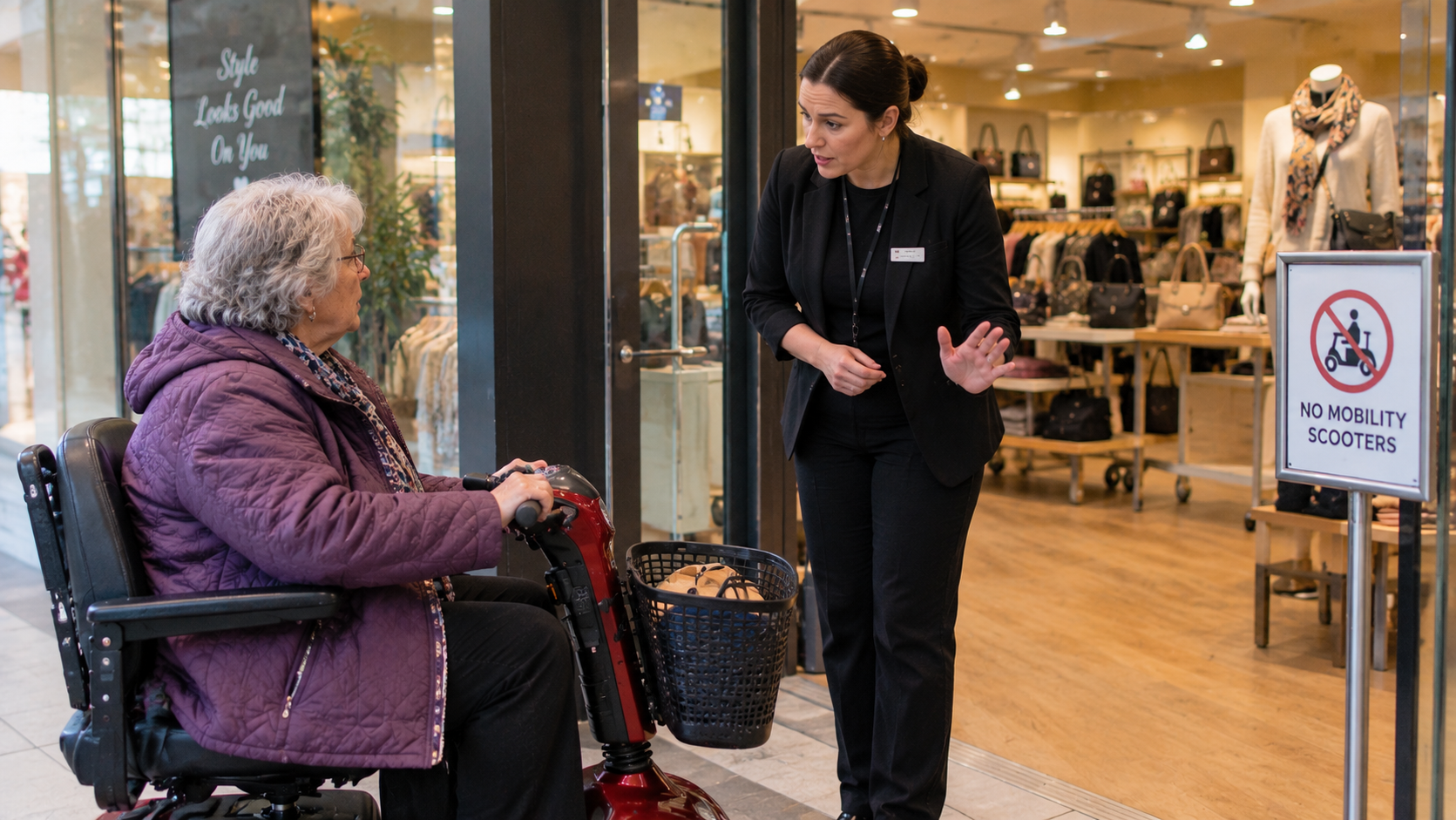
If this has happened to you — or if you're worried it might — you're not alone. It's a scenario many mobility scooter users dread, and it can feel deeply humiliating. But here's what you need to know: you have rights, and you have options.
This guide will walk you through them calmly and clearly, so you can respond with confidence and dignity rather than shock and hurt.
The Law Is on Your Side
Let's start with the most important fact: refusing you entry because of your scooter is against the law in Australia. The Disability Discrimination Act 1992 makes it unlawful to discriminate against a person because of disability in areas including access to premises, goods, services, and facilities.
Section 23 of the DDA makes it unlawful to discriminate in the terms or conditions on which a person is allowed access to, or use of, premises that the public is entitled to enter. Section 24 makes it unlawful for a provider of goods or services to refuse to provide those goods or services, or to provide them on less favourable terms.
In plain English: retail spaces must not refuse entry simply because someone uses a mobility scooter.
A disability aid — which is exactly what your scooter is — is protected under the DDA. Case law has reinforced this. In Haar v Maldon Nominees, the Federal Magistrates Court found that even verbal terms and conditions restricting how a person could access premises were sufficient to constitute a breach of the legislation. The law does not require the refusal to be in writing. A staff member saying "you can't bring that in here" is enough.
So if you've ever wondered whether you're within your rights to push back, the answer is a resounding yes.
But knowing the law is one thing — knowing how to use it in the moment is another. Let's walk through what to actually say.
What to Do in the Moment: A Calm, Clear Script
The first thing to do when a store asks you not to bring your scooter inside is to stay calm. You don't need to raise your voice or make a scene. A calm, polite response is often the most powerful — and the most effective.
Try something like: "I understand your concern, but my scooter is a disability aid. Under the Disability Discrimination Act, I have the right to access this store just like any other customer. Is there a way we can make this work?"
This script does three things at once. It informs the staff member of your rights. It asserts your position without aggression. And it invites a solution rather than a confrontation, which gives the staff member a face-saving way to change course.
If the staff member is unsure or seems flustered, ask to speak to the manager. Sometimes front-line staff haven't been trained on accessibility obligations, and a manager may be more aware of the legal requirements. Many successful cases under the DDA have involved situations where barriers to access were compounded by poor customer care. A calm, informed customer can sometimes turn a difficult interaction into a teachable moment for the whole team.

Why Stores Sometimes Say No (and Why It Doesn't Excuse Discrimination)
Some store owners genuinely believe their space is too small for a scooter. They may worry about damaging stock, blocking aisles, or creating a safety hazard. These concerns are understandable — and in some cases, they may even be legitimate starting points for a conversation.
The DDA does allow for exceptions in cases of "unjustifiable hardship" — for example, if making a premises accessible would impose a severe burden on the business. But the bar for unjustifiable hardship is high, and it is rarely met by a small retail space. More importantly, the law requires businesses to make reasonable adjustments before refusing access. Many reasonable adjustments are low-cost or free: removing clutter from aisles and making them wider so people can easily move around, adjusting the height of a customer service counter, or installing a ramp.
A small shop refusing a scooter entry without exploring any of these options is unlikely to meet the threshold. And a reasonable adjustment might be as simple as a staff member bringing items to you at the door.
Which brings us to the question of compromise.
What If They Still Refuse? Complaint Options That Actually Work
If the store continues to refuse despite your explanation, you have options. And none of them require you to "just get over it."
Step one: document what happened. Note the date, the time, the name of the staff member involved (if you can get it), and exactly what was said. If the refusal was verbal, write it down as soon as you can. If you feel comfortable, ask for the refusal in writing.
Step two: raise it with management. Contact the store's management directly, either in person or by phone or email. Explain what happened and remind them of their obligations under the DDA. Sometimes the refusal was a front-line error and management will be mortified.
Step three: make a complaint to the Australian Human Rights Commission (AHRC). The AHRC is an independent body that investigates and resolves complaints about unlawful disability discrimination. It doesn't cost anything to make a complaint, and you don't need a lawyer. Complaints must be in writing, and you can submit them online. The Commission will contact you to discuss your complaint, may contact the respondent for their side of the story, and will often try to resolve the matter through conciliation — a guided conversation aimed at finding a solution.
Complaints can be resolved in many ways, including through an apology, a change of policy, or compensation. The process is designed to be accessible, not intimidating. And if you're unsure whether you have grounds for a complaint, you can call the Commission's National Information Service on 1300 656 419 for a no-pressure chat.
A Note on Compromise (Without Giving Up Your Rights)
Sometimes, a workable compromise is possible, and it's okay to accept one if it genuinely meets your needs. If a small store truly cannot accommodate your scooter, you might agree to wait at the door while a staff member brings items to you. This isn't a surrender — it's a pragmatic solution that still gets you what you need while preserving the relationship.
But remember: compromise is a choice, not an obligation. You are not required to accept an inferior level of service because of your scooter. If a store can make a reasonable adjustment and simply chooses not to, that's discrimination — and you are entitled to say so.
You Deserve to Shop with Dignity
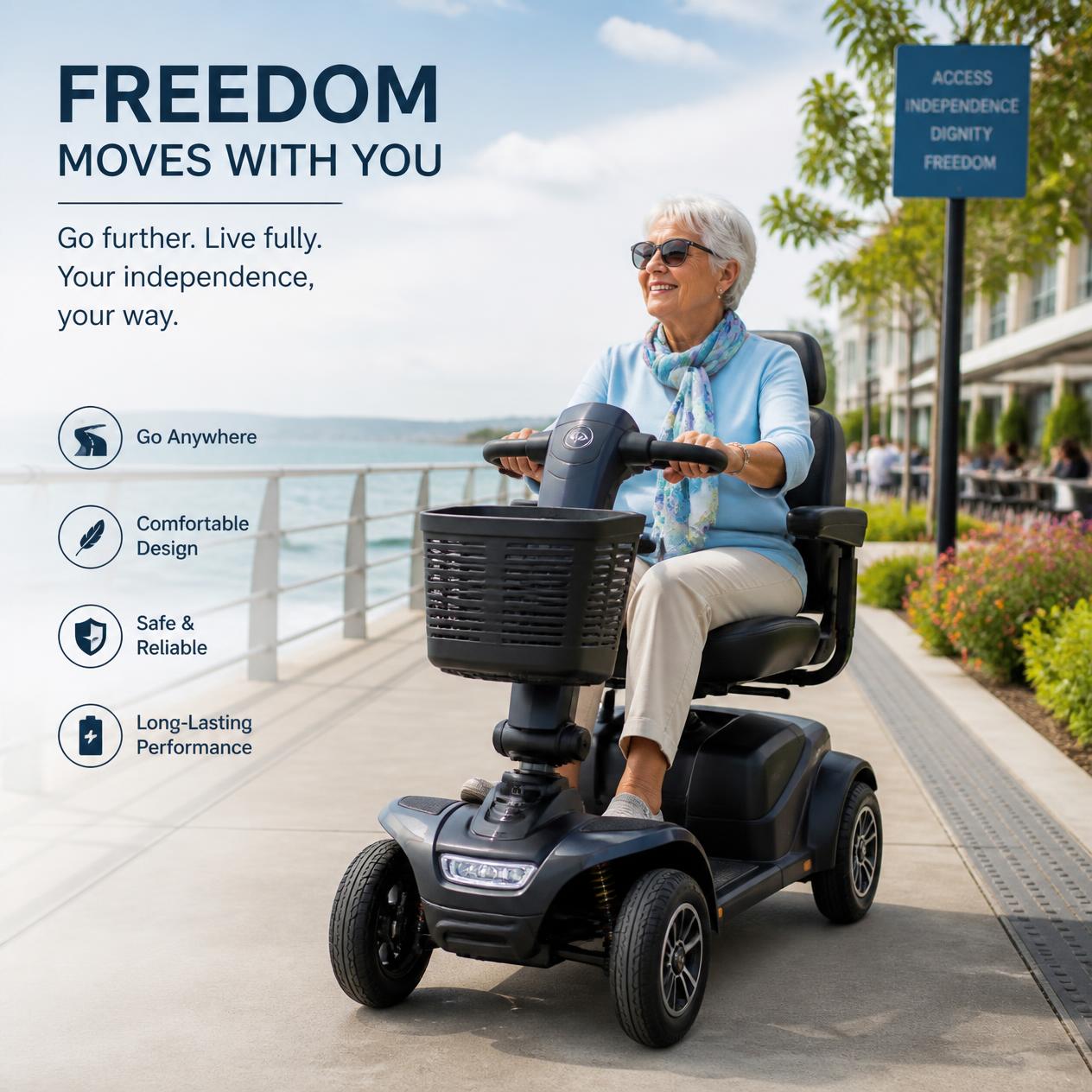
Being refused entry is upsetting, and it's okay to feel hurt or angry. You are not being oversensitive. You are responding to unfair treatment, and your feelings are valid.
But it's important to know that the law is on your side, and there are people and processes that can help. You don't have to go through this alone. Disability advocacy organisations, community legal centres, and the AHRC itself can support you through the complaint process.
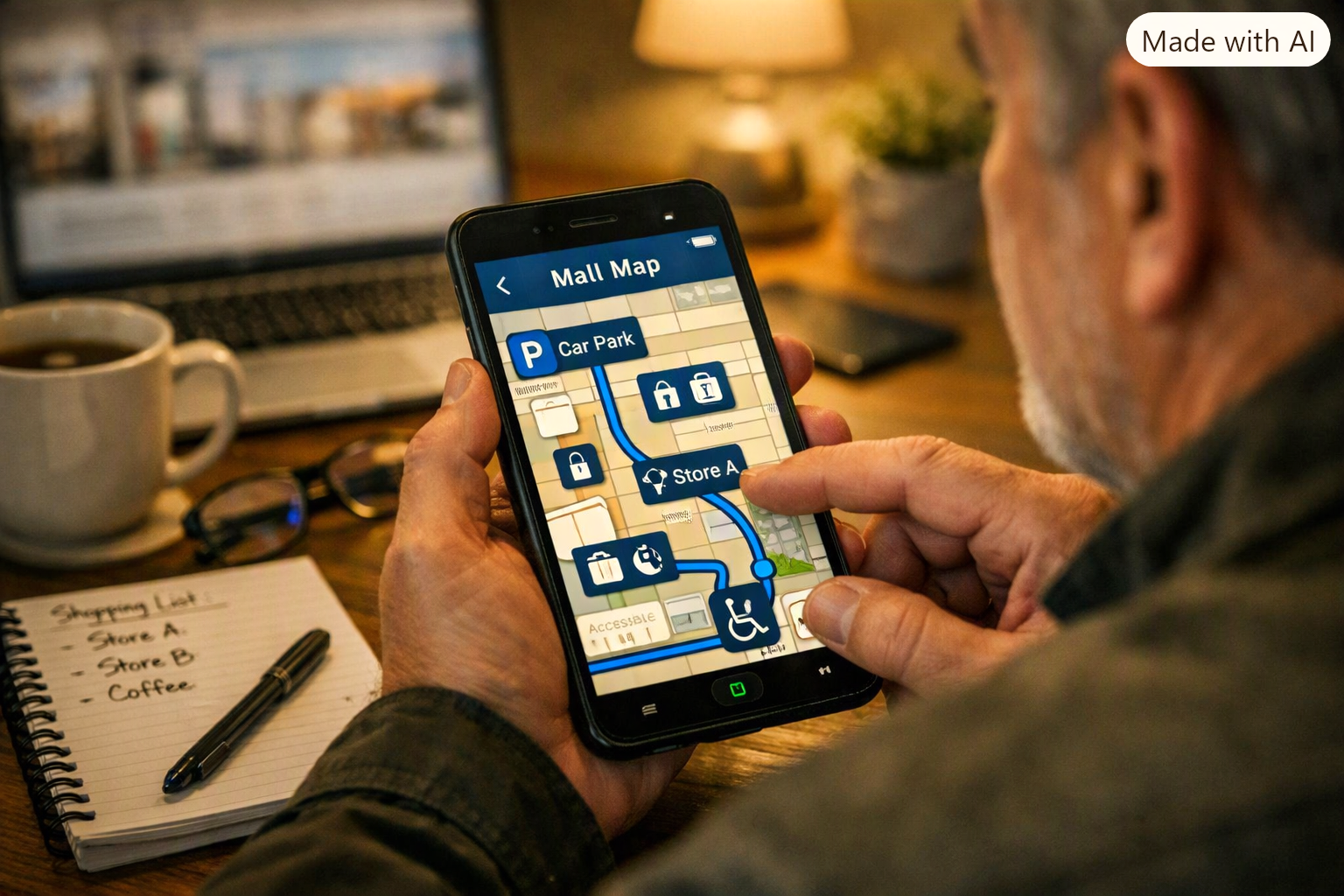
And if you want to reduce the chance of encountering this situation in the first place, our guide on planning your route using the centre map will help you identify which stores are most accessible before you arrive.
If a refusal does happen, you'll know exactly how to handle it — with confidence, with dignity, and with the full weight of the law behind you.
If you are ready to go deeper, these guides will help you with the next decisions:
1. Pre-Visit Planning & Route Mapping
2. Arrival, Parking & Entry
3. Navigating the Centre — Movement & Crowds
- What Do I Do If the Lift Is Busy or Out of Order When I’m Using a Mobility Scooter at a Shopping Centre?
- How Do I Turn Around or Reverse Safely in a Narrow Shopping-Centre Aisle on a Mobility Scooter?
- How Can I Shop at Peak Times on a Mobility Scooter Without Getting Boxed In by Crowds?
4. Stopping, Shopping & Securing
- How Do I Secure My Mobility Scooter While I’m in a Shop or Seated in a Food Court?
- How Do I Handle Queues (Checkout Lines) on a Mobility Scooter Without Blocking Others?
- What Should I Do If a Store Asks Me Not to Bring My Scooter Inside?
5. Battery & Power Management
6. Emergency Preparedness
Stay mobile, stay confident!
Sign up for our monthly Mobility Scooter Newsletter to receive practical guides, expert advice, and inspiring stories that help you make the most of your scooter and download our free "Mobility Scooter Guide for Beginners."
Don't worry — your e-mail address is totally secure.
I promise to use it only to send you our newsletter, "Mobility Matters."
Recent Articles


-
Store Refused My Mobility Scooter: What Are My Rights?
Oct 21, 26 09:26 AM
 What should I do if a store asks me not to bring my scooter inside? Handle it with confidence and dignity.
-
Shopping Centre Navigation Strategies Made Simple & Stress-Free
Oct 21, 26 09:02 AM
 Shopping centre navigation strategies that actually work. Master lifts, tight aisles & crowded malls with practical, carer-friendly advice.
-
What to Do If Your Scooter Battery Dies at the Centre
Oct 21, 26 08:59 AM
 What should I do if my battery runs low while I am at the centre? Recharge options and backup plans that work.

Ready to Feel More Confident on Your Mobility Scooter?

My Ebook, The Ultimate Guide to Mobility Scooters, walks you through choosing the right scooter, using it safely, and keeping it in top condition — all explained in clear, friendly language.
Give yourself (or someone you love) the gift of independence.



