- Home
- Buying Guides
- Avoiding Mobility Scooter Sales Pressure
- Mobility Scooter Salesperson Scripts
Mobility Scooter Salesperson Scripts: What to Say to Slow Things Down and Keep Control
Mobility scooter salesperson scripts are not about being confrontational or clever. They are about having a small set of calm, repeatable phrases ready before you need them—so that when the conversation speeds up, you do not have to think on your feet. You simply reach for a sentence you have already practiced and let it do the work for you.
Picture this. You are on the phone, asking a simple question about a scooter you saw online. Within two minutes, the friendly voice on the other end has told you that the model you asked about is "not really suitable for someone like you," that there is a much better option available, and that a "special price" is available today only if you can come in this afternoon.
You put the phone down feeling strangely winded, as though you have been in a race you did not agree to run. Nothing was said that was overtly aggressive. And yet, somehow, you have been moved from the driver's seat to the passenger seat. This is exactly what mobility scooter salesperson scripts are designed to prevent. They give you a way to gently but firmly take the wheel back—without raised voices, without awkwardness, and without losing the information you actually need.
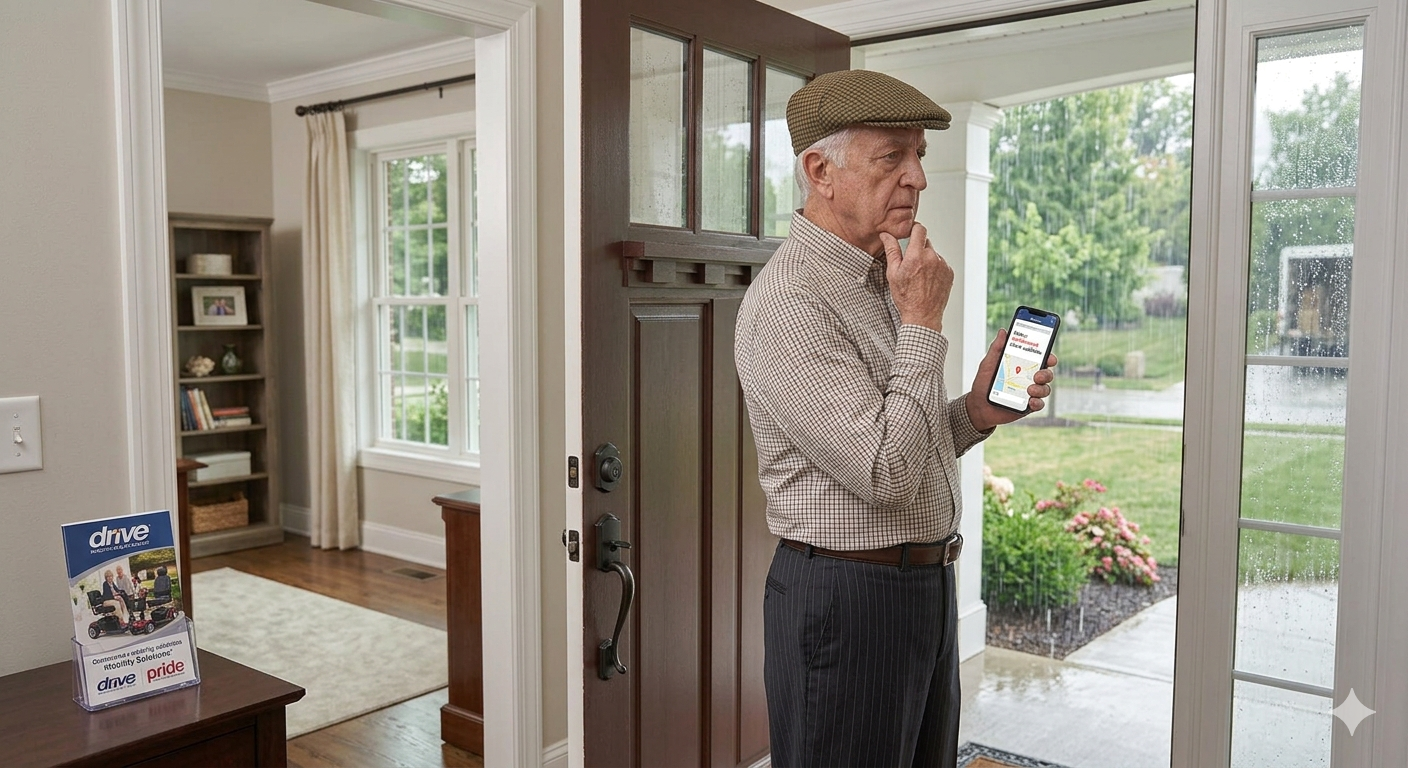
This guide is for anyone who has ever felt the pace of a sales conversation shift against their will. You do not need to be a negotiator. You need a handful of phrases, a clear understanding of why they work, and the quiet confidence that comes from knowing exactly what to say next.
Let us start with why scripts matter so much in this particular purchase.
Why a Script Is More Than Just Words
A script is a boundary in sentence form. It is a way of saying, "I am still here, I am still interested, but I am not going to be moved faster than I choose to move." Pressure selling thrives on momentum—on the assumption that if the salesperson keeps talking, keeps offering, keeps creating urgency, you will eventually agree just to make the conversation stop. A script interrupts that momentum. It introduces a pause, and in that pause, you get your thinking back.
The Australian Consumer Law recognises this dynamic. The ACCC states clearly that pressuring and harassing consumers is against the law, and defines "undue harassment" as unnecessary or excessive contact designed to make a person feel "intimidated, tired or demoralised". High-pressure sales tactics—offering inducements to force a quick decision, or knowingly taking advantage of vulnerable consumers—are specifically called out in industry codes of practice for mobility equipment suppliers.
A script is your personal, practical expression of those protections. It is not rude to say, "I need more time." It is not unreasonable to ask for terms in writing. It is exactly what a careful, informed buyer is entitled to do.
Deeper dive: If you are still in the planning stage and want the full framework for staying in control from first enquiry to final signature, start with the hub: Avoiding Mobility Scooter Sales Pressure.
The Opening Call: Scripts for the First Conversation
The first phone call is where the momentum is set. A salesperson who can get you talking quickly and moving toward an appointment has already begun to shape the decision. Your job in this conversation is to gather information, not to commit to anything.
When you are asked what you are looking for:
"I am in the early research stage. I am gathering written quotes from a few dealers so I can compare them fairly. Could you please tell me the model name, the total price including delivery, and the warranty terms?"
This script does three things at once. It signals that you are organised, that you expect written information, and that you are not making a decision today. A dealer who respects that will respond with information. A dealer who tries to bypass it—by saying "it's easier to explain in person" or "the price depends on the model"—is telling you something useful about how they operate.
When you are pushed to book an appointment immediately:
"I am not ready to book a demonstration yet. I am still gathering written information. If you send me the quote by email, I will review it and contact you if I would like to arrange a demonstration."
This is not a rejection. It is a redirection. You are keeping the door open while keeping the pace in your hands. If the dealer responds with patience, that is a good sign. If the response is a renewed push—"the special ends tomorrow," "I can't hold the price without an appointment"—you have learned something important without spending a cent.
Deeper dive: For the full list of documents to request in writing, see: Don't Buy on a Handshake: What to Ask for in Writing Before Buying a Mobility Scooter
The Showroom: Scripts for When the Pitch Speeds Up
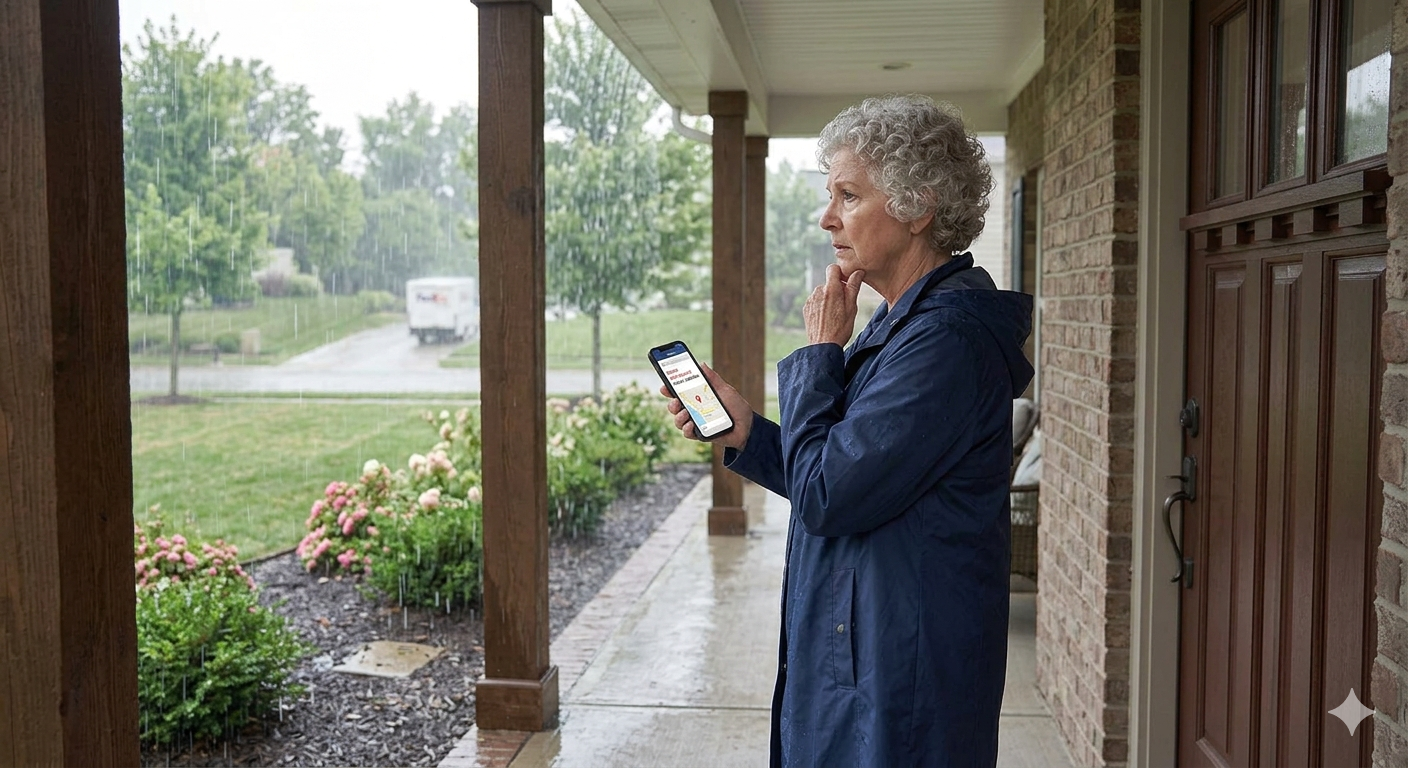
Showrooms are designed to move you along a path. The lighting, the layout, the friendly greeting, the invitation to sit on the scooter—all of it is designed to create a sense of momentum. Your script is the tool that lets you step off the path and look around on your own terms.
When you are steered toward a more expensive model:
"Thank you. I would like to stay with the model I came to see for now. Could you tell me the full price of this one, including delivery and the first service, in writing?"
This script is polite but firm. It does not accuse the salesperson of upselling; it simply returns the conversation to the model you chose. The request for the price in writing is the key move. As consumer advocacy guidance notes, "upfront pricing should be exactly that—the full cost of the product, including aftercare, made clear from the start, not revealed at the end of the conversation." A dealer who can produce that written price is a dealer worth talking to. A dealer who cannot is a dealer who is relying on a vague number to keep you engaged.
When you are told a deal is available "today only":
"I understand. I have a policy of not making same-day decisions on purchases of this size. Please put the full offer in writing, and I will review it tomorrow. If the offer is still available then, I will be in touch."
This is the most important script in the book. The "today-only" deadline is a pressure tactic, and the British Healthcare Trades Association is direct about it: "If a seller offers a large discount only available if you buy on the same day, this is known as pressure selling, and you're best to avoid this retailer". Your script does not argue with the deadline. It simply refuses to be moved by it. If the deal is genuine, it will survive the pause. If it disappears, you have lost nothing—and you have avoided a purchase made under pressure.
When you are told a model is "perfect for your condition":
"Thank you for your opinion. I would like an independent assessment before I commit to a specific model. Could you tell me whether you offer a no-obligation trial, and what the written terms are?"
A salesperson's assurance about medical suitability is not a clinical assessment. The appropriate way to answer that question is through an occupational therapist (OT) or relevant healthcare professional. This script does not dismiss the salesperson; it simply redirects the question to the person qualified to answer it. A dealer who supports that process is a dealer who is prioritising your safety over their commission.
Deeper dive: For word-for-word scripts to handle every stage of the sales conversation, including the home visit, see the companion guide on home-visit mobility scooter sales (link to be added when published).
The Home Demo: Scripts for When the Pressure Is in Your Own Living Room
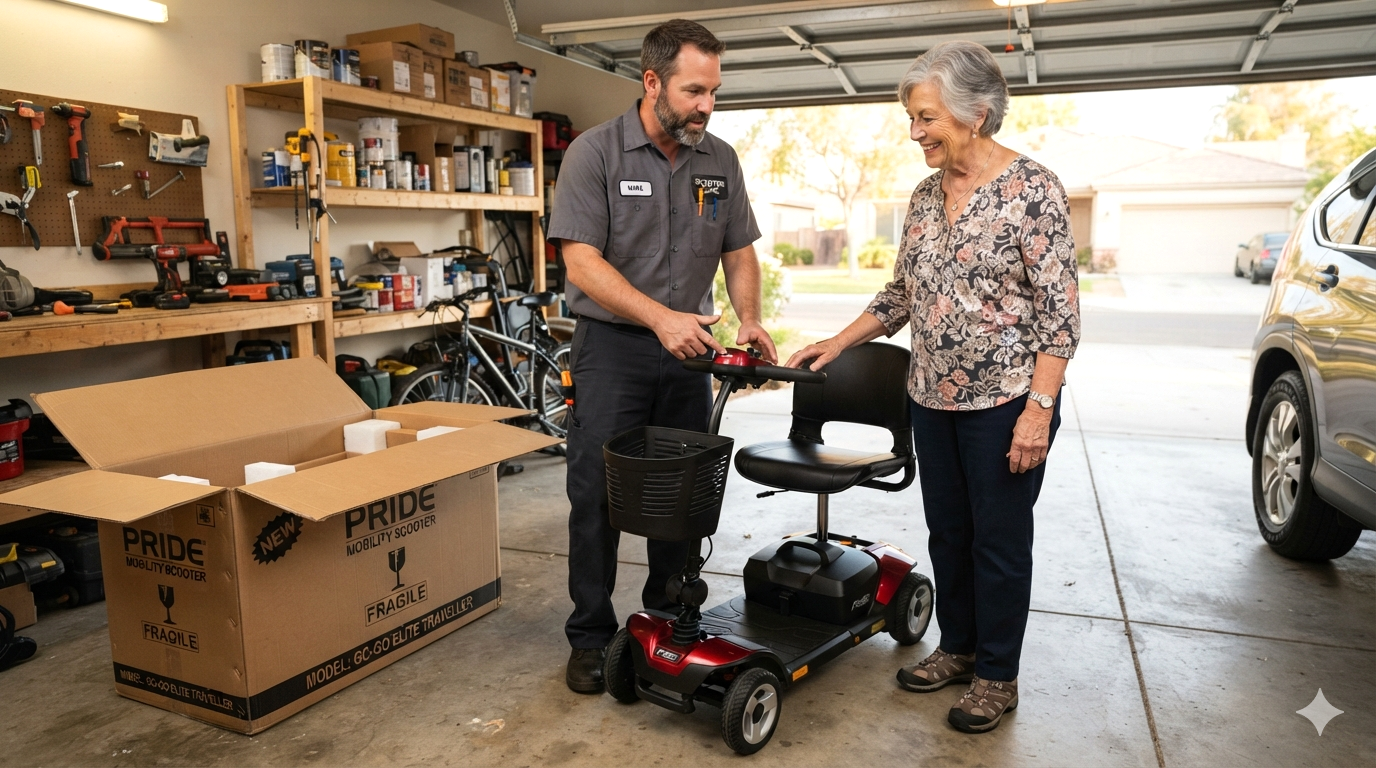
A home demonstration removes the natural exit routes of a showroom. There is no walk to the door, no front desk, no public space to retreat to. That is precisely why pressure tactics are more common in this setting—and precisely why your scripts need to be at their most clear and firm.
When the demonstration is becoming uncomfortable:
"I would like to end the demonstration now. Please pack up the equipment. I will contact the office if I wish to continue."
This is a complete sentence. It does not require explanation. It does not invite negotiation. The British Healthcare Trades Association identifies overstaying a welcome—refusing or finding excuses not to leave until a purchase is made—as an underhand sales technique, and its code of practice requires members to comply immediately with any request to leave. You are not being rude by ending an appointment in your own home. You are exercising a right.
When you are asked for a deposit before you have decided:
"I am not prepared to pay a deposit until I have a full written quote, the warranty terms, the return policy, and the deposit-refund conditions in front of me. What are your written terms on deposits and cancellations?"
This script shifts the conversation from a request (Can I have a deposit?) to a condition (I need these documents first). A legitimate dealer will have the terms ready. A dealer who resists or deflects is telling you that their deposit policy is not designed to protect you. As Australian guidance makes clear, if a deposit is non-refundable, that must be disclosed when the order is placed—not revealed later.
Deeper dive: For the full list of deposit and refund questions to ask before you pay anything, see the dedicated guide: Mobility Scooter Deposit and Refund Questions to Ask Before You Pay Anything.
Ending the Conversation: Scripts for a Polite but Firm Exit
Sometimes the most important script is the one that ends the conversation. You do not need to justify your decision. You do not need to apologise. You need a closing sentence that is warm, final, and leaves no room for a renewed push.
When you are ready to leave a showroom:
"Thank you for your time. I have the information I need for now. I will contact you if I wish to proceed."
When you are on the phone and the call has run its course:
"Thank you—I have what I need. I will be in touch if I have further questions. Goodbye."
When a salesperson asks why you are not buying today:
"I am still in the research stage. I am not making a decision today. Thank you for your help."
These scripts share a common structure: a thank-you, a statement of the current position, and a clear end. They are polite enough to preserve the relationship, and firm enough to close the conversation. A salesperson who respects you will accept them. A salesperson who does not respect them has just given you the most useful information of all.
The Bottom Line: A Script Is a Form of Self-Respect
Pressure selling relies on the idea that you will be too polite, too embarrassed, or too exhausted to say what you actually need. A script dismantles that idea. It gives you a way to be polite and firm at the same time—to say, "I am interested, but I am not in a hurry," "I am listening, but I am also deciding," "I am here, but I am in control."
You do not need to memorise every script in this guide. Choose two or three that feel natural to you—perhaps the "today-only" script, the "written quote" script, and the "ending the conversation" script—and practise them out loud once or twice. The more familiar they feel, the easier they will be to reach for when the moment comes. And the moment will come. When it does, you will be ready.
The right dealer will respect your scripts. The wrong one will resist them. Either way, the scripts will tell you exactly what you need to know—and they will do it without you ever having to raise your voice.

Frequently Asked Questions
What are mobility scooter salesperson scripts?
They are short, prepared phrases you can use to slow down a sales conversation, ask for information in writing, and keep the decision in your hands. They are not about being confrontational—they are about being calm, clear, and prepared.
What is the most important script to have ready?
The "today-only" script is the most important: "I have a policy of not making same-day decisions on purchases of this size. Please put the full offer in writing, and I will review it tomorrow." It is your strongest defence against artificial urgency.
What should I say if I feel pressured during a home demonstration?
Use a clear closing sentence: "I would like to end the demonstration now. Please pack up the equipment. I will contact the office if I wish to continue." You have the right to end any appointment in your own home, and a legitimate dealer will respect that immediately.
Can I ask for a written quote on the spot?
Yes. A simple script works: "Could you please put the full price, including delivery and the first service, in writing for me?" If the dealer cannot or will not provide it, that is a red flag. Upfront pricing should be clear from the start, not revealed at the end of the conversation.
What should I say when a salesperson tells me a model is perfect for my condition?
Thank them for their opinion, then redirect the question: "I would like an independent assessment before I commit to a specific model. Could you tell me about your no-obligation trial terms?" Suitability for a mobility device is a clinical question, and an occupational therapist is the appropriate person to answer it.
Is it rude to end a sales conversation quickly?
No. You are not being rude by saying, "Thank you for your time. I have the information I need for now. I will contact you if I wish to proceed." You are being a careful, informed buyer—and that is exactly what ethical dealers expect and respect.
Stay mobile, stay confident!
Sign up for our monthly Mobility Scooter Newsletter to receive practical guides, expert advice, and inspiring stories that help you make the most of your scooter and download our free "Mobility Scooter Guide for Beginners."
Don't worry — your e-mail address is totally secure.
I promise to use it only to send you our newsletter, "Mobility Matters."
Recent Articles


-
Mobility Scooter Salesperson Scripts: Slow Down, Stay in Control
Nov 24, 26 07:30 AM
 Mobility scooter salesperson scripts that actually work. Learn what to say when you feel rushed, pressured, or pushed toward the wrong model.
-
Avoiding Mobility Scooter Sales Pressure Before You Buy
Nov 24, 26 07:21 AM
Avoiding mobility scooter sales pressure begins with knowledge. This friendly hub walks you through every step—calmly and clearly. -
What to Ask for in Writing Before Buying a Mobility Scooter
Nov 24, 26 07:13 AM
 What to ask for in writing before buying a mobility scooter — quote, warranty, returns, and servicing. A verbal promise is not a protection.
Ready to Feel More Confident on Your Mobility Scooter?

My Ebook, The Ultimate Guide to Mobility Scooters, walks you through choosing the right scooter, using it safely, and keeping it in top condition — all explained in clear, friendly language.
Give yourself (or someone you love) the gift of independence.




