- Home
- Buying Guides
- Avoiding Mobility Scooter Sales Pressure
- Mobility Scooter Quote, Warranty, Returns, Servicing
Don't Buy on a Handshake: What to Ask for in Writing Before Buying a Mobility Scooter
Picture this. You have chosen the scooter. The demonstration went well. The salesperson has been friendly, patient, and reassuring. You are reaching for your card when a small voice in your head asks a very sensible question: What exactly have I been promised—and where is it written down? That voice is not being paranoid. It is being protective.
What to ask for in writing before buying a mobility scooter is the difference between a purchase built on trust and a purchase built on hope. And hope, unfortunately, is not a consumer protection.
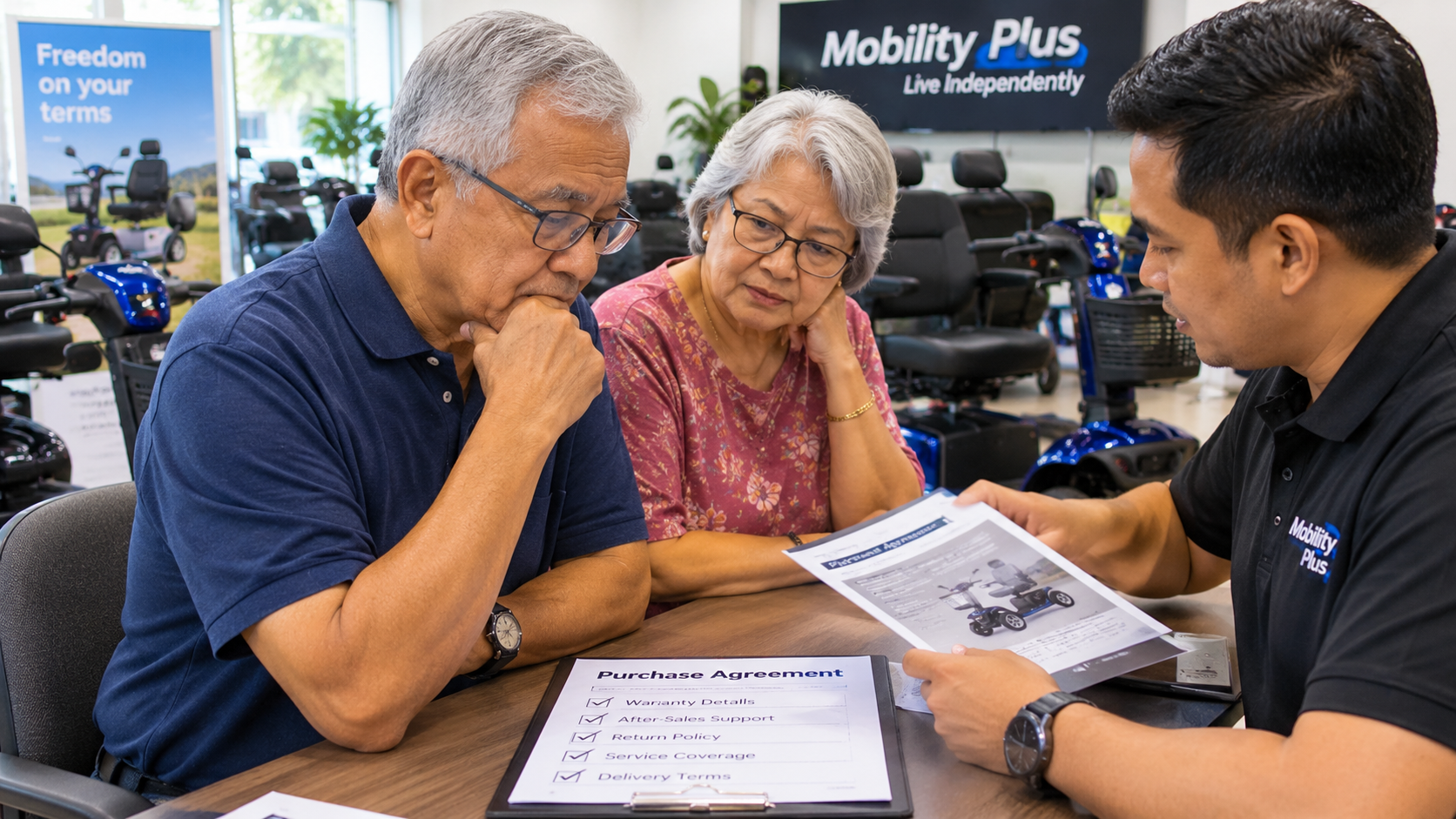
This is the guide that turns that quiet unease into a clear, calm checklist. You do not need to be a lawyer or a contracts expert. You need to know which documents to ask for, what each one must contain, and how to tell the difference between a dealer who is happy to document everything and one who would rather you did not ask.
Let us start with why the paperwork matters more than the pitch.
Why "In Writing" Is Your Most Powerful Protection
A verbal promise is easy to make and almost impossible to enforce. "We'll look after you," "the warranty covers that," "returns are no problem"—these phrases feel reassuring in the moment, but they evaporate the moment something goes wrong.
In writing, they become commitments. In writing, they become evidence. In writing, they become the terms you can hold a dealer to when the friendly salesperson is no longer on the other end of the phone.
The Australian regulatory framework backs this up. Industry codes of practice for mobility equipment suppliers are explicit: guarantees and warranties must be in writing and be clear and unambiguous, and clear and accurate information on the availability and price of all linked services must be provided in writing. If regular servicing is required, an explanation must be given as to what is entailed, and the likely costs must be outlined. This is not optional good practice. It is the standard that ethical dealers are expected to meet.
Deeper dive: If you are still in the planning stage and want the full framework for staying in control from first enquiry to final signature, start with the hub: Avoiding Mobility Scooter Sales Pressure.
The Written Quote: What It Must Include (and What to Do If It Doesn't)
The written quote is the foundation document. Without it, you are buying a promise, not a product. A proper written quote for a mobility scooter should itemise the full cost, not a monthly figure or a "package" price that hides the details.
Ask for a quote that includes: the exact make and model of the scooter, the total purchase price, delivery and assembly costs, the cost of any aftercare or servicing packages, the warranty terms, and any add-ons or accessories listed as separate line items. If GST applies—and it may not, as many assistive technology items are GST-free under certain conditions—it should be shown as a separate figure rather than buried in the total.
One practical test: if the quote does not show the total cost including delivery and aftercare, it is not a complete quote. As industry guidance puts it, upfront pricing should be exactly that—the full cost of the product, including aftercare, made clear from the start, not revealed at the end of the conversation. Ask for the quote by email so you have a timestamped record, and do not pay a deposit until you have it in your hands.
Deeper dive: For the full line-by-line breakdown of what a written quote should contain, see the: What to ask for in writing before buying a mobility scooter (quote, warranty, returns, servicing) —this page is part of that same series.(C0ming Soon!)
For the deposit-specific questions, see: Mobility scooter deposit and refund questions to ask before you pay anything.(Coming Soon!)
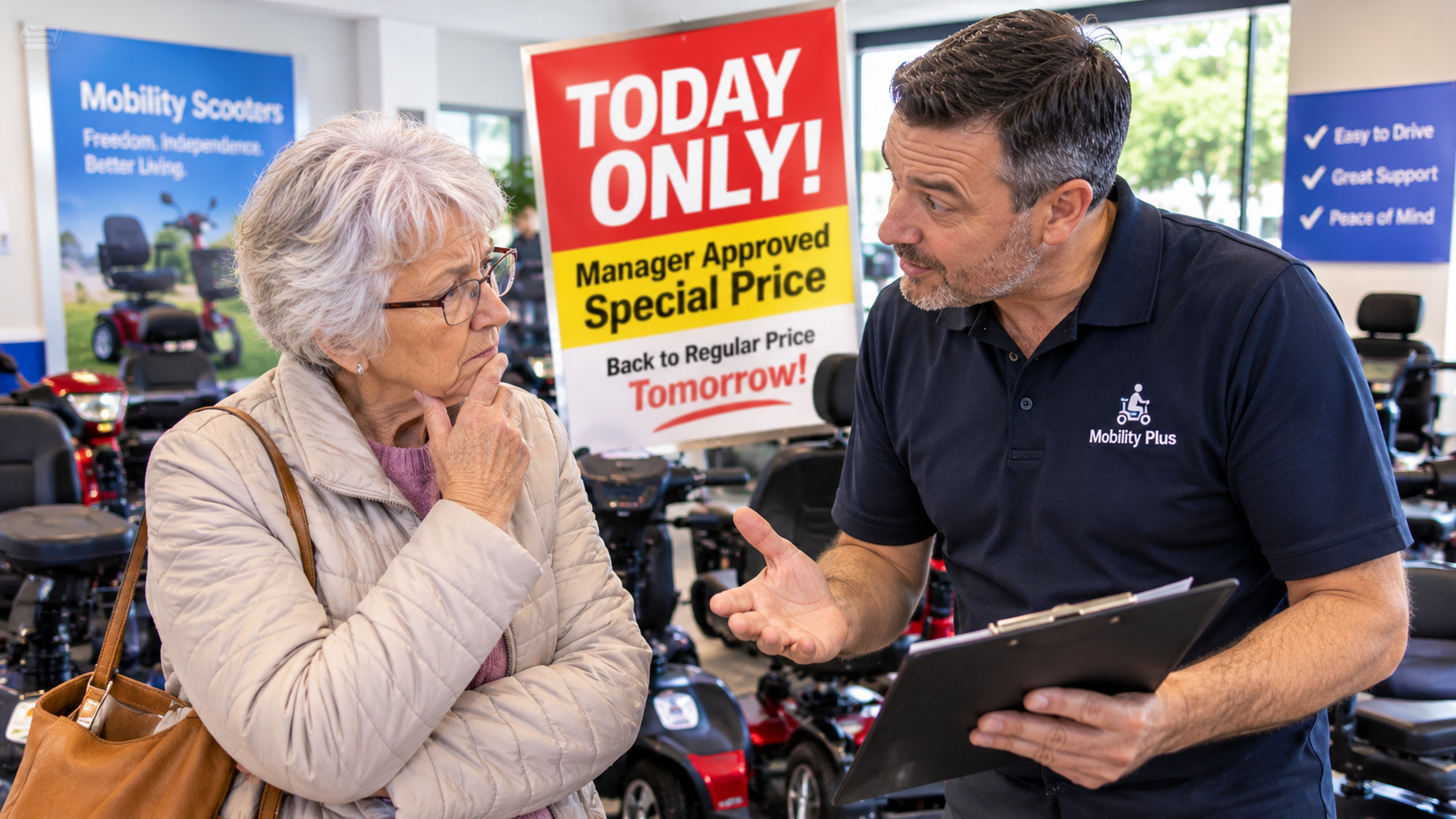
The Warranty: What Must Be in Writing—and What Often Isn't
The warranty is where the gap between what you were told and what you are actually entitled to most often appears. Australian Consumer Law provides a baseline of protection that cannot be excluded: goods must be of acceptable quality, fit for purpose, and match their description. Manufacturers and importers also guarantee they will take reasonable steps to provide spare parts and repair facilities for a reasonable time after purchase.
But the written warranty document is where the specific details live—and those details matter. Ask for a written warranty that states: the warranty period (common periods for new mobility scooters in Australia are around 12–24 months for the frame and motor, with shorter periods for batteries and tyres—one South Australian undertaking, for example, offered a two-year warranty on new scooters, six months on batteries and tyres, and three months on second-hand scooters); exactly which components are covered and which are excluded; who performs warranty repairs; how to make a claim; and what the process is for a claim. Industry codes also require that a minimum three-month guarantee be offered for repair work carried out.
If the warranty is only verbal, it is not a warranty you can rely on. Ask for the written document before you pay, not after.
Deeper dive: For the complete warranty checklist—including the questions to ask about extended warranties and service plans—see: Extended warranty and service-plan upsells for mobility scooters: when to say no (and what to ask instead). (Coming Soon!)
Returns and Cooling-Off: What to Get in Writing Before You Commit
Returns are one of the most misunderstood parts of the purchase—and one of the most important to document. Under Australian Consumer Law, you have rights if a product is faulty, not fit for purpose, or not as described. Those rights exist regardless of what the dealer's return policy says. But a change-of-mind return is different: it is governed by the dealer's policy, and that policy must be in writing if you are to rely on it.
Ask for the return policy in writing, and check for three things: the return window (some dealers offer 14 days; others offer none for change-of-mind returns); the condition requirements (many require the scooter to be returned in "as new" condition with all original packaging); and the fees (restocking fees can range from 10% to 25% of the purchase price, and on a $3,500 scooter, a 15% restocking fee is $525). These are real costs, and you deserve to know them before you pay, not after.
Cooling-off periods are also worth asking about. Some purchases—particularly unsolicited consumer agreements made during home visits or telemarketing calls—come with a statutory cooling-off period of 10 business days. If a dealer offers a voluntary cooling-off period beyond what the law requires, that must be explained and clearly defined in the written terms and conditions. Ask for it in writing.
Deeper dive: For a step-by-step comparison framework that lets you put two quotes side by side, see: Mobility scooter comparison sheet: how to compare two quotes apples-to-apples. (Coming Soon!)

Servicing and Aftercare: The Costs You Must See in Writing
Servicing is the quiet cost that catches many buyers off guard. A mobility scooter is not a one-off purchase; it is a piece of equipment that needs regular maintenance to stay safe and reliable. Industry guidance is clear: if the product will need servicing regularly, an explanation must be given as to what is entailed, and the likely costs must be outlined—and it must be made clear whether maintenance is offered by the dealer or will have to be obtained elsewhere.
What does servicing actually cost? In Australia, a basic annual service can cost around $160, with collection and return adding $120, and technical repair work charged at around $180 per hour. Some providers offer standard servicing from $88, with more extensive work costing more. Many manufacturers recommend servicing every six months, so these costs add up over the life of the scooter.
Explore: Mobility Scooter Service Options: Your Friendly, Stress‑Free Guide
Ask for a written servicing schedule that states: how often servicing is recommended, what each service includes, what it costs, whether pickup and return are included, and what happens if a repair is needed outside the warranty. If a service plan or maintenance agreement is offered, the covered duration and terms must be clear and unambiguous in writing.
Deeper dive: If a home demonstration is where the paperwork conversation is happening—or being avoided: Home-visit mobility scooter sales: red flags and how to end the appointment gives you a room-by-room plan for keeping control. (Coming Soon!)
The Red Flags: When the Paperwork Tells You Something
Sometimes the most important information is not in what the documents say, but in how the dealer responds when you ask for them.
"We don't usually put that in writing." This is a red flag. A dealer who cannot document the quote, the warranty, the return policy, or the servicing costs is asking you to rely on trust alone. Trust is valuable, but it is not a substitute for terms.
"The warranty is standard—you don't need to read it." Never accept this. The written warranty is the terms. If you are discouraged from reading it, the dealer is discouraged from being transparent.
"We can sort the paperwork after you pay." The paperwork comes first. A dealer who wants payment before documentation has the order of operations backwards, and that is a warning sign.
"That's just how it works in this industry." Industry norms are not consumer protections. The codes of practice and consumer law exist precisely because "how it works" has not always been good enough.
Deeper dive: For a full library of word-for-word responses for every stage of the sales conversation, see: Mobility scooter salesperson scripts: what to say to slow things down and keep control. (Coming Soon!)

The Bottom Line: Get It in Writing, Then Decide
The documents you ask for before you buy are not bureaucracy. They are the architecture of a safe purchase. A written quote tells you what you are paying. A written warranty tells you what you are entitled to. A written return policy tells you what happens if the scooter is not right. A written servicing schedule tells you what the scooter will cost to own. Together, they turn a hopeful purchase into an informed one.
The right dealer will welcome these requests. They will have the documents ready, the terms clear, and the patience to let you read them. The wrong dealer will resist, deflect, or rush. Either way, the paperwork will tell you what you need to know.
Ask for it in writing. Read it in your own time. And remember: a verbal promise is not a protection—but a written document is a commitment you can hold onto.

Frequently Asked Questions
What documents should I ask for in writing before buying a mobility scooter?
Ask for a written quote (itemising the scooter, delivery, aftercare, and any add-ons), the written warranty (stating what is covered, for how long, and how to claim), the written return and cancellation policy (including restocking fees and cooling-off terms), and a written servicing schedule (including costs and frequency).
Can a dealer refuse to give me a written quote?
They can refuse, but that refusal is a red flag. Industry codes and consumer guidance expect clear pricing and written information about linked services. A dealer who will not document the price is asking you to buy without the information you need to make an informed decision.
Is a verbal warranty valid in Australia?
Australian Consumer Law provides statutory guarantees that exist regardless of what a dealer says. But the specific terms of a manufacturer's or dealer's warranty should be in writing to be enforceable in practice. Industry codes require guarantees and warranties to be in writing and clear and unambiguous.
What should a mobility scooter warranty in writing include?
It should state the warranty period, the components covered (frame, motor, battery, electronics), the exclusions, who performs repairs, how to make a claim, and the process for a claim. It should also be clear about any minimum guarantee on repair work (industry codes refer to a minimum three-month guarantee on repairs).
How much can a restocking fee be on a mobility scooter return?
Restocking fees vary by dealer and can range from around 10% to 25% of the purchase price. On a $3,500 scooter, a 15% fee is $525. Ask for the fee to be stated in writing before you buy.
What should a written servicing schedule include?
It should state how often servicing is recommended (many manufacturers suggest every six months), what each service includes, the cost, whether pickup and return are included, and what happens if a repair is needed outside warranty. If a maintenance agreement is offered, the covered duration and terms must be in writing.
Stay mobile, stay confident!
Sign up for our monthly Mobility Scooter Newsletter to receive practical guides, expert advice, and inspiring stories that help you make the most of your scooter and download our free "Mobility Scooter Guide for Beginners."
Don't worry — your e-mail address is totally secure.
I promise to use it only to send you our newsletter, "Mobility Matters."
Recent Articles


-
Avoiding Mobility Scooter Sales Pressure Before You Buy
Nov 20, 26 12:44 AM
 Avoiding mobility scooter sales pressure begins with knowledge. This friendly hub walks you through every step—calmly and clearly.
-
What to Ask for in Writing Before Buying a Mobility Scooter
Nov 20, 26 12:20 AM
 What to ask for in writing before buying a mobility scooter — quote, warranty, returns, and servicing. A verbal promise is not a protection.
-
Essential Mobility Scooter Accessories: Must-Have for Your Scooter
Nov 17, 26 01:35 AM
 Discover how mobility scooter accessories can transform your ride, offering enhanced comfort, safety, and convenience.


Ready to Feel More Confident on Your Mobility Scooter?

My Ebook, The Ultimate Guide to Mobility Scooters, walks you through choosing the right scooter, using it safely, and keeping it in top condition — all explained in clear, friendly language.
Give yourself (or someone you love) the gift of independence.




