- Home
- Mobility Scooter Types
- Mobility Scooter Types Overview:
The Only Mobility Scooter Types Guide You Need (With Decision Framework and FAQs)
This mobility scooter types overview is designed to cut through the noise and give you exactly what you need: a clear, friendly, and honest breakdown of every major scooter type, who each one is really for, and — most importantly — how to figure out which one is yours.
Let's be honest for a second: shopping for a mobility scooter can feel a lot like trying to learn a new language while also solving a puzzle — and the stakes feel incredibly high.
You're not just buying a piece of equipment. You're buying independence. You're buying the ability to pop to the shops without asking for help. You're buying the freedom to visit a friend's house, feel the sun on your face in the park, or simply get from your front door to the car without exhaustion or pain.
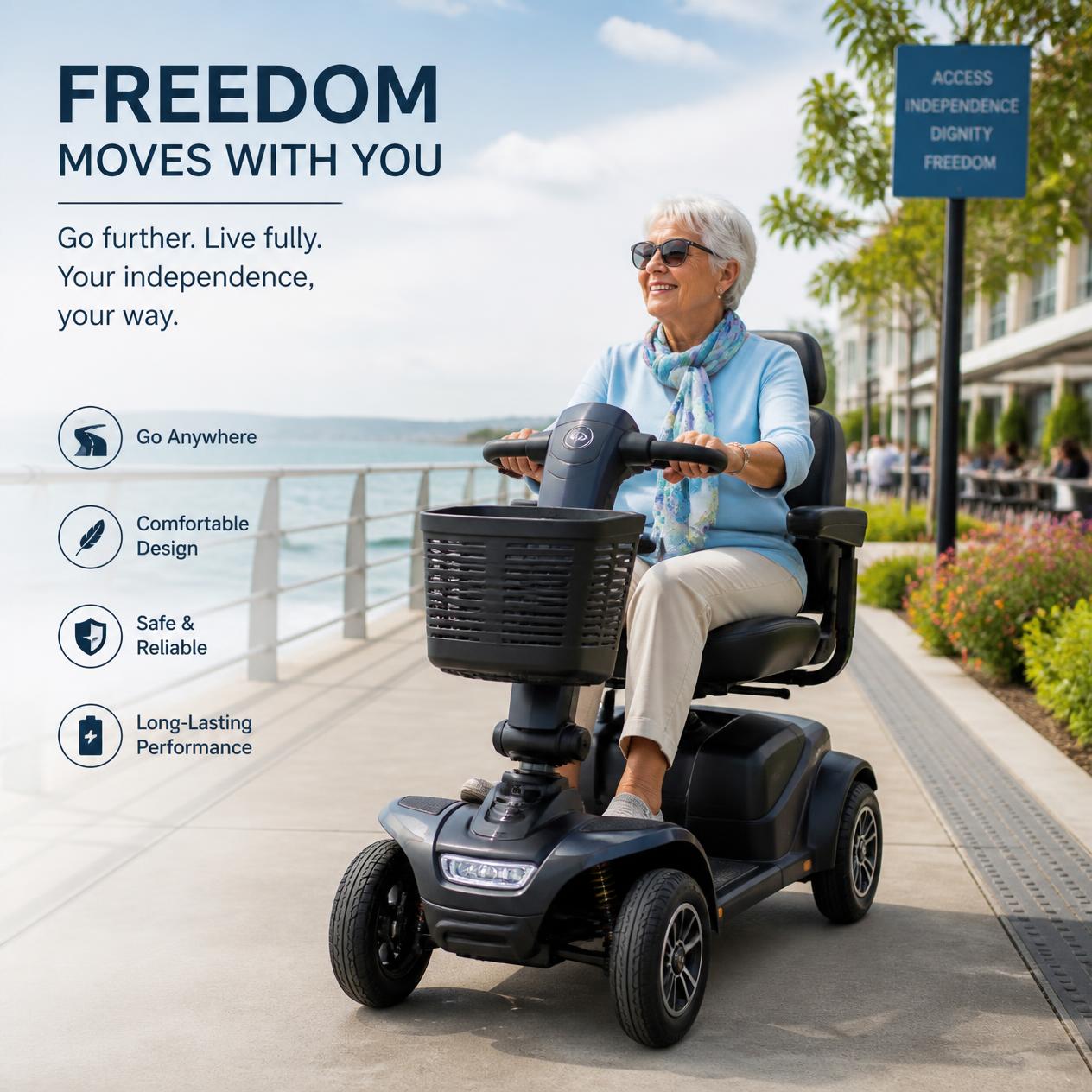
And yet, when you start researching, you're met with a dizzying wall of jargon: Class 2 versus Class 3, 3-wheel versus 4-wheel, travel scooters versus heavy-duty, turning radius, weight capacity, battery range — and that's before anyone even mentions price tags that can make your eyes water.
Take a breath. You're in exactly the right place.
We'll walk through this together, one step at a time. By the end, you'll feel empowered, not overwhelmed. Ready?
Let's go!
Why This Decision Matters More Than You Think
Before we dive into the different types of mobility scooters, let's talk about why getting this right is so important.
A mobility scooter isn't like buying a toaster. If you buy the wrong toaster, you get uneven toast. Annoying, but not life-changing. If you buy the wrong scooter, you could end up with something that's too heavy to lift, too big to fit through your doorways, too weak for the hills in your neighbourhood, or too uncomfortable to use for more than ten minutes.
That's not just frustrating — it's demoralising. And it can make you feel like giving up on the whole idea.
But here's the good news: when you choose the right scooter, it can be genuinely life-transforming. Users consistently report feeling more confident, more social, and more in control of their lives. That's what we're aiming for.
So let's make sure you get it right the first time.
The Big Picture: How Mobility Scooters Are Classified
There are three main ways to categorize mobility scooters, and understanding all three will give you a complete picture of your options.
By legal classification (how and where you can use it)
By size and purpose (what it's designed to do)
By wheel count (how it handles)
Let's break each one down.
Legal Classifications: Class 2 vs. Class 3
This is where many beginners get tripped up, so let's keep it simple.
Class 2 Mobility Scooters
These are pavement-only scooters. They have a maximum speed of 6 km/h (4 mph)— about the speed of a brisk walk — and they're designed for footpaths, shopping centres, and pedestrian areas.
Most Class 2 scooters are dismantlable or foldable, making them easier to transport in a car boot. They have shorter battery ranges and are generally lighter and more affordable.
Who they're for: People who mainly stay within their local neighbourhood, visit nearby shops, or use their scooter indoors and on paved surfaces.
Class 3 Mobility Scooters
These are road-legal scooters. They can travel at up to 6km/h (4 mph) on pavements and up to 12 km/h (8 mph) on roads — roughly the speed of a jog. They come with mirrors, indicators, lights, and a horn because they're sharing space with cars.
Class 3 scooters cannot be dismantled for transport. They have longer battery ranges, larger wheels, and must be registered with the DVLA (if you're in the UK). They're heavier, sturdier, and more expensive.
Who they're for: People who need to travel further afield, including on roads, and who don't need to frequently lift or transport their scooter in a car.
Quick tip: If you're not sure which class you need, ask yourself: "Will I ever need to drive on a road?" If the answer is yes — even occasionally — you need a Class 3.
Now, here's where it gets interesting. Both Class 2 and Class 3 scooters come in 3-wheel and 4-wheel versions. So let's look at that next.
By Wheel Count: 3-Wheel vs. 4-Wheel Mobility Scooters
This is one of the most common questions people ask, and the answer isn't as simple as "one is better than the other." It depends entirely on where and how you'll be using your scooter.
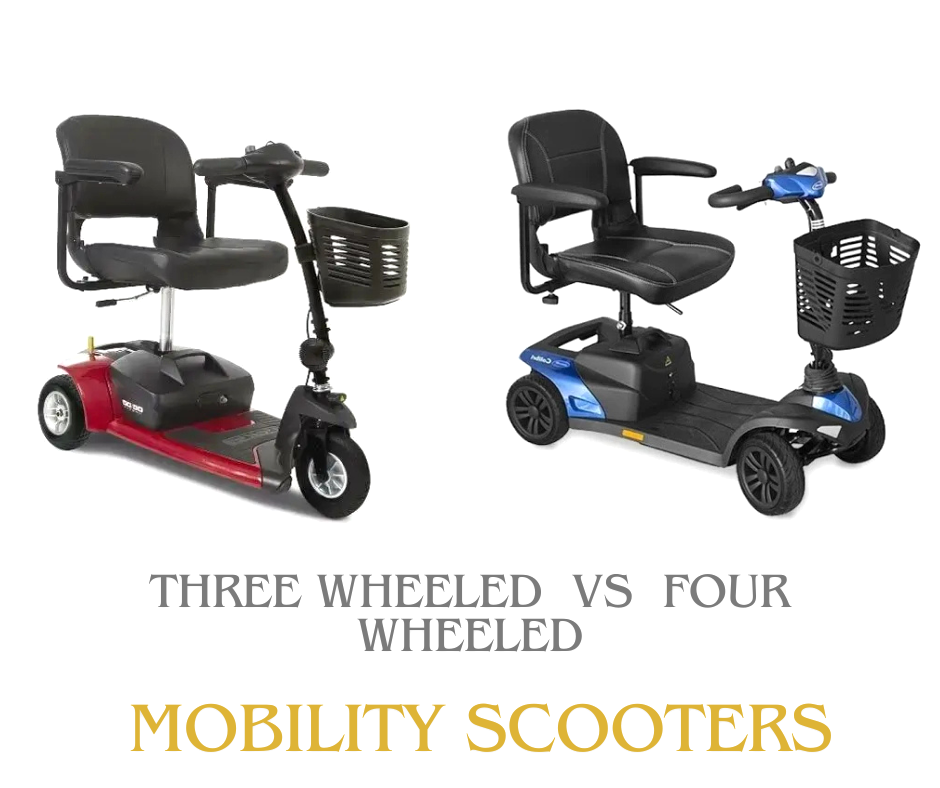
3-Wheel Mobility Scooters
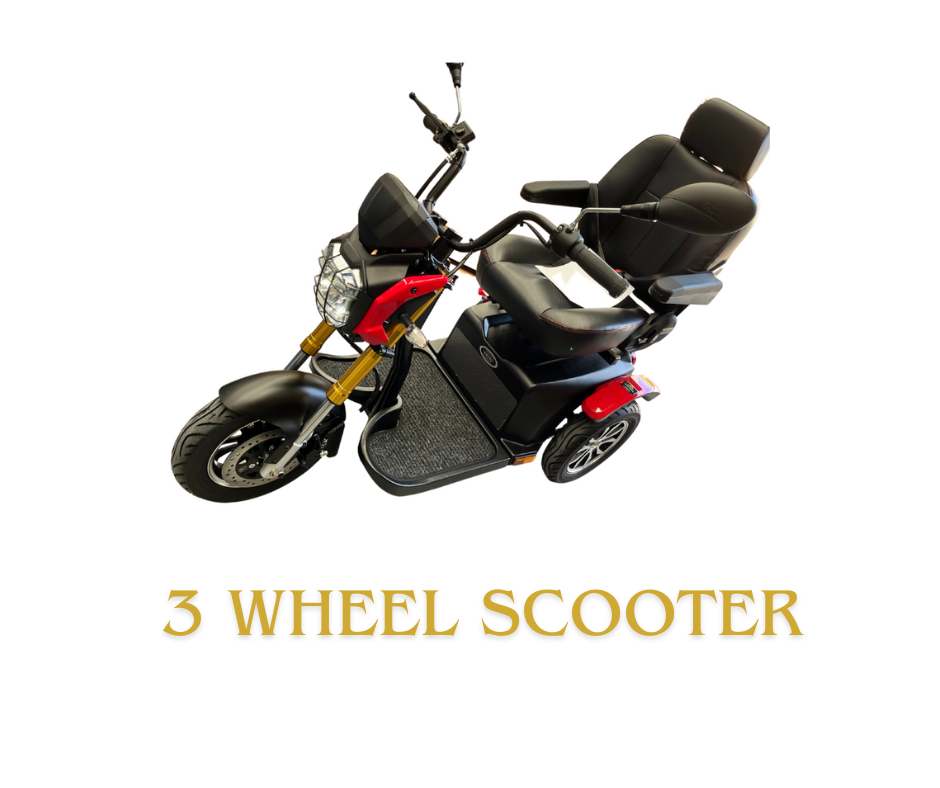
These have one wheel at the front and two at the back. Their superpower is maneuverability. They have a much tighter turning radius, which means they can spin around in narrow spaces, navigate crowded supermarket aisles, and squeeze through doorways that would stump a 4-wheel model.
They're also generally lighter and easier to transport.
The trade-off? They're less stable on uneven ground. If you hit a bump or a slope, you'll feel it more. They're not ideal for rough terrain, grass, or gravel.
Best for: Indoor use, shopping, smooth pavements, and anyone who values agility over stability
4-Wheel Mobility Scooters
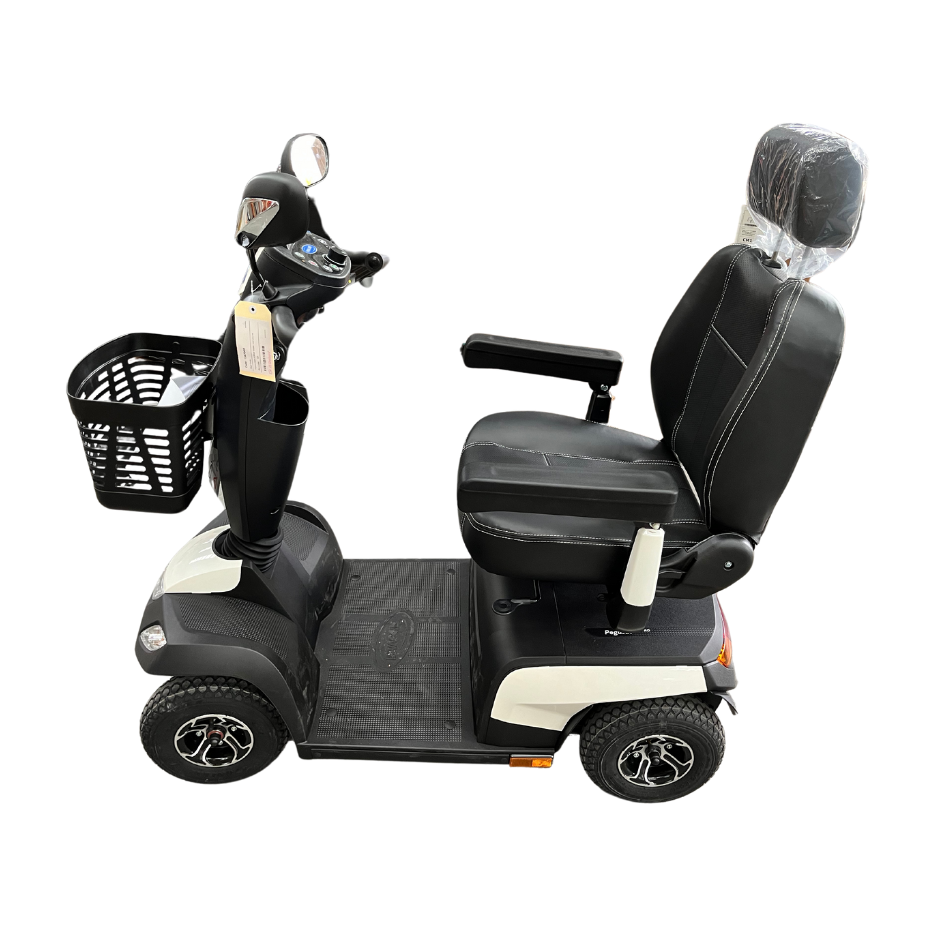
These have two wheels at the front and two at the back — like a car. Their superpower is stability. With four points of contact with the ground, they feel much more secure, especially outdoors on uneven surfaces.
They also offer more legroom and foot space, making them a better choice for taller or larger users. The ride is smoother because the weight is more evenly distributed.
The trade-off? They have a larger turning radius. You'll need more space to turn around, which can be tricky indoors or in crowded areas.
Best for: Outdoor use, uneven terrain, longer journeys, and anyone who prioritizes stability over agility.
So which should you choose? Here's a simple rule: if you're mostly indoors or on smooth pavements, consider 3-wheel. If you're mostly outdoors or on uneven ground, choose 4-wheel.
But wait — there's more. Let's look at the third way to categorise scooters.
By Size and Purpose: The Four Main Types
This is probably the most practical way to think about mobility scooter types, because it directly connects to how you'll actually use the scooter day to day.
1. Travel Scooters (Portable Scooters)
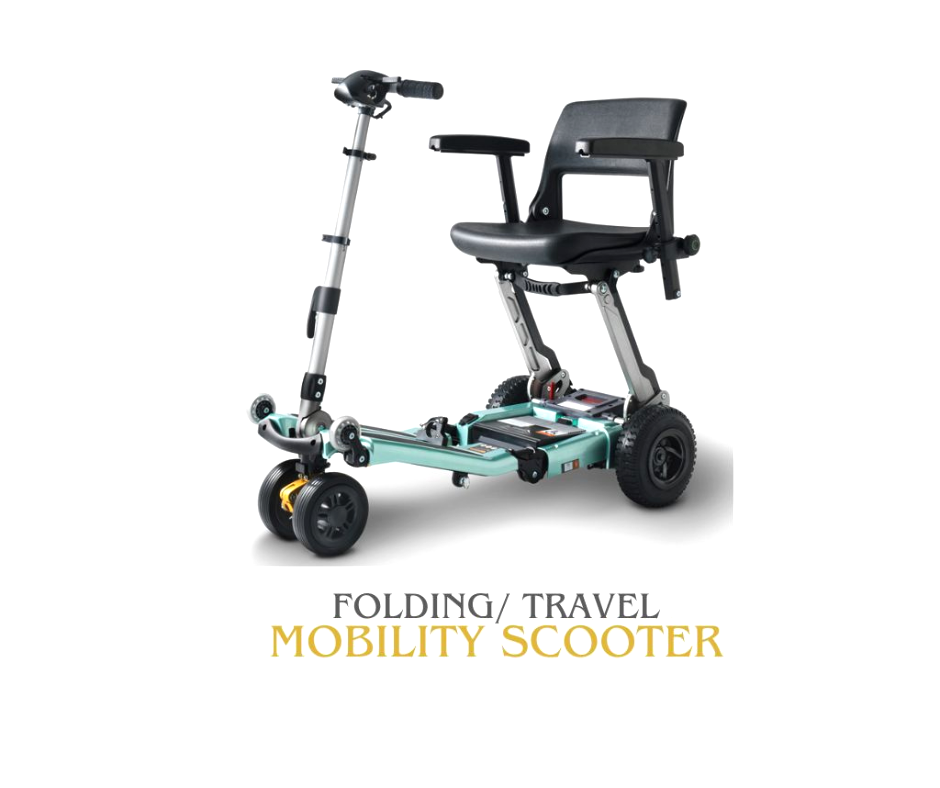
These are the lightweights of the scooter world. They're designed to be easy to transport — they either fold up compactly or break down into pieces that can fit in a car boot. Some are even airline-approved for travel.
Key features:
- Lightweight frames (often aluminum)
- Smaller wheels and lower ground clearance
- Shorter battery range (typically 10-15 miles)
- Lower weight capacity (usually under 325 lbs)
- Often 3-wheel for better maneuverability
Who they're for: People who travel frequently, need to put their scooter in a car, have limited storage space at home, or only use their scooter occasionally.
The catch: They're not built for rough terrain or long distances. They're perfect for a day out shopping or a holiday, but less suited for daily, all-day use.
If you're someone who loves to get out and about but needs a scooter that can come along for the ride, this is your category. Keep reading — we'll help you narrow it down further.
2. Mid-Size Scooters
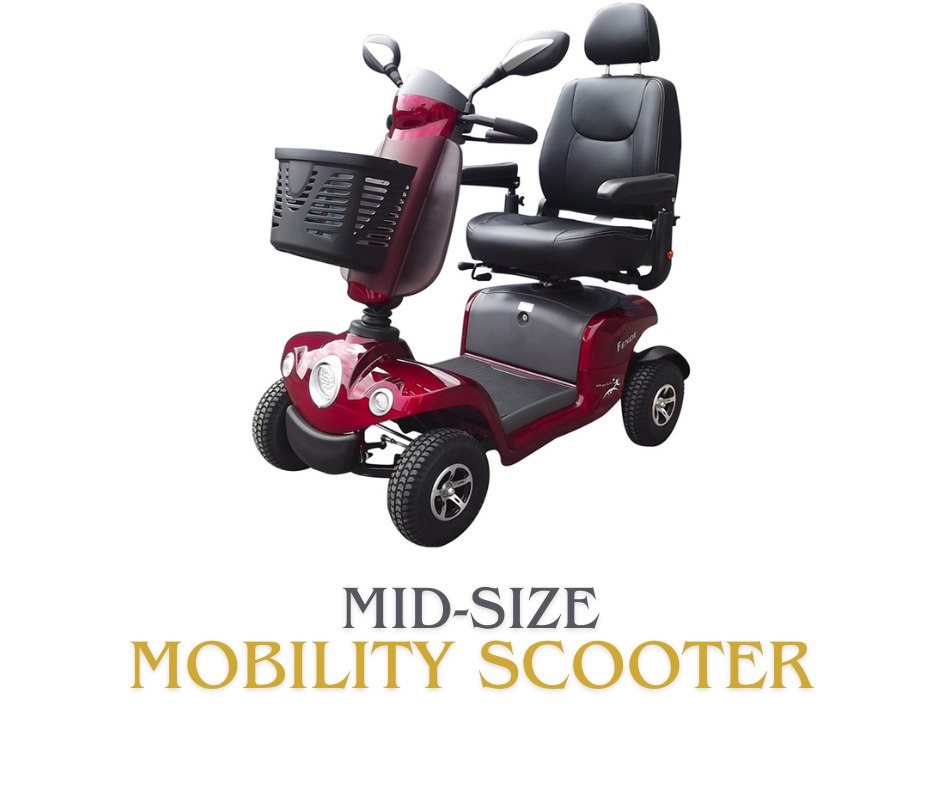
Think of these as the Goldilocks option — not too big, not too small, but just right for many people. They offer a balance of portability, comfort, and performance.
Key features:
- Larger wheels than travel scooters
- Better suspension for a smoother ride
- Longer battery range (typically 20-40 km / 12-25 miles)
- Higher weight capacity (usually 145-180 kg) (325-400 lbs)
- Available in both 3-wheel and 4-wheel configurations
Who they're for: People who use their scooter both indoors and outdoors, need a comfortable ride, and want something that can handle moderate distances without being too bulky.
The catch: They're heavier than travel scooters, so they're less portable. Some mid-size models are "transportable" (they can be taken apart), but the pieces are heavier.
This is the sweet spot for many first-time buyers — enough capability for most situations, without the bulk of a heavy-duty model.
3. Full-Size / Heavy-Duty Scooters
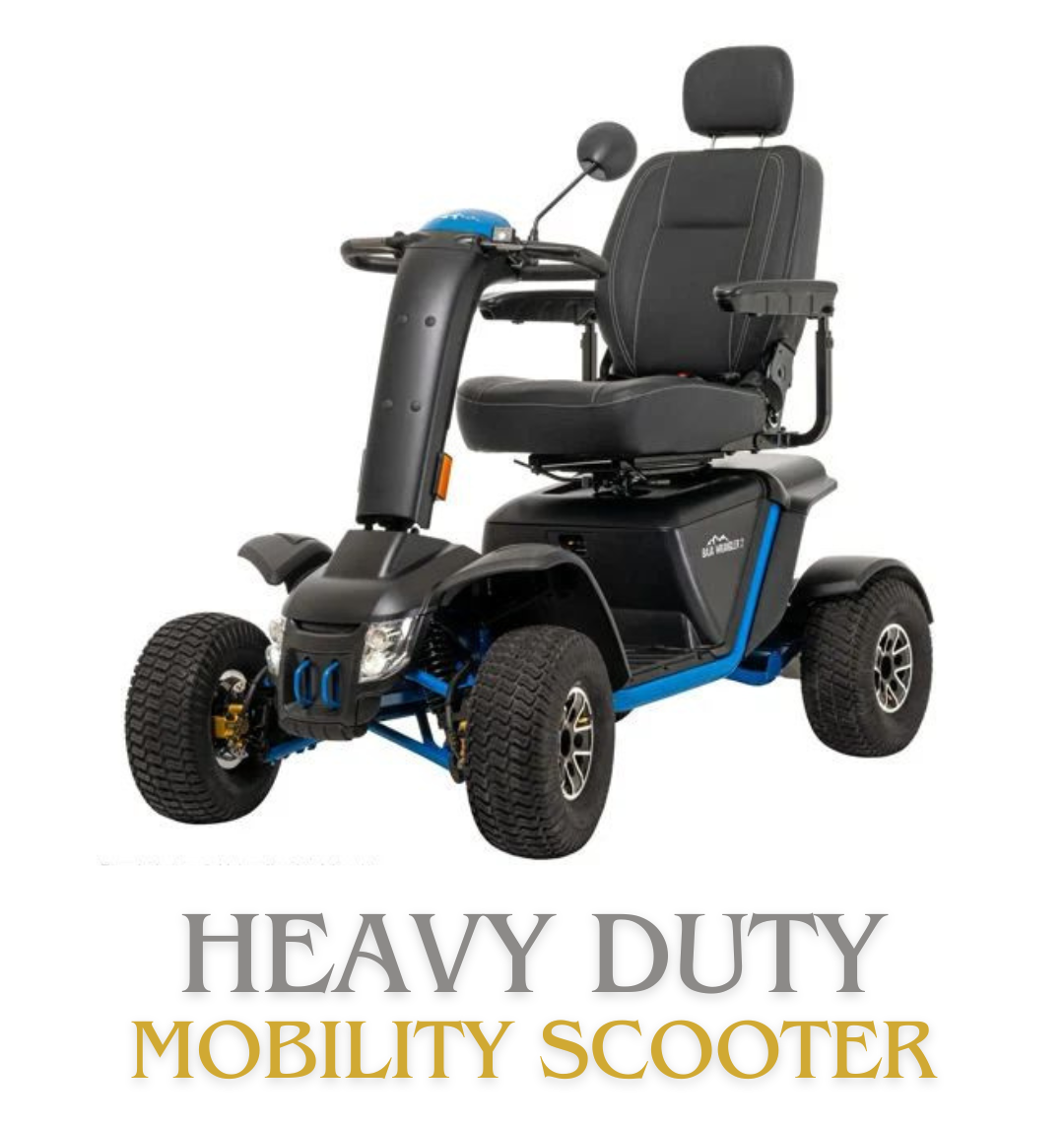
These are the tanks of the mobility scooter world. They're built for power, durability, and maximum comfort — and they don't compromise on any of it.
Key features:
- Large, sturdy frames with wide bases
- High ground clearance for tackling obstacles
- Powerful motors for hills and rough terrain
- Longest battery range (up to 25+ miles / 50 km)
- Highest weight capacity (400 lbs and above)
- Usually 4-wheel for maximum stability
- Full suspension for a comfortable ride
Who they're for: People who primarily use their scooter outdoors, live in rural or suburban areas, need to navigate rough terrain (grass, gravel, slopes), have higher weight requirements, or use their scooter for long periods every day.
The catch: They're heavy and bulky. You can't easily lift them into a car, and they need significant storage space. They're also the most expensive category.
If you need a scooter that can handle anything life throws at it — and you don't need to transport it regularly — this is where you'll find your match.
4. Folding Mobility Scooters
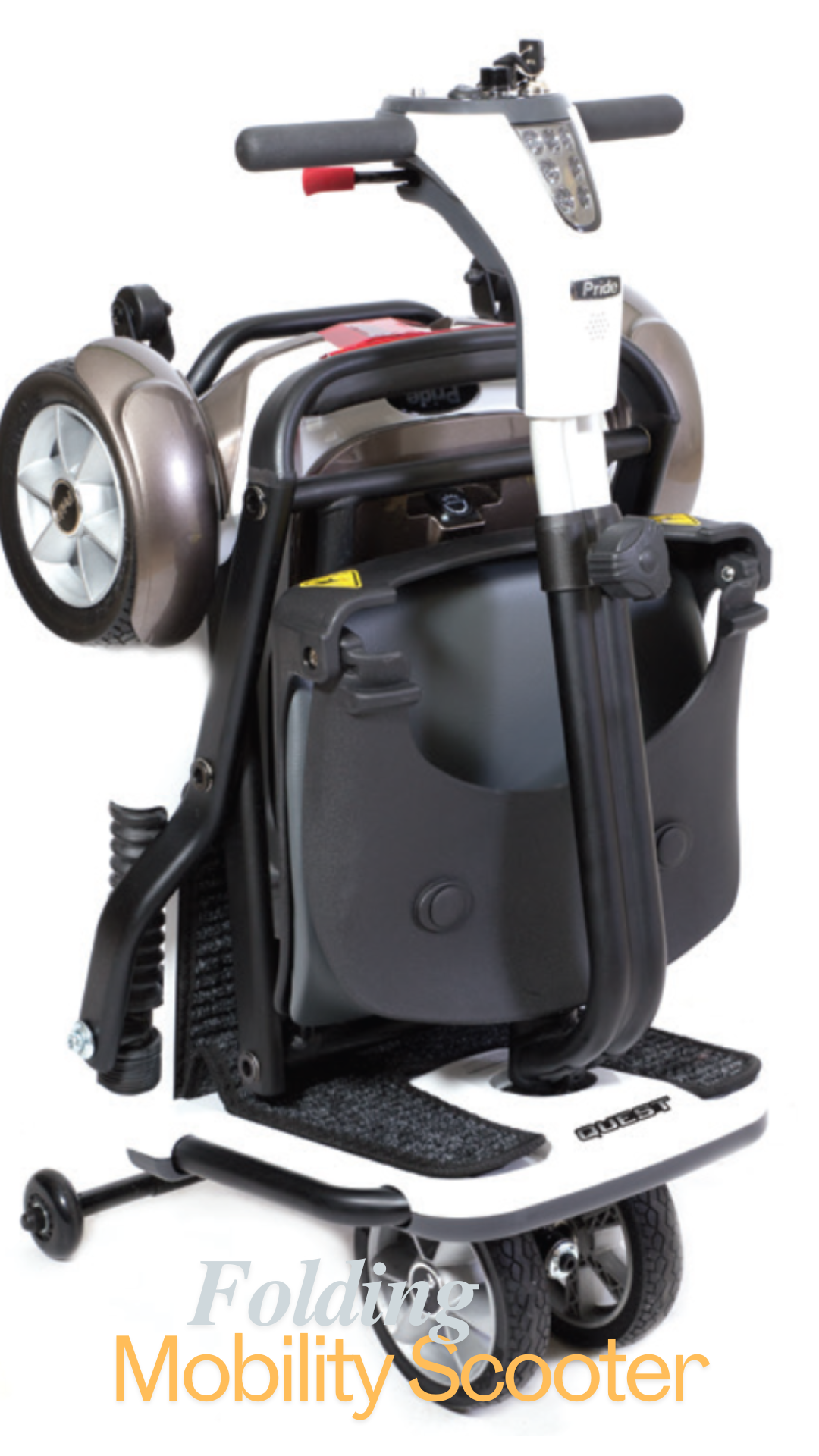
Folding scooters deserve a special mention because they're becoming increasingly popular — and for good reason.
These are Class 2 scooters that fold into a compact form, often with the press of a button. They're designed for maximum convenience — you can store them in a hallway cupboard, put them in the boot of a small car, or even take them on public transport.
The trade-off? Folding mechanisms add weight and cost. They also tend to have narrower seats and lower weight allowances than non-folding models.
Who they're for: People with very limited storage space, those who need to transport their scooter frequently, and anyone who values convenience above all else.
How to Choose the Right Mobility Scooter Type: Step-by-Step
Start by listing where you will actually use the scooter, how you will transport it, your weight, your balance, and your budget.
Then match those answers to a type: indoor use points to a 3-wheel folding or travel scooter; mixed indoor/outdoor use points to a 4-wheel mid-size; hills and rough ground point to a full-size or all-terrain model; higher body weight points to a bariatric scooter. Always test the heaviest piece you will need to lift and confirm the turning radius fits your home and local shops.
If you are in Australia, check state-based footpath and public transport rules before you commit.
Read full article: How do I choose the right mobility scooter type in Australia (step-by-step decision guide)?
Portable vs Travel vs Folding Mobility Scooters: What Sellers Mean
These three terms are often used interchangeably, but they mean different things.
A travel scooter is dismantled into four or five pieces for transport, while a folding scooter collapses into a compact shape without being taken apart.
Portable is the umbrella term for both. The key question is always: how heavy is the heaviest single piece, and can you lift it into your car boot or trunk?
Read full article: Portable vs travel vs folding mobility scooters: what do Australian sellers mean by each term?
How to Measure Your Car Boot for a Portable Mobility Scooter
Measure the boot or trunk opening, the internal floor length, width, and height, and the lip height you must lift the scooter over.
Then compare those numbers with the scooter’s folded or dismantled dimensions, not just its overall length. Leave at least 5 cm of clearance on every side so you are not forcing the scooter in. If the heaviest piece is too heavy for you, the scooter is the wrong type even if it technically fits.
Read full article: How do I measure my car boot to choose a portable mobility scooter (and avoid buying the wrong type)? (Coming Soon!)
When a 3-Wheel Scooter Is the Wrong Choice
A 3-wheel scooter is the wrong choice if you regularly travel on sloped driveways, cambered footpaths, gravel, or uneven ground. It is also a poor fit if you have balance concerns, weak core stability, or a history of falls.
Tight indoor manoeuvrability does not compensate for instability outdoors. If your daily route includes any of these conditions, choose a 4-wheel model instead.
Read full article: When is a 3-wheel scooter the wrong choice (real-life scenarios that cause regret)? (Coming Soon!)
When a 4-Wheel Scooter Is the Wrong Choice
A 4-wheel scooter is the wrong choice if your home has narrow hallways, tight doorways, or sharp turns that demand a turning radius under 100 cm. It is also a poor fit if you need to lift the scooter into a car frequently, because most 4-wheel models are heavier and bulkier than 3-wheel equivalents.
And if you mainly need indoor manoeuvrability, the extra stability of a fourth wheel may not be worth the loss of agility.
Read full article: When is a 4-wheel scooter the wrong choice (real-life scenarios that cause regret)? (Coming Soon!)
Choosing a Mobility Scooter Type for Hills and Sloped Driveways
For hills and sloped driveways, prioritise motor power, wheel size, braking quality, and weight distribution. A 4-wheel scooter with a high-torque motor, larger pneumatic tyres, and a low centre of gravity will outperform a lighter travel scooter every time.]
Check the scooter’s maximum incline rating and test it on a real slope before buying. Battery range also drops sharply on hills, so choose more range than you think you need.
Read full article: How to choose a mobility scooter type for hills and sloped driveways (what to prioritise)? (Coming Soon!)
Mobility Scooter Types for Tall or Heavier Users
Tall users need adjustable seat height, generous legroom, a height-adjustable tiller, and a longer wheelbase. Heavier users need a higher weight capacity with a safety margin, a wider seat, reinforced suspension, and a more powerful motor.
A standard scooter pushed to its maximum weight limit will struggle on inclines and wear out faster. Choose a bariatric or heavy-duty type rather than a standard model with a high claimed limit.
Read full article: Mobility scooter types for tall or heavier users: which design features matter most?
The Specs That Actually Matter
Turning Radius
For indoor use, you need a turning radius under 100 cm. Folding scooters often achieve 80–90 cm. Full-size scooters can need 200 cm or more, which is fine outdoors but impractical in narrow hallways.
Range
Most scooters cover 15–30 km per charge; full-size models can exceed 40 km. Match range to your longest typical outing, plus a 50% safety margin. Hills, weight, and tyre type all reduce real-world range.
Ground Clearance
Folding and travel scooters usually have 5–6 cm, which suits smooth footpaths and indoor floors. All-terrain and heavy-duty models have 10–14 cm, which handles kerbs, gravel, and uneven ground.
Tyres: Solid vs Pneumatic
Solid tyres are puncture-proof and low-maintenance but give a harsher ride and can reduce range by 10–20%. Pneumatic tyres offer better comfort and shock absorption and can extend range, but they need monthly pressure checks. Choose solid for rough, broken pavements; choose pneumatic for joint pain, back sensitivity, or long outdoor rides.
Weight Capacity
Standard scooters typically support 113–136 kg. Mid-size and full-size models range from 150–180 kg. Bariatric models support 200–350 kg. Never choose a scooter where the user’s weight is close to the maximum. Leave at least 20 kg of margin for safety and performance.

Regulations and Transport: What to Check Before You Buy
Rules vary widely by country, state, and city. In Australia, mobility scooters are generally allowed on footpaths in most states but limited to 10 km/h, and public transport access varies by state.
In the Philippines, local government rules and mall policies may apply, and road use is generally restricted. For air travel, most airlines allow lithium batteries up to 300 Wh for a single removable battery, or two batteries of 160 Wh each, but the battery must usually be removed and carried in the cabin.
Always confirm with your local transport authority and airline before you travel.
Frequently Asked Questions
What are the main types of mobility scooters?
Travel, folding, mid-size, full-size/heavy-duty, all-terrain, and bariatric. Each type is defined by its primary purpose: portability, versatility, outdoor capability, or weight capacity.
What’s the difference between a 3-wheel and a 4-wheel mobility scooter?
3-wheel scooters turn more tightly and suit indoor use and smaller users. 4-wheel scooters are more stable on slopes and uneven ground, and offer more legroom for taller users.
Which mobility scooter type is best for indoor use?
A 3-wheel folding or travel scooter with a turning radius under 100 cm. Compact dimensions and smooth throttle response matter more than range or speed indoors.
Which mobility scooter type is best for outdoor footpaths and shopping trips?
A 4-wheel mid-size scooter. It balances outdoor stability with enough manoeuvrability for shop aisles and footpaths.
What does “portable” mean for a mobility scooter (and what usually comes apart)?
Portable means it can be transported in a standard car boot. Travel scooters dismantle into 4–5 pieces: seat, battery, rear section, and front section. Folding scooters collapse into one compact unit without disassembly.
Portable vs travel vs folding mobility scooters: what’s the difference?
Travel scooters are dismantled. Folding scooters collapse without disassembly. “Portable” is the umbrella term for both.
What is a “mid-size” mobility scooter, and who is it for?
A scooter that bridges compact travel models and full-size heavy-duty models. It suits users who need both indoor manoeuvrability and outdoor capability on footpaths and in shopping centres.
What counts as “heavy-duty” in mobility scooters?
Typically a weight capacity of 150 kg or more, larger wheels, higher ground clearance, longer battery range, and more powerful motors. These are designed for outdoor use and rougher terrain.
Are “all-terrain” mobility scooters actually different, or mostly marketing?
Genuinely different. All-terrain models have pneumatic tyres, higher ground clearance — often 10 cm or more — and more robust suspension than standard scooters. They are built for gravel, grass, and uneven ground, not just marketed as such.
How do I choose a mobility scooter type if I have balance concerns?
Prioritise a 4-wheel scooter for maximum stability. Consider a power wheelchair if balance is severely limited, because joystick control requires less upper-body coordination than tiller steering.
How do I choose a mobility scooter type if I have limited hand strength or grip?
Look for delta tiller handles, loop handles, and scooters with lighter steering effort. Heavy-duty and bariatric models often have loop handle controls for easier finger-touch operation.
What turning radius do I need for my home and local shops?
Under 100 cm for tight indoor spaces. Folding scooters typically achieve 80–90 cm. Full-size scooters need 200 cm or more and are unsuitable for narrow hallways.
How much range do I really need (and how does scooter type affect it)?
Match range to your longest typical outing, plus 50% margin. Travel scooters: 15–20 km. Mid-size: 20–30 km. Full-size: 30–45 km. Hills, weight, and tyre type all reduce actual range.
Do bigger scooters always have better suspension and comfort?
No. Many mid-size scooters now offer excellent suspension and captain’s seats. A well-specified mid-size scooter can be more comfortable for daily use than a poorly designed large one.
Pneumatic vs solid tyres: which is better for my use?
Pneumatic for comfort and range on smooth surfaces. Solid for puncture-proof reliability on rough, broken pavements. Pneumatic tyres can give 10–20% more range but need monthly pressure checks.
How important is ground clearance when choosing a scooter type?
Critical if you navigate kerbs, gravel, or uneven ground. Folding scooters have 5–6 cm and suit smooth surfaces only. All-terrain and heavy-duty models have 10–14 cm and can handle rough terrain.
What weight capacity do mobility scooters typically support by type?
Travel and folding: 113–136 kg. Mid-size: 136–160 kg. Full-size: 150–180 kg. Bariatric: 200–350 kg.
Are mobility scooters allowed on footpaths in Australia (and does type matter)?
Yes, in most states, with a 10 km/h speed limit. Type does not affect footpath legality, but scooter width and turning radius affect practical usability on narrow footpaths.
Can I take a portable/folding scooter on public transport in Australia?
Rules vary by state. In Victoria, mobility scooters are allowed on the public transport network. Some states restrict personal mobility devices but make provisions for medical mobility aids. Always check with your local transport authority.
What’s the most common “wrong type” mistake first-time buyers make?
Buying based on price or speed instead of fit. A scooter that is too large, too fast, or poorly matched to the user’s strength and environment increases fall risk and often ends up unused within weeks.
The Bottom Line
There is no “best” mobility scooter type. There is only the best type for your specific combination of body, home, and daily destinations. Start with where you will actually use it.
Choose 4 wheels if stability is a concern; 3 wheels if tight indoor manoeuvrability matters most. Match weight capacity with a safety margin. And never buy without sitting on the scooter and, if possible, testing it in a real-world environment.
The right scooter does not just move you from A to B. It gives you back the confidence to go there.
Stay mobile, stay confident!
Sign up for our monthly Mobility Scooter Newsletter to receive practical guides, expert advice, and inspiring stories that help you make the most of your scooter and download our free "Mobility Scooter Guide for Beginners."
Don't worry — your e-mail address is totally secure.
I promise to use it only to send you our newsletter, "Mobility Matters."
Recent Articles


-
Portable vs Travel vs Folding Mobility Scooters Buyer's Guide
Sep 15, 26 11:01 AM
 Confused by "portable," "travel," and "folding" mobility scooter listings? This guide explains what Australian sellers actually mean, with real weight comparisons and a decision framework.
 -
Mobility Scooter Types Overview: No More Confusion
Sep 15, 26 10:54 AM
 Mobility scooter types explained in plain English. Includes Australian footpath rules, airline battery limits, and the one mistake most first-time buyers make.
 -
How to Choose a Mobility Scooter in Australia Guide (2026)
Sep 15, 26 07:29 AM
 Choosing a mobility scooter in Australia? This guide covers registration requirements by state, public transport dimensions, NDIS funding steps, and practical testing advice.


Ready to Feel More Confident on Your Mobility Scooter?

My Ebook, The Ultimate Guide to Mobility Scooters, walks you through choosing the right scooter, using it safely, and keeping it in top condition — all explained in clear, friendly language.
Give yourself (or someone you love) the gift of independence.



