- Home
- Mobility Scooter Types
- Mobility Scooter Types Overview:
- Portable vs Travel vs Folding Mobility Scooters
Portable vs Travel vs Folding Mobility Scooters: What Australian Sellers Really Mean
If you have spent any time browsing mobility scooter listings in Australia, you have probably noticed that the terms portable, travel, and folding are used as if they mean the same thing.
They do not.

A scooter listed as "folding" might not come apart at all. A scooter called "travel" might weigh 40 kg in total. And a scooter described as "portable" might be technically transportable but practically impossible for you to lift into a car boot on your own.
This guide cuts through the terminology confusion. It explains what Australian sellers actually mean by each term, what the real-world weight and lifting implications are, and how to choose the right type for your car, your body, and your travel habits.
The Core Difference in Plain English
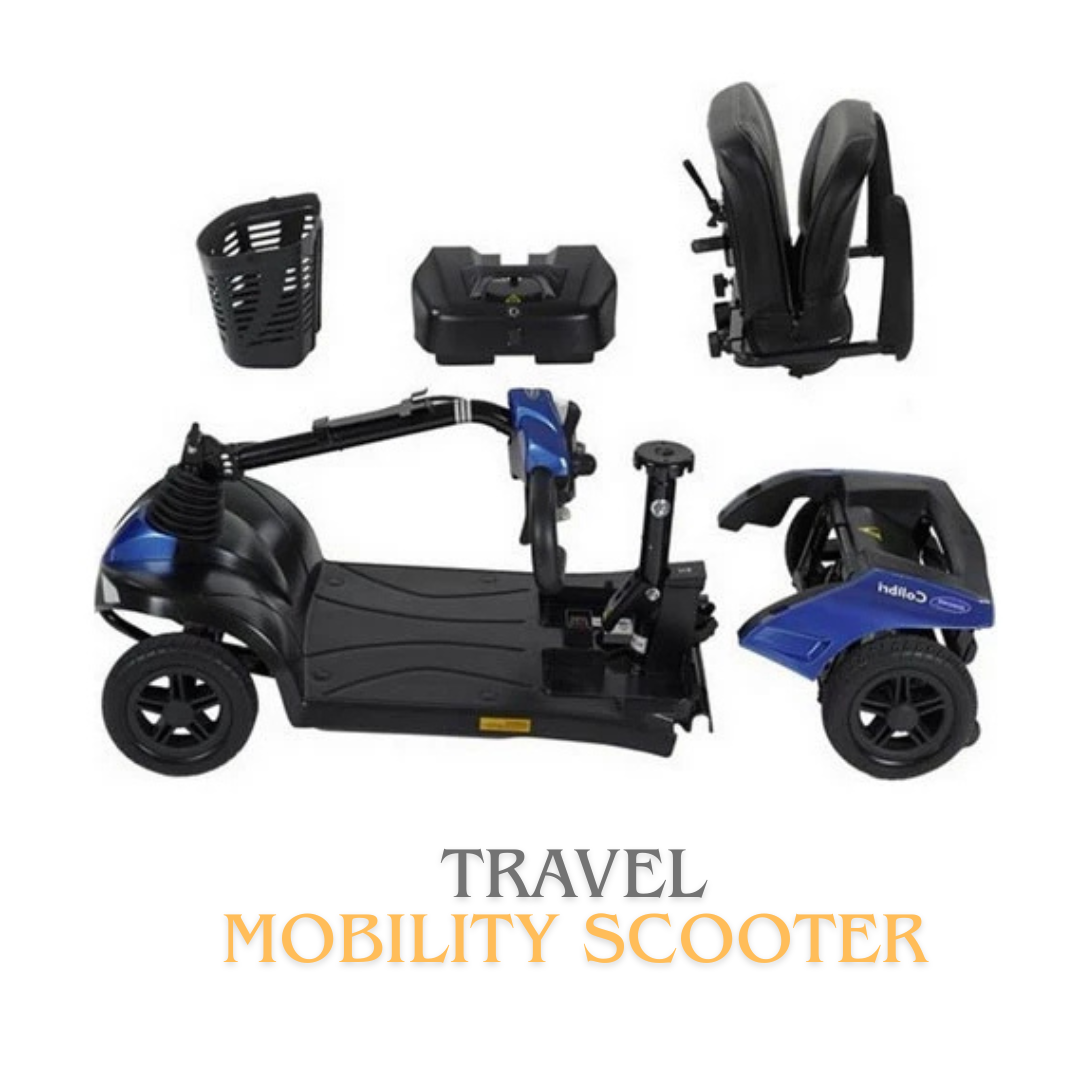
Travel scooters come apart. You dismantle them into separate pieces — typically the seat, battery, rear section, and front section — to fit them into a car boot or storage space. The benefit is that the heaviest single piece is usually manageable, often between 10 kg and 16 kg.
The trade-off is that setup and pack-down take time, and you need somewhere to put the pieces while you reassemble. As one retailer explains, "travel mobility scooters actually come apart into a number of different sections... the benefit is the separate parts weigh no more than 10–15kg, making them far easier to lift".
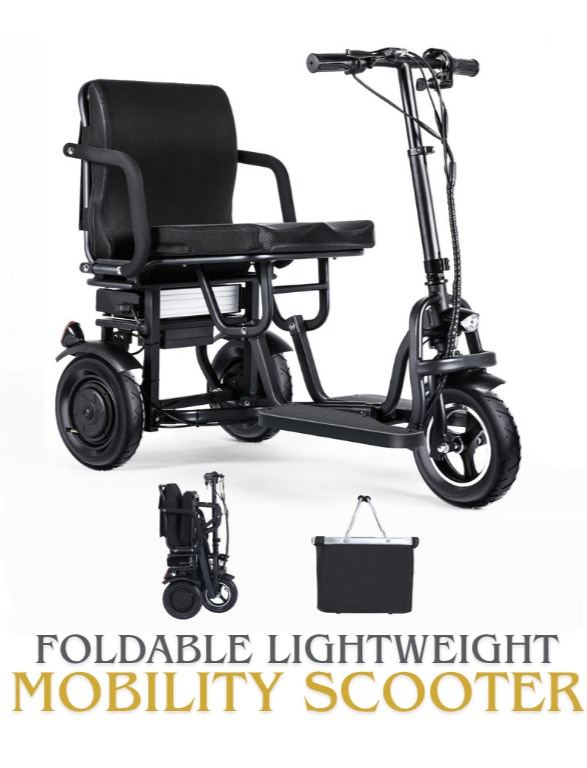
Folding scooters collapse.They fold down into a compact shape, usually in a few simple steps or with an automatic mechanism, without being taken apart. You do not need to remove the seat or separate the frame.
This makes them faster to deploy and easier to manage if you have limited hand strength. The trade-off is that the folded scooter remains one piece, so the entire folded weight must be lifted into the boot. Many folding scooters weigh between 20 kg and 35 kg.
Portable is the umbrella term. When an Australian seller says "portable," they mean the scooter can be transported in a car boot or taken on a plane. A portable scooter may be either a travel scooter (dismantles) or a folding scooter (collapses). As one Australian retailer puts it, portable scooters "are either foldable or easily dismantle into pieces for ease of access when you're on go".
The critical question is not "is it portable?" The critical question is: what is the weight of the heaviest single piece, and can you lift it safely?
The Real-World Weight Test (and Why It Matters More Than Anything Else)
A scooter can be "portable" on paper and completely impractical in reality. The numbers you need to compare are:
- Total scooter weight (including battery)
- Heaviest single piece weight (for travel scooters)
- Folded weight (for folding scooters, which remain one piece)
Here is how the numbers look across real Australian models:
|
Scooter Type |
Example Model |
Total Weight |
Heaviest Piece |
Fits standard car boot? |
|
Travel (dismantles) |
Aspire Boot Supalite |
34 kg |
10.7 kg |
Yes, in 6 pieces |
|
Travel (dismantles) |
SupaScoota MicroLite |
18 kg |
11.9 kg |
Yes, in 3 pieces |
|
Travel (dismantles) |
Aspire Delta Small |
38.8 kg |
15.7 kg |
Yes, in 5 pieces |
|
Folding (auto) |
Solax Transformer |
25 kg |
25 kg (whole unit) |
Yes, folded |
|
Folding (manual) |
Solax Mobi Free Flat |
~22 kg |
~22 kg (whole unit) |
Yes, folded flat |
A travel scooter with a 10.7 kg heaviest piece is easier to lift repeatedly than a 25 kg folding scooter that stays in one piece. But the folding scooter is faster to set up and requires less physical manipulation.
The right choice depends on which trade-off matters more to you.
If you cannot comfortably lift 10 kg — a standard bag of potting mix, for example — you need to look at the lightest travel scooters or consider a different transport solution entirely.
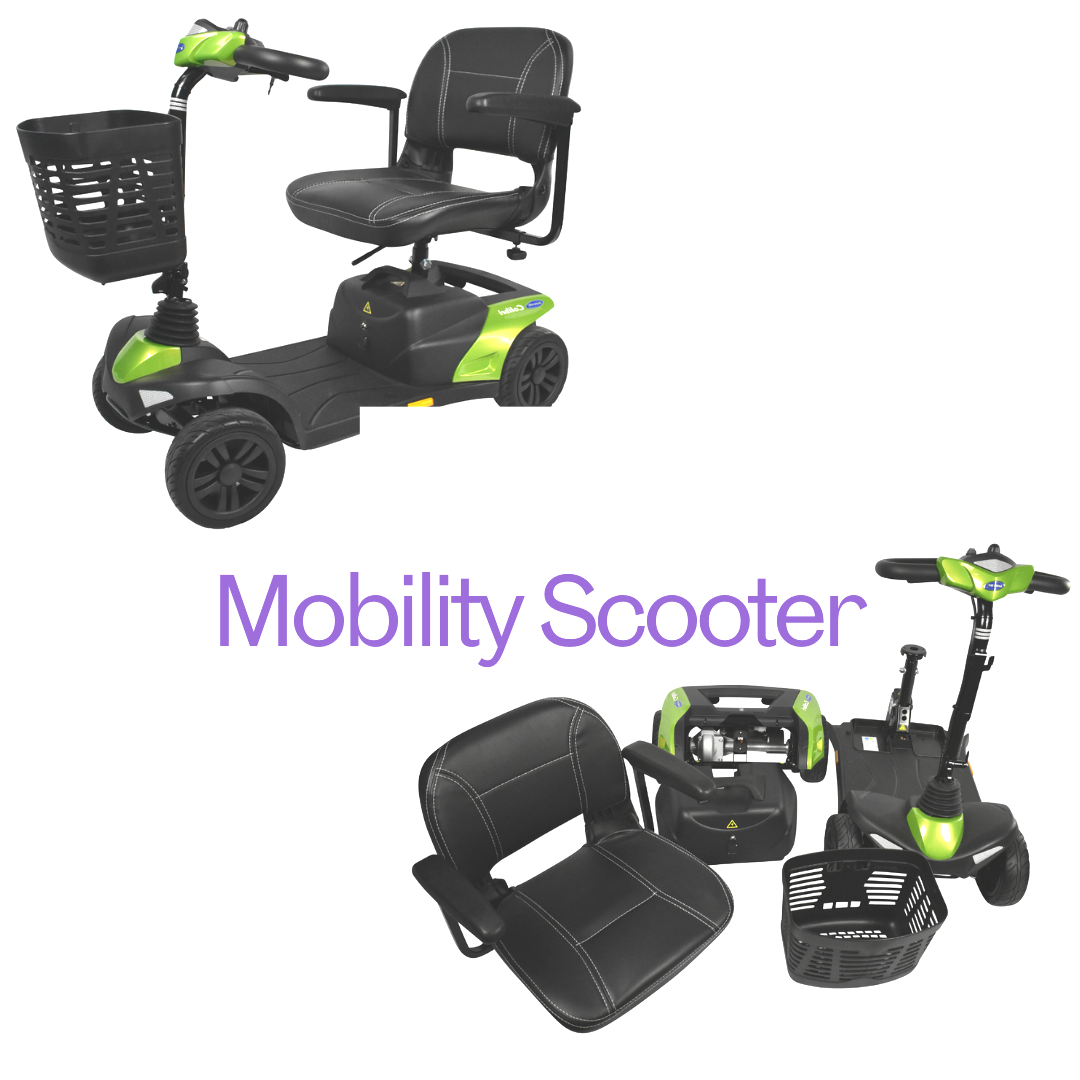
What Usually Comes Apart on a Travel Scooter
Most travel scooters separate into four to six components. The standard breakdown is:
- Seat (removable, often with a handle)
- Battery (removable, sometimes the heaviest single piece)
- Rear section (motor and rear wheels)
- Front section (tiller and front wheel)
- Basket or accessory (if fitted)
Some models, like the Aspire Boot Supalite, separate into six pieces with the heaviest component weighing just 10.7 kg. Others, like the Aspire Delta Small, separate into five pieces with the heaviest at 15.7 kg.
The number of pieces matters less than the weight of the heaviest one. A scooter that breaks into ten pieces but has one 20 kg section is harder to manage than a scooter that breaks into four pieces with a 12 kg maximum.
What Folding Scooters Actually Fold Into
Folding scooters are engineered to collapse without disassembly. Manual folding scooters typically require you to fold the tiller down, fold the seat, and collapse the frame. Automatic folding scooters — increasingly popular in Australia — do this at the push of a button or via remote control.
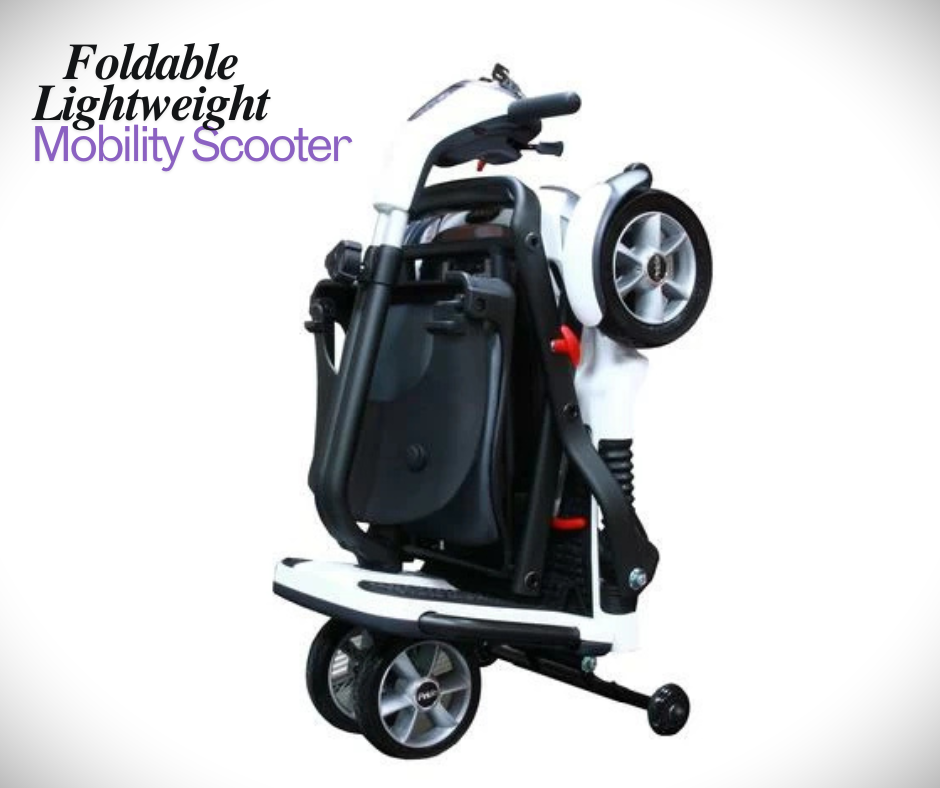
The folded dimensions vary significantly. Some compact models fold to approximately 86 x 35 x 12 cm, making them small enough to fit in a narrow cupboard or behind a car seat. Others fold to around 97 x 47 x 35 cm, which is boot-friendly but not cupboard-friendly.
The key measurement is the folded height. If you drive a sedan with a low boot opening, you need a scooter that folds flat enough to slide under the lip. If you drive an SUV or wagon, you have more vertical clearance.
Australian Seller Terminology: What to Watch For
Australian sellers use these terms inconsistently, and some listings blur the categories deliberately or accidentally. Here are the red flags to watch for:
"Portable" without weight specs. If a listing says "portable" but does not list the heaviest piece weight or folded weight, assume it is not genuinely portable for someone with limited lifting capacity.
"Travel scooter" that does not come apart. Some sellers use "travel" to mean "suitable for travel" rather than "dismantles for travel." A scooter can be travel-suitable and still be a folding model. Check the description for whether it "disassembles" or "folds."
"Folding" that requires tools. A genuine folding scooter folds without tools. If the listing mentions removing bolts or using a spanner, it is not a true folding scooter — it is a partially disassemblable scooter marketed as folding.
Weight listed without battery. Many listings quote the scooter weight "without battery." The battery can weigh 2–4 kg. Always ask for the heaviest piece weight including the battery if the battery is designed to stay attached during transport.
How to Choose: A Practical Decision Framework
Choose a travel scooter (dismantles) if:
- You need the lightest possible individual pieces to lift
- You have a carer or family member who can assist with setup
- You travel by air and need a scooter that packs into multiple pieces
- You have limited upper-body strength and cannot lift a 25 kg folded unit
Choose a folding scooter (collapses) if:
- You need fast setup and pack-down, often multiple times per day
- You use rideshare services or taxis and need to fold quickly at the kerb
- You have limited hand strength or grip and cannot manage multiple separate pieces
- You have a car with a large boot opening and can lift 20–25 kg in one piece
Choose a lightweight folding scooter (under 20 kg) if:
- You need one-piece convenience but cannot manage 25 kg
- Models like the Smarti Plus T330C weigh just 16.15 kg without the battery, and the Bluey Carbon Fibre scooter weighs 13 kg
- These are the lightest folding options on the Australian market and suit users who need genuine one-person portability
Air Travel and Australian Transport Rules
If you plan to fly with your scooter, the travel vs folding distinction matters for airline acceptance. Most airlines accept both types, but the battery is the critical factor. Lithium batteries must typically be removed and carried in the cabin, with limits of 300 Wh for a single battery or two batteries of 160 Wh each.
Travel scooters with removable batteries are generally easier to prepare for air travel because the battery is designed to detach. Folding scooters with fixed batteries may require more negotiation with the airline. Always confirm with your specific airline before booking.
For public transport in Australia, the scooter must fit within the allocated space — typically 1300 mm by 800 mm — and the combined weight of user and scooter must be under 300 kg in most jurisdictions. A folding scooter that collapses to a compact size is often easier to manage on a bus or train than a travel scooter in pieces.

The Bottom Line
"Portable" is a marketing term. "Travel" and "folding" are engineering descriptions. The only numbers that matter are the heaviest piece weight, the folded dimensions, and whether you can physically manage the lift and setup routine on your own.
If you can lift 10–15 kg repeatedly: choose a travel scooter that dismantles.
If you need one-piece convenience and can lift 20–25 kg: choose a folding scooter.
If you need both lightness and one-piece convenience: look at the sub-20 kg folding models now available in Australia.
And whatever you choose, test the lift before you buy. A scooter that fits your boot on paper is worthless if you cannot get it in there in practice.
Stay mobile, stay confident!
Sign up for our monthly Mobility Scooter Newsletter to receive practical guides, expert advice, and inspiring stories that help you make the most of your scooter and download our free "Mobility Scooter Guide for Beginners."
Don't worry — your e-mail address is totally secure.
I promise to use it only to send you our newsletter, "Mobility Matters."
Recent Articles


-
Portable vs Travel vs Folding Mobility Scooters Buyer's Guide
Sep 15, 26 11:01 AM
 Confused by "portable," "travel," and "folding" mobility scooter listings? This guide explains what Australian sellers actually mean, with real weight comparisons and a decision framework.
 -
Mobility Scooter Types Overview: No More Confusion
Sep 15, 26 10:54 AM
 Mobility scooter types explained in plain English. Includes Australian footpath rules, airline battery limits, and the one mistake most first-time buyers make.
 -
How to Choose a Mobility Scooter in Australia Guide (2026)
Sep 15, 26 07:29 AM
 Choosing a mobility scooter in Australia? This guide covers registration requirements by state, public transport dimensions, NDIS funding steps, and practical testing advice.


Ready to Feel More Confident on Your Mobility Scooter?

My Ebook, The Ultimate Guide to Mobility Scooters, walks you through choosing the right scooter, using it safely, and keeping it in top condition — all explained in clear, friendly language.
Give yourself (or someone you love) the gift of independence.

