- Home
- Mobility Scooter Types
- Mobility Scooter Types Overview:
- Mobility Scooter Types for Tall or Heavier Users
Mobility Scooter Types for Tall or Heavier Users: Which Design Features Matter Most?
Picture this: You are 6 foot 3. You have been putting off buying a mobility scooter because every model you have sat on feels like it was designed for someone a foot shorter. Your knees press against the tiller. The seat is so low that your hips ache after ten minutes. The backrest barely reaches your shoulder blades. And when you finally find a scooter that feels almost right, the salesperson tells you the weight capacity is "just barely" enough—which sounds less like reassurance and more like a warning.
You are not being difficult. You are not "too big" for a scooter. You are being failed by a market that designs around an average body that does not include you.
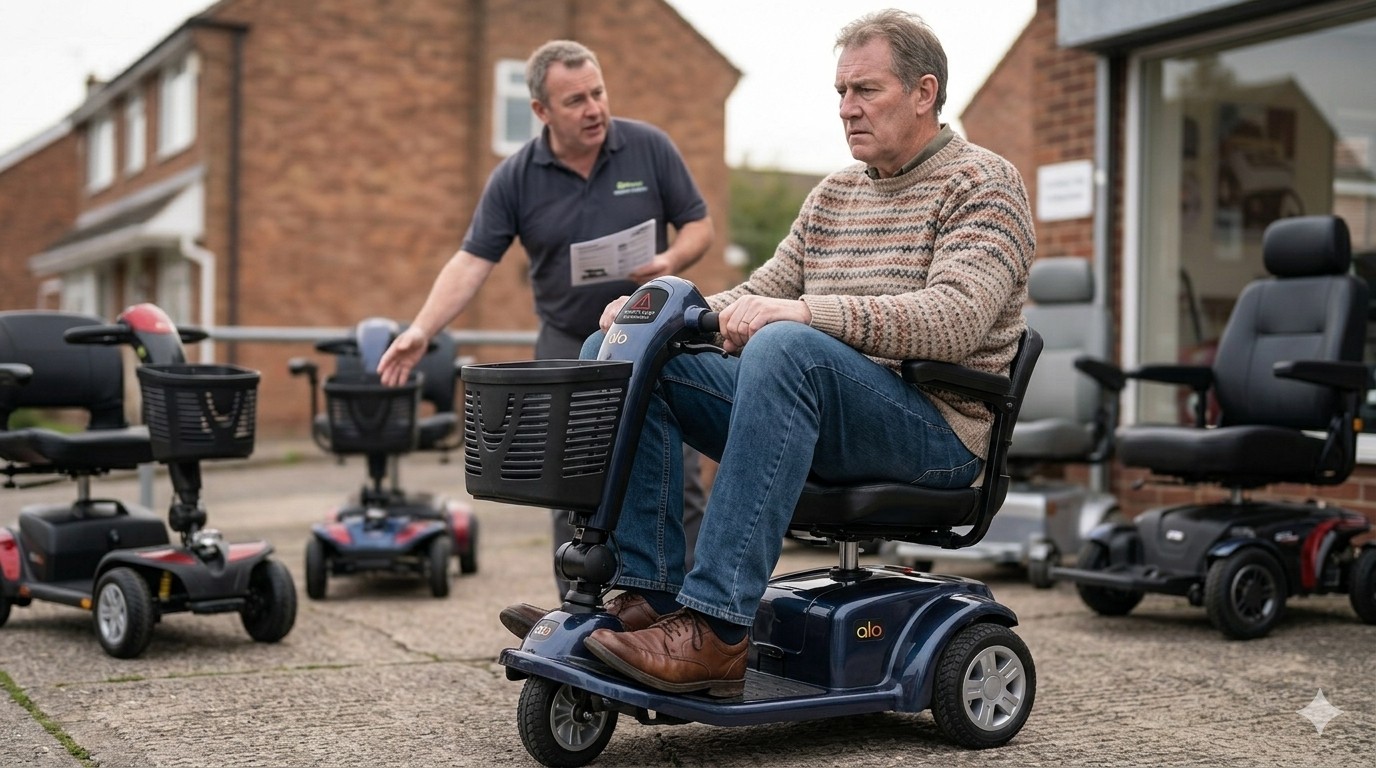
Mobility scooter types for tall or heavier users are not simply "bigger versions" of standard scooters. They are engineered differently—from the frame up—because the physics of supporting a taller, heavier body are fundamentally different.
And the design features that matter most are not always the ones sellers emphasise.
This guide will walk you through exactly which design features matter for tall users, which matter for heavier users, and which matter for both. You will learn how to evaluate seat height, deck length, tiller adjustment, weight capacity margins, motor power, suspension, and stability before you spend a dollar.
By the end, you will know what to prioritise—and what to ignore.
Why Standard Mobility Scooters Fail Tall and Heavier Users
Standard mobility scooters are designed around an average-sized person—typically someone between 5'4" and 5'10" weighing under 130 kg. That design assumption creates predictable problems for anyone outside that range.
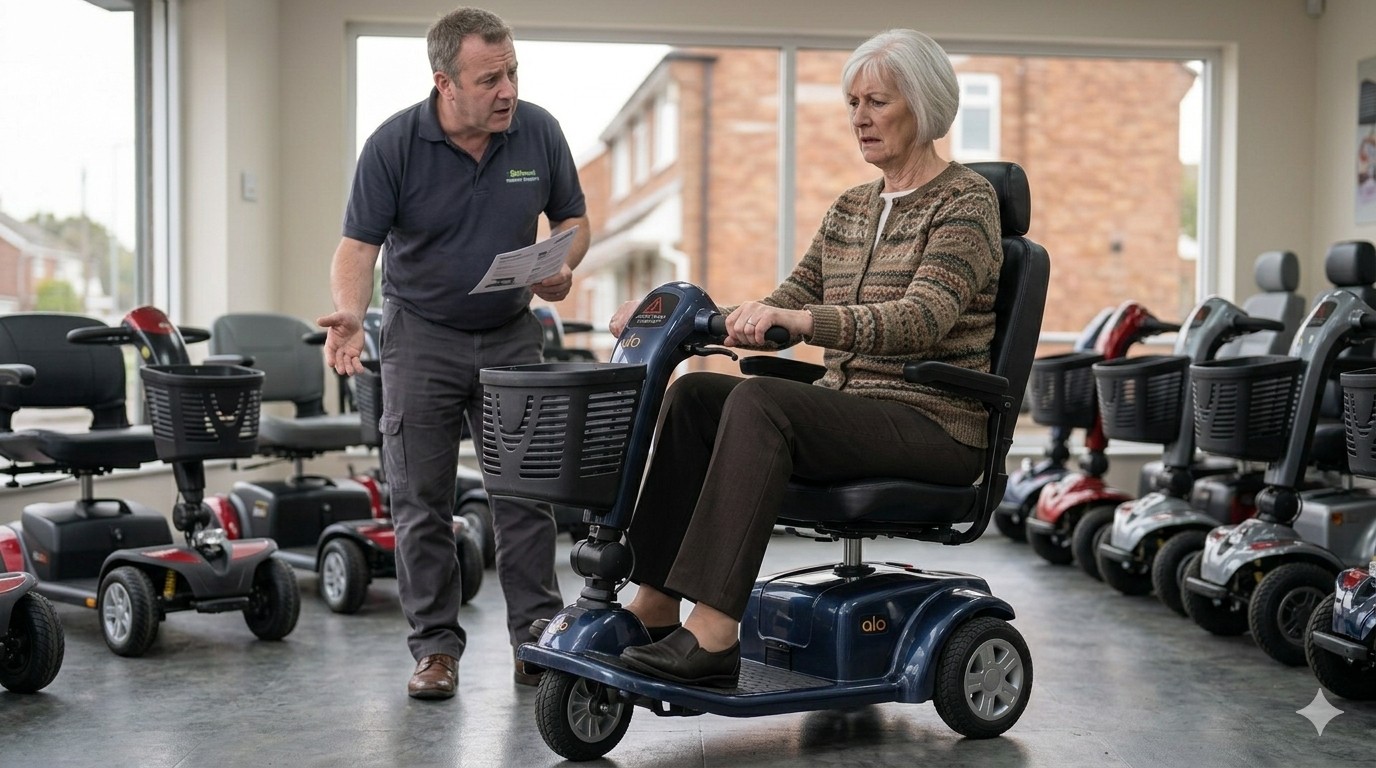
For taller users, the most immediate issue is geometry. A standard scooter seat is often too low, which forces your knees higher than your hips and puts pressure on your lower back. The deck—the floor space between the seat and the tiller—is too short, so your knees hit the steering column or your feet have nowhere to rest comfortably. The backrest is too short to support your shoulders. Over time, these compromises cause pain, fatigue, and reduced control.
For heavier users, the issue is physics. A scooter rated for 130 kg may technically operate with a 150 kg rider, but doing so taxes the motor, reduces battery life, compromises stability, and creates unsafe riding conditions. The frame flexes. The suspension bottoms out. The motor strains on inclines. And the margin of safety that should exist between the rider's weight and the scooter's limit disappears.
For users who are both tall and heavy, the problem doubles. You need a scooter that is structurally robust enough to support your weight and dimensionally generous enough to fit your frame. That is a different engineering challenge than either issue alone.
And it is why the next four design features matter more than anything else.
Design Feature 1: Seat Height, Width, and Depth
The seat is where you will spend every minute of every journey. If it does not fit, nothing else matters.
Seat height is the most critical measurement for taller users. Most standard scooters have a seat height of 16 to 17 inches from the deck. That is too low for many tall adults, because it forces your knees above your hips and compresses your lower back. As a rough guide, if you are around 5'11" to 6'1", look for a seat that adjusts to 18 to 19 inches from the deck. If you are 6'2" to 6'4", you may need 19 to 21 inches. For very tall users, larger road scooters or powerchairs that offer even higher adjustment ranges are often the only genuinely comfortable options.
Seat width matters most for heavier users and for anyone with a broader frame. Standard scooter seats are typically 40 to 45 cm wide. Bariatric and heavy-duty models offer seats ranging from 56 cm to 82 cm wide. The Shoprider Rocky 12 Baricare Scooter, for example, offers a standard 56 cm seat and a wide 82 cm option. The Invacare Comet Ultra features an extra-wide 26-inch (66 cm) seat designed specifically for bariatric users. A seat that is too narrow creates pressure points on the hips and thighs. A seat that is too wide makes it harder to reach the controls.
Seat depth affects leg support and comfort. Standard seats are usually 40 to 45 cm deep. Heavier and taller users often need deeper seats—46 to 55 cm—to support the full length of the thigh. The Invacare Comet Ultra offers a seat depth of 46 cm, while the Shoprider Rocky 12 wide seat has a depth of 45 cm. Look for adjustable seat depth if possible, because it allows you to fine-tune the fit.
A seat that fits properly is not a luxury. It is the foundation of every other comfort and safety feature.
And the next feature—deck length—determines whether your legs can actually reach the footwell.
Design Feature 2: Deck Length and Legroom
Deck length is the floor space between the seat and the tiller. It determines how much legroom you have, and for taller users, it is often the difference between comfort and constant knee pain.
Tall riders need a longer deck—ideally 46 inches or more—so their legs can extend naturally without hitting the tiller or being forced into an awkward position. The Mobility World guide for tall users identifies deck length as one of the four measurements that make the biggest difference to comfort. Class 3 road scooters typically have the longest decks, while folding and boot scooters have the shortest.
Three-wheel scooters often provide more legroom than four-wheel models because there is no front wheel between the user's feet. This is a genuine advantage for tall users, though it comes with the stability trade-offs covered in our guide to when a 3-wheel scooter is the wrong choice.
If you cannot sit on a scooter without your knees pressing against the tiller, the deck is too short.
And if the deck is too short, the next feature—tiller adjustment—cannot fully compensate.
Design Feature 3: Adjustable Tiller and Control Reach
The tiller is the steering column. For taller users, it must adjust far enough forward and high enough to allow a comfortable reach without hunching or overstretching.
Look for a tiller with a wide adjustment range—ideally five or more positions—and a design that brings the controls to you rather than forcing you to reach for them. Some models, like the Shoprider Rocky 12, feature a gas-adjustable steering tiller that can be customised for ergonomic control. Delta tiller handles, which allow steering with the wrists or forearms, are particularly helpful for users with limited hand strength or grip.
If the tiller cannot adjust far enough forward, you will end up with your arms stretched out and your shoulders hunched. If it cannot adjust high enough, you will be steering with your hands too low, which reduces control and increases fatigue. For taller users, tiller adjustment is not a convenience feature. It is a safety feature.
And the next feature determines whether the scooter can actually support your weight.
Design Feature 4: Weight Capacity and the Safety Margin
Weight capacity is the specification that heavier users focus on most—and rightly so. But the number itself is less important than the margin between your weight and the maximum.
Standard scooters typically support 113 to 136 kg. Mid-size and full-size models range from 150 to 180 kg. Bariatric scooters support 200 kg to 350 kg. The Shoprider Rocky 12 Baricare, for example, has a maximum user weight of 350 kg on flat ground. The Invacare Comet Ultra supports 220 kg. The Trek Titan offers 300 kg.
But here is the rule that matters more than the number: never choose a scooter where your weight is close to the maximum capacity. Leave at least 20 kg of margin for safety, motor longevity, and performance on inclines. A scooter pushed to its limit will struggle on hills, drain its battery faster, and wear out sooner. If you are close to a threshold, move up a category rather than risking performance and safety.
A higher weight capacity usually means a heavier scooter overall. The Shoprider Rocky 12 weighs 186 kg. That is not a scooter you will be lifting into a car boot. If portability matters to you, you will need to balance weight capacity against transportability—and that trade-off is real.

Design Features for Both: Motor Power, Suspension, and Stability
Tall and heavier users share three additional needs: motor power, suspension, and stability.
Motor power determines whether the scooter can climb hills and maintain momentum with a heavier rider. A 2Hp high-torque motor, like the one in the Shoprider Rocky 12, provides the power needed for bariatric users on inclines. The Emperor Heavy Duty Mobility Scooter uses a 1300W motor for strong torque and a 250 kg weight capacity. If you live in a hilly area, motor power is not optional. It is a requirement.
Suspension determines comfort. Heavier users feel every bump more intensely because there is more weight pressing down on the wheels and frame. Full suspension—both front and rear—with adjustable settings is essential. The Invacare Comet Ultra features multi-adjustable suspension that can be individually set to the user's weight and driving style. Pneumatic tyres also help, because they absorb road imperfections better than solid tyres.
Stability is the final shared need. A taller, heavier rider raises the centre of gravity, which increases tipping risk. Four-wheel scooters provide greater stability than three-wheel models because they distribute weight across a wider footprint. A longer wheelbase also improves stability on slopes and uneven ground. If you have balance concerns in addition to height or weight, a 4-wheel scooter is almost always the safer choice.
The Trade-Offs You Need to Accept
A scooter designed for tall or heavier users is not a standard scooter with a bigger seat. It is a different machine with different trade-offs. It will be heavier, which makes transport harder. It will be wider, which makes indoor manoeuvrability more challenging. It will be more expensive, because the engineering required to support a larger body costs more. And it may have a larger turning radius, which limits where you can use it indoors.
These are not flaws. They are the honest costs of a scooter that is genuinely built for your body. The question is not whether the trade-offs exist. The question is whether they are worth it for the comfort, safety, and dignity of a scooter that actually fits.
The Bottom Line
Mobility scooter types for tall or heavier users require a different set of priorities than standard scooters. For tall users, seat height, deck length, and tiller adjustment are the features that determine comfort. For heavier users, weight capacity margin, motor power, and suspension are the features that determine safety and performance.
For users who are both, all six features matter—and the trade-offs in portability and cost are real.
Do not settle for a scooter that almost fits. Do not accept a weight capacity that leaves no margin. And do not let anyone tell you that a standard scooter is "good enough" when it was never designed for you.
The right scooter is the one that supports your body, respects your dignity, and lets you stop thinking about the scooter and get back to living.
Stay mobile, stay confident!
Sign up for our monthly Mobility Scooter Newsletter to receive practical guides, expert advice, and inspiring stories that help you make the most of your scooter and download our free "Mobility Scooter Guide for Beginners."
Don't worry — your e-mail address is totally secure.
I promise to use it only to send you our newsletter, "Mobility Matters."
Recent Articles


-
Mobility Scooter Buying Guides– No More Guesswork
Sep 18, 26 10:46 AM
 Mobility Scooter Buying Guides — don’t buy before reading this. Expert tips on features, safety, and getting the best value.
 -
Mobility Scooter Buying Guide: Don't Buy Until You Read This
Sep 18, 26 10:34 AM
 Mobility Scooter Buying Guide: Confused by choices? We walk you through types, costs, test drives and car boot fit so you buy with total confidence.
 -
Mobility Scooter Types Overview: No More Confusion
Sep 18, 26 08:02 AM
 Mobility scooter types explained in plain English. Includes Australian footpath rules, airline battery limits, and the one mistake most first-time buyers make.


Ready to Feel More Confident on Your Mobility Scooter?

My Ebook, The Ultimate Guide to Mobility Scooters, walks you through choosing the right scooter, using it safely, and keeping it in top condition — all explained in clear, friendly language.
Give yourself (or someone you love) the gift of independence.




