- Home
- Funding and Coverage
- National Disability Insurance Scheme (NDIS)
National Disability Insurance Scheme: Your Complete Guide to NDIS Mobility Support
If you or someone you care about is exploring the National Disability Insurance Scheme, you’re probably looking for clarity, confidence, and a simple explanation of how the NDIS can support mobility needs — especially when it comes to essential equipment like mobility scooters. And that’s exactly what this guide is here to give you.
Let’s walk through it together, step by step, so you always feel supported and never overwhelmed.
What the National Disability Insurance Scheme Is — And Why It Matters
The National Disability Insurance Scheme (NDIS) is Australia’s national program designed to support people living with permanent and significant disabilities. But beyond the official definition, the NDIS is really about one thing: helping people reclaim independence, dignity, and everyday freedom.
If you’re reading this, you may be wondering whether the NDIS can help you or a loved one move more freely, stay connected to the community, or simply enjoy life with less struggle — and that’s where mobility support comes in.
But before we get there, it helps to understand how the NDIS works, because once you see the structure, everything else becomes easier to navigate.
Who the NDIS Is For — And How You Know If You’re Eligible
Many people searching for “NDIS” are trying to figure out whether they qualify. Eligibility can feel confusing at first, but it becomes clearer when you break it down.
You may be eligible if you:
- Are under 65 years old when applying
- Are an Australian citizen, permanent resident, or Protected Special Category Visa holder
- Have a permanent and significant disability that affects daily living
- Need support to participate in everyday activities, community life, or work
If mobility is a challenge — whether due to age, injury, illness, or disability — the NDIS may be able to help. And if you’re caring for someone who struggles to move safely or independently, the NDIS can be a life-changing support system.
But eligibility is just the beginning. Once you understand the process, you’ll see how mobility equipment fits into the bigger picture.
How the NDIS Works (In Simple, Stress‑Free Terms)
The National Disability Insurance Scheme is built around choice and control. That means you get to decide what supports you need, who provides them, and how they fit into your life.
Here’s the basic flow:
- Apply for the NDIS
- Provide evidence of your disability
- Meet with a planner to discuss your goals
- Receive your plan, which includes funding categories
- Use your funding to purchase supports and equipment
Mobility equipment — including mobility scooters — usually falls under Assistive Technology (AT). But before we dive into that, it helps to understand why mobility support is such a big part of the NDIS.
Why Mobility Matters So Much in the NDIS
Mobility isn’t just about getting from point A to point B. It’s about:
- Staying connected to family and friends
- Remaining active in the community
- Reducing the risk of falls
- Maintaining independence
- Improving mental and emotional wellbeing
For many people, a mobility scooter isn’t a luxury — it’s a lifeline. And the National Disability Insurance Scheme recognises this. That’s why mobility equipment is often funded when it’s considered reasonable and necessary.
But what does “reasonable and necessary” actually mean? Let’s break it down.

What “Reasonable and Necessary” Means for Mobility Scooters in the National Disability Insurance Scheme
The NDIS funds supports that:
- Directly relate to your disability
- Help you achieve your goals
- Improve independence or safety
- Represent value for money
- Are not day‑to‑day living costs
So if a mobility scooter helps you move safely, participate in your community, or complete daily tasks, it may be considered reasonable and necessary.
But there’s one more important piece: evidence. The NDIS relies heavily on professional assessments — especially from occupational therapists — to determine what equipment is right for you.
And that leads us to the next step.
The Role of
Occupational Therapists in NDIS Mobility Support
Occupational therapists (OTs) are essential partners in the NDIS process. They help you:
- Assess your mobility needs
- Recommend the right type of mobility scooter
- Provide reports and evidence for your NDIS plan
- Ensure the equipment fits your lifestyle and goals
If you’re unsure where to start, an OT can guide you through the entire journey. Their report is often the key that unlocks funding for mobility equipment.
But once you have the recommendation, what happens next?
How Mobility Scooters Fit Into Your NDIS Plan
Mobility scooters fall under Assistive Technology (AT), which is divided into levels based on complexity. Most scooters fall into Level 2 or Level 3, depending on features and usage.
Your funding may come from:
- Core Supports (if the scooter helps with daily activities)
- Capital Supports (if it’s considered specialised equipment)
Your OT will help determine the right
category, but the important thing is this:
If a mobility scooter helps you live more independently, then, NDIS may fund
it.
And that’s where your options start to open up.
Choosing
the Right Mobility Scooter Through the NDIS
Not all scooters are the same — and that’s a good thing. The NDIS wants you to have equipment that truly fits your life.
You’ll want to consider:
- Where you’ll use it (indoors, outdoors, both)
- How far you need to travel
- Your physical strength and comfort
- Portability and storage
- Battery life
- Terrain and safety features
A good provider will help you test different models, compare features, and choose the scooter that supports your goals — whether that’s shopping independently, visiting friends, or simply enjoying fresh air again.
But what if you’re still unsure about the process?
The Step‑By‑Step Path to Getting a Mobility Scooter Through the NDIS
Here’s the simplest way to think about it:
- Identify your mobility challenges
- Talk to an OT
- Get an assessment and recommendation
- Submit evidence to the National Disability Insurance Scheme Office
- Receive funding in your plan
- Choose your scooter with a trusted provider
- Enjoy greater independence and freedom
Each step builds on the one before it, and once you start, the path becomes clearer than you might expect.
Why the
NDIS Is More Than a Funding Program
The National Disability Insurance Scheme isn’t just about money. It’s about giving people the chance to live life on their own terms — with dignity, confidence, and choice.
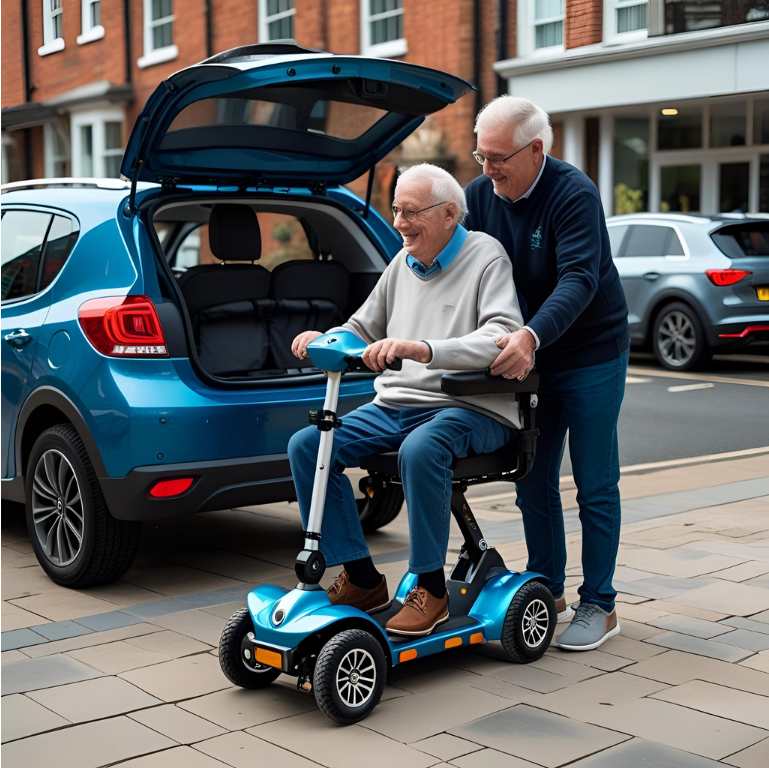
For many Australians, mobility scooters are the bridge between isolation and independence. They open doors to community, connection, and joy. And the NDIS is here to make that possible.
If you or someone you love is struggling with mobility, you’re not alone — and you don’t have to figure this out by yourself. Support is available, and your journey toward greater independence can start today.
Back to top./ Back to Mobility Scooter Funding and Coverage/ Back to Home
Stay mobile, stay confident!
Sign up for our monthly Mobility Scooter Newsletter to receive practical guides, expert advice, and inspiring stories that help you make the most of your scooter and download our free "Mobility Scooter Guide for Beginners."
Don't worry — your e-mail address is totally secure.
I promise to use it only to send you our newsletter, "Mobility Matters."
Recent Articles


-
Portable vs Travel vs Folding Mobility Scooters Buyer's Guide
Sep 15, 26 11:01 AM
 Confused by "portable," "travel," and "folding" mobility scooter listings? This guide explains what Australian sellers actually mean, with real weight comparisons and a decision framework.
 -
Mobility Scooter Types Overview: No More Confusion
Sep 15, 26 10:54 AM
 Mobility scooter types explained in plain English. Includes Australian footpath rules, airline battery limits, and the one mistake most first-time buyers make.
 -
How to Choose a Mobility Scooter in Australia Guide (2026)
Sep 15, 26 07:29 AM
 Choosing a mobility scooter in Australia? This guide covers registration requirements by state, public transport dimensions, NDIS funding steps, and practical testing advice.


Ready to Feel More Confident on Your Mobility Scooter?

My Ebook, The Ultimate Guide to Mobility Scooters, walks you through choosing the right scooter, using it safely, and keeping it in top condition — all explained in clear, friendly language.
Give yourself (or someone you love) the gift of independence.

