- Home
- Services and Shopping
- Mobility Scooter Service Options
- How to Choose a Trustworthy Repair Technician
How to Choose a Trustworthy Repair Technician: Your Complete Guide to Finding Reliable Help
If you've been searching for how to choose a trustworthy repair technician, you're in the right place. Because here's the truth: finding reliable repair help doesn't have to be a gamble.
With the right questions and a clear screening process, you can find a technician who is knowledgeable, honest, and genuinely invested in getting you safely back on the move.

Picture this.
Your mobility scooter has been your faithful companion for years. It's taken you to the shops, to appointments, to visit friends. It's your independence on four wheels.
Then one day, it stops working. A strange noise. A sudden loss of power. Or worse—it just won't start.
You need it fixed. But who do you call? How do you know whom to trust?
The thought of handing over your scooter—and your hard-earned money—to a stranger is daunting. What if they overcharge you? What if they do a shoddy job? What if they suggest unnecessary repairs?
Let's walk through this together, step by step. By the time you finish reading, you'll know exactly what to look for, what red flags to avoid, and how to make a confident choice.
Why Choosing the Right
Technician Matters
Your mobility scooter is more than just a device. As one mobility expert puts it, "a mobility scooter is often relied on for far more than the occasional trip to the shops. When it is not charging, loses power or develops a worrying noise, everyday plans can quickly become difficult".
The right repair provider does more than replace a part. They "take time to understand the scooter, how it is used and what has changed". They explain problems in plain language, provide clear estimates, and ensure your scooter is operating correctly before returning it.
The wrong provider? They can leave you with unresolved issues, inflated bills, or even a scooter that's more damaged than before.
As one frustrated user put it, "it has been impossible to find a company that doesn't charge hugely inflated prices for their services, and basically lie about work that needs to be done, to get as much money as possible".
That's not a risk worth taking. So let's make sure you get it right.
Part One: Understanding Your Options
Before you can choose a trustworthy repair technician, you need to understand the types of repair services available.
Authorised Dealers
These are certified by specific manufacturers like Pride Mobility or Golden Technologies. They have specialised training and access to genuine parts. They're ideal for warranty repairs and complex issues requiring brand-specific knowledge.
Pros: Brand expertise, genuine parts, warranty coverage.
Cons: Can be more expensive, may have longer wait time.
Independent Repair Shops
These shops often work on various mobility scooter brands. While they might not have the same level of brand-specific expertise as authorised dealers, they can offer more competitive pricing and faster turnaround times. Look for shops specialising in medical equipment repair.
Pros: Often more affordable, flexible scheduling.
Cons: May not have access to all genuine parts.
Mobile Repair Services
Many companies offer on-site repair services, bringing the expertise to your home. This is particularly convenient for individuals with limited mobility or those who cannot transport their scooter to a shop.
Pros: Convenient, no transport needed.
Cons: May be limited to simpler repairs; complex electrical work may still need a workshop.

General Handymen or Electricians (Use with Caution)
While some handymen may claim to be able to repair mobility scooters, proceed with caution. These devices are complex, and "improper repairs can lead to safety hazards or further damage". Only consider this option for very minor issues and thoroughly vet their experience.
Pros: May be cheaper for simple fixes.
Cons: High risk of improper repairs; lack of specialised knowledge.
Part Two: The "Green Light" Checklist
✅ Specialist Training and Experience
"Not every repair shop understands mobility equipment. Some focus on general small engines or appliances. Mobility devices are different, and the person working on them should be trained for that".
Ask about:
- Technician training and experience with mobility products
- How often staff receive updated training on new models
- Whether they mainly work on scooters and chairs, not random machines
"Factory training and long-term experience with power wheelchairs and scooters matter because these devices have complex electronics, controls, and safety features. Someone guessing their way through a repair can cause more harm than good".
✅ Brand and Model Familiarity
Before you book, ask if they regularly service your specific type of device. Leading repair centres have experience with trusted brands and can address a wide range of issues efficiently.
If a technician doesn't know your brand, that's a yellow flag. If they've never worked on your model before, proceed with caution.
✅ Clear Communication
A good technician will explain problems in plain language, without excessive technical jargon. They should:
- Listen to your description of the problem before making assumptions
- Investigate rather than fit expensive parts without proper diagnosis
- Explain your options clearly
- Provide updates by phone, text, or email
✅ Written Estimates and Transparency
"A trustworthy service will be comfortable explaining its process. The final cost can depend on the fault, but you should not be left guessing about the basis of the charges".
Look for:
- An estimate agreed before work begins
- Clear explanation of diagnostic and labour charges
- Transparency about call-out fees
- A written service report after the visit
Some providers even credit the diagnostic fee toward the repair if you proceed.
✅ Proper Licensing and Insurance
Confirm that the business is properly licensed and insured, especially if they do in-home work.
This protects you if something is damaged in your house while they are working. It also provides recourse if a repair goes wrong.
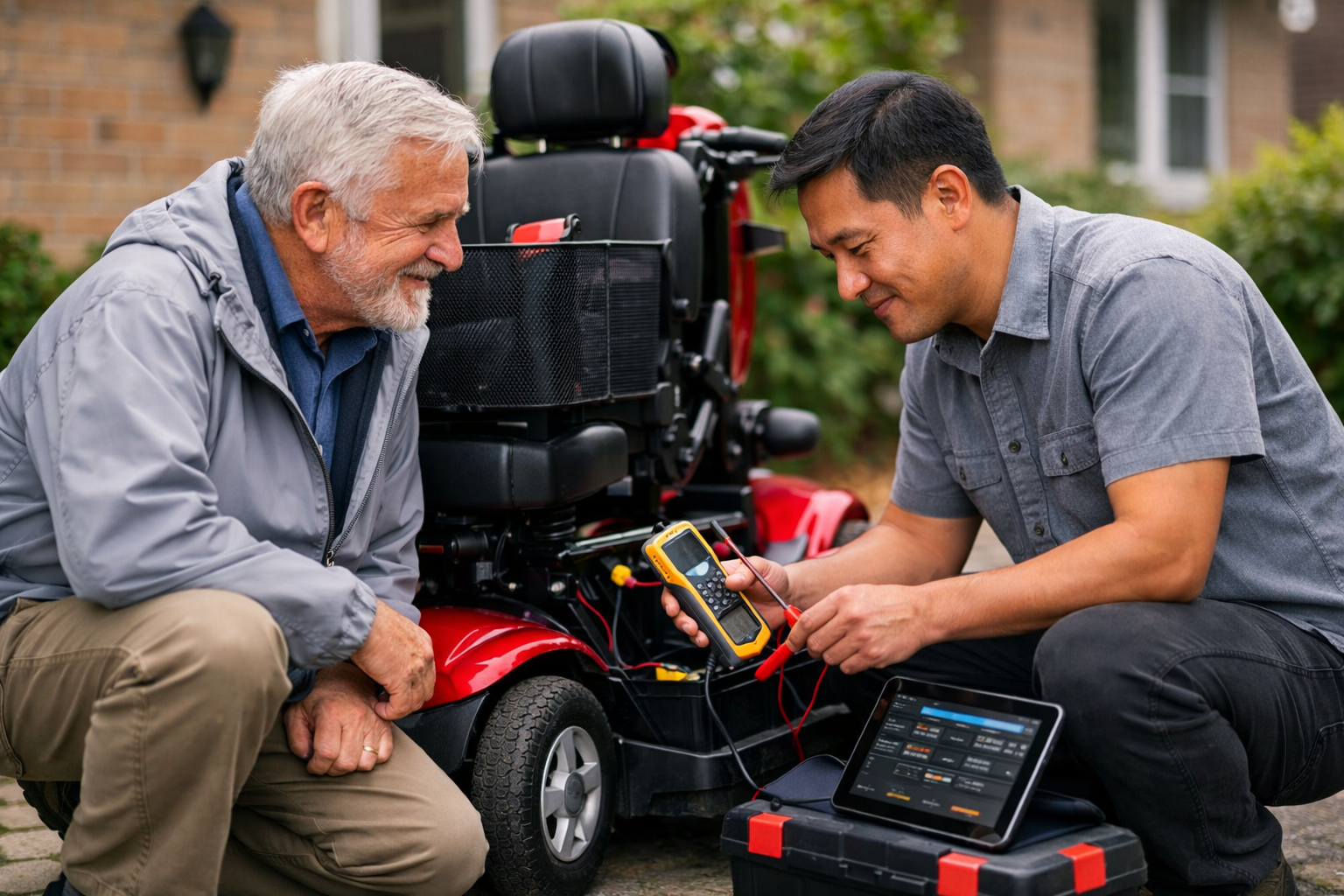
✅ Positive, Specific Reviews
A useful review is not simply a star rating.
Look for detail about:
- How the business handled a fault
- How they explained the work
- How they communicated timescales
- Whether the technician checked the scooter was operating correctly before returning it
"Pay attention to whether reviewers mention staff listening to the problem before making assumptions". Also look for comments from people with a similar type of scooter and usage pattern to your own.
✅ Honesty About When Repair Isn't Worth It
"Not every scooter is economical to repair, especially if it is older, has several worn components or needs batteries alongside electrical work. A dependable provider should explain the options plainly, including when a repair makes sense and when it may be better to consider a replacement".
A trustworthy technician will tell you when it's not worth fixing, even if it means losing a job.
That's integrity.
Part Three: The Red Flags to Avoid
Just as important as knowing what to look for is knowing what to avoid. These are the warning signs that should make you walk away.
🚨 No Clear Estimate or Transparent Pricing
If a technician refuses to provide a written estimate before starting work, that's a major red flag.
You should never be left guessing about the basis of the charges.
🚨 Diagnosis Without Investigation
A good technician investigates before fitting expensive parts. If they jump to conclusions without proper diagnosis, they could replace the wrong part and leave the underlying problem unresolved.
As one expert notes, "a hurried diagnosis can leave the underlying problem unresolved."
🚨 Scaremongering or Upselling Unnecessary Work
One reviewer warned: "Beware of scaremongering, this guy would have happily charged £400 or pursued the sale of a new scooter, both advantageous to him and detrimental to a 91-year-old pensioner".
If a technician pressures you into expensive repairs or a new scooter without a proper diagnosis, walk away.
🚨 Technician Doesn't Carry Parts
Some companies charge for a "service visit" to inspect the scooter, then charge again for a second visit to actually fix it because the engineer doesn't carry replacement parts.
A good service will either carry common parts or be upfront about what they can and cannot do in one visit.
🚨 Poor Communication or Broken Promises
One user described "months of falsehoods, vagaries, broken promises, and a 'long-suffering small businessperson' act".
If a technician is consistently late, fails to return calls, or makes excuses, that's a clear sign to look elsewhere.
🚨 Focus Only on Speed, Not Quality
"Be cautious with reviews that focus only on a quick turnaround without mentioning the quality of the repair. Speed is welcome, but a hurried diagnosis can leave the underlying problem unresolved".
The best service balances prompt attention with careful testing.
🚨 No Follow-Up or Service Report
A trustworthy technician will provide a written report of what was done. If they don't, or if they're vague about what they fixed, that's a problem.
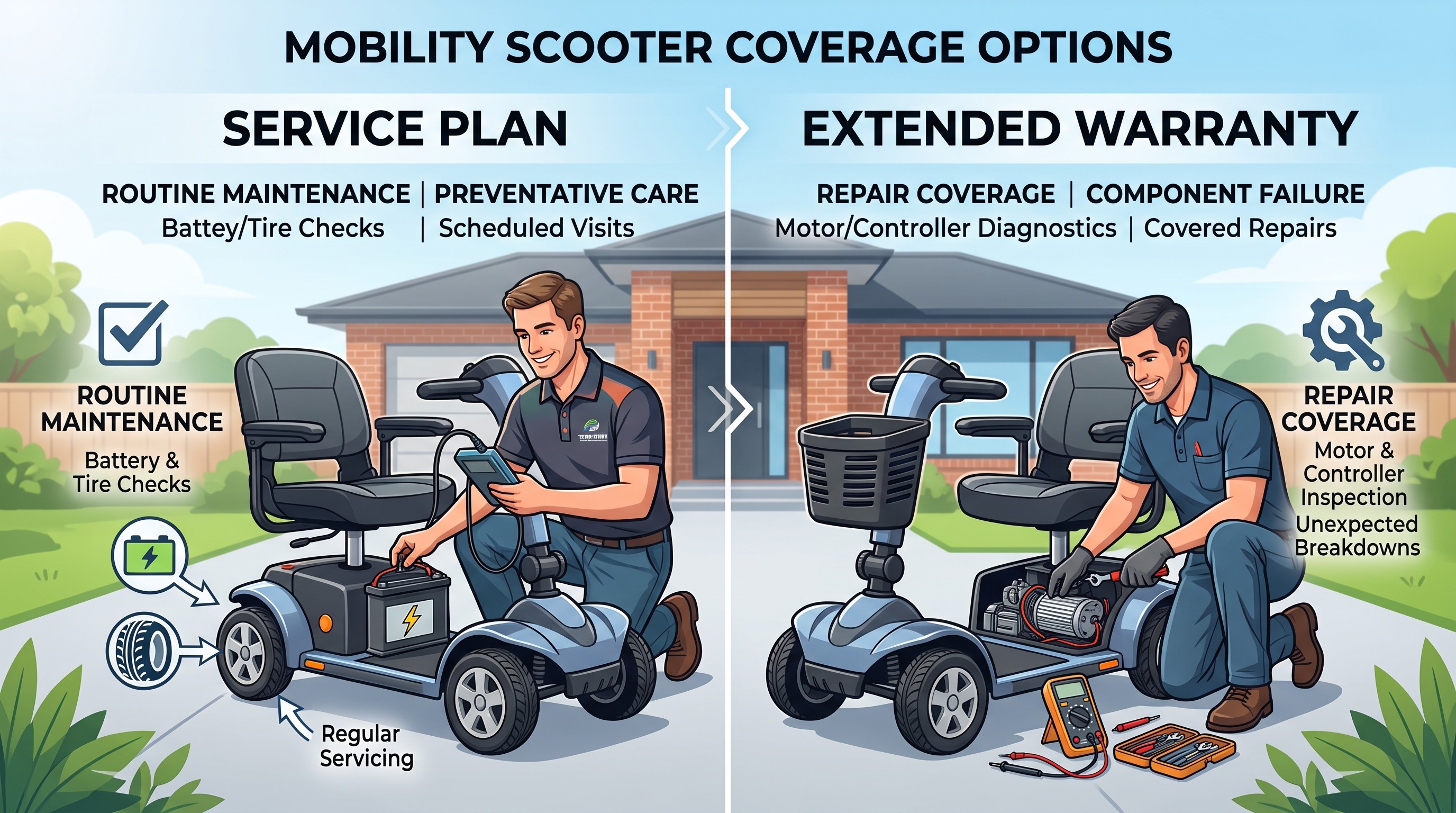
Part Four: Questions to Ask Before You Book
Here's your pre-booking checklist. Ask these questions before you commit to any repair service.
Questions About Qualifications
- "What training do your technicians have on mobility equipment?"
- "How much experience do you have with my specific device?"
- "How often do your staff receive updated training on new models?"
- "Do you mainly work on scooters and chairs, or other types of equipment?"
Questions About the Repair Process
- "Can you repair my particular type of scooter and obtain suitable replacement parts if needed?"
- "How does your diagnostic and labour charging work?"
- "Is there a call-out fee?"
- "Will I receive an estimate before repairs proceed?"
- "How will you explain the problem and repair choices?"
- "Will you get updates by phone, text, or email?"
- "Do you provide a written service report after the visit?"
Questions About Logistics
- "Do you offer collection, delivery, or home repair options?"
- "What are your normal response times for urgent versus standard repairs?"
- "Do you keep common parts like batteries, chargers, and tyres in stock?"
Part Five: The Decision Matrix
When to Repair
Consider repair if:
- The scooter is relatively new (under 5 years old)
- The issue is isolated (e.g., battery, tyre, or a specific component)
- The repair cost is significantly less than replacement
- The technician provides a clear diagnosis and estimate
When to Consider Replacement
Consider replacement if:
- The scooter is old (over 7 years) with multiple issues
- "Several worn components or needs batteries alongside electrical work"
- The repair cost approaches or exceeds the value of the scooter
- Parts for your model are discontinued or difficult to source
A trustworthy technician will be honest about when it's time to let go.
Read the full guide when to repair or replace a mobility scooter.
Part Six: Where to Find Recommendations
- Online reviews: Check platforms like Google and Trustpilot. Look for consistent feedback highlighting professionalism, reliability, and the ability to resolve issues promptly.
- Local senior centres and disability organisations: These often maintain lists of recommended repair services.
- Word of mouth: Ask other mobility scooter users for recommendations. As one forum user noted, "our trying to help each other is the only way forward with this issue".
- Checkatrade and similar services: These platforms vet trades people and provide verified reviews.
Your Next Steps
So here's what I'd like you to do.
Step 1: Identify your options. Search for "mobility scooter repair [your area]" or "medical equipment repair [your location]". Note down 3-4 potential providers.
Step 2: Check reviews. Look for specific, detailed reviews that mention how the business handled faults, explained work, and communicated timescales.
Step 3: Make the call. Use the question checklist in Part Four. A short conversation before you arrange a visit can tell you a great deal.
Step 4: Get a written estimate. Never authorise work without a clear, written estimate.
Step 5: Trust your gut. If something feels off—if they're pushy, vague, or evasive—walk away. There are other options.

Final Thoughts
Let's come back to where we started. How to choose a trustworthy repair technician—you now have the tools.
Your mobility scooter is your independence. When it breaks down, you need someone who understands that—someone who will treat your scooter with care, explain things clearly, and charge fairly.
The right technician will:
- Have specialised training and experience
- Provide clear estimates and transparent pricing
- Explain problems in plain language
- Be honest when repair isn't worth it
- Stand behind their work
The wrong technician will leave you with unresolved issues, inflated bills, and frustration.
So take your time. Ask the questions. Check the reviews. Trust your instincts. And when you find a good one, hold on to them.
Because you deserve to feel confident in your choices. You deserve a technician who genuinely cares about getting you safely back on the move.
You've got this.
Stay mobile, stay confident!
Sign up for our monthly Mobility Scooter Newsletter to receive practical guides, expert advice, and inspiring stories that help you make the most of your scooter and download our free "Mobility Scooter Guide for Beginners."
Don't worry — your e-mail address is totally secure.
I promise to use it only to send you our newsletter, "Mobility Matters."
Recent Articles


-
Portable vs Travel vs Folding Mobility Scooters Buyer's Guide
Sep 15, 26 11:01 AM
 Confused by "portable," "travel," and "folding" mobility scooter listings? This guide explains what Australian sellers actually mean, with real weight comparisons and a decision framework.
 -
Mobility Scooter Types Overview: No More Confusion
Sep 15, 26 10:54 AM
 Mobility scooter types explained in plain English. Includes Australian footpath rules, airline battery limits, and the one mistake most first-time buyers make.
 -
How to Choose a Mobility Scooter in Australia Guide (2026)
Sep 15, 26 07:29 AM
 Choosing a mobility scooter in Australia? This guide covers registration requirements by state, public transport dimensions, NDIS funding steps, and practical testing advice.



Ready to Feel More Confident on Your Mobility Scooter?

My Ebook, The Ultimate Guide to Mobility Scooters, walks you through choosing the right scooter, using it safely, and keeping it in top condition — all explained in clear, friendly language.
Give yourself (or someone you love) the gift of independence.

