- Home
- Services and Shopping
- Service Plan vs Pay As You Go
- Service Plan Red Flags
What Red Flags Should You Look for in a Mobility Scooter Service Plan Contract?
So what red flags should you look for in a mobility scooter service plan contract? This is one of the most overlooked questions in mobility scooter ownership.
Most buyers focus on choosing the scooter—not the service plan contract that determines how repairs, servicing, call-outs, cancellations, and disputes are handled. Yet service contracts often contain hidden fees, vague clauses, unfair lock-ins, and misleading claims similar to the red-flag behaviours documented by consumer protection bodies such as the ACCC (Australian Competition & Consumer Commission) and NDIS (National Disability Insurance Scheme) Quality & Safeguards Commission.
These issues can lead to overcharging, unsafe servicing, refusal of refunds, or denial of repairs even when consumer guarantees apply.

Let's be honest for a moment. When was the last time you actually enjoyed reading a contract? If you're like most people, the sight of dense legal text makes your eyes glaze over and your attention span evaporate. You just want to get to the good part—the scooter, the freedom, the independence. So you sign on the dotted line, eager to start your new chapter.
But here's the thing: that service plan contract you're about to sign? It might be hiding some unpleasant surprises. And we're not talking about minor inconveniences—we're talking about hidden fees, vague clauses, unfair lock-ins, and misleading claims that can leave you stranded, out of pocket, and deeply frustrated.
Imagine this: you've had your scooter for six months when it starts making a strange grinding noise. You call the dealer, confident that your service plan will cover it. But wait—the contract excludes "wear and tear" components like brakes and tyres. That grinding noise? It's a worn brake pad. Now you're facing a $150 repair bill that you thought was covered.
How did that happen?
Or perhaps you need a call-out because your scooter won't charge. The dealer sends a technician—but the contract only covers call-outs within a 10-mile radius. You live 15 miles away. Suddenly you're hit with a $50 travel fee you never expected.
These scenarios aren't hypothetical. They happen every day to well-meaning buyers who trusted that their service plan would protect them. The truth is, service plan contracts are often written by lawyers whose job is to protect the dealer, not you. That's why this article is a troubleshooting guide designed to help you identify the most common red flags before signing any mobility scooter service plan contract.
Because here's what we believe: your independence is worth protecting. And the first step to protecting it is knowing exactly what you're signing up for.
What Red Flags Should You Look for in a Mobility Scooter Service Plan Contract? — Full Troubleshooting Guide
Your mobility scooter service plans should protect you — not trap you. But many contracts contain clauses that shift risk, cost, and responsibility onto the customer.
Below are the most important red flags to watch for, grounded in real consumer‑protection cases and service‑agreement analyses.
1. Vague or Undefined Service Coverage
One of the biggest red flags is unclear wording about what the service plan actually covers. Contracts often use vague phrases like “general servicing,” “maintenance as needed,” or “support as required,” which leave room for interpretation and disputes.
NDIS service‑agreement audits show that unspecific terms such as “personal care as needed” or “services as required” are a major source of conflict because they allow providers to redefine scope later.
Troubleshooting Tip:
Ask for a line‑item list of what is included:
- Battery testing
- Brake adjustments
- Tyre checks
- Electrical diagnostics
- Labour
- Call‑out fees
- Parts discounts
If the dealer cannot provide a clear list, that is a red flag.
2. Hidden Fees and Unauthorised Charges
Hidden fees are one of the most common red flags in service agreements. Consumer‑protection reports show providers charging:
- Gap fees
- Credit card surcharges
- Admin fees
- Unauthorised travel charges
- Inflated labour hours
These behaviours are documented as red flags in NDIS fraud and overcharging cases.
Troubleshooting Tip:
Check the contract for:
- “Admin fee”
- “Processing fee”
- “Travel fee”
- “Surcharge”
- “Minimum billing increments”
If any fee is not clearly justified or itemised, it’s a red flag.

3. No Clear Explanation of Charges
A legitimate provider should explain how fees are calculated. Consumer‑protection guidance warns that not explaining charges is a major red flag.
Providers must publish prices, explain billing, and obtain consent before charging.
Troubleshooting Tip:
Ask:
- How are labour hours calculated?
- Are call‑out fees fixed or variable?
- Are parts billed at retail or inflated rates?
- Will I receive itemised invoices?
If the provider hesitates or avoids answering, walk away.
4. Overservicing or Unnecessary Recommendations
Overservicing — recommending unnecessary assessments or repairs for financial gain — is a documented red flag.
In mobility scooter servicing, this may look like:
- Recommending battery replacement without proper testing
- Suggesting controller replacement without diagnostics
- Insisting on quarterly servicing when annual servicing is sufficient
Troubleshooting Tip:
Ask the technician to explain why a service or repair is needed. If the explanation is vague or inconsistent, it’s a red flag.
5. “No Exit” or Harsh Lock‑In Clauses
Some service plans include lock‑in clauses that make it difficult or expensive to cancel. Contract‑analysis reports show that lack of exit provisions or harsh termination terms are major red flags.
Troubleshooting Tip:
Check for:
- Minimum contract periods
- Early‑termination fees
- Mandatory renewal clauses
- Notice periods longer than 30 days
If you cannot exit the contract easily, it’s a red flag.
6. Misleading Claims (“Approved,” “Guaranteed,” “Certified”)
Consumer‑protection investigations show providers falsely advertising products as “NDIS approved” or “funded,” leading to denied claims and refused refunds.
In mobility scooter service plans, similar misleading claims may include:
- “Manufacturer approved servicing”
- “Government‑certified technician”
- “Guaranteed coverage for all repairs”
Troubleshooting Tip:
Verify every claim. If the provider cannot show documentation, it’s a red flag.

7. Refusal to Honour Consumer Guarantees
The ACCC (Australian Competition & Consumer Commission) has documented cases where providers refuse repairs or refunds because a warranty expired — even though consumer guarantees still apply.
A mobility scooter worth thousands should last longer than a 12‑month warranty. If a service plan contract tries to override consumer guarantees, it’s a red flag.
Troubleshooting Tip:
Look for clauses like:
- “No refunds under any circumstances”
- “All repairs at customer cost after warranty expiry”
- “Manufacturer warranty only”
These violate consumer law.
8. Poor Documentation or No Service Reports
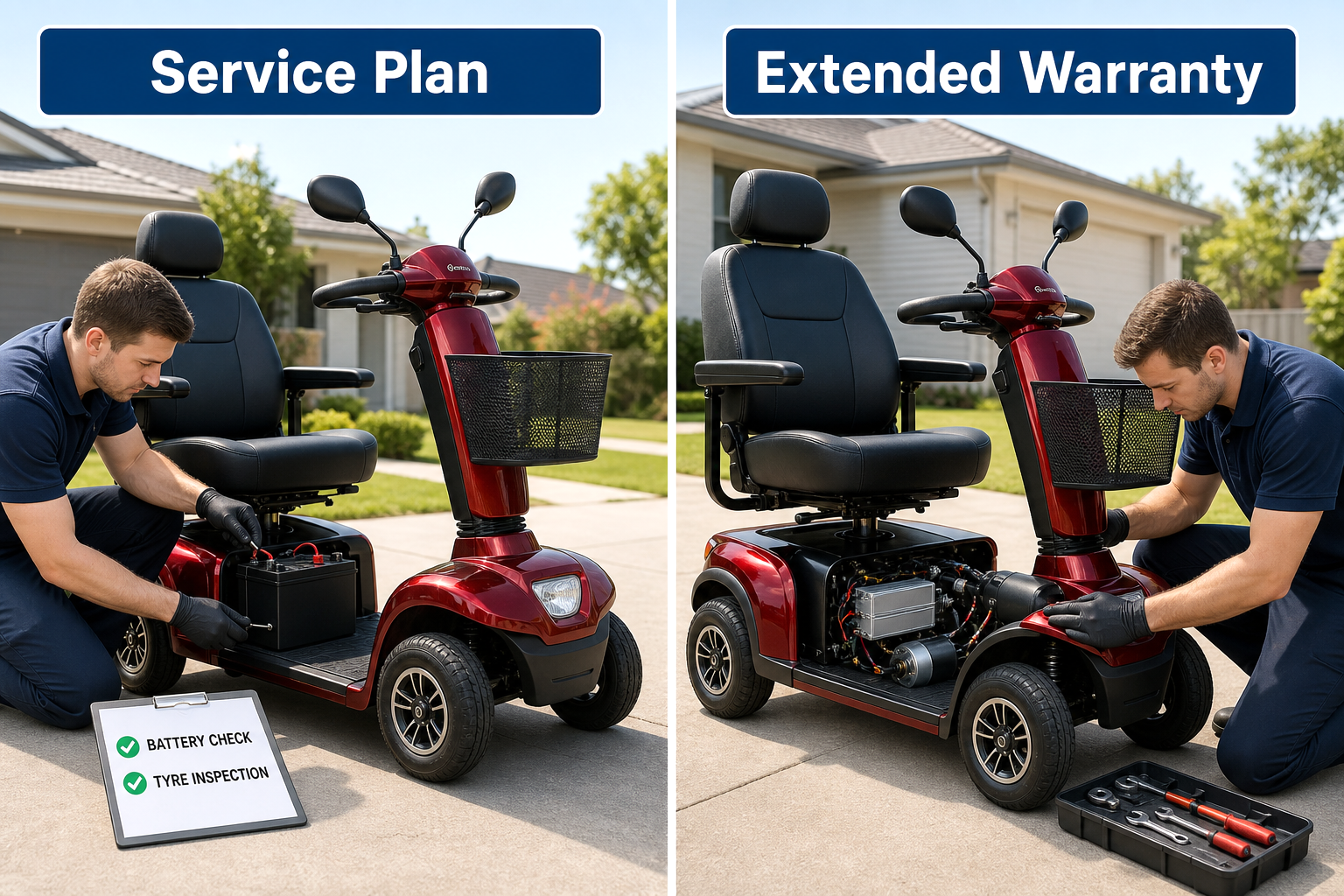
A good provider gives written service reports detailing battery health, brake wear, tyre condition, and electrical status.
If a provider refuses to document work, it’s a red flag.
Troubleshooting Tip:
Ask for sample service reports. If they cannot provide one, avoid the contract.
9. Billing Without Consent
Consumer‑protection bodies warn that billing without consent is a major red flag. Providers must obtain approval before charging.
In mobility scooter servicing, this may look like:
- Charging for extra labour not discussed
- Adding parts without approval
- Charging for travel not agreed in writing
Troubleshooting Tip:
Ensure the contract requires written approval for any additional charges.
Final Verdict: What Red Flags Should You Look for in a Mobility Scooter Service Plan Contract?
To protect yourself, watch for these red flags:
- Vague coverage
- Hidden fees
- Unexplained charges
- Overservicing
- Lock‑in clauses
- Misleading claims
- Refusal to honour consumer guarantees
- Poor documentation
- Billing without consent
These red flags are consistent with documented cases of overcharging, unethical behaviour, and contract misuse across disability‑service providers.
A mobility scooter service plan should protect your independence — not exploit it.
Stay mobile, stay confident!
Sign up for our monthly Mobility Scooter Newsletter to receive practical guides, expert advice, and inspiring stories that help you make the most of your scooter and download our free "Mobility Scooter Guide for Beginners."
Don't worry — your e-mail address is totally secure.
I promise to use it only to send you our newsletter, "Mobility Matters."
Recent Articles


-
Portable vs Travel vs Folding Mobility Scooters Buyer's Guide
Sep 15, 26 11:01 AM
 Confused by "portable," "travel," and "folding" mobility scooter listings? This guide explains what Australian sellers actually mean, with real weight comparisons and a decision framework.
 -
Mobility Scooter Types Overview: No More Confusion
Sep 15, 26 10:54 AM
 Mobility scooter types explained in plain English. Includes Australian footpath rules, airline battery limits, and the one mistake most first-time buyers make.
 -
How to Choose a Mobility Scooter in Australia Guide (2026)
Sep 15, 26 07:29 AM
 Choosing a mobility scooter in Australia? This guide covers registration requirements by state, public transport dimensions, NDIS funding steps, and practical testing advice.



Ready to Feel More Confident on Your Mobility Scooter?

My Ebook, The Ultimate Guide to Mobility Scooters, walks you through choosing the right scooter, using it safely, and keeping it in top condition — all explained in clear, friendly language.
Give yourself (or someone you love) the gift of independence.

