- Home
- Services and Shopping
- Mobile Repair Call-out Expectations
- Repair or Replace Old Mobility Scooter?
Is It Worth Repairing an Older Mobility Scooter or Replacing It?
Deciding whether is it worth repairing an older mobility scooter or replacing it is one of the most stressful and confusing decisions a scooter owner can face—but it doesn't have to be. When your trusted scooter starts failing, the emotional weight can be just as heavy as the practical one.
That scooter has been your freedom, your independence, your ticket to the outside world. The thought of letting it go can feel like losing a part of yourself.
But here's the honest truth: keeping an ageing scooter on life support can sometimes cost you more—in money, stress, and even safety—than investing in a new one. The key is knowing when to hold on and when to let go.
In this guide, we'll walk you through every factor you need to consider. We'll look at repair costs, the age and condition of your scooter, the availability of parts, and the emotional and practical benefits of upgrading.
By the end, you'll have a clear, confident answer to that nagging question: Is it worth repairing my older mobility scooter, or is it finally time to replace it?
Let's start with the most practical question of all—what's actually broken?

Step 1: What's Wrong With Your Scooter?
Before you can decide whether to repair or replace, you need to know exactly what you're dealing with.
Different problems come with different price tags and different implications for the future of your scooter.
Battery Problems
Batteries are the most common point of failure on any mobility scooter. If your scooter won't hold a charge, dies quickly, or struggles on inclines, the battery is the first place to look.
The good news:
Battery replacement is almost always worth doing. A new set of batteries typically costs between $100 and $800 depending on the size and type. Even at the higher end, that's significantly less than a new scooter.
The bad news:
Batteries have a limited lifespan. Most mobility scooter batteries last 18 to 24 months with regular use. If you're replacing batteries every couple of years, that's normal maintenance—not a sign that your scooter is failing.
If it's just the battery, the decision is easy. But what if the problem runs deeper?
Motor or Controller Failure
The motor is the engine of your scooter. The controller is its brain. If either of these fails, you're looking at a much more expensive repair.
Typical costs:
Motor and controller repairs can run into the hundreds or even thousands of dollars. A basic controller repair can cost hundreds, and motors aren't cheap either. Combined with labour costs—which average $135 to $200 per hour—you could be looking at a bill that approaches or exceeds the value of your scooter.
The question to ask:
Is this a one-off failure, or is it a sign that your scooter is reaching the end of its life? If your scooter is relatively young and has been well-maintained, a motor or controller replacement might be worth it. If it's an older model with multiple issues, it's probably time to move on.
Let's talk about the single most important rule for making this decision.
The 50% Rule: Your Golden Guideline
Industry experts agree on a simple rule of thumb: if a repair costs 50% or more of the scooter's replacement value, it's usually not worth it.
Here's how it works:
- Find out what your scooter would cost to replace today with a similar model.
- Compare that to the total cost of the repair (including labour and parts).
- If the repair cost is 50% or more of the replacement cost, replacing is usually the smarter financial decision.
For example, if your scooter is worth $2,500 new and the repair quote is $1,500, that's 60% of the replacement value. It's probably time to replace.
But there's an exception:
If your scooter is a high-end model that originally cost $8,000 or more, a $1,500 repair might be well worth it, especially if the scooter is otherwise in good condition.
The 50% rule is a great starting point. But there are other factors to consider—starting with the age of your scooter.
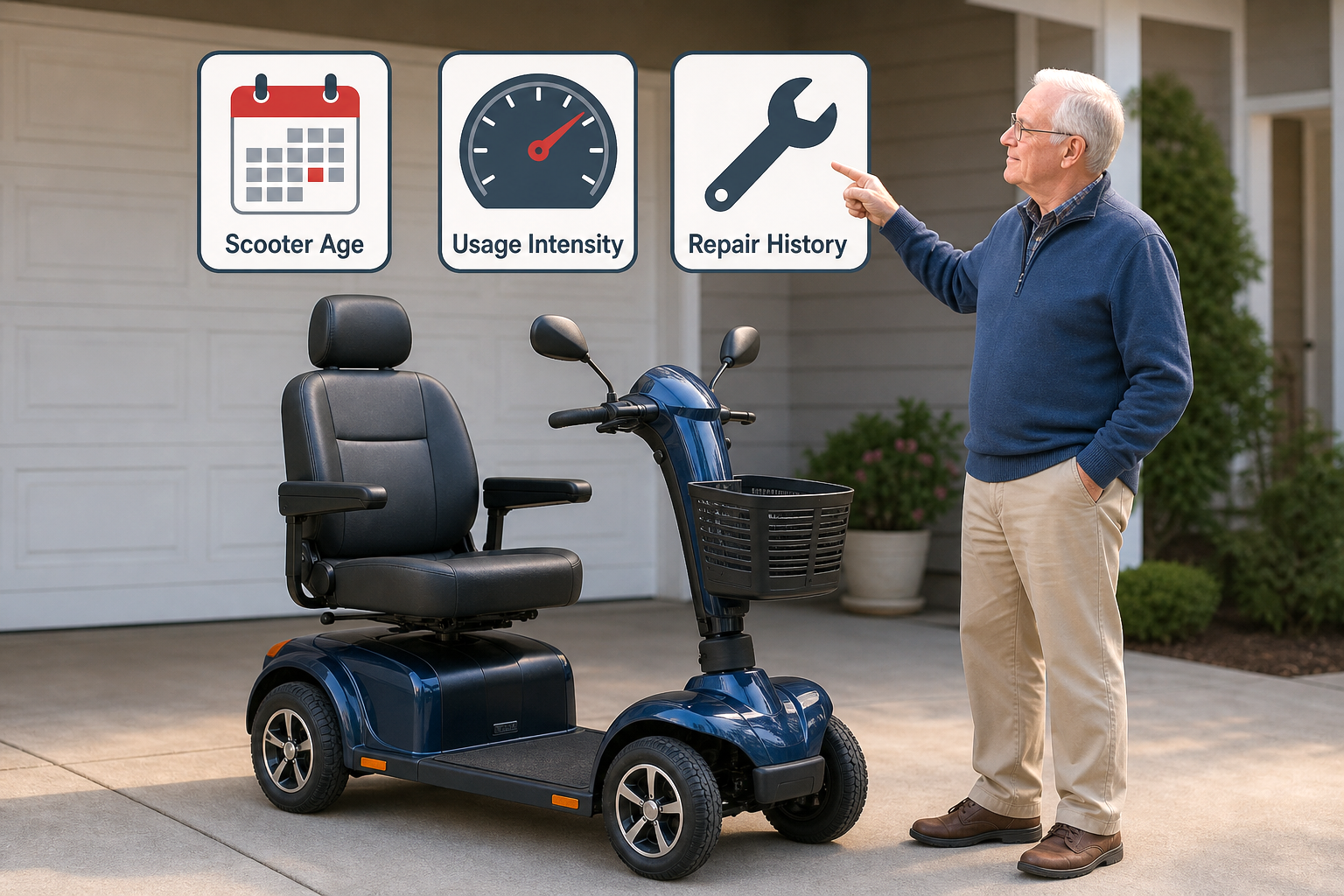
Step 2: How Old Is Your Mobility Scooter?
Age matters—a lot. Mobility scooters don't last forever, and even the best-maintained scooter has a finite lifespan.
Average Lifespan
On average, a mobility scooter lasts between 3 and 7 years. Cheaper models tend to fall at the lower end of that range (3–5 years), while high-quality models from reputable brands like Pride Mobility, Golden Technologies, or Afikim can last 7 years or more with proper care.
If your scooter is approaching or exceeding this age range, you need to be realistic about its remaining life. Even if you pour money into repairs today, you may face another major failure in six months.
The Parts Availability Problem
Older scooters often have another challenge: parts availability.
Manufacturers don't keep parts in production forever. If your scooter is more than 5–7 years old, you may find that certain components are no longer available—or that they need to be ordered from overseas, adding weeks to your repair timeline and significant cost to your bill.
Age is a factor you can't change. But there's another factor that's entirely within your control.
Step 3: How Well Has Your Scooter Been Maintained?
A well-maintained scooter can outlast a neglected one by years. If you've been diligent about:
- Regular servicing (at least once a year)
- Keeping tyres properly inflated
- Charging batteries correctly
- Cleaning and protecting electrical components
- Storing the scooter in a dry, sheltered location
...then your scooter is likely in better shape than its age might suggest. A repair might give you several more years of reliable service.
On the other hand, if your scooter has been exposed to the elements, used heavily on rough terrain, or neglected, its internal components may be worn far beyond their expected lifespan. In that case, repairing one part may simply shift the failure to another.
Let's talk about what happens when repairs become a recurring pattern.
Step 4: Is This a One-Off or a Pattern?
One of the most important questions to ask yourself is: Is this the first major repair, or is it part of a growing list?
If you've had your scooter for five years and this is the first time it's needed anything beyond routine battery replacements, a repair might be a great investment. You've got years of life left in that scooter, and fixing it could be far cheaper than replacing it.
But if you're facing your second or third major repair in 12 months—if you've replaced the batteries, then the controller, and now the motor is failing—you're throwing good money after bad. Each repair extends the life of your scooter, but only briefly. At some point, the cumulative cost exceeds the value of the scooter.
A useful rule:
Add up what you've spent on repairs in the last 12 months. If that total, plus the current repair quote, exceeds 50% of the replacement value, it's time to replace.
Speaking of costs, let's get specific about what different repairs actually cost.
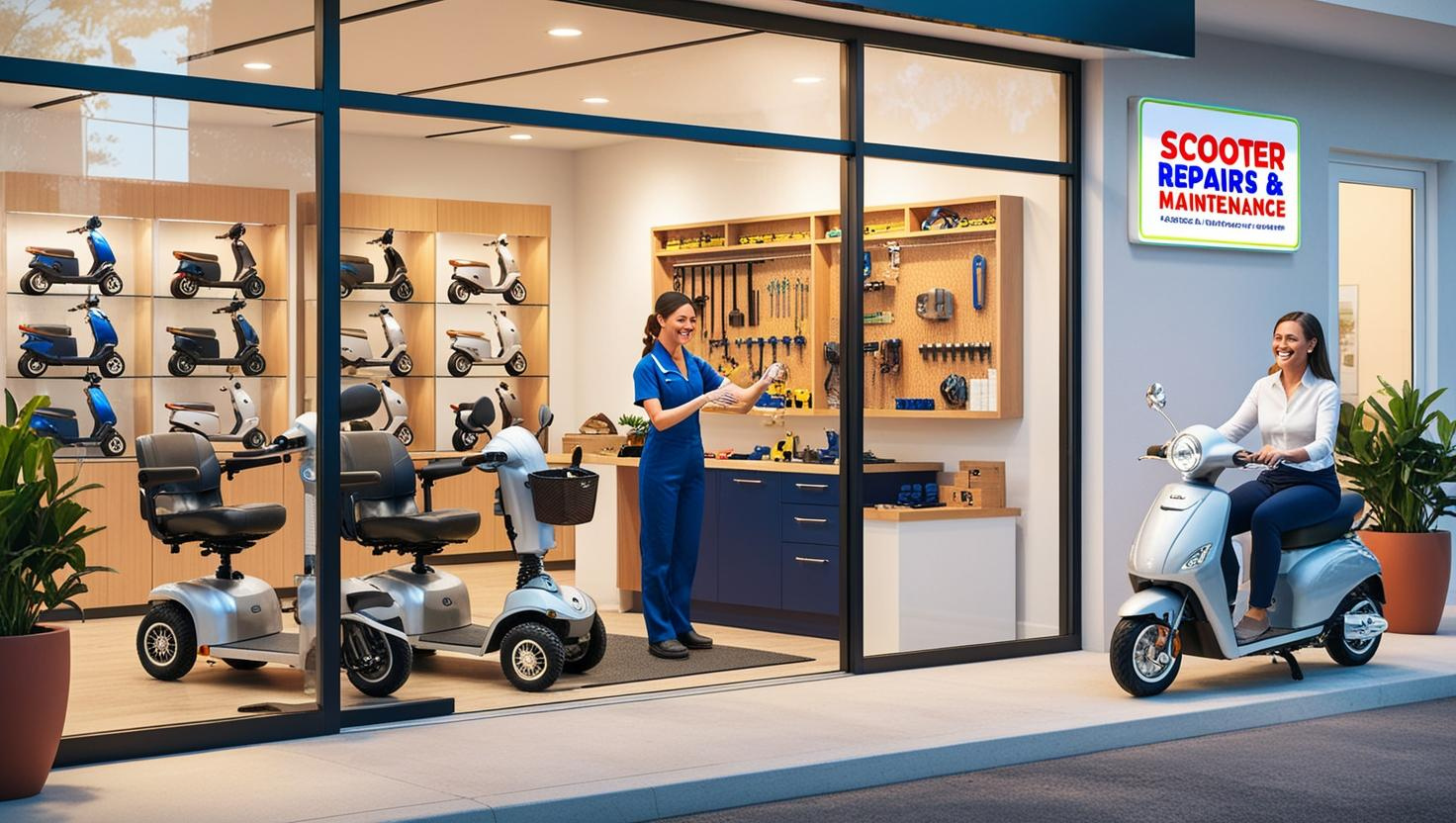
Repair Cost Breakdown: What You're Likely to Pay
Here's a realistic look at what common mobility scooter repairs cost in Australia:
|
Repair Type |
Typical Cost Range |
Worth It? |
|
Battery replacement |
$100–$800 |
Almost always |
|
Tyre replacement |
$90–$150 including labour |
Usually |
|
Brake adjustment |
$50–$150 |
Usually |
|
Controller repair/replacement |
$200–$800+ |
Depends on scooter age |
|
Motor replacement |
$300–$1,000+ |
Often not worth it on older scooters |
|
Full service |
$150–$250 |
Recommended annually |
Labour costs typically range from $135 to $200 per hour. A complex repair can quickly add up in labour alone.
Now let's look at what a new scooter will cost you—because that's your alternative.
New Scooter Costs: What You're Comparing Against
When you're deciding whether to repair or replace, you need to know what a new scooter will actually cost you.
- Basic lightweight folding scooters: Starting around $2,000–$2,700
- Mid-range everyday scooters: $2,400–$4,600
- High-end, heavy-duty models: $5,000–$10,000+
Remember, these are prices for new scooters with full warranties, modern features, and zero wear and tear. When you compare a $1,500 repair on a 6-year-old scooter against a $2,500 new scooter with a warranty, the new scooter starts to look very attractive.
But what if you're an NDIS participant? The financial picture changes—and there are some important rules you need to know.
The NDIS Factor: What You Need to Know
If you're an NDIS participant, the repair vs replace decision has some specific considerations.
The $3,000 Urgent Repair Cap
Under the NDIS, urgent repairs for mobility scooters and power wheelchairs are capped at $3,000.
If your repair quote exceeds this amount, you'll need additional funding approval—which can cause delays.
What NDIS Covers
The NDIS can fund essential repairs, maintenance, batteries, chargers, and even replacement after a reasonable lifespan.
Funding for repairs and maintenance is typically included in your Capital budget under assistive technology.
What to Do If You Need More Funding
If you don't have enough funding in your plan for a repair or replacement, you can contact the NDIS Contact Centre on 1800 800 110 for assistance.
Important:
Warranty repairs (including Australian Consumer Law warranties) are not covered by the NDIS—these should be discussed with the supplier or manufacturer.
With the financial picture clear, let's talk about something just as important: the benefits of upgrading.

The Hidden Benefits of Replacing Your Scooter
Sometimes, the decision to replace isn't just about money. Newer scooters offer features that can dramatically improve your quality of life:
Better Safety Features
Modern scooters come with improved braking systems, better suspension, more stable designs, and enhanced lighting for visibility. If your older scooter lacks these features, you're not just missing out on convenience—you could be compromising your safety.
Improved Portability
New lightweight folding scooters are dramatically easier to transport and store than older models. If you struggle to lift or store your current scooter, a newer model could make a world of difference.
Longer Battery Life
Battery technology has improved significantly in recent years. Newer scooters often offer longer ranges, faster charging, and lighter batteries than older models.
Better Ride Quality
Modern scooters have better suspension, more comfortable seats, and smoother handling. If your older scooter gives you a rough ride, upgrading could improve your comfort and reduce fatigue.
Warranty Protection
A new scooter comes with a warranty—typically 1–2 years on parts and labour. That means peace of mind and protection against unexpected repair costs.
If you're leaning toward replacement, here's what you should do next.
Your Decision Checklist
Here's a simple checklist to help you make your final decision:
Repair if:
- The repair cost is less than 50% of the replacement value
- Your scooter is less than 5 years old
- The scooter has been well-maintained
- This is the first major repair
- Parts are readily available
- You have NDIS funding available for the repair
Replace if:
- The repair cost is 50% or more of the replacement value
- Your scooter is more than 5–7 years old
- You've had multiple major repairs in the last 12 months
- Parts are hard to find or expensive
- The scooter lacks modern safety features
- You want improved comfort, portability, or battery life
- Your repair quote exceeds $3,000 (the NDIS cap)
A Special Note on Emotional Attachment
We need to acknowledge something important: it's okay to be attached to your scooter.
That scooter has been with you through good days and bad. It's taken you to the shops, to appointments, to visit family and friends. It's been your companion when you felt isolated. Letting it go can feel like losing a friend.
But here's what we want you to remember: your scooter serves you, not the other way around. If keeping it going is costing you more than it's worth—in money, stress, or safety—you're not betraying it by choosing to replace it. You're honouring the role it played by choosing a tool that can serve you even better.
A new scooter isn't a betrayal of your old one. It's a continuation of the same freedom and independence that your old scooter gave you—just with better technology, better safety, and fewer breakdowns.

Your Peace of Mind Matters Most
Your mobility scooter is your freedom—your link to the community, your errands, and your cherished daily routines. When it starts failing, the decision to repair or replace can feel overwhelming.
But here's what we want you to take away from this guide: you have the information you need to make a confident decision. You know about the 50% rule, the average lifespan of scooters, the costs of different repairs, and the NDIS funding rules. You understand the hidden benefits of upgrading and the emotional weight of letting go.
So take a breath. Work through the checklist. Trust your instincts. And remember—whatever you decide, you're making the best decision if it is worth repairing an older mobility scooter or replacing it. It is a choice for your independence, your safety, and your peace of mind.
Need more help? Contact your local mobility equipment provider for a repair quote or to discuss new scooter options. And if you're an NDIS participant, don't forget to check your plan has available funding before proceeding with any repair or replacement.
Stay mobile, stay confident!
Sign up for our monthly Mobility Scooter Newsletter to receive practical guides, expert advice, and inspiring stories that help you make the most of your scooter and download our free "Mobility Scooter Guide for Beginners."
Don't worry — your e-mail address is totally secure.
I promise to use it only to send you our newsletter, "Mobility Matters."
Recent Articles


-
Portable vs Travel vs Folding Mobility Scooters Buyer's Guide
Sep 15, 26 11:01 AM
 Confused by "portable," "travel," and "folding" mobility scooter listings? This guide explains what Australian sellers actually mean, with real weight comparisons and a decision framework.
 -
Mobility Scooter Types Overview: No More Confusion
Sep 15, 26 10:54 AM
 Mobility scooter types explained in plain English. Includes Australian footpath rules, airline battery limits, and the one mistake most first-time buyers make.
 -
How to Choose a Mobility Scooter in Australia Guide (2026)
Sep 15, 26 07:29 AM
 Choosing a mobility scooter in Australia? This guide covers registration requirements by state, public transport dimensions, NDIS funding steps, and practical testing advice.



Ready to Feel More Confident on Your Mobility Scooter?

My Ebook, The Ultimate Guide to Mobility Scooters, walks you through choosing the right scooter, using it safely, and keeping it in top condition — all explained in clear, friendly language.
Give yourself (or someone you love) the gift of independence.

