- Home
- Mobility Scooter Types
- Small Home Storage Friendly Scooters
- Narrow Hallways and Tight Turns
Narrow Hallways and Tight Turns: How Turning Radius and Scooter Length Affect At-Home Storage Practicality
Picture this. You have found the scooter. It folds, it dismantles, it promises freedom. And then you try to turn it around at the end of your hallway—and it simply will not cooperate. The front wheel kisses the skirting board, the rear swings wide, and you are stuck in a three-point turn that feels more like a twelve-point argument with physics. Nothing in the brochure warned you about this moment. But this is exactly the moment that decides whether a scooter becomes a trusted companion or a daily source of low-level dread.
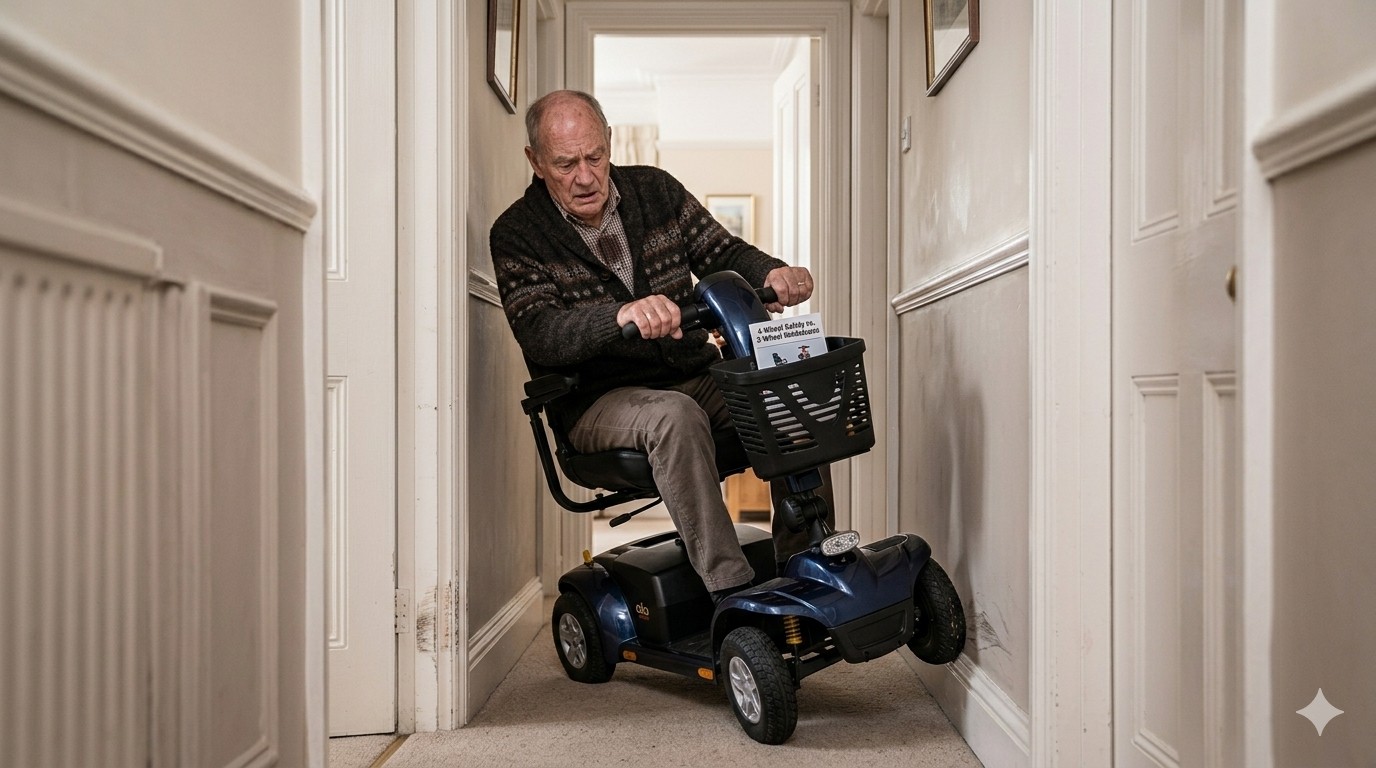
Narrow hallways and tight turns are the hidden test of at-home storage practicality. They are not about the size of the corner where the scooter sleeps. They are about the journey to that corner, and the journey back out again, every single day.
In this guide, we will walk through the two numbers that shape that journey—turning radius and scooter length—and translate them into real-world decisions you can make with a tape measure and a little confidence. No engineering degree required. Just a friendly hand on the shoulder and a clear path forward.
Why Narrow Hallways and Tight Turns Matter More Than the Storage Spot
Most buying guides tell you to measure the space where the scooter will live. That is only half the story. A scooter must first reach that space, and in a small home, the route is often tighter than the destination. One practical guide puts it plainly: “Doorways, hallways, and kitchen corners demand a scooter that turns sharply”. If the route fails, the storage spot is irrelevant.
This is why narrow hallways and tight turns deserve their own chapter in your buying decision. They expose a truth that glossy product pages hide: a scooter’s practicality is defined by its geometry, not its marketing label. A model can be “compact” and still be a nightmare in a 90 cm hallway if its turning circle is wide or its wheelbase is long.
The good news is that geometry is predictable. Once you understand the two key numbers, you can rehearse the fit before you buy—and avoid the hallway argument entirely.

Turning Radius: The Number That Decides Whether You Can Turn Around
Turning radius is the half-circle a scooter needs to make a full U-turn. In plain terms, it is the distance from the centre of the turning circle to the outer edge of the path. The practical rule is simple but often overlooked: the space you need to turn around is double the advertised turning radius. If a scooter claims a 90 cm turning radius, you need roughly 180 cm of clear width to complete a full circle in one smooth movement.
Now, here is where it gets interesting. Three-wheel scooters typically have a substantially tighter turning radius than four-wheel models—sometimes by 30 cm or more. The Victory 10 3-Wheel, for example, has a 42-inch (107 cm) turning radius, while its four-wheel sibling sits at 54 inches (137 cm). On the Rascal Conquest, the gap is similar: approximately 39 inches (99 cm) for the three-wheel versus 52 inches (132 cm) for the four-wheel. That difference is not academic. It is the difference between a scooter you can steer around a hallway corner and one that requires a shuffling reverse-and-forward dance every time you come home.
But turning radius alone is not the whole story. A scooter also has reverse, and a K-turn is a perfectly legitimate way to navigate a tight corner. You do not need a perfect circle in every room. You need enough room to manoeuvre with dignity, without scraping paint or losing your patience. So the question becomes: how much turning space does your hallway actually offer—and which scooter geometry respects that limit? Read the full guide.
Keep that question in mind, because the next number changes the answer.
Scooter Length and Width: The Other Half of the Geometry
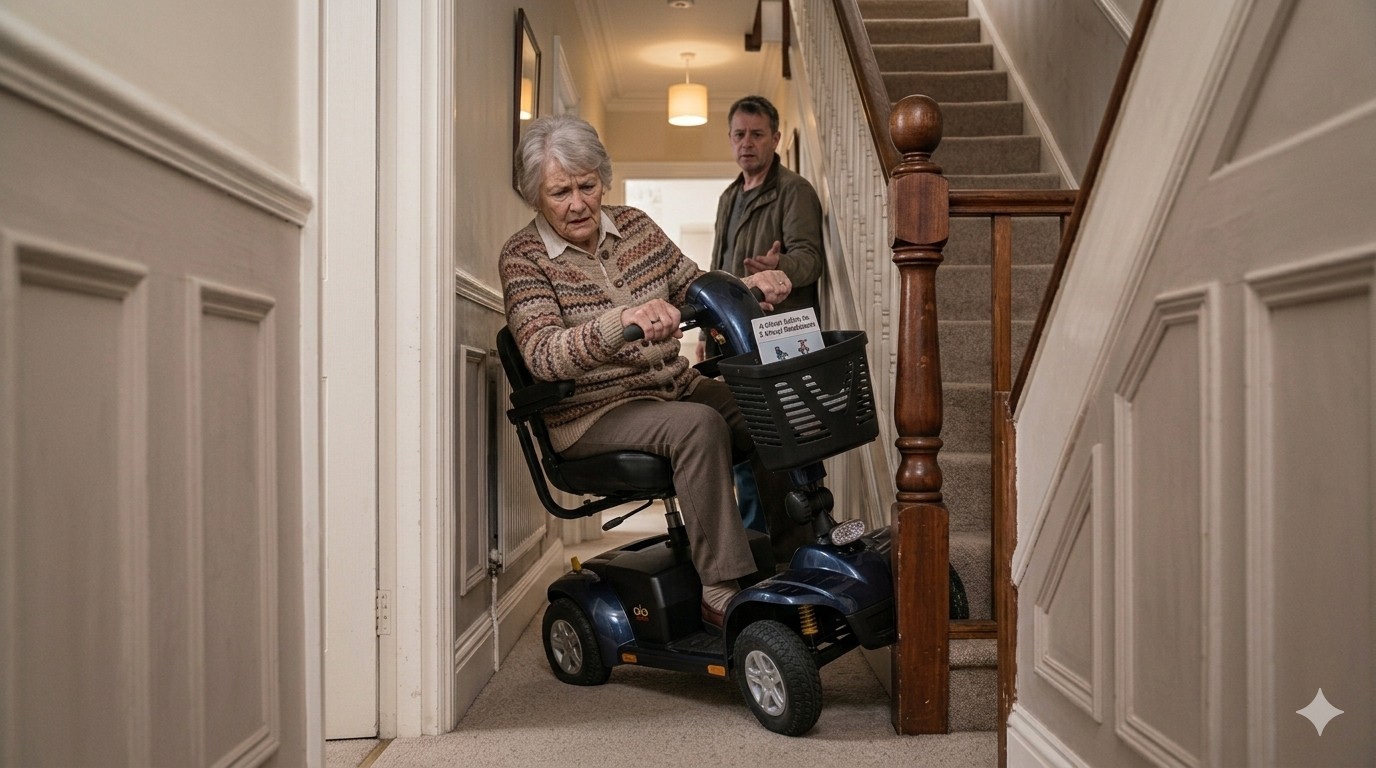
Turning radius tells you how tightly the scooter can pivot. Scooter length and width tell you whether it can get there in the first place. A long wheelbase makes a scooter more stable outdoors, but it also means the front wheel reaches the turn sooner and the rear wheel follows later, effectively demanding more clearance. Width matters for doorways and narrow passages, and it is often the first hard limit you will hit.
Here is where the metric specs become your friends. The Pride GoGo Elite Traveller Sport, for instance, has an overall length of 109 cm and a width of 54 cm, with a 94 cm turning radius. The Eden Essential measures 112 cm long and 52 cm wide, with a 96 cm turning radius. The Sterling Elite 2 Mini takes compactness further with a 61 cm width and a 127 cm length. These numbers are not interchangeable. A scooter that is 5 cm wider may not pass through your narrowest doorway. A scooter that is 10 cm longer may not clear the turn at the end of your hall.
This is why narrow hallways and tight turns demand a route-first measurement, not a storage-spot measurement. Walk the path with a tape measure and note three things: the narrowest doorway width, the tightest corner clearance, and the longest straight run. Compare those numbers to the scooter’s width, length, and turning radius. If the scooter’s width is within a few centimetres of your doorway, treat that as a warning sign, not a green light—door frames, hinges, and skirting boards eat into the usable space.
The next section gives you the checklist that turns these numbers into a confident decision.
The Narrow Hallway Measurement Checklist (Before You Buy)
You do not need a professional assessor. You need ten minutes, a tape measure, and this list.
Doorway width. Measure the narrowest point, not the frame. Compare it to the scooter’s overall width. Leave at least 5–10 cm of clearance on each side for confidence and paint preservation.
Hallway width at the tightest point. This is where the scooter will pass another person, a laundry basket, or a doorway. If the hallway is 90 cm wide and the scooter is 55 cm wide, you have 35 cm of passing space—workable, but tight.
The tightest turn. Identify the corner where the scooter must pivot. Measure the clear floor space from the corner to the opposite wall or door. Remember the doubling rule: you need roughly twice the turning radius for a full U-turn, though a K-turn (three-point turn) can reduce that requirement.
The storage spot’s approach. Can the scooter reach the cupboard or corner without a final tight squeeze? A storage space that is perfect on paper can fail if the last metre is a bottleneck.
The “rehearsal” test. Before buying, walk the route with a friend holding a broom handle at the scooter’s width and length. It sounds silly. It works. You will discover the pinch points your tape measure missed.
And once you have those numbers, the next question is the one that separates a calm purchase from a regretful one: which scooter geometry actually fits your route—and what do you do if it doesn’t?
When the Hallway Wins: Practical Fixes and Honest Trade-Offs
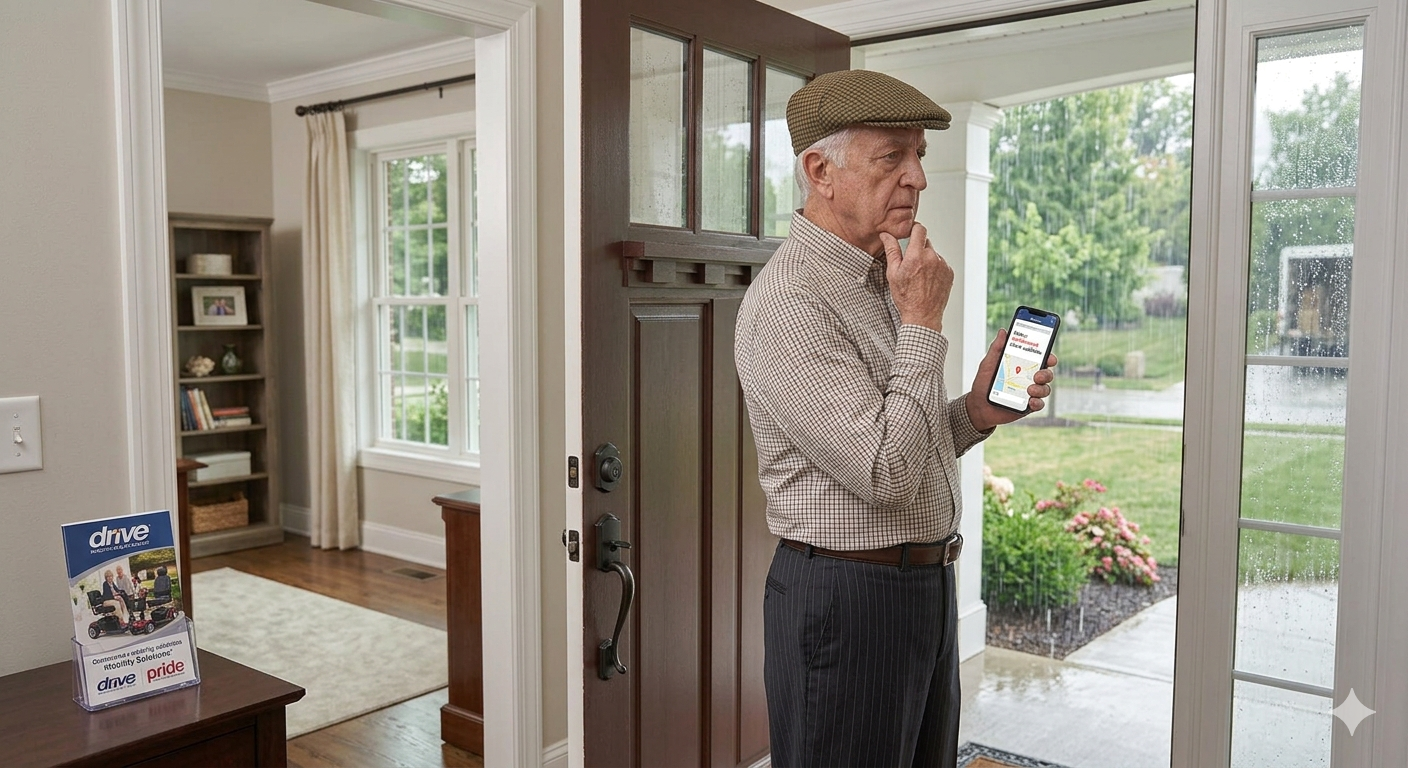
Sometimes the numbers do not work in your favour. A 75 cm doorway and a 60 cm scooter leave almost no margin for error. A tight turn at the top of the stairs may be genuinely impassable for a four-wheel model. In those moments, you have three honest options, and none of them involve pretending the problem away.
Option one: change the scooter geometry. A three-wheel model with a tighter turning radius and a narrower width is often the simplest fix. A dismantling scooter that can be carried through the tight section in pieces is another. The trade-off may be stability outdoors or assembly time, but it keeps the route usable.
Option two: change the route. Is there a wider entrance, a different hallway, or a storage spot that avoids the tightest turn? Sometimes the best scooter decision is a floor-plan decision. This is where the storage plan and the hallway plan meet—and where a little creativity beats a lot of frustration.
Option three: accept the compromise and plan for it. If the hallway is genuinely tight, a scooter that stays in a secure outdoor store or a ground-floor spot may be the pragmatic answer. That is not a failure. It is an honest fit between the home you have and the mobility you need. The worst outcome is buying a scooter that fights you every day—and the best outcome is one that respects the space you actually live in.
The Calm Route Forward
Narrow hallways and tight turns are not obstacles to scooter ownership. They are design constraints—and design constraints can be measured, understood, and solved. You now know that turning radius doubles into real turning space, that three-wheel models often win indoors, that length and width decide whether the scooter reaches the turn at all, and that a route-first tape measure beats a glossy brochure every time.
If you are still weighing up the wider storage picture, the next natural step is to see how these hallway numbers fit into the full home-measurement checklist for storage-friendly scooters. (Coming Soon!) And if the tight turn is part of a cupboard or under-stairs challenge, the guide to closet and under-stairs storage shows how to make those spaces work without turning them into a daily squeeze. (Coming Soon!)
You are closer to a scooter that fits your home—and your life—than you think.

Frequently Asked Questions
What turning radius do I need for a narrow hallway?
There is no single number, but a good starting point is a scooter with a turning radius under 100 cm. Remember that the space needed to turn around is roughly double the advertised radius, so measure your tightest turn and compare.
Is a 3-wheel scooter always better for narrow hallways?
It is often better for turning, because three-wheel models typically have a tighter turning radius. But four-wheel models offer more stability, and some modern four-wheel scooters have very tight turning circles. The right choice depends on your route and your balance needs.
How do I measure a tight corner for a scooter?
Measure the clear floor space from the corner to the opposite wall or doorway. Compare it to twice the scooter’s turning radius for a full U-turn, or plan a K-turn using reverse if the space is tighter.
Will a longer scooter struggle more in a narrow hallway?
Generally, yes. A longer wheelbase means the front and rear wheels follow different paths through a turn, so the scooter needs more clearance. A shorter overall length is often easier in tight indoor spaces.
Can I use a K-turn instead of a full U-turn in my hallway?
Yes. Scooters have reverse, so you can back up and move forward as needed to point yourself in the right direction. The key is having enough clear space to make each movement safely.
What is the narrowest doorway a mobility scooter can fit through?
It depends on the scooter’s width. Many compact models are around 52–56 cm wide, but always check the specific specs. Aim for at least 5–10 cm of clearance on each side of the doorway for safe passage.
How does scooter width affect hallway practicality?
Width is often the first hard limit. If the scooter is too wide for your narrowest doorway, it cannot reach the rest of the route. Measure the narrowest point and compare it directly to the scooter’s overall width.
Can a compact scooter with a tight turning radius still be stable outdoors?
It can be adequate for smooth pavements and shops, but very compact scooters may feel less stable on uneven ground. The trade-off between indoor manoeuvrability and outdoor stability is real, so match the scooter to your most common terrain.
What should I do if my hallway is too tight for any scooter?
Consider a dismantling model that can be carried through in pieces, a different storage location that avoids the tight section, or a secure outdoor store. A route that does not work is a route that does not work—plan around it rather than fighting it.
Does a tighter turning radius mean a less comfortable ride?
Not necessarily, but very compact scooters sometimes have smaller wheels and firmer suspension. A test drive, or a careful read of owner reviews, will tell you more than the turning radius alone.
Stay mobile, stay confident!
Sign up for our monthly Mobility Scooter Newsletter to receive practical guides, expert advice, and inspiring stories that help you make the most of your scooter and download our free "Mobility Scooter Guide for Beginners."
Don't worry — your e-mail address is totally secure.
I promise to use it only to send you our newsletter, "Mobility Matters."
Recent Articles


-
Small Home Storage Friendly Scooters That Actually Fit Your Flat
Nov 04, 26 07:59 AM
 Small Home Storage Friendly Scooters start with your tape measure. Learn the route, not just the spot, before you spend a penny.
-
Narrow Hallways and Tight Turns: Will a Scooter Actually Fit?
Nov 04, 26 07:55 AM
 Narrow hallways and tight turns decide whether a scooter is a joy or a daily fight. Learn the geometry, the measurements, and the fix.
-
Mobility Scooter vs Power Wheelchair for Low Vision: The Honest Guide
Nov 03, 26 05:01 AM
 Mobility scooter vs power wheelchair for low vision—which is safer and easier to control? A calm, evidence-led comparison for riders and carers.


Ready to Feel More Confident on Your Mobility Scooter?

My Ebook, The Ultimate Guide to Mobility Scooters, walks you through choosing the right scooter, using it safely, and keeping it in top condition — all explained in clear, friendly language.
Give yourself (or someone you love) the gift of independence.




