- Home
- Mobility Scooter Types
- Small Home Storage Friendly Scooters
Small Home Storage Friendly Scooters: The Measure-First Guide to Getting It Right
Picture this. The scooter arrives. It gleams. It promises freedom. And then you look at your hallway—the one you already shuffle through sideways—and realise you have no idea where this thing is supposed to live. The box is open, the charger is dangling, and a small knot of panic starts to form. You are not alone in that moment. It is the exact reason “small home storage friendly scooters” is such a searched-for phrase: people are not just buying a vehicle. They are trying to solve a spatial puzzle in the one place they cannot expand.
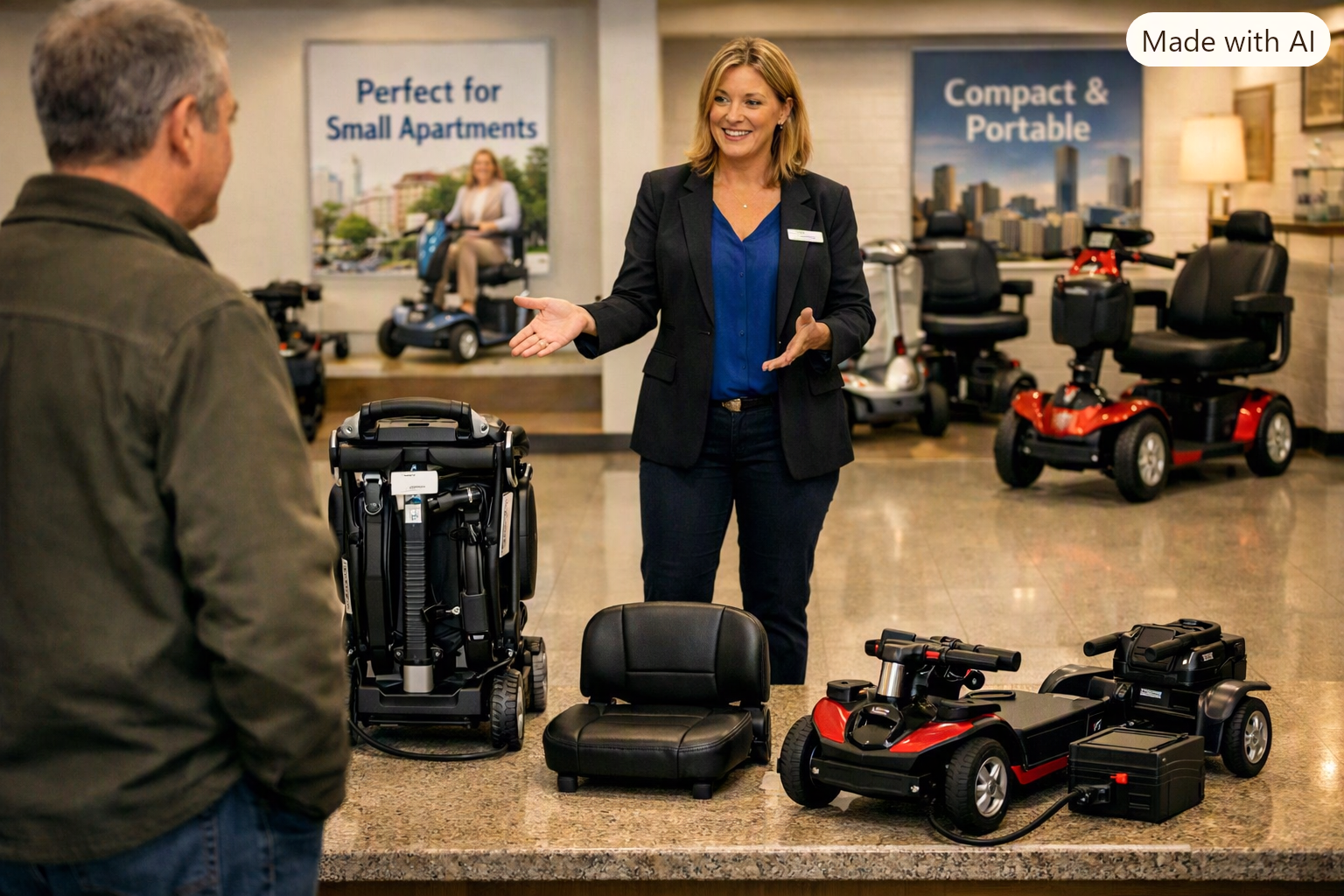
Here is the good news. You can solve this puzzle before you spend a penny, and you do not need to be a technical expert to do it. You need a tape measure, a little honesty about your lifting limits, and a guide that treats storage as a real-world problem—not a footnote on a product page.
That is exactly what this is. By the end, you will know which measurements matter, which scooter type suits your home, and how to store and charge it without creating a hazard.
Let’s take this one step at a time.
Start With the Route, Not the Spot
Most people measure the corner where they hope the scooter will sit. That is the wrong starting point. A scooter has to get there first, and the journey is often tighter than the destination. One storage guide puts it perfectly: “A corridor wide enough to drive along may still be impossible to turn in”.
Before you look at a single product, walk the full route with a tape measure. Write down:
- The narrowest doorway on the path (internal doors are often narrower than your front door).
- Any step or threshold—and whether a ramp would fit.
- The tightest corner you will need to navigate. Remember: a scooter needs room to turn, not just to pass.
- The actual parking footprint—the floor area the scooter will occupy once it is stored, including space for the tiller and any mirrors.
This route-first approach is the single biggest gap on Page 1. Most articles tell you to “measure your space.” Very few tell you to measure your life. You are already ahead.
The Two Mechanisms: Folding vs Disassembly (And the Number That Actually Matters)
Once you know your route, you need to choose how the scooter collapses. There are two main mechanisms, and they solve different problems.
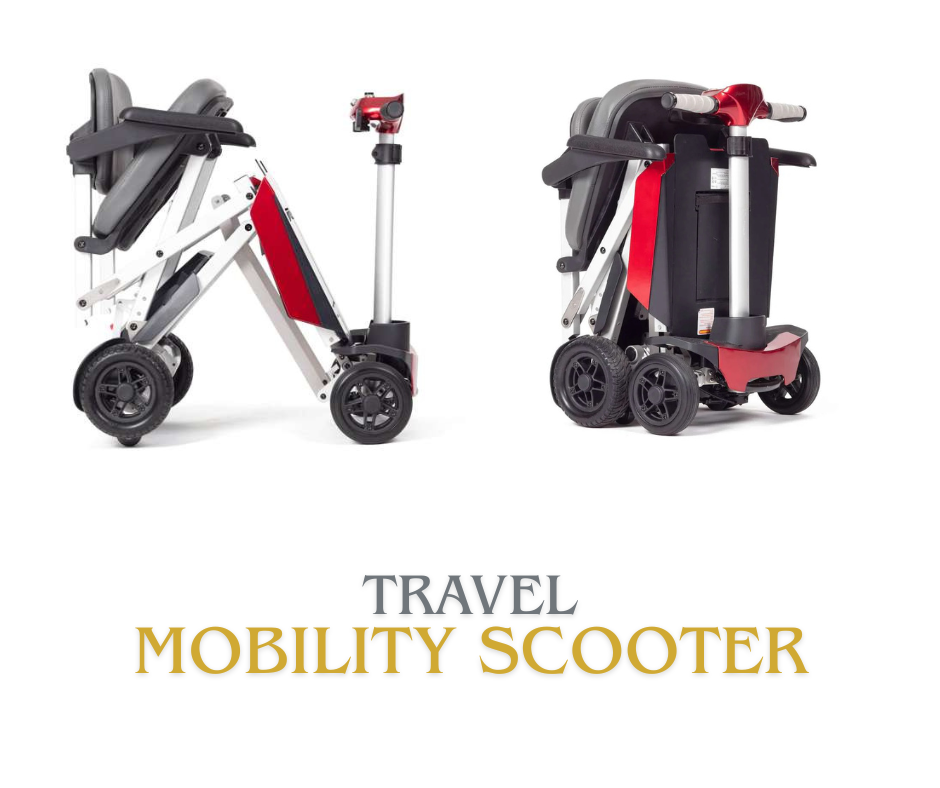
Folding scooters collapse as one piece, usually in five to ten seconds. They are fast, simple, and there are no loose parts to keep track of. But here is the catch that trips people up: the whole scooter stays together, so you lift the entire unit. Typical folding scooters weigh between 20 kg and 30 kg as a single folded package, and that full weight is what you or your carer must manage. Some ultra-light models, like the ATTO Freedom, split into two parts with a heaviest piece of just 16 kg, which changes the maths entirely.
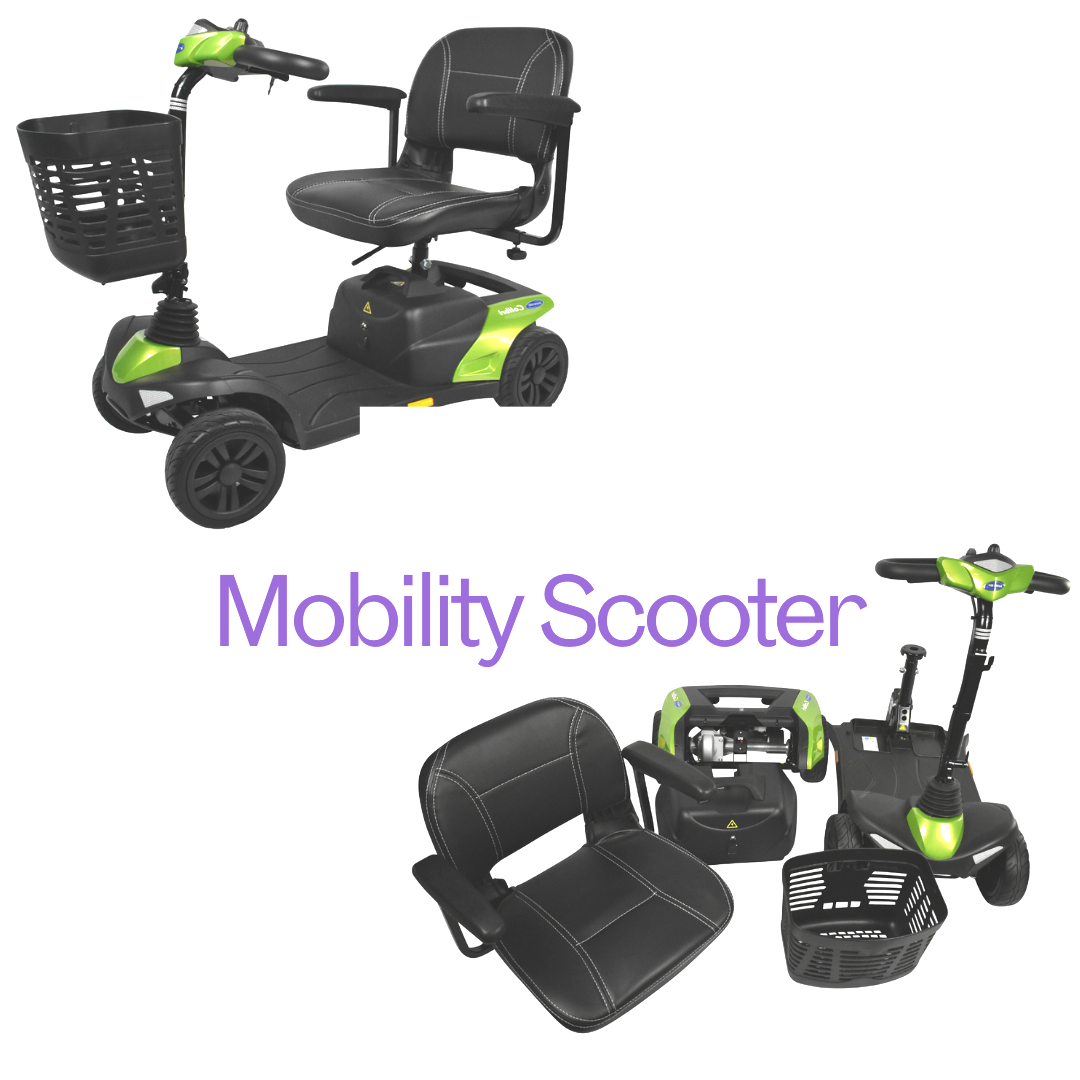
Disassembling (or dismantling) scooters break into four or five pieces—typically the seat, battery, front section, and rear section. The total scooter may be heavier overall, but the heaviest single piece is usually much lighter, often between 10 kg and 16 kg. The trade-off is assembly time: expect two to five minutes to take apart and put back together, and a bit of bending down, which can be difficult for some users
This is where the heaviest piece concept becomes your most important buying metric. The number that matters is not the total scooter weight. It is the weight of the single heaviest component you or your carer will actually lift. A dismantling scooter can be heavier overall yet easier to live with because no single piece exceeds your safe lifting limit.
Ask yourself: what is the heaviest thing I will have to pick up on a bad day? That is your real specification.
The Home-Measurement Checklist for Storage-Friendly Scooters
Now you have your route and your mechanism. Here is the checklist that turns browsing into a confident decision. Keep it open on your phone while you shop.
Doorway and hallway width. Compare the narrowest point on your route to the scooter’s overall width. Many compact 3-wheel scooters are around 49–52 cm wide, but always check the specific model.
Turning radius. This is the half-circle the scooter needs to turn around. The rule of thumb: the space you need to turn is double the advertised turning radius. Three-wheel scooters typically turn tighter than four-wheel models—sometimes by 30 cm or more—which makes them favourites for narrow hallways.
Folded or dismantled dimensions. This is your storage footprint. A folded scooter might measure around 56 × 41 × 76 cm on a compact model, but sizes vary widely, so check the manual.
Heaviest piece. Write it down. Compare it to what you can safely lift. Do not guess.
Charging access. Is there a socket where the scooter will live? Can you reach the charging point without bending behind the seat every night? If not, a removable battery changes everything—you can carry it indoors to charge in the warm.
With those five numbers, you can filter out 90% of unsuitable scooters before you read a single review.
Closet and Under-Stairs Storage: What Works and What Fails
A cupboard or under-stairs space can work beautifully—if the scooter’s dimensions match the usable space, not the headline space. A few practical rules:
- Flat floor, no leaks, no clutter. What matters more than square footage is a dry, flat, clutter-free surface.
- Ventilation matters. Do not seal a charging scooter into a tight, damp cupboard. Batteries and chargers need air.
- The under-stairs trap. It can feel like a clever use of dead space, but if that area is part of your escape route—or close to it—it is not a safe storage spot. More on that in a moment.
If the cupboard is too small, a folding or dismantling scooter stored in a hallway cupboard or even the boot of the car may be the answer. As one guide puts it, “a scooter you can actually store is worth more than a better one you cannot”.
Safety First: Storing and Charging Without Creating a Hazard
This is the section most product pages skip. It is also the section that matters most.
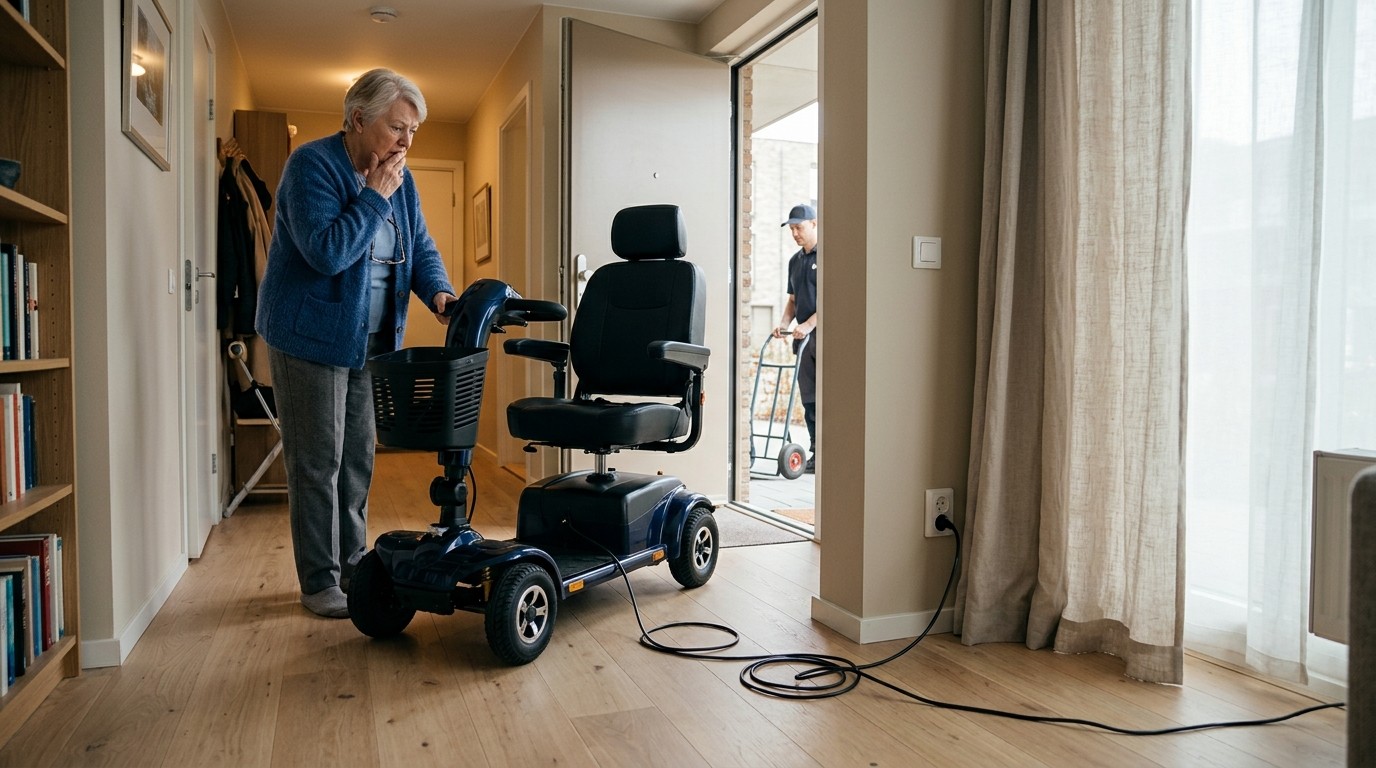
Fire services are unambiguous: do not charge or store a mobility scooter battery in a hallway, communal area, or anywhere it could block your escape. Lithium-ion battery fires can make an escape route impassable, and in a small flat, your hallway may be your only way out. Where possible, store and charge the scooter away from living spaces—a garage, shed, or carport is preferable, away from exit doors and combustible materials.
If you must charge indoors:
- Charge on a non-combustible surface, never on carpet, a bed, or a sofa.
- Do not leave it charging unattended or overnight.
- Use only the charger supplied with the scooter—never a generic replacement.
- Unplug once fully charged.
- If storing long-term, charge every four to six weeks and never leave the battery fully discharged.
These are not scare tactics. They are the practical rules that let you enjoy the freedom a scooter brings without inviting a preventable emergency into your home.
When a Compact Scooter Is the Right Compromise (And When It Is Not)
Storage-friendly scooters usually have smaller wheels, lower ground clearance, and simpler seats. That means a firmer ride on rough pavements and less comfort on long journeys. For getting to the shops, navigating a flat, or hopping in and out of a car, that is often a perfectly acceptable trade-off. For daily long outdoor trips over uneven ground, a larger scooter will serve you better—but it may not fit your hallway.
The honest answer is this: the “best” scooter is the one that fits your home and your life. If storage is the binding constraint, choose the storage-friendly option and accept the comfort compromise. If outdoor range and comfort are non-negotiable, you may need to solve the storage problem differently—a secure outdoor store, a shed, or a community scooter room. Neither choice is wrong. The wrong choice is the one made without measuring.
Your Next Step
You now have more than a buying guide. You have a framework. Measure the route, note the heaviest piece you can lift, decide whether folding speed or disassembly weight matters more, and plan a safe charging spot before the scooter arrives. That is how you turn the “where does it live?” panic into a calm, confident decision.
If you are still weighing up the mechanisms, the next question is usually the most practical one: which one actually stores smaller in real life—and which is easier day to day? That is exactly where the deeper guide on folding vs disassembly travel scooters for small homes (Coming Soon!) picks up. And if you want the full room-by-room method, the home-measurement checklist (Coming Soon!) walks you through every number with a printable worksheet. You are closer to a solution than you think.

Frequently Asked Questions
What counts as “storage-friendly” for a mobility scooter?
It means the scooter’s folded or dismantled footprint fits your actual storage space, and the heaviest piece is within your safe lifting limit. It is about the fit, not just the label.
How much space do I need to store a mobility scooter indoors?
There is no single number—it depends on the model. Measure the parking footprint (including the tiller) and compare it to the folded or dismantled dimensions on the spec sheet. Leave clearance to walk around it.
What measurements should I take at home before choosing a storage-friendly scooter?
The narrowest doorway, the tightest corner, the storage footprint, the heaviest piece you can lift, and whether a charging socket is reachable. Measure the route, not just the spot.
Is a folding mobility scooter always easier to store than a travel scooter that disassembles?
No. Folding is faster, but you lift the full unit. Disassembly takes longer but breaks the weight into lighter pieces. The “easier” option depends on your strength and your storage geometry.
What’s the “heaviest piece” and why does it matter for storage at home?
It is the single heaviest component you must lift when the scooter is folded or dismantled. It matters more than total weight because it is the real limit on who can store and handle the scooter daily.
Can I store a mobility scooter in a hallway without creating a trip hazard?
Only if the hallway is wide enough to keep a clear walking path and the scooter is not blocking an escape route. In a small flat, a hallway is often the worst place—prioritise a cupboard, a dedicated corner, or a safe outdoor store.
Can a mobility scooter be stored upright or on its side?
Follow the manufacturer’s instructions. Some folding models can be stored upright or rolled like a suitcase; others should stay flat. Never store a scooter in a position that puts stress on the tiller or battery.
Do I need to remove the battery for indoor storage?
Not always, but a removable battery makes charging safer and more flexible—you can charge it away from the scooter on a non-combustible surface. If the battery stays on, ensure the charging area is well ventilated and away from escape routes.
Where should I not store a mobility scooter in a small home?
Not in a hallway or communal area that serves as an escape route, not on carpet while charging, not near heat sources or damp, and not anywhere it blocks a door or window.
Will a smaller scooter be less stable or less comfortable?
Generally, yes—smaller wheels mean a firmer ride and less comfort on rough ground. Three-wheel models turn tighter but are less stable than four-wheel models. The trade-off is real, so match the scooter to your most common terrain.
Is 3-wheel or 4-wheel better when indoor turning space is tight?
Three-wheel scooters typically have a tighter turning radius—sometimes 30 cm or more—making them easier to manoeuvre in narrow hallways and around furniture. Four-wheel models offer more stability outdoors.
How do I store a scooter if I can’t lift it?
Choose a disassembling scooter with a light heaviest piece (often 10–16 kg), or a folding model that can be rolled rather than lifted. If lifting is not possible at all, consider a scooter that stays in a secure outdoor store or a ground-floor spot.
What if my doorway/hallway is narrow—what scooter specs matter most?
Overall width, turning radius, and whether the scooter can be dismantled to pass through in pieces. A 3-wheel compact model with a turning radius under 90 cm is often the best starting point.
Are compact scooters okay for outdoor trips if I’m mainly buying for storage reasons?
They are fine for smooth pavements, shops, and short trips. For uneven ground, kerbs, or long journeys, a larger scooter is more comfortable and stable. Be honest about where you will actually ride.
What are common “storage regrets” people have after buying the wrong scooter size?
Buying a scooter that fits the corner but not the route to it. Underestimating the heaviest piece. Forgetting to check charging access. And discovering too late that the hallway is now a daily obstacle course. Measure first—regret later is expensive.
Deeper Guides for Small Home Storage Friendly Scooters
How to Choose a Mobility Scooter Using Folded Dimensions vs “Parked Footprint” (A Measurement-First Method)
The spec sheet gives you folded dimensions. Your home gives you a parked footprint. This guide bridges the two with a room-by-room method. Read the full measurement-first method. (Coming Soon!)
Folding vs Disassembly Travel Scooters for Small Homes: Which Stores Smaller in Real Life (And Which Is Easier Day to Day)?
The marketing says both are “compact.” Real life says otherwise. This side-by-side comparison uses actual dimensions and lifting weights to show which mechanism wins in a small flat. Compare folding vs disassembly in real homes. (Coming Soon!)
A Home-Measurement Checklist for Storage-Friendly Scooters (Doorways, Hallway Width, Turning Space, Parking Spot Size)
A printable, step-by-step checklist that walks you through every measurement—including the ones most buyers forget. Get the full home-measurement checklist. (Coming Soon!)
How to Plan a Safe Storage + Charging Spot for a Mobility Scooter in a Small Home (Without Blocking Access or Creating Hazards)
Fire safety, ventilation, socket access, and escape routes—this guide turns a corner of your flat into a safe, practical charging station. Plan your safe storage and charging spot. (Coming Soon!)
What “Heaviest Piece” Really Means: Choosing a Disassembling Scooter When Storage Space Is Tight and Lifting Is Limited
Total weight is a distraction. This guide explains how to compare the number that actually matters and match it to your lifting ability. Understand the heaviest-piece test. (Coming Soon!)
Narrow Hallways and Tight Turns: How Turning Radius and Scooter Length Affect At-Home Storage Practicality
Turning radius is not just a spec—it is the difference between a scooter you can live with and one you dread manoeuvring. This guide explains the geometry in plain English. Master narrow hallways and tight turns.
Closet / Under-Stairs Storage: What Scooter Features Make These Spaces Workable (And What Makes Them Fail)
Cupboards and under-stairs nooks can be excellent—or a fire risk waiting to happen. This guide shows the features that make tight storage safe and practical. Make closet and under-stairs storage work. (Coming Soon!)
Storage-First Decision Guide: When a Compact Scooter Is the Right Compromise (And When It’s the Wrong One)
A calm, honest framework for choosing between storage convenience and outdoor comfort—so you do not buy the wrong scooter for the wrong reasons. Use the storage-first decision guide. (Coming Soon!)
Stay mobile, stay confident!
Sign up for our monthly Mobility Scooter Newsletter to receive practical guides, expert advice, and inspiring stories that help you make the most of your scooter and download our free "Mobility Scooter Guide for Beginners."
Don't worry — your e-mail address is totally secure.
I promise to use it only to send you our newsletter, "Mobility Matters."
Recent Articles


-
Small Home Storage Friendly Scooters That Actually Fit Your Flat
Nov 04, 26 07:59 AM
 Small Home Storage Friendly Scooters start with your tape measure. Learn the route, not just the spot, before you spend a penny.
-
Narrow Hallways and Tight Turns: Will a Scooter Actually Fit?
Nov 04, 26 07:55 AM
 Narrow hallways and tight turns decide whether a scooter is a joy or a daily fight. Learn the geometry, the measurements, and the fix.
-
Mobility Scooter vs Power Wheelchair for Low Vision: The Honest Guide
Nov 03, 26 05:01 AM
 Mobility scooter vs power wheelchair for low vision—which is safer and easier to control? A calm, evidence-led comparison for riders and carers.


Ready to Feel More Confident on Your Mobility Scooter?

My Ebook, The Ultimate Guide to Mobility Scooters, walks you through choosing the right scooter, using it safely, and keeping it in top condition — all explained in clear, friendly language.
Give yourself (or someone you love) the gift of independence.




