- Home
- Mobility Scooter Travel and Transport
- Storage Planning for Small Spaces
- Mobility Scooter Charging When No Power Point Is Nearby
Where Can I Charge a Mobility Scooter if It Can't Fit Near a Power Point (Removable Batteries vs Extension Leads)?
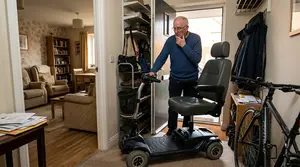
Picture this. You have finally found the perfect spot for your mobility scooter. It tucks neatly into the corner of your living room, out of the walkway, protected from the weather, and easy to access. There is just one problem. The nearest power point is on the opposite wall, about four metres away. Your scooter's charger cable is barely two metres long. You look at the gap between the scooter and the outlet, and you feel a familiar knot of frustration. The manual says never to use an extension lead. But what else are you supposed to do?
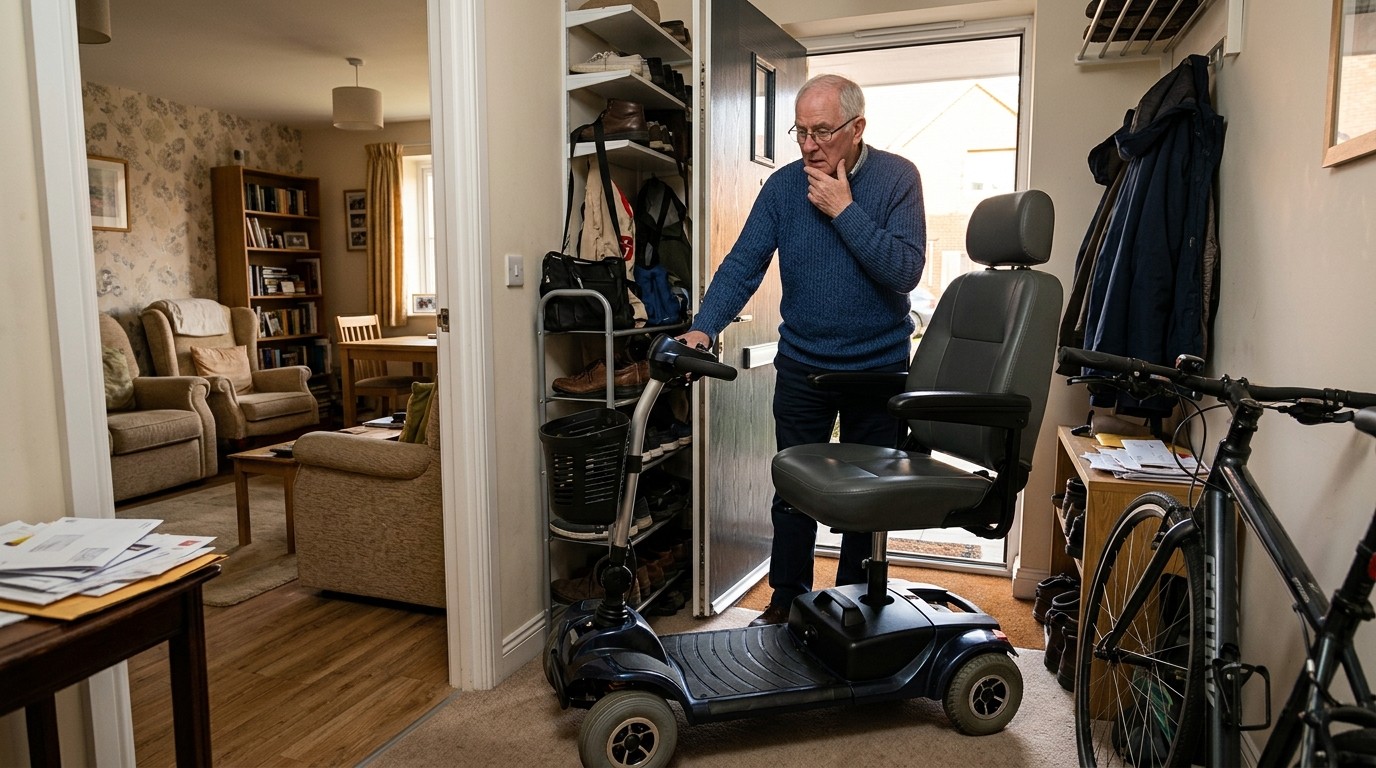
Take a breath. This is one of the most common dilemmas faced by scooter owners in small spaces, and you are not alone in feeling stuck. The good news is that you have two clear options, and understanding the trade-offs between them will help you choose the right one for your home and your peace of mind.
This guide will walk you through where you can charge a mobility scooter if it can't fit near a power point, comparing removable batteries and extension leads honestly and practically. By the end, you will know exactly what to do—and why.
Let's start with the option that most scooter manufacturers would prefer you to choose.
Option 1: Removable Batteries—The Gold Standard
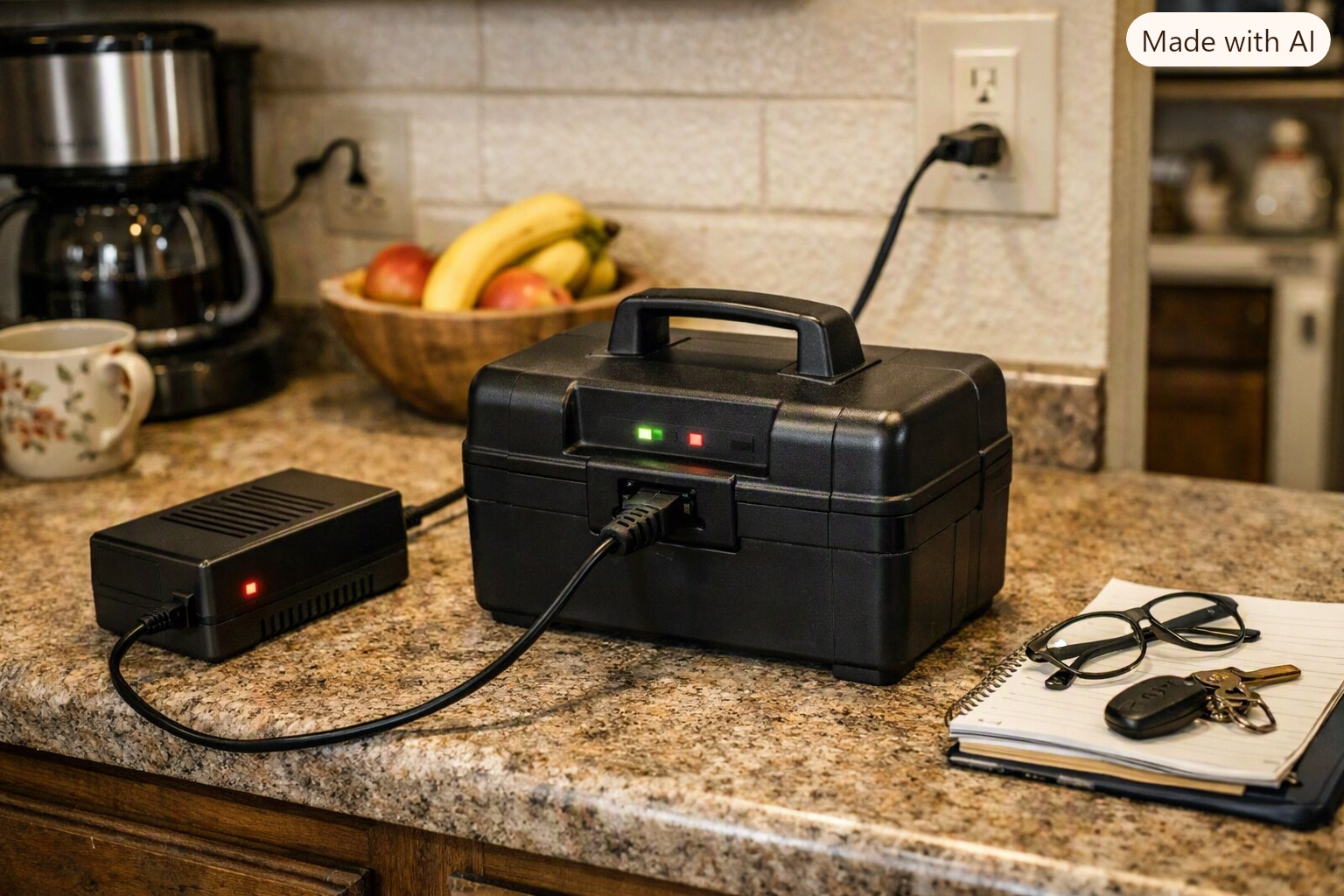
If your scooter has a removable battery, you have the best possible solution to this problem. Instead of moving the scooter to the power point, you move the power point to the scooter—or rather, you move the battery to the power point.
How Removable Batteries Work
A removable battery pack is exactly what it sounds like. It detaches from the scooter, usually with a simple latch or release mechanism. You carry the battery to a convenient charging location—a kitchen bench, a table, or a dedicated charging spot—and plug it into the charger there. The scooter stays exactly where it is.
The charger itself is usually an "off-board" charger, meaning it connects directly to the battery pack rather than the scooter. This is standard on many modern mobility scooters, especially folding models designed for travel and small spaces.
Why This Is the Safer Option
Charging a removable battery away from the scooter eliminates the long cable problem entirely. There is no cable trailing across the floor, no trip hazard, and no risk of the cable being damaged by being run under a rug or through a doorway. You charge the battery in a location that is already set up for safe charging—near a power point, on a hard surface, with good ventilation.
There is another benefit that is easy to overlook: weight.
If your scooter is heavy or difficult to move, removing just the battery reduces the weight you need to handle. You are not wrestling the entire scooter into position near a power point. You are carrying a battery pack that typically weighs between 3kg and 10kg, depending on the model.
What to Check Before Choosing This Option
Not all scooters have removable batteries. Before you commit, check the specifications of the scooter you are considering. If the battery is sealed inside the scooter and cannot be removed, this option is not available to you. If it is removable, check the weight of the battery pack and whether the charger can be used off-board. Most manufacturers provide this information clearly, and a reputable dealer will confirm it for you.
If removable batteries are an option for you, this is almost always the safer and more practical choice.
But what if your scooter does not have a removable battery, or you already own a scooter with a fixed battery? That is where the next option comes in.
Option 2: Extension Leads—Possible, But With Caveats
Let's be honest about this. Almost every mobility scooter manual includes a warning against using extension leads. The Invacare Lynx manual, for example, states: "Only ever use an extension cable if it is absolutely necessary. In case you must use one, make sure it is in good condition." Other manuals are blunter, simply saying "Never use an extension cord."
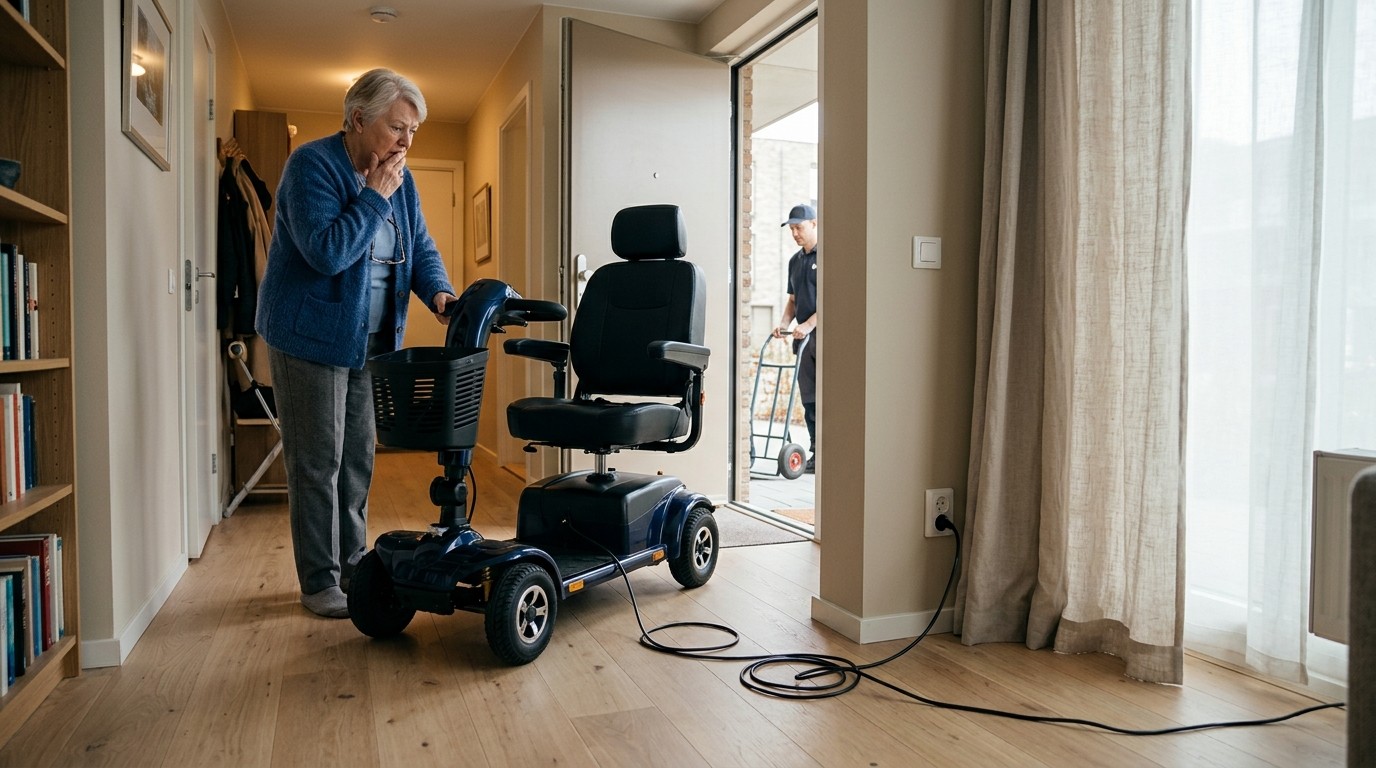
Why the caution? Extension leads introduce additional points of failure. A damaged or undersized lead can overheat. A lead that is coiled while in use can trap heat. A lead that crosses a walkway can be tripped over, damaging the cable and creating a shock hazard.
But here is the reality: sometimes an extension lead is genuinely the only option. If your scooter has a fixed battery and no power point nearby, you have to find a way to bridge that gap. The goal is not to pretend extension leads are ideal—they are not. The goal is to use one as safely as possible if you have no alternative.
How to Use an Extension Lead Safely
If you must use an extension lead, follow these rules without exception.
Use the shortest lead possible. The longer the lead, the greater the voltage drop, and the more heat can build up. A 3-metre lead is safer than a 10-metre lead. If you can rearrange your storage or charging setup to reduce the distance, do that first.
Use a heavy-duty lead rated for at least 10 Amps. Standard domestic extension leads are often rated for 10 Amps, but check the label. Australian guidance recommends heavy-duty cord extension sets rated at least 10 Amps for this kind of use.
Fully unwind the lead before use. A coiled extension lead cannot dissipate heat properly. If the lead is warm to the touch during charging, it is a sign that it is overloaded or coiled. Unwind it completely.
Never run the lead under a rug or through a doorway. This is one of the most dangerous things you can do with an extension lead. Heat builds up under rugs, and doorways crush and damage cables over time. Route the lead along walls, behind furniture, or through a cable protector if it must cross a walkway.
Use an RCD (safety switch). If your power point does not already have RCD protection, use an inline RCD on the extension lead. This provides an additional layer of protection against electric shock.
Inspect the lead before every use. Look for signs of damage—frayed wires, exposed conductors, tears in the insulation, or a loose plug. If you see any damage, stop using it immediately. A damaged extension lead is a fire waiting to happen.
Never daisy-chain leads. Do not plug one extension lead into another. This overloads the circuit and dramatically increases the risk of overheating.
Unplug when not in use. An extension lead that is plugged in but not charging anything is still live. Unplug it when charging is complete.
Comparing the Two Options: Which Should You Choose?
Here is a simple way to think about it.
|
Factor |
Removable Battery |
Extension Lead |
|
Safety |
High—no trailing cables |
Moderate—requires careful management |
|
Convenience |
High—carry battery to power point |
Moderate—cable must be set up and packed away |
|
Trip hazard |
None |
Present unless managed carefully |
|
Manual approval |
Yes—designed for off-board charging |
Usually discouraged or prohibited |
|
Cost |
May require a different scooter model |
Minimal if you already own a suitable lead |
|
Best for |
Anyone choosing a new scooter |
Existing owners with no alternative |
If you are still choosing a scooter, a removable battery is the clear winner. It solves the problem at the source, and it gives you flexibility that a fixed-battery scooter simply cannot match. If you already own a scooter with a fixed battery, an extension lead may be your only option—but use it with the safety rules above firmly in mind.
What If Neither Option Works for You?
There is a third path that is worth considering, especially if you are in an apartment building or a rental property. Some buildings are beginning to install designated charging stations in common areas, car parks, or basement storage rooms. These are purpose-built, fire-safe charging points that allow residents to charge mobility devices outside their apartments. If your building does not have one, this is a conversation worth having with your strata committee or building manager.
Another option is a charging station with an automatic shut-off. These power points turn off after a set period—typically eight hours—so you cannot accidentally leave the charger running. For anyone who worries about forgetting to unplug, this is a simple and effective safety measure.
And if you are still in the planning stage, remember that our guide to setting up a safe mobility scooter charging station in a small space will walk you through ventilation, cable management, and fire safety in detail. If measuring your space is your next step, our guide to how to measure your home for a mobility scooter has you covered.

Frequently Asked Questions
Can I use an extension lead to charge my mobility scooter?
You can, but only if you have no alternative. Use the shortest heavy-duty lead possible, fully unwound, rated for at least 10 Amps, and never run it under a rug or through a doorway. Inspect it before every use.
Are removable batteries better for charging in small spaces?
Yes, in almost every case. A removable battery eliminates trailing cables and trip hazards entirely. You carry the battery to a power point rather than moving the scooter.
How do I know if my scooter has a removable battery?
Check the specifications or user manual. If the battery is described as "removable," "detachable," or "off-board chargeable," you can remove it for charging. If it is "sealed" or "fixed," you cannot.
What length extension lead is safe for charging a mobility scooter?
The shortest possible. A 3-metre lead is safer than a 10-metre lead. If you must use a longer lead, ensure it is heavy-duty and fully unwound.
Can I charge my scooter battery indoors?
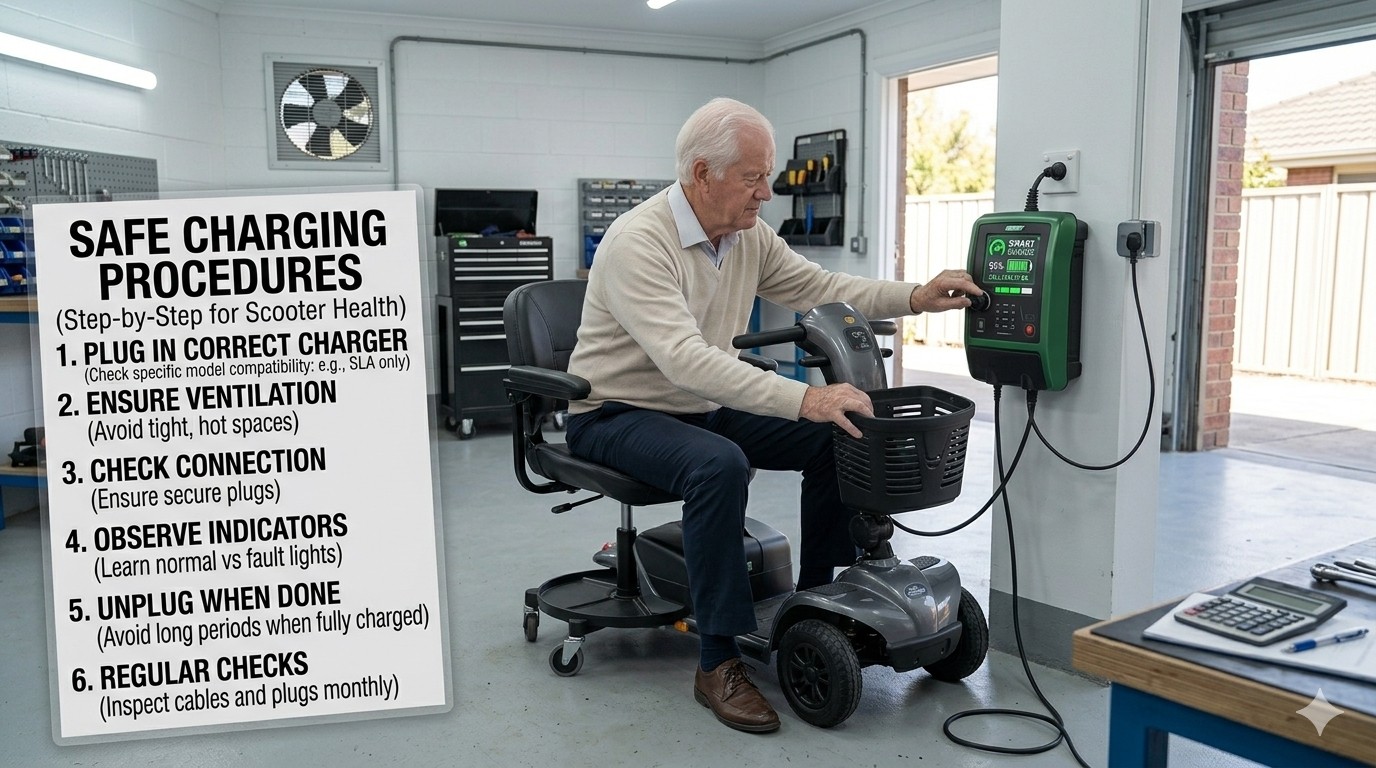
Yes, provided the area is well-ventilated and away from flammable materials. Never charge in a bedroom, hallway, or escape route.
What should I do if my extension lead gets hot during charging?
Stop charging immediately. Unplug the lead and let it cool. A hot lead indicates overheating, which is a fire risk. Replace the lead with a heavier-duty option or find an alternative charging solution.
Is it safe to charge a scooter battery on a kitchen bench?
Yes, if the bench is a hard, non-flammable surface and the area is well-ventilated. Keep the battery away from water sources and flammable materials.
You Have Options—And You Can Choose Wisely
Charging your mobility scooter when it cannot fit near a power point is not an impossible problem. It is a decision between two options, each with its own trade-offs. A removable battery is the safer, more convenient choice—and if you are still choosing a scooter, it is worth prioritising. An extension lead is a workable fallback if you have no alternative, provided you follow the safety rules carefully.
You have already done the hardest part by thinking this through. If you are still planning your storage setup, our guide to storage planning for small spaces will help you map out the rest.
If you are in an apartment building and need to navigate strata rules, our guide to planning mobility scooter storage in an apartment building without blocking egress or common areas has you covered.
You have got this—and we are here to help every step of the way.
Stay mobile, stay confident!
Sign up for our monthly Mobility Scooter Newsletter to receive practical guides, expert advice, and inspiring stories that help you make the most of your scooter and download our free "Mobility Scooter Guide for Beginners."
Don't worry — your e-mail address is totally secure.
I promise to use it only to send you our newsletter, "Mobility Matters."
Recent Articles


-
Storage Planning for Small Spaces: Measure, Plan, Store Safely
Oct 13, 26 08:14 AM
 Storage planning for small spaces doesn't have to be stressful. Learn how to measure, charge, and safely store your mobility scooter at home.
 -
Folding vs Disassembly: Best Scooter Storage for Small Flats
Oct 13, 26 08:11 AM
 What's the best storage plan for a folding scooter vs a disassembly scooter in a small apartment? This practical guide compares both.
 -
Mobility Scooter Charging: Removable Batteries vs Extension Leads
Oct 13, 26 06:33 AM
Where can I charge a mobility scooter if it can't fit near a power point? Learn the safest solution for your home and lifestyle.

Ready to Feel More Confident on Your Mobility Scooter?

My Ebook, The Ultimate Guide to Mobility Scooters, walks you through choosing the right scooter, using it safely, and keeping it in top condition — all explained in clear, friendly language.
Give yourself (or someone you love) the gift of independence.




