- Home
- Mobility Scooter Travel and Transport
- Storage Planning for Small Spaces
Storage Planning for Small Spaces: A Practical Guide to Storing Your Mobility Scooter at Home
Picture this. You have just chosen the perfect mobility scooter. It is comfortable, reliable, and it gives you the freedom to get out and about on your own terms. You bring it home, buzzing with excitement—and then you look around your unit. The hallway is narrow. The living room is already full. There is no garage, no spare room, and the entryway is barely wide enough to walk through, let alone park a scooter.
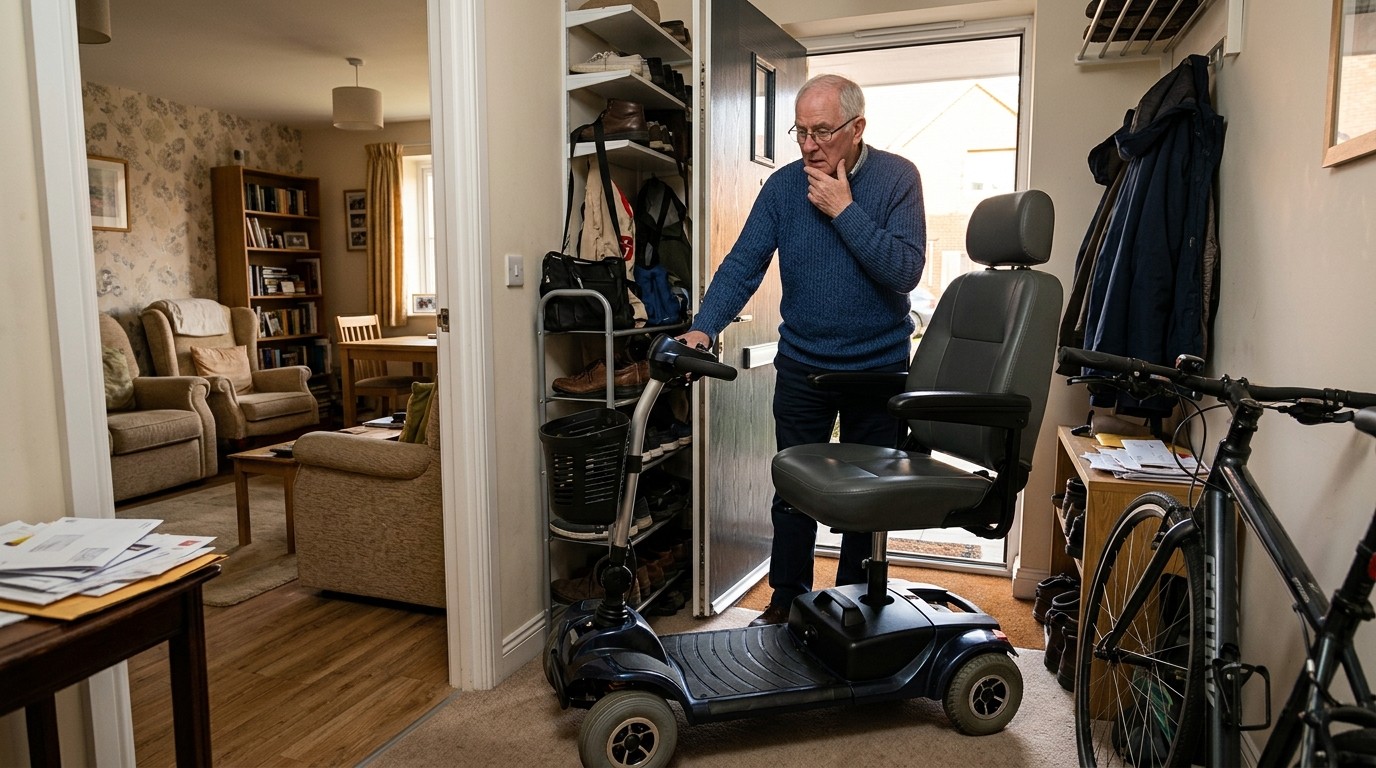
If that sounds familiar, take a breath. You are not alone, and you have not made a mistake. Storage planning for small spaces is one of the most common challenges faced by scooter owners, and it is entirely solvable with the right approach.
This guide will walk you through every step—from measuring your home to choosing the right storage spot, solving charging logistics, and keeping you safe and compliant.
By the end, you will have a clear plan that works for your space, your lifestyle, and your body. Let's get started.
Why Storage Planning for Small Spaces Matters More Than You Think
Many people buy a scooter first and figure out storage later. That is completely understandable—the scooter itself is the exciting part. But the reality is that where your scooter lives has a huge impact on how much you actually use it.
If your scooter is buried behind boxes, folded awkwardly in a corner you can barely reach, or plugged into a charging cable that snakes across the hallway, you will start to dread using it. The scooter that was supposed to give you freedom becomes a source of daily frustration. On the other hand, a well-planned storage spot means your scooter is always ready, always charged, and always easy to access. That is the difference between owning a scooter and actually using it.
There is also a safety dimension that cannot be ignored. Mobility scooters contain lithium-ion batteries, and fire authorities consistently advise against charging or storing them in hallways, escape routes, or communal areas where they could block your exit in an emergency.
Getting your storage plan right is not just about convenience—it is about keeping you and your household safe. Stick with me, and we will make sure your plan ticks every box.
Start Here: Measuring Your Space Before You Commit
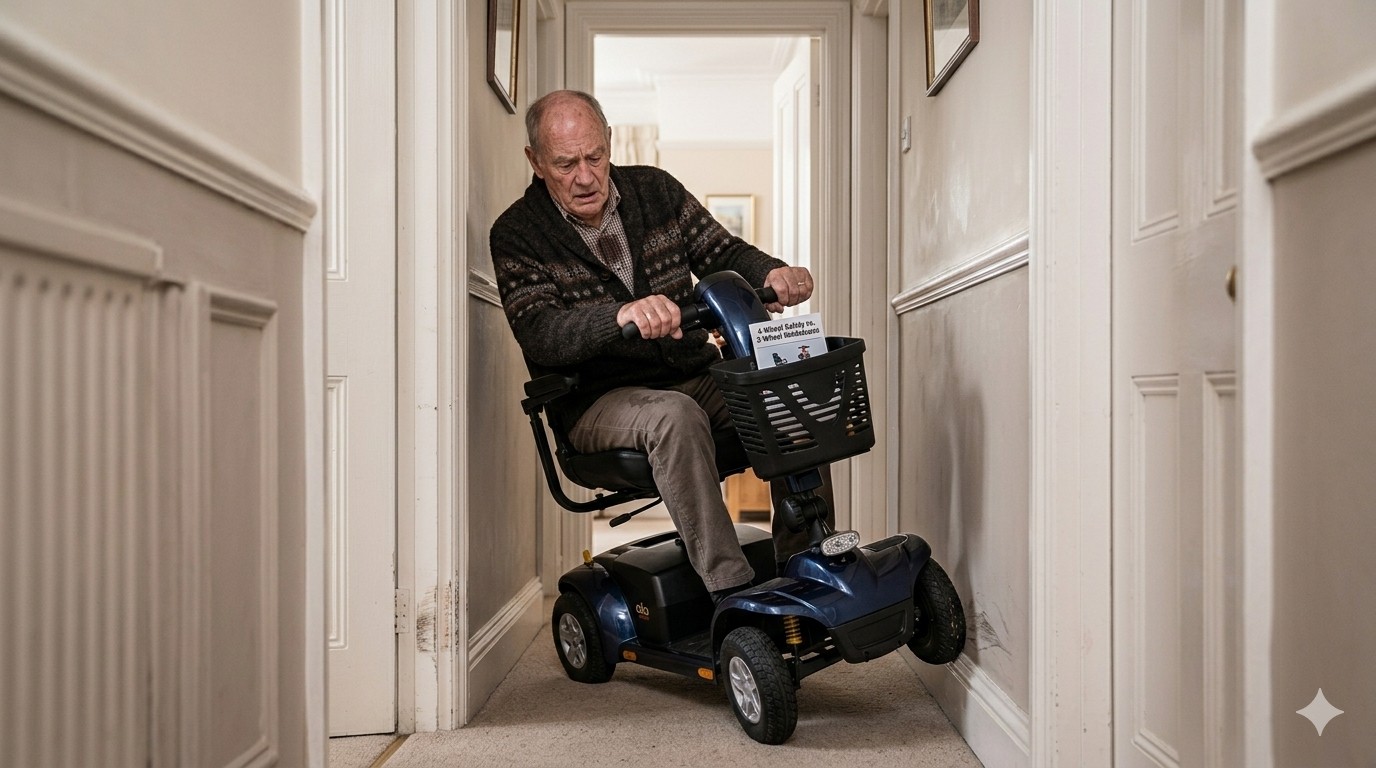
Before you decide where your scooter will go, you need to know whether it can actually get there. This is the step most people skip, and it is the one that causes the most problems later. The route matters just as much as the destination. If you want a full, step-by-step breakdown of every dimension that matters, our guide to how to measure your home for a mobility scooter (Coming Soon!) covers doorways, hall turns, and turning circles in detail.
What to Measure
You will need a simple tape measure and a notebook. Here is your checklist:
Doorway widths. Measure every doorway the scooter will pass through—front door, internal doors, and any door to a storage area. Standard internal doorways in Australian homes are often around 820mm, but older homes can be narrower. The Australian Standard for accessible doorways recommends a minimum clear opening of 850mm. Check your specific doorways and note the narrowest point. This is the single most important measurement you will take.
Corridor widths. A scooter may fit through a doorway but then get stuck in a tight hallway. Measure the narrowest point of any corridor along the route.
Turning space. Scooters need room to turn. A typical compact scooter has a turning circle of around 1.3 to 1.8 metres. If your scooter needs to turn 90 degrees to enter a room, you need at least that much clear floor space. Read our full guide.
The storage footprint. Once you have chosen a storage spot, measure the length and width of that area. Compare it to the scooter's dimensions both assembled and folded (if applicable).
Power point location. Where is the nearest power outlet to your intended storage spot? Is it accessible without running a cable across a walkway?
Write all of these measurements down. You will use them in the next step—and trust me, having them on paper will save you a lot of guessing later.
Choosing Your Storage Location: A Room-by-Room Guide
Now that you have your measurements, let's look at the realistic options for storing a scooter in a small home. Each has trade-offs, and the right choice depends on your layout, your scooter type, and your daily routine.
The Hallway or Entryway
This is the most common choice for apartment dwellers, and it makes sense—it is where you naturally enter and exit. A folding scooter that collapses into a compact unit can often be tucked against a wall or into a shallow cupboard near the front door. If you are renting or in a strata building, though, there are rules you need to know. Our guide to planning mobility scooter storage in an apartment building without blocking egress or common areas (Coming Soon!) walks you through the Australian compliance requirements in plain language.
However, there is a critical caveat. You must not block your escape route. Fire safety guidance is unambiguous: do not store or charge your scooter in a hallway or escape route where it could impede evacuation. If your hallway is your only exit, storing a scooter there—even a folded one—may create a hazard.
The key is to ensure there is still a clear path to the door at all times. If you are unsure, speak to your local fire service or building manager.
A Cupboard or Wardrobe
A dedicated cupboard is a brilliant solution if you have one to spare. A folding scooter can often be stored upright, taking up surprisingly little floor space. If the cupboard is near a power point, even better. Just make sure the cupboard is well ventilated and not used for storing flammable materials.
Under-Stairs or Utility Areas
If you have an under-stairs nook or a utility area, these can work well as long as they are dry and ventilated. Avoid damp cellars or areas near washing machines where humidity can damage the scooter's electronics over time.
A Balcony or Garage
Outdoor storage is possible but comes with risks. Balconies expose the scooter to weather and potential theft. Garages are often cold and damp, which can affect battery performance and cause corrosion. If you must store outdoors, use a breathable cover—not a plastic tarp, which traps moisture—and bring the battery indoors for charging.
And always check your strata or rental agreement before storing anything on a balcony or in a shared garage, as this is a common source of disputes.
The Folding vs. Disassembly Decision
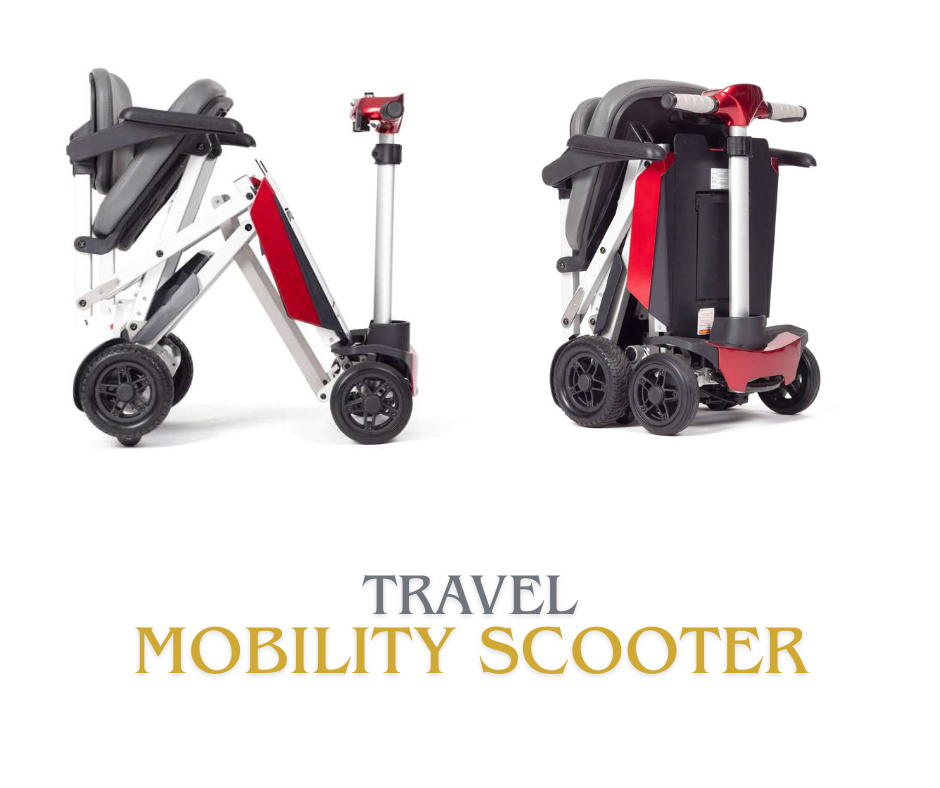
If you are still choosing a scooter, this is the moment to think carefully about how it will store. Folding scooters collapse into a single compact unit, which is ideal for tight spaces, lifts, and hallway cupboards.
Disassembly scooters break into separate components—typically the seat, battery, motor unit, and front section—which can be stored in different places and are often lighter to lift individually.
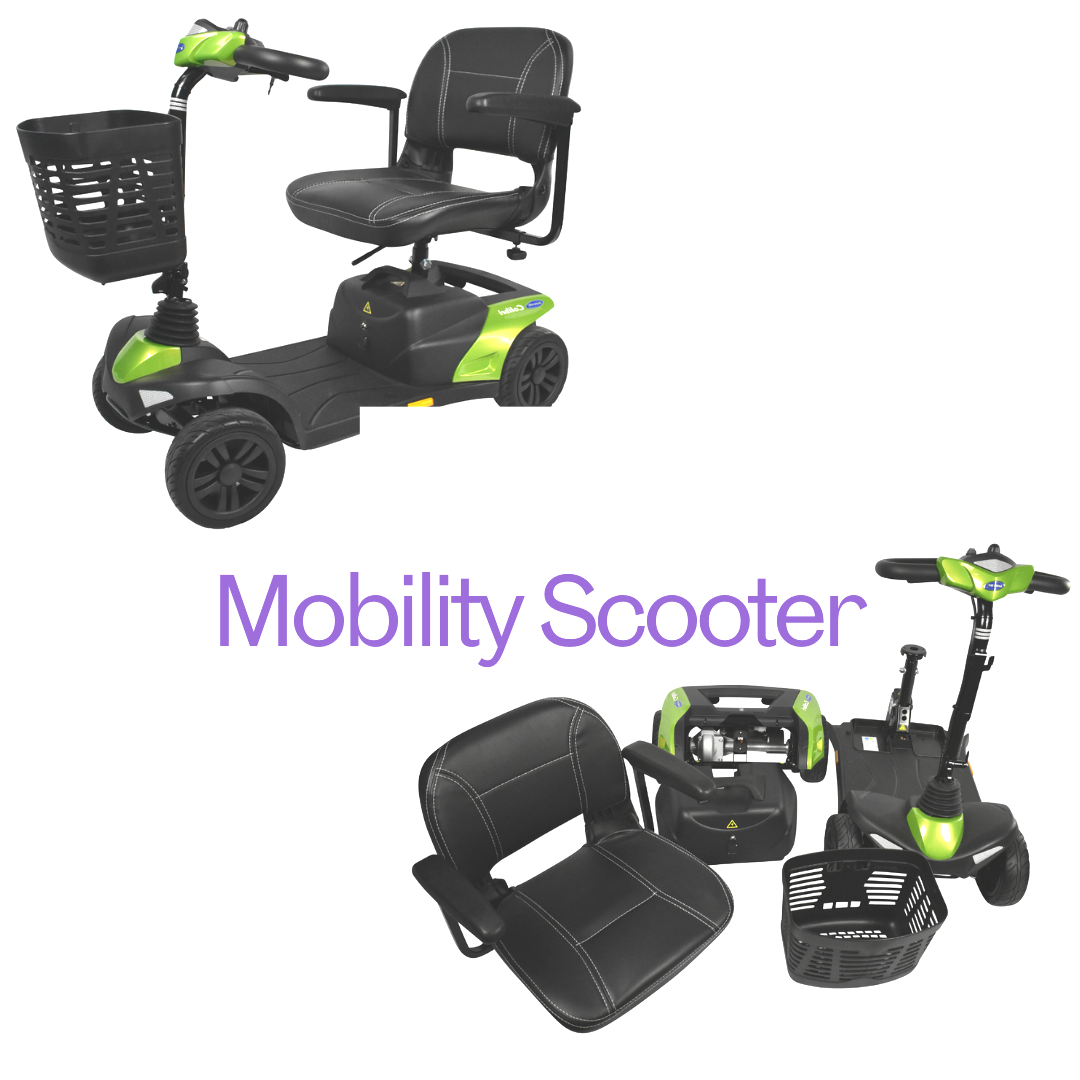
Neither is universally better. If you have limited strength, a disassembly scooter with lightweight components may be easier to manage. If you want speed and simplicity, a folding scooter that you can wheel into place in seconds is hard to beat.
The best choice is the one that fits your body and your home. We explore this in much more detail in our dedicated guide to the best storage plan for a folding scooter vs a disassembly scooter in a small apartment.(C0ming Soon!)
Solving the Charging Puzzle in a Small Space
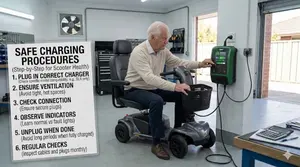
Charging is where small-space storage gets genuinely tricky. The safest approach is to charge in a clear, well-ventilated area, away from heat sources, and never overnight or unattended. If you want a full walkthrough of cable management, ventilation, and trip hazard reduction, our guide to setting up a safe mobility scooter charging station in a small space (Coming Soon!) has you covered.
If your storage spot is nowhere near a power point, you have a few options. First, consider a scooter with a removable battery. You can park the scooter wherever it fits and carry just the battery to a convenient charging location. Second, if you must use an extension lead, ensure it is rated for the load, is not a trip hazard, and is not run under rugs or through doorways. For a deeper comparison of removable batteries versus extension leads, see our guide to where to charge a mobility scooter if it can't fit near a power point. (Coming Soon!)
Third, think about whether a different storage spot—perhaps one closer to an outlet—could work, even if it means rearranging a little furniture. If you are in a rental property or apartment, remember that any changes to your home may need landlord or strata approval. Getting that permission in writing protects you and keeps everyone happy.
When Lifting Is Not an Option
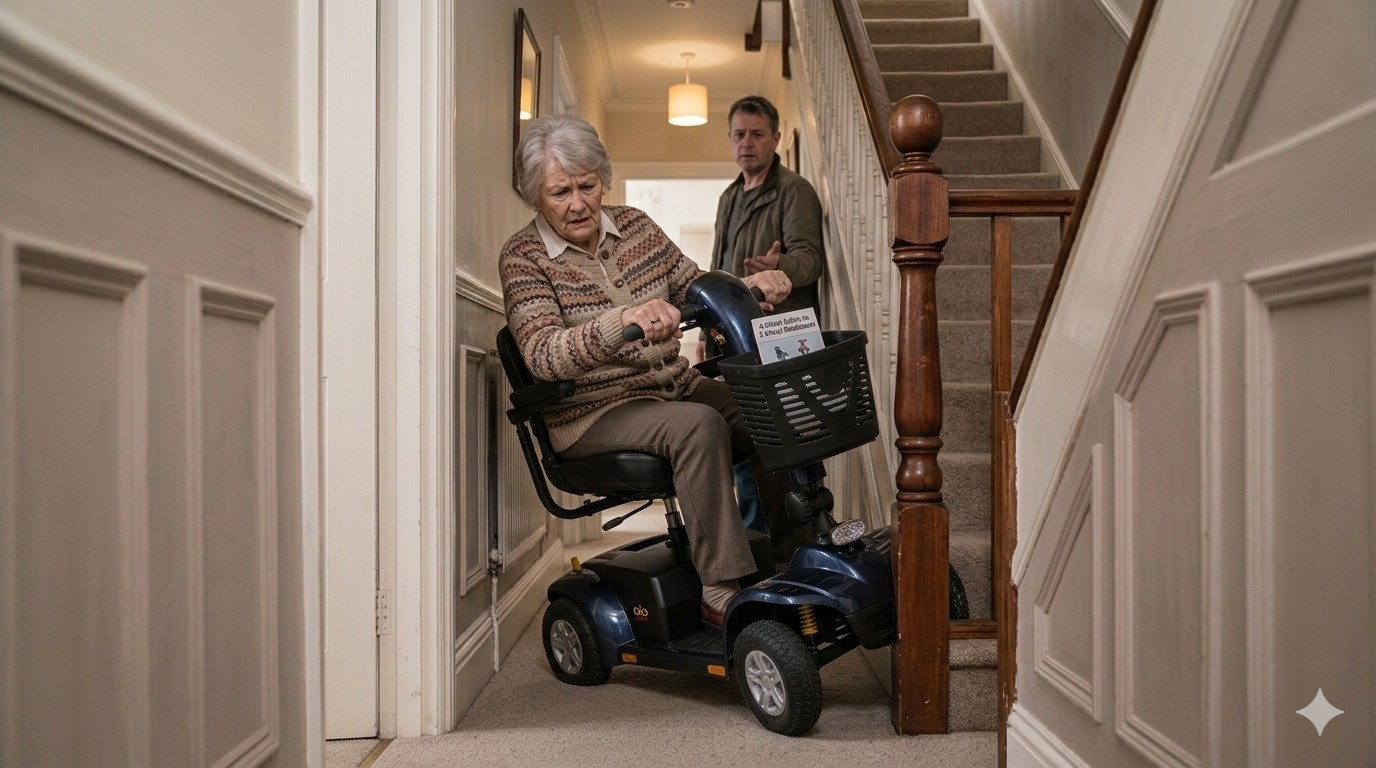
For many people—especially carers and those with limited strength—the biggest barrier to small-space storage is not the space itself. It is the lifting. Even a folding scooter can be heavy, and wrestling it into a cupboard every day is simply not sustainable.
The good news is that you have options. A disassembly scooter with lightweight components allows you to move the scooter piece by piece. A scooter with a removable battery lets you reduce the weight before moving it. And simple equipment—such as a small ramp, a turntable, or wall-mounted hooks for the heaviest parts—can make a huge difference.
Our guide to how to store a mobility scooter in a small unit when you can't lift it (Coming Soon!) covers layout and equipment options in detail.
Making It Work Day to Day: Car Boot and Home
Your storage plan does not exist in isolation. For many people, the scooter needs to travel—to the shops, to medical appointments, to visit family. That means your home storage plan needs to connect seamlessly with your car boot storage plan. If you are constantly folding and unfolding, loading and unloading, the whole system needs to be smooth enough that you actually want to use it.
Our guide to planning storage for a mobility scooter in a car boot and at home (Coming Soon!) shows you how to make the two work together.
Safety, Security, and Accessibility: The Final Checklist
Before you finalise your storage plan, run through this quick checklist. It will take five minutes and could save you a lot of stress later.
- Is your escape route clear? Can you and your household exit quickly in an emergency without moving the scooter?
- Is the area dry and ventilated? Moisture is the enemy of batteries and electronics.
- Is the scooter secure? If it is stored near a door, consider a lock or ground anchor. If indoor space forces near-the-door storage, our guide to how to secure a mobility scooter at home when indoor space forces near-the-door storage (C0ming Soon!) covers locks, visibility, and anchor options.
- Can you retrieve it without strain? If you have limited strength, consider a scooter with a lightweight heaviest component or a storage spot that does not require lifting.
- Do you have written permission? If you rent or live in a strata building, get any storage or charging arrangements approved in writing.

Frequently Asked Questions
How much space do I need to store a mobility scooter at home?
It depends on the scooter. A compact folding scooter might need as little as 1 metre by 0.5 metres when folded. A larger disassembly scooter could need 1.5 metres by 0.8 metres. Measure your intended spot and compare it to the scooter's folded or disassembled dimensions before you buy.
What's the best place to store a mobility scooter in a small apartment?
A hallway cupboard, a wardrobe, or an under-stairs nook are usually the best options. The key is to keep the escape route clear and ensure the area is dry, ventilated, and close to a power point if possible.
Can I store a mobility scooter in a hallway without it being a hazard?
Only if there is still a clear path to the exit at all times. Never store or charge a scooter in a way that blocks your escape route. If your hallway is your only exit, consider a different location or speak to your building manager.
Do folding mobility scooters really save enough space for apartment living?
Yes, for many people they do. A folding scooter can often be stored upright in a cupboard or tucked against a wall. Just check the folded dimensions and weight—some are heavier than you might expect.
Is it better to fold a scooter or disassemble it for storage?
Folding is faster and simpler. Disassembly allows you to store components in different places and can be easier on your back if the individual pieces are lighter. The right choice depends on your strength and your available space.
What measurements should I take before buying a scooter for a small home?
Measure your narrowest doorway, your narrowest corridor, your available turning space, your intended storage footprint, and the distance to your nearest power point.
What's the minimum doorway width for a mobility scooter?
The Australian Standard recommends a minimum clear opening of 850mm for accessible doorways. Many scooters need at least 800mm. Measure your actual doorways—not the nominal width—because door frames and hinges reduce the clear opening.
How much turning space does a mobility scooter need indoors?
Most compact scooters need a turning circle of 1.3 to 1.8 metres. Check your scooter's specification and measure your tightest turn.
Can I keep my mobility scooter near the front door if space is tight?
Yes, provided it does not block your escape route and you have a way to secure it. A lock or ground anchor is a good idea if it is visible from outside.
Where should I charge my mobility scooter in a small space?
Charge in a clear, well-ventilated area away from heat sources. Never charge in a hallway or escape route. If possible, use a spot near a power point so you do not need extension leads.
Can I charge a mobility scooter in a bedroom or living room safely?
Only if the area is well ventilated and the charger is on a hard, non-flammable surface. Never charge overnight or unattended. Check your scooter's manual for specific guidance.
What if the nearest power point is far from where the scooter fits?
Consider a scooter with a removable battery so you can carry just the battery to the power point. If you must use an extension lead, keep it short, rated for the load, and never run it under rugs or across walkways.
Are removable batteries better if I have limited storage space?
They can be. A removable battery lets you park the scooter wherever it fits and charge the battery elsewhere. It also reduces the weight you need to lift when moving the scooter.
Can I store a mobility scooter on a balcony (weather and security)?
You can, but you need a breathable cover to protect it from weather and a lock to protect it from theft. Check your strata or rental agreement first—many buildings prohibit balcony storage.
Can I store my mobility scooter in a garage or carport if I don't have indoor room?
Yes, but garages and carports can be damp and cold. Use a breathable cover, bring the battery indoors for charging, and check for security risks.
How do I reduce trip hazards from charging cables in tight spaces?
Use a removable battery where possible. If you must use a cable, keep it short, route it along walls rather than across floors, and never run it under rugs or through doorways.
How do I protect my walls and door frames from scooter scuffs indoors?
Adhesive wall protectors, foam pipe insulation on door frames, and a little patience when manoeuvring will save your paintwork. A scooter with a tight turning circle also helps.
How do I store a scooter safely if I have limited strength for lifting?
Choose a scooter with lightweight components or a removable battery. Use ramps, turntables, or wall-mounted hooks to reduce the need for lifting. Store at waist height where possible.
What security steps help prevent scooter theft at home?
Use a lock or ground anchor, keep the scooter out of sight from windows and doors, and consider a motion-sensor light near your storage spot. If storing in a shared area, check what security your building already provides.
What should carers consider when setting up scooter storage for someone at home?
Focus on accessibility, safety, and simplicity. The person using the scooter should be able to retrieve and return it without strain. Keep the charging setup simple and ensure the escape route is always clear.

You Can Do This
Storage planning for small spaces is not about having a big home. It is about having a smart plan. You have already done the hardest part by thinking it through before you commit. Measure carefully, choose a location that keeps you safe and comfortable, sort out your charging logistics, and check your permissions. The result will be a scooter that is ready when you are, in a home that still feels like home.
If you are still deciding on the right scooter for your space, start with our guide to measuring your home for a mobility scooter.(Coming Soon!)
If you are weighing up folding versus disassembly, we have a full comparison waiting for you. And if charging is your biggest worry, our safe charging station guide (Coming Soon!) will set your mind at ease.
You have got this—and we are here to help every step of the way.
Stay mobile, stay confident!
Sign up for our monthly Mobility Scooter Newsletter to receive practical guides, expert advice, and inspiring stories that help you make the most of your scooter and download our free "Mobility Scooter Guide for Beginners."
Don't worry — your e-mail address is totally secure.
I promise to use it only to send you our newsletter, "Mobility Matters."
Recent Articles


-
Storage Planning for Small Spaces: Measure, Plan, Store Safely
Oct 11, 26 06:21 AM
 Storage planning for small spaces doesn't have to be stressful. Learn how to measure, charge, and safely store your mobility scooter at home.
 -
Extended Range Battery Kits: Worth It or No
Oct 10, 26 08:47 AM
When "extended range" battery kits make sense (and when they don't): Stop wasting money. Get the honest facts before you upgrade your scooter. -
What to Do When Your Mobility Scooter Battery Won't Hold a Charge
Oct 10, 26 08:34 AM
What to do when your mobility scooter battery won't hold a charge: Everything you need to know about diagnosing and fixing battery problems.
Ready to Feel More Confident on Your Mobility Scooter?

My Ebook, The Ultimate Guide to Mobility Scooters, walks you through choosing the right scooter, using it safely, and keeping it in top condition — all explained in clear, friendly language.
Give yourself (or someone you love) the gift of independence.




