- Home
- Mobility Scooter Travel and Transport
- Storage Planning for Small Spaces
- How to Measure Your Home for a Mobility Scooter
How to Measure Your Home for a Mobility Scooter (Doorways, Hall Turns, and Turning Circle)
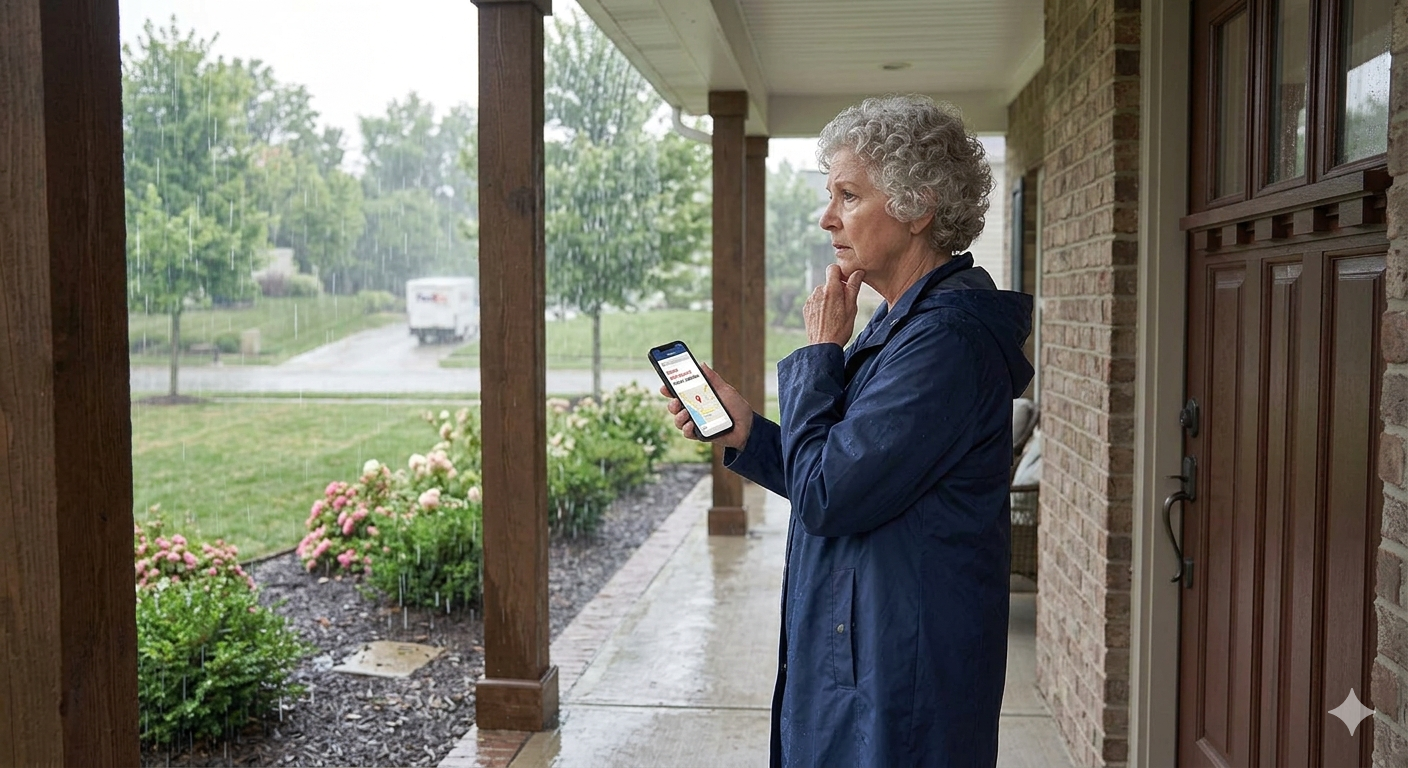
Picture this. You have spent weeks researching mobility scooters. You have compared models, read reviews, and maybe even taken one for a test drive at a showroom. You have finally found "the one"—and then a quiet thought creeps in. Will it actually fit through my front door? You stand in your hallway, look at the narrow turn into the kitchen, and suddenly realise you have no idea. The tape measure is in the drawer. The scooter is in your online cart. And you are frozen, afraid of getting this wrong.
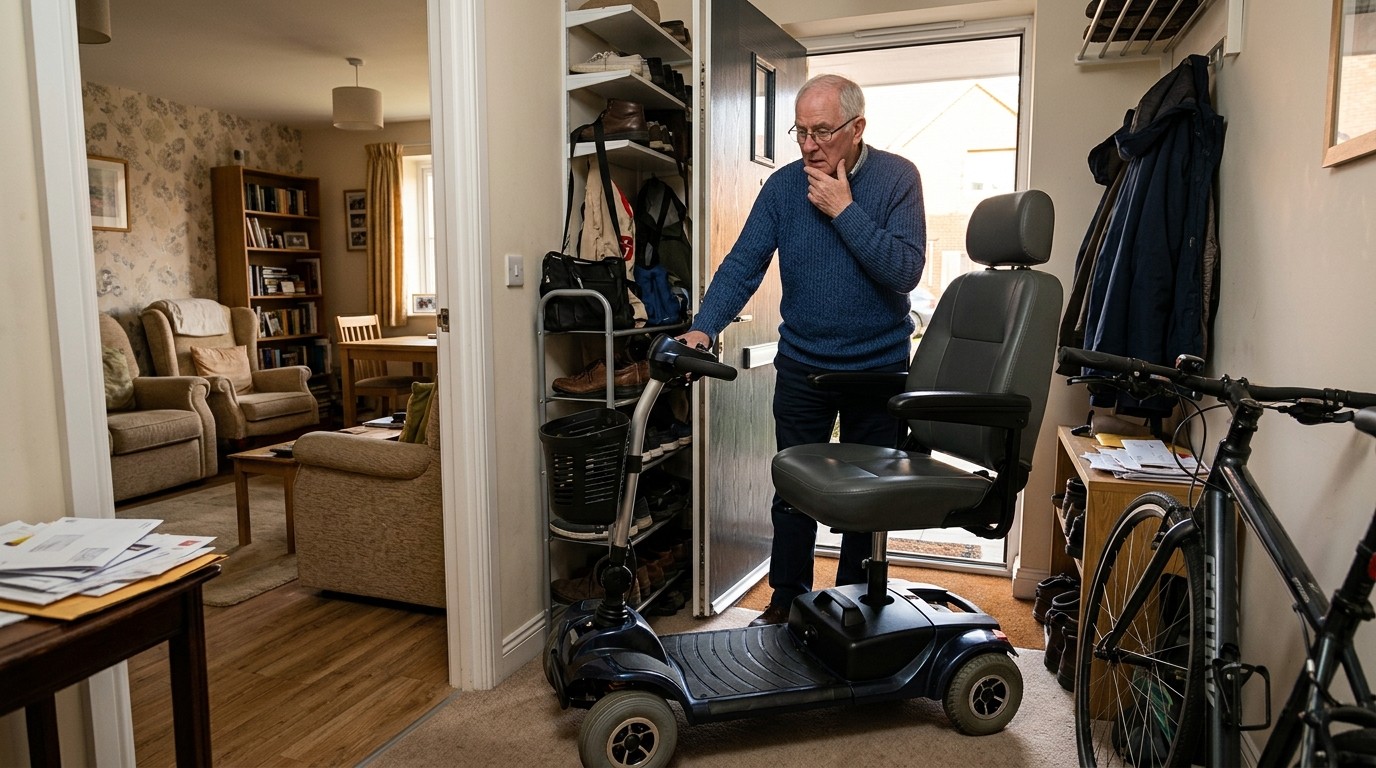
Take a breath. You are in exactly the right place. Learning how to measure your home for a mobility scooter is not complicated once you know what to look for, and it is the single most important thing you can do before you buy. This guide will walk you through every measurement that matters—doorways, hall turns, and turning circles—using metric measurements and plain English.
By the end, you will have a clear picture of whether your home is scooter-ready, and if it is not, exactly what needs to change.
Let's grab that tape measure.
Why Measuring Before You Buy Saves You Stress Later
Here is a truth that scooter owners learn the hard way: a scooter that fits in the showroom does not automatically fit in your home. Showrooms are wide, open, and purpose-built. Your hallway is probably none of those things.
Measuring before you buy protects you from three very real problems. First, it prevents the heartbreak of a scooter that gets delivered and then cannot make the turn into your living room. Second, it saves you from costly returns, restocking fees, and the hassle of arranging transport for a heavy item. Third, and perhaps most importantly, it gives you confidence. When you know your doorways are 850mm and your scooter needs 800mm, you can make a decision without second-guessing yourself. That confidence is worth more than any specification sheet.
So where do you start? With the route your scooter will actually take, not just the spot where it will park.
The Route Matters More Than the Parking Spot
Most people measure the corner where they plan to store the scooter. That is a good start, but it is not enough. Your scooter needs to travel from its storage spot to the front door—and possibly back again multiple times a day. Every doorway, every hallway, and every turn along that route needs to accommodate the scooter's dimensions.
Think of it like moving a sofa. You can find a beautiful spot for it in the living room, but if it cannot get through the front door and around the hallway corner, it does not matter how perfectly it would have fit. The same logic applies to your scooter.
So before you measure anything, walk the route. Start at your front door. Walk to where you plan to store the scooter. Note every door you pass through, every turn you make, and every narrow point along the way.
Then grab your tape measure and a notebook—you are ready to begin.
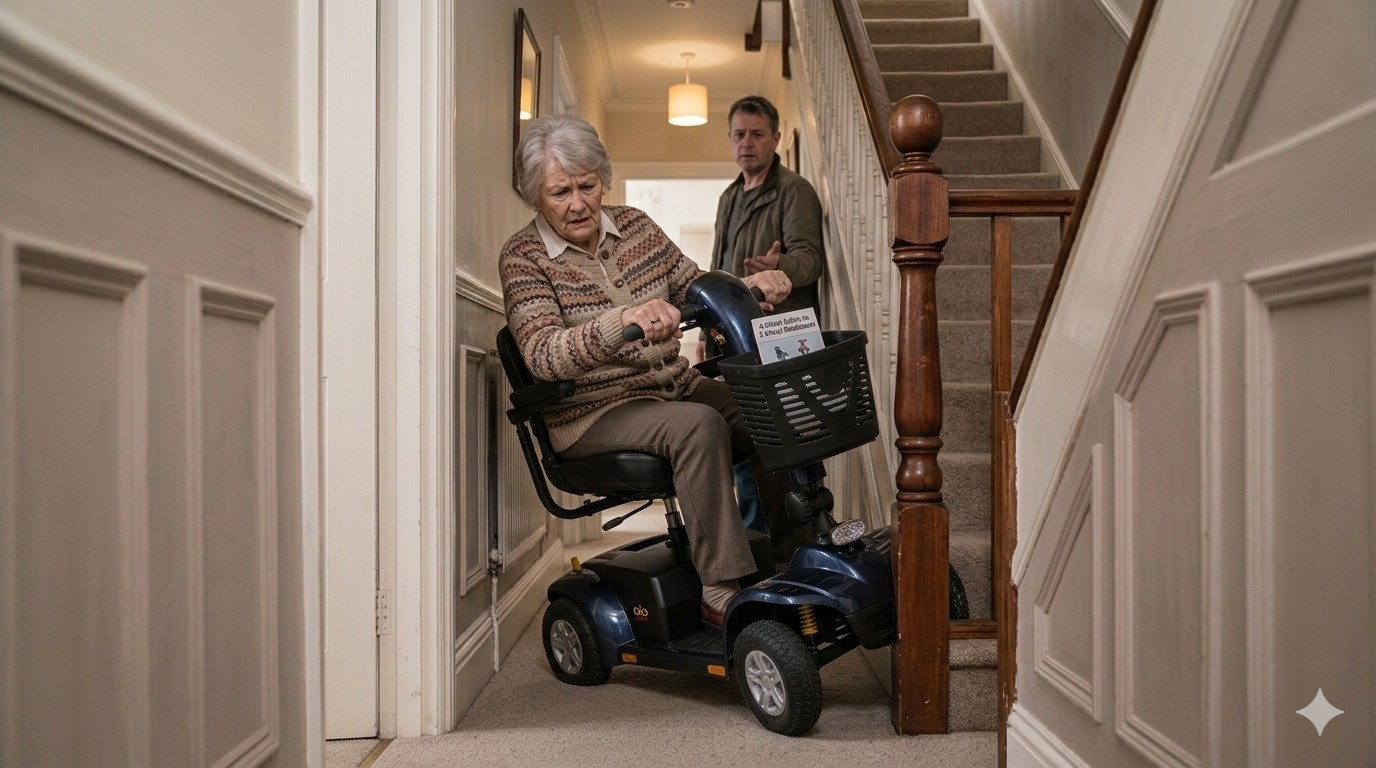
Measuring Doorways: The Most Common Deal-Breaker
Doorways are where most scooter-fitting dreams either succeed or fail. The good news is that measuring them is straightforward, as long as you measure the right thing.
Measure the Clear Opening, Not the Door Frame
This is the single most common mistake people make. The "clear opening" is the actual space you have to pass through when the door is open—not the width of the door frame, and not the width of the door itself. If your door has a thick frame, a protruding hinge, or a door handle that sticks out, the clear opening is narrower than you think.
To measure the clear opening, open the door fully and measure from the face of the door frame on one side to the face of the door frame on the other side. Do this at the narrowest point—usually where the hinge or the door handle is. Write this number down in millimetres.
What the Numbers Mean
The Australian Standard AS 1428.1 recommends a minimum clear opening of 850mm for accessible doorways, based on a 920mm door leaf. Many mobility scooters are designed to fit through this standard width. However, some older Australian homes have internal doorways as narrow as 720mm or 750mm.
If your doorways are below 800mm, you will need to look at compact scooters or consider whether a doorway modification is possible.
Measure every doorway along the route. The narrowest one is your limiting factor. If your front door is 900mm but your kitchen doorway is 750mm, your scooter needs to fit through 750mm to reach the kitchen. And if it cannot, you need to decide whether that matters for your daily routine.
Don't Forget the Threshold
Door thresholds—the raised strip at the bottom of a doorway—can also be a barrier. Measure the height of any threshold. A rise of more than 20mm to 25mm can be difficult or impossible for many scooters to climb. If your thresholds are high, note them down. You may need a ramp, or you may need to choose a scooter with better ground clearance.
Now that you know your doorways, let's look at the space between them—your hallways and corridors.
Measuring Hallways and Corridors
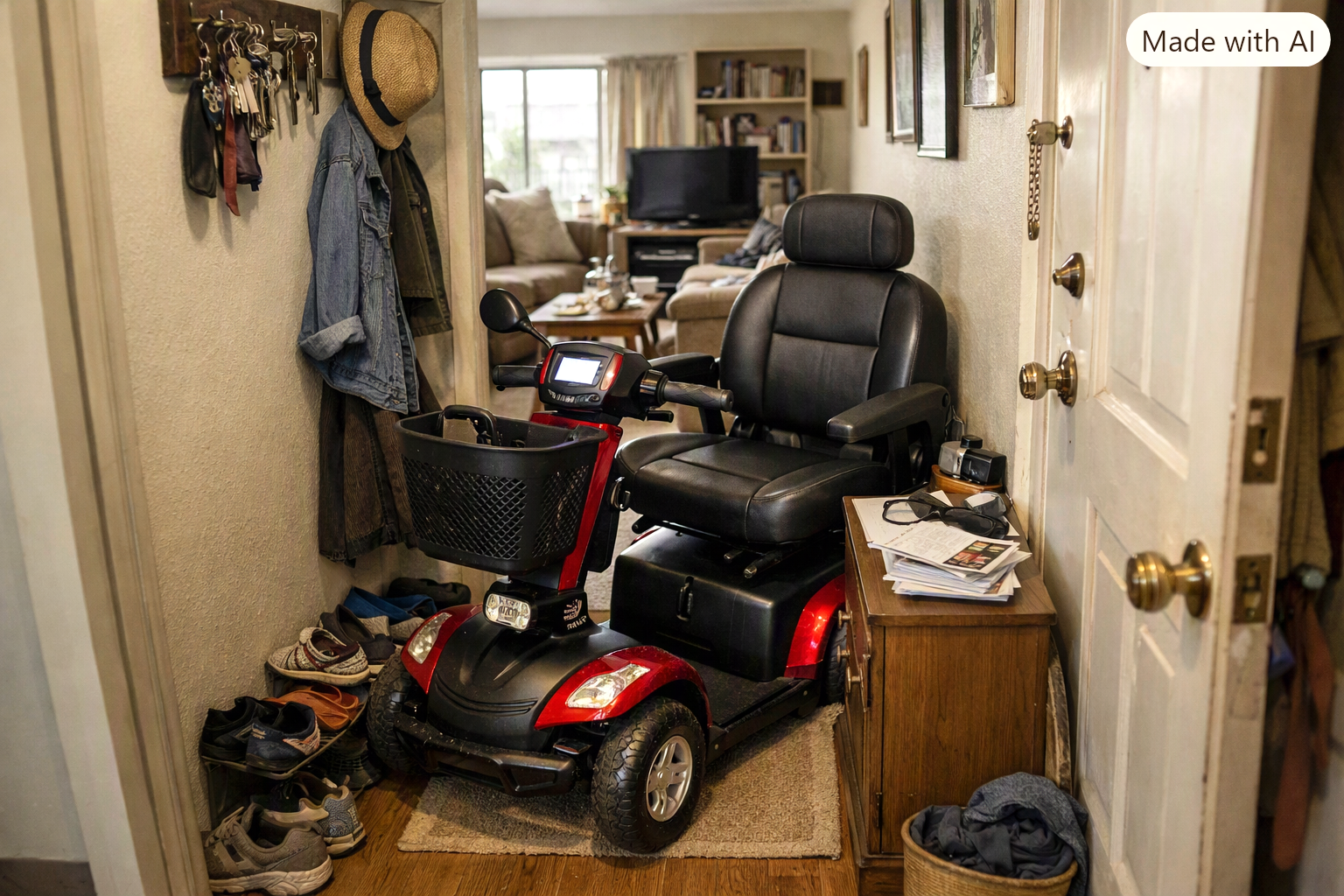
A scooter might fit through a doorway but then get stuck in the hallway. This is surprisingly common, especially in apartments and units where corridors are designed for walking, not driving.
Measure the Narrowest Point
Walk along your hallway and measure its width at the narrowest point. Be honest about this—do not measure the widest part and hope for the best. If there is a radiator, a shoe rack, a coat hook, or a piece of furniture that narrows the passage, measure at that point. You may need to move furniture, but it is better to know now than to discover the problem after delivery.
The Australian Standard for a continuous accessible path of travel recommends a minimum width of 1000mm. This gives a scooter enough room to pass comfortably without scraping walls or getting stuck. If your hallway is narrower than 900mm, you will need a very compact scooter, or you will need to reconsider your storage and access plan.
Consider the Length of the Hall
A long, narrow hallway is not just about width. If your hallway is more than a few metres long with no turning space, you need to be confident your scooter can travel the full length without needing to turn around. Most scooters can reverse, but reversing long distances is tiring and stressful.
If your hallway is a dead end with no room to turn, you may need to reverse out—which brings us neatly to turning space.
Turning Circles and Turning Space: Where Scooters Get Stuck
Turning is the silent killer of scooter storage plans. A scooter that fits through every doorway and down every hallway can still fail if it cannot turn into the room where it needs to go.
What Is a Turning Circle?
A scooter's turning circle (sometimes called turning radius or turning diameter) is the amount of space it needs to complete a full 180-degree turn. This is measured in centimetres or metres and is listed in every scooter's specifications.
Turning circles vary enormously. A compact folding scooter like the Shoprider GK9 Little Ripper has a turning radius of just 1150mm. A larger, more comfortable scooter like the Sunrise Medical Sterling S425 has a turning circle of 2000mm. That is a difference of nearly a metre—and it could be the difference between fitting in your home and not.
How to Measure Your Turning Space
Find the tightest turn along your scooter's route. This is usually a 90-degree turn from a hallway into a room, or a turn within a room itself. Measure the clear floor space available for that turn.
A simple way to do this: place a chair or a box in the corner where the turn happens, then measure the distance from that obstacle to the opposite wall. That is your available turning space. Compare it to your scooter's turning circle specification. If the available space is smaller, your scooter will not be able to make that turn in one movement. It may be able to shuffle back and forth, but that is tiring and frustrating—especially if you need to do it multiple times a day.
Read the full guide: Mobility Scooter Turning Radius Explained: How to Measure Your Home and Avoid a “Too-Big” Scooter
Three-Wheel vs. Four-Wheel Scooters
As a general rule, three-wheel scooters have tighter turning circles than four-wheel scooters. If turning space is your biggest constraint, a three-wheel scooter may be the better choice—though four-wheel scooters tend to be more stable outdoors. It is always a trade-off, and only you can decide which matters more for your lifestyle.
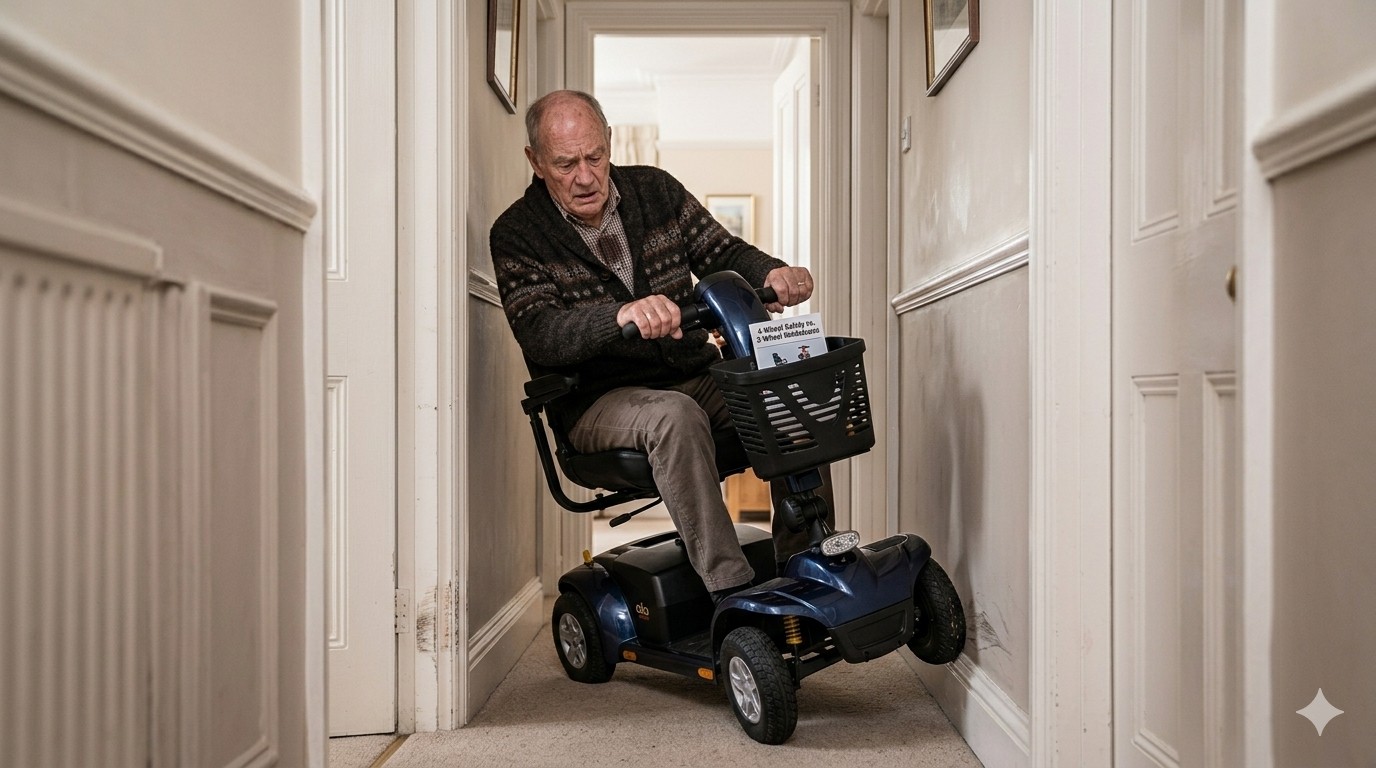
Putting It All Together: A Room-by-Room Measuring Checklist
You now have the knowledge. Here is a simple checklist to take with you as you measure. Write down every measurement in millimetres, and note which room or doorway it applies to.
Front door: Clear opening width. Threshold height.
Hallway: Narrowest width. Length. Any turns and their available space.
Internal doorways: Clear opening width of every door along the route.
Storage area: Length and width of the intended storage spot.
Tightest turn: Available floor space for a 90-degree turn.
Power point: Distance from the storage spot to the nearest power outlet.
Once you have these numbers, compare them to the specifications of the scooters you are considering. Every reputable scooter listing includes dimensions and turning circle. If your numbers are larger than the scooter's requirements, you are in good shape. If they are smaller, you have three options: choose a more compact scooter, modify your home (widen a doorway, move furniture), or rethink your storage plan.
What If Your Home Doesn't Measure Up?
Here is the reassuring truth: very few homes are perfect for a mobility scooter on the first measurement. If your numbers are coming up short, you have not failed—you have just identified the problem early, which is exactly what this process is for.
Some solutions are simple. Moving a shoe rack out of the hallway might gain you 100mm. Removing a door from its hinges (or replacing it with a curtain) can widen a clear opening. A small threshold ramp can solve a height problem. Other solutions require more thought—like choosing a folding scooter that stores upright in a cupboard, or opting for a disassembly model with a lighter heaviest component.
And if you are still in the planning stage, remember that our guide to storage planning for small spaces is your next stop. It will help you turn your measurements into a workable storage and charging plan that fits your home and your life.
Frequently Asked Questions
What is the minimum doorway width for a mobility scooter?
The Australian Standard recommends a minimum clear opening of 850mm for accessible doorways. Many scooters need at least 800mm. Always measure the clear opening—not the door frame—as hinges and handles reduce the usable width.
How much turning space does a mobility scooter need indoors?
It depends on the scooter. Compact models can turn in as little as 1150mm radius, while larger scooters may need 2000mm or more. Measure your tightest turn and compare it to the scooter's specification.
What measurements should I take before buying a scooter for a small home?
Measure every doorway's clear opening, your narrowest hallway width, the available floor space at your tightest turn, your intended storage footprint, and the distance to the nearest power point.
Can I measure my home myself, or do I need a professional assessment?
You can absolutely measure it yourself with a tape measure and a notebook. A professional home assessment is helpful if you want confirmation, but the measurements you take are the same ones an assessor would take.
What if my hallway is too narrow for any scooter?
If your hallway is narrower than about 800mm, you may need to consider a folding scooter that can be carried through, or explore whether a doorway modification is possible. A home assessment can help you explore all options.
Do folding scooters have tighter turning circles?
Not always, but compact folding scooters often do. The Shoprider GK9 Little Ripper, for example, has a turning radius of 1150mm. Always check the specification for the specific model you are considering.
How do I measure for a scooter if I also need to store it in a small space?
Measure the route first, then measure your storage spot. Our guide to storage planning for small spaces walks you through the storage side in detail.
You've Got This
Measuring your home for a mobility scooter is not a test you can fail. It is simply information gathering—and the more information you have, the better your decision will be. You now know how to measure doorways correctly, how to assess hallways and corridors, and how to check whether your turning space is sufficient. You have a checklist, and you have a plan.
The next step is to use those measurements. Compare them to the scooters on your shortlist. If you are still deciding between folding and disassembly, our guide to folding vs. disassembly storage (C0ming Soon!) will help you choose.
And if charging is your next worry, our safe charging station guide (Coming Soon!) has you covered. You are closer than you think to a scooter that fits your home, your life, and your independence.
Stay mobile, stay confident!
Sign up for our monthly Mobility Scooter Newsletter to receive practical guides, expert advice, and inspiring stories that help you make the most of your scooter and download our free "Mobility Scooter Guide for Beginners."
Don't worry — your e-mail address is totally secure.
I promise to use it only to send you our newsletter, "Mobility Matters."
Recent Articles


-
Storage Planning for Small Spaces: Measure, Plan, Store Safely
Oct 12, 26 08:28 AM
 Storage planning for small spaces doesn't have to be stressful. Learn how to measure, charge, and safely store your mobility scooter at home.
 -
How to Store a Mobility Scooter in an Apartment Building (AU)
Oct 12, 26 08:26 AM
 How do I plan mobility scooter storage in an apartment building without blocking egress or common areas? Learn the rules, risks, and workable options.
 -
How to Measure Your Home for a Mobility Scooter Before Buying
Oct 12, 26 06:18 AM
How to measure your home for a mobility scooter without the stress. Grab a tape measure—this guide covers every dimension that matters.
Ready to Feel More Confident on Your Mobility Scooter?

My Ebook, The Ultimate Guide to Mobility Scooters, walks you through choosing the right scooter, using it safely, and keeping it in top condition — all explained in clear, friendly language.
Give yourself (or someone you love) the gift of independence.




