- Home
- Mobility Scooter Travel and Transport
- Storage Planning for Small Spaces
- Safe Mobility Scooter Charging in Small Spaces
How Do I Set Up a Safe Mobility Scooter Charging Station in a Small Space (Cables, Ventilation, and Trip Hazards)?
Picture this. Your new mobility scooter has arrived. It is everything you hoped for—comfortable, reliable, and ready to give you back your independence. There is just one problem. The only power point in your unit is in the corner of the living room, right next to the curtains. The charging cable is three metres long. The hallway is narrow. And you have read enough news stories about lithium-ion battery fires to feel genuinely uneasy about plugging it in overnight. You are not sure where to start, and the last thing you want is to create a hazard in your own home.
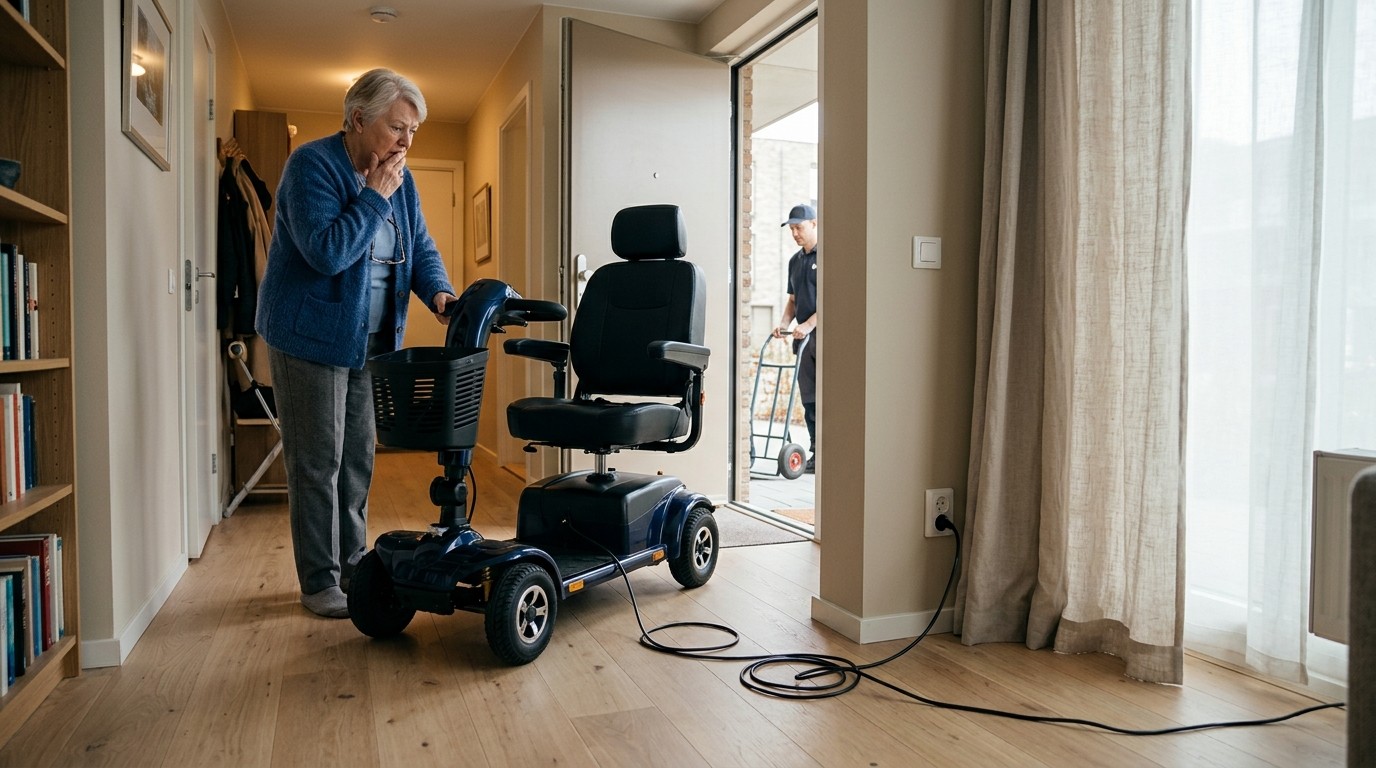
Take a breath. You are asking exactly the right question, and the answer is more manageable than you might think. Learning how to set up a safe mobility scooter charging station in a small space is not about having a dedicated utility room or a garage. It is about understanding three core principles: where to charge, how to manage the cable, and how to keep the air moving.
This guide will walk you through each one, step by step, with metric measurements and plain English. By the end, you will have a charging setup that is safe, practical, and fits your home.
Let's start with the most important question—where should you actually plug in?
Choosing the Right Location for Your Charging Station
The location of your charging station matters more than any other single factor. Get this right, and everything else becomes easier. Get it wrong, and you are creating a risk that no amount of cable management can fix.
The safest place to charge your mobility scooter is in a cool, dry, well-ventilated area, away from escape routes and flammable materials. In a small space, this usually means a corner of a living room or bedroom that is away from curtains, soft furnishings, and clutter. Hard flooring—tiles, concrete, or timber—is far safer than carpet, because if a battery does overheat, a hard surface will not catch fire as easily.
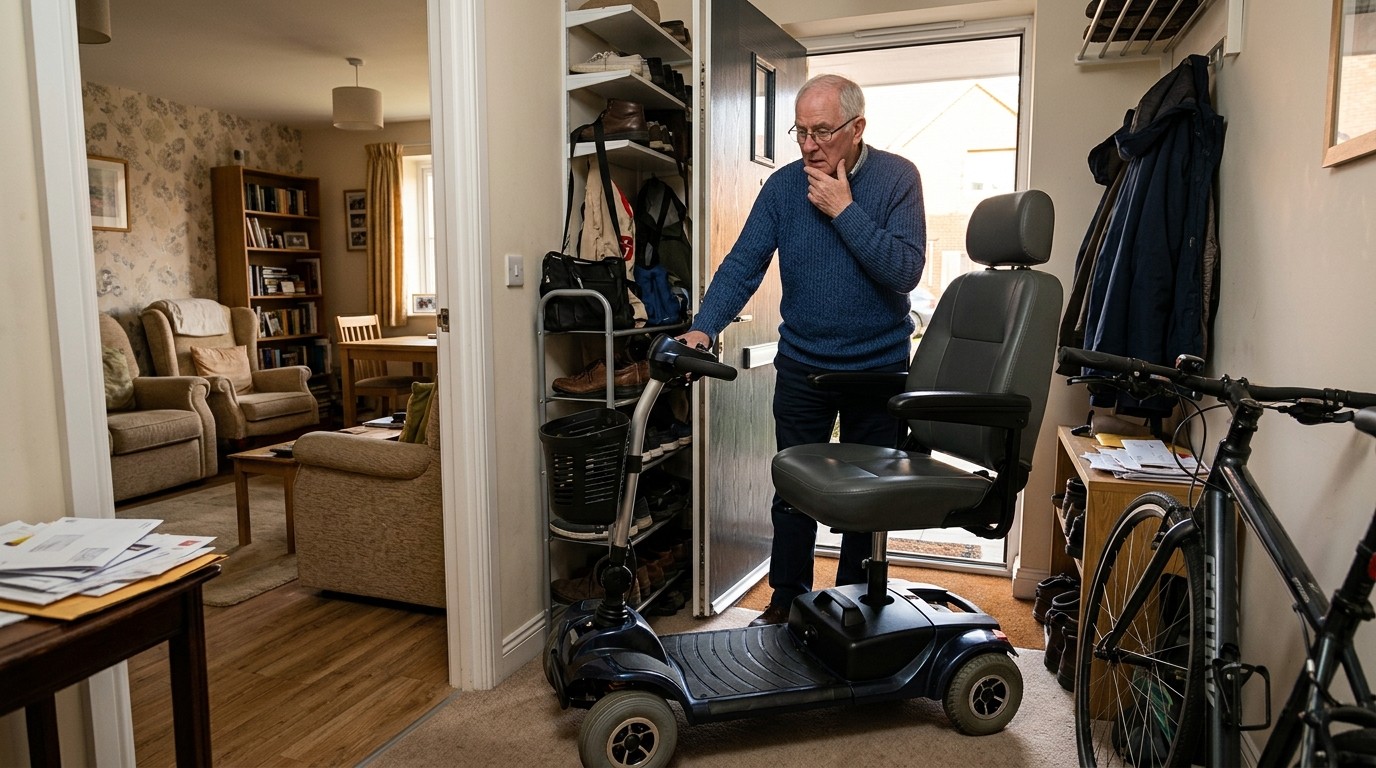
What you must avoid is charging in a hallway, stairwell, or anywhere that blocks your exit. Fire authorities are unambiguous on this point: never charge devices near exits or in bedrooms. If a battery fire starts, it can fill a corridor with toxic smoke in seconds. You need a clear path to escape, and so does everyone else in your household. If your only power point is in a hallway or near the front door, you need to find an alternative—even if it means running a longer cable to a safer spot.
The Kitchen or Living Room Corner
For most small-space dwellers, a corner of the living room or kitchen is the most practical choice. These rooms are usually well-ventilated, have hard flooring, and are not escape routes.
Position the scooter so the charger sits on a hard, non-flammable surface at waist height if possible—this makes it easier to see the indicator lights and monitor the charging process.
Why the Bedroom Is Best Avoided
Charging in a bedroom is risky for one simple reason: you sleep there. If a fire starts while you are asleep, your ability to react is severely compromised. Energy Safe Victoria explicitly advises against charging devices in bedrooms. If you have no other option, charge during the day when you are awake and alert, and never overnight.
Now that you have a location in mind, let's tackle the next challenge—the cable itself.
Managing Cables in a Small Space
Cables are the unsung heroes and silent villains of scooter charging. A well-managed cable is safe and invisible. A poorly managed cable is a trip hazard, a fire risk, and a daily frustration. In a small space, you need a cable strategy, not just a cable.
The Golden Rules of Charging Cables
Never run a cable under a rug. This is one of the most common mistakes people make, and it is genuinely dangerous. A cable under a rug can overheat because it cannot dissipate heat properly, and you cannot see if it becomes damaged. It is also a hidden trip hazard—you will forget it is there, and someone will catch their foot on the lump.
Never run a cable through a doorway. A cable that passes through a doorway will eventually be crushed by the door, damaged by the hinge, or tripped over in the dark. It is one of the fastest ways to create both a fire risk and a fall risk.
Keep the cable fully unwound. If you are using an extension lead, uncoil it completely. A coiled cable can overheat because the heat has nowhere to go. This is a simple fix that many people overlook.
Route cables along walls, not across floors. If the cable must travel some distance, run it along the base of a wall, behind furniture, or through a cable management channel. This keeps it out of walkways and reduces the chance of it being damaged or tripped over.
Use a cable protector if the cable must cross a walkway. If there is absolutely no way to avoid crossing a walkway, use a rubber cable protector ramp. These are low-profile channels that cover the cable and allow wheelchairs, scooters, and feet to pass over safely. They are inexpensive, widely available, and they work.
The Removable Battery Advantage
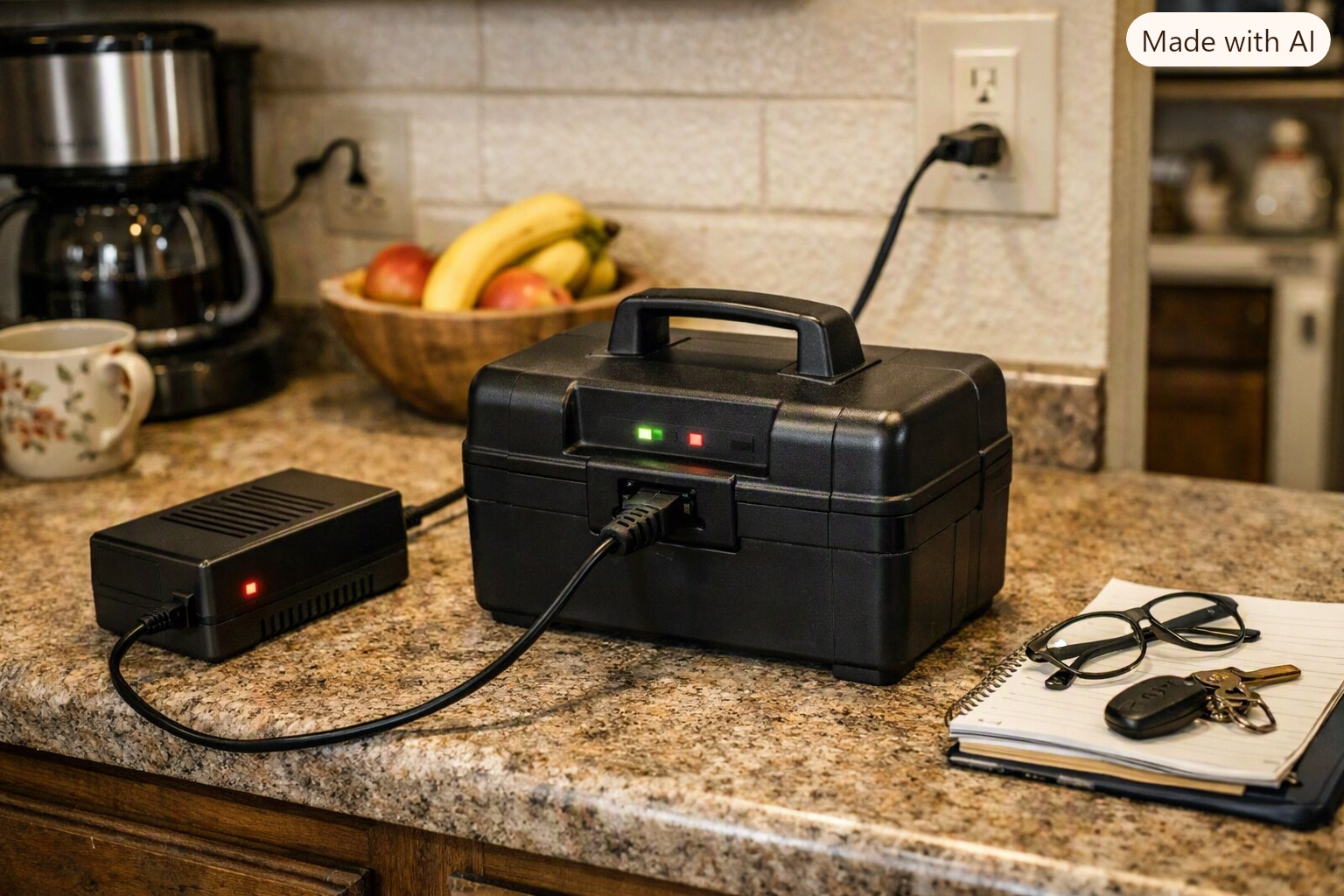
If your scooter has a removable battery, you have a significant advantage. You can park the scooter wherever it fits and carry just the battery to a convenient charging location. This eliminates the long cable problem entirely. The battery charges on a bench or table, and the scooter stays out of the way. If you are choosing a scooter for a small space, this feature alone is worth prioritising.
With the cable sorted, let's turn to the thing you cannot see but absolutely need—ventilation.
Ventilation: Why It Matters and How to Get It Right
Ventilation is the most overlooked element of safe charging. It is also one of the most important. Lithium-ion batteries can release flammable gases during charging, especially if they are damaged or faulty. In a sealed, unventilated space, those gases can accumulate and create an explosion risk.
What Good Ventilation Looks Like
You do not need a laboratory-grade extraction system. You need airflow. The simplest way to achieve this is to charge in a room with a window or door that can be opened slightly. Even a partially open window provides enough air exchange to prevent gas accumulation in most domestic settings.
If your charging spot is in an internal corner with no window nearby, consider a small fan to keep air moving. The goal is not to create a wind tunnel—just to ensure that air is not stagnant around the charger and battery.
Temperature Matters Too
Lithium-ion batteries charge best at room temperature. Extreme heat or cold can affect performance and safety. The NSW Government recommends storing and charging batteries in a cool, dry, ventilated place under 27°C. In an Australian summer, this means avoiding charging in a hot garage or a sun-baked balcony.
If your only available space gets very hot, charge during the cooler parts of the day.
A Simple Safety Checklist for Your Charging Station
You now have the three core principles. Here is a quick checklist to run through before you plug in for the first time.
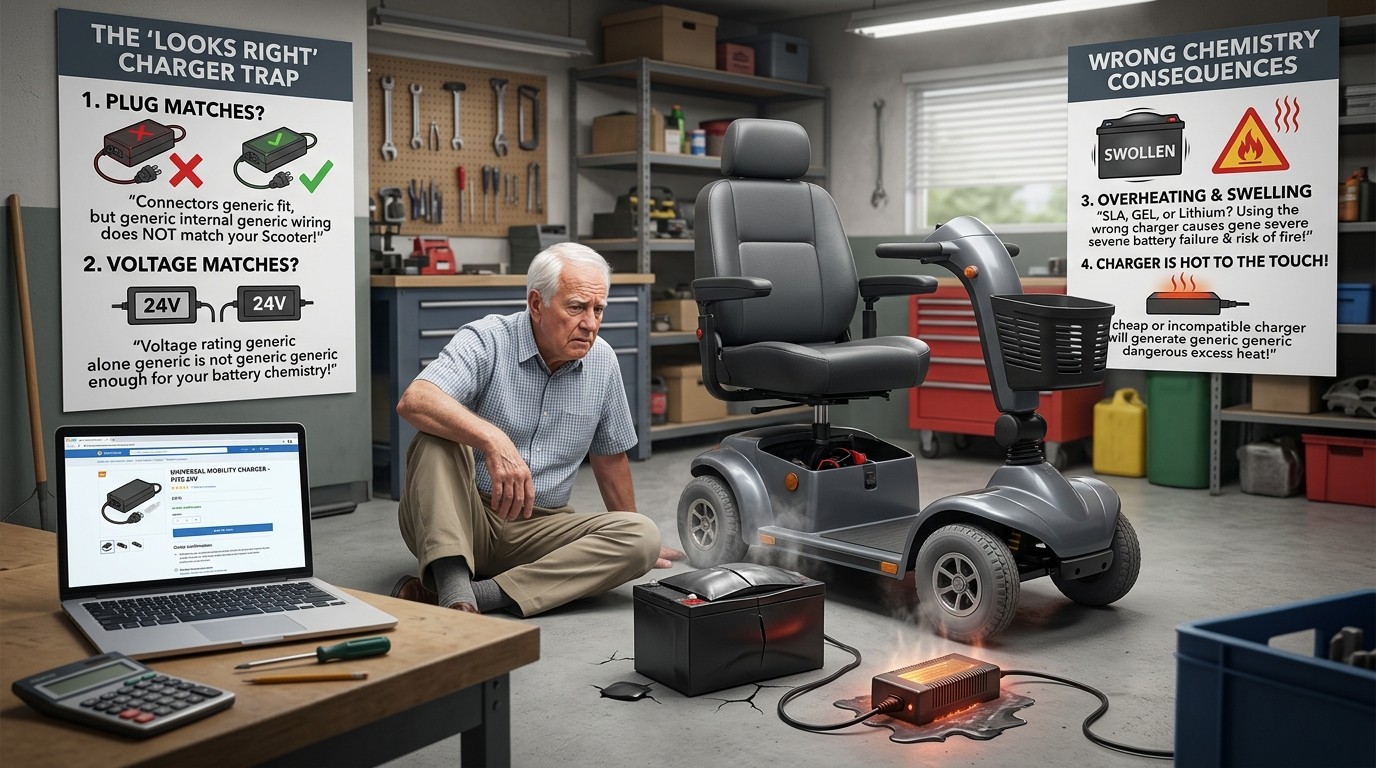
- Is the charger the one that came with your scooter? Only use the manufacturer-supplied charger or a certified compatible replacement. Generic chargers are a leading cause of battery fires.
- Is the charger sitting on a hard, non-flammable surface? Not on carpet, not on a bed, not on a sofa.
- Is the area well-ventilated? A window or door slightly open is ideal.
- Is the cable fully unwound and routed safely? No rugs, no doorways, no coils.
- Are you charging during the day, while you are home? Never charge overnight or unattended.
- Is your smoke alarm working? Check it monthly. If you do not have one near the charging area, consider installing one.
- Do you know the warning signs? Stop charging immediately if the battery is hot, swollen, leaking, smoking, or making unusual noises.
- Do you have a plan if something goes wrong? Evacuate immediately and call Triple Zero (000). Do not try to fight a lithium-ion battery fire with water.
What If Your Space Really Is Too Small?
Sometimes, despite your best efforts, your home genuinely cannot accommodate safe charging. If that is the case, you have options. Some buildings are installing designated charging stations in common areas or car parks. These are purpose-built, fire-safe units that allow residents to charge scooters outside their apartments. If your building does not have one, this is a conversation worth having with your strata committee.
Another option is a charging station with an automatic shut-off. These power points turn off after a set period—typically eight hours—so you cannot accidentally leave the charger running. For anyone who worries about forgetting to unplug, this is a simple and effective solution.
And if you are still in the planning stage, remember that our guide to storage planning for small spaces will help you map out the rest of your setup. If measuring your space is your next step, our guide to how to measure your home for a mobility scooter walks you through every dimension that matters.
Frequently Asked Questions
Where should I charge my mobility scooter in a small apartment?
Choose a cool, dry, well-ventilated area away from escape routes and flammable materials. A corner of the living room or kitchen with hard flooring and a window is ideal. Never charge in a hallway, stairwell, or bedroom.
Can I charge my mobility scooter overnight?
No. Fire authorities consistently advise against overnight charging. Charge during the day while you are home and awake, and unplug the charger once the battery is full.
Is it safe to charge my scooter on a balcony?
Charging on a balcony is possible but not ideal. Balconies are exposed to weather and temperature extremes, which can affect battery safety. If you must charge outdoors, use a weatherproof charging box and bring the battery indoors for charging if possible.
How do I stop the charging cable from being a trip hazard?
Keep the cable fully unwound and route it along walls, not across floors. Never run it under a rug or through a doorway. If the cable must cross a walkway, use a rubber cable protector ramp.
Do I need special ventilation for charging a mobility scooter?
You need airflow, not a laboratory-grade system. A partially open window or a small fan is usually sufficient to prevent gas accumulation in a domestic setting.
What should I do if my scooter battery gets hot while charging?
Stop charging immediately. Move the scooter away from anything flammable if it is safe to do so, and unplug the charger. Do not use the battery again until it has been checked by a professional.
Can I use an extension lead to charge my scooter?
You can, but only if the lead is fully unwound, rated for the load, and positioned where nobody can trip over it. A permanent charging location near a power point is always safer than an extension lead.
You Can Charge Safely—Even in a Small Space
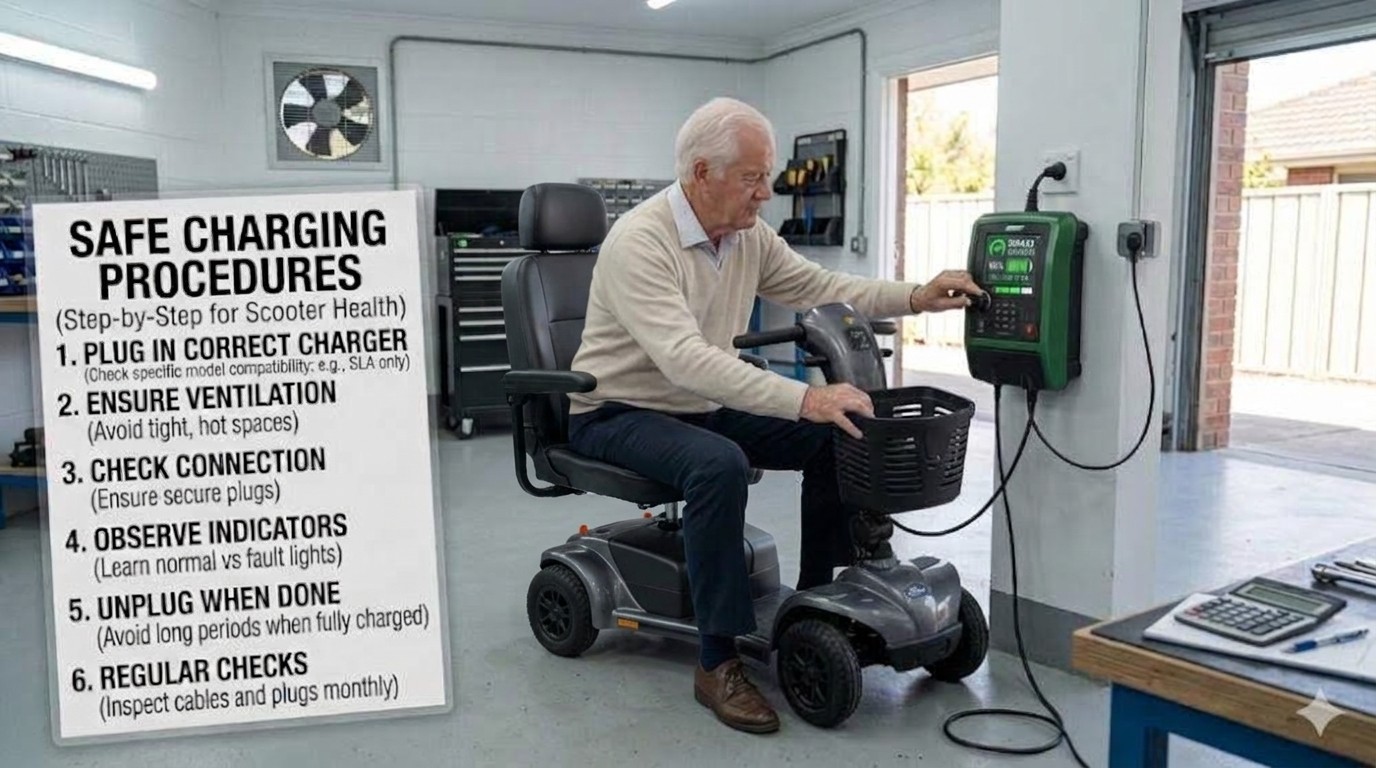
Setting up a safe charging station is not about having a big home or a dedicated room. It is about understanding the principles and applying them to the space you have. Choose a safe location, manage your cable properly, keep the air moving, and follow the simple rules that fire authorities have laid out. That is all it takes.
You have already done the hard part by thinking this through. If you are still choosing the right scooter for your space, our guide to folding vs. disassembly storage will help you decide (C0ming Soon!) . If you are in an apartment building and need to navigate strata rules, our guide to planning mobility scooter storage in an apartment building without blocking egress or common areas has you covered.
You have got this—and we are here to help every step of the way.
Stay mobile, stay confident!
Sign up for our monthly Mobility Scooter Newsletter to receive practical guides, expert advice, and inspiring stories that help you make the most of your scooter and download our free "Mobility Scooter Guide for Beginners."
Don't worry — your e-mail address is totally secure.
I promise to use it only to send you our newsletter, "Mobility Matters."
Recent Articles


-
Storage Planning for Small Spaces: Measure, Plan, Store Safely
Oct 13, 26 08:14 AM
 Storage planning for small spaces doesn't have to be stressful. Learn how to measure, charge, and safely store your mobility scooter at home.
 -
Folding vs Disassembly: Best Scooter Storage for Small Flats
Oct 13, 26 08:11 AM
 What's the best storage plan for a folding scooter vs a disassembly scooter in a small apartment? This practical guide compares both.
 -
Mobility Scooter Charging: Removable Batteries vs Extension Leads
Oct 13, 26 06:33 AM
Where can I charge a mobility scooter if it can't fit near a power point? Learn the safest solution for your home and lifestyle.

Ready to Feel More Confident on Your Mobility Scooter?

My Ebook, The Ultimate Guide to Mobility Scooters, walks you through choosing the right scooter, using it safely, and keeping it in top condition — all explained in clear, friendly language.
Give yourself (or someone you love) the gift of independence.




