- Home
- Mobility Scooter Travel and Transport
- Storage Planning for Small Spaces
- Folding vs Disassembly Scooter Storage in a Small Apartment
What's the Best Storage Plan for a Folding Scooter vs a Disassembly Scooter in a Small Apartment?
Picture this. You are standing in a showroom, looking at two scooters. One folds in a single motion, collapsing into a neat, upright package that looks like it could slide into a hallway cupboard. The other comes apart into several pieces—the seat lifts off, the battery slides out, and the frame separates into two halves. The salesperson tells you both are "perfect for small apartments." You nod, smile, and silently wonder: But which one is actually better for my apartment?
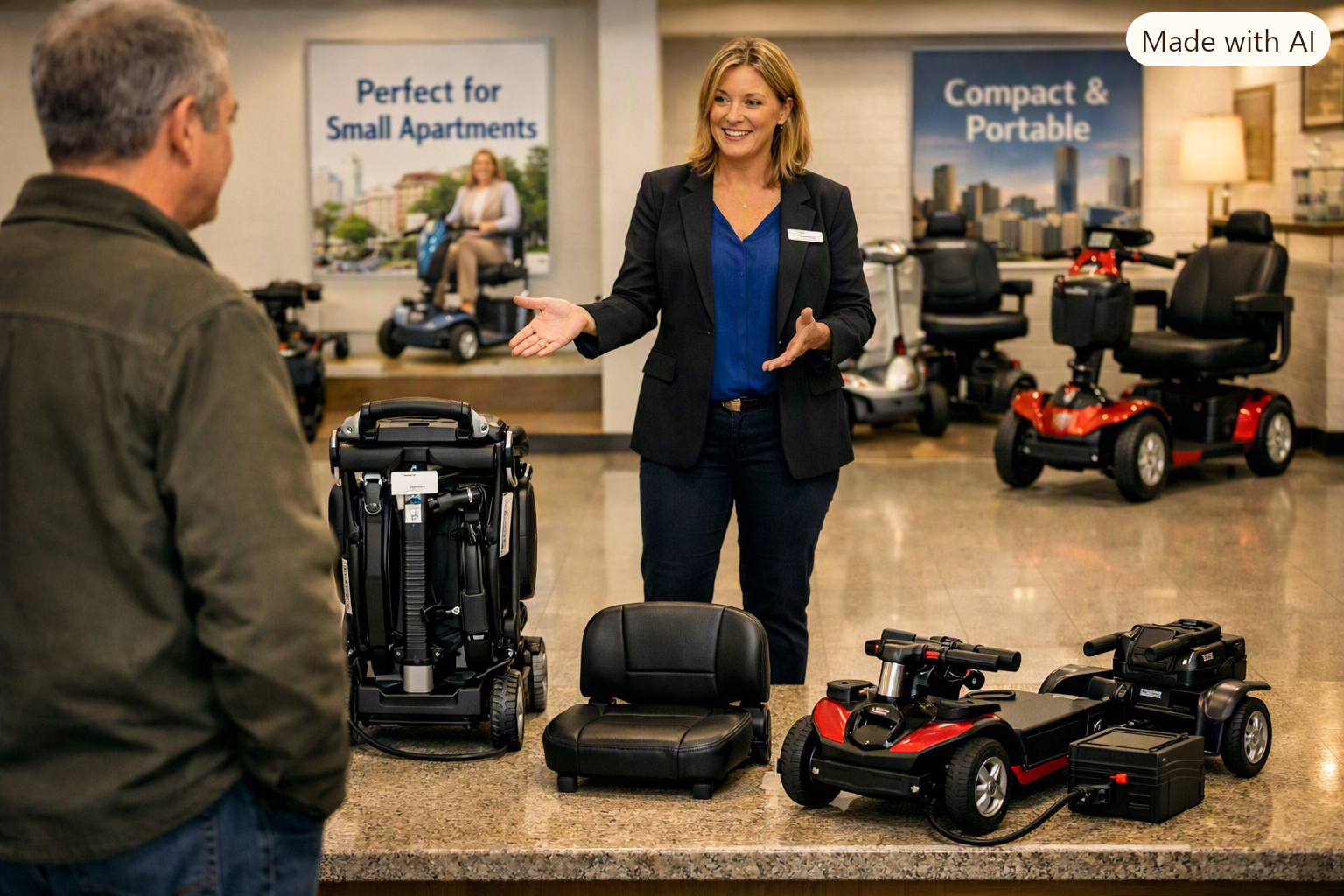
Take a breath. You are asking exactly the right question, and the answer is not as complicated as it seems. Learning what's the best storage plan for a folding scooter vs a disassembly scooter in a small apartment comes down to understanding a few key differences—weight, storage footprint, daily effort, and your own physical capabilities.
This guide will walk you through each one, using metric measurements and real-world scenarios, so you can choose with confidence. By the end, you will know exactly which type suits your home and your body.
Let's start by understanding what actually happens when each type of scooter is stored.
What "Folding" and "Disassembly" Actually Mean
Before we compare storage plans, let's get clear on the two mechanisms. They sound similar, but they work in very different ways—and those differences matter enormously when you live in a small space.
Folding Scooters: One Piece, Compact Shape
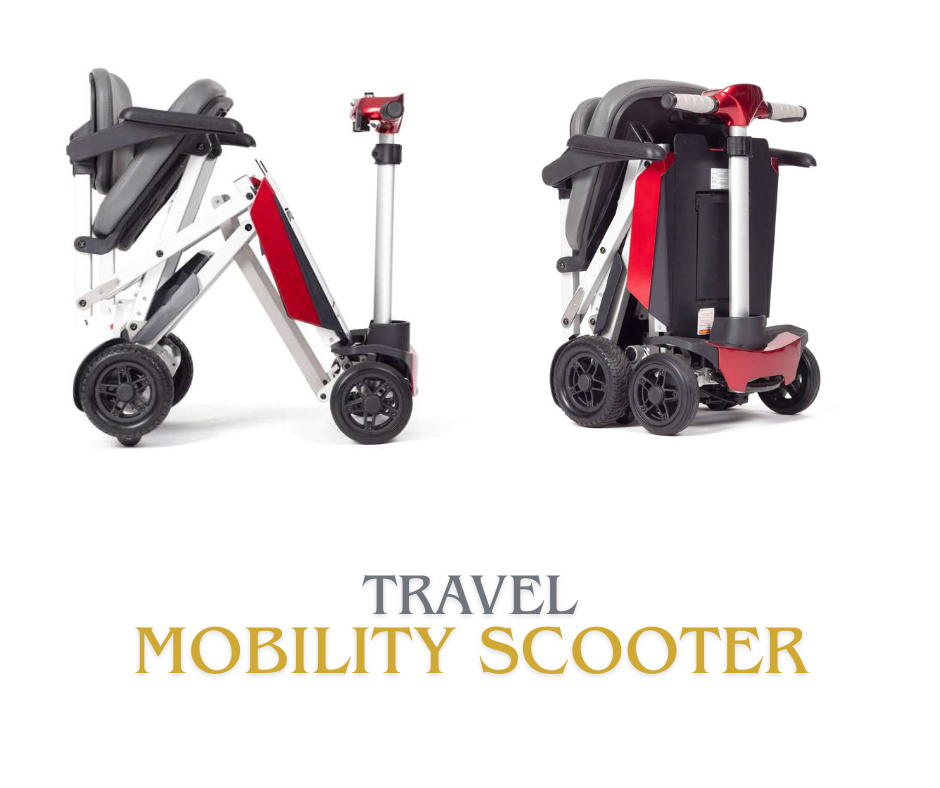
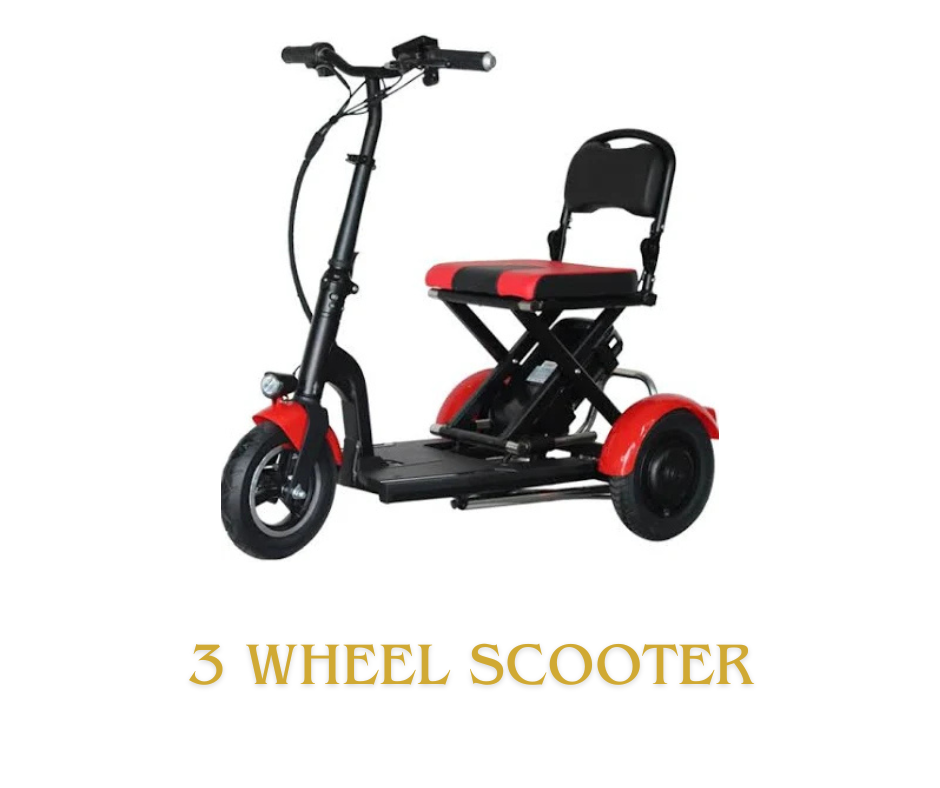
A folding scooter is engineered to collapse into a compact shape without coming apart. You release a lever or handle, and the scooter folds—usually in one or two motions. Some models fold automatically with a remote control or a button. Others require a manual lever, but the principle is the same: the scooter stays in one piece.
The advantage here is simplicity. There are no loose parts to juggle, no cables to disconnect, and no risk of losing a component. You fold it, you store it, you unfold it, and you go. For many people, that simplicity is worth its weight in gold. And weight, as we will see, is exactly where the trade-off begins.
Disassembly Scooters: Multiple Pieces, Lighter Components
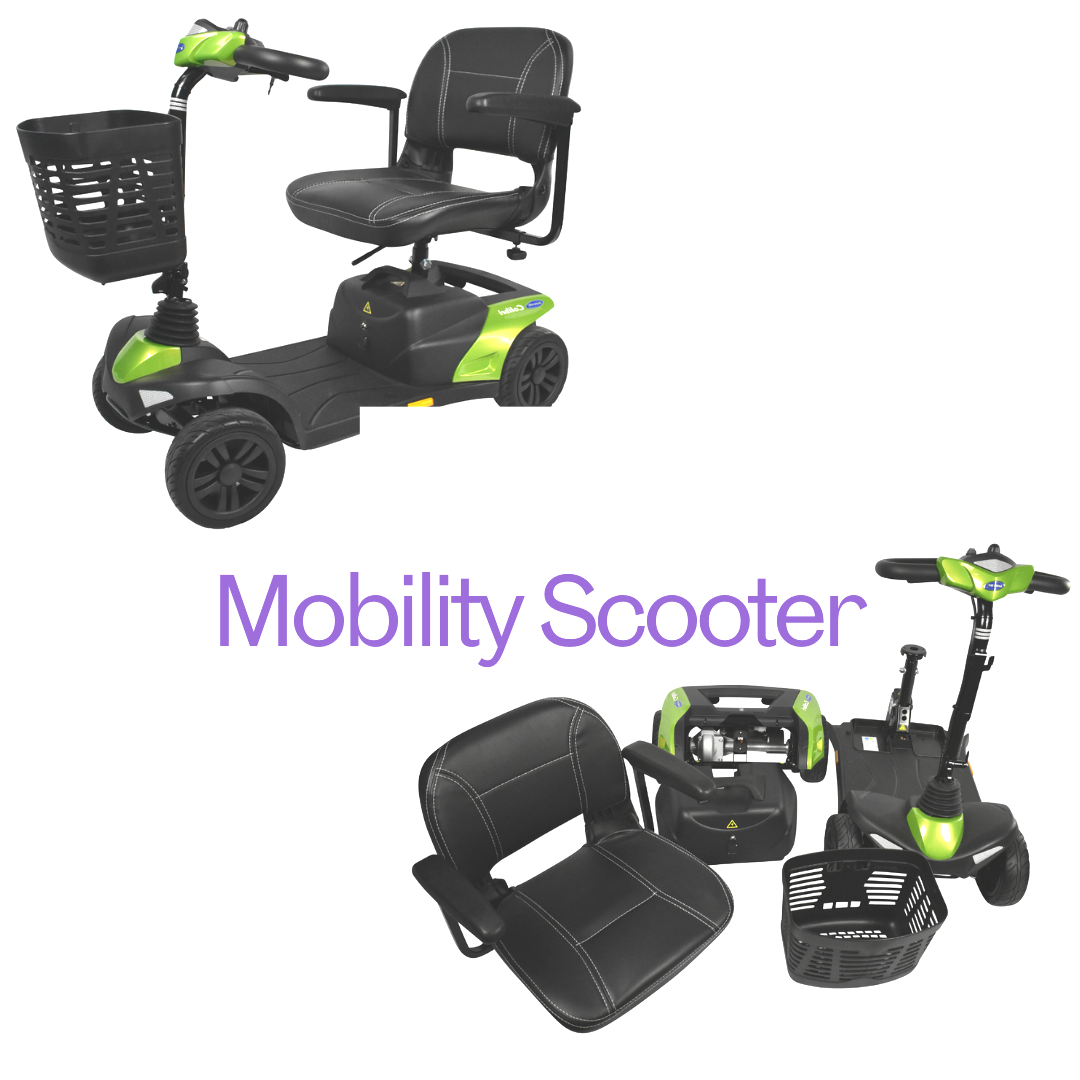
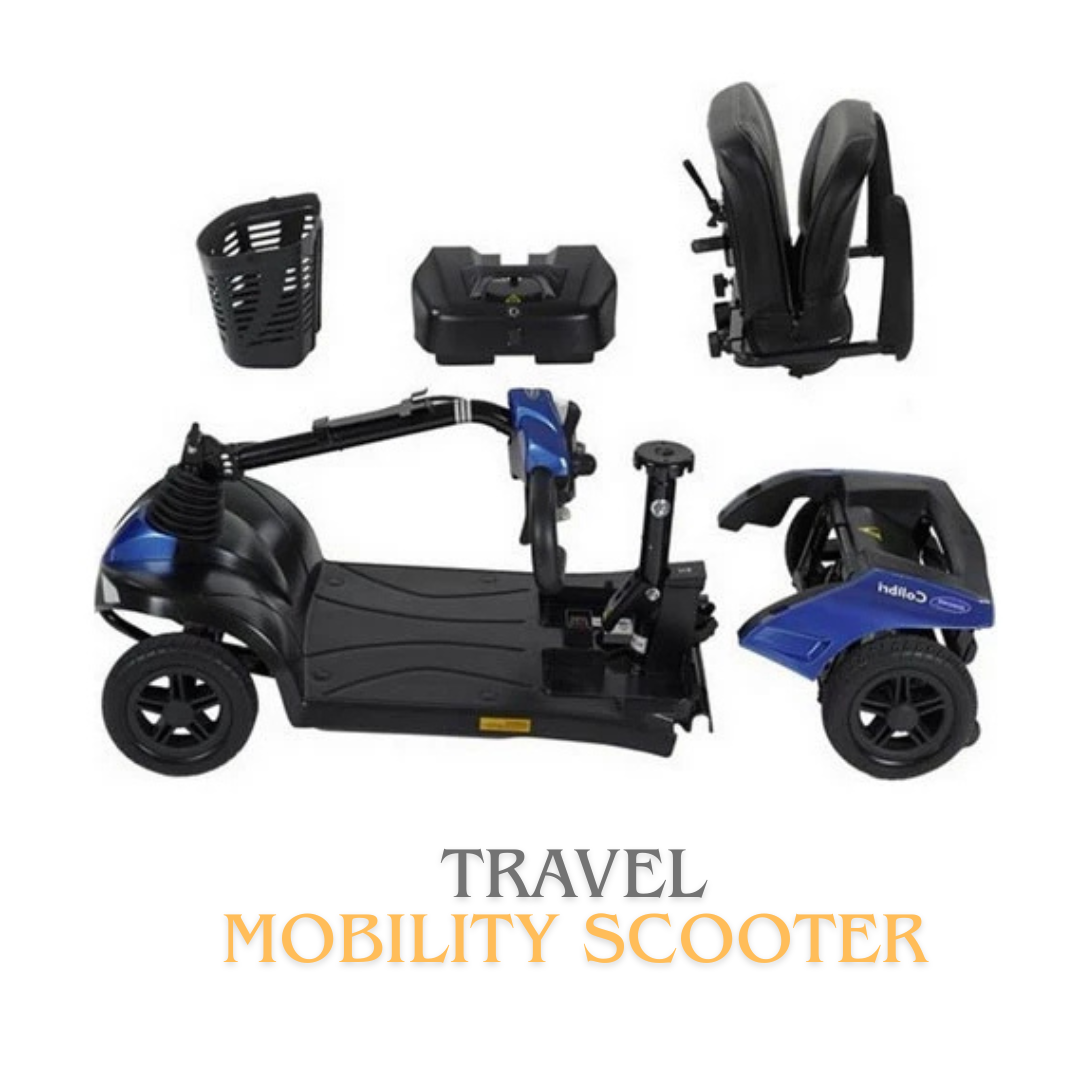
A disassembly scooter (sometimes called a "pull-apart" or "boot scooter") breaks down into separate components. Typically, the seat lifts off, the battery slides out, and the frame separates into two sections—front and rear. Some models have a latch or lever system that makes this tool-free and quick. Others require a few more steps.
The advantage here is weight distribution. Instead of lifting the entire scooter as one unit, you lift each piece individually. That can make a huge difference if you have limited strength or if you are a carer managing the scooter on someone else's behalf. But it also means more steps, more parts, and more places for those parts to live.
Now that you understand the mechanics, let's look at how each type performs in the three areas that matter most in a small apartment: space, weight, and effort.
Storage Space: How Much Room Does Each Type Really Need?
Space is the number one concern for apartment dwellers. Let's look at the actual numbers.
Folding Scooters: A Single Compact Footprint
A typical compact folding scooter, when folded, measures somewhere between 760mm and 1,000mm in length, 450mm to 570mm in width, and 275mm to 500mm in height. For example, the ROBOWHEEL Lite Q40 folds to 760mm (L) x 565mm (W) x 275mm (H) . The Aspire Mini Manual-Folding Scooter folds to 775mm (L) x 510mm (W) x 495mm (H) . The Drive Manual Fold+ folds to 410mm (L) x 545mm (W) x 670mm (H) .
What does that look like in practice? A folded scooter can slide into a hallway cupboard, tuck behind a sofa, or stand upright in a corner. Some models can even be stored vertically, taking up no more floor space than a vacuum cleaner. If your apartment has a coat closet or a narrow gap between furniture, a folding scooter will almost certainly find a home.
Disassembly Scooters: Multiple Pieces, Multiple Spots
A disassembly scooter does not have a single "folded footprint" because it does not stay in one piece. Instead, each component has its own dimensions. A typical seat might measure 400mm x 400mm x 300mm. The battery pack might be 300mm x 200mm x 150mm. The front and rear frame sections each measure roughly 600mm to 800mm in length and 500mm in width.
The upside is flexibility. You can store the seat in a wardrobe, the battery on a shelf, and the frame sections under a bed or in a cupboard. The downside is that you now have multiple items to store, and if you are short on storage space in general, finding a home for four or five separate pieces can be harder than finding one spot for a single folded unit.
The Verdict on Space
If your apartment has one clear spot—a cupboard, a corner, a gap beside the fridge—a folding scooter is usually the better choice because it consolidates into one place. If you have several small storage nooks scattered around the apartment, a disassembly scooter can work well because you can distribute the pieces. The key is to measure your available storage spots before you commit.
But space is only half the story. The other half is weight—and that is where the two types really diverge.
Weight and Lifting: The Critical Difference
Here is the single most important thing to understand about folding vs disassembly scooters: a folding scooter retains the weight of the entire scooter, even when folded. A disassembly scooter distributes that weight across multiple pieces, so the heaviest single component is usually much lighter than the folded weight of a comparable folding scooter.
Folding Scooter Weight
Compact folding scooters typically weigh between 15kg and 30kg without the battery. The eFOLDi Lite weighs just 14kg without the battery . The STERLING S50 Carbon weighs 13kg without the battery . The ROBOWHEEL Lite Q40 weighs 19.9kg without the battery . The Aspire Mini weighs 30.6kg including the battery .
When you fold a scooter, you are still lifting the full weight of that unit—minus the battery, if you remove it first. If the folded scooter weighs 20kg, you are lifting 20kg every time you move it. For some people, that is manageable. For others, especially those with limited strength or back problems, it is not.
Disassembly Scooter Weight
Disassembly scooters are designed so that the heaviest single piece is lighter than the total weight. The Karma KS-200 has a heaviest piece of just 13.3kg after disassembly . The Aspire Ultralight Compact has a heaviest component of 10.2kg . The Aspire Midi Pull Apart has a heaviest piece of 13.7kg . The Go Go Ultra X has a heaviest piece of 13.4kg (3-wheel) or 15.4kg (4-wheel) .
The difference is significant. If lifting a 25kg folded scooter is beyond your capability, a disassembly scooter with a 13kg heaviest piece might be perfectly manageable. This is why many carers and people with limited strength prefer disassembly models.
What About the Battery?
One more point on weight: removable batteries change the equation. If your scooter has a removable battery, you can take it off before lifting. A battery pack typically weighs between 2kg and 10kg depending on the model. The Drive Manual Fold+ battery weighs just 1.8kg . The VEVOR scooter battery weighs 2kg . Removing the battery before lifting a folding scooter can reduce the load significantly—but it still does not make the folded unit as light as the heaviest piece of a disassembly scooter.
Weight is the deciding factor for many people. But there is another dimension to consider: the daily effort required to store and retrieve the scooter.
Daily Effort: Convenience vs. Component Management
Storage is not a one-time event. You will store and retrieve your scooter every day—sometimes multiple times a day. The effort involved in that routine matters more than you might think.
Folding Scooters: Fast and Simple
Folding a scooter usually takes between 10 and 30 seconds. You release a lever, the scooter collapses, and you wheel or carry it into place. Unfolding is just as quick. There are no loose parts to assemble, no cables to reconnect, and no risk of forgetting where you put the seat.
For someone who uses their scooter daily and needs to get in and out of the house quickly, this simplicity is a major advantage. The scooter is either ready to ride or ready to store—there is no in-between state where you are juggling components.
Disassembly Scooters: More Steps, More Time
Disassembling a scooter takes longer. You remove the basket, lift off the seat, slide out the battery, disconnect the frame sections, and lower the tiller. Reassembling it requires reversing all those steps. Depending on the model and your familiarity, this could take two to five minutes each way.
For some people, that is perfectly fine—especially if the scooter is stored for longer periods and only assembled when needed. But if you are using the scooter multiple times a day, the cumulative time and effort can become draining. The CareCo Frontier manual walks through a multi-step disassembly process that includes removing the basket, seat, and battery pack, then separating the front and rear sections . It is not difficult, but it is not instant either.
The Verdict on Effort
If speed and simplicity matter most to you—and you can manage the weight—a folding scooter wins. If weight is your primary concern and you do not mind the extra steps, a disassembly scooter is the better fit.
There is no universal right answer; it depends on your priorities.
Which Type Suits Your Apartment? A Decision Framework
Let's bring this together into a practical framework. Ask yourself these four questions.
1. Can you lift 15–25kg in one go?
If yes, a folding scooter is a strong candidate. If no, a disassembly scooter with a lighter heaviest piece is the safer choice.
2. Do you have one clear storage spot or several smaller spots?
One clear spot? Folding scooter. Several smaller spots? Disassembly scooter.
3. Do you use your scooter multiple times a day?
If yes, folding is faster and less frustrating. If you use it once a day or less, disassembly is manageable.
4. Do you have a carer who manages the scooter for you?
If yes, a disassembly scooter with lightweight components is often easier for a carer to handle. If you manage it yourself, a folding scooter may be simpler.
There is no wrong answer here—only the answer that fits your body, your home, and your daily life. And if you are still unsure, the next section will help you visualise what each option looks like in a real small apartment.
Real-World Storage Scenarios in a Small Apartment
Let's walk through two common apartment layouts and see how each scooter type performs.
Scenario 1: The Studio Apartment
You live in a studio with a narrow entryway, a small kitchen, and one main living space. There is a coat cupboard near the door, but it is already full. The only free floor space is a corner between the sofa and the window.
Folding scooter: Folded, it can stand upright in that corner, taking up roughly 0.3 square metres of floor space. You could also slide it behind the sofa if the gap is wide enough. The key is that it stays in one piece—no parts scattered around the studio.
Disassembly scooter: You would need to find homes for the seat, battery, and frame sections. The seat might go on top of a wardrobe. The battery could charge on the kitchen bench. The frame sections might slide under the bed. It is doable, but it requires more planning and more storage spots.
Verdict: For a studio, a folding scooter is usually the more practical choice because it consolidates storage into one spot.
Scenario 2: The One-Bedroom Unit with a Hallway Cupboard
You live in a one-bedroom unit with a hallway cupboard that is deep but narrow. The cupboard is 600mm wide and 800mm deep. You also have space under the bed and a small balcony.
Folding scooter: A compact folding scooter with a folded width of around 500mm would fit into the cupboard, leaving a little room for other items. If it folds to a height of 500mm or less, it might even slide under the bed.
Disassembly scooter: The seat could go on a shelf in the cupboard. The battery could charge on the kitchen bench. The frame sections could slide under the bed or stand in the corner of the balcony (if covered). You are using multiple spaces, but each piece is smaller and lighter.
Verdict: Both can work here. If the cupboard is the only storage spot, folding wins. If you have multiple small spots, disassembly is a viable option—and it may be easier on your back.

Frequently Asked Questions
Is a folding scooter or a disassembly scooter better for a small apartment?
It depends on your priorities. Folding scooters are faster to store and keep everything in one piece. Disassembly scooters distribute weight across lighter components. If you can lift 15–25kg and want simplicity, choose folding. If weight is your main concern, choose disassembly.
How much space does a folding scooter take up when folded?
A compact folding scooter typically measures between 760mm and 1,000mm in length, 450mm to 570mm in width, and 275mm to 500mm in height when folded. Some models can be stored upright, taking up as little as 0.3 square metres of floor space.
How much space does a disassembly scooter need?
There is no single footprint because the scooter comes apart. Each component needs its own storage spot. The seat, battery, and frame sections can be stored separately, which can be an advantage if you have multiple small storage areas.
Can I store a folding scooter vertically?
Yes, many folding scooters can be stored upright. This is a great space-saving option for apartments with limited floor space. Check your scooter's manual to confirm whether vertical storage is recommended.
What is the heaviest piece of a disassembly scooter?
It varies by model, but many disassembly scooters have a heaviest piece weighing between 10kg and 16kg. For example, the Aspire Ultralight Compact has a heaviest component of 10.2kg, and the Go Go Ultra X has a heaviest piece of 13.4kg (3-wheel).
Can I store a disassembly scooter in a cupboard?
You can store the individual components in a cupboard, but you will need enough shelf space for the seat and battery, plus floor space for the frame sections. A deep cupboard works better than a shallow one.
Do folding scooters weigh more than disassembly scooters?
Not necessarily in total weight, but the folded weight is heavier than the heaviest piece of a disassembly scooter. A 20kg folding scooter requires lifting 20kg at once, while a 25kg disassembly scooter might have a heaviest piece of only 13kg.
Which type is easier for a carer to manage?
A disassembly scooter is often easier for carers because each component is lighter. However, it requires more steps. A folding scooter is faster but requires lifting the full folded weight.
You Can Choose With Confidence
Choosing between a folding and disassembly scooter for a small apartment is not about finding the "best" option in absolute terms. It is about finding the option that fits your body, your storage space, and your daily routine.
If you can lift the folded weight and value speed, a folding scooter will serve you well. If weight is your primary concern and you do not mind a few extra steps, a disassembly scooter is the smarter choice.
You have already done the hard part by thinking this through before you commit. If you are still planning your storage setup, our guide to storage planning for small spaces will help you map out the rest.
If measuring your space is your next step, our guide to how to measure your home for a mobility scooter walks you through every dimension that matters.
And if charging is your next worry, our safe charging station guide has you covered.
You have got this—and we are here to help every step of the way.
Stay mobile, stay confident!
Sign up for our monthly Mobility Scooter Newsletter to receive practical guides, expert advice, and inspiring stories that help you make the most of your scooter and download our free "Mobility Scooter Guide for Beginners."
Don't worry — your e-mail address is totally secure.
I promise to use it only to send you our newsletter, "Mobility Matters."
Recent Articles


-
Storage Planning for Small Spaces: Measure, Plan, Store Safely
Oct 13, 26 08:14 AM
 Storage planning for small spaces doesn't have to be stressful. Learn how to measure, charge, and safely store your mobility scooter at home.
 -
Folding vs Disassembly: Best Scooter Storage for Small Flats
Oct 13, 26 08:11 AM
 What's the best storage plan for a folding scooter vs a disassembly scooter in a small apartment? This practical guide compares both.
 -
Mobility Scooter Charging: Removable Batteries vs Extension Leads
Oct 13, 26 06:33 AM
Where can I charge a mobility scooter if it can't fit near a power point? Learn the safest solution for your home and lifestyle.

Ready to Feel More Confident on Your Mobility Scooter?

My Ebook, The Ultimate Guide to Mobility Scooters, walks you through choosing the right scooter, using it safely, and keeping it in top condition — all explained in clear, friendly language.
Give yourself (or someone you love) the gift of independence.




