- Home
- Services and Shopping
- Mobile Repair Call-out Expectations
- NDIS Mobility Scooter Repairsand What Documentation You Need Before Booking
NDIS Mobility Scooter Repairs and What Documentation You Need Before Booking
NDIS mobility scooter repairs and what documentation you need before booking is one of the most common questions we hear from participants and their families. And honestly? It's a question that causes more stress than it should.
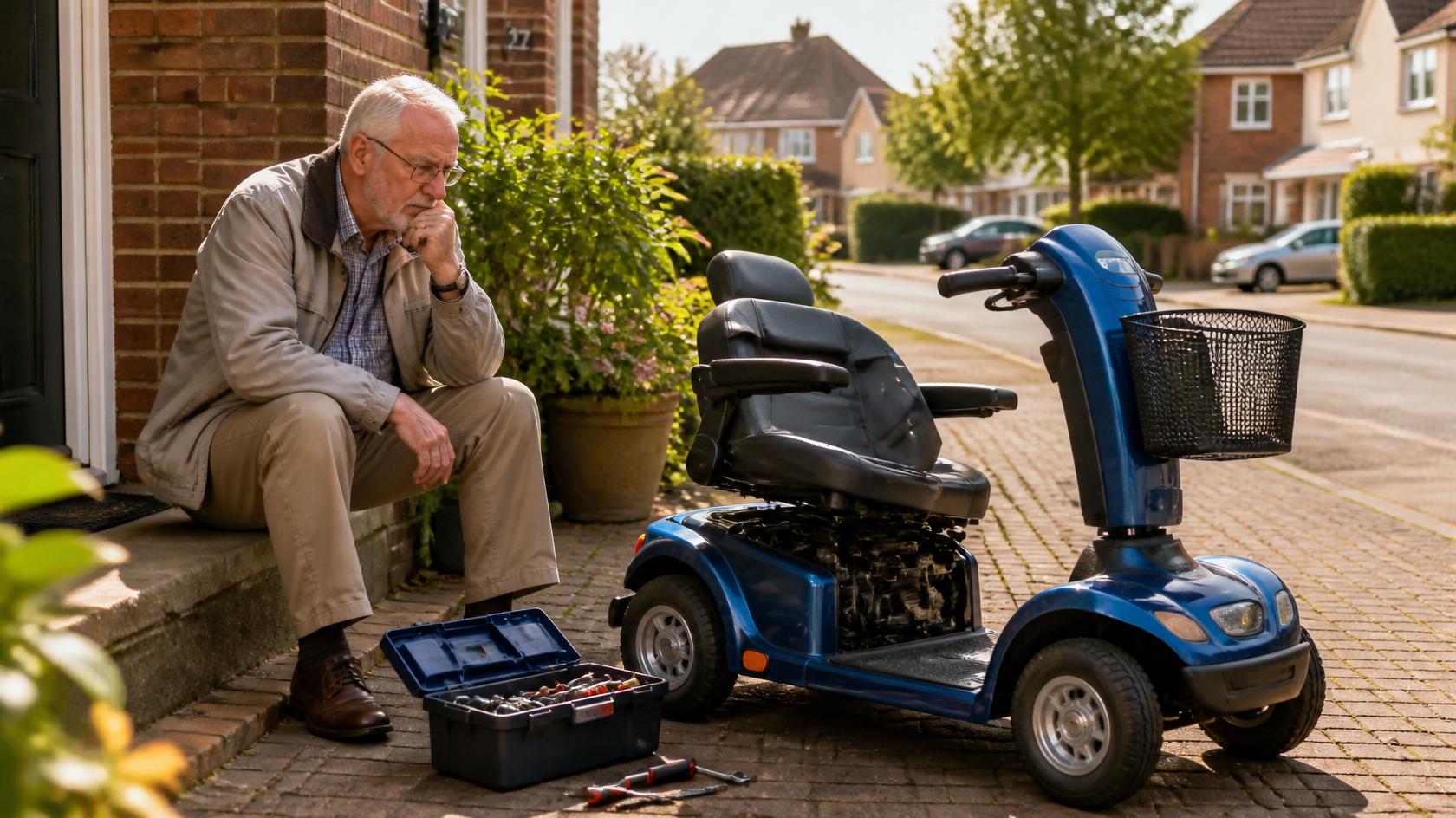
Picture this: your mobility scooter has been making that worrying grinding noise for a few days. You know it needs attention, but you've been putting it off because the whole process feels overwhelming. Finally, you gather the courage to call a repair provider. You're ready to get it sorted.
Then the technician asks: "Do you have your NDIS number handy? And can you email us the quote and your plan details?"
Your heart sinks. You don't have those documents ready. You're not even sure where to find them. The repair gets delayed, your scooter stays broken, and another day of independence slips away.
The good news is that once you know what to gather, the process becomes surprisingly straightforward. Let's walk through it together, step by step, so you can book that repair with confidence and get back to what matters most—your freedom.
Why Documentation Matters for NDIS Mobility Scooter Repairs
The NDIS doesn't just approve repairs automatically. Like any government program, it needs evidence to ensure funding is used appropriately and that the repair is reasonable and necessary for your daily life.
Documentation serves three critical purposes:
- It proves you're an eligible participant with an active NDIS plan that includes assistive technology funding.
- It demonstrates that the repair is needed and that the cost is reasonable.
- It allows providers to claim payment through the NDIS system correctly.
Without the right paperwork, your repair can be delayed, your claim can be rejected, and you could end up paying out of pocket for something that should have been covered.
But here's the thing: once you have your documents organised, the whole process becomes much smoother. And that's exactly what we're going to help you with.
The Essential Documentation Checklist for NDIS Mobility Scooter Repairs
Before you book any repair, make sure you have these documents ready. We've broken them down into clear categories so you can check them off one by one.
1. Participant Identification Documents
These are the basics that every NDIS provider will ask for. Without them, they can't even begin the process.
- Participant's full name (the person who uses the scooter)
- NDIS number (sometimes called the participant number)
- Date of birth
- Contact details (address, phone number, email)
Pro tip: Keep these details saved in your phone or written on a card in your wallet. You'll need them every time you interact with an NDIS provider, not just for repairs.
2. Evidence of Ownership
The NDIS will only fund repairs for assistive technology that you own. If your scooter is leased, hired, or on loan from someone else, the provider you hired it from is normally responsible for repairs.
To prove ownership, you'll need:
- Purchase receipt or invoice showing you bought the scooter
- Warranty documentation if the scooter is still under warranty
- Service records showing a history of maintenance
- Your mobility scooter's details - brand and model, year of purchase, serial number, battery type
If you can't find your original receipt, contact the dealer you purchased from—they should have records of the sale.
3. Evidence That the Repair Is Needed
You can't just say "my scooter is broken" and expect funding. The NDIS needs to see proof.
This can include:
- A written quote from a repair provider describing the issue and the estimated cost
- A medical report from your occupational therapist or other health professional confirming the scooter is essential for your daily living
- Photos or videos of the damage (helpful for complex or unusual issues)
- Your preferred repair method (onsite or workshop repair)
The more detail you can provide, the smoother the approval process will be.
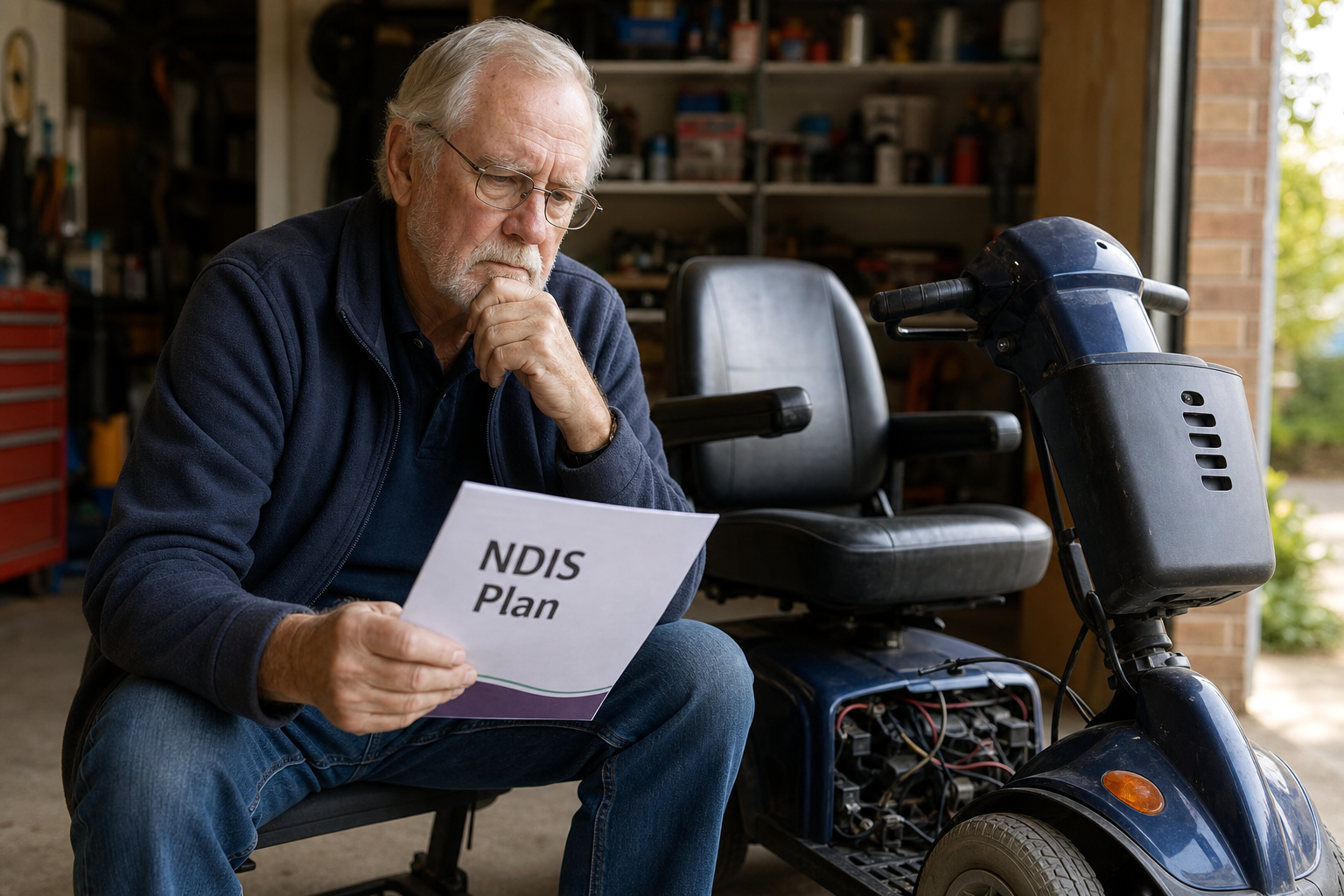
4. Your NDIS Plan Details (The Foundation of Every Repair)
Before booking any NDIS mobility scooter repair, gather your basic plan information. This is the first thing technicians and plan managers will ask for — and having it ready makes you feel instantly more in control.
✔ Your NDIS participant number
This identifies you in the NDIS system.
✔ Your plan type
- Self‑managed
- Plan‑managed
- NDIA (National Disability Insurance Agency)‑managed
Each type affects how invoices are issued and who approves payments.
✔ Your plan manager’s contact details
If you’re plan‑managed, technicians often send quotes directly to your plan manager.
✔ Your funding category
Mobility scooter repairs usually fall under Assistive Technology or Consumables, depending on the issue.
If you're not sure, contact your plan manager, support coordinator, or Local Area Coordinator (LAC). They can help you understand what's in your plan.
Having these details ready is the first step toward a smooth repair process — and the next step builds on it beautifully.
5. A Clear Description of the Problem
You don’t need technical language. Just describe what you see, hear, or feel. This is one of the most important parts of NDIS mobility scooter repairs and what documentation you need before booking.
Write down:
✔ When the issue started
Sudden problems often point to electrical faults; gradual issues may indicate wear and tear.
✔ What exactly happens
Examples:
- “It stops suddenly.”
- “It won’t turn on.”
- “It slows down on hills.”
- “It makes a grinding noise.”
✔ Any error codes or flashing lights
These are extremely helpful for diagnosis.
✔ Whether the scooter was exposed to rain or bumps
Water damage and impact damage require special documentation.
This simple description helps technicians arrive prepared — and the next step makes things even easier.
6. Assessment Reports (For High-Cost Repairs)
For repairs that exceed certain cost thresholds, you may need additional documentation.
- Repairs over $1,500 typically require a quote for NDIA acceptance before a payment request can be made
- Repairs over $15,000 (for the item itself) require an assessment from a qualified AT assessor
- Mid-cost Assistive Technology(AT) (between $1,500 and $15,000) generally requires written evidence from a qualified AT advisor and a quote
Don't let these thresholds scare you—most mobility scooter repairs fall well below $1,500. But it's good to know the rules in case you're facing a major repair.
Urgent Repairs: What Changes (and What Doesn't)
Sometimes you can't wait. If your scooter stops working, and you're dependent on it for safety, mobility, or daily living activities, the NDIS considers this an urgent repair.
For urgent repairs, the documentation requirements are slightly different:
- Providers will need your name, NDIS number, and date of birth to gain authorisation
- If you don't have enough funding in your plan, the NDIS National Call Centre can provide an authorisation number over the phone
- The repair cost shouldn't exceed $3,000 for power wheelchairs and mobility scooters
- If it's outside Call Centre hours (8am to 8pm weekdays), you can organise the repair and get approval the next business day
The key difference with urgent repairs: you can get authorisation after the fact if necessary. But you'll still need to provide documentation eventually.
If you find yourself in this situation, call the NDIS National Call Centre on 1800 800 110. They're there to help.
How Your NDIS Plan Management Affects Documentation
The way your NDIS plan is managed affects who needs to see your documentation and how claims are processed.
NDIA-Managed Participants
- Providers must try to complete a service booking for the repair
- If this doesn't work, the provider calls the NDIS National Call Centre for a pre-claim authorisation
- The provider needs your name, NDIS number, and date of birth
Self-Managed Participants
- You pay the provider directly and then claim against your plan
- If you don't have enough funding, call the NDIS National Call Centre
- You keep all receipts and documentation for your records
Plan-Managed Participants
- Contact your repairer to complete the repair
- Contact your plan manager to confirm sufficient funds
- Either you or the provider forwards the invoice to the plan manager
- The plan manager pays the provider and claims against the plan
Understanding your management type helps you know exactly who to talk to and what documentation to provide.
What If You Don't Have the Documentation Ready?
This is a common concern, and it's completely understandable. Here's what to do:
If you can't find your NDIS number: Call the NDIS National Call Centre on 1800 800 110. They can provide it over the phone.
If you don't have a repair quote: Contact a registered NDIS provider that offers mobility scooter repairs. They can assess the issue and provide a written quote.
If you're not sure if your plan covers repairs: Check your plan documents or speak to your support coordinator or plan manager.
If your documentation is outdated: The NDIS may still accept it, but you might need to provide updated evidence. When in doubt, ask your provider or the NDIS Contact Centre.
The key is not to let the paperwork stop you from getting the repair you need. Providers and the NDIS are there to help, not to make things harder.
Red Flags: What to Watch For in Repair Documentation
While most providers are honest and professional, it pays to be aware of potential issues.
Be cautious if:
- A provider asks for your NDIS number but doesn't explain why—they should always have a legitimate reason.
- You're asked to sign a contract without reading it—make sure you understand what you're agreeing to.
- The quote seems unusually high—check it against the NDIS Pricing Arrangements and Price Limits.
- The provider isn't registered with the NDIS—you can check the NDIS Provider Register to confirm.
- You're pressured to proceed without proper documentation—this could lead to claim rejections later.
Trust your instincts. If something feels off, ask questions or seek a second opinion.
Your Step-by-Step Action Plan
Ready to book that repair? Here's a simple, stress-free process to follow:
Step 1: Gather your documents. Use the checklist above. Keep everything in one folder—physical or digital.
Step 2: Check your NDIS plan. Confirm you have funding for repairs in your Capital Supports budget.
Step 3: Contact a registered NDIS provider. Ask for a written quote that describes the issue and the cost.
Step 4: Submit your documentation. Provide the quote and your participant details to the provider.
Step 5: Book the repair. Once everything is confirmed, schedule the service.
Step 6: Keep records. Save all invoices, receipts, and service reports for future reference.

The Bottom Line
NDIS mobility scooter repairs and what documentation you need before booking doesn't have to be complicated. With the right documents ready—your NDIS number, proof of ownership, a repair quote, and your plan details—the process is straightforward and stress-free.
The NDIS wants to help you keep your mobility scooter in good working order. That's why funding for repairs and maintenance is included in your plan when you have approved AT supports. The documentation is simply there to make sure everything runs smoothly and fairly.
So take a deep breath. Gather your paperwork. Make that call. And get back to the independence that matters most.
Your freedom is worth the effort. And once you've done it once, you'll wonder why you ever worried about it at all.
Stay mobile, stay confident!
Sign up for our monthly Mobility Scooter Newsletter to receive practical guides, expert advice, and inspiring stories that help you make the most of your scooter and download our free "Mobility Scooter Guide for Beginners."
Don't worry — your e-mail address is totally secure.
I promise to use it only to send you our newsletter, "Mobility Matters."
Recent Articles


-
Portable vs Travel vs Folding Mobility Scooters Buyer's Guide
Sep 15, 26 11:01 AM
 Confused by "portable," "travel," and "folding" mobility scooter listings? This guide explains what Australian sellers actually mean, with real weight comparisons and a decision framework.
 -
Mobility Scooter Types Overview: No More Confusion
Sep 15, 26 10:54 AM
 Mobility scooter types explained in plain English. Includes Australian footpath rules, airline battery limits, and the one mistake most first-time buyers make.
 -
How to Choose a Mobility Scooter in Australia Guide (2026)
Sep 15, 26 07:29 AM
 Choosing a mobility scooter in Australia? This guide covers registration requirements by state, public transport dimensions, NDIS funding steps, and practical testing advice.



Ready to Feel More Confident on Your Mobility Scooter?

My Ebook, The Ultimate Guide to Mobility Scooters, walks you through choosing the right scooter, using it safely, and keeping it in top condition — all explained in clear, friendly language.
Give yourself (or someone you love) the gift of independence.


