- Home
- Mobility Scooter Travel and Transport
- Storage Planning for Small Spaces
- Car Boot & Home Storage for Mobility Scooters
How Do I Plan Storage for a Mobility Scooter in a Car Boot and at Home (So It Works Day to Day)?
Picture this. You have a scooter that fits beautifully in your car boot. You have a spot at home where it lives. On paper, everything works. But in practice, every trip feels like a workout. You are bending, lifting, twisting, and wrestling the scooter into the boot. By the time you get home, you are too exhausted to do anything else. The scooter that was supposed to give you freedom is starting to feel like a part-time job.
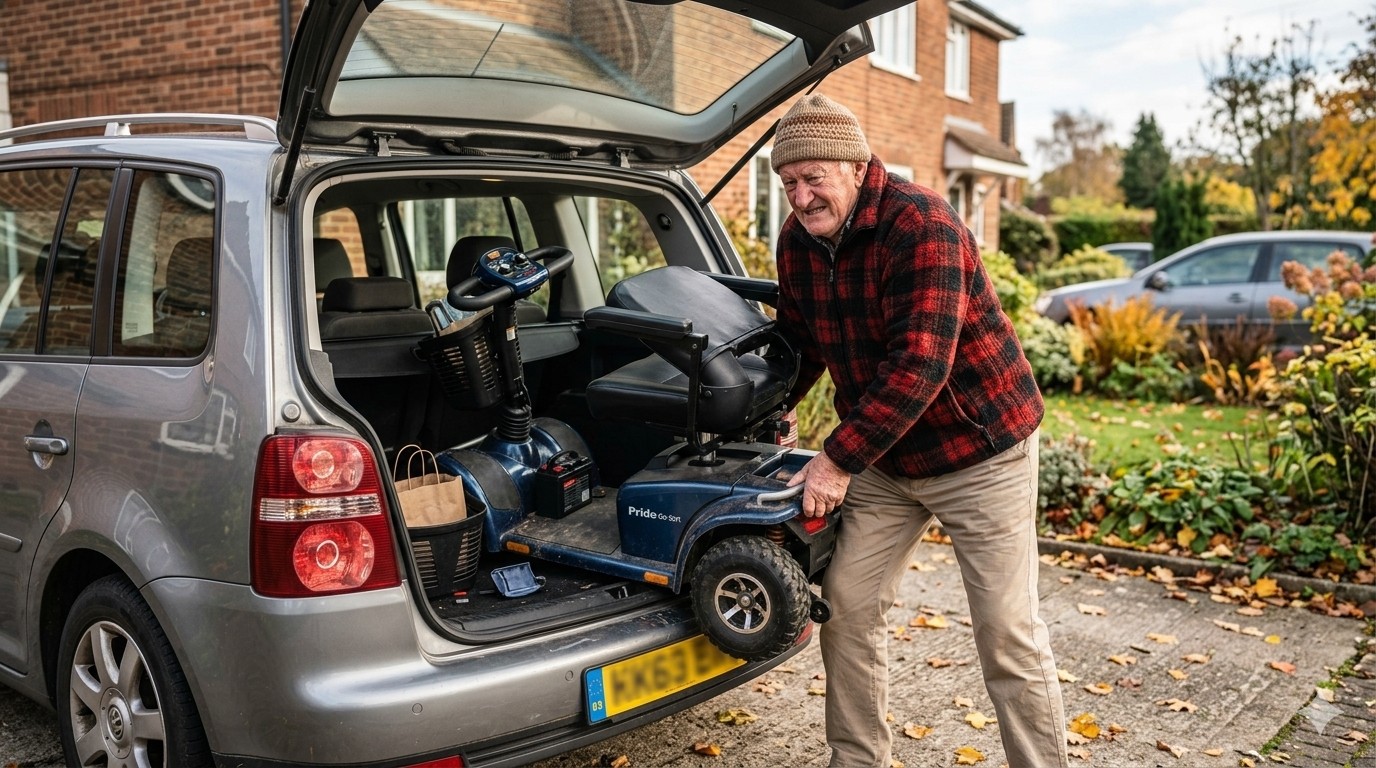
Take a breath. You are not doing anything wrong—you are just missing a system. Learning how do I plan storage for a mobility scooter in a car boot and at home (so it works day to day) is not about finding a single perfect spot. It is about designing a routine where the car and the home work together, and where the equipment does the heavy lifting so you do not have to.
This guide will walk you through every piece of the puzzle—ramps, hoists, boot layouts, and home storage connections—using metric measurements and honest practical advice. By the end, you will have a complete system that makes daily use feel effortless.
Let's start with the car.
The Car Boot: Your Scooter's Travel Home
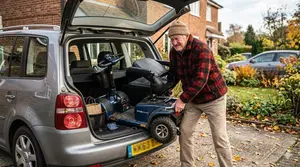
The car boot is where most people run into trouble first. It is a confined space, often at an awkward height, and it requires you to lift or manoeuvre the scooter in ways that can strain your back and arms. The good news is that there are several solutions—and choosing the right one depends on your scooter's weight and your own physical capability.
Option 1: Manual Loading with a Ramp
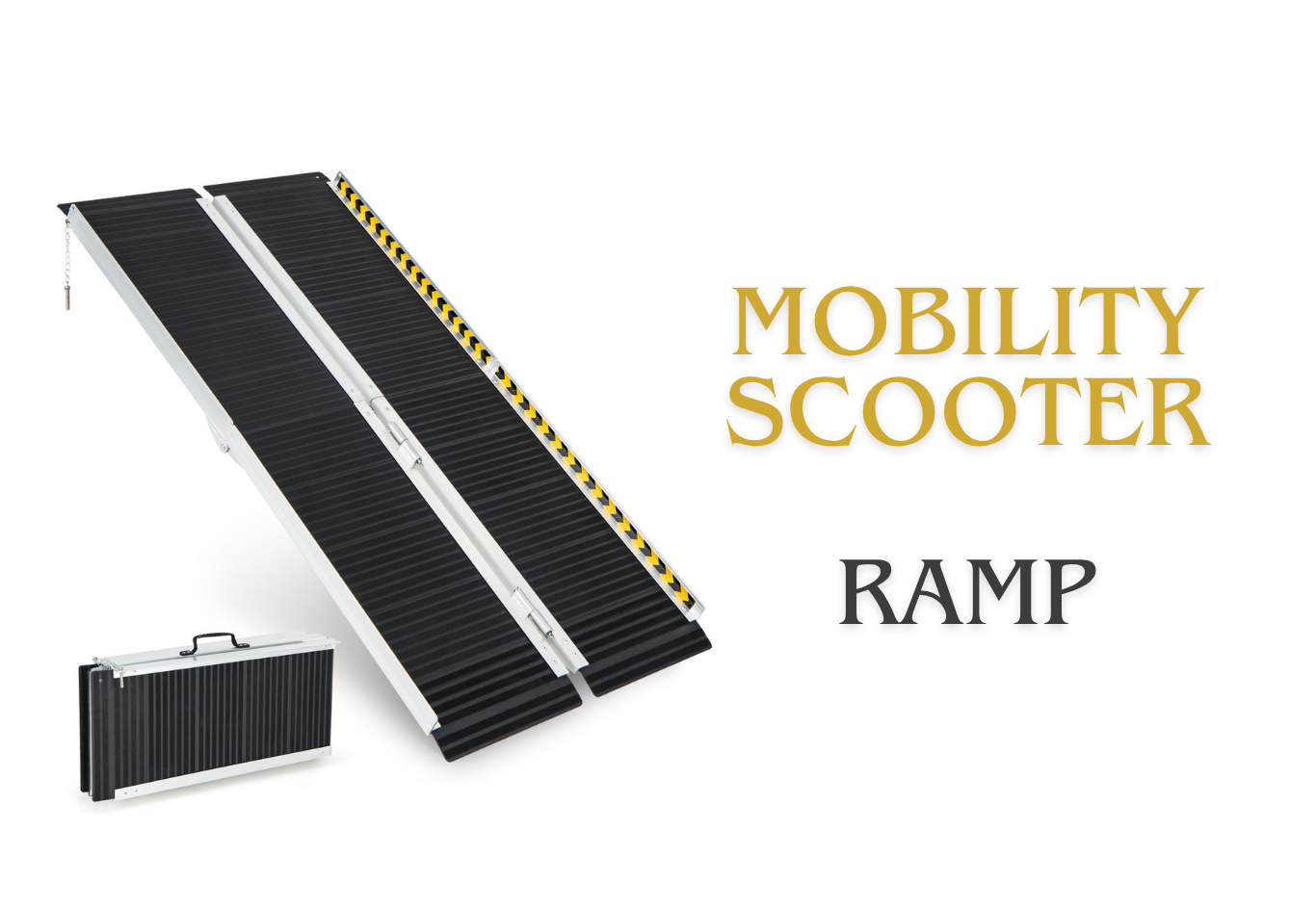
If your scooter is lightweight and you can fold or disassemble it, a portable ramp is the simplest and most affordable solution. A ramp bridges the gap between the ground and the boot floor, allowing you to roll the scooter in rather than lift it.
Portable folding ramps are widely available in Australia. A two-section folding ramp can be folded in half and carried like a suitcase when not in use. Standard lengths range from 1680mm to 2135mm, and the ramp should have a slip-resistant surface and edge barriers for safety. When choosing a ramp, consider the required length to ensure a manageable slope—you need to balance ramp length and weight with a safe gradient. A ramp that is too steep is dangerous; a ramp that is too long is heavy and difficult to store.
For a threshold or a small step, a shorter threshold ramp may be sufficient. These are often foldable and can be stored against a wall or behind a door when not in use.
Option 2: Vehicle Hoists—Powered Assistance
If lifting is not an option—or if your scooter is too heavy for a manual ramp—a vehicle hoist does the work for you. A boot-mounted hoist is fixed to the floor of the vehicle boot and may be powered by the vehicle battery. A push-button control activates a boom or lifting arm that extends out, attaches to the scooter via a hook or strap, lifts it, and swings it into the boot.
There are several hoists available in Australia. The FADIEL SG50 can lift mini scooters up to 50kg and can be laid in the boot to minimise space when not in use. It has a maximum height of 1080mm (adjustable to 380mm) and an arm extension of 875mm (adjustable to 640mm), with a 180-degree rotation angle.
The Autochair Smart Lifter LM is designed for wheelchairs and mini scooters, with a maximum lifting weight of 40kg or 80kg. It features fully automated lifting operated by the touch of a button, eliminating the need to pick up the device. The Smart Lifter LC lifts up to 100kg and can load a scooter in 60 seconds. The Smart Lifter LP is capable of lifting all types of scooters, with capacities of 125kg, 150kg, and 200kg.
The Atlas 60 Portable Car Boot Hoist is another option, priced at around $3,990, designed to make lifting fast, safe, and effortless.
Option 3: Docking Stations—Self-Loading Systems
Some scooters come with a docking station that allows the scooter to load itself into the boot. The Quingo Flyte is a compact powered scooter with a docking station designed to charge and store the scooter in the boot of a car. It loads into most hatchbacks and SUVs in under 60 seconds, and the heaviest component weighs only 8.9kg. The docking station features automatic alignment for charging and a secure holding mechanism to prevent movement.
This is an elegant solution if you are buying a new scooter and want a fully integrated system. It eliminates the need for a separate ramp or hoist, and it is specifically designed for people who struggle with lifting.
Now that you have the car side sorted, let's turn to the home—and how to connect the two.
The Home End: Creating a Landing Zone
The car boot is only half the system. The other half is your home storage. If your home storage is awkward, it will undermine everything you do at the car. The two need to work together.
Choose a Home Storage Spot That Mirrors the Car
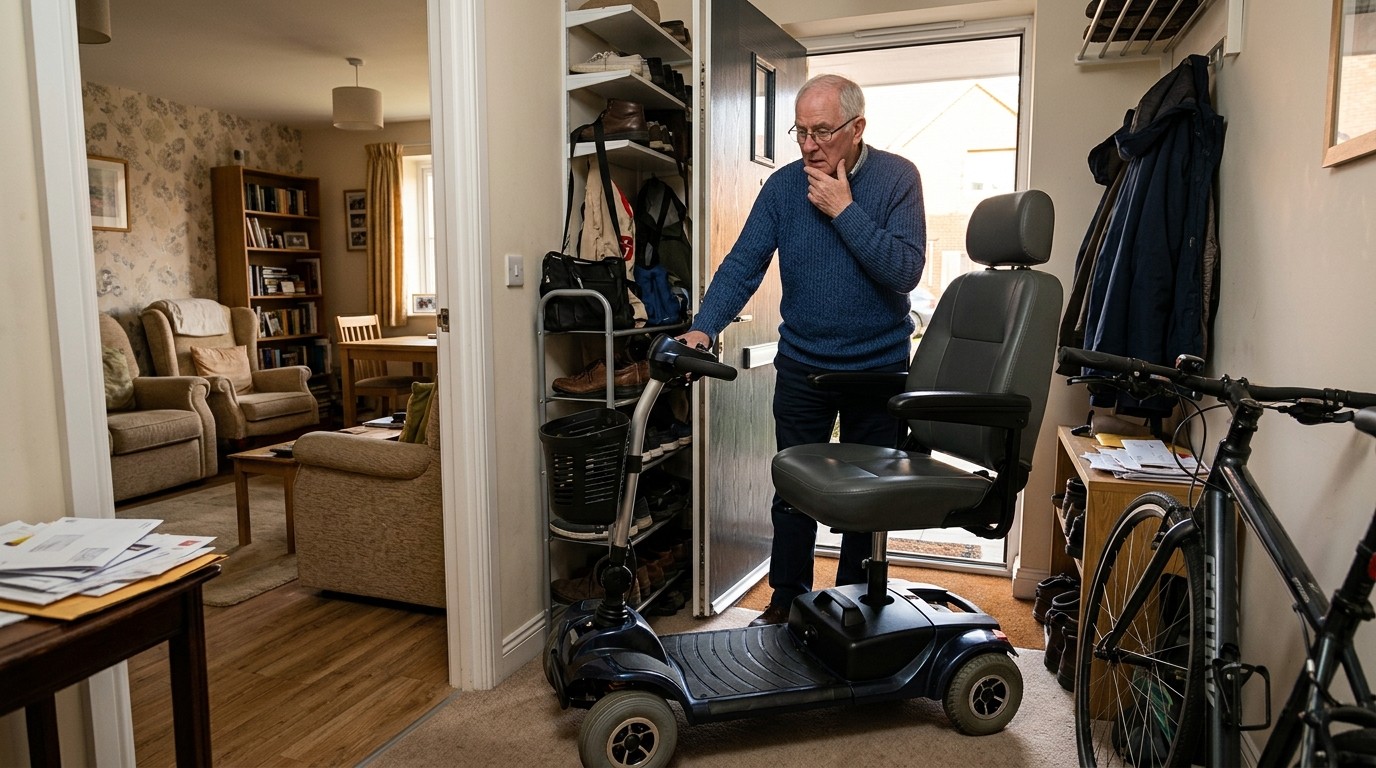
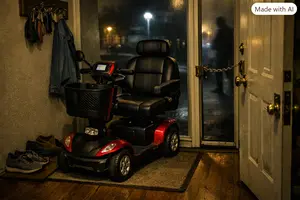
The best home storage spot is one that is as close as possible to where you park your car. If you can store the scooter in a garage or carport, you eliminate the need to move it through the house. If you must bring it inside, choose a spot near the entry door so the distance is short.
For a full breakdown of home storage options, including hallway cupboards, under-stairs nooks, and balcony storage, see our guide to storage planning for small spaces.
.
Consider a "Landing Zone" Layout
Think of your home storage as a landing zone. The scooter comes out of the car, rolls into the landing zone, and stays there until the next trip. If the landing zone is cluttered or difficult to access, the routine will break down.
A good landing zone has three features: clear floor space for the scooter to sit, a power point nearby for charging, and a clear path to the door. If your landing zone is a hallway or entryway, make sure it does not block egress. If it is a garage or carport, make sure it is dry and secure.
Use a Storage Bag for Protection
If your scooter is stored in a garage, carport, or any area exposed to dust or temperature changes, a purpose-designed storage bag can keep it clean and protected. The Easwe Carrying Bag is designed to carry a folded scooter safely, keeping it dust-free and protected during storage at home. It should be kept in a dry, sheltered location away from direct sunlight and extreme temperatures.
Now that you have both ends of the system, let's look at how to make the routine itself effortless.
Making the Day-to-Day Routine Effortless
The difference between a storage plan that works and one that does not is the effort required each day. If the routine takes five minutes of hard physical work, you will avoid using the scooter. If it takes thirty seconds of rolling and gliding, you will use it all the time.
Choose a Scooter That Supports Effortless Storage
If you are still choosing a scooter, prioritise features that make the daily routine easier.
Lightweight construction. A scooter that weighs under 20kg is manageable for many people. The Solax Carbon Swift weighs just 14.5kg including the battery, making it easy to lift into a car boot or store in small spaces at home. The Solax Maleta Carbon Fibre has an ultra-light carbon fibre frame that is easy to lift, carry, and store.
One-piece folding or quick disassembly. A scooter that folds in one motion is faster to handle than one that breaks into multiple pieces. The SupaScoota HD features an ultra-fast folding mechanism that locks into place in under 10 seconds, allowing effortless storage in a car boot, garage, or upright in small spaces.
Disassembly for lighter components. If lifting is a concern, a disassembly scooter distributes weight across multiple pieces. The Aspire Elio disassembles into five compact parts, and the heaviest part is just 10.8kg—easy for carers to lift and fits neatly in most car boots or storage spaces. The Pride Go-Go Boot Scooter also disassembles into five lightweight pieces for transport and storage. The Invacare Colibri features the LiteLock system, which allows tool-free dismantling in under a minute, fitting perfectly into any car boot.
Equipment That Bridges the Two
The best equipment for a car-and-home system is something that works at both ends. A portable ramp can be used to load the scooter into the car and to roll it over a threshold at home. A turntable can help you rotate the scooter in a tight home storage spot and also in the boot if turning space is limited. A storage caddy with wheels can glide the scooter into place at home and help with positioning in the boot.
The goal is to minimise the number of times you have to lift the scooter. Every lift you eliminate is a lift you do not have to do.

Safety First, Always
Regardless of the equipment you choose, safety must come first. Australian guidance recommends seeking assessment and advice from an Occupational Therapist when considering ramps and hoists, to ensure the solution is suitable for the user, the mobility device, and the intended environment.
Ramps should be placed on a stable, level surface and securely positioned before use, and the gradient should be safe for the user and appropriate for the device. Always inspect equipment before each use for signs of wear, warping, or damage, and follow the manufacturer's instructions for weight limits and safe use.
Now that you have the system, let's answer some common questions.
Frequently Asked Questions
How do I choose between a ramp and a hoist for my car boot?
A ramp is cheaper and simpler but requires you to be able to roll or partially lift the scooter. A hoist is more expensive but does all the lifting for you. If lifting is difficult or impossible, a hoist is the safer choice. If your scooter is lightweight and you can manage a ramp, it is a cost-effective solution.
What is the best mobility scooter for car boot storage?
A lightweight folding scooter under 20kg with a one-piece folding design is easiest to handle. If lifting is a concern, a disassembly scooter with a heaviest piece under 12kg is a good option. The Aspire Elio (10.8kg heaviest part) and the Solax Carbon Swift (14.5kg total) are examples of lightweight models designed for easy transport.
How much does a car boot hoist cost in Australia?
Hoists typically range from around $3,000 to $6,000, depending on capacity and installation requirements. The Atlas 60 Portable Car Boot Hoist is priced at approximately $3,990.
Can I use a ramp to load a scooter into a small car boot?
Yes, provided the ramp is long enough to create a safe gradient and the boot opening is wide enough for the scooter. Measure your boot opening and the scooter's width before choosing a ramp.
How do I store my scooter at home if I live in a small unit?
Choose a landing zone near your entry door, ideally with a power point nearby for charging. A folding scooter that stands upright takes up minimal floor space. For a full guide to small-space storage, see our guide on storage planning for small spaces.
Can I charge my scooter in the car?
Some scooters with docking stations can charge while docked in the boot. The Quingo Flyte docking station automatically charges the scooter when it is in place. For other scooters, you will need to remove the battery and charge it indoors.
What if I cannot lift the scooter at all?
A vehicle hoist or a self-loading docking station system eliminates lifting entirely. The Autochair Smart Lifter and the Quingo Flyte docking station are both designed for people who cannot lift their scooter.
How do I keep my scooter clean and protected in storage?
Use a purpose-designed storage bag, keep the scooter in a dry, sheltered location away from direct sunlight and extreme temperatures, and remove loose items before parking.

Your System, Your Freedom
Planning storage for a mobility scooter in a car boot and at home is not about finding the perfect spot. It is about building a system—a routine where the car and the home work together, and where the equipment does the heavy lifting so you do not have to. Choose the right scooter for your needs. Choose the right equipment for your car and your home. Connect the two with a clear, uncluttered landing zone. And then enjoy the freedom that comes from a system that actually works.
You have already done the hardest part by thinking this through. If you are still measuring your space, our guide to how to measure your home for a mobility scooter walks you through every dimension that matters.
If you are weighing up folding versus disassembly, our guide to the best storage plan for a folding scooter vs a disassembly scooter in a small apartment has you covered.
And if charging is your next worry, our safe charging station guide will set your mind at ease.
You have got this—and we are here to help every step of the way.
Stay mobile, stay confident!
Sign up for our monthly Mobility Scooter Newsletter to receive practical guides, expert advice, and inspiring stories that help you make the most of your scooter and download our free "Mobility Scooter Guide for Beginners."
Don't worry — your e-mail address is totally secure.
I promise to use it only to send you our newsletter, "Mobility Matters."
Recent Articles


-
Storage Planning for Small Spaces: Measure, Plan, Store Safely
Oct 14, 26 09:02 AM
 Storage planning for small spaces doesn't have to be stressful. Learn how to measure, charge, and safely store your mobility scooter at home.
 -
Mobility Scooter Security When Stored Near the Door at Home
Oct 14, 26 08:58 AM
 How can I secure a mobility scooter at home when indoor space forces "near-the-door" storage—a layered security guide for peace of mind.
 -
Car Boot & Home Storage for Mobility Scooters: Make It Work
Oct 14, 26 07:00 AM
How do I plan storage for a mobility scooter in a car boot and at home so it works day to day? Read this before you buy.
Ready to Feel More Confident on Your Mobility Scooter?

My Ebook, The Ultimate Guide to Mobility Scooters, walks you through choosing the right scooter, using it safely, and keeping it in top condition — all explained in clear, friendly language.
Give yourself (or someone you love) the gift of independence.




