- Home
- Mobility Scooter Types
- Small Home Storage Friendly Scooters
- Storage-First Decision Guide
Storage-First Decision Guide: When a Compact Scooter Is the Right Compromise (And When It’s the Wrong One)
Picture this. You have measured the cupboard. You have checked the hallway. You have found a compact scooter that folds into a space smaller than a suitcase, and it feels like a triumph. And then you take it out for its first proper trip—a visit to the park, a run to the shops—and the ride is firm, the pavement feels every pebble, and you arrive shaken rather than liberated. The scooter fits your home perfectly. It just does not fit your life. This is the moment that a storage-first decision guide exists to prevent: the quiet disappointment of solving the wrong problem brilliantly.

A compact scooter is a genuine marvel of engineering. It solves a real, pressing problem for people in small homes, flats, and sheltered accommodation—the problem of where on earth to put a mobility scooter without turning your hallway into an obstacle course.
But like any solution, it comes with trade-offs, and those trade-offs are not always obvious from a spec sheet or a glossy product photo. This guide is about making those trade-offs visible, so you can choose a compact scooter with your eyes open—or know, with equal confidence, when a compact scooter is not the right answer for you.
Let’s walk through it together, honestly and gently.
The Real Problem Compact Scooters Solve (And Why That Matters)
Before we talk about compromise, let’s be clear about what compact scooters get right. They are not a lesser choice. They are a specific choice, designed for a specific set of constraints, and when those constraints match your life, they are transformative.
The core problem is space. In a small home or flat, a full-size scooter can feel like having a small motorbike in your hallway—it dominates the floor, blocks routes, and creates friction every time someone needs to pass. A compact scooter, by contrast, folds or dismantles into a package that can tuck into a closet, a corner, or by the door. One guide puts it simply: “In a small home, storage is everything”. Another notes that for apartment living, a scooter that folds down for storage “solves a genuine space problem that a full-size model doesn’t”.
This is not a trivial benefit. It is the difference between a scooter you can own and a scooter you cannot. If the choice is between a compact scooter that fits your home and no scooter at all, the compact scooter wins by default—and it wins decisively. But the key phrase is “if the choice is between.”
The question this guide answers is: what happens when there is a choice, and what do you give up when you choose compact?
What You Trade Away: The Four Compromises of Compact Design
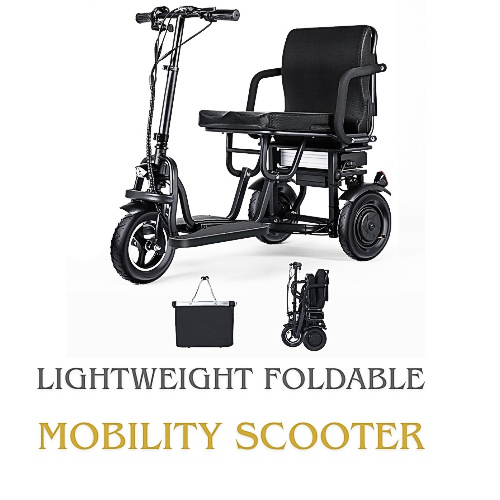
Every compact scooter is built on a set of engineering compromises, and understanding them is the first step to deciding whether they are acceptable for you. These are not flaws. They are the price of portability, and they are worth naming clearly.
Ride comfort and stability. Compact scooters typically have smaller wheels, shorter wheelbases, and less suspension than full-size models. The result is a firmer, bumpier ride on anything other than smooth, flat surfaces. Owner reviews of compact models frequently mention the lack of suspension and the way bumps are transmitted through the frame.
One reviewer of a folding model noted “no suspension and low ground clearance” as a key weakness, while another described the ride as “bumpy on paths as solid tyres”. This does not make compact scooters unsafe. It makes them less comfortable on imperfect ground—and if your daily route includes rough pavements, kerbs, or uneven surfaces, that difference matters.
Ground clearance. Compact scooters often sit lower to the ground, with ground clearance in the range of 5–8 cm. That is enough for smooth pavements and dropped kerbs, but it can be a genuine limitation for shop doorways with raised thresholds, uneven paving, or any surface with a ridge or lip. A full-size scooter with 8–13 cm of clearance handles those obstacles with less drama.
Battery range. The smaller frame and lighter construction of a compact scooter generally mean a smaller battery and a shorter real-world range. This is not a problem for short trips to the shops or around the neighbourhood. It becomes a problem if your regular outings are longer, or if you want the reassurance of a larger reserve. Published range figures should be treated as planning estimates, not promises—rider weight, slopes, temperature, and surface conditions all reduce the real-world number.
Weight capacity. Compact scooters often have lower weight capacities than full-size models, because the lighter frame that makes folding or dismantling possible also limits how much weight it can safely carry. Standard-duty compact models typically support up to around 135 kg, while mid-range and full-size scooters extend further. If your weight is close to or above the rated capacity, a compact scooter may not be the safe or comfortable choice.
The Stability Question: Three Wheels, Four Wheels, and the Indoor-Outdoor Split
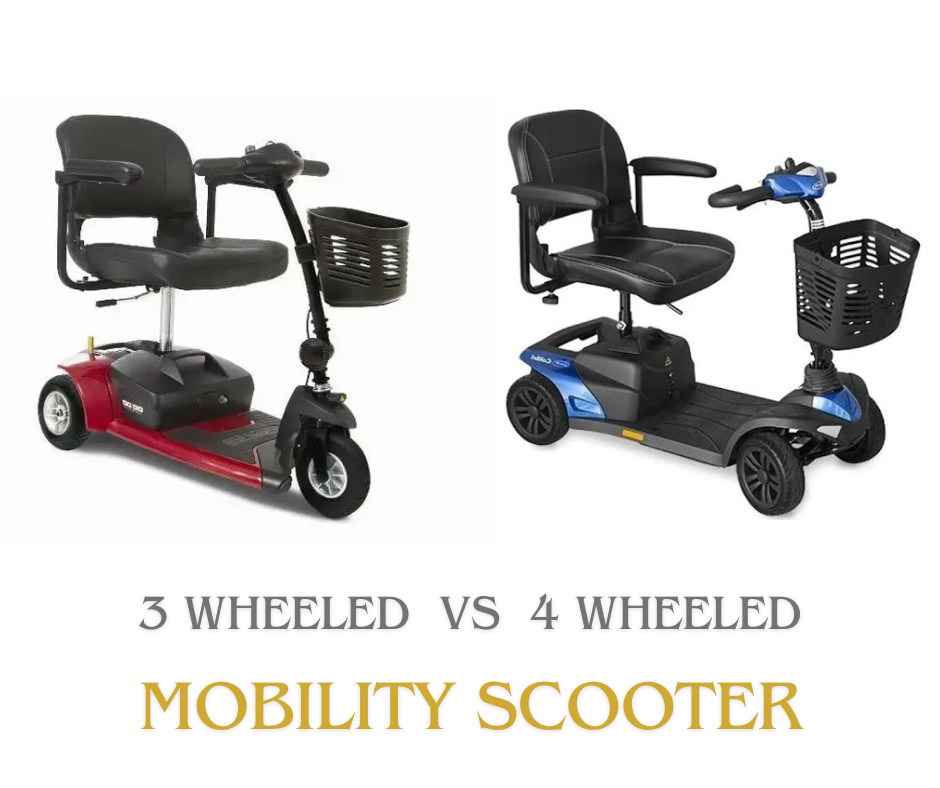
There is one more compromise that deserves its own section, because it sits right at the heart of the storage-first decision: stability. Compact scooters are often three-wheeled, because three-wheel designs turn more tightly and manoeuvre better in narrow indoor spaces. That is a genuine advantage in a small home. But three-wheel scooters are also less stable than four-wheel models, particularly outdoors on uneven ground or at higher speeds.
This is not a reason to avoid three-wheel scooters. It is a reason to be honest about where you will ride. If 90% of your use is indoors or on smooth, flat pavements, a three-wheel compact scooter is a sensible, manoeuvrable choice. If your regular route includes rough pavements, slopes, or longer outdoor trips, a four-wheel model—compact or otherwise—will feel more planted and reassuring. The storage-first decision is not just about where the scooter lives. It is about where the scooter goes.
The Decision Framework: When a Compact Scooter Is the Right Compromise
You now have the trade-offs. Here is how to turn them into a decision. A compact scooter is the right compromise when three conditions are met.
Condition one: storage is a genuine constraint, not a preference. If you have a garage, a shed, or a dedicated room where a full-size scooter could live safely, storage is not your binding constraint. If you are in a flat with a single hallway and no outdoor store, storage may be the constraint that decides everything. A compact scooter is the right choice when the alternative is no scooter at all, or a scooter that dominates your living space.
Condition two: your regular routes match the scooter’s strengths. Compact scooters are at their best on smooth, flat surfaces—pavements, shopping centres, smooth paths, and indoor spaces. If your daily life takes place on those surfaces, the comfort and range trade-offs are manageable. If your regular routes include rough ground, steep slopes, or long distances, the trade-offs become daily frustrations. As one guide advises, think about where the scooter will spend most of its time, not the occasional trip.
Condition three: the lifting and handling demands are within your ability. Compact scooters still require lifting—either the full folded package (often 15–30 kg) or the heaviest dismantled piece (often 10–18 kg). If you can manage that safely, on a bad day, the compact scooter is workable. If you cannot, it is not the right compromise, no matter how well it fits the cupboard.
When a Compact Scooter Is the Wrong Choice (And What to Do Instead)
A compact scooter is the wrong choice when any of the three conditions above fails—and it is important to say that clearly, because the storage-first mindset can sometimes push people toward a scooter that solves the cupboard problem while creating a daily-ride problem.
It is the wrong choice if storage is not actually your constraint. If you have a safe, dry, accessible place to store a full-size scooter, choosing a compact model means accepting comfort and range limitations for no real gain. A full-size scooter’s greater stability, range, and weight capacity generally make it the better daily-use choice when storage allows.
It is the wrong choice if your outdoor needs are substantial. If your regular trips involve rough pavements, longer distances, or variable terrain, a compact scooter’s smaller wheels and limited suspension will make every journey harder work than it needs to be. In that situation, the honest answer may be a different storage solution—an outdoor shed, a secure communal store, or a home assessment—rather than a scooter that fights the ground.
It is the wrong choice if the lifting demands exceed your ability. A compact scooter that you cannot lift into its storage spot is not a storage solution. It is a daily reminder of your limits. If the heaviest piece is beyond your safe lifting ability, the right answer is a different mechanism (a dismantling model with a lighter heaviest piece), a different storage location (a ground-level spot that avoids lifting), or a different solution entirely.

The Middle Path: When a Compact Scooter Works With Adjustments
Sometimes the answer is not “yes” or “no” but “yes, with a plan.” A compact scooter can work beautifully if you adjust the surrounding setup to compensate for its limitations.
Add a storage solution that does not require lifting. If the scooter can be wheeled into its storage spot rather than lifted, the weight problem disappears. A ground-level cupboard, a corner with a ramp, or a scooter that rolls when folded can turn a “wrong choice” into a workable one.
Choose your surfaces deliberately. If the scooter is compact, plan routes that favour smooth pavements and dropped kerbs. Avoid rough shortcuts. Use the scooter for what it does well, and use other transport for the journeys it cannot handle comfortably.
Consider a two-scooter approach. Some households keep a compact scooter for indoor and local use, and rent or borrow a larger scooter for longer outdoor trips. This is not a compromise; it is a recognition that one vehicle does not have to do everything.
Your Next Step
You now have a framework that goes beyond “will it fit?” to “will it work, every day, for the life I actually live?” A compact scooter is the right compromise when storage is a genuine constraint, your routes match its strengths, and the lifting demands are within your ability. It is the wrong choice when any of those conditions fails—and knowing that early is a gift, not a disappointment.
If you are still deciding between a folding and a dismantling model, the guide to folding vs disassembly travel scooters for small homes compares the two mechanisms in real-life terms. And if the storage spot itself is the challenge, closet and under-stairs storage shows how to make tight spaces safe and workable. You are closer to the right decision than you think.
Frequently Asked Questions
When is a compact scooter the right choice for a small home?
When storage is a genuine constraint, your regular routes are smooth and flat, and the heaviest piece is within your safe lifting ability. If all three conditions are met, a compact scooter can be a transformative solution.
When is a compact scooter the wrong choice?
When you have safe storage for a full-size scooter, when your outdoor routes are rough or long, or when you cannot safely lift the folded package or heaviest piece. In those cases, a compact scooter solves one problem while creating another.
What do you give up when you choose a compact scooter?
Ride comfort and stability on rough ground, ground clearance, battery range, and sometimes weight capacity. These are the engineering trade-offs of compact design, and they matter more on some routes than others.
Are compact scooters less stable than full-size scooters?
Generally, yes—especially three-wheel models on uneven ground. Four-wheel compact models are more stable, but still less planted than a full-size scooter with larger wheels and a longer wheelbase.
Can a compact scooter handle outdoor trips?
It can handle smooth pavements, shopping centres, and flat paths. It is not designed for rough terrain, steep slopes, or long distances. Be honest about where you will actually ride.
What is the biggest mistake people make when buying a compact scooter?
Choosing it for storage reasons without checking whether it suits their outdoor routes and lifting ability. A scooter that fits the cupboard but fights the pavement is not a good compromise.
Should I choose a compact scooter if I have a bad back?
Only if the folded package or heaviest piece is within your safe lifting limit. A compact scooter that you cannot lift into storage is not a solution. Consider a dismantling model with a lighter heaviest piece, or a ground-level storage spot.
Can I use a compact scooter as my only mobility scooter?
Yes, if your regular routes are smooth and local. If you need longer range or rougher terrain capability, a full-size scooter or a two-scooter approach may serve you better.
What is the alternative if a compact scooter is not right for my home?
A full-size scooter stored in a shed or garage, a dismantling scooter with a light heaviest piece, or a different storage location that avoids the need for a compact model.
How do I know if my routes are “smooth enough” for a compact scooter?
Walk or drive your regular routes and note the surfaces: rough pavements, kerbs, slopes, and uneven ground. If those features are common, a compact scooter may not be comfortable. If your routes are mostly smooth and flat, it likely will be.
Stay mobile, stay confident!
Sign up for our monthly Mobility Scooter Newsletter to receive practical guides, expert advice, and inspiring stories that help you make the most of your scooter and download our free "Mobility Scooter Guide for Beginners."
Don't worry — your e-mail address is totally secure.
I promise to use it only to send you our newsletter, "Mobility Matters."
Recent Articles


-
Small Home Storage Friendly Scooters That Actually Fit Your Flat
Nov 12, 26 09:16 AM
 Small Home Storage Friendly Scooters start with your tape measure. Learn the route, not just the spot, before you spend a penny.
-
Storage-First Decision Guide: Stop Buying the Wrong Scooter
Nov 12, 26 09:09 AM
 Storage-first decision guide that respects your space and your safety. Learn when a compact scooter works and when it fails.
-
Safe Storage + Charging Spot for Scooters: No Hazards, No Blocking
Nov 12, 26 07:46 AM
 Safe storage + charging spot: never in a hallway, never overnight, never unattended. This friendly guide shows what to do instead.

Ready to Feel More Confident on Your Mobility Scooter?

My Ebook, The Ultimate Guide to Mobility Scooters, walks you through choosing the right scooter, using it safely, and keeping it in top condition — all explained in clear, friendly language.
Give yourself (or someone you love) the gift of independence.




