- Home
- Mobility Scooter Types
- Small Home Storage Friendly Scooters
- Closet Under-Stairs Storage
Closet / Under-Stairs Storage: What Scooter Features Make These Spaces Workable (And What Makes Them Fail)
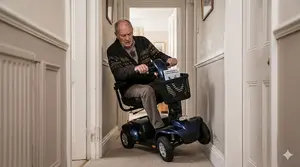
Picture this. You have found the perfect spot—a cupboard under the stairs, a wide closet in the spare room, a corner that has been waiting for a purpose. It looks big enough. It feels private. It keeps the scooter out of the hallway and out of the way. And then the scooter arrives, and you discover that the cupboard door is 5 cm too narrow, the folded height is 10 cm too tall, and the charging cable cannot reach a socket without an extension lead snaking across the floor. The space was never the problem. The fit was.
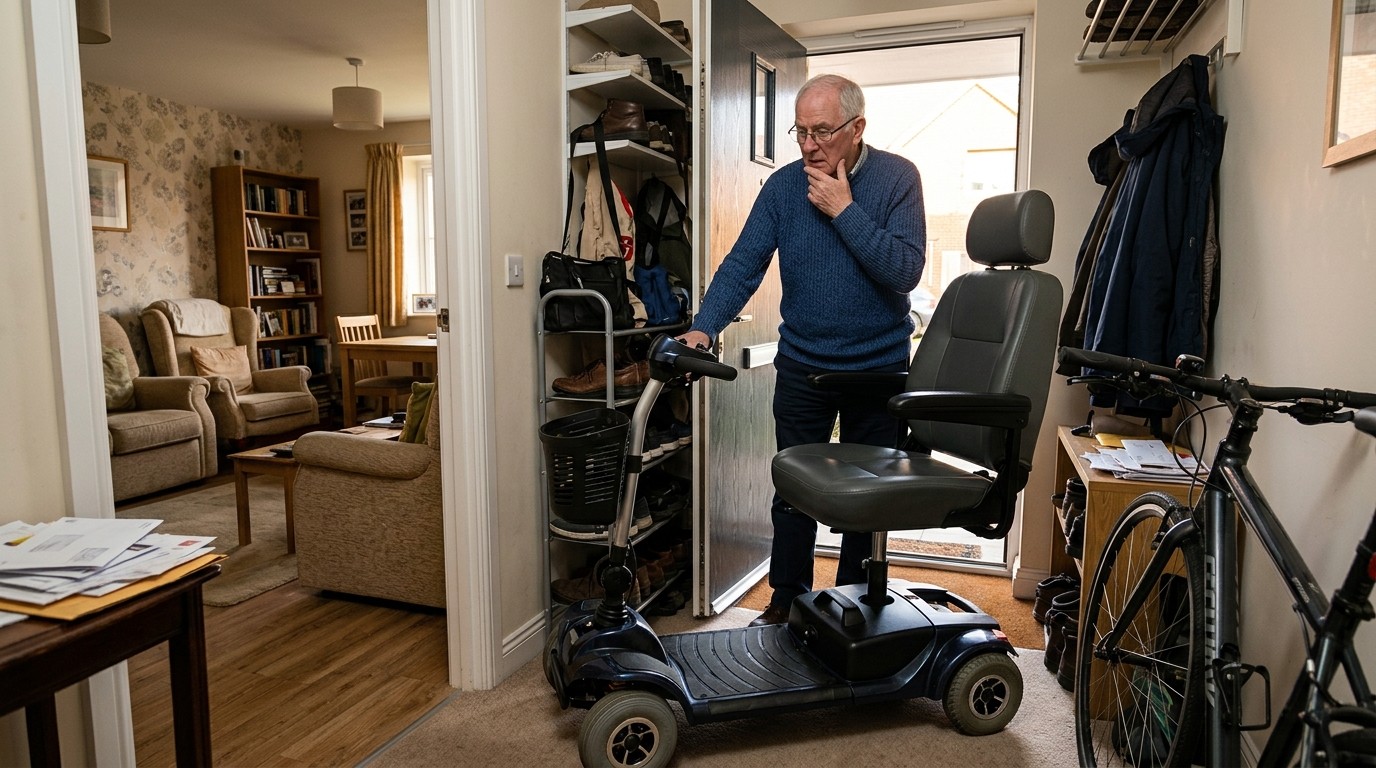
Closet / under-stairs storage is one of the most searched-for solutions for small-home scooter owners, and for good reason: it uses dead space, keeps the scooter protected, and feels tidy. But Page 1 is full of product pages that promise “compact storage” without telling you what that actually means for your cupboard.
This guide is different. We will walk through the features that make closet / under-stairs storage workable—and the ones that turn it into a daily frustration. By the end, you will know exactly what to measure, what to lift, and what to avoid.
Let’s take the guesswork out of it.
First, the Honest Bit: Not Every Cupboard Is a Safe Storage Spot
Before we talk about scooter features, we need to talk about the space itself. This is the part most buying guides skip, and it matters more than any dimension on a spec sheet.
Fire services across the UK are unambiguous: mobility scooters should not be stored or charged in corridors, stairways, or any area that forms part of your escape route. An under-stairs cupboard can feel like a clever use of space, but if it sits in a hallway that is your only way out, it is not a safe storage spot. Research has shown that smoke and heat from a scooter fire in a corridor or stairway can make the route impassable, putting occupants at serious risk. The guidance is clear: corridors and stairways should be free from combustible materials and ignition sources.
So what does this mean in practice? It means your closet / under-stairs storage plan needs a safety-first filter. A cupboard in a hallway may be acceptable if it is enclosed with fire-resistant construction and a fire door—some housing guidance recommends at least 30 minutes of fire-resisting construction for storage areas within a building.
A cupboard in a spare room or a dedicated utility space is often the safer choice. And if the only available space is on your escape route, the honest answer may be that indoor storage is not the right solution, and an outdoor shed or a designated communal store is the better path. This is not about scaring you. It is about making sure the freedom a scooter brings does not come with a hidden risk.
Once you have a space that passes that filter, the features conversation can begin.
The Features That Make a Cupboard Work: Dimensions, Mechanism, and the Heaviest Piece
Now you have a safe space. The next question is whether the scooter will fit—not just in the cupboard, but through the door, around the corner, and into the usable floor area. This is where three scooter features do most of the heavy lifting.
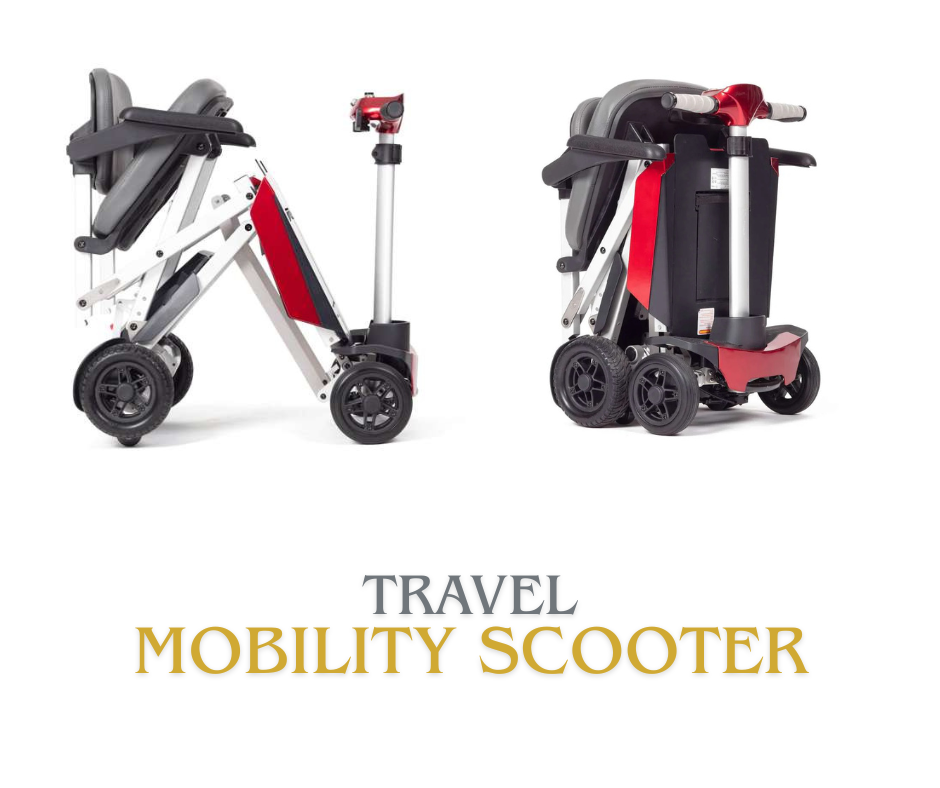
Folded dimensions, not open dimensions. A scooter’s open length and width tell you how it drives. Its folded dimensions tell you whether it will live in your cupboard. One storage guide puts it well: a scooter that fits beneath a shelf may still be too tall once the handlebar position is considered. Measure the cupboard’s internal height, width, and depth, then compare them to the folded or dismantled dimensions. And measure the cupboard opening separately—a wide cupboard with a narrow door is a trap that catches people repeatedly.
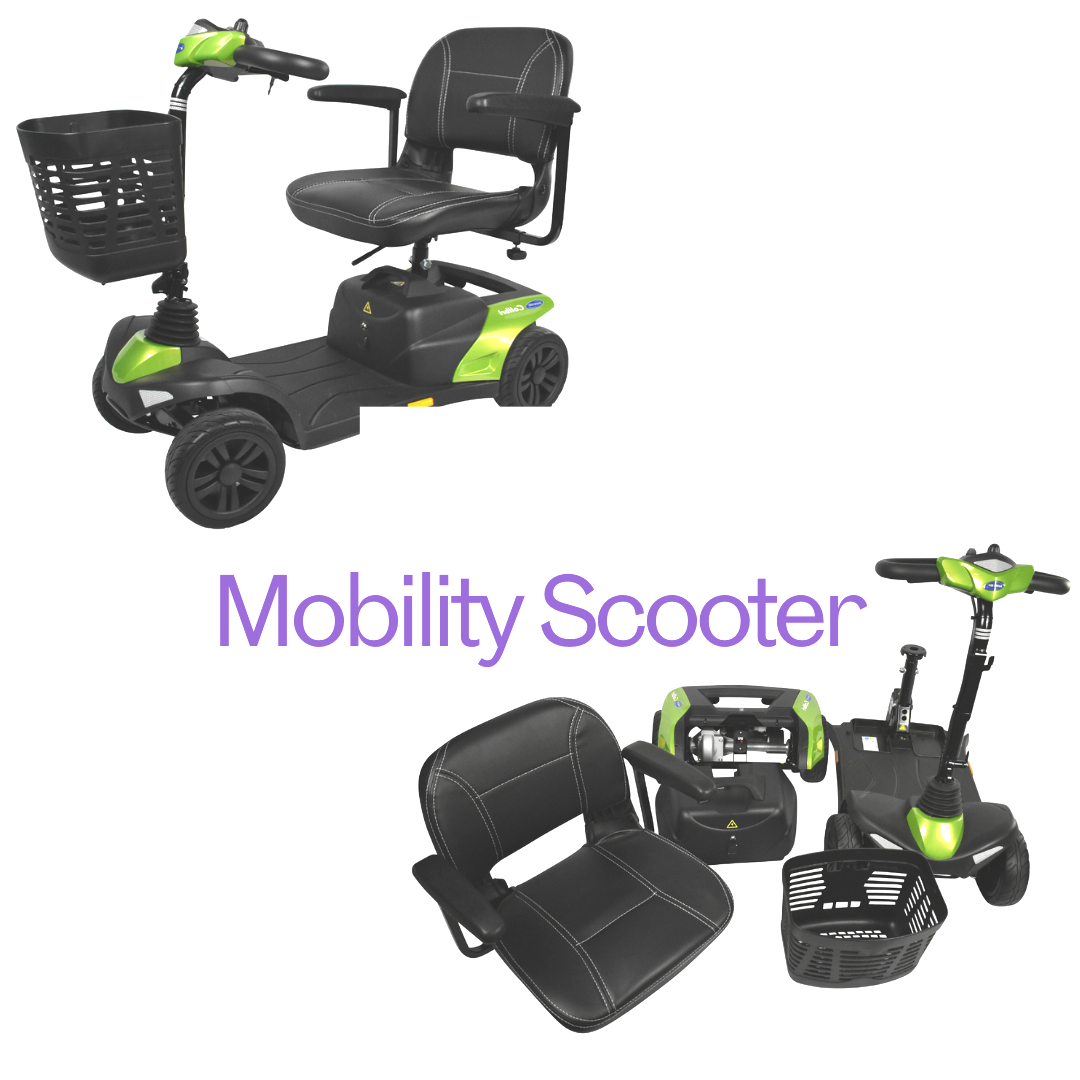
Folding vs disassembly. Folding scooters collapse as one piece, often in seconds, and can be rolled or carried as a single unit. They suit cupboards with enough floor space to store the whole folded package.
Disassembling scooters break into several lighter pieces—typically the seat, battery, front section, and rear section—which can be distributed around a cupboard or stored on shelves. A dismantling model can be easier to manoeuvre through a narrow cupboard door because you carry it in pieces, but it takes longer to assemble and requires somewhere to put each part. The right mechanism depends on your cupboard geometry and your patience.
The heaviest piece. This is the number that matters more than total weight. Many dismantling scooters have a heaviest piece in the range of 10–20 kg, which is the real limit on who can lift the scooter into storage. A folding scooter might weigh 20–30 kg as a single folded unit, and that full weight is what you or your carer must manage.
Before you fall in love with a cupboard, ask yourself: can I lift the heaviest piece safely, on a bad day, without twisting? If the answer is no, the cupboard is not workable—no matter how perfect its dimensions look on paper.
Ventilation, Charging, and the Battery Question
A cupboard is an enclosed space, and enclosed spaces need air. This is where closet / under-stairs storage can quietly fail even when the scooter fits.
Ventilation is not optional. Chargers and batteries need airflow. A sealed, damp cupboard is the wrong home for a scooter. Look for a cupboard that is dry and reasonably ventilated, and avoid sealing the scooter into a tight space with no air movement. If the cupboard is prone to damp—common under stairs, where cold bridging and poor airflow are familiar problems—the scooter’s electrics and contacts will suffer over time.
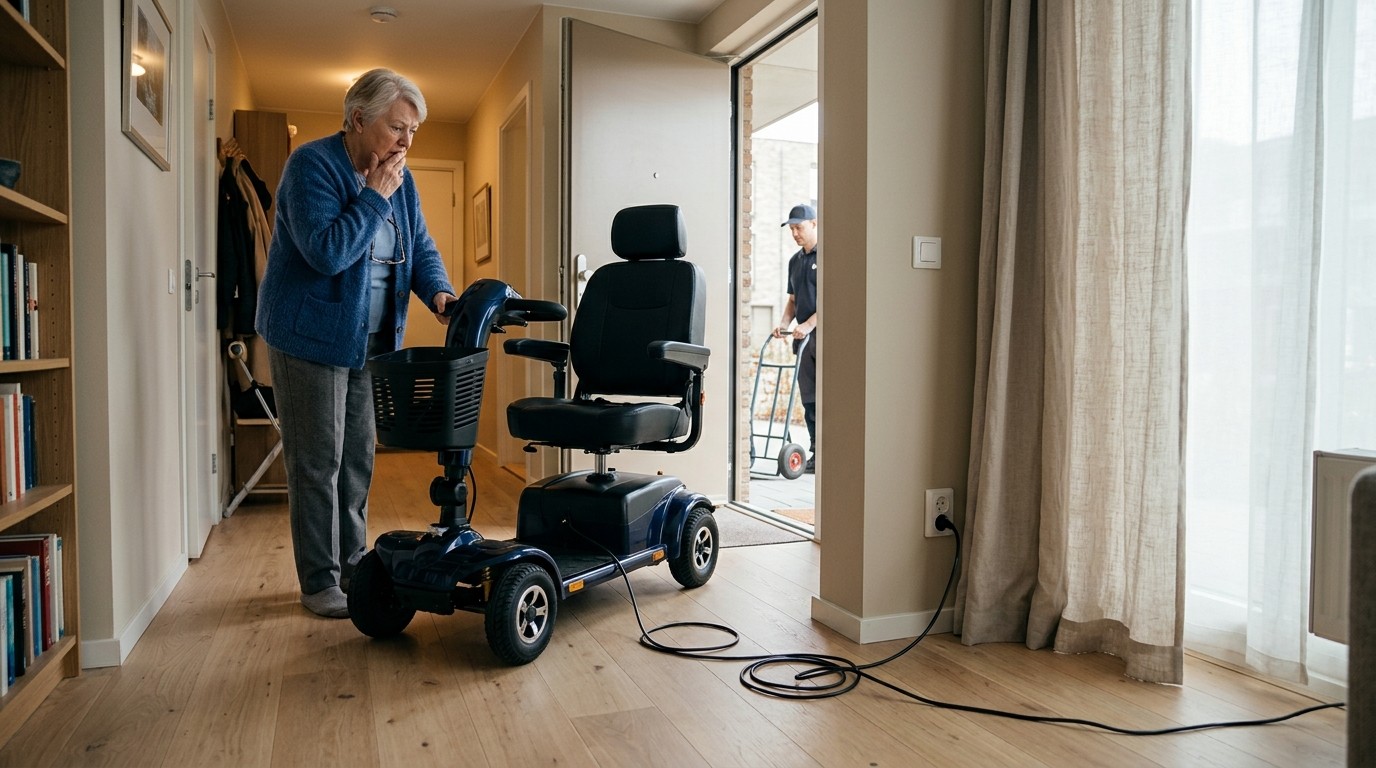
The charging socket question. Can you reach a socket from inside the cupboard? If the answer is no, a removable battery changes everything. You can carry the battery indoors, charge it on a non-combustible surface at room temperature, and return it to the scooter when needed. This is one of the most practical features for closet / under-stairs storage, because it removes the need to run extension leads through doorways or charge in a hallway. Never run an extension lead outdoors as a permanent arrangement, and never charge in a hallway or doorway that is your only escape route.
The overnight charging rule. If you charge indoors, do not leave the battery charging unattended or overnight. Use only the charger supplied with the scooter, unplug once fully charged, and charge on a hard, non-combustible surface—never on carpet or a soft furnishing.
These are simple habits that make indoor storage far safer.
The Cupboard Features That Make or Break the Fit
The scooter is only half the equation. The cupboard itself has features that decide whether the storage arrangement works day to day.
A flat, dry floor. A cupboard with a warped or damp floor will make the scooter hard to slide in and out, and moisture is the enemy of electrics. A simple rubber mat or a wooden platform can lift the scooter off a cold concrete floor.
Adequate clearance. A few centimetres of clearance on each side makes daily use much easier and protects the scooter’s body from scrapes. Tight storage that requires a wrestling match every morning is storage you will start to avoid.
A door that opens fully. A cupboard door that opens only 90 degrees can make it impossible to slide a folded scooter in. Check the swing and the clearance before you commit.
No heat sources or damp. Do not store a scooter next to a boiler, a hot water cylinder, or a damp external wall. Heat and moisture are both unkind to batteries and controls.
A lock, if security matters. Scooters are stolen, and cupboards are not vaults. If the cupboard is accessible from a shared area, a lock is a sensible addition.
When the Cupboard Wins (And When It Doesn’t)
A closet or under-stairs space can be an excellent home for a scooter—but only when four conditions are met. First, the space is not on your only escape route, or it is enclosed with fire-resistant construction. Second, the scooter’s folded or dismantled dimensions fit the internal space and the door opening. Third, the heaviest piece is within your safe lifting limit. And fourth, the space is dry, ventilated, and close enough to a socket for safe charging.
If all four conditions are met, you have a storage solution that protects the scooter, keeps your home tidy, and supports daily use. If any one of them fails, the cupboard is not the answer—and forcing it will cost you more in frustration than a different solution would in convenience.
A folding or dismantling scooter stored in a hallway cupboard or the boot of a car may be the answer when the under-stairs space does not quite work. And if the cupboard itself is unsafe, an outdoor shed or a designated storage area is the responsible choice.
The goal is not to make the cupboard work. The goal is to make your life work.

Your Next Step
You now have a framework that goes beyond “will it fit?” to “will it work, safely, every day?” Measure the cupboard’s internal space and its opening, check the heaviest piece against your lifting ability, confirm ventilation and socket access, and run the safety filter before anything else. That is how closet / under-stairs storage becomes a genuine solution rather than a daily compromise.
If you are still deciding between a folding and a dismantling model, the next natural step is the guide to folding vs disassembly travel scooters for small homes, which compares how each mechanism performs in real cupboards and corners. And if the cupboard door itself is the bottleneck, the guide to narrow hallways and tight turns shows how to measure the route, not just the space.
You are closer to a storage plan that actually works than you think.
FAQs
Can a mobility scooter be stored in a closet?
Yes, if the closet is dry, ventilated, and not on your only escape route. The scooter’s folded or dismantled dimensions must fit the internal space and the door opening, and the heaviest piece must be within your lifting limit.
Is under-stairs storage safe for a mobility scooter?
Only with caution. Under-stairs spaces are often in hallways that form escape routes. Fire services advise against storing scooters in corridors or stairways unless the area is enclosed with fire-resistant construction and a fire door. Safety must come before convenience.
What features should I look for in a scooter for cupboard storage?
Folded dimensions that match your cupboard, a folding or dismantling mechanism that suits your space, a heaviest piece within your lifting ability, and a removable battery if the cupboard lacks a socket.
How do I measure a cupboard for a mobility scooter?
Measure the internal height, width, and depth, then measure the door opening separately. Compare both to the scooter’s folded or dismantled dimensions. Leave a few centimetres of clearance for easy access.
What is the heaviest piece, and why does it matter for cupboard storage?
It is the single heaviest component you must lift when the scooter is folded or dismantled. For many models it falls between 10 kg and 20 kg. It matters more than total weight because it is the real limit on who can store the scooter daily.
Do I need ventilation in a cupboard used for scooter storage?
Yes. Chargers and batteries need airflow, and damp cupboards can damage electrics. Choose a dry, reasonably ventilated space, and avoid sealing the scooter into a tight, airless cupboard.
Can I charge a mobility scooter in a cupboard?
Only if the cupboard is dry, ventilated, and not on an escape route. Charge on a non-combustible surface, use the supplied charger, do not charge overnight or unattended, and unplug once fully charged.
What if my cupboard has no socket?
A removable battery is the practical solution. Carry the battery indoors, charge it at room temperature on a non-combustible surface, and return it to the scooter when needed. Avoid permanent extension leads through doorways.
Should I store a scooter under the stairs if it blocks the hallway?
No. If the under-stairs space is in a hallway that forms your escape route, storing a scooter there can obstruct a safe exit. Prioritise a cupboard in another room, a fire-resistant enclosure, or an outdoor storage solution.
What are common mistakes people make with closet scooter storage?
Measuring the cupboard but not the door opening. Underestimating the heaviest piece. Forgetting ventilation and socket access. And storing the scooter on an escape route without fire protection. Measure twice, lift once, and safety first.
Stay mobile, stay confident!
Sign up for our monthly Mobility Scooter Newsletter to receive practical guides, expert advice, and inspiring stories that help you make the most of your scooter and download our free "Mobility Scooter Guide for Beginners."
Don't worry — your e-mail address is totally secure.
I promise to use it only to send you our newsletter, "Mobility Matters."
Recent Articles


-
Small Home Storage Friendly Scooters That Actually Fit Your Flat
Nov 10, 26 10:48 AM
 Small Home Storage Friendly Scooters start with your tape measure. Learn the route, not just the spot, before you spend a penny.
-
What “Heaviest Piece” Really Means for Disassembling Scooters
Nov 10, 26 10:41 AM
 What “heaviest piece” really means: the single number that decides if you can store and handle a scooter daily. Learn the test.
-
Narrow Hallways and Tight Turns: Will a Scooter Actually Fit?
Nov 10, 26 03:55 AM
 Narrow hallways and tight turns decide whether a scooter is a joy or a daily fight. Learn the geometry, the measurements, and the fix.


Ready to Feel More Confident on Your Mobility Scooter?

My Ebook, The Ultimate Guide to Mobility Scooters, walks you through choosing the right scooter, using it safely, and keeping it in top condition — all explained in clear, friendly language.
Give yourself (or someone you love) the gift of independence.




