- Home
- Mobility Scooter Types
- Small Home Storage Friendly Scooters
- Safe Storage + Charging Spot for Scooters
How to Plan a Safe Storage Plus Charging Spot for a Mobility Scooter in a Small Home (Without Blocking Access or Creating Hazards)
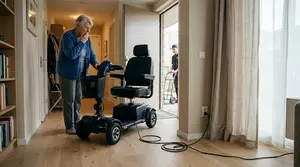
Picture this. The scooter has arrived. It is brilliant—it gets you to the shops, to the park, to see friends. And now it is 9pm, the battery is low, and the only socket you can reach is in the hallway. You plug it in, step over the cable, and go to bed. You have just done the one thing fire services across the country warn against most strongly, and nobody told you. This is not a story about blame. It is a story about how easily a practical decision becomes a hidden risk when the guidance is buried in policy documents instead of written for real people in real homes.
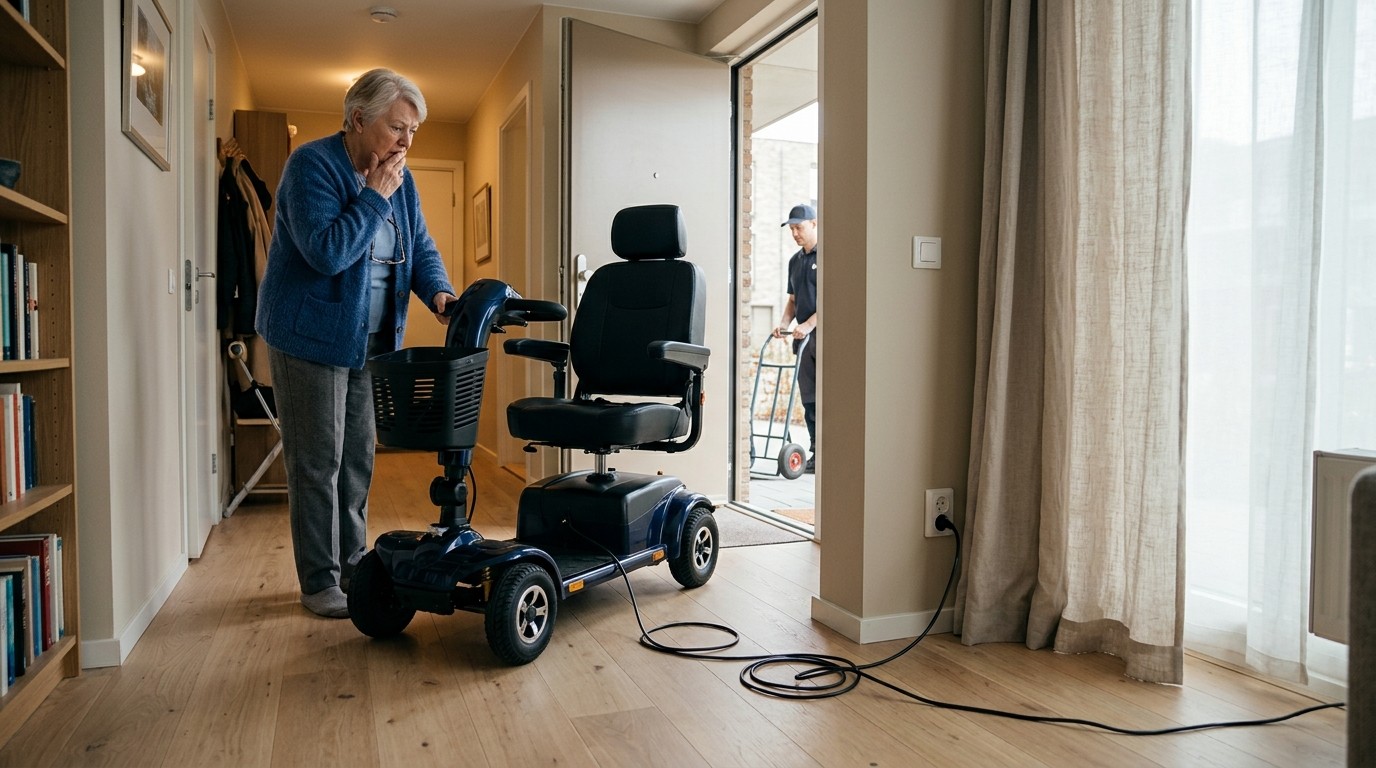
Planning a safe storage plus charging spot for a mobility scooter in a small home is not about finding the tidiest corner. It is about finding the corner that keeps you safe, keeps your escape route clear, and still lets you charge the scooter without a daily obstacle course.
In this guide, we will walk through the fire-safety rules first—because they are non-negotiable—and then the practical layout, ventilation, and battery habits that make a small-home setup work. By the end, you will have a plan you can actually live with.
Let’s take it gently, one decision at a time.
The One Rule That Comes Before Everything Else
Before we talk about cupboards, corners, or charging habits, we need to talk about the single most important rule in scooter storage. It is the rule that fire services repeat in every guidance document, and it is the rule most product pages never mention.
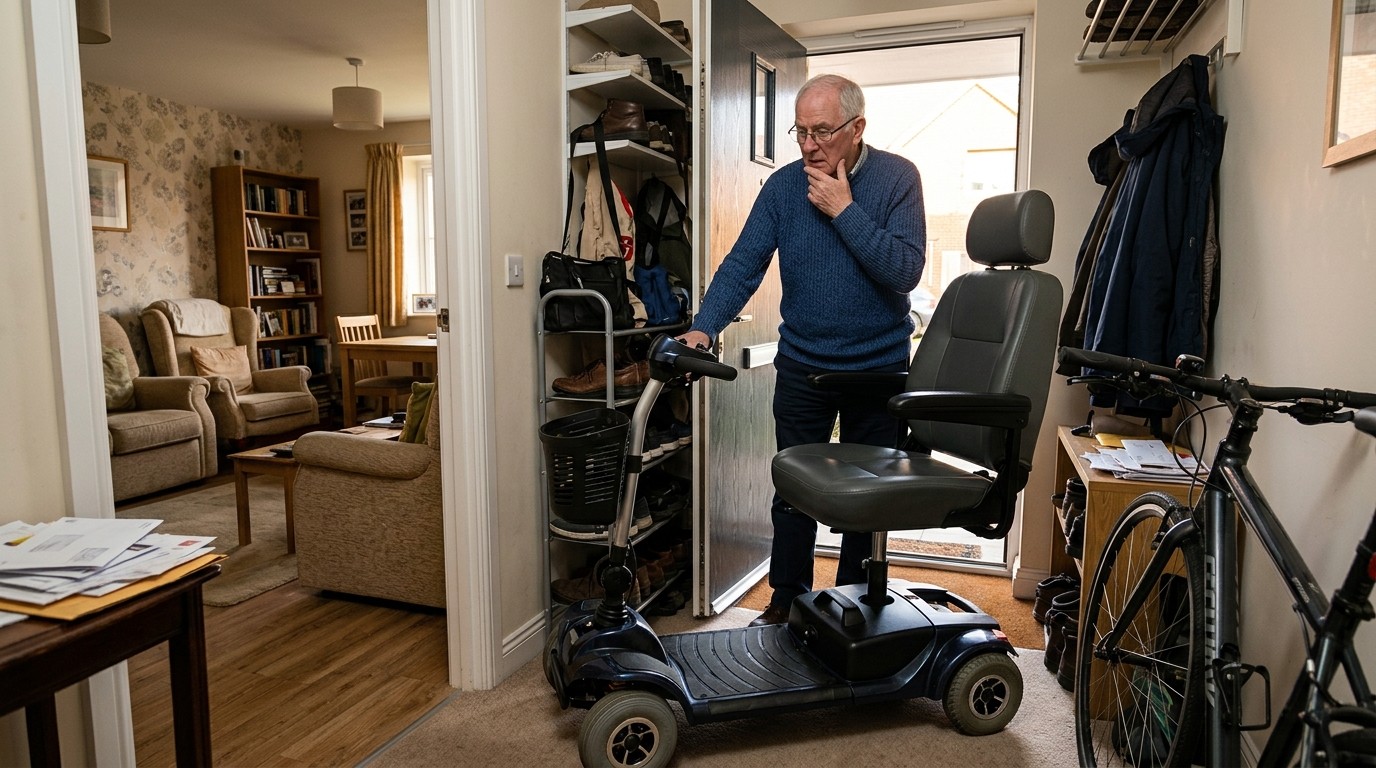
Do not store or charge a mobility scooter in a hallway, stairwell, or any area that forms part of your escape route. The London Fire Brigade warns that scooters stored in corridors, stairwells, or communal areas can release toxic smoke and gases, and can obstruct safe escape routes, posing an unacceptable risk to occupants . Greater Manchester Fire and Rescue Service is equally direct: “You should never charge or store your battery in a hallway, communal area or where it could block your escape if there was a fire” . And Highland Council puts it in the simplest possible terms: storing a scooter in a hallway “could block your way out in a fire” .
This is not about tidiness. It is about the difference between a safe exit and an impassable one. A lithium-ion battery fire can take hold quickly and be ferocious from the start, and the smoke can make a hallway or stairway impossible to navigate . If the scooter is between you and the door, the consequences are not worth the convenience.
So the first question is not “where does it fit?” It is “where can it live without ever blocking a way out?”
Once you have answered that, the rest of the plan falls into place.
Where Should the Scooter Actually Live?
The safest place for a scooter is outside your home—a secure, dry shed or garage—because a fire there is far less likely to trap you inside . Not everyone has that option, especially in a small flat. So what then?
The guidance is clear about the hierarchy of safe options. The best option is an outdoor store: a shed, garage, or purpose-built scooter store that is secure, clean, and dry . The next best option, if outdoor storage is not possible, is a room inside the home with a fire-resistant door and a smoke detector . This is not a hallway. It is a room you can close off—a utility room, a spare room, a ground-floor space away from the main through-route. Wolverhampton Homes advises storing and charging “away from a main through route or exit and in a room where you can close the door” .
What about a cupboard or under-stairs space? Those can work only if they are not on your only escape route and are separated from living spaces by fire-resistant construction. Fire safety guidance for residential buildings recommends at least 30 minutes of fire-resisting construction for storage areas, with a fire door and a smoke detector . An under-stairs cupboard in a hallway that is your only way out is not a safe storage spot, no matter how neatly the scooter fits.
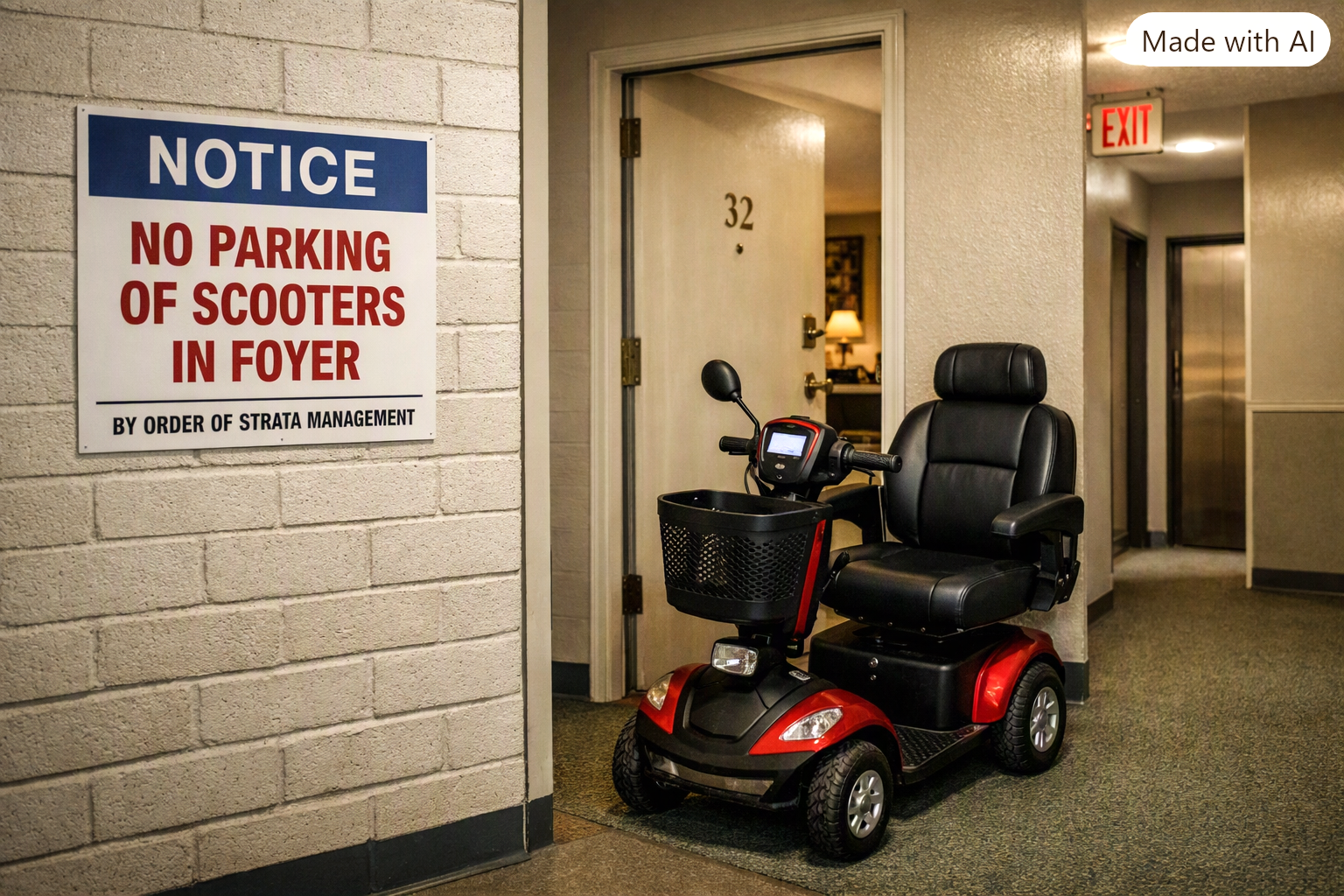
If you live in a flat, check your building’s rules before you assume a communal hallway or landing is available. Shared entrances are escape routes, and storage in communal areas usually requires written permission from the landlord, housing association, or managing agent .
The safest starting point is to plan for storage within the space you control, not the space you share.
Ventilation, Temperature, and the “Dry, Not Damp” Rule
A scooter is an electrical device with a battery, and electrical devices do not thrive in damp, airless spaces. This is where a storage spot that passes the safety test can still fail the practicality test.
The ideal storage environment is dry, well ventilated, and protected from extreme temperatures . Damp is the quiet enemy: it corrodes wiring, damages connectors, and causes control panel issues . Cold temperatures reduce battery performance and shorten long-term battery lifespan . A freezing garage charges a battery far less effectively than a room at room temperature .
If your only option is a garage or shed, take a few practical steps. Elevate the scooter off a concrete floor to reduce moisture transfer. Use moisture absorbers or an insulated cover. And if the battery is removable, bring it indoors to charge and store it in a dry, temperate room, provided the manufacturer permits this . A removable battery is one of the most useful features for small-home storage, because it decouples the scooter’s location from the charging location—and it means you are not running extension leads through doorways.
The Charging Rules That Keep You Safe
Charging is where the fire risk concentrates, and it is where small habits make a big difference. These are the rules that fire services and safety organisations repeat, distilled into a practical checklist.
Charge while you are awake and nearby. Do not charge overnight, and do not charge when you are asleep or out of the house . Greater Manchester Fire and Rescue Service attended 120 incidents involving e-bikes, e-scooters, and mobility scooters over five years, and one of the recurring factors was unattended overnight charging .
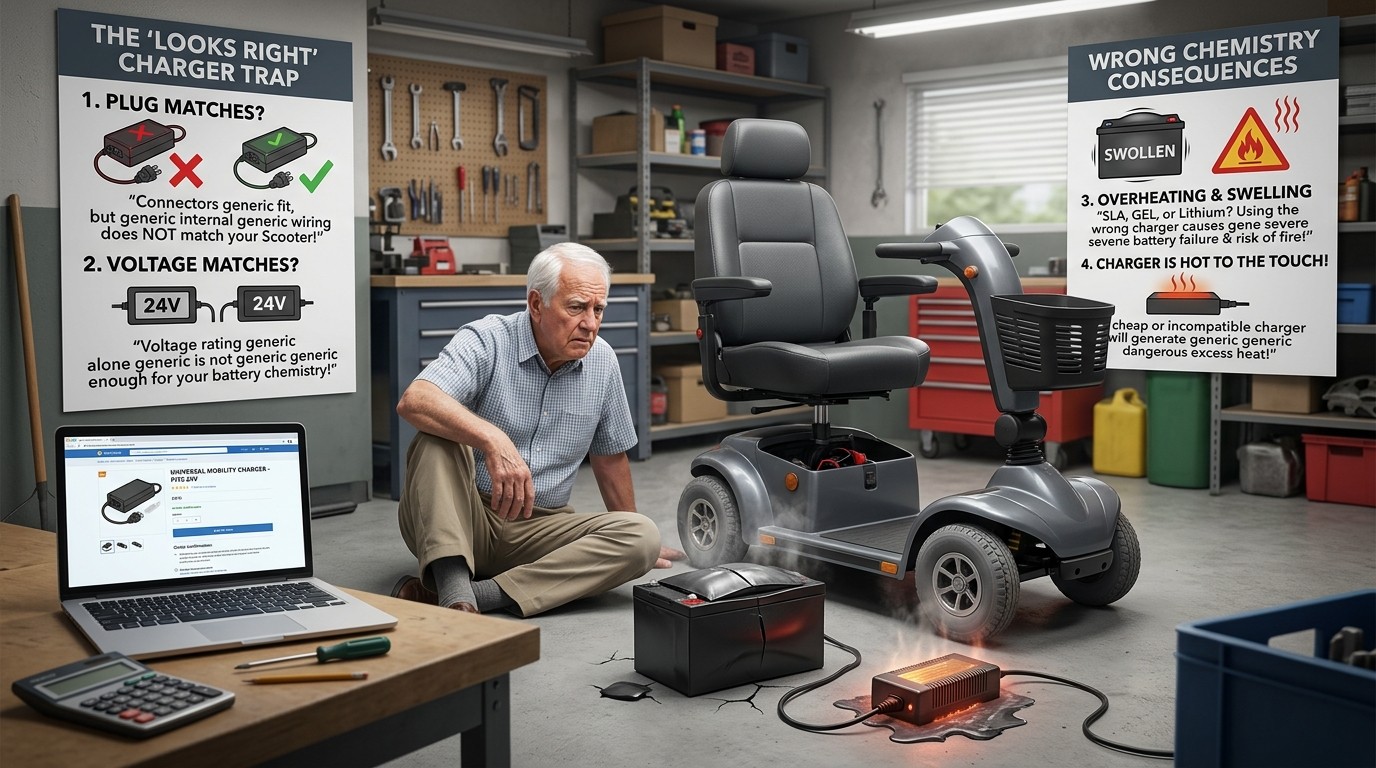
Use only the charger supplied with the scooter. Never a generic replacement. Never a charger with a damaged lead that has been taped up . The correct charger is matched to the battery, and a mismatch can cause overheating .
Charge on a non-combustible surface. Never on carpet, a bed, or a sofa. A hard floor or a dedicated charging mat is safer.
Do not cover the scooter or charger while charging. They need airflow. Covering them traps heat .
Unplug once fully charged. Leaving a battery on charge after it is full is unnecessary and adds risk. Batteries degrade faster when left in a poor state, and a charger left running is a charger left unattended .
Do not overload sockets. A dedicated socket is better than a bar adapter loaded with other devices .
Have an escape plan. If a battery fire does start, do not try to extinguish it. Get out, stay out, and call the emergency services . Make sure everyone in the household knows the plan, especially if the scooter is stored near a route they might use.
The Small-Home Layout: Making It Work in Practice
You now have the safety framework. Here is how to turn it into a workable layout in a small home, step by step.
Step one: choose the room, not the corner. Pick a room that is not on your main escape route and that you can close off with a door. A utility room, a spare bedroom, or a ground-floor room away from the front door is a better starting point than a hallway. If the room has a fire-resistant door and a smoke detector, even better .
Step two: check the socket before you commit. Is there a socket where the scooter will live? Can you reach it without bending behind the seat every night? If the answer is no, a removable battery changes everything—you can carry it to a socket in another room and charge it there . Avoid running extension leads outdoors as a permanent arrangement, and never run one through a partly open door or window .
Step three: leave a clear path. The scooter must not block the door of the room, and it must not create a trip hazard. A parked scooter that you have to climb over to reach the light switch is a scooter that will cause a fall. Mark the footprint on the floor with masking tape and live with it for a day before you finalise the spot.
Step four: keep combustibles away. Do not store the scooter next to curtains, piles of laundry, cardboard boxes, or anything else that could feed a fire. A clear zone around the charging area is a safer zone.
Step five: plan for the long term. If the scooter will be stored for weeks without use, charge it every four to six weeks and never leave the battery fully discharged . Batteries degrade faster when left flat, and a flat battery is a scooter that will not start when you need it .
When the Home Genuinely Has No Safe Space
Sometimes the honest answer is that the home does not have a safe indoor spot. A small flat with a single hallway and no separate room may simply not offer a location that meets the fire-safety standard. That is not a failure. It is information.
In that situation, the responsible options are an outdoor shed or secure store (with the battery brought indoors to charge if it is removable), a designated communal charging area if your building has one, or a home assessment from a local authority or housing provider who can advise on safe storage . Chesterfield Borough Council, for example, says it may allow residents to provide their own outside storage, provided they can show they can access the scooter and charge it safely
The goal is not to force an unsafe indoor spot. The goal is to keep you safe and keep the scooter usable.
Your Next Step
You now have more than a storage tip. You have a safety-first plan. Choose a room that is not on your escape route. Check the socket and the ventilation. Charge while you are awake, on a hard surface, with the correct charger. Unplug when it is full. And if the home genuinely has no safe space, look outward—to a shed, a designated store, or a home assessment—rather than forcing a hallway.
If the storage spot itself is a cupboard or a tight corner, the guide to closet and under-stairs storage shows how to make those spaces work without compromising safety. And if the route to the storage spot is the challenge, narrow hallways and tight turns walks you through the measurements that prevent daily frustration.
You are closer to a safe, workable setup than you think.

Frequently Asked Questions
Can I store a mobility scooter in a hallway?
No. Fire services advise against storing or charging a scooter in a hallway or any area that forms part of your escape route. It could block your way out in a fire, and battery smoke can make the route impassable.
Where is the safest place to store a mobility scooter at home?
The safest place is outside the home—a secure, dry shed or garage. If that is not possible, a room inside with a fire-resistant door and a smoke detector is the next best option. Never a hallway or communal area.
Can I charge my mobility scooter overnight?
No. Fire services advise charging only while you are awake and nearby. Do not charge overnight, while you are asleep, or when you are out of the house. Unattended charging is a major risk factor in battery fires.
Do I need to remove the battery to charge it indoors?
Not always, but a removable battery makes safe charging easier. You can carry it to a socket in a suitable room, charge it on a non-combustible surface, and return it to the scooter when needed.
How often should I charge a scooter in storage?
If storing long-term, charge every four to six weeks and never leave the battery fully discharged. Batteries degrade faster when left flat.
Can I charge a mobility scooter in a shed or garage?
Yes, if the space is dry and ventilated, and if there is a safe power supply. Do not run an extension lead outdoors as a permanent arrangement. If the battery is removable, charging it indoors in the warm is often better for battery life.
What should I do if my only socket is in the hallway?
Use a removable battery and charge it in a different room, or have an electrician install a socket in a safer location. Do not charge in a hallway or escape route, even temporarily.
Can I store a scooter under the stairs?
Only if the under-stairs space is not on your only escape route and is separated from living spaces by fire-resistant construction. An under-stairs cupboard in a hallway that is your way out is not a safe storage spot.
What are the signs of a battery problem?
Smoking, overheating, deformation, unusual noises, or strange smells. If you notice any of these, do not charge the battery. Exit the premises by the safest route and call the emergency services.
What should I do if a scooter battery catches fire?
Do not try to extinguish it. Get out, stay out, and call the emergency services. Make sure everyone in the household knows the escape plan.
Stay mobile, stay confident!
Sign up for our monthly Mobility Scooter Newsletter to receive practical guides, expert advice, and inspiring stories that help you make the most of your scooter and download our free "Mobility Scooter Guide for Beginners."
Don't worry — your e-mail address is totally secure.
I promise to use it only to send you our newsletter, "Mobility Matters."
Recent Articles


-
Small Home Storage Friendly Scooters That Actually Fit Your Flat
Nov 12, 26 08:01 AM
 Small Home Storage Friendly Scooters start with your tape measure. Learn the route, not just the spot, before you spend a penny.
-
Safe Storage + Charging Spot for Scooters: No Hazards, No Blocking
Nov 12, 26 07:46 AM
 Safe storage + charging spot: never in a hallway, never overnight, never unattended. This friendly guide shows what to do instead.
-
Folding vs Disassembly Travel Scooters for Small Homes: The Truth
Nov 12, 26 12:57 AM
Folding vs disassembly travel scooters for small homes: one stores smaller, the other lifts lighter. Here is the real-life comparison.

Ready to Feel More Confident on Your Mobility Scooter?

My Ebook, The Ultimate Guide to Mobility Scooters, walks you through choosing the right scooter, using it safely, and keeping it in top condition — all explained in clear, friendly language.
Give yourself (or someone you love) the gift of independence.




