- Home
- Funding and Coverage
- NDIS Funding for Mobility Scooters
- NDIS Funding for Mobility Scooter Repairs & Servicing
NDIS Funding for Mobility Scooter Repairs, Servicing, and Replacement Batteries: How to Plan Ahead
Picture this. Your scooter has been your freedom for two years now. You've taken it to the shops, to appointments, to visit your grandkids. It's not just equipment — it's independence on wheels.
Then one Tuesday morning, you turn the key and nothing happens. The battery light flickers. You feel a knot in your stomach. How much is this going to cost? Does the NDIS cover this? Who do I even call?

If that scenario feels familiar — or if you just want to avoid it — you're in the right place. This guide is about NDIS funding for mobility scooter repairs, servicing, and replacement batteries. It's not just about what's covered. It's about how to plan ahead so you're never caught off guard.
By the end, you'll know exactly which budget pays for what, when you need a quote, and what to do if something breaks at the worst possible moment.
Two Budgets, Two Rules: Where Repair Funding Lives
Here's the first thing to understand, and it's the thing that trips up almost everyone. The NDIS funds scooter repairs from two different budgets, depending on how much the repair costs.
For small repairs — think a tyre puncture, a wobbly mirror, a loose bolt — funding sits in your Core – Consumables budget. That's the flexible everyday spending budget you use for things like continence products or low-cost aids . You can use it as needed, without asking permission first.
For major repairs and regular servicing, funding sits in your Capital – Assistive Technology budget, under "assistive technology repairs and maintenance" . This is the same budget that funded your scooter in the first place. The NDIS includes repair funding automatically when you have mid-cost or high-cost AT, and you don't need a new assessment to get it .
So the first question when something goes wrong is always: is this a small repair or a major one? We'll come back to that.
But first, let's talk about the $1,500 line, because it changes everything about how you claim.
The $1,500 Line: When You Need a Quote
If your repair costs under $1,500, you don't need a quote. You can get the repair done and make a claim . That covers most tyres, minor electrical faults, brake adjustments, and battery replacements for smaller scooters.
If your repair costs over $1,500, you need to provide a quote before a payment request can be accepted . That's not a bureaucratic hurdle designed to slow you down. It's a safeguard so you know the cost upfront and the NDIS can confirm it's value for money.
Here's the practical takeaway: before you authorise any repair, ask your repairer for a written quote. If it's under $1,500, you can proceed immediately. If it's over, submit the quote first. A five-minute phone call can save you weeks of waiting for reimbursement.
And if you're wondering what happens when the repair is urgent — like, right now urgent — that's the next piece of the puzzle.
Urgent Repairs: What to Do When You Can't Wait
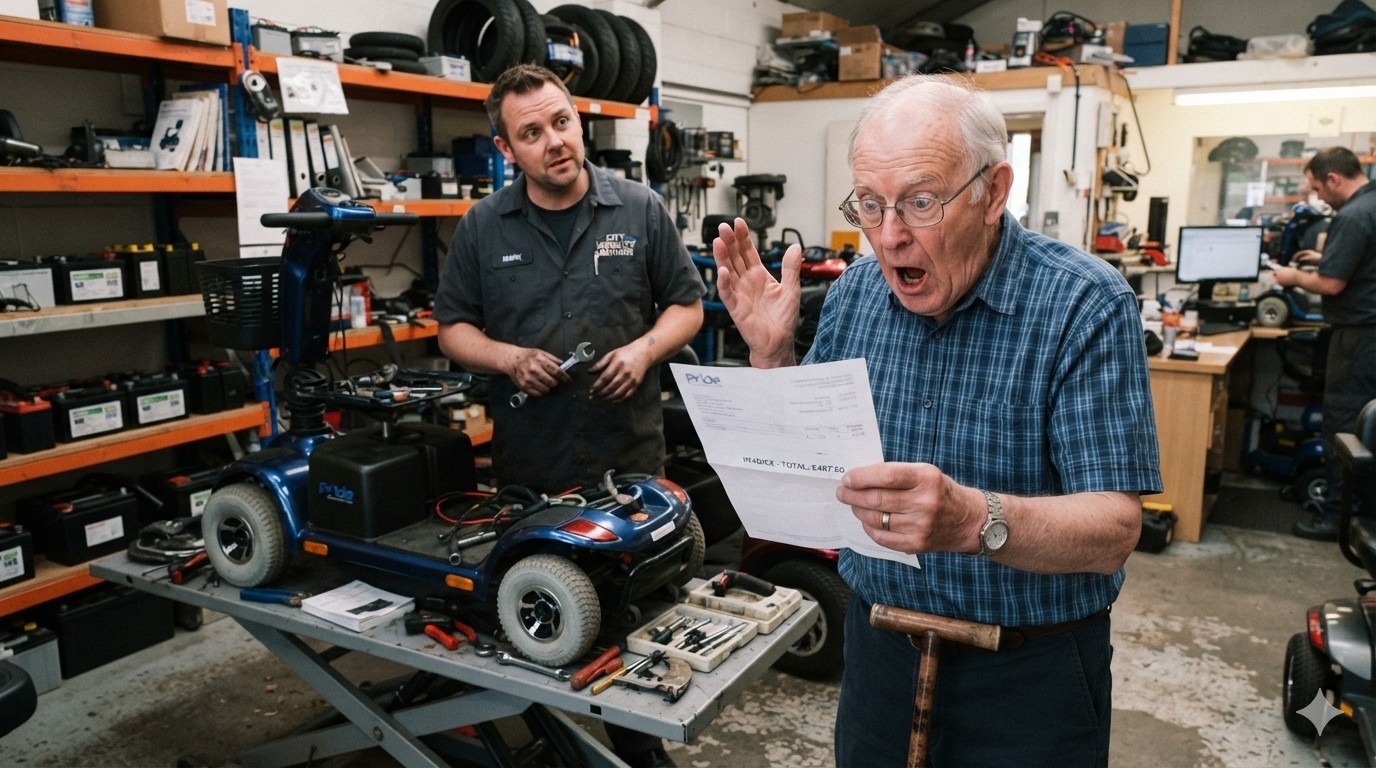
It's 9pm on a Sunday. Your scooter won't start, you have a medical appointment at 8am, and you have no backup. This is the scenario the NDIS calls an "urgent repair" — and there's a specific pathway for it .
Urgent repairs cover equipment you depend on for safety, mobility, communication, or daily living activities like showering . If your scooter is your only way to get around, a breakdown qualifies as urgent.
The best part? Even if you have no funding left in your budget, the NDIS Contact Centre can authorise funds over the phone. You can call 1800 800 110 between 8am and 8pm on weekdays, and they can provide a pre-claim authorisation number so your provider gets paid .
What if it's outside those hours? The NDIS allows repairs or equipment hire to make your AT safe and usable. You can seek approval for further funding the next business day . The system is designed to protect you, even when the office is closed.
The pathway differs slightly depending on how your plan is managed. For agency-managed participants, your provider should call the NDIS Contact Centre. For plan-managed participants, contact your plan manager, who can seek authorisation if funds are short. For self-managed participants, pay the provider directly and claim against your plan — and call the Contact Centre if you need extra funding .
Now, let's talk about the single most common repair you'll ever need: the battery.
Battery Replacement: Your Scooter's Version of a Heart Transplant
Every scooter battery dies eventually. That's not a defect — it's chemistry. And the good news is that the NDIS funds replacement batteries under a specific support item: Wheelchair or Scooter – Battery or Charger (05_501224310_0105_1_2) .
This support item covers replacement and repair of power sources, including assessment of battery health, provision of compatible charging equipment, and installation . It's funded through your Assistive Technology budget, and no quote is required for the item itself .
How do you know when it's time? If your scooter's range has dropped noticeably, if it takes longer to charge, or if the battery indicator falls quickly under load, those are signs it's nearing the end. Most scooter batteries last between 18 months and three years, depending on usage and care.
Here's a tip that can extend your battery's life: charge it regularly, avoid letting it run completely flat, and store it in a cool, dry place. Your supplier can give you specific advice for your model.
Read the full guide: What Should I Ask About Battery Replacement Cost, Lifespan, and Availability (for a Specific Model)?
And if you're wondering about routine servicing — the oil change of the scooter world — that's where we're heading next.
Servicing: The Routine That Prevents the Emergency
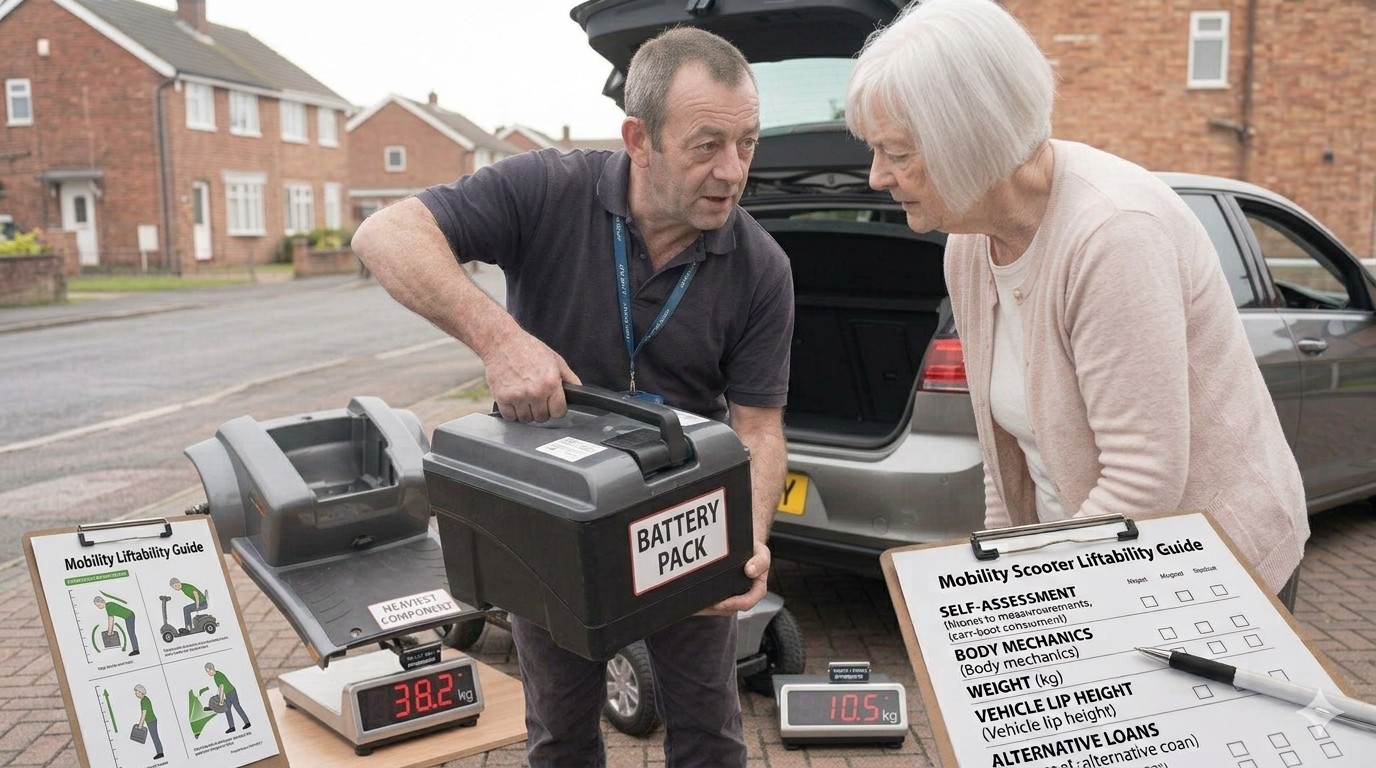
Servicing isn't glamorous. But it's the difference between a scooter that runs smoothly for years and one that breaks down at the worst possible moment. Regular servicing typically covers tyre checks, brake adjustments, battery health assessment, tightening of bolts, lubrication of moving parts, and electrical system checks.
The NDIS funds regular servicing through your Capital – Assistive Technology Repairs and Maintenance budget . You can arrange it with your supplier (if they offer servicing) or another suitable AT provider . You should develop a maintenance schedule based on the manufacturer's advice and your own usage patterns .
How often? For most scooters, a service every six to twelve months is reasonable. If you use your scooter daily, lean toward six months. If it's occasional, annual may be enough. Your supplier can recommend a schedule for your specific model.
The key is to be proactive, not reactive. A $200 service can prevent a $2,000 repair. And it keeps your scooter safe — which matters more than anything.
Which brings us to the most important question of all: what if, despite all your planning, something still goes wrong?
What If Something Goes Wrong? Your Safety Net
If your scooter arrives faulty, if a repair doesn't fix the problem, or if you're not sure whether a repair is covered, you have options. Start with your supplier — they're your first port of call for warranty issues, repairs, and servicing. If the problem isn't resolved, contact your AT advisor or support coordinator .
If you're struggling with funding, call the NDIS Contact Centre on 1800 800 110. They can answer questions about your budget, authorise urgent repairs, and connect you with the right support .
And if your scooter is getting old and needing frequent repairs, it might be time to think about replacement rather than repair. The NDIS can fund a replacement through your plan, and sometimes that's better value than repeatedly patching up ageing equipment.
Read the full guide: Is It Worth Repairing an Older Mobility Scooter or Replacing It?
.
Your Maintenance Checklist: Plan Ahead, Stay Mobile
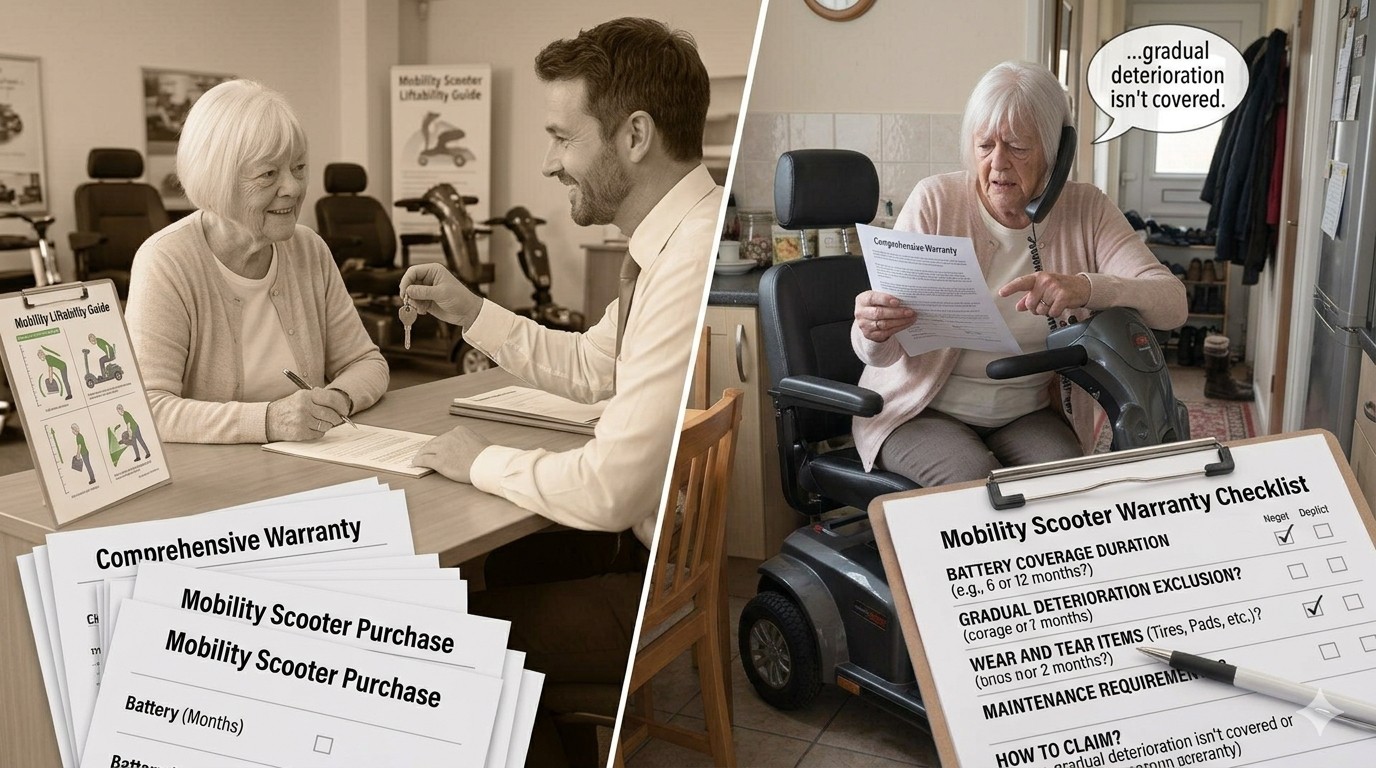
Here's a simple checklist to keep your scooter running and your stress levels low.
Every month: Check tyre pressure and tread. Look for loose bolts or screws. Clean the scooter according to the manufacturer's instructions.
Every three months: Check the battery indicator and note any changes in range. Test the brakes. Inspect the charger for fraying or damage.
Every six to twelve months: Book a professional service with your supplier or AT provider. Have the battery health assessed. Check the warranty status and expiry dates.
Every plan review: Tell your planner if your scooter is ageing, if repairs are becoming more frequent, or if you anticipate needing a replacement soon. Ask them to include adequate repair and maintenance funding .
Always: Keep your proof of purchase and warranty documents in a safe place. Know your plan type and who to call in an emergency.
And remember — you don't have to figure any of this out alone.
FAQs: NDIS Funding for Mobility Scooter Repairs and Batteries
Does the NDIS cover mobility scooter batteries?
Yes. The NDIS funds replacement batteries under support item 05_501224310_0105_1_2, Wheelchair or Scooter – Battery or Charger, funded through your Assistive Technology budget.
How do I know if a repair is "small" or "major"?
Small repairs (under $1,500) come from Core – Consumables. Major repairs and servicing come from Capital – Assistive Technology Repairs and Maintenance. The $1,500 threshold determines whether you need a quote.
What if I have no funding left for a repair?
For urgent repairs, the NDIS Contact Centre can authorise funds over the phone. Call 1800 800 110 between 8am and 8pm on weekdays .
Do I need a quote for a scooter repair?
If the repair costs over $1,500, yes. If it's under $1,500, no quote is required .
Who repairs my NDIS scooter?
Your supplier is usually the best first contact. If they don't offer repairs, your AT advisor or support coordinator can help you find a registered provider .
Can I claim repairs if my scooter is out of warranty?
Yes. The NDIS funds repairs and maintenance for items you're currently using, including accidental damage not covered by warranty .
What if my scooter breaks down after hours?
You can organise repairs or hire a replacement to keep you safe. Seek approval for funding the next business day .

Your Next Step: Plan Now, Ride Later
You don't need to memorise every rule or predict every breakdown. You just need to know the basics: two budgets, one $1,500 line, and a phone number for emergencies. Everything else you can figure out when you need to.
Your next step is simple. Check your current plan for the Assistive Technology Repairs and Maintenance budget. Write down the NDIS Contact Centre number (1800 800 110) and keep it somewhere you'll find it. And if your scooter is due for a service, book it now — before it books you.
A scooter isn't just equipment. It's the coffee with a friend, the appointment you can attend, the independence you've built. Protecting it is worth a little planning.
You've got the map now. Go keep your wheels turning.
Stay mobile, stay confident!
Sign up for our monthly Mobility Scooter Newsletter to receive practical guides, expert advice, and inspiring stories that help you make the most of your scooter and download our free "Mobility Scooter Guide for Beginners."
Don't worry — your e-mail address is totally secure.
I promise to use it only to send you our newsletter, "Mobility Matters."
Recent Articles


-
The NDIS Mobility Scooter Funding Guide I Wish Someone Had Given Me
Sep 28, 26 08:00 AM
 NDIS funding for mobility scooters doesn't have to be confusing. Here's your friendly guide to eligibility, assessment, costs, and approval.
 -
NDIS Funding for Mobility Scooter Repairs & Servicing: Plan Ahead
Sep 28, 26 07:58 AM
 NDIS funding for mobility scooter repairs and servicing: what's covered, who to call, and how to avoid being stranded.
 -
After NDIS Approves a Mobility Scooter: What Comes Next
Sep 28, 26 06:44 AM
After NDIS approves a mobility scooter, you might feel unsure what to do. This friendly guide walks you through every step.



Ready to Feel More Confident on Your Mobility Scooter?

My Ebook, The Ultimate Guide to Mobility Scooters, walks you through choosing the right scooter, using it safely, and keeping it in top condition — all explained in clear, friendly language.
Give yourself (or someone you love) the gift of independence.




